On October 23, 1929, a crowd gathered on a Manhattan street corner, looking up at an unfinished tower. Inside, a 185-foot steel spire that had been hidden in darkness for months began to rise through the top of the building. Within ninety minutes, the Chrysler Building became the tallest structure on Earth. The architect who designed it had just beaten his former partner in the most intense architectural rivalry in American history.
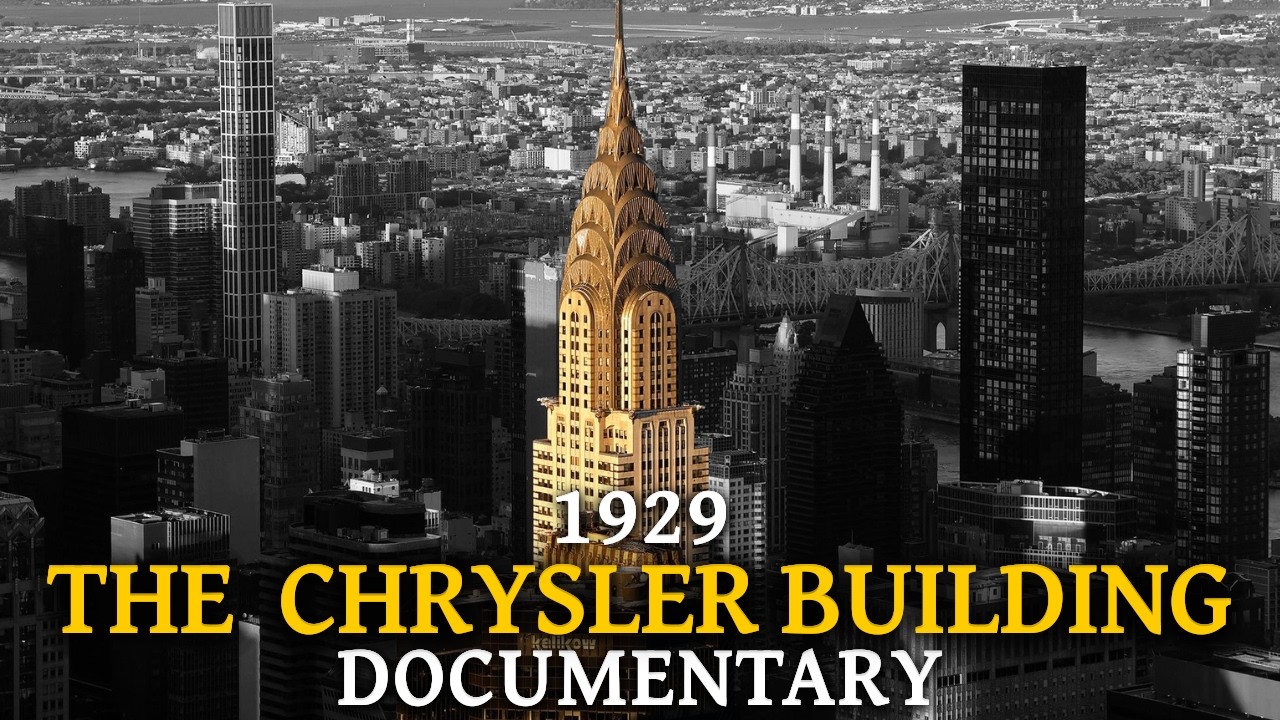
The businessman who paid for it believed his name would live forever. Less than twenty-four hours later, the stock market crashed, the Great Depression began, and the gleaming monument became a symbol of everything that had gone wrong. William Van Alen, the architect, had spent years fighting for this moment. Born in Brooklyn in 1883 to a working-class family, he had no money or connections, only talent.
He studied at night while working as a draftsman by day. In 1908, he won a scholarship to study at the École des Beaux-Arts in Paris, where he absorbed the ornamental styles that would later define his work. When he returned to New York, he partnered with another young architect named H. Craig Severance.
Van Alen was the visionary designer, quiet and introspective. Severance was the charismatic salesman who brought in clients. Together, they built a successful firm and completed several innovative buildings. But their personalities clashed, and in 1924, a magazine article praised Van Alen by name while ignoring Severance.
The partnership dissolved in a bitter legal battle that lasted over a year. After the split, Van Alen struggled to find major work while Severance thrived. Van Alen designed storefronts and small projects, watching his former partner build towers across the city. He was still designing innovative buildings, including one with curved glass corner windows that drew praise from the architect Le Corbusier, but recognition did not pay the bills.
He needed something big. In October 1928, Walter Chrysler bought the land and plans for an office tower at Lexington Avenue and 42nd Street. Chrysler had risen from sweeping railroad floors for ten cents an hour to become one of the wealthiest men in America. He had built the Chrysler Corporation and been named Time magazine’s Man of the Year.
Now he wanted a monument. He kept Van Alen as the architect and told him the building should reflect his automobile empire, with art deco styling, stainless steel that gleamed like chrome, and height. Van Alen’s original design called for 67 floors and 808 feet, which would beat the Woolworth Building, the current tallest in the world. Construction began in September 1928.
Three thousand workers excavated nearly seventy feet down to bedrock and raised the steel frame at a pace of four floors per week, the fastest skyscraper construction anyone had ever seen. Chrysler implemented safety measures that were revolutionary, including guardrails, wire netting, and an on-site hospital. Remarkably, not a single worker died during the steel frame construction, an almost unheard-of achievement. But across town, another tower was rising.
Banker George Ohrstrom hired H. Craig Severance to design a building at 40 Wall Street. When Severance learned that Van Alen was building a tower to surpass the Woolworth, he saw his chance for revenge. He kept increasing his building’s height, first to 60 stories, then to 62 floors and 840 feet, making it taller than the Chrysler.
The press called it the race to the sky. By August 1929, 40 Wall Street topped out at 927 feet. Severance believed he had won. Van Alen, however, had a secret.
He planned to add a spire, a 125-foot steel needle that would be assembled in secret inside the building and raised through the top in a single dramatic gesture. If it worked, the Chrysler Building would reach 1,046 feet, taller than anything on Earth, including the Eiffel Tower. Chrysler approved the plan. The spire was fabricated in four sections at a workshop far from the construction site, transported under cover of night, and assembled in darkness inside the building’s core.
Even most of the construction workers had no idea what they were building. On the morning of October 23, 1929, Van Alen stood on the corner of 42nd Street with Chrysler and the engineers. The spire was ready. At 9:30, workers used a system of pulleys and cranes to lift the 27-ton steel structure through the top of the dome.
It emerged slowly, which Van Alen later described as a butterfly leaving its cocoon. Crowds gathered, the press was blindsided, and within ninety minutes the spire was riveted into place. The Chrysler Building stood at 1,046 feet, 119 feet taller than 40 Wall Street. Van Alen had won.
The next day, October 24, the stock market began to collapse. Panic spread through Wall Street, and on Black Tuesday, October 29, the market completely crashed. Fortunes evaporated overnight. Banks failed, businesses closed, and the Great Depression began.
The gleaming monument that had been raised in triumph the day before became a symbol of reckless excess. Critics attacked the building mercilessly. The architecture critic Lewis Mumford called it a series of restless mistakes that proved the dangers of plutocracy. The building that was supposed to cement Van Alen’s legacy was now being mocked as a monument to greed.
When construction finished in May 1930, Van Alen submitted his bill. The standard architectural fee was six percent of the construction cost, which came to $840,000. But Chrysler refused to pay, demanding documentation for every expense and questioning the fee. The two men argued, lawyers got involved, and Van Alen sued his client.
The lawsuit became public, and in the world of elite architecture, suing your client was professional suicide. Van Alen eventually won the case and received his fee, but the damage was done. Wealthy clients did not want to hire an architect who might sue them. After the Chrysler Building, Van Alen received almost no major commissions.
The Great Depression made everything worse. He retreated from public life and took a teaching job. He would never design another significant building. Walter Chrysler also suffered.
In 1938, his wife died of a cerebral hemorrhage, and he suffered a massive stroke. He recovered enough to continue working, but in 1940, at age 65, he suffered a second stroke and died. His monument outlived him by only a decade of glory. The Chrysler Building held the title of world’s tallest for less than a year.
In April 1931, the Empire State Building was completed at 1,250 feet, easily surpassing it. The title that Van Alen and Chrysler had fought so hard to win was gone almost before they could enjoy it. The building itself struggled through the Depression, with vacancy rates climbing until it became one of the loneliest towers in New York. By the 1970s, occupancy dropped to just seventeen percent.
The art deco lobby was neglected, the spire tarnished. The building that cost $14 million to construct was worth less than the land it sat on. Every owner who bought it struggled to make it profitable. Craig Severance continued to receive commissions throughout the 1930s and 40s, but he never escaped the shadow of the race.
Friends said he remained bitter for the rest of his life, claiming that Van Alen had cheated, that the spire was a trick. He died in 1941 at age 62. The rivalry that destroyed both men ended with neither finding peace. William Van Alen died on May 24, 1954, at age 70.
The New York Times ran a brief obituary noting his work on the Chrysler Building, but most people had forgotten his name. He never spoke publicly about the building again. He had created a masterpiece that destroyed his career, won the race to the sky only to lose it eleven months later, and died in obscurity. The Chrysler Building survived.
In 1976, it was designated a National Historic Landmark. In 2005, the Skyscraper Museum surveyed architects and historians, asking them to choose their favorite New York towers. The Chrysler Building came in first place, ahead of the Empire State Building and every modern glass tower. The building that had been mocked and forgotten became beloved, but recognition came too late to save the men who built it.
The building has changed hands many times. In 2008, the Abu Dhabi Investment Council purchased it for $800 million. In 2019, it sold for just $150 million, a massive loss. Even in the twenty-first century, the Chrysler Building remained financially cursed, beautiful but unprofitable, iconic but troubled.
The spire that Van Alen raised in secrecy on the eve of the crash still points toward the sky, a gleaming reminder that some dreams cost more than they are worth. The workers who built it survived, went home to their families, and lived to tell the story. They were the only people connected to the building who truly won.
