The storm had been building all day, and by the time night fell over Magnolia Plantation, the Mississippi ran black beneath an October moon. Sarah pressed her calloused hands against the rough wooden wall of her cabin, feeling the vibration of thunder roll across the Louisiana sky, and she knew the rain would come soon. The air hung thick with humidity and something else, a tension that raised the hair on her arms. “Storm’s coming hard tonight,” whispered Mama Celia from her corner, working steadily on a torn shirt by candlelight.
At sixty-five she was the oldest among them, her back bent from decades of cotton picking, but her eyes remained sharp. “Can feel it in my bones. ”
Sarah nodded, though her attention was fixed on the sounds drifting from the overseer’s house. Jeremiah Blackwood’s drunken laughter mixed with the clink of bottles, and from her small window she could see the yellow glow of his lantern moving erratically across the porch.
The man had been drinking heavily since sunset, celebrating another profitable harvest on the backs of their suffering. “He’s worse when he drinks,” murmured Thomas, a broad-shouldered man in his thirties who worked the sugar mill. His left hand bore the permanent scar where Blackwood had crushed it with a hammer for working too slowly. “Saw him eyeing little Mary again today.
”
Sarah’s jaw tightened. Mary was barely fourteen, thin as a reed, and had already endured too much at Blackwood’s hands. The overseer had a particular cruelty toward the young women, using his position to take what he pleased while Master Bogard turned a blind eye from his mansion a mile upriver. “Not tonight,” Sarah said quietly, her voice carrying a steel that made the others look up.
“I won’t let him touch her again. ”
Mama Celia’s hands stilled on her sewing. “Child, you can’t keep putting yourself between that devil and the rest of us. One day he’s going to—”
“Kill me?
” Sarah’s laugh was bitter. “We’re already dying, Mama. Every day we stay silent, we die a little more. ”
Lightning split the sky, illuminating the quarters in stark white relief.
In that brief moment, Sarah’s face was transformed, no longer the submissive slave Blackwood thought he owned, but something fierce, like the wild cats that prowled the swamplands beyond the plantation. Across the muddy yard, Blackwood’s lantern had gone out. His house sat in darkness, but Sarah could still hear him moving inside, heavy boots stumping across the wooden floors. She knew his patterns.
When he drank this much, he would eventually make his way to the quarters, looking for someone to abuse. “I’m going to check on Mary,” she announced, rising from her stool. “Sarah, no. ” Thomas grabbed her wrist.
“Stay inside tonight. Something feels wrong. ”
She looked down at his scarred hand on her arm, then met his worried eyes. Thomas had been like a brother to her since they were children.
Both of them born on this plantation, both knowing no other life than this endless cycle of labor and fear. “Everything’s wrong, Thomas. Has been since the day we were born. ”
She gently pulled free and stepped out into the night.
The rain hit her immediately, soaking through her thin cotton dress within seconds. The quarters were arranged in two long rows facing each other, with Blackwood’s house positioned at the far end like a watchful eye. Most of the cabins were dark now, their occupants trying to steal rest before the dawn bells summoned them back to the fields. Sarah made her way carefully across the slippery ground, her bare feet finding purchase in familiar ruts and puddles.
She had walked this path thousands of times, but tonight it felt different, charged with electricity that had nothing to do with the storm. Mary’s cabin was the third from the end, shared with her mother Ruth and two younger siblings. Sarah tapped softly on the door in the pattern they had established, three quick, one slow. The door opened a crack, revealing Ruth’s frightened face.
“Sarah, what are you doing out in this weather? ”
“Checking on Mary. Is she here? ”
“She’s safe.
But Blackwood came by earlier asking questions. Said he might need her to help with some work in his house tomorrow. ”
Sarah’s hands clenched into fists. They all knew what work in his house meant.
“He won’t touch her,” Sarah said, her voice carrying across the small cabin. Mary looked up, hope flickering in her dark eyes. “Sarah, you can’t keep fighting him,” Ruth whispered urgently. “He’s already got it in for you after what happened with Samuel.
”
Sarah’s chest tightened at the memory. Three weeks ago, Blackwood had been beating the elderly man for dropping a sack of cotton, and Sarah had intervened, grabbing the overseer’s whip and staring him down until he backed away, his face red with rage and humiliation. Since then, Blackwood had been looking for an excuse to make her pay. “Let him come,” Sarah said simply.
Another flash of lightning illuminated the quarters, and in its brief glow, Sarah saw something that made her blood run cold. Blackwood’s door was open, and a dark figure was moving across the yard, not toward the quarters, but toward the path that led to the swamp. “Ruth, keep Mary inside no matter what you hear tonight,” Sarah said quickly. “And bolt the door.
”
Before Ruth could protest, Sarah was back out in the storm, following the shadowy figure at a distance. The rain came down in sheets now, turning the red clay soil into treacherous mud that sucked at her feet. Blackwood, for she was certain it was him, moved with the unsteady gait of a drunk man, but there was purpose in his direction. He was heading toward the old slave cemetery, a forgotten patch of ground where those who had died on the plantation lay in unmarked graves.
Sarah had always avoided that place, especially at night. The older slaves spoke of it in whispers, claiming that the spirits of the dead still walked among the weathered wooden crosses and sunken earth. But tonight something was drawing Blackwood there, and Sarah’s instincts told her it meant trouble for someone. She followed him past the last of the quarters, past the equipment sheds and the sugar mill, until they reached the edge of the swampland.
Here the cultivated fields gave way to wild cypress and tupelo trees whose roots disappeared into black water that reflected the lightning like broken mirrors. The cemetery lay on a small rise just before the swamp proper began, a collection of crude wooden markers slowly being reclaimed by the encroaching wilderness. Spanish moss hung like ghostly curtains from the branches overhead, and the air was thick with the smell of decay and stagnant water. Blackwood had stopped near the center of the cemetery, his lantern casting dancing shadows among the graves.
Sarah crept closer, using the larger trees for cover until she could hear his voice over the storm. “I know you’re out here,” he was saying, his words slurred but audible. “Think you can hide from me? Think you can make a fool of Jeremiah Blackwood?
”
Sarah’s heart hammered against her ribs. Was he talking to her? Had he known she was following him? Then she realized he wasn’t looking in her direction.
His attention was focused on something deeper in the cemetery. “Come out, come out,” Blackwood sang in a mocking tone. “I’ve got something for you. Something you’ve been asking for.
”
Lightning flashed again, and in that moment of illumination, Sarah saw what had drawn the overseer to this cursed place. There, standing among the graves like a specter risen from the earth itself, was a figure in tattered clothing, tall and gaunt, with skin that seemed to absorb the light rather than reflect it. Sarah’s breath caught in her throat. She recognized the figure, though it had been five years since she had last seen him alive.
It was old Moses, the plantation’s former blacksmith, who had died of fever in the winter of 1837. But there he stood, as real as the rain soaking through Sarah’s dress, his eyes fixed on Blackwood with an intensity that made the air itself seem to vibrate. The dead had come calling, and Jeremiah Blackwood was about to answer for his sins. The storm reached its full fury as Sarah crouched behind the massive trunk of a centuries-old cypress, her heart pounding so hard she feared it might give her away.
She couldn’t move, couldn’t breathe, couldn’t look away from the impossible scene unfolding before her. Old Moses stood motionless among the weathered grave markers, his presence both familiar and terrifyingly wrong. Sarah remembered him as a gentle giant of a man, his massive hands capable of shaping iron with delicate precision, his deep voice always ready with a kind word for the children. But this figure bore only a passing resemblance to the man she had known.
His clothes hung in tatters, stained with five years of grave dirt. His skin had a grayish pallor that seemed to drink in the lightning rather than reflect it. But it was his eyes that made Sarah’s blood turn to ice water. They burned with a cold fire that spoke of justice too long delayed.
“Moses,” Blackwood’s voice cracked, the bravado of moments before evaporating. The overseer’s lantern shook in his grip. “Moses, you’re dead. I saw them put you in the ground myself.
”
The figure tilted its head slightly, a gesture so achingly familiar that Sarah felt tears mixing with the rain on her cheeks. “Dead. Yes. ” Moses spoke, and his voice was like the whisper of wind through dry leaves.
“But not gone, Jeremiah Blackwood. Never gone. ”
Blackwood stumbled backward, his boots slipping in the mud, but he couldn’t tear his gaze away from the apparition. “This ain’t real.
This is the whiskey talking. You’re just a fever dream. ”
Moses took a step forward, and where his foot touched the ground, Sarah could swear she saw the grass wither and die. “Tell me, Jeremiah, do you remember the last words I spoke to you?
”
The overseer’s face went white as bone. His free hand moved instinctively toward the coiled whip at his side, the same whip he had used to beat Moses during his final illness, claiming the blacksmith was malingering to avoid work. “I don’t,” Blackwood stammered. “You don’t remember.
” Moses’s laugh was like the sound of coffin nails being driven into wood. “Let me remind you. I said that one day you would answer for every lash, every cruel word, every life you destroyed with your hatred. I said the dead would not forget.
”
Lightning split the sky again, and in its stark illumination, Sarah saw that Moses was not alone. Other figures were emerging from the shadows between the graves, men and women she recognized, all of them slaves who had died under Blackwood’s brutal oversight. There was Samuel’s wife, who had died of grief after her husband was sold away. There was young Peter, who had been worked to death in the sugar mill at age sixteen.
There was Martha, who had taken her own life rather than endure another day of Blackwood’s abuse. They formed a circle around the terrified overseer, their eyes all burning with that same cold fire of judgment. The rain seemed to pass right through them. “No,” Blackwood whispered, raising his lantern as if the feeble light could protect him.
“No, this ain’t happening. You’re all dead. ”
“Death is not the end, Jeremiah,” said Martha, her voice carrying the weight of all the suffering she had endured. “It is merely a doorway.
And tonight you will walk through it. ”
Blackwood spun around, looking for an escape route, but the spirits had him surrounded. His eyes wild with panic, he spotted Sarah’s hiding place and pointed a shaking finger in her direction. “There—there’s someone else here.
Sarah, I know you’re there, girl. Come out and face me. ”
Sarah’s blood turned to ice. She pressed herself harder against the tree trunk, praying the darkness would conceal her.
But Moses turned his burning gaze in her direction. “Sarah,” he said, and his voice was gentler now, more like the man she remembered. “Child, you don’t need to hide. You are not the one being judged tonight.
”
Slowly, knowing she had no choice, Sarah stepped out from behind the cypress. The rain soaked her to the bone, but she barely felt it. Her attention was fixed on the impossible gathering before her. “You!
” Blackwood snarled, his fear transforming into familiar rage. “This is your doing, isn’t it? Some kind of voodoo nonsense you learned from that old witch woman in the quarters. ”
Sarah found her voice, though it came out as barely more than a whisper.
“I didn’t do anything, Mr. Blackwood. I just followed you here. ”
“Liar.
” He raised his hand as if to strike her, but Moses moved with impossible speed, placing himself between them. “You will not touch her,” the spirit said, his voice carrying the authority of the grave. “Your time of hurting others is over. ”
Blackwood’s hand froze in midair, trembling with the effort of trying to complete the motion.
His face contorted with rage and terror as he found himself unable to move. “What are you doing to me? ”
“We’re giving you what you gave us,” said Peter, his young face bearing the marks of the machinery that had crushed him. “Pain.
Fear. The knowledge that your suffering is just beginning. ”
Sarah watched in horrified fascination as the spirits began to close in on Blackwood. She wanted to run, wanted to flee back to the safety of the quarters, but her feet seemed rooted to the muddy ground.
This was justice, she realized. Terrible supernatural justice for crimes that the living world had never punished. “Sarah. ” Moses turned to her, and she saw something like compassion in his burning eyes.
“You have been our voice among the living, our protector when we could no longer protect ourselves. But this is not your burden to bear. ”
“I don’t understand,” she whispered. “You will,” he said simply.
“But first, you must choose. Will you stay and witness what comes next, or will you go back to your people and prepare them for what is to come? ”
Before Sarah could answer, Blackwood let out a scream that seemed to tear the fabric of the night. The spirits had reached him, their ghostly hands grasping at his clothes, his flesh, his soul.
Where they touched him, Sarah could see dark marks appearing on his skin as if he were being burned by invisible flames. “Please,” Blackwood begged, falling to his knees in the mud. “Please, I’ll change. I’ll be better.
I’ll free them all. I swear it. ”
“Too late,” whispered Martha. “Too late for promises.
Too late for mercy. ”
The overseer’s screams grew louder, more desperate, echoing across the swampland and mixing with the thunder. Sarah knew that sound would haunt her dreams for the rest of her life, the sound of a man facing the full weight of his sins. And then, as suddenly as it had begun, the screaming stopped.
Blackwood knelt in the mud, his body rigid, his eyes wide and staring. The light had gone out of them, leaving only empty shells that reflected the lightning like broken glass. His mouth hung open in a silent scream, his hands frozen in claws as if he had been trying to tear something invisible from his throat. The spirits began to fade, their forms becoming translucent in the rain.
Moses was the last to go, and he looked at Sarah one final time. “Remember us,” he said. “Remember what happened here. And when they ask what became of Jeremiah Blackwood, tell them the truth, that the dead collected their due.
”
Then he was gone, and Sarah was alone with the body of the overseer and the storm that showed no signs of abating. She stood there for a long moment, rain streaming down her face, trying to process what she had witnessed. Finally she turned and began the long walk back to the quarters, her mind already racing with the implications. Blackwood was dead, but his death would bring consequences none of them could predict.
The master would want answers, would want someone to blame. And Sarah knew with a certainty that chilled her more than the rain that she would be the first person they suspected. Dawn broke gray and sullen over Magnolia Plantation. The storm had passed, leaving behind a world transformed.
Sarah had not slept. She had spent the remaining hours of darkness sitting on her narrow cot, staring out the small window and replaying the impossible events in the cemetery over and over in her mind. The plantation bell rang at 5:30 as it always did, its bronze voice cutting through the morning mist to summon the slaves to another day of labor. But this morning something was different.
The bell rang once, twice, then fell silent, an irregularity that sent a ripple of unease through the quarters. “Where’s Blackwood? ” Thomas asked, peering out his cabin door. “He’s always the first one up, making sure we don’t get a moment’s extra rest.
”
Mama Celia emerged from her cabin, her weathered face creased with worry. “Something ain’t right. I can feel it in the air, like the calm before another storm. ”
Sarah said nothing, but her stomach churned with the knowledge of what they would soon discover.
She had considered telling them what she had witnessed, but who would believe such a tale? And more importantly, what good would it do? The dead had taken their revenge, but the living would still face the consequences. The sound of horses’ hooves splashing through puddles drew their attention to the main road.
Master Bogard was approaching with his usual morning escort, two overseers from neighboring plantations who helped coordinate the day’s work assignments. But today there was a third rider, a man Sarah didn’t recognize, wearing the dark clothes of a town official. Bogard dismounted near Blackwood’s house, his expensive boots squelching in the mud. He was a thin, pale man in his fifties with the soft hands of someone who had never done a day’s physical labor.
His usual expression of bored disdain was replaced by something sharper. “Blackwood,” he called out. “Jeremiah, where the devil are you? ”
Silence answered him.
The slaves had gathered in small groups outside their cabins, watching with the careful attention of people whose lives depended on reading the moods of their masters. Bogard tried the door to the overseer’s house and found it unlocked. He disappeared inside for several minutes, and Sarah could hear him moving around, calling Blackwood’s name with increasing irritation. When he emerged, his face was flushed.
“His bed hasn’t been slept in,” he announced to his companions. “And there’s evidence he was drinking heavily last night. ”
One of the visiting overseers, a burly man named Crawford, spat into the mud. “Probably passed out drunk somewhere.
You know how these Irish get when they hit the bottle. ”
But the third man, the one in dark clothes, shook his head. “Mr. Bogard, I think we need to organize a search.
It’s not like Jeremiah to abandon his post, drunk or sober. ”
Sarah felt a chill run down her spine. The man spoke of Blackwood with familiarity and respect, as if he knew the overseer personally. “Very well,” Bogard said with obvious reluctance.
“We’ll search the immediate area. Crawford, take some of the field hands and check the equipment sheds and the mill. I’ll take another group and search along the river. And you, Marshall?
”
Sarah’s blood turned to ice. A federal marshal here on the morning after Blackwood’s death. It couldn’t be a coincidence. “I’ll check the slave quarters,” the marshal said, his cold eyes scanning the assembled workers.
“Sometimes these people know more than they let on. ”
The search began immediately. Sarah found herself assigned to Crawford’s group along with Thomas and several other field hands. They moved methodically through the plantation’s outbuildings, checking every corner where a man might have fallen or passed out.
But Sarah knew they wouldn’t find Blackwood in any of these places. His body lay in the cemetery, and she was the only living person who knew the truth of how he had died. As they worked through the sugar mill, Thomas moved close to her side. “Sarah,” he whispered.
“You were out last night during the storm. Did you see anything? Hear anything? ”
She met his eyes, seeing the concern there.
“I saw things,” she said quietly. “Things I’m not sure I believe myself. ”
“What kind of things? ”
Before she could answer, Crawford’s voice boomed across the mill.
“You two, less talking, more searching. We’re looking for a missing white man, not gossiping like washer women. ”
They continued in silence, but Sarah could feel Thomas’s worried gaze on her. She knew he sensed something was wrong, knew he was trying to protect her.
But there was no protection from this, not from the supernatural justice that had been dispensed in the night, and not from the very human consequences that would follow. It was nearly noon when young Peter, the younger brother of the dead Peter who had appeared in the cemetery, came running from the direction of the swamp. His eyes were wide with terror, and he was breathing so hard he could barely speak. “Master Bogard,” he gasped, stumbling to a halt in front of the plantation house.
“I found him. I found Mr. Blackwood. ”
The search parties converged on the boy.
“Where? ” Bogard demanded, grabbing the boy by the shoulders. “Where did you find him? ”
“In the old cemetery, Master, near the edge of the swamp.
He’s—” Peter’s voice broke, and tears began streaming down his young face. “He’s what, boy? Speak up. ”
“He’s dead, Master.
Stone dead, with his eyes wide open like he seen the devil himself. ”
A collective gasp went up from the assembled slaves. But Sarah noticed that some of the older ones, Mama Celia, Old Samuel, Ruth, didn’t look surprised. They looked frightened, yes, but not surprised, as if they had been expecting this news.
The marshal stepped forward, his face grim. “Show us. ”
The procession to the cemetery was unlike anything Sarah had ever seen. Bogard rode his horse while the marshal and Crawford walked alongside.
Behind them came a dozen slaves, all pressed into service as witnesses and potential suspects. The cemetery looked different in daylight, smaller, more pathetic, just a collection of weathered wooden crosses marking the graves of forgotten people. But the sight of Blackwood’s body sent a shock through the group that was almost physical. The overseer knelt in the mud exactly as Sarah had last seen him, his body rigid, his face frozen in an expression of absolute terror.
His eyes stared sightlessly at the gray sky, his mouth hung open in that silent scream. But what drew gasps from the onlookers were the marks on his body, dark bruises that looked like handprints covering his arms, his throat, his chest. “Jesus Christ,” Crawford whispered, crossing himself. “What the hell happened to him?
”
The marshal knelt beside the body, his trained eyes taking in every detail. “No obvious wounds. No blood. But these marks—” he looked up at Bogard.
“Have you ever seen anything like this? ”
Bogard shook his head, his face pale. “Never. It’s like he was grabbed, held down by multiple attackers.
”
“But where are the attackers? ” the marshal asked, rising to his feet. “And why is there no sign of a struggle? The ground around him is undisturbed, except for his own footprints.
”
Sarah felt the weight of dozens of eyes upon her and the other slaves. She knew what they were thinking, that one or more of them had killed Blackwood and somehow managed to leave no trace. The truth was far stranger, but who would believe it? “You.
” The marshal pointed directly at Sarah. “You’re the one they call Sarah, aren’t you? The troublemaker? ”
Sarah’s mouth went dry.
“Yes, sir. ”
“Where were you last night during the storm? ”
“In my cabin, sir, with the others. ”
“Can anyone verify that?
”
Before Sarah could answer, Mama Celia stepped forward. “She was with us all night, Marshall. We were all together, scared of the storm. ”
It was a lie.
And Sarah knew that Mama Celia knew it was a lie. But the old woman’s voice was steady, her eyes clear and honest. Thomas nodded in agreement, as did Ruth and several others. The marshal’s eyes narrowed.
“All of you? The entire night? ”
“Yes, sir,” Mama Celia said firmly. “We don’t go wandering around in storms like that.
Too dangerous. ”
The marshal walked slowly around Blackwood’s body, his boots squelching in the mud. “This man was killed,” he said finally. “I don’t know how, and I don’t know by whom, but he was murdered.
And I intend to find out who did it. ” He turned to face the assembled slaves. “One of you knows something. Maybe all of you know something.
And I’m going to stay here until I get the truth. ”
Sarah felt the noose tightening around her neck, even though no rope had been produced. She was the obvious suspect, the slave who had defied Blackwood, who had stood up to him when others cowered. The fact that she was innocent of his murder wouldn’t matter if they decided she was guilty.
But as she stood there in the shadow of the cemetery, surrounded by the graves of her people and the body of their tormentor, Sarah made a decision that would change everything. She would not run. She would not hide. And she would not let the innocent suffer for the justice that the dead had claimed.
Whatever came next, she would face it. The plantation house parlor had never felt so oppressive. Sarah sat on a hard wooden chair in the center of the room while Marshal William Hayes paced around her like a predator circling wounded prey. The afternoon sun slanted through tall windows, casting long shadows across polished floors and expensive furniture that represented generations of wealth built on enslaved labor.
Bogard sat behind his mahogany desk, his fingers drumming nervously against the leather-bound ledger that contained the names, ages, and monetary values of every human being he owned. Crawford stood by the fireplace, his massive arms crossed, while a fourth man, Dr. Edmund Rouso, the parish coroner, examined his notes from the preliminary examination of Blackwood’s body. “Let’s go through this again,” Marshal Hayes said, his voice deceptively calm.
He was a lean man in his forties with graying hair and pale eyes that seemed to see everything and reveal nothing. “You claim you were in your cabin all night during the storm. ”
“Yes, sir. ”
“With witnesses who can verify your whereabouts?
”
“Yes, sir. ”
Hayes stopped pacing and leaned against the desk, his gaze fixed on her face. “Tell me about your relationship with the deceased. ”
Sarah felt her throat tighten.
“Mr. Blackwood was the overseer, sir. He supervised our work. ”
“That’s not what I’m asking, and you know it.
” Hayes’s voice sharpened. “I’ve been talking to people, Sarah. I know about the incident three weeks ago when you interfered with his discipline of another slave. I know about your reputation for defiance.
”
“I just tried to help Samuel, sir. He’s an old man. ”
“And you grabbed the overseer’s whip,” Crawford interrupted, his voice booming across the room. “You stared him down like you thought you were his equal.
That’s not helping. That’s rebellion. ”
Dr. Rouso looked up from his notes.
“Marshall, if I may interrupt, the physical evidence presents some unusual aspects that might be relevant to your investigation. ”
Hayes turned his attention to the doctor. “What kind of unusual aspects? ”
“The marks on the body,” Rouso said, adjusting his spectacles.
“I’ve examined hundreds of corpses in my career, including victims of violence, but I’ve never seen bruising patterns quite like these. ” He withdrew a series of sketches he had made of Blackwood’s injuries. “Look at these handprint marks on his throat and arms. They’re perfectly formed, as if made by hands gripping with tremendous force.
But here’s what’s strange. The bruising is too deep, too extensive for marks made by living hands. ”
“What do you mean? ” Bogard asked, leaning forward.
“The pressure required to create bruises this severe would have crushed bone,” Rouso explained. “Yet there are no fractures, no broken bones at all. It’s as if he was gripped by hands of incredible strength that somehow avoided causing skeletal damage. ”
Sarah felt a chill run down her spine.
The doctor was describing exactly what she had witnessed, the supernatural strength of the spirits as they claimed their revenge. “Furthermore,” Rouso continued, “the body shows signs of extreme terror. His facial muscles are locked in an expression of absolute horror, and his heart appears to have simply stopped. Not from physical trauma, but from shock.
”
“Shock from what? ” Hayes demanded. “That, Marshall, is what you need to determine. ”
Hayes resumed his pacing.
“So we’re looking for someone, or multiple someones, with extraordinary physical strength who somehow managed to terrify a grown man to death without leaving any other trace of their presence. ”
“That’s correct. ”
The marshal’s cold eyes fixed on Sarah again. “You’re a strong woman, aren’t you, Sarah?
I’ve heard you can work alongside the men in the fields, carry loads that would break smaller people. ”
“I do my work, sir. But not strong enough to leave marks like that, I’d wager. ”
Hayes held up one of the doctor’s sketches.
“These handprints are massive. Larger than any woman’s hands. Larger than most men’s. ”
Sarah stared at the drawing, remembering Moses’s huge hands, the hands that had shaped iron and now had shaped justice.
But she couldn’t say that, couldn’t tell them the truth without sounding like a madwoman. “However,” Hayes continued, “you could have had help. Several accomplices, perhaps, working together to overpower Blackwood. ”
“Marshall,” Bogard interjected, “I understand your suspicion, but you have to consider the practical aspects.
These slaves are valuable property. If I thought any of them were capable of murdering an overseer, I would have sold them long ago. ”
“Property that talks back to overseers,” Crawford pointed out. “Property that thinks it has rights.
”
“That’s enough,” Hayes said sharply. He turned back to Sarah. “Tell me about the cemetery. Do you ever go there?
”
Sarah’s heart skipped a beat. “Sometimes, sir, to pay respects to those who’ve passed recently. ”
“But you know the area well? ”
“Yes, sir.
”
Hayes nodded slowly. “The thing is, Sarah, I’ve been investigating crimes for twenty years. And in my experience, when someone is murdered in a specific location, it’s usually because that location has significance for either the victim or the killer. ” He walked to the window and gazed out at the plantation grounds.
“Now, Jeremiah Blackwood had no particular connection to that cemetery. He wasn’t a religious man. Didn’t visit graves. Didn’t have any family buried there.
So why was he there last night? ”
“Maybe he was chasing someone,” Crawford suggested. “Maybe he saw someone sneaking around and followed them. ”
“Possible,” Hayes agreed.
“Or maybe someone lured him there. Someone who knew the area, who felt comfortable moving around in the dark and the storm. ”
Sarah felt the walls closing in around her. Every question, every observation seemed designed to point suspicion in her direction.
And the terrible irony was that she was innocent of the crime they were investigating, even though she had witnessed it happen. “There’s something else,” Dr. Rouso said quietly. “Something I haven’t mentioned yet.
”
All eyes turned to him. “The condition of the ground around the body,” Rouso said. “I examined it carefully before we moved him. There were footprints, Blackwood’s boots clearly visible in the mud.
But there were also other impressions. They appeared to be footprints, but they were wrong somehow. Too deep, as if made by people of enormous weight. And they seemed to fade as they moved away from the body, becoming shallower and less distinct until they disappeared entirely.
”
“That’s impossible,” Crawford scoffed. “Footprints don’t just disappear. ”
“Nevertheless, that’s what I observed. ”
Hayes was quiet for a long moment.
Finally he turned back to Sarah. “I want you to think very carefully about your answer to this next question. Is there anything, anything at all, that you haven’t told me about last night? ”
Sarah met his gaze, knowing that her life hung in the balance.
She could tell him the truth about following Blackwood to the cemetery, about witnessing the supernatural confrontation, about seeing the spirits of the dead claim their revenge. But who would believe such a story? And even if they did, would it save her or damn her further? “No, sir,” she said quietly.
“I’ve told you everything. ”
It was a lie, but it was a lie told in service of a truth too large and terrible for this room to contain. Hayes studied her face for a long moment, then nodded slowly. “Very well.
But understand this, Sarah. I’m not leaving this plantation until I have answers. And if I find out you’ve been lying to me, the consequences will be severe. ”
“Yes, sir.
”
“You can go. But don’t leave the plantation grounds. I may have more questions for you. ”
Sarah rose, her legs unsteady.
As she reached the door, Hayes called out to her. “Sarah. ” She turned back. “Jeremiah Blackwood was not a good man.
I knew him for fifteen years, and I know the kind of overseer he was. But murder is murder, regardless of the victim. Justice will be served. ”
Sarah nodded and left the room, but his words echoed in her mind as she walked back toward the quarters.
Justice will be served. But what kind of justice, the supernatural justice that had already been dispensed by the spirits of the dead, or the human justice of a legal system that saw her as property rather than a person? Three days had passed since Blackwood’s body was discovered, and Magnolia Plantation had transformed into something resembling an armed camp. Marshal Hayes had brought in additional men from New Orleans, hard-faced bounty hunters and slave catchers who moved through the quarters like wolves among sheep.
Sarah had barely slept. Every sound in the night made her heart race, every footstep outside her cabin made her wonder if they were coming for her. The other slaves moved through their daily routines like ghosts, speaking in whispers, keeping their eyes downcast whenever one of the white men passed. But it was the change in the atmosphere itself that troubled Sarah most.
The plantation felt different now, charged with a tension that made the very air vibrate. Animals behaved strangely. Horses shied at shadows. Dogs whined and refused to enter certain areas.
And the birds that usually filled the trees with song had fallen silent. “Something stirring,” Mama Celia whispered as they worked side by side in the cotton fields. “Can you feel it? Like the night before Blackwood died, but stronger.
”
Sarah could feel it. It was as if the barrier between the world of the living and the world of the dead had been weakened by the events in the cemetery, allowing something to seep through. She had seen things in her peripheral vision, shadows that moved when no one was there, figures standing at the edge of the swamp that vanished when she looked directly at them. “The spirits are restless,” Old Samuel said, his voice barely audible.
“They tasted justice. And now they want more. ”
“Hush,” Ruth warned, glancing nervously toward the overseers who had been brought in to replace Blackwood. “You want them to hear you talking about spirits?
They’ll think we’re planning some kind of voodoo uprising. ”
That afternoon, Sarah saw a new arrival at the plantation house, a tall, thin man in expensive clothes who carried himself with the authority of someone accustomed to being obeyed. She recognized him immediately. Judge Cornelius Witmore, the federal magistrate who presided over cases involving slave crimes.
The sight of him made Sarah’s blood run cold. Judges like Witmore didn’t come to plantations for routine investigations. They came when someone was about to be arrested, tried, and executed. “Sarah.
” Thomas appeared at her side, his face grim. “We need to talk. ”
They walked toward the equipment shed, away from prying eyes and ears. Once they were alone, Thomas grabbed her by the shoulders.
“They’re going to arrest you,” he said without preamble. “Tonight. I heard Crawford talking to one of the bounty hunters. They don’t have evidence, but they don’t need evidence.
They just need someone to blame. ”
Sarah felt the world tilt around her. She had known this moment was coming, but the reality of it still hit her like a physical blow. “How do you know?
”
“Because I’ve been listening. Because I know how these things work. ” Thomas’s voice was bitter with years of accumulated knowledge about the injustices of their world. “They can’t solve the case, so they’re going to close it.
And you’re the most convenient target. ”
“What about the others? Will they be safe? ”
“For now.
But Sarah, if they take you—” He couldn’t finish the sentence, but she understood. “I won’t let them take me,” Sarah said quietly. Thomas stared at her. “What are you saying?
”
“I’m saying I won’t be their scapegoat. I won’t die for their need to blame someone. ”
“Sarah, you can’t run. They have dogs, horses, men who know every inch of this country.
”
“And if I’m caught, I’ll be no worse off than if I stay. At least if I run, I have a chance. ”
“Where will you go? The swamp?
”
Sarah looked toward the dark line of cypress trees that marked the beginning of the wetlands. The swamp was dangerous, full of alligators, snakes, and treacherous waters that could swallow a person without a trace. But it was also vast, largely unmapped, and home to communities of escaped slaves who had learned to survive in its depths. “Maybe,” she said.
“Or maybe somewhere else. But I won’t stay here and let them hang me for something I didn’t do. ”
Thomas was quiet for a long moment. Finally he nodded.
“Then we need to get you ready. Food, water, whatever supplies we can gather without arousing suspicion. ”
“Thomas, I can’t ask you to—”
“You think I’m going to let you face this alone? ” Thomas’s smile was sad but determined.
“We’re family, Sarah. All of us in the quarters, we’re family. And family protects each other. ”
Over the next few hours, as the sun set and darkness crept across the plantation, a quiet conspiracy took shape in the slave quarters.
Mama Celia contributed dried meat and hardtack from her carefully hoarded supplies. Ruth provided a small knife and a water gourd. Samuel offered his knowledge of the swamp’s geography, drawing a rough map in the dirt that showed the safest routes through the wetlands. “There’s a settlement about ten miles in,” he whispered, his gnarled finger tracing paths through the imaginary maze of water and land.
“Folks call it Haven. It’s built on a series of islands connected by hidden bridges. The people there, they’ll help you if you can reach them. ”
“How do you know about it?
” Sarah asked. Samuel’s eyes grew distant. “Because I helped build it thirty years ago, before I got too old to run. It’s where slaves go when they can’t take anymore.
When death seems preferable to another day in chains. ”
As the night deepened, Sarah made her final preparations. She changed into her darkest clothes, wrapped her few possessions in a piece of oiled cloth, and said goodbye to the people who had been her family for twenty-three years. “You don’t have to do this,” Mama Celia said, tears streaming down her weathered cheeks.
“Maybe the marshal will see reason. ”
“No,” Sarah said firmly. “You know as well as I do how this ends if I stay. At least this way, there’s hope.
”
She hugged the old woman, breathing in the familiar scent of lye soap and woodsmoke that had comforted her since childhood. Then she embraced Thomas, Ruth, Samuel, and the others, each farewell feeling like a small death. “Remember me,” she whispered. “And remember that I didn’t kill Blackwood.
Whatever they say, whatever stories they tell, remember the truth. ”
“We’ll remember,” Thomas promised. “And we’ll tell our children, and they’ll tell theirs. Your story won’t be forgotten.
”
Sarah slipped out of her cabin just after midnight, moving like a shadow through the familiar landscape of her captivity. The plantation was quiet except for the sound of night insects and the distant murmur of the river. The investigators had posted guards, but they were watching the roads and main paths, not expecting anyone to flee into the deadly embrace of the swamp. She had almost reached the tree line when she heard it, the sound of horses approaching at a gallop, accompanied by the baying of bloodhounds.
They were coming for her, just as Thomas had predicted, but they were early. Sarah broke into a run, crashing through the underbrush as the sounds of pursuit grew louder. Shouts erupted from the plantation as her absence was discovered. “Find her!
She’s the key to this whole thing. Don’t let her reach the swamp! ”
But Sarah was already among the cypress trees, her feet splashing through ankle-deep water as she followed Samuel’s directions toward the deeper wetlands. Behind her, torches flickered like angry stars, and the dogs howled as they picked up her scent.
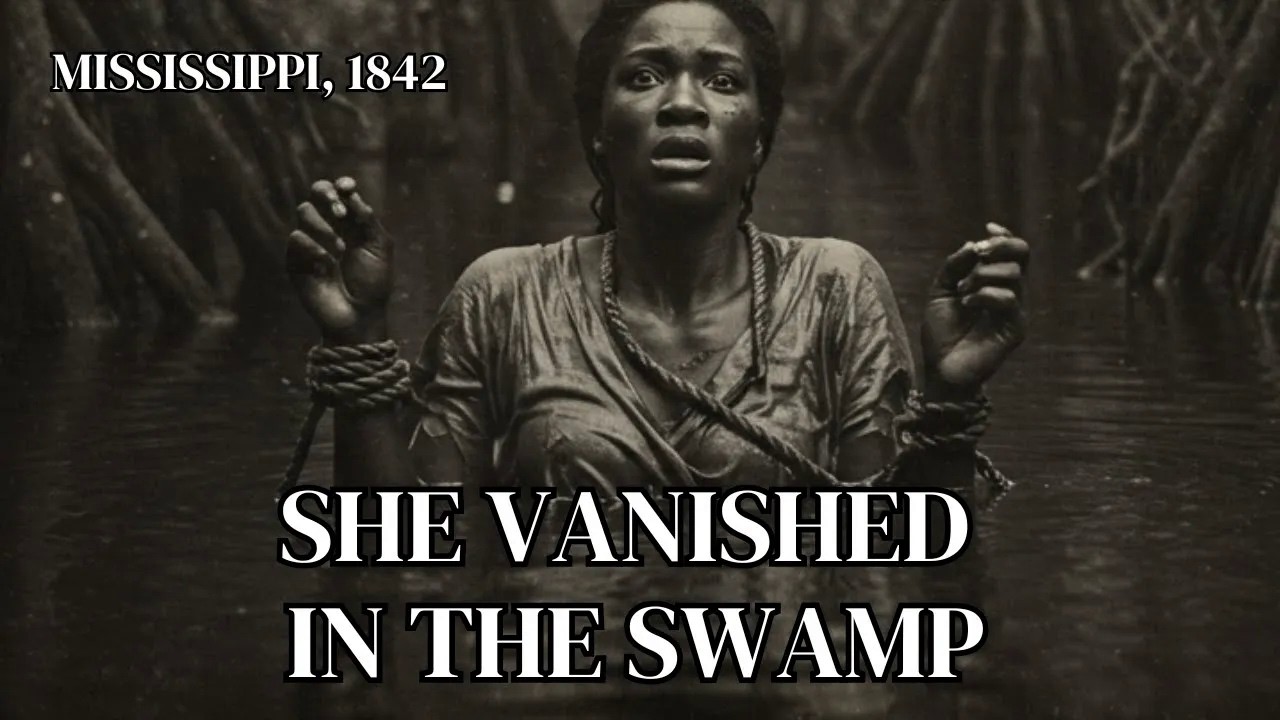
She ran deeper into the swamp, guided by instinct and desperation, the water rising to her knees, then her waist. Strange sounds echoed through the darkness, the splash of alligators, the cry of nightbirds, and something else, something that made her skin crawl with recognition. Voices. Human voices, but not quite human.
Calling her name from the shadows between the trees. “Sarah. Sarah. This way, child.
”
She knew those voices. They belonged to the spirits she had seen in the cemetery, the dead who had claimed their revenge against Blackwood. But what did they want with her now? “Sarah, follow us.
We know the way. ”
Against every instinct of self-preservation, Sarah followed the ghostly voices deeper into the swamp, trusting the dead to guide her where the living could not follow. Behind her, the sounds of pursuit grew fainter, the dogs confused by the maze of waterways and the supernatural presence that seemed to mask her trail. She was free for now.
But freedom in the swamp was a relative thing, and Sarah knew that her real journey was just beginning. The swamp at night was a world unto itself, alien and primordial. Sarah waded through black water that reflected the pale moon like a broken mirror, her feet sinking into mud that seemed to grasp at her ankles. The air was thick with humidity and the smell of decay, while unseen creatures moved through the water around her, their presence marked only by ripples and the occasional splash.
The ghostly voices had fallen silent after leading her away from her pursuers, but Sarah could still feel their presence, a cold touch against her skin, a whisper of movement in her peripheral vision. She was no longer afraid of them. They had saved her life. But their continued presence raised questions she wasn’t sure she wanted answered.
Following Samuel’s crude map, she navigated by the stars when she could see them through the canopy, and by instinct when she couldn’t. The water grew deeper as she moved toward the heart of the swamp, forcing her to swim in places, her meager possessions held above her head to keep them dry. It was near dawn when she first saw the lights. They flickered between the trees like fireflies, but too steady, too purposeful to be natural.
As she drew closer, Sarah could make out the silhouettes of structures built on stilts above the waterline. A hidden community that existed in the spaces between the mapped world and the wilderness. “Who goes there? ” A voice called out from the darkness, speaking in the Creole patois common among the escaped slaves of Louisiana.
“My name is Sarah,” she called back, her voice raw from hours of exertion. “I’m running from Magnolia Plantation. Samuel told me about this place. ”
There was a long pause.
Then the sound of a boat moving through the water. A dugout canoe emerged from the shadows, paddled by a woman whose dark skin seemed to absorb the moonlight. She was perhaps forty years old, with graying hair wrapped in a colorful headscarf and eyes that held the wisdom of someone who had seen too much of the world’s cruelty. “Samuel’s still alive?
” the woman asked, her voice carrying a mixture of surprise and pleasure. “Yes, ma’am. He drew me a map, told me how to find you. ”
The woman studied Sarah’s face in the pale light, then nodded.
“I’m Marie Lavo. Not the famous one from New Orleans, but her cousin. Welcome to Haven, child. Climb in.
”
Sarah pulled herself into the canoe, grateful to be out of the water. As Marie paddled them toward the settlement, Sarah could see that Haven was larger than she had imagined. Dozens of structures connected by a network of wooden walkways and rope bridges, all built to rise and fall with the seasonal floods. “How long has this place existed?
” Sarah asked. “Forty years, maybe more,” Marie replied. “Started with just a few families who couldn’t take the whip anymore. Grew over time as word spread.
We got maybe two hundred people here now. All of them free. ”
“Free? ” Sarah repeated the word like a prayer.
It was a concept so foreign after twenty-three years of bondage that it felt almost dangerous to speak aloud. “Free to live, free to love, free to die on our own terms,” Marie said, her paddle cutting silently through the dark water. “But freedom ain’t the same as safety, child. We got our own troubles here.
”
As they approached the main settlement, Sarah could see people moving about despite the early hour. Men and women preparing for the day’s work, children playing on the wooden platforms, elderly folks sitting in rocking chairs watching the sunrise paint the sky in shades of gold and pink. But there was something else, something that made Sarah’s skin prickle with recognition. The same supernatural tension she had felt at the plantation was present here, but stronger, more concentrated.
It was as if the very air was charged with the presence of the dead. “You feel them, don’t you? ” Marie asked, noticing Sarah’s expression. “The spirits.
They’re thick here. Thicker than anywhere else in the swamp. ”
“Why? ”
“Because this is where their people came to die free,” Marie explained as she guided the canoe to a small dock.
“Every person who ever made it to Haven, every soul who chose the swamp over the chain, when their time comes, they stay. They protect this place. Protect us. ”
Sarah climbed out on unsteady legs, her body exhausted from the night’s ordeal.
Marie introduced her to a tall man whose face was creased with concern. They had heard the dogs and the commotion from the direction of Magnolia. What was happening out there? Sarah found herself telling the story again: Blackwood’s death, the investigation, her narrow escape.
But this time she included details she had omitted before, details about the supernatural events she had witnessed. “The spirits came for him,” she said quietly. “I saw them. Moses and the others, all the people who died under his whip.
They took their revenge. ”
Instead of skepticism, she saw understanding in the faces around her. These people lived in a world where the boundary between life and death was thin, where the spirits of the ancestors were as real as the morning mist. “Moses was a good man,” the tall man said.
“I knew him before he died. If he came back, it was for justice. ”
“And justice has a way of spreading,” Marie added ominously. “Like ripples in still water.
What happened at Magnolia, it’s just the beginning. ”
Over the next few hours, Sarah was introduced to the community of Haven. She met families who had been free for generations, children who had never known the weight of chains, elderly people who had escaped slavery in their youth and built new lives in the hidden corners of the swamp. But she also sensed an undercurrent of fear that ran through the settlement.
The people of Haven lived in constant awareness that their freedom was precarious, that discovery by the outside world would mean death or re-enslavement for all of them. “The authorities will come looking,” said Jean Baptiste, the settlement’s unofficial leader. “They always do when a slave escapes, especially one connected to a white man’s death. ”
“Let them come,” said another man, his hand resting on the handle of a machete.
“We’ve fought them off before. ”
“This is different,” Marie said, her voice heavy with foreboding. “The spirits are stirring like I’ve never seen. Something’s coming.
Something bigger than just a manhunt. ”
As if summoned by her words, a child came running along the walkway, his eyes wide with terror. “Mama Marie, Mama Marie, there’s something in the water. Something big.
”
The adults rushed to the edge of the platform, peering into the dark water below. At first Sarah saw nothing unusual. Then she noticed the ripples, too large and too regular to be caused by fish or alligators. Jean Baptiste pointed toward the eastern channel.
Sarah followed his gaze and felt her heart stop. Rising from the water like some primordial creature was a figure she recognized. Tall, gaunt, with skin that seemed to absorb light rather than reflect it. But this wasn’t Moses or any of the other spirits she had seen in the cemetery.
This was something older, more powerful, more terrible. “Bonduré? ” Marie whispered, crossing herself. “It’s the swamp king.
”
“The what? ” Sarah asked, though part of her already knew she didn’t want to hear the answer. “The first one,” Jean Baptiste explained, his voice hushed with awe and terror. “The first slave to die in these waters, back when the French still ruled Louisiana.
They say he was a prince in Africa before he was captured. A man who commanded spirits and spoke with the dead. ”
The figure in the water turned toward them, and Sarah saw eyes that burned with the accumulated rage of centuries. When it spoke, its voice carried across the water like the whisper of wind through dry bones.
“The time of reckoning has come. The blood debt must be paid in full. ”
Around the settlement, other figures began to emerge from the water. Dozens of them, then hundreds, all bearing the marks of violent death, all radiating the same terrible purpose.
The spirits of every slave who had ever died in the swamp, every soul who had chosen death over bondage, every person murdered for the crime of seeking freedom. They had come to collect a debt that was two centuries in the making. “What do they want? ” Sarah asked.
“Justice,” Marie said simply. “Complete and final justice. Not just for Blackwood, but for everyone. Every master, every overseer, every person who ever profited from our suffering.
”
The swamp king raised one skeletal hand, and his voice boomed across the water with the authority of the grave. “The living have failed to right the wrongs of the past. Now the dead will finish what the living could not. ”
Sarah felt a chill that had nothing to do with the morning air.
She had witnessed supernatural justice once before in the cemetery, but that had been personal, limited, focused on one man’s crimes. This was something far larger and more terrible. A reckoning that would sweep across Louisiana like a plague, claiming every life connected to the institution of slavery. The sun climbed higher over the Louisiana swamplands, but its light seemed unable to penetrate the supernatural darkness that had settled over Haven.
The spirits of the dead filled the waterways like a ghostly armada, their numbers growing with each passing hour as more souls answered the swamp king’s call to judgment. Sarah stood on the main platform, watching in horrified fascination as the army of the dead organized itself with military precision, moving through the water in formations that spoke of ancient knowledge, of battles fought in distant lands before slavery had torn them from their homes. “How many do you think there are? ” asked Thomas.
Sarah spun around, her heart leaping with joy and terror. Thomas stood behind her, soaking wet and exhausted, but alive. Behind him were Ruth, Samuel, and a dozen other slaves from Magnolia Plantation. “Thomas, how did you—?
”
“We followed you,” he said simply. “After they discovered you were gone, after they realized they couldn’t track you through the swamp, things got bad at the plantation. Real bad. ”
Ruth stepped forward, her face grim.
“Marshal Hayes went crazy with rage. Started threatening to hang every slave on the plantation until someone confessed to helping you escape. So we ran. All of us who could.
”
“Mama Celia? ” Sarah asked, dreading the answer. “She stayed,” Samuel said quietly. “Said she was too old to run, too tired to start over.
But she blessed our escape, told us to find you and keep you safe. ”
Sarah felt tears burning her eyes. “There’s more,” Thomas said, his voice heavy with portent. “We weren’t the only ones running.
Word is spreading across Louisiana like wildfire. Slaves are escaping from plantations all over the state, all of them heading for the swamps. It’s like something is calling them. ”
As if to confirm his words, more boats began arriving at Haven.
Dugout canoes and makeshift rafts carrying families and individuals who had fled their bondage. The refugees spoke of strange dreams, of voices calling to them in the night, of an irresistible compulsion to seek freedom in the wetlands. “The spirits are gathering their people,” Marie observed, watching the steady stream of arrivals. “Calling them home before the final reckoning begins.
”
Jean Baptiste approached them, his face pale with worry. “We can’t accommodate all these people. Haven was built for two hundred, maybe three hundred at most. We’ve got twice that number already, and more coming every hour.
”
“Then we expand,” Marie said firmly. “We build more platforms, more shelters. ”
“With what materials? What supplies?
We’re already stretched thin, and winter’s coming. ”
“We’ll manage,” Marie insisted. “We have to. Because the alternative is sending these people back to slavery or death.
”
But even as the living struggled to accommodate the flood of refugees, the dead continued their own preparations. The swamp king had established himself on a massive cypress stump that rose from the water like a natural throne, and from there he directed his supernatural army with the authority of a general preparing for war. Sarah found herself drawn to the edge of the platform, watching the ghostly figures as they moved through the water. She recognized some of them: Moses, Martha, Peter, and others from the plantation cemetery.
But there were so many more, representing decades of suffering and injustice. “You can see them clearly, can’t you? ” The voice belonged to an elderly woman Sarah hadn’t met before, a tiny figure with skin like aged leather and eyes that seemed to hold the wisdom of centuries. “Yes, ma’am,” Sarah replied.
“I’ve been seeing them since the night Blackwood died. ”
“I’m Grandmother Ulali,” the woman said, settling herself on a wooden crate beside Sarah. “I’ve been in these swamps for sixty years, and I’ve never seen the spirits so active. They’re preparing for something that ain’t been seen since the beginning of time.
”
“What do you mean? ”
Ulali’s eyes fixed on the swamp king. “That one there, he’s older than slavery itself. Older than America.
He was a king in Africa, a man who could speak with the dead and command the spirits of his ancestors. When he was brought here in chains, when he died in these waters, he didn’t just become a ghost. He became something more. ”
“What?
”
“A judge. A force of cosmic justice that’s been waiting for the right moment to act. ” Ulali’s voice dropped to a whisper. “And that moment has come.
”
As if he had heard their conversation, the swamp king turned his burning gaze toward them. When he spoke, his voice carried across the water with supernatural clarity. “Sarah of Magnolia. Daughter of sorrow, witness to justice, come forward.
”
Sarah felt every eye in the settlement turn toward her. With trembling legs, she made her way to the edge of the platform closest to the swamp king’s throne. “You have seen the beginning,” the ancient spirit said. “You witnessed the first act of justice when the overseer paid for his crimes.
Now you will witness the completion of what was started. ”
“What do you want from me? ” Sarah asked, her voice barely audible over the sound of water lapping against the platform. “Nothing,” the swamp king replied.
“You have already played your part. Your courage in standing against injustice, your willingness to risk everything for others. These actions awakened something that has slept too long. The spirits of the oppressed have found their voice, and that voice demands satisfaction.
”
Around them, the ghostly army began to move, flowing through the waterways like a tide of supernatural vengeance. Sarah could see them spreading out across the swamp, heading toward the plantations and towns where their oppressors lived and worked. “What will happen to the innocent? ” Sarah called out.
“What about the children, the people who never owned slaves? ”
The swamp king’s expression softened slightly. “Justice is not vengeance, child. The innocent will be spared, the children protected.
But those who have profited from suffering, those who have turned their backs on the cries of the oppressed, they will face judgment. ”
As the sun reached its zenith, reports began filtering back to Haven from the outside world. Refugees arriving from various plantations brought tales of supernatural encounters. Overseers found dead with no explanation.
Masters fleeing their homes in terror. Entire communities gripped by inexplicable fear. “It’s happening everywhere,” Thomas reported after speaking with a group of escapees from a sugar plantation fifty miles upriver. “The spirits are visiting every plantation in Louisiana, maybe beyond.
Some folks are saying it’s the end times. ”
“Maybe it is,” Marie said quietly. “Maybe it’s time for this whole rotten system to come to an end. ”
But Sarah found herself thinking about the people she had left behind: Mama Celia, the children too young to escape, the elderly slaves who couldn’t make the journey to freedom.
What would happen to them when the supernatural reckoning was complete? As if reading her thoughts, the swamp king’s voice echoed across the water once more. “The old world is ending, Sarah of Magnolia. A new world will take its place, one where the chains of bondage are broken forever.
Your people will be free. All of them, everywhere. This I promise you. ”
As night fell over the swamp, Sarah could see fires burning in the distance.
Not fires of destruction, but fires of transformation. The old order was being swept away by forces beyond human comprehension, and from its ashes, something new was emerging. She thought of Blackwood lying dead in the cemetery where it all began. His death had been the first drop of rain in a storm that would wash away centuries of oppression.
And she, Sarah of Louisiana, had been chosen to witness it all. Ten years later, the old woman sat in her rocking chair on the porch of her small cabin, watching the sunset paint the sky in shades of gold and crimson over the free settlement that had grown from the ashes of the old plantation system. Children played in the yard before her, their laughter carrying on the evening breeze. Children who had never known the weight of chains, who had been born into a world where freedom was their birthright.
Sarah was thirty-three now, her hair showing the first threads of silver, her hands bearing the calluses of honest work rather than forced labor. The events of that terrible and wonderful night ten years ago had become legend, spoken of in whispers around campfires and passed down through generations like sacred scripture. “Tell us the story again, Miss Sarah,” pleaded little Moses, named for the spirit who had started it all, as he climbed onto her lap. “Tell us about the night the dead came back.
”
Sarah smiled, looking out over the thriving community that had risen where Magnolia Plantation once stood. The big house had been abandoned after that night of reckoning, its owners fled to distant cities, never to return. The slave quarters had been torn down and replaced with proper homes, each one occupied by families who worked their own land and kept the fruits of their labor. “Well,” Sarah began, her voice taking on the cadence of a storyteller, “it was a night much like this one, when the storm clouds gathered over Louisiana, and the spirits of our ancestors decided they’d had enough of injustice.
”
As she spoke, Sarah’s eyes drifted to the old cemetery at the edge of the settlement. The weathered wooden crosses had been replaced with proper headstones, each one bearing the name of a person who had lived and died in bondage, but whose memory now lived on in freedom. Sometimes on nights like this, she could still see them, Moses and Martha and Peter and all the others, standing among the graves like guardians watching over their people. They no longer burned with the fire of vengeance, but with the warm glow of satisfaction.
Their work was done. Their people were free. The children listened with rapt attention as Sarah told them about the swamp king and his army of the dead, about the night when supernatural justice swept across Louisiana like a cleansing fire. Some of the details had grown in the telling over the years, but the heart of the story remained true: how the dead had risen to free the living, and how one young woman’s courage had helped spark the greatest liberation in human history.
“And they say,” Sarah concluded, her voice dropping to a whisper, “that on stormy nights, when the wind blows through the cypress trees and the Spanish moss dances in the moonlight, you can still hear them. The voices of our ancestors, singing songs of freedom that will echo through eternity. ”
Thunder rumbled in the distance, and the children pressed closer to Sarah, their eyes wide with wonder and just a touch of fear. But it was a good fear, the kind that comes from hearing stories of justice triumphant and wrongs made right.
As the first drops of rain began to fall, Sarah gathered the children and led them inside, where warm fires and loving families waited. But she paused for a moment on the threshold, looking back at the cemetery where it all began. “Thank you,” she whispered to the gathering darkness. “Thank you for everything.
”
And in the distance, carried on the wind like an echo from another world, she could swear she heard Moses’s deep voice responding: “Thank you, child. Thank you for having the courage to stand up when it mattered most. ”
The storm passed, as storms always do. But the legend of Sarah of Louisiana, the slave who vanished into the swamp and emerged as a witness to the greatest act of supernatural justice the world had ever seen, lived on, passed down through generations as a reminder that even in the darkest times, hope and justice can prevail.
In the hidden depths of the Louisiana swamplands, where the boundary between life and death grows thin, the spirits still keep watch. And sometimes, on nights when injustice seems to triumph and hope grows dim, they remind the world that some debts can never be forgotten, and some wrongs will always be made right.
