The overseer found Josiah Peton at dawn, hanging from a support beam in the tobacco barn outside Natchez, Mississippi. The cotton merchant’s body swayed slightly in the morning light, a noose tight around his neck. Within hours the local sheriff ruled it suicide, noting in his report that Peton had recently suffered financial losses and appeared despondent. The case was closed, the body buried, life continued.
What the sheriff chose not to investigate was that Peton’s hands were bound behind his back with hemp rope. A man cannot hang himself with his hands tied. Someone had executed him and made it look like suicide. And that someone had done this before, many times before.
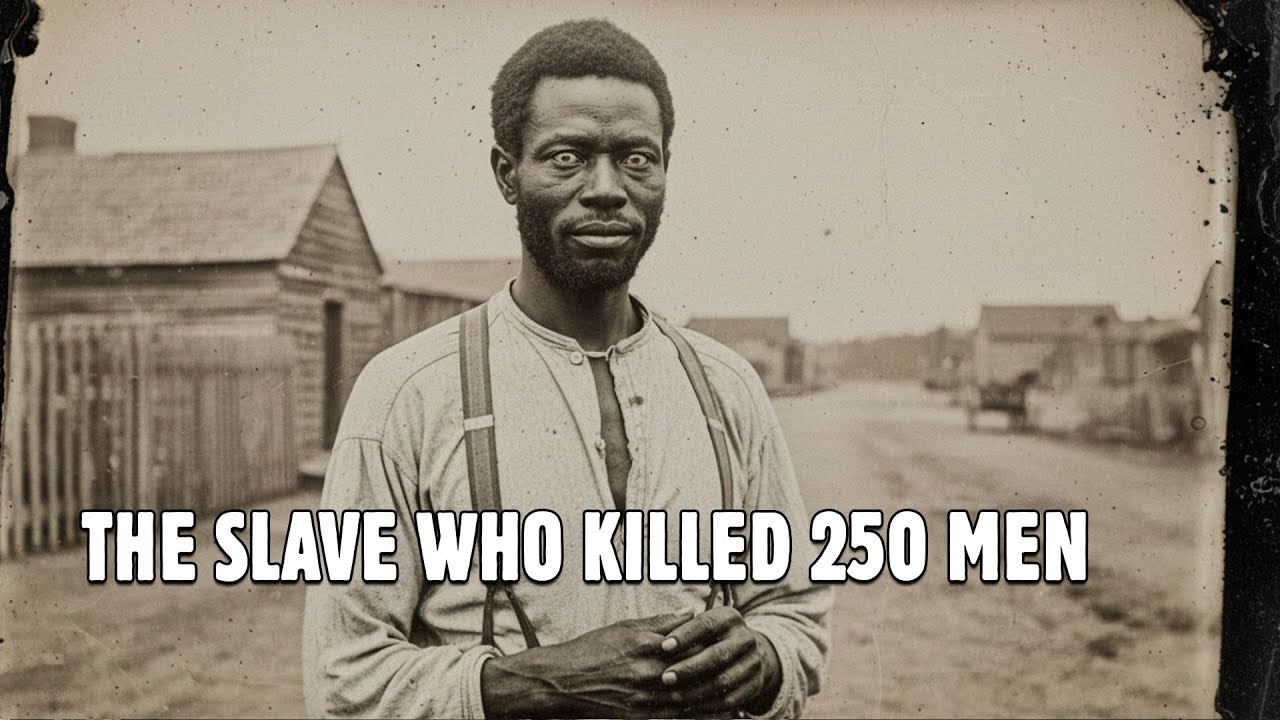
Between 1832 and 1863, across five southern states, at least 250 white men died under circumstances that authorities either couldn’t explain or chose not to investigate too carefully. Plantation owners, overseers, slave traders, patrollers, county sheriffs, federal marshals, wealthy merchants who profited from human bondage—all dead. Some found hanging in barns or warehouses with their hands mysteriously bound. Others discovered drowned in shallow creeks where drowning should have been impossible.
Some simply vanished without a trace, their horses found wandering, their weapons unused, their bodies never recovered. The deaths spanned three decades and covered territory from Virginia to Louisiana. No pattern was ever officially acknowledged. No investigation ever connected them.
No arrest was ever made. But buried in courthouse basements, in private letters, in plantation records, in the oral histories of formerly enslaved people, a name appears—always whispered, never written in official documents. The name of a man who moved through the antebellum South like smoke, who could disappear into a crowd of enslaved workers and become invisible. Who understood that the system which enslaved him had created its own vulnerabilities, and learned to exploit those vulnerabilities with surgical precision.
Who killed without mercy and vanished without trace. They called him Moses. Not because he led people to freedom, though some say he did that too, but because like the biblical Moses, he was the angel of death passing through Egypt. And every firstborn son of the pharaohs fell.
The story starts not with violence, but with a sale. August 17th, 1832. The slave market in Richmond, Virginia. A humid morning where the air hung thick enough to choke on, where the smell of unwashed bodies mixed with the stench of fear.
On the auction block stood a man approximately 28 years old, identified in the auctioneer’s ledger only as “Daniel, prime field hand, strong back, no defects. Some resistance noted. ”
That last phrase should have been a warning. Resistance noted.
But the buyer, a tobacco plantation owner named Marcus Whitfield, saw only a powerful physique and paid $950 for the man, taking him in chains to a plantation 40 miles west of Richmond. The plantation was called Asheford. It sat on 3,200 acres of prime tobacco land worked by 180 enslaved people under the supervision of seven overseers who ruled through systematic terror. Whitfield himself rarely interfered in daily operations.
He lived in the main house, managed his accounts, entertained guests, and let his overseers handle the brutal mechanics of forced labor. He considered himself a businessman, not a slaver. He was wrong on both counts. The man purchased as Daniel arrived at Asheford on August 20th, 1832, along with four others from the same Richmond auction.
They were processed like livestock—stripped, examined for hidden injuries, assigned numbers, given rough clothing, and marched to the quarters, a collection of wooden shacks arranged behind the work buildings where enslaved families lived in conditions that would have shamed a livestock owner. Daniel was assigned to the first gang, the highest tier of field workers reserved for the strongest men. The work was brutal. Tobacco cultivation required constant attention: planting, weeding, pruning, topping the plants to force energy into the leaves, harvesting, hanging the leaves in curing barns, stripping, packing.
The labor stretched from before sunrise to after sunset during growing season. The overseers enforced productivity through violence. A man who worked too slowly received the whip. A man who talked back received worse.
A man who tried to run and was caught received public punishment designed to destroy both body and spirit. For the first three months, Daniel did exactly what was expected. He worked in silence. He kept his eyes down.
He ate his rations of cornmeal and fatback. He slept in his assigned space in the quarters. He showed no emotion, no personality, nothing that would make him memorable. To the overseers, he was just another body in the fields, indistinguishable from the dozens of other men bent over the tobacco rows.
But Daniel was doing something the overseers couldn’t see. He was learning. Every day he memorized more: the layout of the plantation, the blind spots in the patrol routes, the schedules the overseers followed, which men drank heavily at night and which stayed alert, where the property boundaries lay, which roads led where, how the local slave patrols operated, where the dogs were kept. He learned the sounds of Asheford—the routine noises that signaled normal operations versus the urgent sounds that meant trouble.
He learned to move without making sound, to be present without being noticed, to fade into the background of plantation life while observing everything. And he waited. On November 23rd, 1832, exactly three months after Daniel’s arrival, the first overseer died. His name was William Cobb, and he’d worked at Asheford for six years.
He was known for carrying a hickory cane that he used to strike workers across the back of the legs, a punishment that caused intense pain without marking the skin visibly enough to reduce a slave’s value at auction. Cobb’s body was found in one of the tobacco curing barns at dawn. He’d been working late the previous night, checking the temperature and humidity levels in the barn where thousands of tobacco leaves hung drying on racks. According to the report filed by Marcus Whitfield with the county authorities, Cobb had apparently fallen from one of the upper racks where he’d been inspecting leaves.
The fall, approximately 15 feet, had broken his neck. His body lay on the dirt floor of the barn, his hickory cane beside him, his lantern still burning on a nearby hook. The plantation physician, a doctor named Hastings who serviced several estates in the area, examined the body and confirmed death by broken neck consistent with a fall. There were some bruises on Cobb’s arms and torso, but Hastings attributed these to the impact.
No one questioned his conclusion. Falls happened. Barns were dangerous places in the dark. Men lost their footing.
What Hastings didn’t note was that the bruises on Cobb’s arms were finger-shaped—the kind of marks that come from someone gripping you with tremendous force, the kind that appear when someone holds you down. And he didn’t examine Cobb’s pockets, where a small piece of cloth had been stuffed. A piece torn from a slave’s shirt. A message, though no one understood it yet.
For four months, nothing unusual happened at Asheford. The new overseer, a man named Peterson, settled into his duties. The tobacco was harvested and cured and sold. Whitfield made excellent profits that season.
Life continued in its brutal routine. Then on March 14th, 1833, Peterson disappeared. He’d left the main house after dinner, telling the other overseers he was going to check the quarters before turning in for the night. He carried a lantern and a pistol, standard equipment.
He never came back. A search party formed at dawn when Peterson failed to appear for breakfast. They combed the plantation systematically—the quarters, the fields, the woods, the tobacco barns, the roads. They questioned every enslaved person they encountered.
They brought out dogs to track his scent. The dogs followed a trail from the main house toward the quarters, then lost it near one of the irrigation ditches that ran through the property. The search continued for three days. They dragged the ditches.
They searched every building twice. They sent riders to neighboring plantations asking if anyone had seen him. Nothing. Peterson had vanished as completely as if he’d never existed.
His pistol was never found. His lantern was never found. His body was never found. Whitfield reported the disappearance to the county sheriff, who conducted his own investigation and reached no conclusions.
Some suggested Peterson had run up gambling debts and fled. Others thought he’d been drunk and fallen into one of the deeper ditches and drowned, his body carried away by water flow. A few whispered that one of the slaves had killed him, but without evidence that theory led nowhere. In the slave quarters, in conversations that happened after dark in languages and codes the overseers couldn’t understand, people were talking.
A woman named Sarah mentioned she’d seen Daniel returning to his cabin late one night, his clothes wet, around the time Peterson had disappeared. A man named Joseph said he’d noticed Daniel watching Peterson for days before the disappearance, studying his routines with unsettling focus. None of them reported these observations to the authorities—to do so would have meant torture and likely death for themselves. But a quiet understanding began spreading through the enslaved community at Asheford.
Someone was fighting back, and that someone was careful, patient, methodical. On June 2nd, 1833, Dutch died in broad daylight. He’d been supervising a work gang in one of the distant tobacco fields, a quarter mile from the main buildings. It was mid-morning, the sun already fierce, the air thick with humidity.
Dutch was standing at the edge of the field, watching the workers move through the rows, when he suddenly collapsed. The workers closest to him saw him grab his throat, his face turning red, then purple. He fell to his knees, gasping, clawing at his neck. Within two minutes, he was dead.
The plantation physician was summoned immediately. Hastings examined Dutch’s body right there in the field with workers standing in a loose circle watching. Hastings concluded it was heart failure, likely brought on by the heat. Dutch had been overweight.
He noted he’d probably been drinking. These things happened. But one of the enslaved workers, a young man named Thomas, noticed something the physician either missed or chose to ignore. Dutch’s water flask, which he carried on his belt, smelled wrong.
Not like water. Like something bitter, something that shouldn’t be there. Thomas said nothing. He went back to work.
But that night he told others what he’d observed, and the understanding deepened. This wasn’t random. This wasn’t accidents. This was war.
A war being waged by one man who’d learned that the system which enslaved him could be turned against itself. Three overseers dead in seven months. And Daniel—quiet Daniel, who never caused trouble, who worked without complaint, who seemed to disappear into the background of plantation life—was still there, still working, still watching, still waiting for the next opportunity. Marcus Whitfield was beginning to feel afraid.
He couldn’t articulate why. The deaths could be explained as accidents and misfortune. But something in his gut told him there was a pattern. He began carrying a loaded pistol everywhere.
He doubled the patrols. He ordered the overseers to work in pairs when possible. And on August 12th, 1833, exactly one year after purchasing Daniel, Whitfield made a decision. He called his estate manager and ordered Daniel sold.
He didn’t explain his reasoning. He simply wanted the man gone. On August 20th, 1833, Daniel was taken in chains back to Richmond and sold at auction for $875. The buyer was a cotton plantation owner from North Carolina named Benjamin Garrett, who operated a massive estate called Thornhill near the town of Edenton.
Garrett had come to Richmond specifically looking for strong field hands. Cotton was booming. Garrett examined Daniel on the auction block, checked his teeth, felt his arms and shoulders, asked him to walk, to bend, to demonstrate his strength. Daniel complied without expression, his face a mask of docile obedience.
Garrett saw what he wanted to see—a strong worker, no obvious defects, worth the investment. The chains went back on. Daniel was loaded into a wagon with six other purchases and transported 200 miles south to Thornhill, a journey that took five days through late summer heat. Thornhill was larger than Asheford—nearly 5,000 acres of cotton fields worked by 280 enslaved people, supervised by nine overseers.
The operation was more sophisticated, more profitable, and more brutal. Cotton cultivation required different skills than tobacco, but the same backbreaking labor: planting in spring, chopping weeds through summer, picking in fall with hands bleeding from the sharp bolls, then ginning and baling the harvest before starting over. Daniel arrived on August 25th, 1833. He was assigned to the second gang of field workers.
And for two months, he did exactly what he’d done at Asheford. He worked in silence. He learned the layout. He memorized the routines.
He identified the vulnerabilities in Thornhill’s security. He studied the overseers, learning which ones were cruel, which were merely indifferent, which represented the greatest threat to the people suffering around him. And he chose his targets carefully. On October 31st, 1833, an overseer named Richard Sloan was found dead in his bed.
Sloan had been one of the cruelest men at Thornhill, known for his creative punishments. He’d once forced a man to dig his own grave, then stand in it for 12 hours as punishment for attempting to run. He’d beaten women who were pregnant. He’d separated families as punishment for minor infractions.
Sloan’s body was discovered by another overseer when he failed to appear for morning roll call. He was lying in his bed in the overseers’ quarters, a building where six of Thornhill’s supervisors lived. His face was purple, his tongue protruded, his eyes bulged and bloodshot. The plantation physician, a different doctor named Mand, examined the body and ruled it death by natural causes, possibly a stroke or seizure during sleep.
But Sloan’s pillow showed signs of pressure—deep creases, as if something had been pressed down hard over his face. And his door, which should have been locked from the inside, was unlocked. Someone had entered his room while he slept. Someone had suffocated him with his own pillow.
Someone had then arranged the scene to look natural and left without being seen or heard by any of the other five overseers sleeping in the same building. Two months later, on December 28th, 1833, another overseer named Francis Drummond vanished. He’d been riding the property boundary on horseback, conducting his regular patrol. His horse returned without him at dusk, the reins dragging, the saddle empty.
Search parties found nothing—no body, no signs of struggle, no indication of what had happened. Drummond simply ceased to exist. In February 1834, an overseer named Caleb Thornton died when his horse allegedly threw him during morning rounds. His neck broke in the fall.
But experienced horsemen noted that Thornton’s horse was gentle and well-trained. It didn’t make sense for such an animal to suddenly buck violently enough to kill its rider. And there were marks on Thornton’s saddle girth—cuts that looked deliberate, as if someone had partially severed the leather so it would fail under stress. Three overseers dead or missing in four months.
Benjamin Garrett was terrified. He increased security. He armed all the overseers with pistols and rifles. He installed additional patrols.
He questioned the enslaved workers brutally, looking for any hint of conspiracy or rebellion. He found nothing. No one admitted seeing anything. No one offered information.
The wall of silence was absolute. And so on April 3rd, 1834, exactly as Marcus Whitfield had done the previous year, Garrett decided to sell Daniel. He couldn’t prove Daniel was involved in the deaths. He couldn’t even articulate why he suspected him.
But something about this particular slave made Garrett deeply uncomfortable. Daniel was sold again, this time to a rice plantation in South Carolina for $900. Then six months later to another cotton estate in Georgia for $850. Then to a sugar plantation in Louisiana for $925.
Then back east to a tobacco farm in Virginia for $800. Between 1834 and 1840, Daniel was sold twelve times. Twelve different plantations across five states. And at every single location, within months of his arrival, white men involved in the slave system began dying.
The pattern was always the same. Daniel would arrive. He would work quietly for several weeks or months, learning the terrain, studying the people, identifying his targets. Then the deaths would start.
Overseers found dead in circumstances that could be explained as accidents or natural causes, but which upon closer examination showed signs of something more sinister. Slave catchers who disappeared while tracking runaways. Plantation managers who drowned in water that shouldn’t have been deep enough. County officials who died in their sleep from unexplained causes.
And always Daniel would be there—quiet, unremarkable, invisible in plain sight—until the plantation owner’s nerve broke and he sold Daniel to someone else, passing the problem along. The enslaved communities at each plantation recognized what was happening. They understood that Daniel wasn’t killing randomly. He was executing a very specific campaign.
He targeted the cruelest overseers first—the men who beat women, who separated families, who invented creative tortures, who took sadistic pleasure in their power. Then he moved to slave catchers, the professional hunters who tracked down runaways with dogs and guns. Then plantation managers who ran the day-to-day operations. Then merchants and traders who profited from the system.
He was systematic, patient. He never took unnecessary risks. He never killed unless the opportunity was perfect. And he never left evidence that could be traced back to him with certainty.
Stories began spreading through the underground networks that connected enslaved people across the South. Stories about a man who moved from plantation to plantation, leaving dead white men in his wake. A man who couldn’t be caught or stopped. They gave him names.
Moses. The angel. The shadow. The ghost.
Different communities called him different things, but the meaning was always the same. He was death to slaveholders. He was hope to the enslaved. By 1840, plantation owners across the Deep South were starting to notice a disturbing pattern.
They met in private clubs and drawing rooms, comparing notes, pulling out ledgers and auction records, tracing sales and transfers. Slowly, a few of the sharper minds began to see something that made their blood run cold. There was a slave who’d been sold an unusual number of times. A man who appeared in the records of multiple plantations where unexplained deaths had occurred.
A field hand who seemed unremarkable in every way except for one thing: wherever he went, white men died. But they couldn’t prove it. No witnesses. No confession.
No physical evidence. Just a pattern that might be coincidence. In January 1841, a group of wealthy planters in Charleston, South Carolina, pooled resources and hired a private investigator, a former Pinkerton detective named Amos Fairchild who specialized in difficult cases. They gave him access to plantation records, auction ledgers, death certificates, and court documents going back a decade.
They told him to find the pattern. Fairchild spent four months reviewing documents, interviewing plantation owners, visiting properties where deaths had occurred. He traveled from Virginia to Louisiana following a trail of corpses and suspicious circumstances. And in May 1841, he submitted his report.
The report was 47 pages long. It documented 89 deaths occurring between August 1832 and March 1841 that fit a specific profile: white men involved in the slave system, deaths that appeared accidental or natural but showed subtle inconsistencies, occurring at properties where a specific enslaved man had been present or nearby. Fairchild had traced this individual through 12 sales, 14 plantations, and five states. His conclusion was stark.
“Gentlemen, you have been harboring a serial killer. An enslaved man of remarkable intelligence and patience who has been systematically murdering white men for nearly a decade without being caught. Based on the evidence, I estimate his actual death toll may exceed 100 individuals. ”
The report recommended immediate action: locate the individual currently identified in records as Daniel, arrest him, interrogate him, execute him publicly as a warning to other enslaved people who might consider resistance.
But there was a problem. By the time Fairchild submitted his report in May 1841, Daniel had disappeared again. His last recorded sale had been in March 1841 to a cotton plantation in Alabama. But when authorities went to that plantation to arrest him, he was gone.
The plantation owner said Daniel had been there for three weeks, then simply vanished. One morning he never returned from the fields. Fairchild organized a massive manhunt. He brought in slave patrols from three states.
He offered a reward of $1,000—an enormous sum—for information leading to Daniel’s capture. He distributed descriptions to every plantation, every sheriff, every slave catcher in the South. For six months, nothing. No sightings.
No leads. Daniel had vanished into the landscape as if he’d never existed. Then in November 1841, a slave trader named Horus Bentley was found dead in a warehouse in Mobile, Alabama, where he kept enslaved people before shipping them to auction. Bentley had been strangled with a length of chain.
The warehouse had been locked from the inside. There were no witnesses. And twenty enslaved people who’d been shackled in the warehouse were found unchained and gone, vanished into the night. One week later, a plantation overseer in Mississippi died in his sleep, suffocated with his own pillow.
Two weeks after that, a slave catcher in Louisiana drowned in a bayou in water eighteen inches deep. The killings had resumed. The message was clear. Daniel wasn’t hiding.
He was still hunting. Between 1842 and 1850, the situation became more complex and more terrifying for those who profited from slavery. Daniel seemed to have evolved his methods. He was no longer staying at plantations long enough to be sold through legitimate channels.
Instead, he was moving through the South using the very networks that enslaved people had created to survive. The Underground Railroad is famous for helping people escape north to freedom, but there were other networks, less discussed in history books, that served different purposes—networks that passed information, that warned of slave catchers in an area, that identified which plantation owners were considering selling families apart, that tracked which overseers were particularly brutal. Daniel had plugged into these networks, and they protected him the way a body protects its immune system. He would appear at a plantation, having walked there or been smuggled in with legitimate purchases.
He would work for a few weeks, invisible among the dozens or hundreds of other enslaved workers. He would identify targets. He would strike. And then he would vanish, moving along routes that no white person understood or could trace, sheltered by communities that saw him not as a murderer but as an instrument of justice.
The deaths during this period became more brazen. In March 1842, a notorious slave catcher named James Harrove was found dead in his own home in Vicksburg, Mississippi. Someone had entered while he slept, slit his throat with surgical precision, and left without waking his wife sleeping beside him. The killer had left something on Harrove’s chest—a small wooden cross, the kind enslaved people carved.
A signature. In July 1843, a plantation owner named Silas Blackwood, known for his exceptional cruelty, was killed in broad daylight at a county fair in Georgia. Blackwood was walking through the crowded fairgrounds when he suddenly collapsed, a knife wound in his back, so precisely placed it had pierced his heart instantly. By the time people realized what had happened, the killer had disappeared into the crowd.
Witnesses gave dozens of different descriptions. None were useful. In December 1844, an entire slave patrol—four armed men on horseback—disappeared while tracking a runaway in the swamps of Louisiana. Their horses were found three days later, wandering loose.
Their bodies were never recovered. The swamps had swallowed them completely. Authorities were desperate. The manhunt that had failed in 1841 was renewed with greater resources.
Amos Fairchild was hired again, this time with a team of trained investigators. They established a network of informants. They offered increasingly large rewards. They tortured enslaved people suspected of helping the killer.
They executed several people publicly as warnings to others who might be protecting him. None of it worked. The wall of silence held. Even under the most brutal interrogation, even facing death, not a single enslaved person gave up information that led to Daniel’s capture.
Some died without speaking. Others gave false information that sent investigators in wrong directions. The solidarity was absolute, and it spoke to something that terrified slave owners more than the deaths themselves. It meant their system had a fundamental vulnerability they couldn’t fix.
They’d built their world on the premise that enslaved people were property—inferior, broken, incapable of organized resistance. But Daniel’s campaign proved otherwise. It proved that enslaved people could organize, could keep secrets, could wage war against their oppressors. And if one man could kill over a hundred white men in a decade without being caught, what did that say about the security of the entire system?
Plantation owners started sleeping with loaded weapons. Some built fortified bedrooms with locks and bars. Others hired private guards to patrol their homes at night. Men who’d felt invulnerable, who’d wielded absolute power over hundreds of human beings, were now afraid.
They were looking over their shoulders. In 1846, something remarkable happened. A Presbyterian minister named Reverend Thomas Ashford, who owned a small plantation in South Carolina, published a letter in several southern newspapers. The letter was titled “A Confession and Warning.
” In it, Ashford admitted he’d been visited by someone he believed was the man they were hunting. A man who’d appeared at his plantation, worked for two weeks, then come to Ashford’s study late one night. According to Ashford, this man had sat across from him, calm and articulate, and explained his mission. He wasn’t killing randomly, the man had said.
He was executing justice. Every man he killed had committed acts of extreme cruelty. Every death was earned. And he would continue until the system of slavery ended, or he was killed, whichever came first.
Ashford wrote that he’d asked the man why he was revealing himself. The man had replied that Ashford was known to treat his enslaved workers relatively humanely—he didn’t beat them excessively, he kept families together, he allowed them religious instruction. “I’m not here to kill you,” the man had supposedly said. “I’m here to deliver a message.
Change this system or more will die. The choice is yours. ”
Then the man had left, walking out into the night. Ashford was so shaken he couldn’t move for several minutes.
He ended his letter by stating he was freeing all his enslaved workers and selling his plantation. He couldn’t continue participating in a system that produced such monsters on both sides. The letter caused a sensation. Some called Ashford insane.
Others suggested he’d fabricated the story. But many plantation owners read it with a cold recognition. The fear Ashford described was real, because they felt it themselves. Meanwhile, the death toll climbed.
Fairchild’s updated estimate in 1848 put the number at 187 confirmed deaths that fit the pattern, with dozens more possibles. The killings were spreading geographically—from Texas to Maryland, from Tennessee to Florida. Either Daniel had expanded his territory, or more disturbing, he’d inspired copycats. Other enslaved people were adopting his methods, targeting the cruelest members of the slave system using similar tactics.
The authorities couldn’t tell which deaths were Daniel’s work and which were the work of others. The resistance was becoming a movement. In 1850, the United States Congress passed the Fugitive Slave Act, requiring northern states to cooperate in returning runaway slaves to their owners. The law was meant to strengthen the slave system, but it had an unintended consequence: it put federal officials directly in the enforcement chain.
Between 1850 and 1853, several U. S. marshals enforcing the Fugitive Slave Act died under suspicious circumstances. One was found dead in a Boston alley, his neck broken.
Another disappeared while transporting captured runaways through Pennsylvania. A third died in his home in Ohio from what appeared to be poisoning. The federal government was now involved. The Justice Department assigned federal resources to the case.
They coordinated with local authorities. They established a task force specifically targeting the individual or individuals responsible. And they failed completely. The killings continued.
By 1855, the estimated death toll attributed to Daniel and possible copycats had exceeded 200. Amos Fairchild, now in his sixties and exhausted from over a decade of failed investigations, submitted his final report. In it, he admitted defeat. “This individual or these individuals have created a form of warfare that our system cannot counter.
They move invisibly through populations we cannot access. They have support networks we cannot penetrate. They strike with a patience and precision that defeats conventional law enforcement. Unless the underlying system changes, these deaths will continue.
”
Fairchild’s report was suppressed. Publishing it would have admitted that the slave system was fundamentally vulnerable. But privately, many plantation owners read it and understood its implications. Some began treating their enslaved workers less harshly, hoping moderation might protect them.
Others doubled down on brutality, believing only overwhelming force could maintain control. Neither approach solved the problem. And then in 1857, something unexpected happened. The killing stopped—not gradually, but suddenly.
For months, no deaths matching the profile were reported. The man they’d been hunting, the ghost who terrorized the South for a quarter century, seemed to have vanished. Some believed he’d died after 25 years of violence and constant movement. Others believed he’d escaped north, either to freedom in Canada or to continue his work in a different form.
Some whispered that he’d become a conductor on the Underground Railroad, using his skills to help others escape rather than to kill. But a few, particularly in the enslaved communities that had sheltered him for decades, believed something different. They believed he saw what was coming before anyone else did. War was coming.
And some believed that the man they called Moses was positioning himself for that war, preparing to continue his mission on a much larger scale. On November 6th, 1860, Abraham Lincoln was elected president of the United States. Within weeks, South Carolina seceded from the Union. Six more states followed.
In April 1861, Confederate forces fired on Fort Sumter, and the Civil War began. In the chaos of war, individual deaths became impossible to track. But there are stories—fragmentary accounts from former slaves interviewed decades later, Confederate military correspondence preserved in archives, newspaper reports from occupied territories—that suggest the pattern continued. Confederate officers dying in their tents from unexplained causes.
Slave catchers operating behind Confederate lines found dead in circumstances that defied explanation. Plantation owners who’d stayed in southern territory dying despite being far from battle lines. In 1863, a Union officer named Colonel William Brennan wrote a dispatch from occupied New Orleans that was filed away in military archives and forgotten for over a century. The dispatch described what Brennan called “a peculiar phenomenon” occurring in areas of Louisiana under Union control.
Confederate sympathizers, particularly former plantation owners and overseers who’d remained in occupied territory, were dying at an unusual rate—not from combat, Brennan noted, but from accidents, illnesses, and unexplained circumstances. “It’s as if,” Brennan wrote, “someone is systematically eliminating those who profited most egregiously from the slave system. The colored population knows something about these deaths, but will not speak of it, even to Union officers who’ve liberated them. They smile when questioned, but offer no information.
It’s the strangest conspiracy of silence I’ve ever encountered. ”
Similar reports came from other occupied territories. A Union chaplain named Reverend Samuel Norton interviewed dozens of freed slaves in 1864, trying to understand the phenomenon. He compiled their stories into a manuscript he titled Testimonies of the Freed.
In it, multiple people referenced a figure they called by different names: the angel, the deliverer, the shadow of justice, Moses. One elderly woman named Clara, who’d been enslaved for over sixty years, told Norton: “There was always someone watching the cruel ones, someone keeping count of their sins. We knew that justice delayed ain’t justice denied. We knew that the Lord sends his angels in his own time.
And we knew that some angels don’t carry harps. They carry vengeance. ”
Norton pressed her for details. Who was this person?
How had he avoided capture for so long? Clara had smiled and said only: “Some questions ain’t meant to be answered, Reverend. Some mysteries serve a purpose by remaining mysterious. Let the slavers wonder.
Let them fear. Let them spend the rest of their days looking over their shoulders, knowing that justice might come for them at any moment. That fear, that’s a punishment, too. ”
Norton’s manuscript was never published during his lifetime.
It was considered too inflammatory, too likely to encourage further violence during an already violent period. But it was preserved in his personal papers and eventually donated to a university library, where it sat unread for decades. The Civil War ended on April 9th, 1865, with Lee’s surrender at Appomattox. The 13th Amendment abolished slavery.
Four million people who’d been property became legally free. The South was devastated, its economy destroyed, its social system shattered. In the chaos of Reconstruction, tracking individual deaths became impossible. The records that had documented slave sales and movements no longer existed in any organized form.
The entire bureaucratic infrastructure of the slave system collapsed. And somewhere in that collapse, the man known as Daniel, as Moses, as the angel, disappeared from history. But there are fragments—clues, stories—that suggest a possible ending. In the National Archives, there’s a pension application from 1867 filed by a man identified only as Daniel Freeman, claiming service with the 54th Massachusetts Infantry Regiment, one of the first African-American units in the Union Army.
The application is unusual because the man claimed to be significantly older than typical soldiers, listing his age as approximately 63. If true, that would place his birth around 1804, making him the right age to be the Daniel sold at Richmond in 1832. The application was denied because the man couldn’t provide documentation of his service. Military records showed no soldier by that name in the 54th.
But the rejection letter preserved with the application contains a curious note from the reviewing officer: “Applicant demonstrates detailed knowledge of military campaigns in South Carolina and Georgia 1863 to 1865. However, his description of activities during this period do not match standard infantry operations. He describes what sounds like reconnaissance and irregular operations behind enemy lines. No record exists of such authorization.
Claim denied. ”
Behind enemy lines. Irregular operations. Activities that don’t match standard military records.
It’s possible—even likely—that during the Civil War, Daniel had continued doing what he’d always done, moving invisibly through the South, targeting those who’d benefited most from slavery, using the chaos of war as cover. And if he’d been operating unofficially, perhaps with tacit approval from Union intelligence officers who appreciated the tactical value of his work but couldn’t officially sanction it, there would be no records. Another fragment appears in a collection of letters housed at the Smithsonian. In 1870, a Freedman’s Bureau officer named Thomas Whitmore wrote to his superior about his work establishing schools for freed slaves in rural Georgia.
In one letter, Whitmore mentioned encountering “a remarkable elderly negro man” who was teaching children to read in a small community near Savannah. “This man,” Whitmore wrote, “possesses an extraordinary level of education for someone born into slavery. He reads Latin and Greek. He understands mathematics and natural philosophy.
He speaks multiple languages, including what he tells me are several African dialects. When I asked him where he received such education, he smiled and said he’d been teaching himself for forty years by any means necessary. He carries himself with a dignity that I’ve rarely seen in men of any race. The children are slightly afraid of him, though he treats them kindly.
One child told me they call him Moses because he’s old like the biblical Moses. ”
Whitmore tried to learn more about this teacher, hoping to recruit him for the Freedman’s Bureau Educational Program. But when Whitmore returned to the community three months later, the man was gone. The locals said he’d moved on, heading south toward Florida.
They wouldn’t say more. The most detailed account, and the most uncertain, comes from an oral history recorded in 1935 as part of the Federal Writers Project. A woman named Rachel Johnson, aged 94, was interviewed in Charleston, South Carolina, about her memories of slavery and Reconstruction. Near the end of the interview, she told a story about a man she’d known briefly in 1872.
Rachel had been working as a laundress in Charleston, washing clothes for white families to survive. One day, an elderly black man came to her door asking for work. He was willing to do odd jobs, repairs, anything that would earn a small wage. Rachel hired him to fix her roof, which had been leaking.
The man worked for three days, barely speaking, sleeping in a shed behind her house. On the third evening, after completing the work, he sat with Rachel on her porch. They talked for hours. He told her stories about his life, though he never gave his name.
He’d been enslaved on multiple plantations across the South. He’d survived horrors that Rachel, who’d herself endured slavery, found almost unbelievable. And then he told her something that made her blood run cold. He said he’d made a promise to himself as a young man.
A promise that for every scar on his back, for every friend sold away, for every child torn from their mother’s arms, for every woman raped, for every man worked to death in the fields, he would exact a price. He would make the guilty pay. Not all of them, because there were too many. But enough.
Enough to send a message. Enough to prove that the supposedly powerless had power after all. “How many? ” Rachel had asked, afraid of the answer.
The old man had looked at her with eyes that seemed to contain depths of pain and resolve that no person should have to carry. “I stopped counting after 200,” he’d said quietly. “The number didn’t matter anymore. The principle did.
”
Rachel asked if he felt any guilt, any remorse for the lives he’d taken. The old man had considered the question seriously before answering. “I feel grief,” he’d said. “Grief for what I was forced to become.
Grief for a life spent in violence when I would have preferred peace. But guilt? No. Because every man I killed had blood on his hands.
Everyone had participated enthusiastically in a system built on torture and murder. Everyone had choices and chose cruelty. I simply ensured they faced consequences for those choices. In a just world, they would have faced legal consequences.
But we didn’t live in a just world. So I became the consequence they couldn’t avoid. ”
He’d left the next morning. Rachel never saw him again.
She told the interviewer in 1935 that she’d thought about that conversation for over sixty years, wondering if the old man had been telling the truth or simply telling stories. But she believed he’d been truthful because of the weight in his voice, the sorrow in his eyes. “If he was who I think he was,” Rachel said at age 94, “then I hope he found some peace before he died, because a man who carries that much violence, even righteous violence—that man’s soul must be heavy beyond measure. ”
The interview ends there.
Rachel died three months later. The old man she described was never identified. No death record exists for anyone matching his description in Charleston in the 1870s or 1880s. And that’s where the trail ends.
No definitive proof of what happened to the man who killed at least 200, possibly 250 or more, white men over three decades without being caught. No grave marker. No death certificate. No final accounting.
What remains is a mystery wrapped in legend, wrapped in the deliberate historical amnesia that America has imposed on the darkest chapters of its past. The documented evidence is undeniable: between 1832 and 1865, over 200 white men involved in the slave system died under suspicious circumstances across the American South. Investigators at the time recognized a pattern. They hired detectives.
They offered rewards. They organized manhunts. They tortured suspected collaborators. And they failed completely to capture whoever was responsible.
The enslaved communities of the South maintained absolute silence about these deaths—a conspiracy that involved thousands of people across decades. That silence speaks to how these communities viewed the killings. Not as crimes, but as justice. Not as terrorism, but as warfare.
Not as murder, but as execution. The story reveals something that makes many people uncomfortable. The enslaved population wasn’t helpless. They had agency.
They had the ability to resist, to organize, to fight back. The fact that one person—or even several people—could wage a thirty-year campaign of targeted killings proves that the slave system, despite its overwhelming violence, had vulnerabilities. Was Daniel real? Did one man really kill 250 people and evade capture for three decades?
Or was he a composite, a legend created from the actions of many resistors whose individual stories were forgotten? Whether Daniel was one person or many, whether the death toll was 250 or 150 or 300, whether specific incidents happened exactly as described—the fundamental truth remains. Enslaved people resisted. Some of that resistance was violent.
Some of it was effective. And the people who benefited from slavery lived in fear because of it. That fear was justified. That resistance was real.
And that history deserves to be told, even when it’s uncomfortable, even when it challenges preferred narratives, even when it forces acknowledgment that oppressed people sometimes become what they must to survive and to fight back. The story of Moses, the angel of death who moved through the antebellum South leaving dead slaveholders in his wake, is buried in archives. It’s preserved in oral traditions. It’s documented in fragmentary records that historians have largely chosen to ignore because it doesn’t fit the comfortable story America wants to tell about itself.
But ignoring uncomfortable history doesn’t make it less true. It just makes us less informed, less honest, less willing to confront the full complexity of who we are and where we came from.
