On February 22, 2026, Mexican special forces, supported by US Army units and CIA intelligence, located Nemesio Oseguera Cervantes, known as El Mencho, in a compound near Tapalpa, Jalisco. The most wanted man in Mexico and one of the most wanted criminals in the United States was seriously wounded in the operation and died while being transported to Mexico City. Seven members of the Jalisco New Generation Cartel, or CJNG, were killed with him, and two more were arrested. By any objective measure, it was one of the greatest victories in the history of Mexico’s drug war.
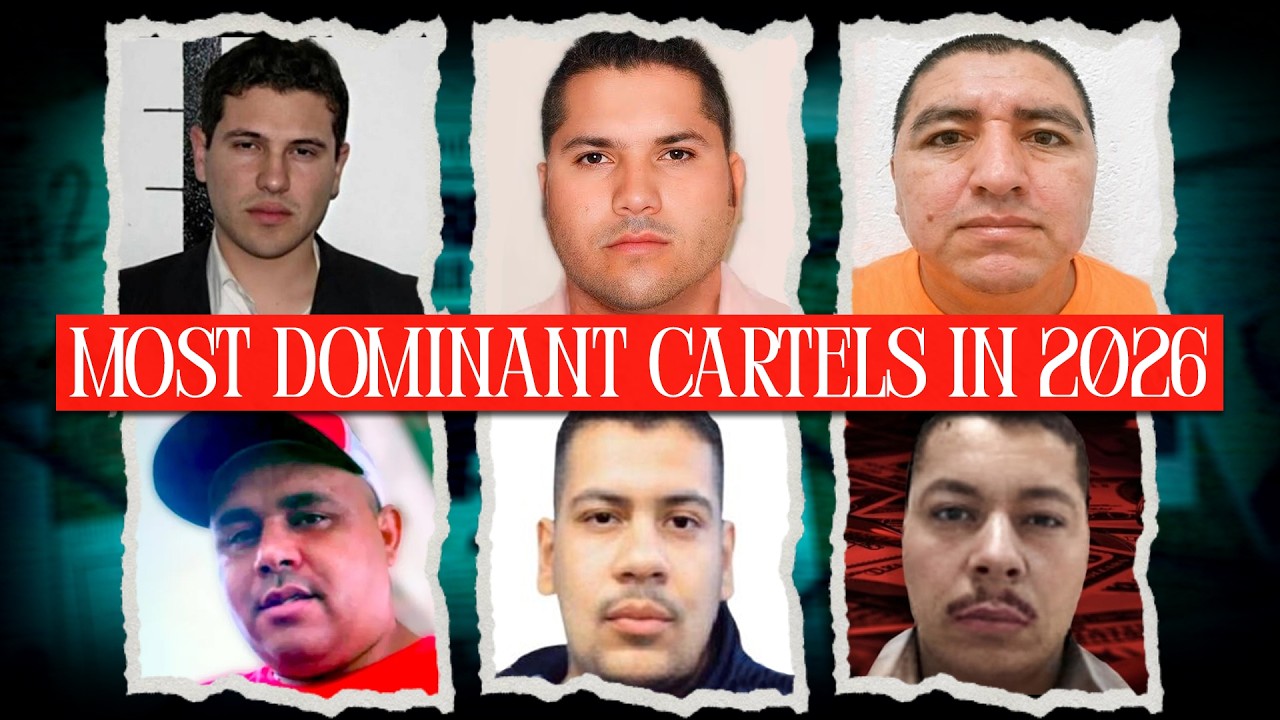
Within hours, the CJNG proved why it remains the most dominant cartel in the country. The organization did not mourn, and it did not retreat. It retaliated. El Mencho’s right-hand man, Hugo Salazar Macías Herrera, known as El Tule, immediately took command of the cartel’s response operations.
He issued a bounty for every Mexican National Guard soldier killed, not for captures or information, but for kills. Across multiple Mexican states, CJNG operatives set fire to vehicles, established roadblocks using hijacked cargo trucks and buses, and launched direct armed confrontations with security forces. In the violence that followed, the Mexican National Guard lost 25 members. A Jalisco state prosecutor agent was killed, a prison guard was killed, and 32 cartel members died in the clashes.
In under 24 hours, Mexico experienced a coordinated paramilitary response that paralyzed transportation, terrorized civilians, and forced a nationwide escalation of security measures. El Tule, the man running the retaliation, was killed by security forces within days of taking over while attempting to flee arrest. The CJNG lost its leader and its second-in-command within the same week, and still, it did not stop. The CJNG did not even exist until 2009.
In less than fifteen years, a regional drug trafficking group in Jalisco grew into arguably the most militarized, most geographically expansive, and most internationally feared cartel Mexico has ever produced. It started as a splinter of the Milenio Cartel, defeated its rival faction, and took over their smuggling networks. Then it expanded coast-to-coast, state by state. By 2018, analysts estimated that CJNG was running over 100 methamphetamine labs across Mexico.
The cocaine trade alone was generating up to $8 billion a year, with crystal meth adding another $4. 6 billion on top of that. By 2026, the cartel had a presence or active operations in Jalisco, Michoacán, Guanajuato, Veracruz, Zacatecas, Colima, Chiapas, Quintana Roo, and parts of Sinaloa, Sonora, and Baja California. It was not a cartel in the traditional sense.
It was a national criminal infrastructure. El Mencho had evaded capture for over a decade despite coordinated intelligence operations involving the DEA, the CIA, the Mexican army, and multiple elite law enforcement units. The American government had a $15 million bounty on his head, and the Mexican government had offered 300 million pesos for information leading to his capture. He was believed to have suffered from kidney disease for years, requiring regular dialysis, and even that failed to compromise his security.
When he finally fell, the organization absorbed the blow because it had already been operating as a decentralized network for years. El Mencho was the figurehead, the founder, the brand, but the organization’s actual operations were distributed across regional commanders in eleven states. There was no single throat to choke. The death of El Mencho was like cutting the head off a hydra, and these heads had been growing independently for years.
Before February 2026 even ended, CJNG operatives were back at work in Mexicali, competing with the Sinaloa Cartel over smuggling corridors. They were pushing into contested territories in Chiapas, fighting for control of migrant smuggling routes on the border with Guatemala. In Tijuana, violence between CJNG and Sinaloa Cartel factions continued without pause. The Mexican and American governments had landed their biggest punch, and the CJNG absorbed it and kept swinging.
The CJNG sits at the top of the current cartel landscape, but it is far from the only major player. The Gulf Cartel, one of the oldest criminal organizations in the Western Hemisphere, dates back to the Prohibition era of the 1920s. It built its empire in the northeastern state of Tamaulipas, on the border with Texas, and for decades controlled lucrative smuggling corridors into Brownsville, McAllen, and Laredo. At its peak in the early 2000s, the Gulf Cartel was essentially a state within a state.
It had its own military wing, Los Zetas, made up of former elite Mexican soldiers. It had politicians, police chiefs, and military officers on payroll. But the Gulf Cartel lost power not only because of the government, but because of itself. When Los Zetas broke away in the early 2000s and became an independent criminal force, it triggered a chain reaction from which the Gulf Cartel never fully recovered.
By 2025, the DEA formally declared that the Gulf Cartel was no longer a unified organization, having fractured into three rival factions: Los Escorpiones, Los Metros, and Los Cyclones, all fighting each other for what remained of the territory. Even fractured and at war with itself, the cartel continued moving drugs into Texas and running human smuggling operations along the Gulf Coast. In 2026, the Los Metros faction reportedly allied with the CJNG, its long-time rival, just to protect itself from the Sinaloa Cartel and the Cartel del Noreste pressing in from the north. The US State Department designated the Gulf Cartel a foreign terrorist organization in February 2025, meaning American citizens could now face criminal charges for doing business with them.
Fragmentation did not mean death for the Gulf Cartel. It meant evolution. The Cartel del Noreste, formerly known as Los Zetas, built a criminal empire from the ruins of that earlier organization. Los Zetas were originally the military enforcement arm of the Gulf Cartel, made up of deserters from Mexico’s elite special forces unit, the GAFE.
They were trained soldiers who knew military tactics, surveillance, weaponry, and strategic territory control. At their most powerful, they were considered the most technologically sophisticated and brutally violent cartel in Mexico’s history. They were the first cartel to use military-grade fragmentation grenades in assassinations, ran their own internal intelligence networks, and executed rivals in ways designed to send psychological messages. By the mid-2000s, law enforcement had systematically dismantled the original leadership through captures and killings.
It looked like it was over. From the ashes rose the Cartel del Noreste, operating primarily out of Nuevo Laredo, one of the busiest commercial border crossings in the entire world. It maintained the military structure and violent tactics of the Zetas while focusing specifically on controlling northeastern smuggling routes into Texas. In February 2025, just days after a senior regional leader was arrested in Nuevo Laredo, the cartel unleashed coordinated blockades across the city.
The US consulate issued emergency alerts, the Nuevo Laredo International Airport shut down for 24 hours, and the entire border city was held hostage by a cartel retaliating against one arrest. When the US terrorist designation came down in February 2025, the Cartel del Noreste did not slow down. It adapted, leaning further into physical territory control, extortion of businesses, taxation of other criminal groups, and control of human smuggling routes that became more lucrative under increased border enforcement pressure. La Nueva Familia Michoacana and the broader alliance known as Carteles Unidos have one of the most remarkable stories of resilience in cartel history.
Michoacán, a mountainous state in central-western Mexico, is strategically critical because whoever controls it controls the flow of chemical precursors coming in from Asia, the raw materials used to manufacture fentanyl and methamphetamine. The state also contains one of Mexico’s busiest Pacific ports, Lázaro Cárdenas. The original La Familia Michoacana emerged in the early 2000s with a bizarre identity, presenting itself as protectors of the people, distributing food during droughts, funding local churches, and positioning itself as a morality-based criminal organization. When La Familia was dismantled, splinter groups rose from it, and eventually La Nueva Familia Michoacana emerged, more battle-hardened and desperate to hold its ground.
By 2024 and into 2026, La Nueva Familia Michoacana and Carteles Unidos were not just fighting off rival traffickers. They were fighting off the CJNG, which had been attempting to seize Michoacán for years. In response, the local groups banded together under the Carteles Unidos banner, presenting themselves as self-defense forces protecting their communities from the invaders from Jalisco. That narrative resonated locally and gave them a degree of social cover.
Carteles Unidos controls the port of Lázaro Cárdenas, the entry point for methamphetamine precursor chemicals shipped from China, making it one of the most strategically critical criminal choke points in North America. The US State Department designated Carteles Unidos as a foreign terrorist organization in February 2025, alongside the very cartels they were fighting. The organizations remain firmly entrenched in Michoacán, controlling port access and fighting off the CJNG at every turn. The Sinaloa Cartel is the organization that built the modern drug trafficking industry.
Founded in the mountains of Sinaloa state in the 1980s and 1990s, it grew under the leadership of Joaquín El Chapo Guzmán into the largest and most powerful drug trafficking organization in the Western Hemisphere. At its peak, it moved more cocaine, heroin, meth, and eventually fentanyl into the United States than any other organization on Earth. When El Chapo was captured and extradited to the US in 2017, most people expected the cartel to collapse. Instead, his sons, known as the Chapitos, took over their piece of the operation, and Ismael El Mayo Zambada, the quiet co-founder who had always operated in El Chapo’s shadow, continued to run the business side.
For years, an uneasy power-sharing arrangement kept the cartel functional. On July 25, 2024, El Mayo, the 76-year-old co-founder and longest-serving leader of the Sinaloa Cartel, was arrested in the United States after landing on a private plane in El Paso, Texas. He had been allegedly lured onto that plane by one of El Chapo’s own sons. That act of betrayal did not just destroy El Mayo.
It shattered the entire Sinaloa Cartel from the inside. Within weeks, all-out war broke out between the Chapitos faction and El Mayo’s loyalists. Culiacán, the capital of Sinaloa state and a city of nearly a million people, became a battlefield. Mazatlán and surrounding municipalities saw checkpoints manned by armed men appear on highways.
Civilians were caught in crossfire. The Mexican army deployed in force, but the violence carried into 2025 and was still burning in 2026. By early 2026, estimates from security analysts and Mexican government data pointed to thousands of casualties in Sinaloa state alone since the split began. While the Sinaloa Cartel tore itself apart, its rivals smelled blood.
The CJNG began pushing into Sinaloa territory, into Tijuana, into Baja California, and into routes the Sinaloa Cartel had held unchallenged for decades. In January 2026, the Chapitos faction was linked to the kidnapping of ten mine workers in southern Sinaloa, showing that even in the middle of a civil war, the cartel was still conducting operations. Despite being fractured and at war with itself, the Sinaloa Cartel remains the single largest drug trafficking organization in the Western Hemisphere. Its fentanyl pipeline into the United States is still the primary source of the drug killing tens of thousands of Americans every year.
The United States designated six Mexican cartels as foreign terrorist organizations in February 2025. The US military began conducting maritime strikes against suspected trafficking vessels in the Caribbean and Pacific, killing at least 145 people by mid-February 2026. Mexico deployed thousands of soldiers into Sinaloa. El Mencho was finally killed after over a decade of pursuit.
The cartels adapted, splintered, reformed, allied with enemies, and kept the product moving north. Security experts now warn that without a dominant leader at the top, CJNG factions might become more violent, not less, as regional commanders who once operated under El Mencho’s authority begin competing with each other for control of the top position. There are even reports of CJNG factions exploring a new alliance with the Chapitos against El Mayo’s loyalists within the Sinaloa Cartel. These organizations do not survive simply because they have guns and money.
They survive because they are woven into the social, economic, and political fabric of Mexico. They employ millions, directly and indirectly. They fill government voids in rural communities. They bribe the officials who are supposed to stop them.
And when one leader falls, there are ten men already trained, already positioned, and already hungry to take his place.
