The answer, when it finally came down from the hills, ran two sentences, and the grammar was broken. December 963. Around fifty bishops sat in council at St. Peter’s Basilica in Rome, joined by cardinals, deacons, Roman nobles, and the emperor Otto I, who had just conquered most of Italy.
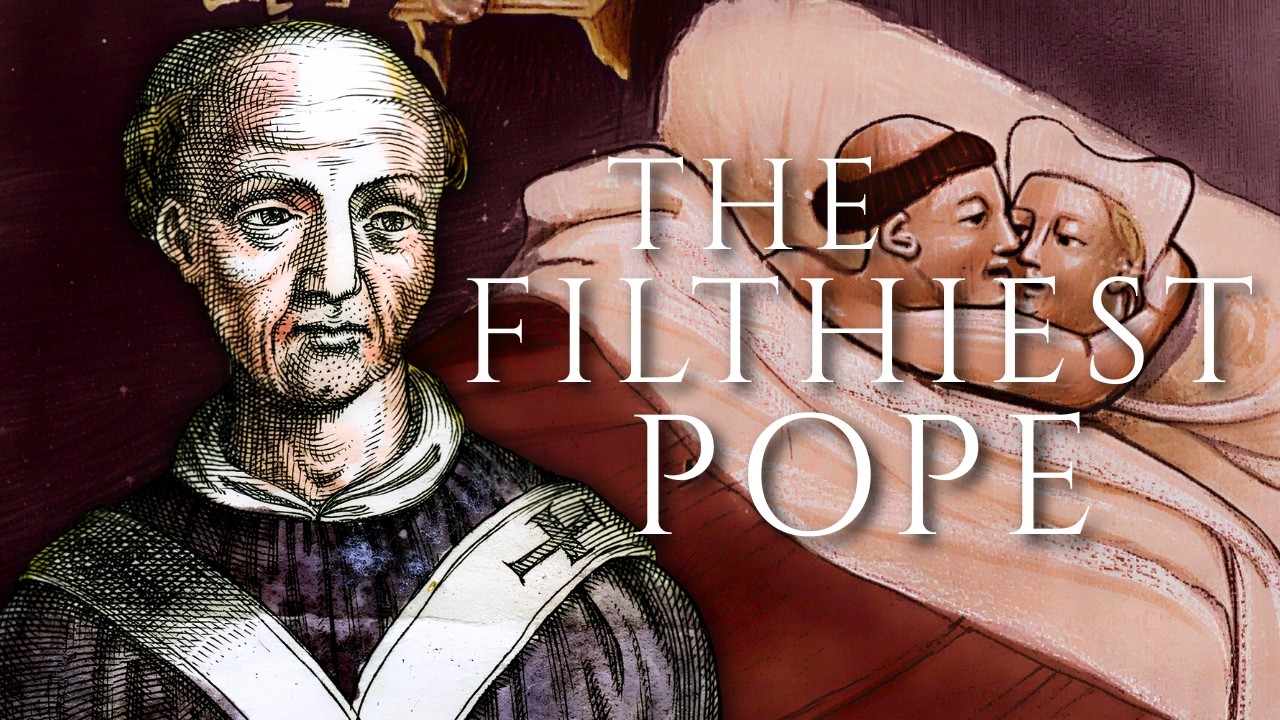
They had gathered to put a pope on trial, and a messenger had carried his written reply down from the hills. In the usual English rendering, it runs: *To all the bishops, we hear that you wish to make another pope. If you do, I excommunicate you by Almighty God and you have no power to ordain no one or celebrate mass. *
Maybe you caught the problem.
*No power to ordain no one. * A double negative sitting in the official correspondence of the Vicar of Christ. The bishops caught it instantly, and their reply contains one of the driest jokes ever entered into the record of a church council. They informed his holiness that, as far as they had always understood grammar, two negatives make an affirmative.
So by his own sentence, he had just confirmed their power to do exactly the thing he was threatening them over. Then they added that his Latin was about what you would expect from a slow schoolboy, and they invited him, for the second time, to come to Rome and clear his name. He never came. The man who wrote that letter was up in the hills near Tivoli with a good chunk of the papal treasury loaded onto pack animals.
When messengers went out to serve him the second summons, they came back empty-handed. Nobody could find him. He was out hunting. His name was John the Twelfth.
He was somewhere around twenty-six years old, had been prince of Rome since roughly sixteen, pope since roughly eighteen. By the time that letter reached St. Peter’s, the sworn testimony stacked up against him included selling bishoprics for cash, consecrating a ten-year-old boy as a bishop, ordaining a deacon in a horse stable, blinding his own confessor, castrating a cardinal who then died of it, sleeping with his dead father’s mistress, handing chalices from St. Peter’s altar to his girlfriends, turning the Lateran Palace into something the witnesses flatly called a brothel, drinking a toast to the devil, and calling on Jupiter and Venus for luck while he threw dice.
Within three months of that letter, he would ride back into Rome, take a blade and a whip to the men who had deposed him, and hold a counter-council to undo everything. Within six months, he would be dead at about twenty-seven, in bed with a married woman, and one chronicler swears the devil himself struck him on the temple as he went. Almost everything vivid in that list comes from men who wanted him remembered exactly that way. But even the records with no axe to grind can’t find much nice to say about him.
The Rome he was born into around 937 barely deserved the name. Eight centuries earlier, over a million people had lived inside its walls. By John’s childhood, the guesses run to maybe twenty or thirty thousand. The Aurelian walls still stood, twelve miles of them, but the city inside had shriveled down to a few inhabited clusters along the Tiber, and the rest was empty.
Romans had a word for it later: the *disabitato*, the uninhabited part, and it made up most of the space inside the walls. Vineyards grew over the Palatine where emperors once lived. Cattle grazed in the forum; later centuries would name it the *Campo Vaccino*, the cow field. The great aqueducts had been cut during sieges centuries before and never fully repaired, so the population huddled near the river and drank from it, floods, sewage, corpses, and all.
Malaria came off the marshes every summer and killed with a regularity nobody questioned anymore. Ancient temples stood roofless, trees growing out of the upper courses. Marble came off imperial monuments and went into lime kilns to make mortar, so the city was quite literally burning its own past for building material. At night, wolves were sometimes heard inside the walls.
This was the capital of western Christendom. The pilgrims never stopped coming. They walked from England, from Francia, from Germany, down the Via Francigena—months on foot through forests full of bandits, over alpine passes that killed people every season—to pray at the tomb of St. Peter.
They arrived at a wreck of a city run by aristocratic clans who fought each other with knives in the streets, and they knelt anyway, because underneath St. Peter’s high altar lay the bones of the fisherman himself. An archbishop of Canterbury from just after this period wrote down his route home, and it ran to seventy-nine overnight stops: seventy-nine days of walking, minimum, one direction. The ones who survived the journey arrived at St.
Peter’s and found whole foreign neighborhoods waiting—the *scholae*, national compounds where Saxons and Franks and Lombards and Frisians each kept hostels for their own. And every one of those travelers, rich or destitute, left something at the tomb: coins, silver, candles, land deeds from kings, a lifetime’s savings from a farmer’s widow. Centuries of it piled up in the treasury of the Roman church. That treasury has its own part in this story.
A young man is going to load it onto mules one autumn night and ride it into the hills. The papacy in this era had become a prize that a handful of Roman noble families passed around, fought over, and occasionally murdered for. Forty years before John’s birth, in the same Lateran complex where he would later grow up, a scene had played out with a strong claim to being the low point in the entire two-thousand-year history of the papacy, and the boy was raised in its long shadow. January 897.
Pope Stephen VI orders the body of his predecessor, Pope Formosus, dug out of its tomb. Formosus had been dead about nine months. What came out of the ground was what you’d expect after nine months: a partially decomposed corpse, skin gone leathery and black where it hadn’t sloughed away, the smell filling the room. The moment the wrappings opened, Stephen had this thing dressed in full papal vestments, the silk going on over the rot.
The corpse was carried into the council hall and propped upright on a throne. Then Pope Stephen put it on trial. This actually happened; it’s in multiple sources, one of the most securely documented events of the century. A trembling deacon was appointed to stand beside the dead man and answer on his behalf while Stephen screamed the charges at the body: that Formosus had violated canon law, that he’d held his office unlawfully.
Whenever the corpse was invited to respond, the deacon would answer in a small voice for it. The verdict, you will be shocked to hear, was guilty. Formosus was declared to have never validly been pope. His acts were annulled.
Then the punishment: the vestments were stripped off the body, and the three fingers of the right hand—the fingers a pope uses to give blessings—were hacked off. The corpse was dragged through the streets of Rome and thrown into the Tiber. A monk fished the body out downstream and hid it. Rome turned on Stephen within months.
He was seized, stripped of his own vestments, thrown into a cell, and strangled there in the summer of 897. In the thirty years after the corpse trial, the papacy changed hands about a dozen times. One pope reigned twenty days. Popes were imprisoned and murdered with almost administrative regularity: one smothered, another strangled, others left to starve in cells.
Out of that knife fight, one family emerged holding everything—John’s family. Their story runs through two women, a mother and a daughter. Church historians politely call this era the *saeculum obscurum*, the dark century. The less polite name coined later by Protestant writers is the *pornocracy*, the rule of the harlots.
Whatever you make of that label, the family behind it is the direct explanation for how a teenager ended up on the throne of St. Peter. Around the year 900, a Roman aristocrat named Theophylact maneuvered himself into control of the city. He held the titles that mattered—commander of the militia, master of the treasury—and he backed the election of a pope named Sergius III, a man who owed him everything and behaved accordingly.
Sergius, incidentally, is the same pope who had cheered on the corpse trial years earlier as a young cleric, and once he had the throne, he had two rival claimants strangled in prison. Theophylact’s wife was named Theodora, and by every account, she was the sharper political operator of the two. The main chronicler for this whole family, a bishop named Liudprand of Cremona, described Theodora as a shameless prostitute who wielded power over the Roman citizenry like a man. Notice what’s doing the work in that sentence: her crime, in his telling, is competence in the wrong body.
Then comes the daughter, Marozia, born around 890. By the time she was about fifteen, she was the mistress of Pope Sergius III, a man roughly thirty years her senior—her own father’s ally. Out of it, so the story goes, came a son, a boy named John, fathered by the pope himself. Liudprand states it flatly; other records are quieter about the paternity.
Either way, Rome will later watch that child crowned pope while his mother stands behind the throne. Marozia’s first husband on paper was a warlord named Alberic of Spoleto. With him she had another son, also named Alberic—and that second boy is the father of tonight’s subject. Edward Gibbon, writing in the 1700s, looked at this genealogy and produced a sentence historians still quote: “The bastard son, two grandsons, two great-grandsons, and one great-great-grandson of Marozia—a rare genealogy—were seated in the chair of St.
Peter. ”
Marozia’s rise was not gentle. In 928, she moved against the reigning Pope John X, a capable man who had personally worn armor at the battle that finally cleared Saracen raiders out of central Italy. He was too independent for her taste, and he had a brother, Peter, who was his right hand.
Marozia’s faction stormed the Lateran and cut Peter down inside the palace in front of the pope—his brother butchered before his eyes in his own home. John X himself was dragged to Castel Sant’Angelo, the fortress-tomb of the emperor Hadrian, and locked in a cell. He was dead within the year; Liudprand passes on the version whispered in Rome, a pillow held over the old man’s face until he stopped moving. Two short papacies followed, men who conveniently died.
Then in 931, Marozia produced her masterpiece: she had her son John, the one fathered by reputation by Pope Sergius, elected pope as John XI. He was in his early twenties. His qualifications were his mother. Marozia had one more move in her, and it destroyed her.
Widowed twice by now, she arranged a third marriage to Hugh of Provence, the king of Italy. One obstacle: Hugh’s late brother had been her second husband, and canon law counted that as incest. Hugh’s solution was to declare publicly that his brothers were bastards and no true kin of his, thereby slandering his own mother’s name to clear a path to the wedding bed. The wedding took place in 932 inside Castel Sant’Angelo, a marriage celebrated in a mausoleum, which several later writers found appropriate.
At the banquet, one of those tiny moments happened that reroutes the history of an institution. Marozia’s teenage son Alberic from her first marriage was serving at table, as noble boys did. He brought the water for the king to wash his hands, and he did it clumsily—spilled it, or held the basin wrong; the accounts differ. Hugh struck him across the face, in front of the assembled guests, the king of Italy hitting his new stepson like a servant.
Alberic walked out of that banquet, went straight into the streets of Rome, and raised the city. The speech attributed to him boils down to this: the dignity of Rome has fallen so far that we now take orders from foreigners, and once this man is settled here with his soldiers, you will all be slaves. Rome rose overnight. A mob stormed Castel Sant’Angelo.
Hugh, king of Italy, went over the wall on a rope in the dark and abandoned his bride of a few weeks to her fate, running for his army camped outside. And Marozia’s fate is one of the coldest details in this whole saga. Her own son took the fortress, and he took her. She was arrested, and she disappears from the record from 932 onward.
The near certainty is that Alberic kept his mother locked in a cell, possibly in that same fortress, for the rest of her life. One much later notice suggests she may have lived on in confinement for over fifty years, into her nineties—an old woman forgotten in the dark while her grandson rose and fell above her. The source for that is late and shaky, but nobody ever saw her free again. Alberic’s half-brother, Pope John XI, got a version of the same treatment.
Alberic left him on the throne—a pope in the family was useful—while stripping him of every scrap of independence, keeping him, in the words that come down to us, practically as a household servant, a chaplain who performed sacraments when told to and otherwise stayed quiet. He lasted a few more years like that and died in the mid-930s, still in his twenties. Nobody suggests foul play. Nobody needed to.
Now take stock of the young man running Rome, because his character presses directly onto everything his son becomes. Alberic II at roughly eighteen years old has overthrown a king, imprisoned his own mother for life, and reduced his own brother, the pope, to a servant. And here’s the twist nobody sees coming: he then governs well, genuinely well, by the standards of the age. For twenty-two years, from 932 to 954, Alberic rules Rome with the title prince and senator of all the Romans, and he gives the city something it hasn’t had in living memory: stability.
He beats back Hugh’s repeated sieges. He reforms the currency. He invites Odo of Cluny, the most respected monastic reformer alive, into Rome to clean up the monasteries. At one point, Odo even brokered a peace under which Alberic marries Hugh’s daughter, Alda—his enemy’s child—to seal a truce.
Alberic is ruthless. He is a usurper. He keeps the papacy in a cage. But under him, the murders stop, the mobs quiet down, and Rome functions.
The cage itself is the machine his son inherits. During those twenty-two years, four popes reign, and every one of them is Alberic’s appointment and Alberic’s subordinate: Leo VII, a monk who kept to spiritual matters; Stephen VIII, about whom a grim later tradition survives—he apparently crossed the prince somehow, and the chronicles say he was mutilated, disfigured so badly he could no longer show himself in public; then Marinus II, who reportedly wouldn’t so much as act without the prince’s instruction; then Agapitus II, a decent and respected man who held the office while understanding precisely how much of it he actually held. Now the boy Octavian was born somewhere in the window between 930 and 937, in the family’s palace on the Via Lata, the old triumphal road running through the heart of inhabited Rome. Even his birth comes with a question mark attached, and it’s not a trivial one, since it decides whether he became pope at seventeen or in his mid-twenties.
The respectable version makes his mother Alda, Hugh’s daughter, the peace-treaty bride married to Alberic in 936, putting the boy’s birth in 937 and making him legitimate. But a Roman monk called Benedict, writing up on Mount Soracte north of the city within living memory of these events, recorded in his lumpy, half-broken Latin that the prince fathered his heir on a concubine. If Benedict has it right, Octavian arrives earlier, around 930, and the future pope is illegitimate—a bastard in an era that cared about the term, destined for the most legitimate office on earth. The chronicle’s grammar is genuinely bad enough that scholars argue about what the sentence even says.
The name at least tells you something solid. Alberic named his son Octavian—passing over the saints’ names and the family names, reaching straight for the birth name of Augustus, the first Roman emperor. A prince of a ruined city, naming his heir after the man who built the marble version of it. The ambition in that choice isn’t subtle.
This boy was being pointed at empire from the cradle. What he wasn’t pointed at, apparently, was books. The same monk Benedict who lived close enough to know laments the boy’s education, and everything in the later record backs him up: the pope whose Latin got laughed at by a church council was not a young man who’d been kept at his lessons. He was raised as a soldier-prince: horses, hawks, hounds, weapons, the aristocratic curriculum of the tenth century.
Somewhere along the way, his father also had him tonsured and installed as cardinal-deacon of Santa Maria in Domnica, one of the old deaconry churches on the Caelian Hill. In this household, that title was a coat hook—Alberic was holding a place for his son inside the church. In 954, dying, he executed the plan the place had been held for. Alberic was only around forty, and we don’t know what was killing him; the sources just show him failing.
What they do show in some detail is what he did about the succession. He had himself brought to St. Peter’s, and he summoned the Roman nobility and the senior clergy to gather around him at the *confessio*, the shrine directly over the tomb of the apostle. There, above Peter’s bones, he made every man present swear an oath: at the next vacancy of the Holy See, they would elect his son Octavian pope.
Papal elections were, by canon and ancient custom, supposed to be free. Alberic, from his deathbed, converted the next election into an inheritance, and he made Rome’s elite swear it on the most sacred spot in western Christendom. Nobody refused him. You didn’t refuse Alberic, even a dying Alberic.
The deeper move is easy to miss: for twenty-two years he had kept the principate and the papacy strictly separate—himself over here holding the power, a tame pope over there holding the holiness. For his son, he fused them. One boy would hold both. Alberic died in August 954, and Octavian stepped into the principate without a ripple.
Rome obeyed him because Rome had spent two decades obeying his father. Then on the 8th of November 955, old Pope Agapitus died, and the oath came due. The electors kept it. On the 16th of December 955, Octavian was consecrated bishop of Rome in St.
Peter’s. If the later birth date is right, he was seventeen or eighteen years old—quite possibly the youngest pope in the entire history of the office. His only serious rival for that title comes eighty years later, and it’s another member of this same family. One of his first acts as pope was, oddly enough, one of his most influential, and it’s the one thing he did that every single one of his successors still imitates.
He changed his name. Octavian, he seems to have felt—or his advisers felt—was a bit much for the throne of the fisherman: too pagan, too imperial, or maybe just too much his father’s ambition stamped on his forehead. So he took the name John, becoming John XII. Only one pope had ever done this before: four centuries earlier, in 533, a Roman priest unfortunately named Mercurius, after the god Mercury, decided a pope probably shouldn’t carry a pagan god’s name, and became John II.
Octavian made it two. After him, the practice caught on, and within a few generations it hardened into the tradition we still watch on the balcony today. For a while, his chancery even ran both identities in parallel: some documents signed John, others still issued as Octavian. Pope with one hand, prince with the other, and the paperwork itself couldn’t quite decide which he was.
That split is the whole story of the reign. As prince, he was expected to hunt, feast, command troops, and carry on his father’s court. As pope, he was expected to sing the offices, celebrate the stational masses, judge the clergy of the world, and live at least publicly like a successor of the apostles. He was a teenager.
Guess which half won. The detailed picture of John’s private life comes overwhelmingly from one document: the record of the council that tried him in 963, written up by Liudprand of Cremona. Liudprand was an Italian bishop in the service of Otto the German king—the man who convened the trial, deposed John, and needed Christendom to accept that deposing a pope was justified. Liudprand is also, separately, one of the most entertaining and most venomous writers of the entire Middle Ages; one of his other books is literally titled *Revenge*.
So every lurid item you’re about to hear arrives through a hostile pen, recording testimony given by Roman clergy who had just switched sides and had every incentive to bury the man. Against that stands this: the charges were made publicly, in front of fifty bishops and the assembled Roman elite, by named witnesses swearing oaths about events in living memory in their own city. And no source from John’s own camp survives to answer them, while the neutral-ish chronicles mutter in the same general direction. They said the Lateran had become a brothel.
That’s the word the testimony uses: the sacred palace, the residence of the popes since Constantine, operating as a whorehouse under its nineteen-year-old bishop. Women came and went from the papal apartments. Some were paid, some were prizes. When the witnesses got to the sexual charges, they made a distinction that is weirdly convincing in its caution: they admitted they had not seen these things with their own eyes, but said they knew them with certainty—the tenth-century equivalent of “everybody in this building knows.
” Then they got specific with names. Stefania, they said, his father’s concubine, the dead prince’s own mistress, taken into the son’s bed. Then Rainera, a widow, and with her the charge grows a second head—because the testimony adds that John didn’t just carry on with her. He paid her out of the church.
He put golden chalices from St. Peter’s into her hands, sacred vessels from the apostle’s own altar, and he granted her control of cities from the papal lands—actual towns with actual inhabitants, signed over to a mistress like a tavern tip. Then a widow named Anna. And then the item the council clearly found hardest to say out loud: Anna’s niece, his own kinswoman by some tellings, folding incest into the pile.
Then the pilgrims. The accusation that circulated—and which Gibbon later fixed in one of the most quoted sentences ever written about the papacy—was that John’s appetites had made the holiest shrine in the West unsafe for women, that female pilgrims who had crossed the Alps on foot were being warned away from St. Peter’s itself for fear the pope would take them. Gibbon’s phrasing runs that his rapes of virgins and widows had deterred the female pilgrims from visiting the tomb of St.
Peter, lest in the devout act they should be violated by his successor. By Peter’s successor, in Peter’s house. The gambling charges have a texture all their own, because they come with a soundtrack. The charge was that when John rolled the dice, he called out for luck to Jupiter, to Venus, and to other demons—that’s the synod’s word, demons—because to a tenth-century churchman, the old gods hadn’t stopped existing; they had just been correctly identified as devils.
A young man named for Augustus, calling on Augustus’s gods in the city Augustus built. Gibbon, ever dry, remarked that the invocation, if true, could hardly have been serious—maybe it was a joke at the dice table, a teenager being edgy for his drinking companions. But it was the pope being edgy, and someone in the room remembered it for years and eventually swore to it in front of an emperor. Alongside that sits the toast: the record says everyone present, clergy and laity together, affirmed this one—that John had drunk wine to the love of the devil.
A raised cup in the Lateran to Satan’s health. Add the smaller liturgical charges, and a picture assembles. He celebrated mass at improper hours or skipped communion within it. He never made the sign of the cross.
He ignored matins and the canonical hours, allegedly because the hours in question found him either asleep or occupied. Out of doors, they charged him with living openly as what he was: a hunting aristocrat. He rode out with hawks and hounds publicly—which sounds harmless until you remember canon law flat-out barred clergy from the hunt. They said he girded on a sword, put on a helmet and a cuirass, armed and armored himself like the soldier his father raised him to be.
Then the church as marketplace: simony, the selling of holy things, described as his standard operating procedure. One witness, a cardinal-deacon named Benedict, testified with others that John had consecrated a ten-year-old boy as bishop of Todi, a real diocese in Umbria with real souls in it, handed to a child—presumably a child whose family paid well, though the testimony never records the price. And John of Narni, a bishop, together with a cardinal-deacon also named John, swore they had personally watched the pope ordain a deacon in a horse stable, among the animals in the straw and the dung, outside the appointed times. The catalog turns physical from here.
The witnesses charged John with blinding Benedict, his spiritual father, his confessor—the man appointed to hear the pope’s sins and guide his soul, likely a man who had known him from childhood. We aren’t told what Benedict did; “rebuked him once too often” is the guess that writes itself. Blinding in this world was a deliberate craft with a known toolkit: red-hot iron drawn across the open eyes, or the blade, or thumbs held down by however many men it took. Benedict, the testimony says, did not stay alive.
He died from what was done to him—the shock, the wound fever, the sepsis that followed the iron. Then the cardinal-subdeacon John. The charge: the pope had him castrated, and he died of it. Castration outside a battlefield was a message, a punishment tradition reserved for sexual offenders, so the choice of mutilation was itself a statement.
The record gives him one line: castrated and died. A cardinal of the Roman church, and his entire ending fits in four words. Arson rounds it out: fires set, the testimony says, without telling us what burned or who was inside. The summarized indictment ran through the whole grim list—murder, perjury, sacrilege, simony, incest—against a man in his mid-twenties describing a reign of about eight years.
If even a third of it is true, the Lateran of the 950s was one of the darkest addresses in Europe. If almost none of it is true, then fifty bishops and the better part of Rome’s clergy stood in St. Peter’s and perjured themselves in unison over the tomb of the apostle. Neither option is comfortable.
While all of that was allegedly going on indoors, the actual job of ruling the Papal States was going badly. Around 958 or 959, still barely into his twenties, John personally took an army south against the Lombard princes of Capua and Benevento, trying to claw back territories the papacy claimed. The campaign collapsed. The man on the other side, Pandolf of Capua—history remembers him as Pandolf Ironhead, and you don’t earn a name like that by losing to teenagers—outfought him, and John came home with nothing but the bill.
His father had spent twenty-two years never losing control of anything. The son’s first solo venture ended in retreat, and Italy noticed. The vultures noticed most. Up north sat Berengar II, who wore the title King of Italy, and his son Adalbert, and the pair of them ran their kingdom like a protection racket with a crown on it.
With the pope revealed as beatable, Berengar’s forces pushed into papal territory and started taking it. Towns and strongholds inside the lands John was sworn to protect peeled away while he could do precisely nothing about it. So John reached for the biggest weapon on the board, and in doing so he set every remaining event of his life in motion. In 960 he sent an embassy north across the Alps to the court of Otto of Saxony, King of the Germans.
Note the two men he chose to carry the appeal, because this story has a savage sense of structure, and both of them will be back: a cardinal-deacon named John, and a senior papal notary named Adso. Their message, dressed in the proper formulas, came down to a plea, for the love of God and of the holy apostles Peter and Paul: come to Italy, deliver the Roman church from the tyrant Berengar, and restore what has been taken. And along with the plea went the one thing a pope could offer that no one else on earth could: a crown. The imperial title of the West, vacant for decades, waiting in Rome for a man strong enough to hold it.
John was inviting the most powerful ruler in Europe to come and take it from his hands. Otto said yes. Of course he said yes. Otto was about fifty, roughly twice John’s age, and he had spent his whole adult life doing the opposite of everything John stood accused of.
King of the Germans since 936, he had crushed rebellion after rebellion—including ones led by his own brothers and his own son—forgiving just enough of the rebels to look magnanimous while burying the rest. In 955, on the plain of the Lechfeld outside Augsburg, he had met the Magyar horsemen, the raiders out of Hungary who had terrorized Europe for two generations, and he had annihilated them so completely that the raids stopped for good. The survivors were hunted through the rivers and marshes for days, and the captured chieftains were hanged. Men began calling Otto what they had once called Charlemagne: the Great.
He was pious, in the heavy, church-building way of serious medieval kings. And he wanted one thing his sword hadn’t yet given him. Emperors were made in Rome, by popes, at the tomb of Peter. Only John could make him one.
Consider the transaction from both ends, because both men thought they were using the other. John gets a rescuer, a hammer to drop on Berengar, and he assumes a protector who will collect his crown and go home over the mountains like Charlemagne’s heirs used to. Otto gets the title that turns a German king into the successor of the Caesars, from the hands of a compromised boy he expects to manage. One of them has badly misjudged the other, and it takes about a year to find out who.
Otto came over the Alps in 961 with an army that ended the campaign before it started. Berengar declined battle altogether, scattered his strength into mountain fortresses, and hid. Before Otto approached Rome, oaths went ahead of him: he swore to defend the pope, to protect the Roman church, to restore its lost territories, and to make no decree in Rome touching the pope or the Romans without John’s consent. Everything correct, everything sealed.
On the 31st of January 962, Otto entered Rome. Two days later, on the 2nd of February, Candlemas, when the churches glowed with blessed candles, John crowned him. The scene in St. Peter’s that morning is one to linger over.
At the altar over the apostle’s bones stands a pope in his mid-twenties. Before him kneels a fifty-year-old Saxon warlord, and the young man anoints him with holy oil and sets the imperial crown on his head, and on his wife Adelaide’s beside him. By that gesture, the Holy Roman Empire comes into being—the institution that will sit at the center of European politics for 844 years, until Napoleon finally kills it in 1806. On that February morning, it was all three of those things, and the man conjuring it into existence was our John.
One detail from that day cuts through everything. A story preserved in the German records has Otto, before entering the basilica, turning quietly to his swordbearer, a young noble named Ansfrid, with an instruction: “While I kneel today at the tomb of the apostles to pray, hold the sword above my head the whole time. I know only too well what my predecessors have found trustworthy in these Romans. ” A man about to receive the crown of the West from the pope’s own hands, arranging armed cover for the moment his eyes would be closed.
Otto bowed in prayer, and above his bent neck a drawn blade watched the room. The honeymoon lasted eleven days and produced two documents. On the 12th of February, a synod in Rome, pope and emperor side by side, established the new archbishopric of Magdeburg—Otto’s pet project, a missionary hub aimed at the Slavic lands—along with a new bishopric at Merseburg, plus pallium grants for Otto’s favored archbishops. On the 13th of February came the big one: the *Diploma Ottonianum*, drawn up in gold letters on purple-dyed parchment, in which the new emperor confirmed to Peter and his successors basically everything popes had ever claimed: the city, the duchies, the patrimonies, the donations of the Frankish kings, territories Otto didn’t even control yet.
All guaranteed. And then, down in the operative clauses, the hook. Henceforth, papal elections would proceed canonically—but the man elected could not be consecrated until he had sworn, before imperial representatives, an oath of loyalty to the emperor. One sentence, and the papacy had an overlord.
The boy who inherited the office as family property had just signed the family property over to a landlord. The document still exists. A luxury copy of the Ottonianum, gold script on parchment stained imperial purple, survives in the Vatican’s own archives, eleven hundred years old—the actual physical instrument of the papacy’s subordination, preserved for a millennium by the institution it subordinated. Otto marched out on the 14th of February to go dig Berengar out of his rocks.
On the way out, the emperor sent his young spiritual father some parting advice, urging him to leave off the hunting and the women and the rest, and to live as his office demanded. John’s response to being fathered by his own protector was about what you’d expect from a prince of his upbringing: he waited until Otto’s back was turned, and he betrayed him. Look at it from inside John’s skull for a second, since his logic isn’t hard to trace. He had invited Otto in to remove Berengar.
He now watched Otto swallowing Italy whole, the fortresses falling one by one, the emperor everywhere obeyed. An imperial oath now legally wrapped around the throat of every future pope—meaning his own successors, meaning the family business. From where John sat, Otto had stopped being the solution and become the biggest threat the family had ever faced. So the pope started writing letters.
Letters to Adalbert, Berengar’s son—the heir of the tyrant John had begged Otto to destroy—proposing in essence an alliance against the emperor. Letters east to the Magyars, inviting them to come at Otto from Hungary—the Magyars, the people Otto had butchered on the Lechfeld seven years earlier, whose destruction was the foundation of his fame. And letters to Constantinople, to the Byzantine court, feeling out the other empire’s interest in cutting the new one down. Envoys carried all this quietly through an Italy crawling with imperial patrols.
And you can guess the rest. Otto’s men caught the couriers. The letters, seals and all, went straight to the emperor’s tent. Otto’s reaction is one of the best lines of the whole century.
Confronted with documentary proof that the pope who had crowned him was soliciting pagans against him, the emperor shrugged, more or less, and said—as Liudprand tells it—“He’s a boy. A boy who may yet be changed by the example of good men. ” That was the whole reaction: a middle-aged man filing the pope of Rome under “adolescent, to be corrected later. ” Otto sent envoys down to Rome to look into things, and the reports they brought back were the full menu we’ve already been through: the women in the palace, the vessels of Peter handed out as gifts, the whole inventory now flowing directly into the imperial court’s records and hardening from gossip into case file.
John, for his part, sent his own smooth ambassadors to Otto with reassurances—and among them, in a twist nobody in the room could have called, was the papal official who would end up wearing the tiara within the year. Then John stopped pretending. Adalbert, half-beaten, the son of the tyrant, sailed out of hiding, came to Rome, and the pope received him publicly: the two of them, the teenage pontiff and the fugitive prince, standing together on the walls—an open break with the emperor. When word reached Otto, the file closed.
He left a holding force at the siege of Berengar’s last fortress and turned the main army toward Rome, late summer of 963. As the imperial army approached the city, the defense of Rome was commanded in person from the fortifications by the pope—in a helmet and a cuirass, with a great sword, moving along the ramparts among the fighting men. Liudprand records it with a sneer about how well the armor suited him, but the sneer can’t quite smother the image: Alberic’s son, at last, doing the one thing his whole upbringing had actually trained him for. For a moment the resistance even held.
The Romans threw back an imperial probe at the river crossings. It couldn’t last. John knew his own city well enough to know it: Roman resolve was a market, and Otto could outbid him. So the pope made his decision.
He gathered up what remained of the treasury of the Roman church, the portable centuries of it—the gold, the offerings of all those pilgrims—loaded it, and slipped out of Rome with Adalbert, up into the hills toward Tivoli. The shepherd, as one later writer put it, fleeing with the flock’s money. Rome opened to Otto without a fight on the 2nd of November 963. The clergy and nobles came out to submit, and the emperor made them swear a new oath on the spot, its terms the whole future in one sentence: never again would they elect or consecrate a pope without the consent of the emperor and his son.
Rome swore. Rome at that point would have sworn anything. And with the city secured, Otto did something no emperor had ever done in nine centuries of Christian history: he convened a council to sit in judgment on the pope of Rome. The synod opened on the 6th of November 963 in St.
Peter’s itself, deliberately, over the bones, so that nobody could later claim the thing was done in some hole-and-corner way. The roll call alone announces how seriously Otto built this: around fifty bishops, Italian and German together—the archbishops of Milan and Ravenna, the great sees of Lombardy and the Romagna; Otto’s own men from Hamburg and Speyer and the rest—alongside the cardinal-priests and cardinal-deacons of Rome, John’s own senior clergy, the men who had lived with his reign at close range. Behind them, the Roman nobility and representatives of the city’s militia and its people. And presiding over it all, the emperor, ten months crowned, sitting in judgment in the church where he’d knelt for his anointing, while a sword hung over his head.
One staging detail changes how you hear everything else: Otto couldn’t really run the proceedings in his own voice, because his Latin wasn’t up to public speech. He addressed the council in Saxon, and his interpreter, standing beside the imperial seat, rendering the emperor’s words into Latin for the assembled fathers, was Liudprand of Cremona. The author of our record was also the mouth of the prosecution. Otto opened by asking, reasonably enough, why the pope wasn’t present at a council of his own church, and the assembly’s answer set the tone.
Then the testimony came, witness by named witness. Peter, a cardinal-priest, rose and testified that he had seen the pope celebrate mass without taking communion—the celebrant himself refusing the sacrament he was consecrating, a detail with a genuinely eerie implication if you let it sit. John, Bishop of Narni, and John the cardinal-deacon testified to the ordination in the stable and swore they had watched it happen. Benedict the cardinal-deacon, with fellow clergy alongside, testified to the ordinations sold for money and to the ten-year-old bishop of Todi.
Then came the sexual charges with their careful preface—not seen with our own eyes, but known for certain—and the names went into the record one after another: the widow of Rainier, Stefania, his father’s concubine, the widow Anna and Anna’s niece, and the declaration that the sacred palace had been made a brothel. The hunting in public. Benedict, his spiritual father, blinded and dead of it. John, the cardinal-subdeacon, castrated and dead of it.
The fires, the sword, the helmet, the cuirass. And at the end, on the toast to the devil and the dice prayers to Jupiter and Venus, the record notes that everyone, all present, clergy and laymen together, with one voice affirmed it. Otto, through Liudprand’s mouth, then did something shrewd. He warned the assembly about slander, reminded them that it’s common enough for men in high station to be accused falsely by their enemies, and charged them not to bring anything they couldn’t stand behind.
In answer, the whole synod swore an oath: if they were lying about the Lord Pope, then might they be struck with the fate of Judas, damned with the traitor for eternity. Fifty bishops and the elite of Rome calling down Judas’s damnation on their own heads in Peter’s Basilica. You can view that as fifty men absolutely certain of their testimony, or as fifty men who had watched an emperor take their city and knew what was expected in that room. The council drafted its first letter to John, and the tone is almost gentle: everything laid out, everything charged, and a promise attached—come to Rome under formal safe conduct and answer, and if you can clear yourself, clear yourself.
This was the letter that found him in the hills. And back down from Tivoli came the reply we opened with: the excommunication of everybody, the power to ordain no one, the double negative sitting in the official correspondence of the Vicar of Christ. The bishops’ response—the two-negatives joke, the schoolboy jab—went back up the road along with a second, sterner summons on the 22nd of November: appear, or the sentence falls on you instead. And this time the messengers physically could not deliver it, because his holiness had gone hunting.
Follow those riders for a moment, since the record lets us: out the eastern gates, twenty-odd miles up the Via Tiburtina, the ancient road climbing toward Tivoli, where the river Anio comes crashing off the hills in waterfalls the Romans had admired for a thousand years. Below the town sprawled the shell of Hadrian’s villa, an emperor’s private paradise of domes and pools, stripped and sinking into the olive groves. And somewhere in that landscape of dead imperial luxury, a young man named for Augustus was flying hawks while a council of the universal church waited on his answer. The messengers asked after him at the gates and on the roads, carried their unopened summons around the hills for days, and eventually turned their horses back toward Rome with the citation still sealed in a saddlebag.
On the 4th of December, the synod reconvened. It counted its two summonses against the canonical three, decided that a man who couldn’t be located was a man who had answered, and moved to sentence. Otto rose through his interpreter and recited the case: a pope charged by his own clergy with sacrilege, simony, perjury, murder, adultery, and incest; who had allied with the enemies he’d invited the emperor to crush; who had fled his see with its treasure; and who had responded to a lawful council with insults and disappearance. The assembly’s recorded answer is the sentence to put on the poster for this whole reign: they begged the emperor to expel from the Holy Roman Church this monster, unredeemed from his vices by any virtue—*monstrum* is Liudprand’s Latin, and he chose it with care, a word from the old poets for something born wrong—and to give them a worthy man in his place.
So the deed was done. A council of the church, under an emperor’s eye, deposed the reigning successor of Peter in his own basilica. Whether any power on earth could lawfully do such a thing was a question canon lawyers would fight about for centuries, and John himself was about to make devastating practical use of the doubt. But on that December afternoon, doubt kept quiet.
Then came the replacement, and with it Otto’s one unforced error of the whole affair. The emperor proposed, and the synod accepted by acclamation, a Roman named Leo, the *protoscriniarius*, the chief notary of the papal administration—essentially the head of the civil service: a respected man, a serious man, and a complete layman. No orders at all. What followed had never been seen.
In the span of about a day, Leo was run through every clerical grade in sequence—doorkeeper, lector, exorcist, acolyte, subdeacon, deacon, priest—steps meant to be climbed over years of formation, taken at a sprint between sessions, and then consecrated bishop of Rome as Leo VIII. Canon law required intervals between orders precisely so that no strong man could manufacture a bishop overnight. Here was an emperor manufacturing a pope overnight in front of witnesses. Every enemy of the new regime now had a legal argument shrink-wrapped and ready: the deposition was invalid, the ordination was invalid, the man in white was a notary in costume.
John, hunting in the hills with the treasury, had just been handed his counterattack by the very council that condemned him. Rome delivered the rest of it. Whatever the city’s elite had sworn in November, the actual population discovered fairly quickly that it did not enjoy watching a German choose the bishop of Rome—and John’s money, the pack-animal loads from Tivoli, was moving through the city buying friends. On the 3rd of January 964, Rome rose.
Fighting broke out in the streets against the imperial garrison, barricades and ambushes, the old city’s oldest reflex—and it went the way street fighting against Otto’s professionals was always going to go. The legions of the Lechfeld turned the rising into a massacre, and the sources say a great number of Romans died in a single day, cut down in the alleys between the ruins. Leo VIII begged the emperor to show mercy, and Otto, indulging his new pope, released the hostages and stayed his hand. Then, in mid-January, the emperor made his own miscalculation.
Adalbert was still loose. Berengar’s last fortress had finally fallen. There was a war to finish elsewhere, and Rome seemed cowed. Otto marched the army out of the city to go hunt Adalbert down, leaving Leo behind with a modest force and the sworn word of the Romans.
John was back inside the walls within weeks. Liudprand, seething, explains the restoration with two forces: the pope’s gold and the women of Rome. His claim is that John’s many mistresses and their families formed an actual political faction, agitated the city for him—that the boy was, in the most literal sense, loved back onto his throne. Money made a wall-switching argument too, no doubt.
However the coalition assembled in February 964, the gates opened for him, and Leo VIII ran for his life—out of the city, north up the roads to the emperor, barely ahead of the mob, a pope of ten weeks’ standing fleeing the see he’d been sprinted into. John XII walked back into the Lateran that his great-grandmother’s faction had once stormed, sat back down on the throne his father had bought him with a deathbed oath, and turned his attention to the men who had testified. What John did over the following days is the part of this story that even the drier chronicles refused to soften. Start with the cardinal-deacon John.
Two histories converged on this one man: he was in all likelihood the same cardinal-deacon who had carried the pope’s desperate appeal over the Alps to Otto back in 960, the trusted courier of the whole alliance—and he had then stood up in St. Peter’s, testified against his master, served the synod as one of its formal accusers, and put his hand to its acts. The pope had him seized, and his right hand was cut off. The hand that had carried the letters, the hand that had sworn the oath and signed the record—on a block, with a blade, through skin and tendon and the wrist’s small bones, and then the stump seared, hot iron or boiling pitch, the only surgery on offer, so that he would live.
Living was the point. A dead man is mourned and forgotten. A one-handed cardinal walks around Rome for twenty years as a proclamation. Adso came next—the papal notary, the other half of that original embassy to Otto, the professional whose entire existence was penmanship, records, the written instruments of the church.
The accounts vary on the exact extent: some say the hand, others say the fingers of his writing hand, taken joint by joint. Either way, aim it at the meaning: a scribe with no fingers is a man erased from his own profession. The synod’s German members were mostly beyond John’s reach, but one wasn’t. Otgar, Bishop of Speyer, one of Otto’s bishops left behind in the city, was taken and scourged—a consecrated bishop, stripped and flogged like a thief at a whipping post, the lash opening his back stroke after stroke, while Roman onlookers took the lesson.
And the chronicle adds one more nameless official to the tally: a man who lost his nose and his tongue and two fingers. The nose sliced away, leaving the face a flat wound that would mark him among strangers forever; the tongue drawn out with pincers and cut, ending his speech—the tongue, presumably, that had testified; the fingers that had sworn or signed. Face, voice, hand—everything a witness is—removed piece by piece from a living man who was then released into the city to be looked at. With the object lessons distributed, John moved to paperwork.
On the 26th of February 964, he convened his own synod in St. Peter’s. Same basilica, same bones underfoot, mirrored proceedings. Sixteen bishops and twelve cardinal-priests attended—and one figure in the attendance list says everything: eleven of those sixteen bishops had sat in the December synod that deposed him.
The same men, ten weeks earlier, had called him a monster unredeemed by any virtue and invoked the fate of Judas on themselves if they lied. Now they sat under his eye, the smell of Otgar’s flogging still in the air, and voted to annul every word of it. He opened the session himself with a line the record preserves, and coming from him it’s almost elegant: “Beloved brethren, you know that by the emperor’s power I was expelled from my see for two months. ” Then the machinery ran.
The December council was condemned root and branch. Leo was declared no pope at all, a perjured intruder, his lightning ordinations void, and he was excommunicated. Sico, the bishop of Ostia who had consecrated him, was stripped of his rank, and the clergy Leo had ordained were reduced to whatever grade they’d held before. Two popes now existed, each with a synod behind him, each having anathematized the other—one backed by the emperor of the West, the other sitting in the actual Lateran.
Christendom’s lawyers would still be untangling it a thousand years later; the church’s own official lists have flip-flopped on which of these men counts. Otto got the news up north, along with descriptions of what remained of Otgar’s back and the cardinal-deacon’s arm, and began preparing to come back and finish it. The phrase that survives is blunt: a harvest. Rome braced.
The great families weighed their options one more time. Every road ran toward a second siege, a second sack, worse than the first. And then, in the middle of May, the crisis solved itself in a bedroom. Pope John XII died on the 14th of May 964, somewhere around twenty-seven years old.
The manner of it, as reported, is the single most notorious papal death ever recorded. Liudprand—who by now you can hear licking the nib—reports that the pope was outside the walls of Rome, taking his pleasure with a married woman, when, in the very act of adultery, he was struck. A seizure of some sort is what the account describes—*apoplexia* in the old vocabulary, a stroke, we’d probably say, his body failing him mid-sin. Later tradition fills in the woman’s household: the wife of a Roman named Rainerius.
And Liudprand, of course, cannot leave it at medicine. In his telling, the devil himself dealt the blow—struck John on the temple as he lay there, collected what was owed. The pope who had toasted Satan’s love with wine, the story wants you to understand, got the reply personally. He did not die at once.
And that single detail turns this from lurid to genuinely awful, whichever version you favor: he lingered eight days, paralyzed or broken, in and out of whatever consciousness remained. And in those eight days, the account is specific, he did not receive the last sacraments—neither confession nor absolution, nor the viaticum, the final communion whose very name means “provision for the journey. ” Whether he refused them, as Liudprand implies, or couldn’t speak to make a confession, or no priest in Rome would come, or none was sent for—the record just says he died without them. Take that in with tenth-century nerves: dying unconfessed in mortal sin was the worst outcome a human life could have, worse than any death by iron or fire, because those ended and this didn’t.
And here was the man who held the keys, the successor of Peter, the one human being on earth whose office existed to loose sins, dying eight days within reach of Rome’s thousands of priests and going out unabsolved from the bed of another man’s wife. One more version circulated, and it belongs here, since for centuries it was the one people repeated in the streets. In this telling, the medical details drop away and a simpler story stands up: the husband came home. Rainerius, or whatever his name truly was, found the pope of Rome in his bed with his wife, and did what a wronged tenth-century Roman with strong arms did—beat him, some say with a hammer, some say threw him bodily from the window.
And John died of the beating over those same eight days, his body breaking down around injuries no one dared name in the official account. No contemporary source states it outright. It grows in the later retellings, the way the version people find most satisfying usually does. But it survived a thousand years of retelling for a reason: everyone who ever heard both versions understood that with this particular man, either was entirely possible.
They buried him in the Lateran, in his cathedral, St. John’s, under the roof of the palace that fifty bishops had called a brothel on the sworn record. He had held the papacy for eight and a half years, and been in that time the maker of an empire that outlived him by nearly nine centuries. And he was gone before thirty, without absolution.
You’d think Rome at that point would take the exit ramp. Otto was coming. His Pope Leo was with him. The man who caused it all was in the ground.
And the path of survival was posted in letters ten feet high: accept Leo, open the gates, endure. The Romans took one look at that path and elected their own pope instead. Eight days after John died, on the 22nd of May 964, the clergy and people chose Benedict V, a Roman deacon. Benedict was, by every account including his enemies’, a good man—learned, upright, so bookish the city nicknamed him *Grammaticus*, the Grammarian.
After a decade of John, the Romans reached for his exact opposite: a scholar with a clean reputation. And the reports say Benedict didn’t want it. He seems to have understood with perfect clarity what accepting meant: a direct violation of the oath Rome had sworn to Otto, a personal challenge to the most powerful man in the world on behalf of a city that had already folded twice. They elected him anyway, and swore, with that inexhaustible Roman confidence, that they would defend him against everyone.
So the century’s worst papacy got, as its immediate sequel, a decent man pushed onto a burning throne by his own neighbors. Otto arrived in June, made no assault at all, and simply locked the city up to let hunger do the work, his men stripping the countryside around Rome so there’d be nothing to smuggle. Inside, the numbers went where siege numbers go. The chronicle preserves one price, and it’s enough: a single measure of bran selling for thirty denarii—coarse husks normally shoveled to animals, priced like luxury goods in the city of the apostles.
Benedict, to his credit, stood on the walls during that siege too, but with words: preaching to the defenders and hurling excommunications down at the besiegers, the only weapons he owned. The comparison to the last man on those ramparts sets itself up: John in a cuirass with a sword; Benedict in a stole with a sentence of anathema. Rome held for about a month. On the 23rd of June 964, the gates opened, and the Romans, in the phrase that has stuck to this episode ever since, handed their pope over—walked Benedict the Grammarian out to the emperor’s lines and gave him up to save themselves.
What Otto and Leo did with him was staged as carefully as any scene in this whole saga, and it’s among the most quietly brutal things in it precisely because nobody bleeds. A synod convened in the Lateran, John’s old house, with the emperor enthroned and Leo VIII presiding, and Benedict was brought in wearing the full papal vestments and carrying the ferula, the pastoral staff of the Roman bishop. They asked him by what right he had dared. And Benedict, no soldier, no liar, answered in effect that he had done wrong and cast himself on their mercy.
He was made to lie prostrate on the floor. Then Leo tore the pallium from his shoulders—the band of white wool, the badge of the office itself, ripped off the man’s body—and took the ferula from his hand and broke it over him. The crack of the wood would say what no decree could. They degraded him from the papacy, stripped him past priesthood down to simple deacon.
Otto, who seems to have developed something like respect for this gentle, ruined man, took him north as a prisoner and lodged him in Hamburg, at the far, cold edge of the Christian world, in the custody of its archbishop. Benedict lived out about a year there. The locals came to regard him as very nearly a saint. He died in 965 or 966.
Decades later, an emperor—Otto’s own grandson, Otto III—had the bones brought home to Rome. An apology delivered a generation too late, to the last casualty of John XII’s reign. The other players from John’s last gamble get their curtain calls here, and fate handed them out with a bleak evenness. Berengar II, the land-grabbing king whose raid started the whole chain, the man John begged Otto to destroy, was starved out of his final fortress at San Leo around the same weeks John was being deposed a day’s ride away.
The emperor shipped him and his queen Willa over the Alps into captivity at Bamberg, deep in Germany, where the sometime king of Italy died a prisoner in 966, and Willa finished her days in a convent. Adalbert, the fugitive prince John embraced on the walls—the alliance he burned an emperor for—fought on after his ally died, out of Corsica with Byzantine money whispering behind him, until Otto’s Swabian troops broke his last army near the Po in 965. He ran again, for good this time, and died in exile in Burgundy years later: a king’s son who spent his entire adult life running. Even Pandolf Ironhead, the Lombard prince who handed young John his first defeat back in the 950s, sailed on serenely; he ended up ruling most of southern Italy as Otto’s trusted ally and died a ruler in 981, having outlasted everyone who ever fought him.
And Otto kept everything: nine more years of empire, a Byzantine princess finally secured for his heir, the whole structure settling into the permanence it would hold for centuries—and then a peaceful death in 973, after Vespers, in his own bed, followed by burial in his own cathedral at Magdeburg. The archbishopric that exists because a frightened young pope co-signed it eleven days into a friendship that destroyed him. Every man from that coronation morning ended where the odds always pointed. The fifty-year-old professional died full of years in his own church.
The others died in prison, in exile, or in someone else’s bed. The ledger of this reign has a page that almost never gets counted, and it belongs to the women. Run back through the names the record preserves. Stefania, the dead prince’s concubine, passed from father to son like the palace furniture—a woman whose safety in Rome depended entirely on the favor of Alberic’s household, presented with the desires of Alberic’s heir, who was also her sovereign and also the pope.
What refusal was available to her? Rainera, the widow with the chalices and the cities—the sources sneer at her as a kept woman grown rich, and never once ask what a widow in tenth-century Rome, alone in that city, was supposed to do when the master of it turned his attention on her. Anna, widowed too. Anna’s niece, a girl whose age nobody bothered to write down, remembered by history for one fact only.
And the wife of Rainerius, in whose bed a pope died, whose name we don’t even have, whose life after the 14th of May 964—married to a man the whole city now knew, in a Rome that blamed women first as a reflex—the record closes on without a word. And behind the named ones, the crowd the testimony gestures at: the women of the palace, the pilgrims warned off the apostle’s tomb, wives and daughters in a city where the ruler’s appetite was law and the ruler was nineteen. Every man in this story got a trial, a synod, a chronicle, an argument that has lasted a thousand years. The women got a sentence each, if that, written by their enemies, and then the file closes.
Liudprand claims the women of Rome rallied to bring John back in 964, and maybe some did. Power, protection, and survival braid together in ways a hostile bishop wouldn’t bother untangling. The truth of any of their lives is past recovering. What’s certain is that the era got named after them—the rule of the harlots—while the hands doing the ruling, the strangling, the blinding, and the bargaining belonged, with two formidable exceptions, to men.
And the boy himself—look at what he actually grew up inside. His grandmother had allegedly arranged the smothering of a pope and was rotting, as he learned to walk, in a cell his father put her in. His uncle had worn the tiara as a household servant and died young and silenced. His father, the one strong figure in his life, had taken the city with a mob at eighteen, ruled it by fear and competence for two decades, and then, dying, reached out from the bed and bent the next papal election around his son like iron.
Octavian was never asked whether he wanted to be pope. He was sworn into it by other men, over a tomb, before the vacancy even existed. He came to supreme spiritual office with a soldier’s education, a prince’s appetites, an emperor’s name—and, apparently, not one person left alive with both the standing and the courage to tell him no. His father was dead.
His confessor tried, if the blinding charge holds—and you heard how that ended. Otto tried from a distance with fatherly letters, and got betrayal for it. Absolute power over a city, spiritual authority over a continent, at an age when most men were still being cuffed by their fathers. Very few human beings in history have been handed that combination, and the ones who were rarely came out of it well at fifty, let alone at eighteen.
None of that acquits a man of a blinded confessor, a gelded cardinal, a scourged bishop, and a trail of women who couldn’t say no to him either. It just puts the tragedy where it belongs: not only in what he did, but in the fact that everyone who built his life—from Theophylact down to Alberic’s deathbed—made this outcome about as close to certain as human arrangements get, and then the chroniclers acted surprised. The strangest gap in the whole file needs filling. Strip away the trial record, and what survives of John XII in his own voice is startlingly ordinary.
His chancery functioned. Bulls went out over his name for eight years: privileges for monasteries, confirmations for bishops, pallia granted to archbishops as far away as Germany and beyond. Churchmen across Europe wrote to Rome and received correct, formulaic answers sealed with his seal. Cluny, the great engine of monastic reform, the conscience of the age, received favors from him and had no recorded complaint.
So did Subiaco, the mountain sanctuary where St. Benedict himself had lived in his cave four centuries earlier, the cradle of western monasticism, confirmed in its lands and rights by a bull carrying this pope’s name. Judge him by the paperwork alone, and the reign looks like any other: a functioning administration under a pope nobody would remember. That gap is the vertigo of studying him.
On one shelf, a bureaucracy issuing parchment. On the other, sworn testimony about the devil’s health being toasted down the hall. Both shelves are real documents. Nobody has ever fully reconciled them.
The private man is simply gone, and what stands in his place is the version his destroyers needed and the version his clerks typed up, with a human being somewhere unrecoverable between them. One transaction from those files puts an actual saint in the room with him. In the autumn of 960, an Englishman arrived in Rome: Dunstan, the newly appointed Archbishop of Canterbury, Abbot of Glastonbury, reformer, kingmaker, the towering churchman of Anglo-Saxon England, and a future saint on both the Catholic and Orthodox calendars. He had crossed the channel and walked the whole pilgrim road to collect his pallium—the narrow band of white lamb’s wool without which an archbishop’s authority stayed theoretical.
Customs surrounded the object with tenderness: the wool came from lambs blessed on St. Agnes’s feast, was woven by nuns, and lay overnight on the tomb of Peter itself before it ever touched a man’s shoulders. His biographer preserves a detail from that journey: Dunstan gave away so much to the poor along the route that his own party ran out of provisions, and when his exasperated steward pointed this out, the archbishop answered in effect that Christ would see to dinner. This is who came climbing the steps of St.
Peter’s on the 21st of September 960. And the pope who laid the pallium across his shoulders at the apostle’s tomb, with all the ancient formulas, was our John, twenty-two or twenty-three years old—three years out from his trial, presiding correctly, and by all appearances gravely, over one of the most solemn rites his office performs. Dunstan took the wool, went home, spent the next quarter-century rebuilding the English church into something rigorous and holy, and never, in any surviving text, said one word against the young man who gave it to him. The scene stands on record: one of the great saints of the century kneeling before its alleged monster, and the machinery of the church humming along above them both.
We don’t even have his face. A portrait from life was never made, as far as anyone knows, and the chronicles skip his person entirely: height, coloring, all of it blank. The mosaic medallion you’ll find if you search his name, part of the long frieze of papal portraits in St. Paul’s Outside the Walls, was invented centuries later by artists working down a list—a generic young man’s face filled in where a real one should be.
His family, though—his family we can follow. The house of Theophylact was not finished with the papacy, not remotely. After a few decades on the back foot, the clan—now styled the counts of Tusculum, from their fortress town in the hills southeast of Rome—came roaring back. In 1012 they simply resumed the family business, as if the Ottonian interruption had been a bad dream.
A Tusculan count’s son became Pope Benedict VIII—a capable one, actually, a fighting pope in the family tradition who won actual battles. When he died, his brother took the throne as John XIX. And here the mask slips entirely: this brother was a layman, the civil governor of Rome, and he went from unordained aristocrat to pope in a single day—the same one-day sprint through holy orders that everyone had howled about with Leo VIII, now performed in-house for convenience, without an emperor even asking. When he died, the family reached one branch further down and produced the heir to end all heirs.
In 1032, the counts of Tusculum installed Theophylactus, son of Count Alberic III—note the names still cycling, Theophylact, Alberic, a century deep—as Pope Benedict IX. He was, depending on the source you trust, anywhere from about twelve to twenty years old. And here he is at last: John’s only serious rival for youngest pope in history, great-great-nephew territory on the same family tree, the final name in Gibbon’s rare genealogy. Benedict IX proceeded to have a career that makes even John look like a man of settled habits.
The chronicles charge him with the full inherited inventory: the violence, the seized women. One later pope described his life as so foul he shuddered to describe it. And then he added innovations. He was driven out of Rome by revolts and fought his way back.
He was deposed and returned. And in 1044–45, in the family’s crowning transaction, he sold the papacy—sold it, negotiated a price, allegedly against the income of church lands or so he could pursue a marriage, and transferred the office of St. Peter to his own godfather for money. Then he changed his mind and tried to repossess it, so that at one point in 1046, three separate men all claimed to be pope simultaneously—one of them a Tusculan on his third attempt.
The dynasty that had made a seventeen-year-old pope by deathbed oath in 955 ended by making the papacy itself a resale item. John wasn’t an aberration in that house. He was a first draft. Cleaning up the three-popes fiasco fell, in the end, to a German king marching south to sort out Rome.
And if that sentence gives you an odd sense of the century folding back on itself, it should. This is John XII’s most durable legacy working exactly as designed. The arrangement he sealed in February 962—a Roman crown on a German head, and that quiet clause obliging popes to swear loyalty to the emperor—did not die with him or with Otto. It ran for a hundred years.
Otto’s son and grandson made and unmade popes. In 1046, King Henry III arrived at the Synod of Sutri, swept all three competing pontiffs off the board in a matter of days, and simply appointed a German bishop, then another, then another: a run of imperial popes handed down from north of the Alps. One of whom, Leo IX, turned out to be the spark of the great reform movement that would eventually clean house. Follow the chain, and it bends into irony so neat you’d reject it in fiction: the reformers raised under imperial protection eventually turned on imperial control itself, and by the time Gregory VII was making an emperor stand barefoot in the snow at Canossa in 1077, the papacy had reversed the entire relationship John signed into being.
Every link of that chain hangs off the crown a compromised twenty-four-year-old set on Otto’s head to save his own skin. He built, in one winter, both the cage his successors lived in and, at several removes, the force that broke it. His other legacy: the name-changing custom he cemented turned papal names into a running historical ledger, and the ledger of Johns specifically became the most haunted in the church. The numbering after him got so tangled by medieval clerical errors that a phantom slipped in.
There has never been a Pope John XX. The sequence just skips him, because scribes miscounted the earlier Johns—partly thanks to the chaos of this very era—and the mistake fossilized. Every John since has carried a number that is quietly, permanently wrong by one, and the church long ago decided that correcting it would cause more confusion than living with it. Then a disgraced antipope took the name John XXIII in the early 1400s, and after that, popes avoided the name entirely.
For over five hundred years, no pope would touch the most common papal name in history—radioactive, in real part because of the trail our man and his relatives left on it. It took until 1958 for a pope to reclaim it, when the beloved, grandfatherly Angelo Roncalli deliberately chose John XXIII, remarking on the long line of Johns before him with their mostly brief pontificates, and set about scrubbing the name clean successfully—since that John is now a canonized saint. Somewhere well down the list, past the saint and the phantom and the antipope, sits a teenager from the Via Lata who threw dice in the Lateran. The church never unpopped him.
Open the Vatican’s own annual directory today, the *Annuario Pontificio*, and he’s right there on the list of legitimate popes in sequence, reign dated 955 to 964, printed exactly like the saints on either side of him in the column. No asterisk of shame, no formal posthumous condemnation. In the church’s own final accounting, the December synod’s sentence never stuck—and it’s his rival Leo VIII who wears the footnote, with the directory carrying an openly hedged note conceding that if his election was invalid, then Benedict V was the true pope. An official shrug, republished annually for over a century now, about a question this one man’s reign created a thousand years ago.
And everything John did as pope stands. Otto’s imperial crown was never voided, so the Holy Roman Empire’s entire legal existence ran back through those particular anointed hands until the whole edifice folded in 1806. Magdeburg stands. Dunstan’s pallium stood.
The priests and bishops he ordained outside the contested batches stayed ordained and went on ordaining others. The theology carrying all of that has a Latin tag: *ex opere operato*—the sacrament works by the work performed, meaning the rite itself delivers the grace, and the personal state of the minister, however foul, cannot poison it. Its plain implication remains one of the stranger sentences you can write about Christianity: a man could toast the devil at night and validly bind heaven in the morning. Believers see in this the entire point—treasure in earthen vessels, the office greater than any hand that holds it.
Skeptics see an institution insulated from its own leadership by design. The career we’ve just walked through supplies full supporting evidence to both. No other man ever made the doctrine work so hard. One last thread.
You can’t visit him. The Lateran received his body in May 964, into the ancient Basilica of Constantine, the actual fourth-century building, by then already six hundred years old. That building is gone. On the 6th of May 1308, fire took the Lateran roof, timbers, treasures, the accumulated furniture of a thousand years, and what the first fire spared, a second finished in 1361.
The basilica standing there today is a rebuild over the bones of the site, and in the burning and clearing and reconstruction, the tombs of a whole stretch of early medieval popes were destroyed or scattered or simply lost track of. John’s among them. The tomb is gone. If an epitaph existed, the fires took every record of it.
He left neither relic nor shrine; for obvious reasons, no one was ever going to pray at that grave. The most infamous pope of the first millennium has, as his sole surviving monument, a stack of parchment—the minutes of his own trial, taken down by the man who called him a monster—and one short letter in bad Latin, preserved because his enemies found it too useful to burn. Somewhere under the floor of the rebuilt Lateran, or in the fill beneath it, whatever was left of him after 1308 is part of the foundation now.
The palace he was accused of disgracing is, in the most literal sense, standing on him.
