The gift card stopped working on February 17th, 2009. The name printed on the card was the same name above the door on Old Country Road in Westbury, Long Island, but at the register that no longer meant anything. Fourteen years earlier, that building had been one of the most productive rooms in American retail. In 1995, sixty thousand shoppers came through its doors every week.
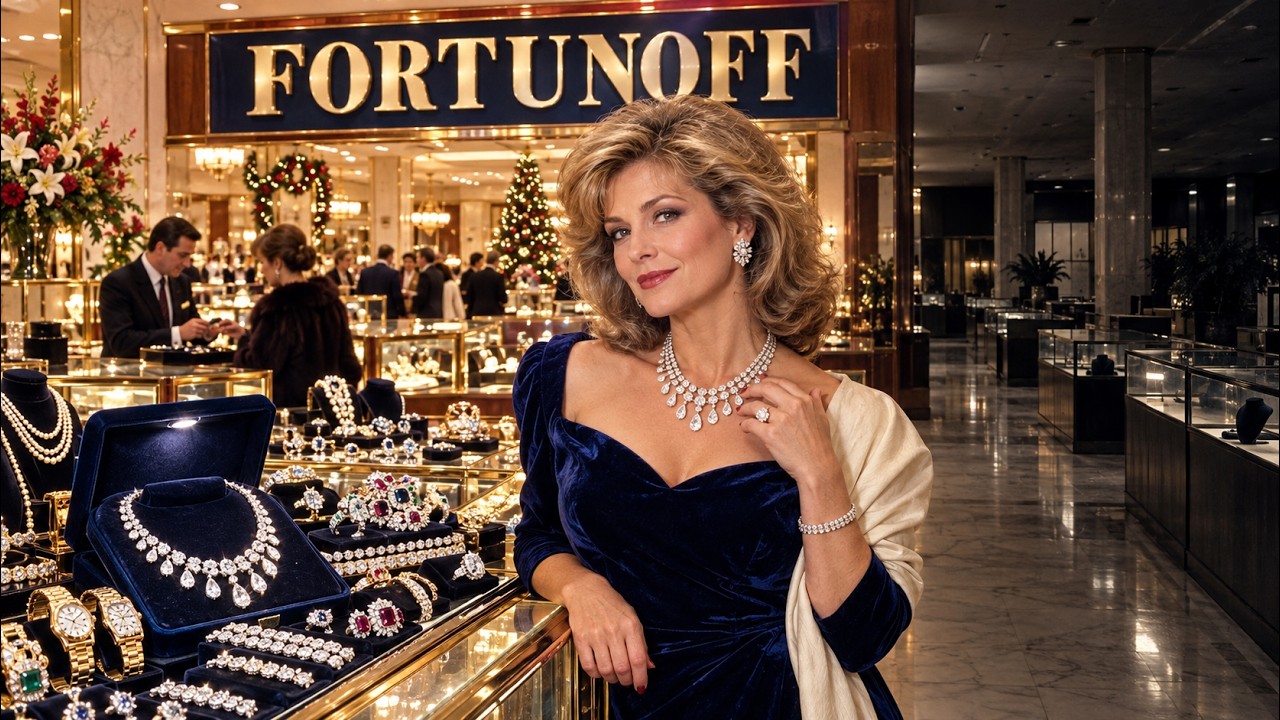
The store rang up $160 million in annual sales, and no retailer in the country sold more jewelry per square foot of floor space. Not Tiffany. Not Cartier. Not any of the great houses on Fifth Avenue.
Twelve months before the gift cards failed, the company had been rescued. A new owner, the investment group behind Lord & Taylor, paid roughly $100 million for it and walked it out of bankruptcy court. The plans were announced with confidence: another $100 million in fresh capital, a chain of more than fifty stores, and the company’s name on jewelry and home departments inside Lord & Taylor locations across the country. None of it happened.
On February 5th, 2009, one year and one day after its first bankruptcy filing, the company filed again. A week later, layoffs began at headquarters. An auction was scheduled to find a buyer for the whole business. No one came forward.
On February 25th, the liquidation signs went up. By the first week of June, the shelves were empty. The flatware wall was empty. The diamond cases were empty.
The remaining stones were sent to auction by the lot. The company that had outsold the most famous jewelers in the world could not find a single buyer willing to keep its doors open. For nearly half a century, anyone who grew up within driving distance of Westbury knew the name. Mothers registered for their wedding silver there.
Fathers bought engagement rings there, with the receipt folded into a coat pocket for the drive home. Families spent Sunday afternoons walking its aisles, past patio sets and towel displays, toward the long bright jewelry counters at the center of the store. The company called itself by two words. Those two words were meant to promise that nothing stood between the customer and the thing she wanted.
The source. The collapse took barely a year. The story behind it took eighty-seven. But the real story of Fortunoff is not a bankruptcy filing or an empty store on a Long Island highway.
It is the story of a husband and wife selling pots and pans in the shadow of an elevated train in one of the poorest neighborhoods in Brooklyn, of the young woman who married into their family and taught it to sell diamonds, and of what happened when the family finally let go of the name. In 1922, the eastern edge of Brooklyn was still being built. East New York and neighboring Brownsville had filled up in a single generation with immigrant families, most of them Jewish, most of them from the old Russian Empire. They had come across the East River from the crowded tenements of the Lower East Side looking for cheaper rent and a little more air.
They found narrow brick buildings, pushcart markets, and a new elevated subway line running above Livonia Avenue, throwing the street into stripes of shadow every time a train passed. It was a place where people worked with their hands and counted every coin. Fathers were tailors, peddlers, garment workers, and shopkeepers. Mothers ran households on whatever was left at the end of the week.
A new pot, a set of sheets, or a decent blanket was a real decision, weighed against rent and food and shoes for the children. Max Fortunoff understood that arithmetic because he had grown up inside it. He was born in Russia around 1898 and came to America as part of that great wave of Jewish immigration. His father ran a small wholesale business in pots and pans.
Wholesale meant buying goods in bulk from manufacturers and selling them in quantity to shopkeepers, who then marked them up and sold them one at a time to ordinary customers. It was a business of thin margins, heavy crates, and constant haggling. Max left school to work in it. There he learned what a pot really cost before it ever reached a store shelf, and how much of the price a family paid was simply the markup.
In 1922, Max married a young woman named Clara. Marriage, by the family’s account, was what pushed him to strike out on his own. He did not want to spend his life working for his father. He wanted a business with his own name on it.
The beginning was about as modest as an American business can be. By the family’s own telling, Max and Clara started with a pushcart, wheeling their merchandise through the streets toward the market on Livonia Avenue. Before long, they had a storefront directly beneath the elevated tracks. The historical record does not preserve what they paid in rent, how much money they started with, or the size of their first order.
What it does preserve is the stock: pots, pans, and other household basics sold to families who could barely afford them. The young couple lived in a small apartment behind the store. There was no separation between home and work. The store was the household, and the household was the store.
Over the next decade, Max and Clara raised three children in those rooms: a daughter, Marjorie, and two sons, Alan and Lester. All three grew up behind the counter, and all three eventually went into the business. The trains overhead never stopped. Customers came in shaking the dust off their coats.
The children learned to make change before they learned much else. To see why the little store under the tracks worked, it helps to see what shopping looked like for a working family in Brooklyn in the 1920s. The great department stores of New York, such as Abraham & Straus in downtown Brooklyn and Macy’s in Manhattan, offered selection, service, and a certain dignity. They also charged full retail price, a price that included every link in the chain between the factory and the customer.
For a family in Brownsville, that price put a good set of cookware or a proper set of linens out of reach. The alternatives were the pushcart, where quality was a gamble, or doing without. No one was selling the family in Brownsville good merchandise at a price built around their budget. Max Fortunoff saw the gap.
He did not see it as a grand idea. He saw it as a simple observation from someone who had spent his youth in wholesale. He knew what goods actually cost, so he priced his store close to that number, roughly 30 percent below the normal retail price. The customer paid what a shopkeeper would pay.
That decision later earned Fortunoff a distinction the family would carry for decades: retail historians would describe it as the first discount store in the New York metropolitan area, decades before the word discount became a national retail strategy. The timing was harder than anyone could have known. Seven years after the store opened, the stock market crashed. Through the Great Depression, as factories closed and breadlines formed across New York, a store that sold necessities at wholesale prices became more valuable than ever.
Families who could no longer afford the department stores could still afford Fortunoff. The business did more than survive the decade. It grew. One storefront became two.
Two became several. Over the following years, the Fortunoffs took space after space along Livonia Avenue until the business sprawled into a complex of six to eight separate shops stretched across two city blocks. There were stores for housewares, linens, bedding, and more. On Sundays, lines of shoppers formed on the sidewalk waiting to get in.
Pretzel vendors and street hawkers worked the crowd. One industry observer later suggested that during the 1940s, 1950s, and 1960s, Fortunoff probably furnished nearly every home in Brooklyn and Queens. Through the war years and into the postwar boom, the store remained a family operation in the most literal sense. Max and Clara ran it.
Their children worked it. The family still lived close enough to hear the trains. Then in 1953, the family grew by one more person. Helene Finke was twenty years old.
She was born on March 2nd, 1933, in Paterson, New Jersey, and grew up in nearby Fair Lawn. Her parents, Samuel and Tilly, ran a wholesale plumbing and heating supply business. From the age of thirteen, Helene worked there after school, learning inventory, suppliers, and the difference between what something cost and what it could sell for. She started college at Syracuse University, then transferred to New York University School of Commerce.
In a real estate class there, she met Alan Fortunoff. They married in 1953, and Helene went to work in the family store. She started in the departments nobody fought over: shower curtains, bath mats, and luggage. She would not stay there long.
By the mid-1950s, the store on Livonia Avenue sold nearly everything a household needed except the one thing a household kept. Pots wore out, sheets thinned, towels frayed and were replaced. Housewares were a business of repetition, of low prices and high volume, and very little of what left the store under the elevated tracks was meant to last longer than a decade. Alan Fortunoff had built his own corner of the business around silver gifts and flatware: the forks, knives, and spoons of a table setting, and in its finest form made of sterling silver, an alloy that is 92.
5 percent pure silver hardened with a small amount of copper so it can survive daily use. It was a respectable trade. Helene could see it was not enough. Years later, she explained her thinking plainly.
Her husband’s interest ended at silver gifts and flatware. That business, she believed, would never be large enough to carry the family’s future. The company needed something with higher value, something customers would treasure rather than use up. She chose jewelry.
In the late 1950s, by most accounts in 1957, Helene founded the company’s fine jewelry business: jewelry made from genuine precious metals such as gold and platinum set with real gemstones, as opposed to costume jewelry, which uses base metals, plating, and glass. Gold in fine jewelry is measured in carats, a scale of twenty-four parts. Fourteen-karat gold is fourteen parts pure gold out of twenty-four, a little more than half, blended with harder metals so the ring or bracelet can hold its shape on a working hand. Selling fine jewelry at discount prices was an unusual proposition.
Jewelry had always been sold on trust and mystery. The customer rarely knew what the stone was really worth, and the traditional jeweler’s markup depended on keeping it that way. A store that sold diamonds the way it sold saucepans, close to cost, in volume, and without ceremony, would have to find its merchandise differently. So Helene went looking for it herself.
She began traveling to meet manufacturers and suppliers directly, first across the United States and then around the world, to the workshops, cutting centers, and trade fairs where jewelry was actually made. Her goal was to buy from the people who produced the goods, not from middlemen. Every intermediary she removed was a markup the customer no longer had to pay. It was the same wholesale logic Max had brought to pots and pans in 1922, applied now to gold chains and diamond rings.
It also made her an unusual figure. By her own recollection, she was one of very few retailers traveling the world to buy jewelry at the time, and very likely the only woman doing so. The people across the table noticed. She kept going.
As the division grew, she hired and trained a team of buyers and brought them along on the same journeys. The team went, as they described it, to the source. The phrase was practical and nearly literal: the place where the merchandise began. In time, it would become the most important words the company ever used.
That same year, the leadership of the family business changed hands. In 1957, Max and Clara stepped back from daily operations after thirty-five years behind the counter. Their daughter, Marjorie Fortunoff Mayrock, became president of the company. Alan and Helene ran their own divisions.
The Fortunoffs were now a second-generation business, with a daughter at the head, a daughter-in-law building a jewelry department, and the founders still coming in to look after the cookware. The neighborhood around them, however, was changing faster than the store. By the early 1960s, East New York and Brownsville were entering a long and painful decline. Many of the families who had once lined up on Livonia Avenue on Sunday afternoons had moved away to Queens, to New Jersey, and above all, to the new suburbs of Long Island.
The neighborhood they left behind grew poorer and more dangerous. For the store, the decline showed up first as theft. Shoplifting and pilferage rose steadily. Management tried what some larger retailers were doing and brought in guard dogs to patrol the premises.
The patrols provoked retaliation. After one of the Fortunoff stores was firebombed, the sprawling complex on Livonia Avenue shrank to three units. The family faced a choice that thousands of urban merchants faced in those years. They could stay where they began, or they could follow their customers.
They followed their customers. After the war, Nassau County on Long Island had become one of the fastest-growing places in America. Its population roughly doubled during the 1950s. Levittown, the most famous suburban development of the era, had risen from potato fields only a few miles away.
The families moving into these new houses needed everything: sheets, towels, cookware, lawn furniture, table silver. And on graduations, anniversaries, and engagements, they needed jewelry. In 1964, Fortunoff opened a new store on Old Country Road in Westbury, beside the Roosevelt Raceway harness racing track, in a development called the Shopping Center at Roosevelt Raceway. The building was 150,000 square feet, about three times the space the family actually believed they needed.
They took it anyway. It was a risk measured in rent and inventory, and for a business that had always lived on thin margins, it was a serious one. The move changed more than the address. In Westbury, the store upgraded its merchandise, adding better quality goods for a more prosperous suburban customer.
Yet it kept the pricing instinct that had defined it since the pushcart. As late as 1969, the chain’s profit after taxes was estimated at just 2 percent of sales. On $30 million in annual volume, that came to roughly $600,000. The margin was thin by design.
Low prices were the product, not the byproduct. The scale of what the store offered is documented. Under one roof, a customer could find fine jewelry and watches, sterling flatware, china and crystal, bedding and bath, luggage and outdoor furniture. The Westbury store quickly accounted for about 90 percent of the entire company’s sales.
It grew almost immediately. By 1969, the family had added another 50,000 square foot level. That same year, Fortunoff opened a small store in a former townhouse on East 57th Street in Manhattan, a few blocks from the most expensive jewelers in the country. Two of its four floors were devoted entirely to jewelry and silverware.
The other two held offices and repair shops. The company that had been born beneath a subway line now had a Manhattan address. By then, the business had reorganized into five separate divisions, each its own corporation and each run by a member of the family. It was still unmistakably a family store.
It was also becoming something no one else in New York had built. A young couple could drive to Westbury on a Saturday, choose an engagement ring, register for their wedding silver, and price a patio set all in the same afternoon, all at discount prices, all from the same family. No jeweler on Fifth Avenue could put a diamond ring and a barbecue grill on the same receipt. In October 1972, the family announced that the Westbury store would more than double in size to 440,000 square feet, making it the second largest store on Long Island.
Eight years after the Fortunoffs had worried that 150,000 square feet was three times too much, it was not enough. What filled that space said a great deal about what the store had become. The jewelry counter sat at the center, but around them spread a retail landscape that had no real equivalent anywhere in New York. There were long aisles of china and crystal, and a silverware department that set out on open display virtually every flatware pattern in production.
There was bedding and bath on a scale that astonished suppliers. One of them later remarked that Fortunoff’s towel department alone was the size of most retailers’ entire home textiles floor. Outside the jewelry cases, the store sold lawn furniture, luggage, leather goods, and gifts. And in the late 1970s, the jewelry side of the business was pulling ahead of everything else.
By the end of the decade, jewelry accounted for roughly 60 percent of the company’s sales. The division Helene had started as a side extension of the gift department had become the heart of the company. In 1979, the Fortunoffs made the boldest move in their history. That year, annual sales were estimated at close to $100 million.
The company paid $5 million for a building at 681 Fifth Avenue, between 53rd and 54th streets in Midtown Manhattan. It was the most famous shopping street in America, and the stretch that had belonged for generations to the great jewelry houses. Tiffany and Company stood a few blocks north. Cartier, Harry Winston, and Van Cleef and Arpels were all within walking distance.
Fortunoff built a new four-level interior inside the building, designed in the Art Deco style of 1920s and 1930s New York. The store covered 20,000 square feet and replaced the smaller townhouse shop on East 57th Street. The Fifth Avenue store carried gold jewelry, diamonds, precious stones, sterling silver, silver plate, and flatware. Unlike Westbury, it carried no costume jewelry at all.
This was fine jewelry only, sold at Fortunoff prices on the same avenue as the most expensive jewelers in the world. The neighbors were not pleased. For the established houses of Fifth Avenue, the arrival of a discounter from Long Island was more than competition. It was a challenge to the way fine jewelry had always been sold, on atmosphere, exclusivity, and a price no one questioned.
The tension came into the open in 1984. That year, Fortunoff filed a federal antitrust lawsuit against a distributor of Swiss luxury watches. Fortunoff alleged that the distributor had improperly stopped supplying it with watches. The suit also named Tiffany, charging that Tiffany had conspired with the distributor to fix watch prices and to keep the watches away from any retailer that sold them at a discount.
The distributor acknowledged that it had cut off Fortunoff. Its explanation was about the setting, not the price. Fortunoff, it argued, did not offer the right atmosphere for goods at that level. A lawyer for the company put it more bluntly, saying in effect that the firm did not want its watches displayed alongside barbecue grills and redwood patio furniture.
It was meant as an insult. It was also the most precise description of Fortunoff anyone ever gave. The same store sold a luxury watch and a barbecue grill, and to the families of Long Island, that was not a weakness. It was the reason they came.
The company kept expanding. By 1977, it had opened a 12,000 square foot store in a mall in Paramus, New Jersey. By 1987, it had added stores in Wayne and a second location in Paramus. A large store in Woodbridge, New Jersey followed in 1989.
Outdoor furniture alone brought in more than $20 million a year. Home textiles reached $65 million in 1989. The company promoted all of it relentlessly through weekly newspaper circulars, catalogs, and in-store events. There was face painting for the children.
There were ice sculptures in the aisles. And there was a phrase that ran through all of it in print and on television until it became part of the vocabulary of the region. The source. It had begun as a description of what Helene’s buyers did, traveling to the place where the merchandise was made.
As a slogan, it became a promise to the customer. There was no middleman here, no inflated markup, no reason to shop anywhere else. For a generation across Long Island, New York City, and northern New Jersey, the two words needed no explanation. The face of that promise for many years was Lauren Bacall.
A Hollywood star since the 1940s, the husky-voiced leading lady of films opposite Humphrey Bogart, she was also a New Yorker and carried a particular kind of elegance: sophisticated but never fussy. She served for years as Fortunoff’s spokesperson, and the company’s advertisements featuring her became a familiar sight across the region. The choice was strategic. By the end of the 1980s, Fortunoff was deliberately moving away from its reputation as a discounter.
Industry observers noted that its success no longer rested on price alone. It rested on presentation, advertising, and customer service. The company ran its own in-house advertising and public relations departments, invested heavily in training its sales staff, and kept employee turnover unusually low. A saleswoman at the Westbury jewelry counter might remember the same customer from her engagement ring to her twenty-fifth anniversary.
Bacall gave the store the one thing discount prices could not buy: prestige. The message was that the woman who shopped at Fortunoff was not settling for less. She simply knew where to go. For the women who grew up in that world, Fortunoff marked the milestones.
A sweet sixteen meant a first pair of gold earrings. High school graduation meant a birthstone ring or a delicate gold chain. An engagement meant a Saturday afternoon at the long glass counters in Westbury. A wedding meant the bridal registry, where a young couple chose the china, crystal, and sterling pattern they would use for the rest of their lives, and aunts, cousins, and family friends bought it for them one place setting at a time.
Those forks and spoons were built to last longer than the marriage vows required. Sterling flatware does not wear out. It darkens, it is polished, and it comes back out every Thanksgiving, every Passover, every Christmas dinner. Somewhere in countless dining room cabinets across the Northeast, a silver pattern chosen at Fortunoff was set on the table for decades and handed down.
At the center of the company stood the same three generations, but the founders did not live to see the company’s greatest years. Marjorie Fortunoff Mayrock, who had led the company as president since 1957, died in 1983 at the age of sixty. Her brother Alan succeeded her as president. Max Fortunoff died in July 1987 at the age of eighty-nine.
He was still chairman of the company he had started with pots and pans beneath the elevated tracks on Livonia Avenue. He died as the head of a company that competed with Tiffany on Fifth Avenue. He did not live to see what his family would build next. For decades, Alan Fortunoff had wanted to bring a modern enclosed mall to Westbury.
Long Island, he argued, needed shopping under one climate-controlled roof. Proposals for a mall on the old Roosevelt Raceway property had circulated for years, tangled in lawsuits and community opposition. In 1990, his first plan, the Fortunoff Galleria, collapsed under local resistance and a national recession. He kept at it.
In 1991, he won approval for a scaled-down version. To help make it possible, Alan sold thirty acres of the site to the Price Company for more than a million dollars an acre. There, the Price Company built a members-only warehouse store, Price Club, the discount chain that would later merge with Costco. The Fortunoffs had invented discount retailing in New York.
Now they were selling land to the future of it. The mall finally opened in 1997. It was the first new regional mall on Long Island in nearly twenty-five years, built in partnership with the Simon DeBartolo Group, the largest mall developer in North America. It covered 522,000 square feet and was built around Fortunoff, connected directly to the store’s second level.
The family named it after the slogan. The mall was called The Source. By the end of that year, it was drawing more than 100,000 cars a week. The company reached customers who never set foot in Westbury, too.
In 1994, it launched a half-hour cable television program called Direct Source. The program aired four times a day on Cablevision systems in New York City, Long Island, New Jersey, and Boston, showing jewelry priced from $90 to more than $5,000. In 1997, the company even applied for a federal license to broadcast traffic reports to drivers approaching the store under the name Radio Fortunoff. By the late 1990s, the company employed about 2,500 people.
Its annual sales were estimated at $375 million. Throughout the decade, its jewelry sales consistently ranked among the top ten of any retailer in the United States. Helene, meanwhile, had become a force in the industry itself. She was a founding member of the Women’s Jewelry Association and later its president.
She led an effort to establish standards requiring full and accurate disclosure of gemstone weights and enhancements, the treatments such as heating and filling that jewelers used to improve a stone’s color or clarity. One number captured all of it. In 1995, the Westbury store sold more jewelry per square foot than any other store in the American retail industry. The store was an ocean away from the source of its goods and seventy-three years from its pushcart.
For a moment, it stood at the top. The first warning sign did not appear on a balance sheet. It appeared in the family. In 2000, Alan Fortunoff died at the age of sixty-seven.
He had spent his entire life in the business, from the apartment behind the store on Livonia Avenue to the mall he had spent two decades fighting to build. Helene became president of Fortunoff Fine Jewelry and Silverware and kept working. By one family account, the loss weighed on the generation that came after them. Two of Max and Clara’s three children had now died in their sixties, both still running the company.
The grandchildren were not certain they wanted the same life. At the same time, the ground beneath the business was moving. The model that had made Fortunoff unbeatable for forty years depended on a simple fact: no one else offered its combination of breadth and price in one place. By the early 2000s, that was no longer true.
The same warehouse chain that had bought thirty acres of Alan Fortunoff’s land in 1991 was now selling diamond rings, flatware, and patio furniture in bulk at membership prices. Big box specialists had taken over bed and bath. National jewelry chains filled every regional mall in the Northeast, and a new competitor had no address at all. Online retailers could list thousands of rings without paying rent on a single foot of display space.
Fortunoff’s advantages had been physical: the enormous store, the wall of silver patterns on open display, and the inventory deep enough to let a customer carry her purchase home the same day. Every one of those advantages came with a cost. The company paid for them in rent, staff, and stock. Its competitors were learning to do without them.
The company responded in the ways a traditional retailer knew. It launched the Fortunoff Backyard Store, a chain of showrooms devoted entirely to outdoor living. It opened a full line store in White Plains, north of the city in Westchester County. It expanded its website and added an online bridal registry.
The effort was real. By one account, it was not enough to reverse the trend. Net sales continued to decline. In November 2004, the family made the decision that could not be undone.
The Fortunoff and Mayrock families, the descendants of Max and Clara, agreed to sell a 75 percent stake in the company to two private equity firms, Trimaran Capital Partners of Manhattan and the Keer Group. The price was reported at about $250 million. The deal was supposed to close in December. It closed in July 2005.
Eighty-three years of sole family ownership came to an end. Several family members stayed in management. Helene did not. She retired that year after nearly half a century of building the jewelry business that had become the soul of the company.
The reasoning at the time was understandable. The family was large, the business was complex, and the industry was changing faster than a family company could easily follow. Outside capital promised modernization. But the company that professional investors now controlled had been built on things that were difficult to put in a financial model: a merchant’s instinct, a buyer’s relationships with workshops around the world, and a customer’s trust that had been handed down from mother to daughter along with the flatware.
The years that followed were hard ones. Later court filings would describe the problem in blunt terms: years of antiquated merchandising and out-of-date systems. The slowness to modernize that had seemed harmless in 1970, when the company waited years to adopt electronic registers, had never been fully corrected. In a new era of retail, it had become a liability.
On February 4th, 2008, Fortunoff filed for Chapter 11 bankruptcy, the section of federal bankruptcy law that lets a company keep operating while it reorganizes its debts under the supervision of a court. At the time, the company employed about 2,400 people. The news landed across Long Island like a death in a familiar family. The store that had seemed as permanent as the Long Island Expressway was in bankruptcy court.
But it came with a rescue already attached. The buyer was NRDC Equity Partners, an investment firm that also owned Lord & Taylor, the oldest department store chain in America. It agreed to buy Fortunoff for a reported price of roughly $100 million, including the company’s debt. The deal closed in March 2008, and Fortunoff emerged from bankruptcy after barely a month.
The plans were enormous. NRDC said the business was worth $439 million. Its chief executive said the firm would invest $100 million in Fortunoff, refurbishing the stores and opening new ones. It aimed to double the company’s size within five years.
Fortunoff, it was said, could become a national chain. Its jewelry and home departments would be installed inside Lord & Taylor’s forty-seven stores, including the flagship on Fifth Avenue. The name born under the elevated tracks would finally reach the whole country. The strategy began to move.
In November 2008, Lord & Taylor ended its contract with Finlay, the company that had long run its fine jewelry departments, to make room for Fortunoff counters. The rollout started in selected stores. By then, the economy had already broken. In September 2008, the investment bank Lehman Brothers collapsed, and the worst financial crisis since the Great Depression swept through every part of American life.
Credit froze, home values fell, consumers stopped buying the two things Fortunoff sold most: fine jewelry and furnishings for the home. Meanwhile, NRDC’s attention had turned to far larger holdings. In July 2008, it bought the Hudson’s Bay Company, Canada’s oldest retailer. The new combined company, with billions of dollars in annual volume, made Fortunoff one of its smallest pieces.
The promised hundred million dollars in new capital never arrived. Inside the stores, the strain was visible. For most of 2008, Fortunoff operated with inventory below normal levels, tight credit, and shrinking borrowing capacity. For a store whose reputation rested on abundance, thin shelves were a message customers understood immediately.
Shoppers who had come for decades expecting to find everything began finding gaps. Then the holidays failed. The 2008 Christmas season was one of the worst in modern American retail, and for Fortunoff, it was devastating. In the nine months ending November 30th, 2008, the company lost $42.
2 million on revenues of $260. 1 million. Across the country, the jewelry industry was collapsing with it. That year, 1,140 American jewelry businesses closed.
Three national jewelry chains were liquidated, including Whitehall Jewelers and Friedman’s. On February 5th, 2009, Fortunoff filed for Chapter 11 again. It was one year and one day after its first filing. The company cited a disastrous holiday season, weak spending on jewelry and home furnishings, the costs of its expansion into Lord & Taylor, and a sharp drop in its ability to borrow.
It had twenty stores left. Four still carried the full line of merchandise. This time there was no rescue attached. It was later alleged that vendors had been encouraged to ship more merchandise to the company in the months before the filing.
Laid-off employees filed a class-action lawsuit claiming they had not received the advance notice of mass layoffs that federal and state law require. The claims were argued in court. For the people involved, the outcome could not undo what had already happened. Management had hoped to sell the company whole.
No buyer stepped forward. The end came in a matter of days. On February 12th, layoffs began at headquarters in Uniondale. Soon after, the Manhattan store on 57th Street closed.
On February 17th, Fortunoff stopped accepting its own gift cards. On February 23rd, the bankruptcy auction was held. No one bid to keep the stores open. On February 25th, the liquidation began.
The plan to put the Fortunoff name inside Lord & Taylor was quietly canceled. The remaining diamonds from the fine jewelry division were handed to an auction firm and sold by the lot. Crowds came one last time. Some came for bargains.
Others simply wanted to walk the aisles once more. The discounts grew deeper. The cases grew emptier. Shoppers carried out the last silver.
The counters went next, then the fixtures, then the lights. By the first week of June, it was finished. No buyer. No rescue.
No Fortunoff. The source was gone. The liquidation ended in June 2009. The name did not disappear with it.
That spring, the court-supervised sale of the company’s assets included the one thing no auctioneer could carry out on a hand truck: the Fortunoff name itself, along with its trademarks and intellectual property. An intellectual property firm was hired to find a buyer. In July 2009, the buyer turned out to be the family. David Fortunoff, Alan and Helene’s son, joined with members of the Fortunoff and Mayrock families, the grandchildren of Max and Clara, to buy back the brand their grandparents had built.
Four years after selling control of the company, the family owned its name again. The stores, the staff, and the inventory were gone. What they rebuilt was smaller and split in two. The first half was the backyard.
In September 2009, the family licensed the Fortunoff name for outdoor furniture to a company called Furniture Concepts, which reopened the former Backyard Store. Patio furniture had always been one of the quiet engines of the old business, and the name still carried weight with anyone who had furnished a deck on Long Island. The licensee later combined with a Texas outdoor furniture chain, Chair King. The Fortunoff Backyard stores have since spread across New York, New Jersey, Connecticut, Pennsylvania, Delaware, and Virginia.
Together, the two chains are believed to form the largest independent outdoor furniture dealer in the country. The Fortunoff name that most Americans can find in a store is now attached to chaise lounges and dining sets, not diamonds. The second half was the jewelry. In 2010, Esther Fortunoff, Helene’s eldest daughter, relaunched Fortunoff Fine Jewelry as an online business, working with an established jewelry manufacturer to source the merchandise.
She described the opportunity in terms her grandfather would have recognized. The market, she observed, had split between cheap and expensive, with very little left in the middle for customers who wanted good jewelry at a sensible price. That middle had been the family’s territory since the pushcart. In 2014, Esther opened a small boutique in the mall at Westbury, a short walk from where her mother’s jewelry counters had stood.
For a few years, a customer could again buy a Fortunoff ring on Old Country Road. In January 2021, the boutique closed and the business moved entirely online. The revival is genuine in one sense and limited in another. It is the family, not a stranger, borrowing the name.
But the thing that made Fortunoff what it was, the enormous store, the silver wall, the lines on Sunday, cannot be licensed. It exists now only in what customers carried home. And customers carried home a great deal. Unlike a costume jewelry maker, Fortunoff rarely stamped its own name into what it sold.
The rings and chains and bracelets were made by manufacturers around the world, the ones Helene and her buyers had tracked down at the source. The store’s name lived on the box, on the receipt, on the appraisal papers folded into a drawer. For many families, that is where the trace remains. There is a velvet box in a dresser with a name on the lid that no longer has a store behind it.
The largest surviving legacy, though, is on the dining room table. For more than half a century, Fortunoff was one of the places where the Northeast registered for its wedding silver. The patterns chosen there were made by the great American silversmiths. Some are still produced.
Many have been discontinued. And sterling flatware has a peculiar quality that makes discontinuation matter. It does not wear out. A fork made in 1968 can serve dinner in 2068.
It tarnishes, it is polished, and it goes back in the drawer. What happens is that pieces go missing. A spoon goes out with the trash. A knife disappears into a college apartment.
A set of twelve becomes a set of ten. When the pattern is no longer made, there is no store to call. Families turn instead to replacement dealers who specialize in discontinued silver and china, to estate sales, and to online marketplaces. They search by pattern, name, and maker, hunting for a single fork to complete a set that was first assembled one place setting at a time by wedding guests who are mostly gone now.
That search is not nostalgia. It is function. A set is not a set until the table is full. On Livonia Avenue in Brooklyn, the elevated train still runs.
Some of the old buildings where the Fortunoff shops once stretched along the block are still standing among the few structures left on that part of the street. For years, open lots faced them from across the avenue. In Westbury, the mall at The Source outlived its anchor by less than a decade as a shopping mall. After Fortunoff closed, the stores drifted away and the building grew quiet.
In 2017, a subsidiary of the Chinese building materials company Leso paid $92 million for the mall and the empty Fortunoff building attached to it, a structure of more than 200,000 square feet. It has since been reworked as a home, dining, and entertainment center called Samanea New York at 1500 Old Country Road. A long corridor inside the old mall was known as the Fortunoff Court. It ran to the doors of a store that no longer exists.
Helene Fortunoff lived to see all of it. After she retired, the industry she had helped shape kept honoring her. In 2006, she received a lifetime achievement award at the Gem Awards in New York. The woman who introduced her on stage was Lauren Bacall.
That same year, she was named chairman of the board of governors of the Gemological Institute of America, the organization that sets the grading standards for diamonds around the world. She remarried and moved to Florida. Her son Louis died in 2012. Helene Fortunoff died in Miami Beach on November 8th, 2021.
She was eighty-eight years old. In her obituaries, her family asked that donations be made to an institution that most of her former customers had never heard of. In 1979, a television journalist and a psychologist who had survived the Holocaust as a child began recording videotaped interviews with survivors in New Haven, Connecticut. The project was called the Holocaust Survivors Film Project, and it soon moved to Yale University.
In 1987, Alan Fortunoff gave an endowment that established the collection permanently. It was named in memory of his parents, Max and Clara. It became the Fortunoff Video Archive for Holocaust Testimonies. It holds more than 4,400 testimonies, over 12,000 hours of recorded memory, gathered with thirty-six affiliated projects across North America, South America, Europe, and Israel.
It pioneered the use of video to preserve the eyewitness accounts of history. When Helene died, she left a gift from her estate to help keep those stories available for generations to come. The name of a couple who sold pots and pans under a Brooklyn subway line is carried by one of the most important records of the twentieth century. The store is gone.
That name is not. The story of Fortunoff is not only a story about a store that closed. It is a story about what a family business actually is. For eighty-three years, the company’s real assets were things no balance sheet recorded: a merchant’s knowledge of what goods truly cost, a buyer’s relationships with workshops on the other side of the world, and the trust of customers who shopped where their mothers had shopped.
When the family let go, those assets did not transfer with the stock. What remained could be valued, leveraged, and sold. What made it work could not. Four years after the family sold control, the stores were empty.
And yet the most durable things Fortunoff ever sold were never meant to stay in the store. They were meant to leave it and to last. Somewhere on Long Island this Thanksgiving, a woman will lift a sterling fork from a velvet-lined drawer, polish away a year of tarnish, and set it beside a plate on the same table where her mother set it first, a few miles from the store where it was chosen as a wedding gift more than fifty years ago.
