Mary, Queen of Scots gave birth to her only surviving child on 19 June 1566 in a small chamber within Edinburgh Castle. Labor began in the early morning hours, attended by her midwife and several ladies of the bedchamber, while male courtiers waited in adjacent rooms. By mid-morning the delivery was complete. When the child was confirmed healthy and male, guns fired from the castle ramparts to announce the news to the city, and bonfires were lit throughout Edinburgh that evening.
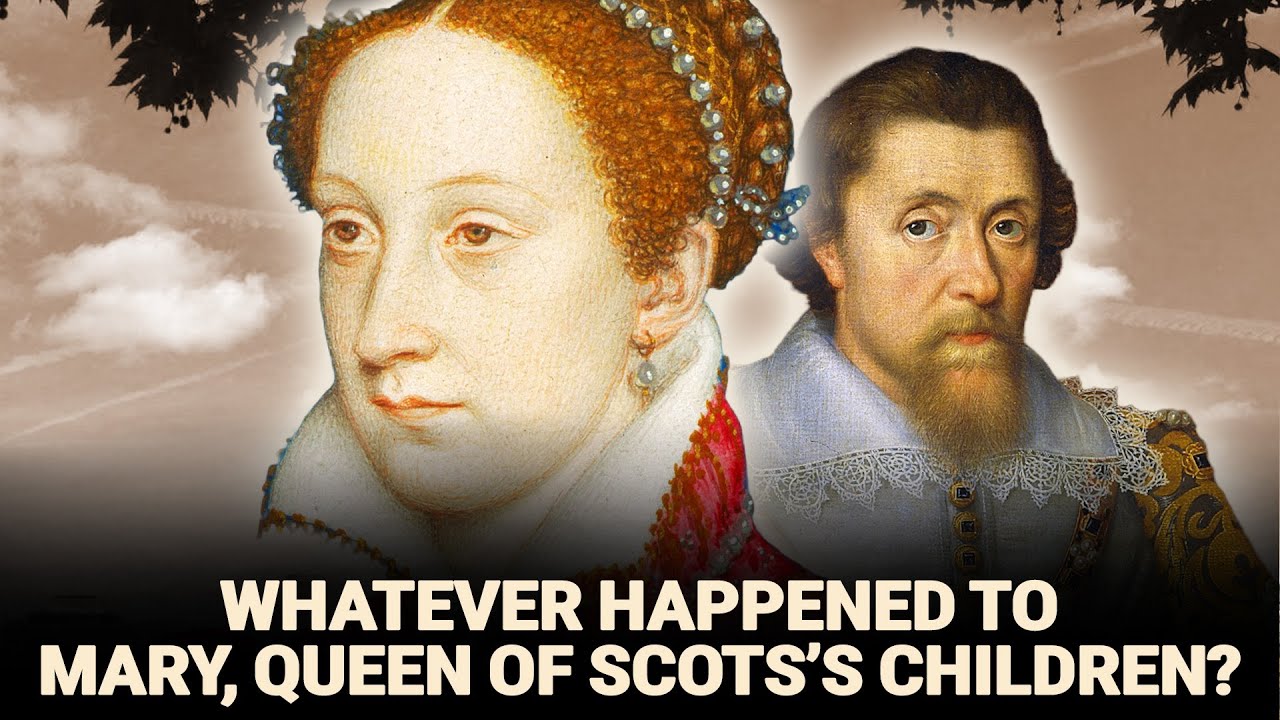
The boy’s birth came less than four months after a violent shock that had threatened both mother and child. On 9 March 1566, a group of Protestant nobles, with the complicity of Mary’s husband Henry Stewart, Lord Darnley, had burst into her private supper chamber at Holyrood Palace and murdered her Italian secretary, David Rizzio, in her presence. Mary was six months pregnant. The secretary was dragged from the room and stabbed multiple times, dying at the foot of the main staircase.
The attack was both a political coup attempt and an act of personal terror aimed at the queen. Mary later reported fearing for her own life and that of her unborn child. Contemporary accounts confirm that her attendants feared she would lose the baby. The pregnancy survived, but the murder permanently destroyed whatever affection remained between Mary and Darnley.
The newborn prince was named James, honoring his paternal grandfather Matthew Stewart, Earl of Lennox, and Scottish royal tradition. Within days he received the traditional title Duke of Rothesay, borne by heirs to the Scottish throne since the fourteenth century. The child’s position in Scottish law was secure. His birth also carried immediate implications for England.
As the great-great-grandson of Henry VII through Margaret Tudor, James represented a potential future claimant to the English throne, given Queen Elizabeth I’s unmarried status. Protestant nobles in both kingdoms saw the child as a way to secure a reformed succession, provided he was raised in the Protestant faith. Control over his person and upbringing would become the central question of Scottish politics within a year. James was baptized on 17 December 1566 in the Chapel Royal at Stirling Castle.
The ceremony followed Catholic rites, reflecting Mary’s personal faith and her desire to maintain favor with Catholic Europe, particularly France. The godparents were Charles IX of France, Elizabeth I of England, and Emmanuel Philibert, Duke of Savoy, each represented by proxy. The choice demonstrated Mary’s diplomatic skill in balancing European powers. The ceremony was followed by three days of festivities, including masques, banquets, and tournaments.
Lord Darnley did not attend, remaining in his apartments in a public display of marital discord. Most Protestant Scottish nobles attended the celebrations but declined to enter the chapel during the Catholic service. In the early hours of 10 February 1567, an explosion destroyed the Kirk o’ Field house in Edinburgh, where Darnley was staying. His body was found in the garden, apparently strangled before the explosion.
Suspicion immediately fell on several Scottish nobles, particularly James Hepburn, Earl of Bothwell. Mary’s conduct in the aftermath raised questions about her knowledge or involvement, as she appeared publicly with Bothwell and did not pursue his prosecution with the vigor expected of a widowed queen. For the eight-month-old James, the immediate effect was minimal, as he remained at Stirling under the care of the Earl and Countess of Mar. The long-term consequences proved severe.
On 24 April 1567, while traveling from Linlithgow to Edinburgh, Mary was intercepted by Bothwell and a force of eight hundred men and taken to Dunbar Castle. The circumstances of what followed remain disputed. Bothwell claimed Mary went willingly; others characterized the episode as abduction. On 15 May 1567, Mary married Bothwell in a Protestant ceremony at Holyrood, less than three months after Darnley’s death.
The marriage destroyed what remained of Mary’s political support. Catholic Europe was scandalized, and Protestant Scottish nobles already suspicious of Mary’s role in Darnley’s death now openly moved against her. A coalition of lords styling themselves the Confederate Lords raised an army. Mary and Bothwell met the rebel lords at Carberry Hill on 15 June 1567.
After negotiations, Bothwell was allowed to escape, and Mary surrendered on the promise of honorable treatment. Instead, she was taken to Edinburgh, where crowds called for her execution, and then imprisoned in Loch Leven Castle. Within weeks of her imprisonment, Mary’s captors became aware that she was pregnant, approximately six to eight weeks along. The child’s paternity was attributed to Bothwell, making the pregnancy politically explosive, as Bothwell was widely believed to have murdered Darnley.
The Confederate Lords sought Mary’s abdication in favor of her infant son. A living child by Bothwell could become a focus for pro-Mary factions, complicating the new regime. In mid-July 1567, Mary miscarried twin boys. She was under extreme physical and psychological stress, having been coerced into signing abdication documents on 24 July, and the miscarriage occurred either immediately before or shortly after that act.
On 29 July 1567, five days after Mary’s forced abdication, James was crowned King of Scots at the Church of the Holy Rude in Stirling. He was thirteen months old. The Earl of Morton acted as proxy, taking the coronation oath on James’s behalf. John Knox preached the sermon, emphasizing Protestant control over the new regime.
Mary’s half-brother, the Earl of Moray, was designated regent. James would not see his mother again. Mary escaped Loch Leven in May 1568, was defeated at the Battle of Langside, and fled to England expecting temporary refuge from Elizabeth. Instead, she was kept in captivity for the next nineteen years.
James was raised to view his mother as a political problem and a religious threat. His tutor, the humanist scholar George Buchanan, taught him that Mary had been justly removed from power for her crimes, portraying her as a murderer and adulteress. The Confederate Lords used Mary’s pregnancy and miscarriage as propaganda. The existence of the pregnancy served as evidence of Mary’s continued association with Darnley’s murderer, undermining her claims that Bothwell had abducted and raped her.
Protestant preachers interpreted the loss of Bothwell’s children as divine judgment against Mary’s sins. The miscarriage also served practical political interests by eliminating potential rival claimants to the Scottish throne. Had the twins survived, they could have become focuses for opposition to the regency, particularly from Catholic powers in Europe. The twins were buried on Loch Leven Island, but exact details of their interment remain sparse in historical records.
They were never named in official documents. No tomb or memorial was erected. The historical record comes primarily from correspondence between Mary’s captors and from Mary’s own later accounts of her imprisonment, in which she referenced the loss as evidence of the harsh treatment she had received. Mary had no more children.
Her line would continue only through James, who had been taken from her and raised under the authority of her enemies. James’s minority was marked by a succession of regents. Moray’s regency lasted until January 1570, when he was assassinated by a supporter of Mary. James’s paternal grandfather, the Earl of Lennox, became regent in July 1570 and was killed in a skirmish in Stirling in September 1571.
The Earl of Mar, James’s guardian since infancy, succeeded him but died in October 1572. James Douglas, Earl of Morton, then governed Scotland until 1578, bringing the most stable period of James’s minority and defeating the last Marian strongholds, including Edinburgh Castle in 1573. Meanwhile, Buchanan’s strict education produced one of the most learned monarchs in Europe, fluent in multiple languages and deeply read in theology and classical literature. In August 1582, when James was sixteen and had begun to assert his personal rule, a group of Protestant nobles led by the Earl of Gowrie abducted the king while he was hunting near Perth.
They held him for ten months, forcing him to dismiss the Duke of Lennox, whom they viewed as dangerously pro-French. James escaped in June 1583 and declared the raid treasonous. The episode reinforced his determination never again to be at the mercy of his subjects. He subsequently established his personal rule, balancing competing factions and asserting royal authority over the Kirk through the Black Acts of 1584.
James’s claim to the English throne rested on his descent from Margaret Tudor, eldest daughter of Henry VII. Throughout the 1580s and 1590s, he corresponded directly with Elizabeth, addressing her as his dearest sister and cultivating support among English politicians while carefully avoiding any action that might compromise his claim. When Mary was executed at Fotheringhay Castle on 8 February 1587 for complicity in the Babington Plot, James responded with public protest and private pragmatism. He wrote to Elizabeth expressing outrage and threatened military action, but he did not follow through.
He had no military force capable of invading England and no interest in sacrificing his claim to the English throne for a mother he had never known. Within months, he restored normal diplomatic relations. In 1589, James married Anne of Denmark. The marriage produced seven children between 1594 and 1607, though only three survived infancy: Henry Frederick, Elizabeth, and Charles.
Henry, born in 1594, was athletic and drawn to military matters, but died of typhoid fever in November 1612 at age eighteen. Elizabeth married Frederick V, Elector Palatine, in 1613, briefly becoming queen of Bohemia before being driven into exile. Her descendants would eventually inherit the British throne as the House of Hanover. Charles, born in 1600, was a weak and sickly child, slow to walk and speak, who became heir after Henry’s death and succeeded his father as Charles I.
Elizabeth I died on 24 March 1603. James was proclaimed James I of England on the same day. He departed Scotland on 5 April, traveling south in a progress that allowed his new subjects to see him, and entered London on 7 May. His coronation took place at Westminster Abbey on 25 July.
The Union of the Crowns remained a personal union in James’s person, with England and Scotland retaining separate parliaments and laws, but it ended centuries of Anglo-Scottish warfare and created a common foreign policy. James’s reign in England was marked by ongoing tension with Parliament, disputes over royal expenditure and prerogative, and a foreign policy that prioritized peace. He concluded the Treaty of London with Spain in 1604, ending the Anglo-Spanish War. The Hampton Court Conference of January 1604 produced few changes to church practice, but it initiated the project that became the King James Bible, published in 1611.
The Gunpowder Plot of 5 November 1605, in which a group of English Catholics planned to destroy James and Parliament, confirmed Protestant fears of Catholic conspiracy and led to harsher enforcement of recusancy laws. James’s reliance on favorites, particularly Robert Carr and George Villiers, Duke of Buckingham, created resentment among nobles and contributed to parliamentary criticism of royal expenditure. In 1612, after becoming king of England, James ordered Mary’s body removed from Peterborough Cathedral, where she had been buried after her execution, and reinterred in Westminster Abbey in a magnificent tomb portraying her in royal dignity. He also commissioned a similarly grand tomb for Elizabeth I, balancing the honors paid to his mother with those paid to the queen who had ordered her execution.
Through this gesture, James claimed both the Tudor and Stewart lines as sources of his authority, presenting himself as the reconciler of the conflicts that had defined the previous half century. James died at Theobalds on 27 March 1625, aged fifty-eight, and was buried in Westminster Abbey in the vault of Henry VII. He had united the crowns of Scotland and England, fathered a dynasty that would rule Britain for more than a century, and established the framework that made the 1707 Act of Union possible. The Loch Leven twins, miscarried during Mary’s imprisonment, never lived to complicate that inheritance.
Their deaths ensured that Mary’s entire legacy would rest on the shoulders of one son, educated in Protestantism and committed to the very cause his mother had fought against. From Edinburgh Castle in 1566 to Westminster Abbey in 1625, James’s life traced an arc from Scottish prince to British monarch, fulfilling possibilities that existed only because his mother survived long enough to give him birth and because no rival heir from her later marriage survived to challenge his claim.
