The demolition permits were filed. The decision was final. Wrecking crews would arrive within months to reduce Mar-a-Lago to rubble, and the 17 acres of Palm Beach it occupied would be subdivided into smaller lots for development. Everything Marjorie Merriweather Post had created—the imported Italian stone, the 36,000 antique tiles, the gold-leaf ceilings—would vanish, another Gilded Age mansion surrendered to modern economics.
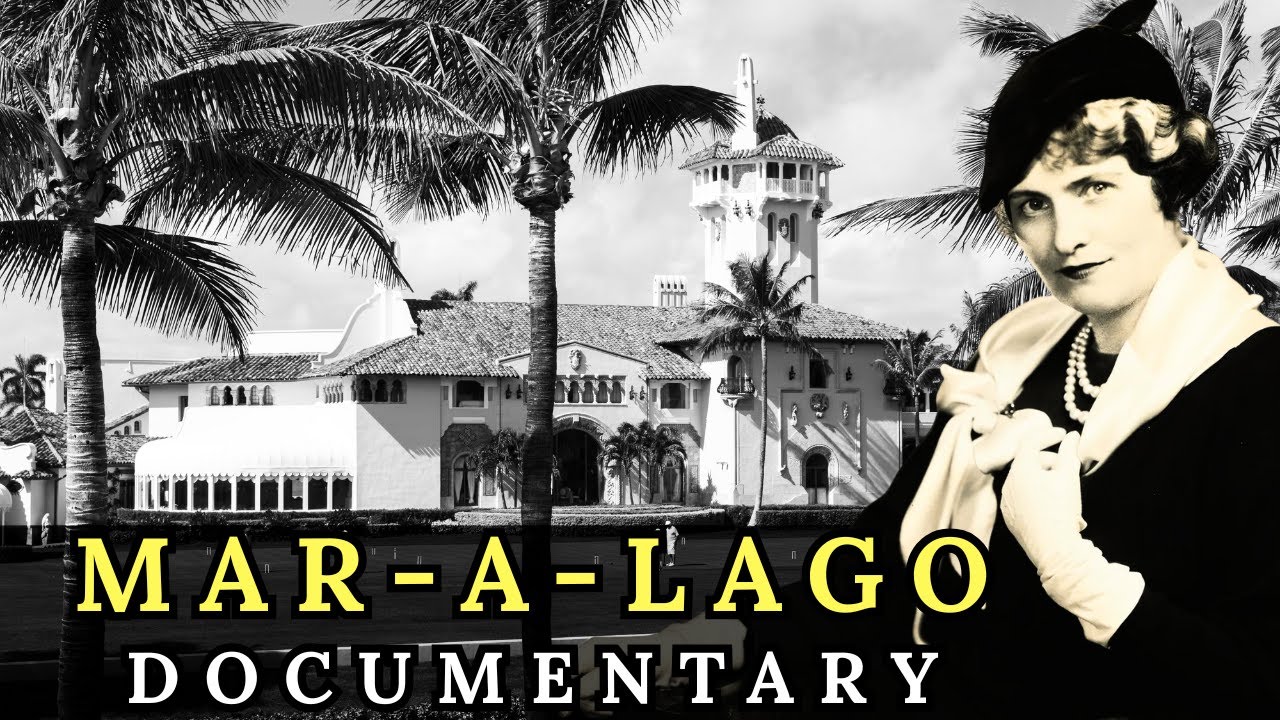
Then a New York real estate developer made a phone call. Understanding Mar-a-Lago requires understanding the place that made it possible, and that place did not even have a proper name until 1878. It began with an accident: a Spanish cargo ship that never reached its destination, and the unlikely series of events that turned an uninhabited island into the winter capital of American wealth. On January 9, 1878, the Spanish brig *Providencia*, bound from Havana to Barcelona, ran aground off the coast of Florida.
Twenty thousand coconuts packed tight in her hold spilled into the surf as the ship broke apart. The cargo washed ashore on a barrier island the locals called Lake Worth Country. A handful of settlers lived there, scattered along the coast in rough wooden structures. They came running when they spotted the wreckage—not to rescue the crew, who had already abandoned ship, but to claim salvage rights.
Families gathered the coconuts by the cartload. Some cracked them open for the meat and milk inside. Most saw opportunity and started planting. The coconut palm isn’t native to Florida, but it thrived in the sandy soil and subtropical climate.
Within ten years, groves lined the shore. What had been dense scrub and tangled vegetation became something that looked almost tropical. Visitors from the north noticed. The island needed a new name.
Palm Beach seemed fitting. The first permanent settlers had arrived in 1872 and found an unforgiving environment. Summer heat reached oppressive levels. Storms came without warning.
The nearest substantial town sat more than a hundred miles north. Supplies arrived by boat when they arrived at all. Early pioneers cleared land with hand tools, planting citrus and pineapples, fishing the lagoon and ocean. They survived, but barely.
By 1890, the area supported roughly two hundred residents. A church stood near the water. A post office handled mail that arrived irregularly. A settlement called Styx housed many of the Black laborers who kept the small community functioning.
Everything changed in 1893, when Henry Morrison Flagler stepped onto the island. He was sixty-three and phenomenally wealthy from his partnership with John D. Rockefeller in Standard Oil. He had recently completed the Ponce de León Hotel in St.
Augustine, a spectacular success that proved wealthy Americans would travel to Florida if someone gave them a reason. Flagler spent days walking the narrow strip of land. He studied the coral foundation beneath the sand. He noted the protected lagoon on one side, the open Atlantic on the other.
He saw not what the island was—a remote settlement with basic infrastructure—but what it might become with enough money and vision. He began buying property immediately. Construction on the Royal Poinciana Hotel started in May of 1893. Flagler brought in hundreds of workers.
The hotel would span 1,100 rooms, making it the largest wooden structure on Earth. He positioned it on the lakefront, facing west toward the sunset. But the project created immediate problems. Workers needed housing.
The hotel would require enormous staff. Guests would demand services the small island couldn’t support. Flagler looked across Lake Worth at the empty mainland and made a decision that would shape the region forever: he founded a new town. West Palm Beach was planned from the start as a support community, everything necessary to maintain the luxury resort across the water, but invisible to the guests enjoying their tropical escape.
The Royal Poinciana opened on February 11, 1894. Flagler’s Florida East Coast Railway reached West Palm Beach the following month. For the first time, wealthy northerners could travel to the island in private rail cars, stepping directly from train to hotel without ever encountering the rough Florida frontier. In 1896, Flagler opened the Palm Beach Inn on the ocean side of the island, later renamed the Breakers.
A massive pier extended into the ocean, allowing steamships from Nassau, Havana, and Key West to dock with passengers and cargo. The winter season emerged: eight to twelve weeks every year when America’s wealthiest families fled northern cold for Florida warmth. They didn’t just visit—they built homes, enormous winter cottages that rivaled the grandest estates in Newport or the Berkshires. Flagler set the standard in 1902 with Whitehall, his own fifty-five-room residence.
The Marble Palace announced that Palm Beach was no longer a frontier outpost. By the early 1920s, Palm Beach had become the winter capital of American wealth. Addison Mizner was designing Mediterranean Revival estates up and down the island. Worth Avenue attracted luxury retailers.
Private homes competed for oceanfront. The stage was set for someone to build something that would surpass everything that came before, something that would make even Flagler’s Whitehall look modest by comparison. All that was missing was someone with enough money, enough vision, and enough ambition to create a palace that would define the island forever. That person was about to arrive.
On May 9, 1914, Marjorie Merriweather Post received word that her father had taken his own life at his California estate. Charles William Post, founder of the Postum Cereal Company, was convinced his deteriorating health would never improve. He was fifty-nine years old. Marjorie was twenty-seven.
She inherited everything: $20 million in cash and assets, equivalent to over half a billion today. More importantly, she gained control of a rapidly growing food empire her father had built from a barn in Battle Creek, Michigan. C. W.
Post had started with Postum, a coffee substitute made from roasted wheat and molasses. Aggressive marketing with dubious health claims somehow worked. Grape-Nuts cereal followed, then Post Toasties. By the time of his death, the Postum Cereal Company was a household name.
Marjorie wasn’t unprepared. Her father had groomed her for business from childhood; she attended board meetings at age ten. But in 1914, women faced barriers men never considered. She couldn’t even vote yet.
Her first husband, Edward Bennett Close, showed little interest in the cereal business. The marriage deteriorated. Marjorie needed a partner who understood business. She found him in Edward Francis Hutton, a stockbroker and financier with aggressive instincts and sharp business sense.
When Marjorie divorced Close in 1919 and married Hutton the following year, she gained a strategist. Together they transformed Postum into a food empire. The company went public in 1922 with Marjorie retaining majority ownership. They began acquiring other brands: Jell-O in 1925, Walter Baker Chocolate in 1927, Maxwell House Coffee in 1928.
The most important purchase came from an unexpected encounter at sea. Marjorie and Hutton were sailing their yacht off Massachusetts when their cook served a surprisingly delicious meal. The goose had been frozen solid six months earlier. Frozen food in 1929 meant poor quality—ice crystals formed during slow freezing, destroying texture and flavor.
But Clarence Birdseye had invented a flash-freezing process that changed everything. Marjorie saw the potential immediately. Hutton was skeptical: grocers would need to install expensive freezers, consumers weren’t accustomed to frozen products, the infrastructure didn’t exist. Marjorie insisted.
She remembered her mother spending endless hours canning food on their Battle Creek farm. Any technology that saved housewives that labor would succeed. They purchased Birdseye’s General Seafood Corporation for $22 million in 1929. The Postum Cereal Company needed a new name to reflect its expanded scope.
It became General Foods Corporation. Marjorie was now one of the most powerful businesswomen in the country. She collected art and hosted charity events at her fifty-four-room New York apartment. Every winter she craved escape.
Her first Florida property was modest by her standards, far too small for the elaborate entertaining she envisioned. In 1923, she went looking for property. She reportedly crawled through dense underbrush with her realtor, searching for the right parcel. She found 17 acres stretching from the Atlantic Ocean all the way across the island to Lake Worth Lagoon.
The parcel sat on solid coral, crucial for supporting a large structure in hurricane-prone Florida. Now she needed architects—not just builders, but artists who could execute her vision. Marion Sims Wyeth had designed her first Palm Beach home and understood her tastes. But for this project, she wanted rooms that felt like stage sets.
For that, she needed Joseph Urban, a theatrical designer who had created sets for the Metropolitan Opera and worked with Florenz Ziegfeld. Wyeth would handle the structure and floor plan. Urban would transform the interiors into works of art. The layout would be crescent-shaped, wrapping around a central courtyard.
Two stories for the main block, with lower wings extending outward to house service areas and guest quarters. A tower rising over seventy feet would dominate the center, offering panoramic views across the island. Urban envisioned stucco walls, red tile roofs, arches and loggias. Construction began in the fall of 1923.
Crews used dynamite to break through the hardest sections of the coral foundation. Post had been explicit about one thing: she wanted the finest materials available, regardless of origin or expense. Three boatloads of Doria stone left Genoa, Italy, bound for Palm Beach. The fossil-bearing limestone appealed to Post for a specific reason—it aged rapidly, developing a weathered patina that made new construction appear established.
Post had also located a collection of antique tiles, reportedly 36,000 of them, some dating back centuries. They had belonged to the Havemeyer family, sugar-refining magnates who had assembled the collection over decades. Post purchased everything. Black and white marble flooring blocks came from a Cuban castle.
Venetian silk would line certain walls. Carved wooden beams in the Spanish style would support ceilings throughout. The project employed hundreds at its peak, most crossing from West Palm Beach each morning to work long days in brutal heat. Post made sure meals were provided on site.
As 1924 turned to 1925, then 1926, the house revealed its final character. The living room spanned over 1,800 square feet with ceilings reaching over forty feet. Gold leaf accented decorative elements throughout. A ballroom could hold hundreds.
Final accounting exceeded $7 million—adjusted for inflation, well over a hundred million in modern currency. At the time, it was reportedly the most expensive private residence ever constructed in the United States. In January of 1927, four years after construction began, Mar-a-Lago officially opened. Fifty-eight bedrooms filled the wings.
Thirty-three bathrooms featured fixtures Post had specified down to the smallest detail. The tower offered 360-degree views. Service areas occupied entire wings, with kitchens large enough to prepare meals for hundreds. The grounds were equally elaborate.
The property stretched from oceanfront to lagoon shore, living up to its name in the most literal way possible. The first party at Mar-a-Lago took place before construction was even finished. In March of 1927, weeks before the official opening, Post hosted a dinner for close friends before the annual Everglades costume ball. The guests wore elaborate costumes evoking the court of Louis XVI.
Post and Hutton appeared as the king and queen themselves, dripping in jewels and silk. The house made an impression even half complete. Post had built Mar-a-Lago for exactly this purpose: hosting on a scale that would make other Palm Beach hostesses look modest by comparison. The winter season of 1927 established the pattern.
Dinner parties happened multiple times each week, with thirty, sometimes fifty guests. The guest list reflected Post’s position at the intersection of business, politics, and society: corporate executives, politicians, European aristocrats, artists and musicians. Post believed in mixing people who wouldn’t normally meet. In 1929, she hired Ringling Brothers and Barnum & Bailey Circus to perform on the grounds as a charity fundraiser, inviting underprivileged children from West Palm Beach to attend alongside wealthy donors.
The marriage to Hutton, however, was deteriorating. The couple divorced in 1935. Post married Joseph E. Davies that same year, and when Davies was appointed ambassador to the Soviet Union in 1936, Post accompanied him to Moscow.
Mar-a-Lago sat closed for five seasons while they were abroad. In 1944, Post made the grounds available to World War II veterans who needed occupational therapy. Wounded servicemen spent time in the gardens participating in programs designed to help them recover from combat trauma. Post returned to Mar-a-Lago full-time in 1948.
In 1957, she began hosting the International Red Cross Ball annually. The event became a Palm Beach institution—white tie, tails, and tiaras required. It continues to this day. Post built a pavilion in 1961 specifically for square dancing.
Her life extended far beyond Palm Beach, and one chapter took her somewhere she never expected to go. In December of 1935, her new husband Joseph Davies received a telephone call from Franklin Roosevelt in August of 1936, asking if he would consider becoming an ambassador. Davies replied he would prefer either Russia or Germany. The German post was filled.
The Soviet Union was available. They arrived in Moscow in early 1937. At Spaso House, the American Embassy residence, the Davies family discovered that their domestic staff reported to Soviet intelligence. Hidden microphones captured their private conversations.
Yet for an ambassador’s wife, the mission remained unchanged: diplomacy required entertaining, and entertaining required Marjorie Post. She transformed Spaso House into a stage for American hospitality, pairing French and Russian porcelain with pink and yellow orchids, serving meals featuring American products—a subtle advertisement for the capitalist system her guests officially despised. The United States had only recognized the Soviet government in 1933. Relations remained fragile.
Post also discovered something unexpected: Russian art. The Soviet government desperately needed foreign currency to fund industrialization. Stalin had ordered the sale of treasures seized from the Romanov family, the Orthodox Church, and aristocratic estates. Imperial porcelain, Fabergé eggs, religious icons, furniture from the Winter Palace—all were available to buyers with hard currency.
Post began purchasing systematically. By the time she finished, she had assembled the finest collection of Russian imperial art outside the Soviet Union itself. The marriage lasted two decades, eventually dissolving in 1955. She kept the art.
Her Russian collection eventually found a permanent home at Hillwood, her Washington estate. Marjorie Merriweather Post started planning her death in the late 1960s. At eighty years old with declining health, the question of what happened to her three massive estates demanded answers. Hillwood in Washington would become a museum.
Camp Topridge in the Adirondacks could go to New York State. But Mar-a-Lago presented a unique problem. No single family could afford the operating costs. Staff, grounds, utilities, repairs—the expenses exceeded $1 million annually.
Her daughters had their own lives. Demolition crossed her mind, but destroying what took four years to build felt like erasing her own history. A different option emerged. The federal government maintained retreats for presidential use: Camp David, Blair House.
Why not a winter White House in Florida? Lawyers structured the gift carefully. Upon her death, Mar-a-Lago would transfer to the National Park Service. A trust fund providing $100,000 annually would help offset maintenance.
Congress approved the donation in 1972. President Nixon signed the acceptance legislation. Then on September 12, 1973, complications from a long illness ended Post’s life at age eighty-six. Mar-a-Lago transferred to government ownership as planned.
Problems started immediately. Nixon had signed the acceptance legislation, but he already owned a Florida retreat—his Key Biscayne compound offered everything he needed. A single inspection visit in 1974 was his only appearance at Mar-a-Lago. Watergate consumed the remaining months of his presidency.
Gerald Ford preferred Colorado ski slopes. The house sat empty. Jimmy Carter’s administration evaluated the property seriously. The assessment was discouraging.
The trust fund covered barely ten percent of actual operating expenses. Security presented additional complications: a public road ran nearby, Palm Beach International Airport generated constant aircraft noise. Carter’s team recommended returning the property. Congress debated through 1979 and 1980.
In December of that year, legislation transferred Mar-a-Lago back to the Post Foundation. The government’s ownership had lasted seven years. No president had ever slept there. Mar-a-Lago went on the market at $20 million.
Buyers didn’t materialize. The house was too large for practical family use. Operating expenses scared away anyone who looked closely. Without adequate staff, paint peeled from exterior walls.
Gardens grew wild. By 1985, the foundation made a decision: Mar-a-Lago would be demolished. Donald Trump first noticed Mar-a-Lago while vacationing in Florida in 1982. He was thirty-nine years old.
Trump Tower was under construction in Manhattan. His first offer was $15 million. The foundation rejected it. Other interested buyers circled the property, but each deal collapsed before closing.
Three years passed. Rather than raise his offer, Trump found a different approach. A narrow strip of beachfront property lay between Mar-a-Lago and the ocean. It belonged to Jack Massey, a businessman who had made his fortune building Kentucky Fried Chicken into a national chain.
Trump paid Massey $2 million for the land. Then he announced he intended to build a house on his new beachfront lot, directly in Mar-a-Lago’s sightline, blocking the views of water and horizon from the main terrace. The mansion’s most celebrated feature would be permanently compromised. The foundation recognized the threat immediately.
Other potential buyers vanished. Trump also understood what the foundation possessed beyond the real estate itself. The rooms contained antique furniture, oriental carpets, porcelain, and decorative objects that Marjorie Post had collected across five decades of travel. Independent appraisers valued these contents at $8 million—nearly half the current asking price.
By December of 1985, both parties signed the purchase agreement. Trump wrote in his autobiography that he paid $5 million for the house and land plus $3 million for the furnishings. Contemporary news reports cited figures ranging up to $10 million total. Either way, Trump had acquired Mar-a-Lago for roughly half its listed value.
His wife Ivana took immediate charge of restoration. Contractors descended on the property. The work continued for months and cost millions beyond the purchase price. By 1990, Donald Trump was in financial trouble.
His Atlantic City casinos were losing money. Mar-a-Lago contributed to the problem: annual maintenance exceeded $3 million. Trump approached the town council with a proposal to subdivide the estate into smaller residential lots. The town rejected him—Mar-a-Lago held National Historic Landmark status, and nearby residents had no interest in construction crews.
In 1993, both sides reached a compromise. Trump could convert Mar-a-Lago into a private membership club, maintaining the historic structure and grounds in exchange for limited commercial use. The Mar-a-Lago Club opened in 1995. Initiation fees started at $25,000.
Membership was capped at 500. The club distinguished itself in ways beyond its architecture. Other private clubs in town had long maintained restrictive membership policies. Jewish applicants found themselves perpetually waitlisted at certain establishments.
African American families were quietly steered elsewhere. Trump took a different approach: the Mar-a-Lago Club accepted members regardless of religion or background. Jewish families joined alongside established Protestant dynasties. African American professionals received the same consideration as anyone else.
The club reportedly welcomed gay couples at a time when other establishments would not. Skeptics noted that many wealthy residents of the area were Jewish but had no club of their own. Supporters argued his willingness to challenge local norms took courage regardless of motivation. In 1997, Trump filed a lawsuit against the town, alleging officials were imposing restrictions on his club that they did not apply to establishments that excluded minorities.
The Anti-Defamation League praised him for highlighting discrimination at Palm Beach clubs. The lawsuit was eventually settled, and restrictions were eased by the late 1990s. When Trump purchased Mar-a-Lago, much of its original splendor had faded. Richard Haynes became the estate’s artist in residence.
His father had served as Post’s chief gilder during the original construction. Using sheets of 23-karat gold, thinner than tissue paper, Haynes reapplied gilding to surfaces throughout the mansion, rebuilding forty ram’s heads that jutted from the roof line. In 1998, the Florida Trust for Historic Preservation presented an award for the rehabilitation and conversion of Mar-a-Lago. But Trump wanted more than preservation.
The white and gold ballroom Post had built measured 11,000 square feet. It could not accommodate demand. Trump proposed a new ballroom. Architects positioned the new structure in a low area behind existing walls where it would be difficult to see from the road.
The town council approved the plans in October of 1999. Trump modeled the ballroom after the Hall of Mirrors at Versailles. The Donald J. Trump Grand Ballroom was completed in 2005, with the New Year’s Eve gala ringing in that year serving as its debut.
The space measured 20,000 square feet, nearly twice the size of Post’s original ballroom. Coffered ceilings rose forty feet overhead. Seventeen crystal chandeliers hung from the gilded ceiling, each imported from Czechoslovakia at a cost of $250,000. Gold leaf alone cost $7 million.
Trump installed four gold-plated bathroom sinks near the ballroom entrance, spending $100,000 on fixtures. The total project cost approximately $40 million. The International Red Cross Ball moved to the new space. Trump’s wedding to Melania Knauss took place in the Grand Ballroom in January of 2005.
Marjorie Merriweather Post believed that wealth carried obligations. During World War I, while still in her twenties, she funded an American military hospital in France. Decades later, the French government awarded her the Legion of Honor. She gave consistently to the American Red Cross, serving not merely as a donor but as an active volunteer.
The Salvation Army received her support. The Boy Scouts of America became one of her signature causes; she donated the funds to construct their national headquarters in Washington, and the organization honored her in 1971 with the Silver Fawn Award, among the first three recipients ever to receive it. In 1955, she contributed $100,000 to the National Symphony Orchestra for free public concerts, launching the Music for Young America program. When plans emerged for a national cultural center in Washington, Post wrote a check for $100,000—that center eventually became the John F.
Kennedy Center for the Performing Arts, her contribution coming before the Kennedy name was attached. During the Great Depression, she organized charity balls at Madison Square Garden and led fundraising campaigns for the Salvation Army’s emergency relief efforts. Much of her philanthropy remained anonymous. The full scope of her private giving will never be known because she preferred it that way.
She had spent nine decades accumulating beautiful things: art, houses, jewels, friendships. In the end, what she gave away defined her more than what she kept. And the palace she built on a barrier island in Palm Beach, the one that was never supposed to survive, stood because someone else saw in it what she had seen—a place built to be full of guests, of music, of conversation, of life.
