The telephone rang in the small hours, and Lord Frederick Windsor answered it the way any man answers a call that late, with a dread that settles in the chest before a single word is spoken. His wife, Sophie Winkleman, had been in a car crash on a country road seventy miles away, and the voice on the other end made it clear that she might not survive the night. In that moment, the royal title meant nothing. The centuries of lineage, the blood of the Romanovs, the apartments in Kensington Palace, all of it dissolved into the only fact that mattered: the woman he loved was lying broken in a ditch, and he was not there.
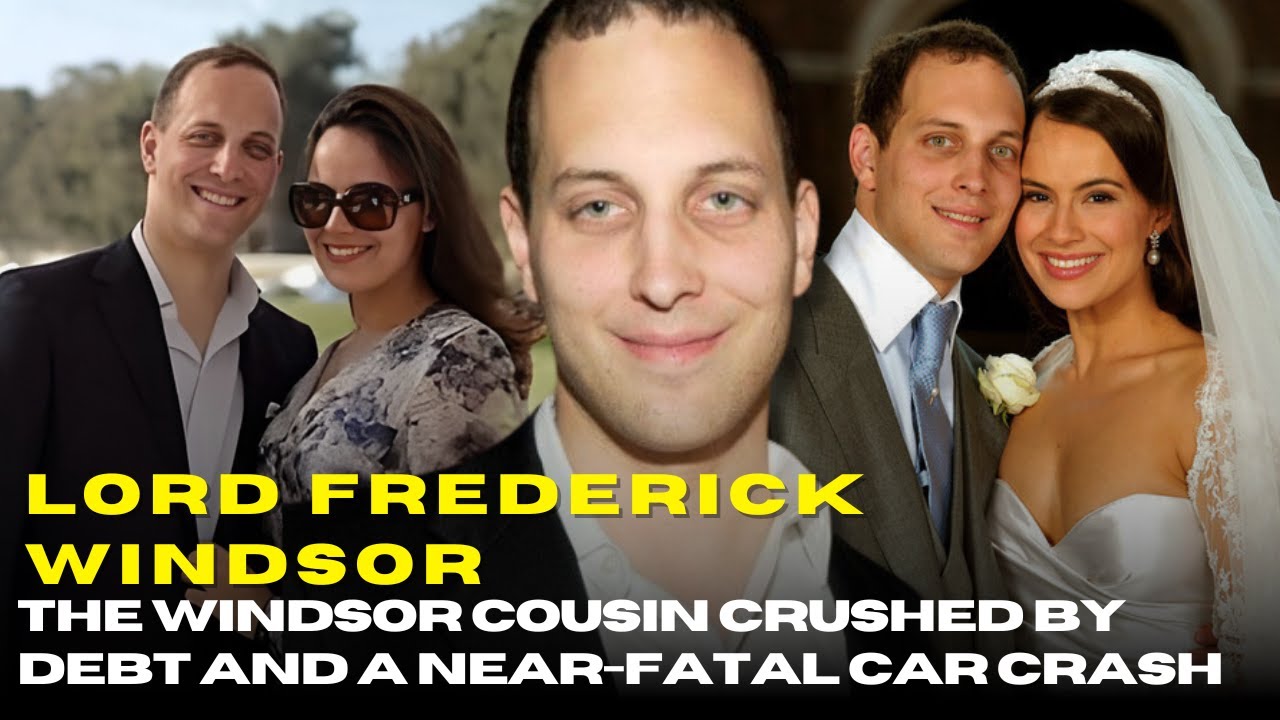
The crash had happened on the night of November 23, 2017, near Saffron Walden in Essex. Sophie had finished filming for the day at Audley End House, a Jacobean mansion where she was working on the television drama Trust, directed by Danny Boyle. The series told the story of the Getty family, another dynasty destroyed by wealth, and the irony of the casting was almost too perfect. Sophie, married into the House of Windsor, was playing a character in a drama about the corrupting weight of privilege.
She had been tired but content, balancing the demands of a serious acting career with motherhood. Her two daughters, Maud and Isabella, were at home in London, and her husband was thriving in his work at J. P. Morgan.
She had navigated the treacherous waters of marrying into the royal family and emerged not merely intact but flourishing. The drive home that night was one she had made a hundred times. The road was narrow, a strip of asphalt cutting through the dark fields. Then a deer bolted from the hedgerow.
The driver swerved instinctively, and the car left the road. It did not simply slide; it was launched into the air, a ton of steel and glass turning into a projectile that slammed into an oncoming vehicle. The collision was not a fender bender. It was a head-on impact of devastating force.
Sophie did not remember the screech of brakes. She remembered a tremendous, terrible boom, the sound of her world shattering. Then came the heat, not the cold of the winter night but an impossible, searing heat that flooded her body. Then silence.
Trapped in the twisted wreckage, she was conscious. She looked down and saw that her abdomen had been torn open. The violence of the impact had been so severe that she felt her insides had come apart. But the real horror was her spine.
She could feel the bones of her back moving, grating against each other. Lying there, bleeding, unable to move, Lady Frederick Windsor did not think about her title. She did not think about the Queen. She thought with a quiet, terrifying certainty: I am dying.
She felt a strange serenity, a sensation she later described as her soul rising. She was millimeters from paralysis. Her spinal cord, that thin thread connecting the brain to the world, was being compressed by shattered bone. If she moved the wrong way, if the paramedics were not precise, she would never walk again.
In London, Frederick received the news and raced to Addenbrooke’s Hospital in Cambridge. He arrived to find not the sterile calm of a royal birth but the chaotic, bloody reality of a trauma unit. Sophie’s foot was completely broken, her back fractured in three places. She was in agonizing pain, and yet her feet were terrifyingly numb.
For three days, sensation did not return to the lower half of her body. Frederick sat by her bed, watching the woman who was the dynamic center of his life reduced to a body wired to tubes and machines. The doctors were serious but optimistic, and they were honest: the recovery would be long, and the damage was profound. Sophie survived, and miraculously, the paralysis was not permanent.
After weeks of painful care at Addenbrooke’s and then at Chelsea and Westminster Hospital, she was allowed home. But returning home was not the end of the nightmare; it was the beginning of a new and brutal reality. Their London residence became a rehabilitation center. Sophie could not walk, could not stand, could not lift her children.
For a mother of two girls aged two and four, this was a special kind of torture. Maud and Isabella would run toward her demanding hugs, and she would have to repel them, trapped in her bed or in a chair, terrified that a single embrace would dislodge one of her vertebrae. Here the golden cage of the minor royals slammed shut. In the public imagination, when a member of the royal family falls ill, a battalion of nurses and nannies materializes instantly.
But for Frederick and Sophie, there was no battalion. There was only the two of them. Frederick faced an impossible equation. His wife needed full-time care; she needed help going to the bathroom, help getting food, help managing her pain medication.
His daughters needed a father to dress them, feed them, take them to school while their mother was incapacitated. But Frederick had a boss. He was a vice president at J. P.
Morgan, and in the high-stakes world of finance, sympathy has a short shelf life. The financial panic set in quickly. They were a dual-income family living in one of the most expensive cities in the world. They had a mortgage, school fees, and the expenses of a life that looked aristocratic but was in its structure upper-middle-class.
If Frederick stopped working to care for Sophie, his income stopped. If Sophie could not act, hers stopped too. They were standing on the edge of a cliff. The title Lord meant nothing here.
You cannot pay a mortgage with a coat of arms, and you cannot barter your place in the line of succession for groceries. For weeks they struggled in silence. Frederick turned into a ghost. He woke up, cared for the children, cared for his wife, tried to manage his work remotely, then collapsed.
The strain was devastating. He watched his wife suffer, handled the confusion of his children, and stared at a bank balance that was bleeding money. There is an ingrained pride in the nobility, especially among the less wealthy branches like the Kents. You do not ask for help.
You do not admit you are drowning. You maintain composure, you keep up appearances. To admit you could not afford a private nurse, or that you worried about the grocery bills, would be to admit the failure of your class. So Frederick said nothing.
He cooked, he cleaned, he carried his wife, risking the safety of his own back. He tried to be the hero in a story with no audience. He was fighting a war of attrition against costs and finances, and he was losing. Sophie, trapped in her ailing body, watched her husband wither under the pressure.
She saw the exhaustion in his eyes, the gray creeping into his hair. She realized he was breaking. She realized that the modern royal experiment, the idea that they could live without state assistance, was failing under the weight of an ordinary tragedy. They were isolated.
The senior royals, the Queen, Charles, William, lived in a world of palaces and retinues. They had no idea what it meant to worry about laundry or cooking dinner while recovering from a broken spine. Frederick would not tell them. He was the son of Princess Michael, and he had spent his life trying to prove he was not a burden.
He was not about to start then. So as Christmas 2017 approached, the lights in the Windsor home were dim. Outside, London was celebrating. Inside, a lord and his wife faced the hardest winter of their lives.
They were trapped in a physical and financial prison, waiting for a collapse that seemed inevitable. They needed a miracle, or at least, they needed a meal. That hunger, both the literal need for food and the metaphorical hunger for salvation, marked their existence. It was a moment of profound isolation, standing in stark contrast to the royal calendar.
While the world outside their window hung lights and sang carols, Frederick and Sophie found themselves locked in a silent, cold struggle that mocked the public image of the family they belonged to. Christmas in the British royal family is a staged, intense display of wealth. The walk to church at Sandringham, the crowds lining the road, the tweed coats, the group photograph of a family that looks secure, united, and invincible. Inside the great house, fires blaze in the hearths, tables groan with turkey and pudding, and champagne flows with the seamless rhythm of a dynasty that has not worried about a grocery bill since the seventeenth century.
But in December 2017, in the home of Lord Frederick Windsor, there was no wealth. There was only the cold gray silence of survival. By mid-December, the situation was unbearable. Sophie was in severe pain, immobile without help.
Frederick had become a shadow of his former self. His career at J. P. Morgan was on hold, his income unstable, and his mental health deteriorating under the relentless pressure of being a nurse, a father, and a breadwinner all at once.
The golden cage had become a pressure cooker, and the lid was about to blow. Rumors began to circulate. A whisper here, a concern raised there. Perhaps a shared friend, perhaps Princess Michael herself, swallowing her pride, revealed the gravity of the situation.
However the news arrived, it reached the office of the man at the top of the operational pyramid, Prince Charles. Charles was often portrayed as an eccentric, a man who talks to plants and obsesses over architecture. But those who knew the inner workings of the palace understood another side of him. He was the patriarch of money, the one who understood the disparities between rich and poor better than anyone.
He knew that while he lived in the splendor of Clarence House, funded by the vast revenues of the Duchy of Cornwall, his cousin faced a crisis that could destroy him. Charles did not send an official memorandum. He did not send a get-well card. He did something that reveals the unique and specific mechanisms of royal charity.
He sent a chef. It sounds simple, almost banal. A cook in the face of a broken back and financial ruin. But in the context of the Windsor-Winkleman crisis, it was a stroke of genius, of practical mercy.
Charles ordered his staff at Clarence House to take over the responsibility of feeding the Windsor family. He ordered fresh, nutritious meals to be prepared daily in his own kitchens and delivered across London to Frederick and Sophie’s door. For Sophie, lying in bed unable to stand, the arrival of those meals was a lifeline. It meant she no longer had to worry about whether Frederick was eating.
It meant her children got healthy food. In interviews years later, she spoke of this intervention with the reverence usually reserved for spiritual experiences. Prince Charles sensed we were suffering. It was wonderful, she said.
She described how the Prince’s staff embraced her family with all their support. It was not just the food; the message it carried was what mattered. It was a message from the future king: you are not alone, you are under my protection. For Frederick, the feelings were more complex.
To be in his forties, a vice president at a major bank, holding a noble title, and then be forced to rely on his cousin’s charity to feed his children was humiliating. It was a stark reminder of his place in the hierarchy. It cemented the truth that no matter how hard he worked, no matter how independent he tried to be, he was still a satellite orbiting the senior royals. Yet Frederick swallowed his pride.
He accepted the food boxes from the Clarence House kitchen with the grace of a man who knew he had no other choice. He realized this was not a time for vanity; it was a time for survival. The intervention bought them time, eased the immediate daily pressure, and allowed Frederick to focus on two things: caring for his wife and rescuing his career. The recovery was slow and agonizing, stretching through the winter and into the spring of 2018.
Sophie Winkleman had to relearn how to control her body. The woman who once moved between film sets and elegant dinner parties now celebrated the triumph of wiggling a toe. It was a humiliating reduction of self, and Frederick was present for every painful step. This period forged a new dynamic in their marriage.
Before the accident, they had been successful partners, the banker and the actress, living parallel lives of achievement. Now they became complements. Frederick became Sophie’s physical strength. Sophie became Frederick’s emotional anchor.
As he carried her, washed her, encouraged her, the last remnants of the playboy prince faded away. In his place stood a man of profound, quiet toughness. He returned to his work at J. P.
Morgan, but he returned a changed man. The ambition to climb the corporate ladder had been replaced by a desperate need for security. He was not working for a bonus to buy a sports car; he was working to fill the savings account the collapse had drained. The experience changed his relationships at the bank too.
Colleagues who might once have seen him as a glossy figurehead now saw a man who had stared into the abyss. There is a gravity that trauma confers. Frederick moved with a new seriousness. He looked at his own life’s budget and realized how close he had come to bankruptcy.
The crash and its aftermath exposed a fault line in the British royal family rarely seen by the public: the enormous gap between the working royals and the rest. To the average person, a royal is a royal. They all live in palaces, wear crowns, have money. But Frederick Windsor’s story proves this is a lie.
There is a brutal class system within the family itself. At the top are the first-class royals, the monarch, William and Kate. They have security details, travel budgets, and state-maintained palaces. Then there are the working royals of the minor branches, the Kents and Gloucesters, and now people like Beatrice and Eugenie.
They hold the titles, but they must pay for their housing. They must struggle to make a living. And as Frederick discovered, when disaster strikes, they have no safety net except the charity of their wealthier relatives. By spring 2018, Sophie was walking again.
The steps were hesitant, painful, and slow, but she was on her feet. The first time she walked into a room unassisted was a greater victory than any red-carpet appearance. The family began to emerge from their fortress, but they emerged changed. The gloss had worn off.
The desire to be watched had faded. They made a conscious decision to retreat further from the spotlight. They appeared at mandatory family events, Trooping the Colour and weddings, but they stayed in the background. Frederick, in particular, seemed to embrace a new role, the invisible man.
He became the antithesis of Harry. While his cousin Harry began his loud, public break from the family, complaining about the traps of royal life, Frederick quietly went about his business. He took the Tube to work. He picked his children up from school.
He did not write a memoir. He did not appear on Oprah. He simply went to his office, did his job, and returned home to the wife he had almost lost. This quiet was not weakness.
It was strength. It was the silence of a man who knew he had nothing left to prove. He had saved his family. He had weathered the storm.
He had accepted his cousin’s help and endured the humiliation of that position. He had endured. But just as things began to calm down, the royal family was about to enter a period of unprecedented turmoil. The year 2018 brought weddings, but it also brought the first tremors of the Megxit earthquake.
In the midst of that national drama, Lord Frederick Windsor found himself in a unique position: a man who understood both the trap of the palace and the terror of the real world, standing silently between the two factions. As the dust of Sophie’s recovery cleared in 2018 and 2019, the saga of the Duke and Duchess of Sussex began to dominate every headline. Harry and Meghan’s narrative was framed as a quest for freedom. Harry spoke of the trap of royalty, of the unbearable weight of hereditary pain, of the desperate need to escape the goldfish bowl to achieve financial independence.
He painted a picture of the royal family as a prison one must escape to survive. But while Harry signed million-dollar deals with Netflix and Spotify to tell the world how hard his life was, his cousin, Lord Frederick Windsor, was quietly living the reality Harry only theorized about. Frederick was financially independent. He had escaped the goldfish bowl, and he had done it without a single Oprah interview.
The contrast between the two cousins could not have been starker. Harry chose the path of the famous victim, profiting from his grievances. Frederick chose the path of the enduring survivor, containing his struggles within himself. While Harry demanded state-funded security, Frederick took the Tube to his office at J.
P. Morgan, sitting shoulder to shoulder with commuters reading news about his family in the free papers. For the generation of royal watchers over fifty, the demographic that values duty over drama, Frederick quietly became a figure of respect. He was the anti-Harry.
He embodied the old-school virtue of getting on with it. There were no complaints about the press, though the press had savaged his mother for decades. There were no complaints about money, though he had nearly gone bankrupt caring for his wife. He simply put on his suit, carried his briefcase, and went to work.
In February 2024, the mirror shattered. Thomas Kingston, the husband of Frederick’s younger sister, Lady Gabriella Windsor, was found dead at his parents’ home in the Cotswolds. A weapon was found at the scene. It was a suicide.
Thomas was forty-five years old, healthy, wealthy, and seemingly happy. There had been no public warning signs. For Frederick, the tragedy must have been a devastating re-traumatization. Seven years earlier, he had sat by a hospital bed, terrified of losing his partner.
He had been given a second chance. Now he watched his beloved sister face the very scenario he had survived, but with a definitive, non-negotiable ending. He saw Ella become a widow at forty-two. He saw the devastation in his parents’ eyes, the arrogant princess transformed into a grieving mother, her arrogance dissolved by the pure pain of watching her daughter’s life shatter.
This time, Frederick was not the one needing help; he was the one providing it. In the days following the death, he became the pillar. He stood by his sister. At the funeral, he was an example of stoic calm, his face etched with the lines of a man who had seen too much of life’s darkness, a mask of determination.
He did not speak to the press. He did not post on social media. He simply stood there, a silent guardian protecting his family’s grief. The inquest held in Gloucestershire delivered the final, painful piece of the puzzle.
It was not a story of a man hiding a secret life or ruinous debts. It was a tragedy of modern medicine. While the coroner recorded a verdict of suicide, the inquest heard harrowing evidence that the act was likely reckless, possibly the result of an adverse reaction to a drug prescribed for work-related stress. The details stripped the tragedy of any elevated meaning, leaving only the cruel randomness of chemistry.
A pill taken to help a man sleep ended his life. It was another reminder, after his own drug scandal in the nineties and Sophie’s bizarre accident with a deer, that the line between having everything and losing everything is terrifyingly thin. This time, however, the Kent family did not retreat into their old, superior silence. Lady Gabriella spoke, showing a courage that surprised the press.
She warned the public about the side effects of medication. Frederick stood silently beside her, supporting this new campaign. In the months that followed, he made a subtle but significant transformation. For years he had avoided the charitable circuit royals often use to justify their existence.
But his brother-in-law’s death changed the calculation. Frederick began working with James’ Place, a charity dedicated to saving the lives of men in suicidal crisis. It was not a glamorous patronage; it was hard, necessary work. He was a man who had seen the horror of male suicide up close, using his platform to say, I know.
I have been there. It was the final step in his transformation. The party prince, staggering out of nightclubs, was now a middle-aged father quietly using his grief to help strangers. He was not doing it for a Netflix documentary.
He was not doing it for a knighthood. He was doing it because he had looked into the eyes of his widowed sister and realized that titles cannot stop a bullet. But perhaps empathy can. Today, if you pass by the J.
P. Morgan offices in London, you might see a tall, dark-haired man in a gray suit walking toward the Tube station. He looks like any other banker, worried about the markets, checking his phone for a message from his wife. You would not know that his great-grandfather was a king.
You would not know that his father is a prince. And that is precisely the point. Lord Frederick Windsor spent the first half of his life trying to live up to his name, and the second half proving he does not need it. He is no longer the royal who went broke.
He is simply Frederick. And in the end, that is the noblest title of all.
