The winter of 1923 was bitter cold in the high country where Kentucky and Virginia run together along a wall of mountains so steep that the sun only touched the bottoms of the hollows for an hour or two a day. That country was changing fast then. The coal companies had come in, and the railroads behind them, and where there had been nothing but cabins and corn patches for a hundred years, suddenly there was money, and men with money, and men with money are not in the habit of listening. That is most of this story if you want it plain.
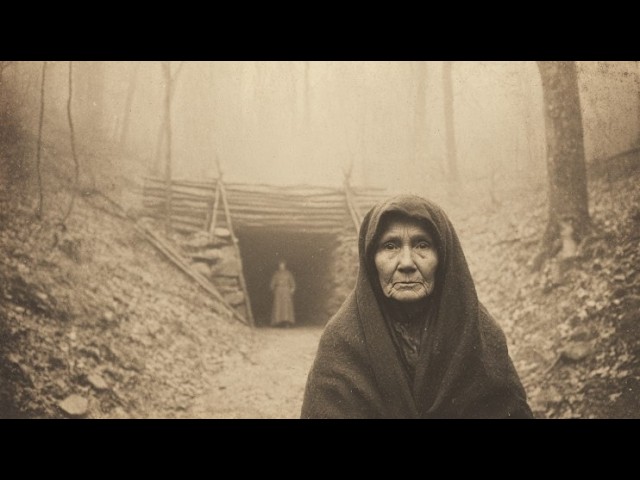
Men who would not listen. The man at the center of it was named Burl Winterborn. He was thirty-six that winter, a mineral surveyor by trade, which is a fancy way of saying a coal company paid him to climb where nobody wanted to climb and figure out where the coal lay, and how thick, and how deep, so they would know where to dig. He had a good education for a mountain man — two years at a college down in the flatlands — and it had given him a habit of trusting numbers over feelings that would in time nearly cost him everything.
He was a big-shouldered, slow-moving fellow, dark-headed, with a careful way about him. He had lost two fingers off his left hand to a winch cable years before, learned to do everything one-handed, and never mentioned it. He kept his survey notes in a leather case worn slung crossways, and he had a habit, when he was thinking, of pressing the stumps of those two missing fingers against his jaw. He was a decent man.
That matters because the hard part of this isn’t what happened to the bad men. It’s what happened to the good one. He came up into that country in the first week of December, hired by a coal outfit out of Pennsylvania that had bought up a whole mountain. They had a name for it on their maps that meant nothing — a number, really.
But the people who had lived under it for generations called it Sabbath Knob, and the long cold hollow that ran up into it they called Cold Haven. The company’s plan was simple and greedy. They wanted to open a new mine portal high up on the knob, in a spot where an old survey had hinted at a thick seam close to the surface. Burl’s job was to go up, confirm the seam, and mark where the powdermen should blast the first opening.
There was just one wrinkle. The spot the company wanted was already open. Not a mine — something older than mining. Up near the head of Cold Haven, on a shelf of the knob, there was a cut in the mountain, a deep dark vertical cleft in the rock, narrow as a doorway, that went straight down into a dark past where no light ever reached.
The old surveyor’s notes mentioned it and then strangely said nothing more, just marked it on the map with a small drawing of crossed timbers and the word “sealed. ” Because somebody a long time ago had built a door over that hole. A heavy frame of squared chestnut logs, gone black and iron-hard with age, set right into the living rock across the mouth of the cut, with a slab of slate behind it, built to keep the cut shut. And the company wanted to open it because their geologist back in Pennsylvania, looking at a map, had decided the seam ran right behind it and that the cut was the cheapest way in.
Burl came up the hollow on the company’s mule string with the man sent to run the whole operation, the mine superintendent. His name was Howard Crowley, and if a hundred stories were told, a hundred Howard Crowleys would appear. He was a hard, dry, sure sort of man who had come up the company ladder by never once doubting himself out loud. He wore a city coat in the mountains, was cold the whole time, and blamed the mountains for it.
He had a way of saying “the company has decided” that ended any argument, because to Crowley the company was a kind of god, and its will was not to be questioned by men who hadn’t read its maps. There was a third man with weight in this, and he was the opposite of Crowley in every way. His name was Cleopus Renfro, the local man the company had hired to guide them and hire on the labor. Cleopus was past sixty, born in Cold Haven, gone gray and slow, but tough as a fence post, with a face folded up like a paper that has been opened and refolded ten thousand times.
He knew that mountain the way you know a face you grew up across the table from. And from the first day, Cleopus Renfro did not want to go near that cut. He wouldn’t say why, not at first. He just found reasons.
The footing was bad. The weather was turning. The mules couldn’t make the last shelf. Crowley brushed every one of them aside the way you’d brush off a fly, and Cleopus would go quiet and chew his lip and look up the hollow with an expression Burl couldn’t read.
They set up a work camp partway up Cold Haven, in a flat below the shelf where the cut was. Tents, a cook shack, a string of mules, and a dozen hired men, most of them local, all young and strong and glad of the wages. Among those men was the one this story turns on hardest. His name was Dwey Holloway — the powder man, the one who set and shot the dynamite.
He was maybe thirty, lean and quick and grinning, the best-liked man in camp, the kind who could make a tired crew laugh at the end of a brutal day. He had a young wife down in the valley, and he talked about her constantly, told everybody he was only up here for one season, just long enough to put a roof of his own over her head. He carried her picture in his shirt pocket and showed it to anyone who would look. On their third evening in camp, an old woman walked up the hollow out of the dusk.
She had come the whole way up Cold Haven on foot in the December cold, and how she had done it nobody could say, because she looked older than the mountains. Her name was Permelia Coldwell, and everyone in that country called her Aunt Permelia. She was tiny, with a black shawl pulled up over her head and a face inside it like a walnut, and eyes that were a strange light gray, almost silver, that didn’t blink near as much as eyes should. She walked straight into that camp full of men like she had been invited.
Cleopus Renfro saw her and took his hat off, which told Burl something right there, because Cleopus didn’t take his hat off for the superintendent. She found Burl by the fire. She seemed to know which man to find. She sat herself down across from him on a powder box, slow, and looked at him a long time before she spoke.
When she did, her voice was low and even, like water under ice. “You’re the one going to tell them where to dig,” she said. He allowed that he was. “And they mean to open the slate door,” she said.
“Up on the shelf. The old cut. ”
Burl said the company believed there was coal behind it. Aunt Permelia smiled at that, but it wasn’t a happy smile.
It was the smile of somebody who has heard a child say something a child would say. “There’s no coal behind that door, son. There’s a hole, and the hole’s got no bottom anybody ever found. And there’s a reason why people put a door on it before there was a Kentucky or a Virginia, before there was anybody up here but us.
”
He asked her in his careful way what the reason was. He was humoring her. He was a man of numbers sitting across from an old woman talking about a bottomless hole, and the part of him that had gone to college two years was already arranging her words into a tidy little box marked superstition. She must have seen it on him.
She leaned in. “There’s a thing lives down in that cut. It was here before us. It sleeps most of the year down in the warm dark.
But it wakes in the cold months, and when it wakes, it’s hungry, and it climbs. ” She paused. “Not for meat. That’s what folks get wrong.
It don’t want to eat you. ”
“Then what does it want? ” Burl asked. She said a thing he never forgot, a thing that turned out to be the truest description of it anybody ever gave.
“It wants to be you. It’s the loneliest thing God ever made or didn’t make. It can’t abide being itself. So it takes a man down into the dark and it learns him.
Every part of him. His face, his walk, his voice, the way he laughs and what he laughs at. And then it climbs back out wearing him. And it walks back into the warm and the light and the company of men.
And for a while, a little while, it gets to be a person. It gets to not be alone. ”
The fire snapped out in the dark. A mule shifted.
“And nobody knows? ” Burl said slowly. “If it’s that good, nobody knows it’s not the man? ”
“Most don’t.
Most never know till it’s too far gone. But there’s one thing it can’t do, son. It can wear the whole of a man outside and in. But it’s a cold thing.
Cold all the way through. Cold as the hole it crawled out of. And a living man in the cold—” She lifted one knotted hand and tapped her own lips. “A living man breathes smoke.
You’ve seen it. Everybody breathes smoke in the cold. ”
Burl felt the hair stand up on his arms, and he didn’t know why yet. “That thing don’t breathe nothing.
It’ll talk to you, laugh with you, eat at your fire, but you watch its mouth in the cold. Nothing comes off it. No smoke, no ghost, because there’s nothing warm inside to make it. ” She fixed those silver eyes on him.
“When the cold comes hardest and the men are out in the dark, you count every man’s breath. And the one that don’t make smoke, that’s the one you’ve lost. And that’s the one you’ve got to get away from before it knows you know. ”
Then she stood slow, pulled her shawl tight, and looked around the whole camp — all those young, strong men — with something in her face that can only be called sorrow.
“Tell him not to open it,” she said, meaning Crowley. “Tell that hard man not to open the door. Once it’s out, it don’t go back willing. And it don’t come out hungry.
It comes out hungry till the cold breaks. ”
And she walked back down into the dark of the hollow and was gone. Burl was the listening kind, down underneath the college and the numbers. That cold finger went right up his back and stayed there.
He believed her — not with the front of his mind, but with the back of it, the old animal part that knows a thing before you can argue yourself out of it. But Burl Winterborn was not the man who decided. Howard Crowley was. When Burl went to him careful, not even repeating the worst of it, just saying that the local people held that cut sacred, that there might be trouble with the labor and bad feeling all around if they opened it, and that maybe the seam could be reached another way, Crowley looked at him like he had started speaking a foreign language.
“The company,” he said, “has decided. ” And that was the end of it. They opened the door. It took three days.
The chestnut frame was harder than the men expected — hard as stone after all those years — and it had been set deep into the rock by people who meant it to stay. They had to use the powder. Dwey Holloway’s powder. He shot it careful the way he did everything.
On the third day, the old slate slab cracked and fell inward, and the black square of the cut stood open to the air for the first time in longer than anybody could count. Burl was there when it opened. The smell came out first. Not a rotten smell — that was what made it worse.
It was a cold smell, an old smell, the smell of a place that has never once had the sun in it. The smell of deep stone and standing water, and something underneath that he had no word for, something almost like the inside of an old, old house where someone has been waiting a very long time. And out of the open cut came cold — real cold, rolling out of the dark like water poured downhill, cold enough that the men working the mouth stepped back from it. Crowley said it was just cave air, and that was true enough.
Caves do breathe cold. But it didn’t stop. Hour after hour that opening breathed cold down into the camp, and by nightfall the temperature in Cold Haven had dropped hard, and a fog came up out of the cut and laid down in the hollow and didn’t lift. There would be a fog every night after — cold gray fog that filled Cold Haven to the brim, turned every man into a shape and every lantern into a smear, and made it so that ten feet from the fire you couldn’t be sure who you were looking at.
They didn’t go down into the cut that first day. Crowley wanted to, but even he could see the men wouldn’t, not yet, and there was light and equipment to bring up. So they shored the opening, posted a watch, and went to their tents, and the fog lay over the camp, and the cold poured out of the dark all night. In the morning, one of the local men was gone.
Not Dwey — a quiet fellow named Marsh Darkwood, a teamster, gone out of his blankets in the night with his boots still by his cot. They searched. Cleopus Renfro searched hardest, and the look on his face got worse and worse. They found Marsh’s tracks going up toward the shelf, toward the open cut, in the frost — going up, not coming back.
Crowley said the man had got scared and run off home in the night. It happens, he said. Mountain men are skittish. They’ll find his pay docked, and that’ll teach him.
But Cleopus pulled Burl aside, white around the mouth, and said low, “His boots is still here. Men don’t run off home in December with their boots setting by the bed. ” Burl knew he was right, and he thought about a bottomless hole and a cold thing learning a man, and he wanted, more than he had ever wanted anything, to be back down in the flatlands at his little college desk, where the world made sense. That evening, in the fog, Marsh Darkwood walked back into camp.
They had given him up, and here he came out of the gray, walking slow and easy, looking just exactly like himself. The men by the fire half cheered and half shrank back, because there was something off, and nobody could say what. He said he had gotten turned around in the fog, spent the night under a ledge, sorry to scare everybody. It was his voice.
It was his walk. It was his face, down to the chipped front tooth. And Burl Winterborn, standing at the edge of the firelight in the bitter cold, watched Marsh Darkwood talk and watched the air in front of his mouth. Nothing.
Every other man at that fire breathed smoke. Burl could see it — little ghosts going up off every mouth in the cold, off Cleopus, off the cook, off the youngest hand, white in the firelight — and in front of Marsh Darkwood’s moving mouth, nothing at all. Not a wisp. The air stayed clear and still as glass.
Burl said it was the most frightening moment of his life. He was standing eight feet from a thing wearing a dead man’s face, a thing that did not breathe, and it was looking around the fire friendly, smiling Marsh’s smile, and any second it might look at him. He understood with total certainty that he must not, under any circumstance, let it see that he had seen. He kept his face still — the hardest thing he ever did.
He nodded at the thing like he was glad Marsh was back, and he made his legs walk him slow and easy away from that fire, and he went and found Cleopus Renfro in the dark. He took the old man by the arm, put his mouth to his ear, and said one word: “Breath. ”
Cleopus went rigid. The old man understood at once.
He had grown up on Aunt Permelia’s warnings the way you grow up on scripture — half-believing, never tested. Now it was tested. He looked back at the fire, at the thing wearing Marsh, and Burl felt the old arm shaking under his hand. “There’ll be more,” Cleopus whispered.
“She said it don’t come out hungry the once. As long as that door is open and the cold holds, it’ll keep taking and keep coming back. And every time there’ll be one less of us is us, and we won’t be able to tell. ” He gripped Burl’s good hand hard.
“We got to get down off this mountain tonight. Before there’s so many of them, we can’t tell who’s who in this fog. ”
But here is where it turned terrible. As they stood there in the dark, planning to slip away, they heard a laugh from the fire.
A bright, easy, well-loved laugh. Dewey Holloway’s laugh. Burl turned cold all the way through, because he hadn’t seen Dwey in hours. He made himself walk back toward the firelight, slow and casual — and there was Dwey Holloway sitting on a powder box, telling some story, grinning, the men around him grinning back.
He was warm and alive and himself in every way a man can be, except that in the cold, in front of that grinning mouth, there was no smoke. Dwey was gone. Whenever it had happened, out in the fog, nobody had even marked it. And the thing that had him had been sitting at their fire for who knew how long, learning the rest of them, listening, watching, getting ready.
It had Dwey’s picture in its shirt pocket. It patted the pocket while it talked, the way Dwey did — the loving little habit of a man who missed his wife. Burl had to stand there and watch a thing that was not Dewey Holloway pat the picture of a woman it would never love, with a hand colder than the grave, and smile around at men it meant to carry one by one into a hole with no bottom. And here is the real horror of the whole account — not the breath, not the hole.
That the thing was happy. You could see it down underneath the stolen face. The thing was happy, the way Aunt Permelia said — sitting in the warm, in the light, in the laughter of men, getting to be a person, getting to not be alone for a little while. It wanted what every lonely thing wants.
It just had to hollow out a good man to get it. Now they were two men who had seen the truth in a camp full of men who hadn’t, in a fog so thick you couldn’t count heads, with more of the things crawling up out of the dark every night the cold held. And the only ones who would have believed them were the ones already taken. You can’t warn the men because you can’t prove it.
The second you start pointing and saying that ain’t Dewey, that ain’t Marsh, you’ll have the whole camp thinking you’ve lost your mind. And worse, you’ll have the things knowing you can tell. And a thing that knows you can tell is a thing that comes for you first. Here is what Burl did.
He didn’t run — not yet. He couldn’t leave a dozen living men asleep in a camp with two of those things already sitting at the fire and more coming. So he and Cleopus worked through the night, quiet and careful, sorting the living from the not. It was slow, terrible work.
They’d find a man, get him alone, get him talking in the cold, and watch his mouth. Smoke — he was real, and they’d whisper the truth to him and watch the belief and the terror come up in his face. No smoke — they’d back away easy, smiling, mark him in their minds, and leave him be. By the gray of dawn they had counted.
Of the dozen-odd men in that camp, three of them no longer made breath. Marsh, Dwey, and the young cook’s helper, taken some time in the small hours and walked back in, and not one soul had marked him gone. Three. And the cold wasn’t breaking, and the door was still open.
The plan at first was to creep away — get the living men down the hollow in the dark before the things understood what was happening. But Cleopus Renfro stopped them. The old man had been thinking, and all of Aunt Permelia’s lore came up in him. He said a thing that changed everything.
“It won’t fix nothing to run. We run, and that door is still open, and the cold’s still on, and it’ll keep climbing out and climbing down out of this hollow into the valleys, into the towns. It’ll wear our faces right down into Cold Haven Settlement, and nobody’ll ever know. ” He looked up at the shelf, at the black mouth of the cut breathing fog.
“We don’t just got to leave. We got to shut the door behind us. ”
And here is the part that makes a man put the account down and walk around the room. To shut that door, to bring down the rock and seal the cut, somebody had to set the powder up at the mouth of the hole — in the cold, in the fog, with the things in camp, which would absolutely understand what was happening the instant they saw a man rigging charges to seal the only door back to their dark.
And the only man in camp who knew powder well enough to bring down that much rock was Dwey Holloway, who was gone. So Burl Winterborn — a surveyor with two fingers off one hand and two years of college and no business doing any such thing — had to learn to do it himself, from the living men who had watched Dwey work, in the dark, in a few hours, well enough to bring a mountain down on a hole with no bottom on the first and only try. They worked it out in whispers behind the cook shack while the fog hid them. The living men, the real ones — six or seven of them now, wide-eyed and believing — would slip down the hollow a few at a time, easy, like men going to relieve themselves, like men fetching mules.
Anything to not draw the cold things’ eyes. They’d gather at the foot of Cold Haven by the creek. The creek mattered. Cleopus swore by it.
Running water, he said. Aunt Permelia always held the cold thing couldn’t cross running water, that it was bound to the dry dark, that a man who got across a live creek was a man it couldn’t follow. Burl didn’t know if it was true, but standing where he stood, he wasn’t about to bet against the old woman on anything. And while the living slipped away, Burl and Cleopus would go up to the shelf, set the charges, shoot the door shut, and run.
It nearly worked clean. It nearly did. They got the living men down one at a time, easy, into the fog, while the three cold things sat at the fire wearing their borrowed faces, content, not yet alarmed, getting to be people a little while longer. And Burl and Cleopus got up onto the shelf, up to the mouth of the cut, and in that rolling cold that poured up out of the dark, they worked the powder into the seams of the rock above the opening, fast and shaking, the way Dwey had shown the men a hundred times, and Burl prayed to a god he wasn’t sure he believed in that he’d learned it right.
And that’s when the things came up the shelf. All three of them, out of the fog. Marsh, and the cook’s helper, and Dwey. They came slow.
They weren’t running. They didn’t need to. They came up the rock slow and easy and smiling — three men who weren’t men. And the thing wearing Dewey Holloway’s face called out in Dwey’s bright, friendly voice, the voice that had made the whole camp laugh:
“Burl.
Hey, Burl. What are you boys doing up here in the cold? ”
And its smile was Dwey’s smile, and in front of its mouth in the bitter dawn cold there was nothing. No breath.
No ghost. Just the three of them climbing slow, smiling, getting close. Cleopus Renfro told Burl to run. The old man was past sixty, and he knew that fuse, and he knew one of them had to hold the things off the rock long enough for it to burn, and he knew which one of them was going to get down the mountain alive, and which one wasn’t.
He pushed Burl toward the path. He took up a matlock in both his old hands. And he turned to face three smiling things that wore the faces of men he had hired, men he had known. He set himself between them and the powder, and he told Burl Winterborn to light it and go, and not look back.
What happened on that shelf Burl never described — not to anyone, not in the account, not once in all the years after. He wrote only this: that he lit the fuse and he ran, and that the last thing he heard from up on that shelf was Cleopus Renfro shouting, and underneath it three voices that were not the voices of men, all of them gone wrong at once, all of them making a sound he would not write down and could not forget. He said the sound followed him down the whole length of Cold Haven. He said he doesn’t think it was rage.
He thinks it was grief — because the thing in the dark was about to be alone again, and that, to a thing like that, is the only real death there is. The mountain came down behind him. The charge went, and the whole shelf of Sabbath Knob slid into the cut and filled it, and sealed it under more rock than ten companies could ever move. The cold stopped pouring out of the dark, and within the hour the fog began to lift off Cold Haven for the first time in days.
Burl got across the creek at the foot of the hollow. The living men were there. He counted them in the cold dawn — everyone. And he watched every mouth, and every one of them breathed smoke, white and beautiful in the rising light.
They were all real. They were all men. But there were two missing from that count. Cleopus Renfro, who never came down off the shelf.
And Howard Crowley, the superintendent, the hard man who would not listen. They never found him. In all the noise and fog of that last night, somewhere, Howard Crowley had simply stopped being where men could find him. Whether he went up into the dark, or the dark came down for him, no one ever knew.
The company shut the whole operation down. Officially, it was a roof fall and the loss of two men — a known hazard of the work. There was paperwork, and the paperwork said nothing true. The Sabbath Knob portal was abandoned.
The whole mountain was let go. And the records the company kept of that December — the survey notes, the labor rolls, Burl’s own reports — got sealed up in a company vault back in Pennsylvania and were, as far as anyone can find, never opened again. There are some things a company would rather not have written down where a man might read them. Burl Winterborn never surveyed another mountain.
He went down to the flatlands and never came back up into the high country as long as he lived. And he never once stood in the cold and watched another man talk without checking, helpless, just out of old habit, for the smoke of his breath. He set the whole account down when he was an old man, in the winter of 1958, the way men do when they feel the cold of their own ending and can’t carry the thing alone any longer. He gave it to a nephew, the way these things get passed — careful hand to careful hand, until it came to me.
I went up there once. Where Cold Haven was, the mine’s long gone, the camp a hundred years rotted into the leaves, and the shelf where the cut was is just a great raw slide of broken rock that the laurels never quite covered. Even now, the locals still don’t go up there. They couldn’t tell you why anymore.
The reason’s been forgotten the way reasons get forgotten, down to just a feeling, a thing the old folks pass to the young without the story attached. Don’t go up on the knob in the cold months. That’s all that’s left of it now. A rule with the why worn off.
But here is the thing that stayed with me, the thing I can’t put down. Howard Crowley was never found. And the rock came down on the cut — yes — and sealed the door, but it sealed it with whatever was on this side of it still on this side. And in the spring of 1924, down in a valley town a long way from Sabbath Knob, a man matching Howard Crowley’s description took a room in a boarding house and kept to himself, worked quiet at a desk job, bothered no one.
People said he seemed a decent enough fellow. A little cold. Didn’t go out much. Kept the stove banked high even in summer, like a man who could never quite get warm.
And the woman who ran that boarding house told a story years later that she could never explain and didn’t like to tell. She said that one winter morning she brought that quiet boarder his coffee and stood talking to him a minute in the cold of the front hall, with the door open behind her. And she said that the whole time he talked to her, pleasant as you please, his breath never once showed in the cold.
