In April 2026, authorities in Massachusetts announced that DNA evidence had definitively identified Robert Carey, born in 1960, as the man who attacked Donna Beal in 1993 and ended Sherry Bishop’s life in 1991. Carey had lived just a block and a half from both crime scenes, at the Brockton Veterans Center. But he had already died of natural causes in 2025, at the age of sixty-four. He could never be tried.
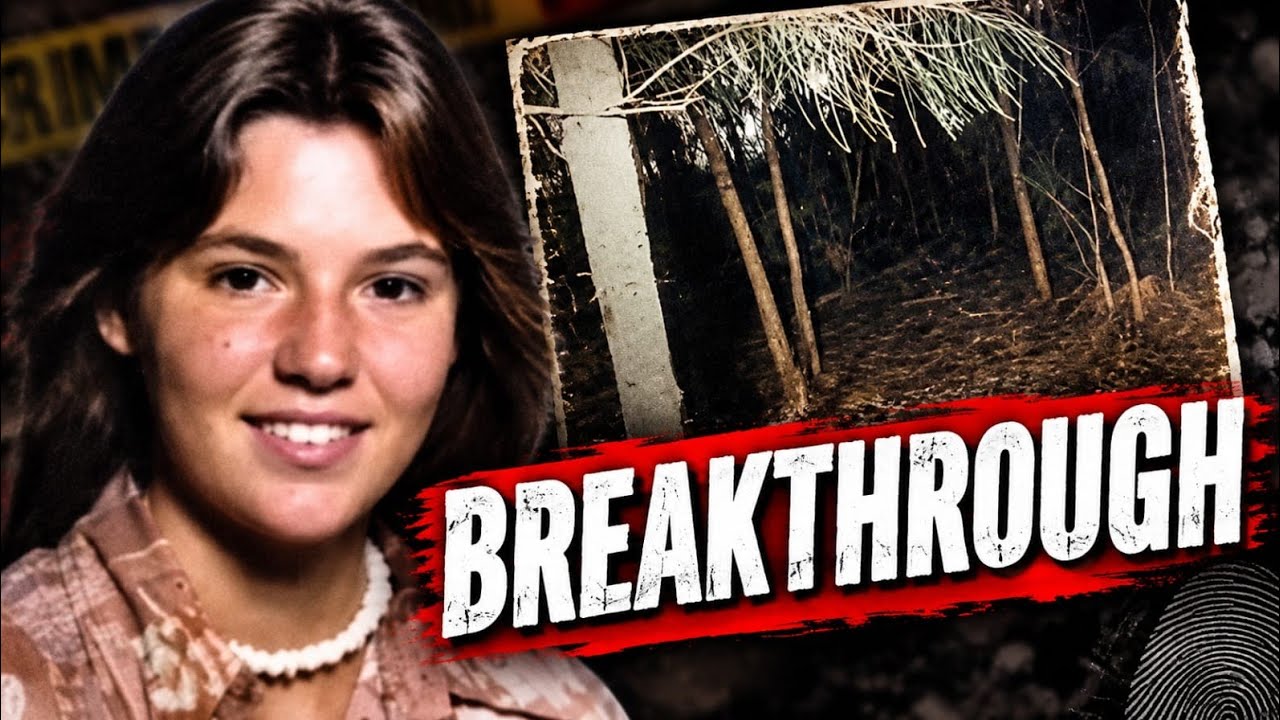
The announcement closed a chapter that had remained open for more than thirty years. On June 25, 1991, Sherry Bishop, twenty-eight, was found dead in Mulberry Park in Brockton. She lay face down, completely naked except for a pair of red socks and a single diamond earring. She had been strangled.
During the autopsy, forensic examiners collected evidence of a sexual assault, and the samples yielded a complete DNA profile of an unknown man, uploaded to the CODIS database. Less than two years later, on April 4, 1993, Donna Beal, thirty-eight, was walking in Brockton when a truck pulled up beside her. The driver forced her into the vehicle, threatening her with an electrical cord and telling her to cooperate or he would strangle her. He drove her to an isolated location and assaulted her.
Afterward, he tried to stab her with a sharp instrument. Donna fought back fiercely, grabbing at the weapon and cutting her right hand in the process. Despite her injuries, she managed to escape. Two Brockton police officers happened to be nearby and helped her, though the suspect had already fled.
Investigators gathered biological evidence from Donna’s assault examination. The attacker’s DNA profile was preserved, but the forensic technology of 1993 was not advanced enough to identify him. Both cases eventually went cold. Over the years, investigators periodically re-examined the evidence as DNA testing improved, but no match appeared in traditional databases.
In 2016, more than two decades later, investigators linked the two cases to the same suspect through DNA extracted from the assault samples. Still, police had no name. In March 2023, evidence from both crimes was sent to Astrea, a forensic genetics company, for further analysis in hopes of finding new leads. Two years later, in 2025, Astrea identified a person who was a biological family member of the still-unknown suspect.
Massachusetts State Police requested reference DNA samples from the family member, who cooperated with the investigation. The comparison led to a conclusive identification. Investigators stated that they had finally been able to provide answers and comfort to the victims’ families after more than three decades. Donna had died in 2021.
Her courage in surviving the attack, reporting it, and preserving the evidence had been crucial. The DNA collected in 1993 did not just solve her case; it identified the man responsible for ending Sherry’s life. Maggie Beal, Donna’s daughter, believed her mother’s will to live helped solve the case. “She was strong.
She was very strong. I’m very proud of my mom for being able to fight the way she did and survive, so our family could feel comfort,” she said. Linda Bishop, Sherry’s mother, said, “This is the end. I’m 82 years old.
I never really thought this would happen one day, but it did. ”
Two close friends were killed at a construction site in Stockton, California. The crime remained unsolved for more than thirty-two years, becoming one of the region’s most mysterious and frustrating cases before modern DNA technology revealed a suspect. Eugene Kitts, twenty-three, and Larry Lauer had been close friends for years.
They were studying criminal justice at San Joaquin Delta College, dreaming of careers in law enforcement. Larry worked the night shift as a security guard at a construction site in Stockton’s Spanos Park area. Eugene worked at a nearby gas station and often stopped by Larry’s security trailer after work to visit. Both young men were engaged, and family and friends knew them as hardworking, ambitious, and respectful.
Larry had already taken the entrance exam for the Stockton Police Department, while Eugene had qualified for a job as a California corrections officer and was waiting for his final background checks. In the early hours of May 23, 1994, someone arrived at the construction site around 3 a. m. Police received a report that someone had been attacked at the site on Thornton Road.
When officers arrived, they discovered a horrific scene. Larry was found inside the security trailer. He had been bound and gagged before being shot once in the back of the head. Outside, Eugene was found near a damaged metal fence.
Investigators concluded that the killer had used Eugene’s vehicle to crash through the fence while fleeing. The vehicle was later found abandoned and burned several miles away. Early investigators were initially unsure whether Eugene had been shot, run over, or both, given the condition of the crime scene. They collected fingerprints, biological evidence, and other forensic material.
Many people were interviewed over the years, but no witnesses identified the person responsible. Nothing seemed to have been stolen. The victims had no known enemies. Investigators found no clear motive and no known connection between the perpetrator and either victim or the construction site.
With no suspect identified, the case eventually went cold. More than three decades after the case was opened, in 2025, the Stockton Police Cold Case Unit partnered with the San Joaquin County Cold Case Task Force, the California Department of Justice’s Bureau of Forensic Services, and the forensic DNA company Astreum. Scientists used advanced forensic genome sequencing and forensic genetic genealogy to analyze preserved DNA evidence from the original crime scene. The genetic analysis generated investigative leads that pointed toward Donald Lee Clark, a Stockton resident.
Investigators obtained a reference DNA sample from Clark. Laboratory tests reportedly confirmed that his DNA matched evidence collected during the 1994 investigation. On April 22, 2026, members of the U. S.
Marshals’ fugitive task force arrested Donald Clark, then eighty years old, in Stockton. He was held on two counts of murder connected to the incident. Prosecutors also filed special circumstance allegations involving multiple crimes. Clark was charged, but like any criminal defendant, he is presumed innocent until proven guilty in court.
For the victims’ families, the arrest came after more than three decades of waiting. Eugene’s sister said she was grateful the arrest had finally been made, but wished their parents had lived long enough to see it. Family members described Eugene and Larry as inseparable friends whose promising futures were stolen just as their adult lives were beginning. They were buried side by side.
According to the latest public reports, authorities had not publicly revealed a motive for the crimes or explained why the two young men were targeted. In 1992, a farmer found remains in a field in Pennsylvania. It took more than three decades to identify her. On June 3, 1992, a farmer plowing a field along Christmasman Road in Windsor Township, Berks County, about twenty-seven miles west of Allentown, noticed what looked like a human skull in the freshly turned soil.
Investigators from the Pennsylvania State Police and the Berks County Coroner’s Office combed the area and found a shallow grave containing partial skeletal remains. They suspected the remains had been buried there at least a year before the farmer found them. Officials initially believed the remains belonged to a white woman between twenty-five and forty years old, about five feet three inches tall. Investigators prepared a facial reconstruction in an attempt to identify her.
They also used methods such as DNA analysis and the National Missing and Unidentified Persons System. When they could not identify her, officials named her “Christmasman Jane Doe. ”
The coroner’s office stated that investigators had tried repeatedly to identify the woman over three decades. In 2024, the coroner’s office worked with Parabon NanoLabs, based in Virginia, using advanced DNA technology to trace her family connections.
Pennsylvania State Police also worked with the coroner and the lab to identify the woman, leading them to a family in New York that had been searching for a relative since the early 1990s. In April 2026, investigators were confident the woman was Noria Columbina Rodriguez, twenty-five years old. The identification was publicly announced in June 2026 after her family was notified. Noria was born in La Ceiba, Honduras, but was from the Bronx in New York City.
She was a mother of young children and lived with or near family members. She was described as cheerful and loving, someone people often felt safe around. She could be feisty at times, but never cruel. She was smart and loved school.
She attended Nathaniel Hawthorne Middle School 74 in the Bronx, where she was on the cheerleading squad, and later moved on to Murray Bergtraum High School in lower Manhattan. She gave birth to her son, Herbert Junior Matos, at a young age. Her son remembered holding his mother’s hand on Halloween while she wore a soldier costume with a helmet and canteen. One Christmas, she brought a real tree home.
Without a stand, she improvised and tied it to the fireplace. Her family wrote, “She left much too early. A life cut short. A story left unfinished in ways that will always be difficult to accept.
”
According to relatives, she disappeared in the early 1990s. Family members later said they realized something was wrong when she did not show up for one of her children’s birthday parties, an event they believed she would never have voluntarily missed. At the time, there were no immediate indications of where she was going or what had happened to her. Despite knowing the victim’s identity, many key questions remain unanswered.
Because only partial skeletal remains were found, the medical examiner has not publicly determined her cause of death. No suspect has been identified, and no charges have been publicly filed. One of the biggest unanswered questions is why a woman living in the Bronx ended up buried in a rural field in Berks County, Pennsylvania, more than 100 miles away. Investigators believe someone transported her body there, but they have not publicly explained how or why.
Police are working to reconstruct her last known movements, including her relationships, work, friends, acquaintances, and means of transportation, as well as anyone who may have seen her shortly before her disappearance. Several factors delayed the identification. DNA technology in 1992 was far less advanced than today. Missing persons databases were limited.
Genetic genealogy did not exist. The victim’s remains were skeletal, leaving traditional identification methods extremely limited. Modern DNA sequencing and genealogy ultimately succeeded where earlier methods failed. The investigation remains open and active.
Authorities continue to seek information about her disappearance and death, asking anyone who knew her in the early 1990s to come forward. For nearly two decades, the identity of a man found dead in the Moncton area of New Brunswick remained one of Canada’s most enduring unidentified person cases. In 2007, an adult man was found dead in the Moncton area. Investigators from the RCMP’s Codiac Regional detachment began an investigation immediately.
The death did not appear suspicious. After examining the scene and available evidence, investigators concluded there was no indication of criminal activity. The bigger mystery was not how he died, but who he was. Despite extensive investigative work, police could not identify the man.
For years, he remained nameless. Over the years, investigators compared his fingerprints against Canadian and international databases. They submitted DNA profiles for comparison and worked with the RCMP’s National Center for Missing Persons and Unidentified Remains. They even sought help from Interpol and published facial reconstruction images and other identifying information to the public.
None of these efforts produced a match. The man was known simply as a John Doe, while his family wondered what had happened to him. In July 2025, eighteen years later, investigators turned to forensic genetic genealogy. Unlike traditional DNA matching, forensic genetic genealogy combines DNA analysis with genealogical research to identify distant relatives and build family trees that can eventually identify an unknown person.
The investigation involved collaboration between the RCMP, the New Brunswick Coroner’s Office, the National Center for Missing Persons and Unidentified Remains, and the Toronto Police Service. Within about a year, genealogists and investigators succeeded in identifying the man. On June 25, 2026, authorities announced that the unidentified man was William Dean Bailey McKay. Police notified his surviving family, ending more than twenty years of uncertainty.
Billy’s sister, Linda McKay, said, “For over 20 years, we wondered what happened to our brother Billy. ” She added, “Thanks to the great work and excellent cooperation between the police team, the coroner’s office, and the DNA experts, we are grateful to finally have the answer. ” Although the identification did not involve solving a crime, it finally answered one of the family’s most painful questions. What happened to Billy?
Authorities did not publicly release further details about the circumstances of his death, beyond stating that investigators found no evidence of criminal suspicion. For nearly twenty-eight years, the identity of a man known only as Garfield County John Doe was restored through advanced DNA technology. On June 2, 1998, partial skeletal remains of an unknown person were discovered in the Hog Springs area near Ticaboo, Utah, within the Glen Canyon National Recreation Area. A Colorado Bureau of Investigation agent found the remains during a search for three fugitives suspected of ending the life of a Colorado police officer and attempting to end the life of a San Juan County sheriff’s deputy, along with several other law enforcement officers.
According to investigators, a psychic medium had suggested searching that area. While following that lead, an agent with the Colorado Bureau of Investigation unexpectedly discovered the remains lying in a wash, partially buried under sand, rocks, and dirt. Investigators determined the remains belonged to an adult Hispanic male between twenty-five and thirty-four years old, believed to have been at the site for about two years before discovery. No identification was found, and because of the condition of the remains, there was no way to identify the person at the time.
Several personal items were found with the body, including a cowboy boot, a denim jacket, a bathrobe, sunglasses, a metal bracelet with an eagle pendant, a Ford truck key, an international phone card, and a belt buckle. The clothing and belongings suggested the man may have been traveling, but none provided investigators with enough information to identify him. Fingerprints, dental records, facial reconstruction, and other traditional investigative methods failed. The case was entered into national missing persons databases, but no match was found.
For decades, the victim was known simply as Garfield County John Doe. Investigators concluded the remains were unrelated to the fugitive investigation, with no evidence linking the deceased to the suspects being sought. In July 2024, twenty-six years after the case was opened, the Utah Department of Public Safety submitted evidence to Astreum for advanced forensic genetic testing. Scientists successfully extracted viable DNA from the remains and created a genetic profile.
Genetic research identified potential relatives, eventually leading investigators to a woman believed to be the victim’s sister. In May 2026, she provided a DNA sample that confirmed the remains were those of Pedro Calderon Marion, who was thirty-one at the time of his death. His identification was publicly announced on June 23, 2026, ending nearly three decades of uncertainty for his family. Little was publicly revealed about Pedro’s life.
Investigators believe he may have been traveling from El Paso toward Los Angeles at the time of his disappearance, based on evidence found with his belongings. Authorities did not announce a cause or manner of death, nor whether he was killed, died accidentally, from natural causes, or due to weather conditions. Because the remains were skeletal when discovered, determining exactly what happened was extremely difficult. The investigation into the end of his life remains open, and investigators continue to search for anyone who knew Pedro or could explain his movements before his disappearance.
Identifying him closed one chapter of the mystery but left the central question in his case unanswered. An unidentified man was finally identified more than forty years after his remains were found in Arizona. On August 16, 1983, workers digging a trench on the southwest side of a building in Prescott, Yavapai County, Arizona, found a human skull, a collection of non-human bones, and a time capsule. The presence of the time capsule with the fragmented skeletal remains led investigators to classify the burial as possibly historical in nature.
Investigators concluded the remains were likely those of a white male estimated to be thirty to forty years old at death. Despite extensive investigative efforts, the man was not identified, and case details were entered into the NamUs database. More than four decades later, in 2025, the medical examiner and the Yavapai County Sheriff’s Office sent the skeletal remains to Othram, a forensic DNA lab. Scientists worked to extract DNA from the evidence, then used forensic genome sequencing to build a comprehensive DNA profile suitable for forensic genetic genealogy.
Othram’s genetic genealogy team developed new leads, breathing life into the decades-old case. The investigation allowed investigators to identify the unknown man as Edwin “Ed” Moore. The identification was publicly announced in June 2026. According to his family, Ed disappeared in the early 1970s after returning from Vietnam.
At the time of his disappearance, he was living in Yavapai County. Although his identity was finally restored, many questions remain unanswered. Authorities did not publicly reveal whether any suspects had been identified or whether the circumstances of his death had been determined. Preserved clothing from forty years ago helped solve a cold case in Dallas, Texas, involving a woman whose life was ended inside her home.
On May 27, 1986, Ruby Pattie was brutally killed and assaulted after an intruder broke into her Dallas home. Investigators collected physical evidence, including biological material on her clothing, but the forensic technology available in the 1980s could not produce a DNA profile identifying the attacker. The investigation eventually stalled and became a cold case. In January 2025, nearly four decades later, investigators with the Dallas Police Cold Case Unit re-examined evidence that had never been tested or could now be analyzed using modern forensic methods.
Items sent to the University of North Texas Center for Human Identification included swabs collected during the original assault examination and Ruby’s underwear found at the crime scene. On April 13, 2026, scientists developed a partial male DNA profile, which was uploaded to CODIS. On May 5, investigators were notified that the DNA profile matched Marvin Lee Holloway. By that time, Holloway was already serving a life sentence in the Texas Department of Criminal Justice for ending the life of his co-worker, Emily Proctor, in 1988.
Investigators obtained a court order for a new DNA sample from Holloway in prison, confirming the match with evidence from Ruby’s case. Following the DNA confirmation, investigators obtained an arrest warrant for capital murder against Holloway. Court proceedings were still ongoing. A young woman from Vermont and North Carolina disappeared in 2015.
Her disappearance puzzled investigators for more than a decade. Sarah Nicole Graham, eighteen, lived with her father and stepmother in Robeson County. She had recently moved to North Carolina from Texas. She worked as a bookkeeper and receptionist at a Walmart in nearby Pembroke.
Friends and family described her as quiet, kind, and dependable. On the morning of February 4, 2015, Sarah left home around 6:30 a. m. for work in her father’s white Chevrolet Astro van.
She never arrived. Hours later, the van was found abandoned and locked in a field off East McDonald Road near Interstate 95. Her purse and personal belongings remained inside, but Sarah was gone. There were no obvious signs of a struggle, and no witnesses reported seeing what happened to her.
The Robeson County Sheriff’s Office, with help from the FBI, launched a search. Hundreds of leads were investigated, search warrants were executed, and the property where Sarah lived was searched multiple times over the years. An unusual detail caught the public’s attention. Both Sarah’s father and stepmother worked for the Robeson County Sheriff’s Office.
Her stepmother, Connie Graham, was fired from her job a few weeks after Sarah’s disappearance, though investigators did not publicly explain why at the time. Despite years of interviews and searches, investigators said they believed someone close to Sarah was withholding crucial information. For more than eleven years, Sarah’s family waited without knowing what had happened. Her body was never found, but investigators increasingly believed her life had been deliberately ended.
In June 2026, a judge legally declared Sarah dead under North Carolina law, which allows a person missing for at least seven years to be presumed dead. The case formally shifted from a missing persons investigation to a homicide investigation. On June 25, investigators announced a major development. Sarah’s stepmother, sixty-five-year-old Connie Graham, was arrested and charged with first-degree murder, criminal conspiracy, and altering, stealing, or destroying evidence.
Two of Graham’s sons, Bobby McClellan and Luke Leclair, both of Lumberton, were also arrested. Prosecutors alleged they helped destroy evidence and conceal the crime after Sarah was killed. McClellan faced charges of accessory after the fact, criminal conspiracy, and evidence tampering, while Leclair faced charges of criminal conspiracy and evidence tampering. Court documents stated that the evidence allegedly destroyed included a bed, clothing, and flooring connected to the crime.
Authorities did not publicly reveal how Sarah’s life was ended, and her remains had not yet been found. Sheriff Burnis Wilkins said investigators believed much remained to be uncovered and were continuing to pursue new leads after the arrests. Graham was denied bail at her first court appearance. Both McClellan and Leclair were held on one million dollars secured bond each.
Authorities did not reveal what evidence led to the arrests, saying they could not disclose key details while the case moved through the courts. Wilkins said he hoped the arrests would bring some measure of solace to Sarah’s loved ones. “While nothing can compensate for the loss that so many feel, we hope these arrests provide some comfort,” he said. “The pursuit of justice never stopped.
”
Sarah’s mother, Catherine Armenta, said the past eleven years had been extremely difficult. “There is not a day that goes by that I and my other children do not think about Sarah,” she said. “We miss her terribly. ” Catherine said the family’s decision to legally declare Sarah dead was painful but necessary after more than a decade without answers.
The FBI continued to offer a reward of up to $5,000 for information leading to the location of Sarah’s remains. A traveling salesman case dating back more than four decades was finally solved. In the fall of 1985, John Christopher Warren, forty-four, worked as a traveling salesman for an auto parts company. His job required driving across several states to meet clients and attend sales meetings.
In mid-October, work brought him to Middletown, Ohio, where he checked into a Holiday Inn near Interstate 75 on the evening of October 16. He was expected to attend business meetings before returning home. The next morning, October 17, hotel staff grew concerned when John failed to check out or respond to knocks on his door. When they entered the room, they made a horrifying discovery.
John was dead. Investigators concluded he had been severely beaten and strangled. The room showed evidence of a struggle, and investigators quickly concluded the motive was robbery. His 1985 Oldsmobile, wallet, and several personal belongings were missing.
Within days, investigators learned that John’s stolen property had surfaced about 400 miles away. Some of his personal belongings, along with other items believed connected to the crime, were discarded behind a Cracker Barrel restaurant in Dalton, Georgia, the town where John worked and had connections. His stolen car was later found even farther away, in Redington Beach, Florida. The discovery suggested whoever ended his life had fled south after the crime, but investigators had no way to identify them.
Investigators pursued numerous leads throughout the late 1980s. They interviewed witnesses, tracked the movements of John’s car, and examined abandoned belongings found in Georgia. However, forensic science in 1985 was limited. Although investigators believed there were possible suspects, they lacked sufficient evidence to make arrests.
Three men from South Carolina were identified as suspects, but charges were later dropped after polygraph tests corroborated their statements. As the years passed, witnesses died or their memories faded, and the case remained unsolved for more than three decades. In 2019, the Warren County Sheriff’s Office reopened the investigation as part of its cold case efforts. Investigators gathered every piece of preserved evidence, including items recovered from John’s hotel room, evidence from his recovered car, and belongings discarded behind the Cracker Barrel in Georgia.
Using modern forensic techniques, crime lab specialists re-examined the evidence. The new analysis reportedly revealed evidence linking Randy Lynn McAllister of Columbus, Ohio, to the crime. Investigators also identified a second alleged participant, but that person had died before charges could be filed. In late June 2026, prosecutors presented the new evidence to a grand jury.
On July 1, McAllister, sixty-two, was arrested and charged with ending John’s life. Warren County Prosecutor David Fornshell said, “Cold cases stay cold for a reason. Often there is evidence implicating a suspect, but not enough to move forward. ” He added, “Leads also diminish over time.
But, especially over the past five years, Warren County Sheriff’s Office investigators have been persistent in their investigation of this case to get it to a point where our office believed we had sufficient evidence to charge Mr. McAllister in the John Warren case. ” The prosecution alleged John was killed during an armed robbery in which his car and belongings were stolen. McAllister pleaded not guilty at his arraignment.
The judge set his bail at $500,000, ten times the $50,000 defense attorneys requested, after hearing about prior convictions for aggravated robbery and felonious assault in 1985 and 1992. If convicted, he could face life in prison under Ohio law. The case had remained unsolved for more than forty years, making it one of Ohio’s oldest outstanding criminal cases. The former Holiday Inn where John was killed had since been demolished.
His case highlighted how carefully preserved evidence and advances in forensic science could yield new leads decades after a crime, even when investigators initially had little to work with. Two men faced charges after the reopening of a cold case in Gary, Indiana. Jack Daniel was only nineteen. He was a resident of the small town of Hebron in Porter County, Indiana, remembered by family and friends as a gentle young man with his whole life ahead of him.
Like many teenagers, he looked forward to the future, never knowing that a routine meeting on an evening in March 2018 would end his life. On the evening of March 11, Jack drove his gold Chevrolet Astro van to the 5100 block of Georgia Street in Gary, Indiana. Investigators believe he traveled there expecting to meet several individuals regarding what he thought was a marijuana deal. According to prosecutors, the meeting was never intended to be an illegal drug transaction.
Instead, investigators believe Jack was lured to the location as part of a carefully planned armed robbery. Shortly after Jack arrived, two armed men allegedly approached his van. As the robbery unfolded, Jack reportedly realized something was wrong and tried to escape by putting the van in reverse. Before he could get away, prosecutors alleged both suspects opened fire.
Witnesses told investigators that Jack desperately tried to flee, but gunfire struck him before he could escape. After losing control of the vehicle, it rolled backward and collided with a parked car before coming to a stop. When Gary police officers arrived, they found Jack still inside the driver’s seat suffering from multiple gunshot wounds. Paramedics tried to help, but he was pronounced dead at the scene.
The Lake County coroner later determined Jack had been struck by three gunshots. Crime scene investigators found numerous pieces of evidence, including 9mm shell casings, spent bullets, and fingerprint evidence lifted from the driver’s side of the van. The amount of ballistic evidence suggested more than one firearm, and possibly more than one shooter, was involved. Although investigators meticulously processed the crime scene and interviewed witnesses, the investigation soon hit a dead end.
While they had fingerprints and other forensic evidence, investigators did not have enough evidence to conclusively identify the perpetrators. For years, Jack’s case was one of many unsolved cases in northwest Indiana. More than eight years later, in 2026, investigator Nicholas Wardrip of the Lake County Prosecutor’s Task Force reopened the investigation from scratch. Rather than relying only on the original case file, investigators conducted a full review.
They re-interviewed witnesses, reviewed every piece of physical evidence, re-examined fingerprint comparisons, and analyzed surveillance footage from neighboring homes. They also obtained Facebook records and other digital communications, comparing witness statements collected years apart. The renewed investigation revealed connections investigators said had not previously been strong enough to support criminal charges. According to court documents, one witness, who was a juvenile at the time of the shooting, told investigators that Willie Terrell Wallace Jr.
directed them to contact Jack and arrange the meeting. The witness said Jack drove them to the apartments on Georgia Street where a blue Dodge Dart pulled up beside the van. According to the witness, Wallace and Rashad Jerome McCoy got out of the Dodge armed with handguns and approached Jack’s vehicle. The witness stated Jack immediately tried to escape by putting the van in reverse.
Wallace allegedly fired first, while McCoy fired additional rounds at the vehicle as the witness ducked for cover. According to the probable cause affidavit, investigators gathered several key pieces of evidence. A fingerprint found on the driver’s side door matched McCoy’s prints. Ballistic evidence indicated two separate firearms were used during the shooting.
Multiple witnesses identified two men allegedly involved in the robbery. Facebook records allegedly showed communication between Wallace and McCoy before the shooting, including discussions about meeting that day. Surveillance cameras captured what investigators believed was a blue Dodge Dart near the crime scene. During interviews, McCoy admitted owning a similar vehicle in 2018 and living near the crime scene, though he denied any involvement in Jack’s case.
Investigators concluded the evidence pointed to a planned armed robbery that resulted in Jack’s death. On June 24, 2026, prosecutors formally charged Wallace Jr. , twenty-six, and McCoy, twenty-eight. If convicted, each could face more than eighty-five years in prison.
At the time of the announcement, Wallace was in custody in Wisconsin awaiting extradition to Indiana. McCoy was already serving a sentence in Indiana on another matter, allowing authorities to arrest and charge him without delay. Jack Daniel’s case was no longer considered a mystery. It had become an active criminal case.
A mysterious 1995 case on the Willamette River was resolved thanks to genetic genealogy and the persistence of investigators. The victim’s family finally received some measure of relief after all these years. On the evening of June 2, 1995, the body of Jonnie Marie Grigsby, a thirty-three-year-old mother of two from Springfield, Oregon, was found in tall grass near the bank of the Willamette River under the Main Street Bridge in Springfield. A passerby discovered the body shortly after 9 p.
m. , ending the life of a woman whose family had spent decades searching for answers. Jonnie had lived in the Springfield area most of her life. Friends and family described her as a loving mother who left behind two young children.
Her sudden and violent end devastated those closest to her and left investigators with a difficult task. The coroner’s report concluded Jonnie had been assaulted and strangled. Investigators determined she suffered severe physical injuries and believed she was killed near where her body was found, rather than transported there later. Investigators meticulously processed the crime scene and collected biological evidence they hoped would eventually identify the perpetrator.
Despite extensive interviews and countless leads, no suspect was identified. Investigators took swabs from forty men in the area, but DNA test results all came back negative. As months and years passed, the investigation stalled. The DNA technology available in the mid-1990s was not advanced enough to identify the unknown person whose genetic material was found at the crime scene.
The case eventually became one of the Lane County Sheriff’s Office’s old cold cases. Nearly three decades later, advances in forensic science gave investigators renewed hope. In 2023, the Lane County Sheriff’s Office cold case team sent DNA evidence from the crime scene to an outside lab for advanced testing. Using modern DNA analysis and investigative genetic genealogy techniques, investigators narrowed the suspect list to a few individuals.
As investigators examined those names, one stood out. The investigation revealed that one potential suspect was Roy C. Gomez, a California man shot and killed by Sacramento police during a violent confrontation in 2004 while on parole. During his autopsy, authorities had collected a DNA sample that remained preserved in official records.
Lane County investigators obtained that sample and compared it to the biological evidence found at Jonnie’s crime scene. The results were conclusive. Laboratory testing confirmed Gomez’s DNA matched the DNA collected during the original investigation, identifying him as the man connected to Jonnie’s case. Because Gomez died more than twenty years earlier, he could not be arrested or tried.
However, investigators formally closed the investigation after finally identifying the person responsible. For Jonnie’s family, the June 2026 announcement brought a mixture of relief and sorrow. After living with unanswered questions for thirty-one years, they finally knew who was responsible for taking their loved one. Her son described the news as surreal and emotional, while her brother spoke publicly about carrying decades of grief without knowing who ended his sister’s life.
Jonnie’s younger brother, John Roberts, said, “She was a fun-loving, upbeat person. She was someone you wanted to be around, a beautiful soul. She took care of me when I was little, you know. We had a special bond.
” He added, “At first, there was a little shock. You know, 31 years is a long time. There were always questions like: Where did this guy come from? And how did he end up here?
He had no known connections here that investigators could uncover and no ties to my sister. So it seems like it was a random act of violence. ”
Roberts said he spent years in active addiction, driven by the lack of answers about what happened to his sister. He had been in recovery for nineteen years and helped others overcome addiction.
Although the identification did not bring Jonnie back or lead to a trial, it gave the family finally the truth they had sought for more than three decades. A case of a woman brutally killed and placed in a vacant lot finally saw some progress. On the morning of January 15, 1947, a woman walking with her young daughter through the Leimert Park neighborhood of Los Angeles noticed what looked like an abandoned store mannequin lying in a vacant lot a few steps from the sidewalk. As she approached, she made a terrifying discovery.
It was not a mannequin but the mutilated body of a young woman. The victim had been completely severed at the waist, with the two halves of her body placed a short distance apart. Her body was carefully posed, arms raised above her head, her face bearing horrific wounds extending from the corners of her mouth toward her ears, forming what is known as a Glasgow smile. Although the body showed severe injuries and signs of torture, investigators were immediately struck by one disturbing detail.
There was not a single drop of blood at the crime scene. This indicated the woman had certainly been killed elsewhere before her body was transported and deliberately displayed in that vacant lot. The investigation quickly became one of the most notorious cases in American history. Within hours, the Los Angeles Police Department requested help from the FBI.
Using unclear fingerprints sent from Los Angeles via a primitive fax-like system known as sound pictures, FBI fingerprint experts identified the victim in just fifty-six minutes. She was Elizabeth Short, an aspiring twenty-two-year-old actress who had traveled to Southern California hoping to build a new life in Hollywood. Elizabeth dreamed of becoming a star. Friends described her as attractive, friendly, and ambitious.
She often dressed in sleek black clothing, and after her tragic end, newspapers connected that image to the recently released film “The Blue Dahlia,” giving her the legendary nickname “The Black Dahlia. ”
The FBI already had Elizabeth’s fingerprints for two reasons unrelated to the crime. In January 1943, she submitted her prints while applying for a clerical job at Camp Cooke, a U. S.
Army base in California. Several months later, she was arrested in Santa Barbara for underage drinking, resulting in another fingerprint record and a mugshot. The FBI provided investigators with that photo, which was eventually released to the media. As investigators pieced together details of Elizabeth’s final days, they learned she had been constantly moving, staying with friends, acquaintances, and hotels around Southern California.
Investigators interviewed hundreds of people who crossed her path in the weeks before her death. The brutality of the crime suggested the perpetrator possessed unusual knowledge of anatomy. Elizabeth’s body had been severed with astonishing precision through the lumbar spine, leading investigators to suspect someone with medical training or surgical experience. Based on this theory, the FBI helped examine students and staff associated with the USC medical school, along with doctors, morticians, and butchers.
None were conclusively linked to the crime. The case soon descended into chaos. Thousands of tips flooded police headquarters. More than 150 people confessed to the crime, many seeking attention or suffering from mental illness.
Investigators questioned countless suspects, but no evidence identified the person responsible. Just days after the crime, newspapers received an anonymous package containing several of Elizabeth’s personal belongings, including her birth certificate, address book, and photographs. The items had been carefully cleaned with gasoline to remove fingerprints. Authorities believed the package may have been sent by the killer.
Although investigators found fingerprints on an anonymous letter believed connected to the case, the FBI searched its extensive records and found no match. Despite being one of the largest investigations Los Angeles had ever seen, the case’s leads eventually ran out. No one was ever charged, and Elizabeth’s case became one of America’s most enduring unsolved mysteries. Over the decades, countless books, documentaries, and amateur investigations proposed various suspects, but none were supported by sufficient evidence to officially close the case.
In recent years, however, the investigation took an unexpected turn. Filmmaker Jeff Thomas and producer Kimberly Lopine of Tell Storm Productions began conducting their evidence-based investigation for the upcoming documentary series “Deconstructing Dahlia. ” According to Thomas, the project began after the son of one of the original investigators shared a secret his father had kept for decades, a detail he had promised never to reveal until then. Using that information as a starting point, Thomas assembled forensic experts, historians, and investigators known as the Deconstruction Team.
The team eventually focused on an old Los Angeles lodge that has been operating since the 1940s. They believe this lodge, not the vacant lot where Elizabeth’s body was found, is the actual crime scene. In 2022, veteran forensic experts Jim Homer Nyman and Leslie Thompson examined one of the lodge’s rooms. During the examination, Thompson noticed a loose section of baseboard beneath a wall heater.
After carefully removing a portion of the wall, the team discovered hidden layers of drywall that appeared to have been sealing off an older space for decades. Behind the wall, they uncovered what they describe as evidence of a major bloodshed event, including blood stains hidden since the late 1940s. Thomas says the team’s examination of thousands of never-before-published investigative files revealed a striking pattern. Locations mentioned in original police reports where witnesses described seeing blood matched the blood evidence discovered inside the lodge room.
By comparing witness statements, investigation reports, and forensic findings, the team announced in 2026 that they had not only identified where Elizabeth was killed but also the weapon and the person responsible. However, Thomas did not publicly reveal the alleged perpetrator’s identity, explaining that his conclusions rested on evidence to be presented in the upcoming documentary. He says one crucial piece of evidence is still missing. Thomas argues the complete, unredacted autopsy report has never been publicly released by the LAPD.
He believes access to the full report could help confirm the motive behind Elizabeth’s crime and strengthen the team’s conclusions. To support this effort, he launched a public petition urging the LAPD to release the remaining autopsy records. Despite these new claims, the Black Dahlia case remains officially unsolved. Law enforcement has not announced that the case has been resolved or that a formal suspect has been identified based on the filmmaker’s investigation.
Nearly eight decades after Elizabeth’s death, her case continues to fascinate investigators, historians, and the public alike. Whether the new evidence will finally provide definitive answers remains uncertain. A mother was charged in a horrific 1985 crime in Massachusetts. Thanks to advances in DNA technology, the pursuit of justice became possible.
On January 26, 1985, a father and son went rabbit hunting in the woods off Fruit Street in Mansfield, Massachusetts. The father noticed footprints in the snow ending at a stone wall. When he looked over the wall, he saw what he thought was a doll lying in the snow. He quickly realized it was actually the body of a newborn baby, lying naked in the snow, partially covered.
The umbilical cord was still attached. The autopsy determined the infant had been born alive and placed in the snow while still breathing. The baby was found sunk into the snow, and his body heat appeared to have melted the snow beneath him, turning it to ice. Mansfield police held a funeral for the child, paid for by the department and Steve Grogan, a New England Patriots player at the time.
Police videotaped the funeral but never identified a suspect, and the case went cold for more than three decades. The baby became known as “Baby Boy Doe. ”
In April 2022, the Bristol County District Attorney’s Office expanded its cold case unit to identify several unidentified bodies found over the past forty years. Using forensic genetic genealogy, the FBI used the baby’s DNA to create a possible family tree of the infant’s relatives.
That led investigators to Diane Carey Beck, who was a seventeen-year-old senior at Mansfield High School in January 1985 when she became pregnant. In 2024, investigators took trash from her home, and they said DNA from a soda bottle led them to believe she was the mother. In August 2025, state and local police interviewed her, and she told them she had given birth to a child in 1985. She said she learned of her pregnancy in the summer of 1984, from a former boyfriend’s child.
Beck allegedly hid her pregnancy, later telling investigators she gave birth in her ex-boyfriend’s car. She said the baby was born alive and she handed him to the boyfriend, thinking he would handle adoption arrangements. The ex-boyfriend was also a seventeen-year-old senior. She stated she never spoke to him again after that.
When asked about the extensive 1985 media coverage of an infant found a mile and a half from her home, she claimed she believed she had given birth to a girl. She also said she never checked the baby’s sex herself before handing him over, so she thought it had nothing to do with her. Beck said she gave birth on January 20, but the prosecution argued in court that the timeline did not match the infant’s condition and the freezing temperatures. According to the medical examiner, the infant had likely been in the woods for only about twelve hours before being found.
A DNA swab later confirmed she was the mother. The ex-boyfriend, whose name was not disclosed in court, died in 2020. DNA was taken from one of his relatives, confirming he was the infant’s father. Investigators could not find a single person who knew Beck was pregnant in 1985, and no information suggested the ex-boyfriend was involved or even knew of the pregnancy.
Nevertheless, prosecutors charged Beck, now fifty-nine. She was processed at the Mansfield Police Department and indicted in June 2026. She pleaded not guilty in Fall River Superior Court and was released on $10,000 bail with an order to surrender her passport. FBI Boston Special Agent in Charge Ted Dock said, “Few cases are more heartbreaking than those involving newborns who were allegedly abandoned by their mothers to die in the woods, deprived of the care, love, and protection every child deserves.
” He added, “For 41 years, this child was known simply as ‘Baby Boy Doe. ’ He came into this world with boundless promise, yet was deprived of his most basic right to life. ” Her attorney, Jason Maloney, told reporters after the hearing, “The allegations presented undoubtedly evoke a strong emotional reaction. However, we ask all parties to withhold judgment until all the facts are clear.
” Beck was scheduled to return to court for a pre-trial hearing on August 31. For nearly forty-three years, a young woman whose skeletal remains were found in the Florida Everglades remained unidentified. Thanks to DNA testing, her identity was finally established. In September 1983, a truck driver made a horrifying discovery along Highway 27 in the South Florida Everglades in Broward County, Florida.
He found the skeletal remains of a young woman. Investigators concluded the woman’s life had been ended, but they had no idea who she was. For decades, she was simply an unidentified person known as “Jane Doe. ” Police even created a facial reconstruction of the victim and published it publicly, hoping someone would recognize her.
But the case eventually went cold for four decades. The case was later reopened by the Broward Sheriff’s Office cold case unit. Using modern DNA testing and genetic genealogy, investigators began building family connections from the unidentified remains. The work was supported by a U.
S. Department of Justice grant dedicated to unidentified human remains cases. The investigation ultimately pointed to a missing teenager from Decatur, Georgia, named Sheila Anne Nichols. A DNA comparison with Sheila’s father, Clyde Nichols, confirmed that the remains found in Florida in 1983 were indeed Sheila’s.
The DNA was confirmed in 2025, although authorities officially announced her identity in July 2026. Cold case detective Andrew Giannino of the Broward Sheriff’s Office said, “It’s indescribable how someone could dispose of this young woman with such disregard. It’s truly heartbreaking. ” There was an extraordinary development involving her sister.
One of the strangest parts of the investigation is that Sheila’s sister, Virginia Gail Nichols, also disappeared from Decatur around the same time. When Detective Andrew Giannino reopened the case, investigators initially had to consider whether they were dealing with two linked disappearances or two crimes. But Virginia Gail was found alive in Georgia, where she had been arrested on a vagrancy charge in June 2025. Investigators were able to help reunite her with her family after decades apart.
But what about the perpetrator of Sheila’s crime? Here, the case remains unsolved. Investigators still do not know who ended her life, how she was killed, or why she was transported more than 650 miles from Georgia to Florida. They also want to know who she was with immediately before her disappearance, and why her body was abandoned along Highway 27.
However, there is one intriguing piece of evidence. A blue work shirt bearing the name “P. C. Cook” was found with the remains.
Investigators have not yet determined whether the shirt is connected to the killer. There was also a man named Ricky Ross who claimed in the 1990s that he was the one who ended her life. However, investigators determined he was in prison when Sheila disappeared, effectively ruling him out as a suspect. Detective Giannino believes someone in Decatur, Georgia, or South Florida may know what happened to her.
Investigators are particularly interested in anyone who remembers seeing Sheila shortly before her disappearance or knows who she was with. The Broward Sheriff’s Office offers a reward of up to $5,000 for information leading to an arrest. A woman was stabbed to death 100 times in Texas. Fourteen years after the crime, investigative genetic genealogy helped identify the person who committed it.
On January 20, 2012, Eracelma Chavez, thirty-two, was found in the kitchen of her Texas apartment, unconscious and covered in blood. Her niece, who had been dropped off to spend the day there, found her body just before 9 a. m. She had been stabbed more than 100 times and was pronounced dead at the scene.
Investigators collected a drop of fresh blood on the TV stand in the bedroom, but had few leads to work with. Among them were a missing television, surveillance video of a woman walking toward the apartment, and that drop of blood. Surveillance video from January 19 showed a person wearing a baseball cap and a large hooded sweatshirt knocking on the door at 10:36 p. m.
and being let inside. The recording appeared to be disconnected about ten minutes later, leading investigators to believe Eracelma knew the perpetrator. The sample was sent to a crime lab for DNA analysis and determined not to belong to Eracelma, but to an unknown female of Hispanic descent. The DNA profile was uploaded to the FBI’s CODIS system, but no match was found, and the case went cold for more than a decade.
In November 2024, the Arlington Police Department met with the FBI in Dallas to discuss using investigative genetic genealogy to solve the case. In April 2026, a suspect was identified through investigative genetic genealogy, a process that uses unknown DNA from a crime scene, genealogical research, and historical records to identify the unknown DNA. The suspect is Meera Velasquez, forty-two. Velasquez worked in real estate and lived in Dallas with her husband and children.
She was at one time a close friend of Eracelma’s and lived only a few miles from the crime scene. She had previously visited Eracelma’s apartment. Detective Tracy Dixon of the Arlington Police Department said Eracelma’s cell phone was a valuable source of information about their relationship, but declined to elaborate. The following month, undercover officers tracked Velasquez to a local restaurant, where they watched her have lunch with friends before collecting two plastic forks, the plate, and the cup she used during the meal.
Using that DNA, investigators compared the genetic profile extracted from the blood on the TV stand with the forks and found a match. Velasquez was arrested in July without incident on a warrant charging her with capital murder in Hurst, fourteen years, five months, and twenty-seven days after the date investigators allege she stabbed Eracelma. The motive for the stabbing remains unclear. Dustin Hoffman, an attorney with the Sellers law firm representing Velasquez, said, “What I can say right now is that Ms.
Velasquez, Meera, is completely innocent of this charge. ” He argued her DNA was present in the apartment because she frequently visited her friend, and that the person seen in the surveillance video appears to be male. They asked the court to grant her bail. A work acquaintance said Velasquez seemed like a nice, family-oriented person, having closed millions of dollars in real estate sales and traveling regularly abroad to visit family.
The acquaintance said she was shocked by the arrest news, as she believed anyone who knew Velasquez would be. For the family, the news was a relief after years of pain. Detective Dixon said, “Being able to share that with the family is why we do this work. They were so grateful.
It was emotional. ” Velasquez was eventually transferred to the Tarrant County Jail, where she was held without bail. Her attorney asked the court to set bail, and prosecutors did not object. On July 28, the court ordered bail set at $450,000.
Conditions required her to wear a GPS tracking device and remain in Dallas and Tarrant County. The next day, she posted bail and was released. No hearings were currently scheduled in the case. An ordinary July afternoon in 1994 in Seattle, Washington, became the beginning of a nightmare lasting more than three decades.
Tanya Marie Fraser had recently graduated from Washington Middle School and was preparing to start high school that fall. She was involved in her community and attended St. Clement’s Episcopal Church in Seattle’s Mount Baker neighborhood. She also volunteered with Chicken Soup Brigade, an organization providing meals to those in need.
On July 18, 1994, Tanya attended a summer school class at Meany Middle School. It was supposed to be just another day. When class ended, Tanya left the school. She was expected to make her way toward work.
According to accounts at the time, she planned to go to the Chicken Soup Brigade charity shop, but Tanya never arrived. At some point after leaving school, the fourteen-year-old disappeared. Initially, it was a missing persons investigation, but the search quickly turned into something more horrifying. A man walking his dog found Tanya’s body in the Capitol Hill neighborhood in the 2200 block of East Highland Drive, just a few buildings from where she was last seen.
The teenager had suffered multiple sharp-force injuries to her head and neck. The case immediately became a criminal investigation. Investigators believed Tanya may have known her attacker, or at least may not have initially viewed him as a direct threat. The location and circumstances suggested her body had been moved from somewhere else.
Evidence containing DNA was found. At the time, however, DNA technology was nowhere near what it would eventually become. The years passed. Tanya’s family continued living with the absence of a daughter, sister, and loved one.
The case became one of Seattle’s old unsolved cases, but cold did not mean forgotten. Investigators continued to review the investigation. Generations of investigators eventually examined the evidence. Among them was Detective Rolf Norton, who became deeply involved in the case.
Even decades after Tanya’s case was opened, investigators continued to ask the same question: what did they miss? That question haunts cold case detectives, because somewhere inside an old file, a piece of ignored evidence, or a forgotten interview, an answer can sometimes be found. The problem is finding it. More than thirty years after Tanya’s murder, forensic science had changed dramatically.
Technology that investigators could only dream of in 1994 had become available. Finally, DNA evidence from Tanya’s case could be examined using modern investigative techniques. Investigators then obtained a lead. DNA evidence was linked to a man named Mark Anthony Ross.
Ross was fifty-seven when Seattle police arrested him in November 2025. According to police, the DNA match is what finally linked him to Tanya’s case. The arrest was the moment Tanya’s family had waited for over thirty years. But it was not a moment for celebration.
Seattle Police Detective Rolf Norton stressed that the focus should remain on Tanya and her family, because an arrest does not mean a conviction. Ross was charged with ending Tanya’s life. He still had to face legal proceedings. According to prosecutors, Ross had a lengthy criminal history.
Court records show Ross was convicted of five felonies including robbery, burglary, assault, and attempted assault. He had previously been serving a life sentence but was resentenced in 2021 after new sentencing reform laws. Authorities also classified him as an unregistered offender. Investigators believe Tanya may have been targeted while walking home from summer school.
According to court documents, Ross’s mother lived across from Meany Middle School, where Tanya was last seen on July 18, 1994. The teenager’s classmates reported seeing a man approach her on the day she disappeared, and five days later her body was found less than a mile from the school. Ross’s name did not emerge as a suspect during the initial investigation, although his family members had been interviewed when she first disappeared in their neighborhood. For Tanya’s family, the arrest brought mixed emotions.
There was relief, sadness, and anger, and there were still outstanding questions. Knowing the name of the person charged with ending her life does not erase what happened. It does not give back the years her family lost. It does not allow Tanya to grow up, graduate high school, build a career, fall in love, or live the life she should have lived.
Her life ended before it barely began. Ross pleaded not guilty. The judge found probable cause to charge him with first-degree murder and ordered him held without bail. But questions remain about motive, opportunity, and whether Tanya’s murder was random or targeted.
For the first time in more than three decades, however, her family may be one step closer to knowing the truth. Tanya’s sister said, “I definitely want to face him. I hope I don’t cry. I hope I find closure.
I want answers to help me heal from this. ” Ross remained in custody at the King County Jail in Washington without bail. In August 2026, he was found competent to stand trial. A man was shot to death in Desert Hot Springs, California.
The case remained unsolved for four years until new leads finally revealed the identity of the person responsible. On the morning of July 18, 2022, police responded to reports of a shooting near Buena Vista Avenue and West Drive in Desert Hot Springs. Officers found Jason Jamar Green, forty-one, a resident of Desert Hot Springs, suffering from multiple gunshot wounds. He was transported to Desert Regional Medical Center in Palm Springs in critical condition.
Jason survived for about a week but remained in a coma. He eventually died in the hospital from his injuries. The shooter fled the scene before police arrived. Investigators initially worked intensively to identify the perpetrator but could not come up with a suspect.
Police stated that Jason and the eventual suspect were involved in some kind of confrontation shortly before the shooting. According to investigators, the shooter allegedly drew a gun and shot Jason multiple times, then fled. The exact circumstances surrounding the confrontation and the motive were not publicly disclosed. The case remained unsolved for nearly four years.
In early 2026, Desert Hot Springs investigators reopened the investigation after finding new leads. Those leads eventually guided investigators toward Camilo Castillo, twenty-eight, a Desert Hot Springs resident. On March 31, 2026, the Riverside County District Attorney’s Office gang impact team located Castillo in Los Angeles and arrested him. He was transported to Riverside County and held on suspicion of ending a life.
On April 8, prosecutors formally charged Castillo with first-degree murder, with special circumstances involving use of a firearm, causing great bodily injury, and prior conviction. Castillo pleaded not guilty at his court arraignment on April 22. He was held at the Byrd Detention Center. The arrest was a significant breakthrough in a case that had remained unsolved for years without an identified suspect.
Castillo remained in custody on one million dollars bail. A seventy-one-year-old man was arrested and faced charges for a brutal 2001 crime in Selma, North Carolina. The case was only solved after nearly twenty-five years of stagnation, thanks to a DNA match. On August 24, 2001, a report was filed about the abduction of a twenty-four-year-old woman from a store on Pollock Street in Selma.
The victim was assaulted in the aftermath. The case remained unsolved for nearly twenty-five years. The breakthrough finally came through DNA analysis. A profile entered into the FBI’s CODIS database during an unrelated criminal investigation in Dearborn matched evidence from a 2001 assault kit.
Selma police received the match results on January 29, 2026. The match pointed investigators to Jammon Mohammed Al-Jazi. Police then returned to the old case file and rebuilt the investigation, eventually gathering enough evidence to make an arrest. Al-Jazi, who was seventy-one at the time of his arrest, was taken into custody in Michigan on March 24, then later extradited to Johnston County, North Carolina, on July 12.
He faced charges of first-degree forcible rape, first-degree kidnapping, and first-degree sexual offense. He remained in custody in Johnston County without bail. Selma’s police chief described the case as unsolved for nearly a quarter century and emphasized the relief this development could bring to the victim and her loved ones. For nearly two decades, the case of a Canadian man remained unsolved.
In 2006, Patrick Santos was twenty-one and living in Toronto, Canada. On the night of September 16, Patrick was in downtown Toronto. He was at a nightclub with friends. At some point during the early morning hours of September 17, he began making his way home.
His destination was his father’s house on Bridletown Drive in the Scarborough area, near Ellesmere Road and Bellamy Road. At around 4:30 a. m. , he spoke to his girlfriend on his cell phone.
Patrick told his girlfriend he was heading home from a downtown nightclub. That was the last known contact anyone had with him. What happened over the next few hours remained a mystery for years. Investigators believed Patrick eventually reached his father’s house, but according to police, he simply did not go inside.
Instead, investigators came to believe Patrick was ambushed. Police later said they believed his attackers may have been waiting for him at his residence, and investigators believed more than one person may have been involved. This theory became important because of the circumstances in which Patrick was found. At around 7:20 a.
m. on September 17, Patrick’s father discovered his son’s body outside the home. Toronto police received a 911 call. Officers were dispatched to the house.
When they arrived, they found Patrick showing clear signs of severe trauma. Emergency personnel attempted first aid, but Patrick was pronounced dead at the scene. For Patrick’s father, the discovery was devastating. He had found his son lying lifeless outside his own home.
Investigators determined that Patrick’s hands and feet had been bound. Police later described the restraints as plastic ties, zip ties. Duct tape had also been wrapped around his head. The tape covered his face, including his mouth and nose.
Patrick had also suffered other injuries. Earlier reports about the case stated he had been stabbed four times. Toronto police later said he died of asphyxiation. Patrick suffocated after his head was covered with duct tape.
Detective Sergeant Steven Smith later explained why investigators believed the circumstances indicated Patrick’s attackers intended to end his life. He said, “They kidnapped him. They bound his hands and feet with plastic ties, then covered his head entirely with duct tape. ” Smith said investigators believed there may have been multiple people involved, because it would have required physical control to restrain Patrick and prevent him from alerting anyone nearby.
He explained, “We believe there may have been more than one person there in order to physically control him and prevent him from alerting anyone else that he was being kidnapped. ”
This became one of the biggest unanswered questions. Why would someone kidnap a twenty-one-year-old man and end his life in such a violent manner? Detective Sergeant Smith later described Patrick as a young man in the prime of life.
He had a job, a future ahead of him, and plans to move into his own home with his girlfriend. This description became particularly poignant after Patrick’s death because all those plans suddenly ended. His mother spent years asking the same question: who ended my son’s life and why? Juliette told CityNews, “I asked God, why would anyone hurt my son?
My son is so good and helps everyone. ”
Investigators collected physical evidence from the crime scene. Among the evidence was something that would later become crucial: DNA. Investigators were able to develop a DNA profile believed to belong to the perpetrator.
But there was a problem. The profile did not match anyone in the national Canadian DNA bank. There was no name, no specific suspect, no arrest. The DNA remained an unidentified profile.
Eventually, the case went cold. The case may have gone cold, but investigators did not discard the evidence. The DNA profile remained available. As forensic science advanced, police began looking for new ways to use it.
In 2020, fourteen years after the case was opened, Toronto police partnered with Astreum. Investigators submitted the perpetrator’s DNA profile for investigative genetic genealogy purposes. The process did not immediately produce a suspect. Instead, it produced new investigative leads.
Smith explained, “Although this process did not directly identify the suspect, it generated valuable investigative leads that helped move the case forward. ” Those leads took several more years for investigators to develop. Investigators in the cold case unit continued working on the case. The Forensic Identification Services team was also involved in the investigation.
Nearly two decades had passed. Witnesses had moved away. Memories had faded. Technology had changed.
So had the people involved in the original investigation. But the investigators continued their work. Then, in 2025, they identified a person of interest. His name was Pierre O’Connor.
O’Connor was living in Hamilton, Ontario. He was forty-two years old at the time. Police now had someone they wanted to investigate more closely, but they needed to prove whether the DNA evidence linked him to Patrick’s case. Investigators obtained a DNA sample from O’Connor.
The sample was sent for forensic comparison. The result was significant. According to Toronto police, O’Connor’s DNA matched the evidence found at the 2006 crime scene. Nearly twenty years later, investigators had a suspect whose DNA matched the preserved evidence from the original crime scene.
On July 29, 2026, Toronto police arrested O’Connor and charges were laid. Police also released photos of O’Connor from 2026 and an older photo from 2003. Investigators stated they believed Patrick was involved in criminal activity related to copying credit and debit card data. Patrick’s family was not aware of this alleged aspect of his life.
But investigators also said they were still trying to determine the exact motive and the relationship between Patrick and the people responsible for his death. Smith described the suspected motive only in general terms. He said investigators believed there was a dispute involving Patrick with another group. Importantly, police said they did not necessarily believe this was a gang-related dispute.
Instead, Smith described it as a dispute between different people or groups of friends. So, although investigators had developed theories about the circumstances surrounding Patrick’s murder, the exact cause of the crime remained unclear. But police were careful to emphasize that the arrest did not mean the investigation was over. In fact, they believed there may be other people involved.
Another big unanswered question was whether Patrick knew O’Connor. Police had not publicly identified the nature of their relationship. Smith also said, “While nothing will bring Patrick back to his family, we can say today that the person allegedly responsible for ending his life has been identified and arrested, and will now have to answer for this crime in court. ”
For nearly five decades, investigators knew her only as “Arvin Jane Doe,” a teenage girl whose skeletal remains were discovered buried beneath a vineyard in California in 1978.
Then advances in DNA technology finally gave investigators an answer. On June 21, 1978, a tractor driver working in a vineyard near Arvin, California, near South Wheeler Ridge Road, disturbed the soil as the tractor moved through the farm. The driver discovered what appeared to be a shallow grave. Inside were human skeletal remains.
Investigators were called to the scene and recovered the remains of a young girl. But there was an immediate problem. No one knew who she was. There was no name, no confirmed identity.
Without knowing who the victim was, investigators had very little information about her life. She became known as “Arvin Jane Doe. ” An autopsy was performed, but investigators could not precisely determine how she lost her life. As investigator Ashley Thompson of the Kern County Sheriff’s Office later explained, without her identity, there were no leads, no suspects, and no arrests.
Her remains were eventually buried in Arvin Cemetery in November 1978. The investigation stalled. As forensic technology improved, authorities periodically reconsidered the case. Eventually, investigators began using new methods to try to identify the girl.
An important step came nearly three decades later, in 2007. Investigators discovered that DNA samples had never previously been collected from the remains. They needed to obtain biological material for modern forensic testing. The remains were exhumed in August.
Investigators collected samples from bones and other material that might contain usable DNA. Those samples were sent to the California Department of Justice. But again, the investigation hit a dead end. The DNA produced no traditional match.
There was no familial DNA match available in the databases investigators were using. Technology had improved significantly since 1978, but even DNA could not yet tell investigators the girl’s identity. Investigators also tried another approach. The National Center for Missing and Exploited Children was brought in.
A facial reconstruction was created from the remains. The reconstructed image was then circulated publicly. Investigators reviewed missing persons cases. They examined fingerprints and looked at dental records.
They searched missing persons information from California and Oregon. But there was no identity, and the girl remained known as “Arvin Jane Doe. ”
By the 2020s, forensic DNA science had advanced considerably. One of the most important developments was investigative forensic genetic genealogy.
Unlike traditional database searching, genetic genealogy can identify a person through their relatives. Investigators first needed to develop a detailed enough DNA profile. They could then search for genetic connections to people whose DNA data was available in appropriate genealogy databases. Those connections could lead investigators to the person’s relatives.
Researchers could then build family trees and work generation by generation until they could identify the unknown person. It was a technique that had transformed many cold case investigations. In this case, it finally provided the breakthrough they had been waiting for. Investigators eventually partnered with Astreum.
Scientists developed a comprehensive DNA profile from the remains. The genetic information was then used to identify potential relatives. Instead of searching for the person directly, investigators were effectively searching for her family tree. This approach produced something investigators had never had before: a possible family connection.
According to information released about the investigation, Astreum’s forensic genetic genealogy work identified a possible relative in August 2025. Investigators followed that lead. The next step was to determine whether the unidentified remains truly belonged to that family. Family members provided DNA samples.
Those samples were compared to the DNA profile extracted from the remains. The comparison eventually confirmed what investigators had been searching for since 1978. The unidentified girl was Michelle Louise Collier. Nearly forty-eight years later, the “Arvin” Jane Doe victim finally had a name.
Michelle was born in California and lived in Fresno with her family. To the people who loved her, she was known by the nickname Shelley. She was only fifteen when she disappeared in 1978. Because the case remained unidentified for so long, little information was published about Michelle’s personal life.
What investigators know is that she was a teenager from Fresno reported missing in February 1978. At the time, her family did not know she would eventually become the unidentified victim known as “Arvin Jane Doe. ”
Her older sister, Cynthia Dunbar, later spoke publicly about the impact Michelle’s disappearance had on their family. She described the emotional reality of knowing that the sister they had been searching for had been dead all that time.
Cynthia said, “She disappeared 48 years ago and we only recently learned where she was. ” They did not know if they would ever see her again. The exact circumstances surrounding her disappearance were not publicly revealed. That was one of the frustrating aspects of the case.
Investigators finally knew who she was, but they still did not know exactly what happened in her final days. The identification process also brought a more painful realization. Michelle had not simply disappeared. She had been killed.
At the press conference announcing Michelle’s identification, Cynthia addressed her sister directly. Using the nickname “Shelley,” she said, “You did not deserve to lose your life this way, Shelley. ” Cynthia continued, emphasizing how young Michelle was. She said Michelle was barely fifteen, still a child with her whole life ahead of her.
Those words captured the magnitude of what was lost. Had she lived, she would have experienced decades of life her family could not share with her. Instead, she became a name investigators could not identify for forty-eight years. But Cynthia’s message did not stop with her sister.
It also addressed the person responsible for ending Michelle’s life. She said, “Your cowardly act affected our entire family, but make no mistake, law enforcement will find you and hold you accountable. ” She added, “Whether you are already imprisoned or dead, you will be found. ” It was a warning from a family that had waited nearly half a century for answers.
They knew Michelle’s identity, but they still wanted justice. Michelle’s brother Kevin, his wife Nancy, and her cousin Michael provided their DNA to the genealogy database, leading to Michelle’s identification as the victim. After her identity was confirmed, Michelle’s remains were moved from Arvin Cemetery in April 2026. Her family was finally able to receive her remains.
They could give her the burial they could not give her in 1978. Cynthia said, “Thanks to the detective’s dedication, perseverance, and attention to detail, we were able to bring our sister home and hold a proper burial. ” The Kern County Sheriff’s Office continues to treat her death as an ongoing investigation. For more than fourteen years, the case of a Connecticut man remained unsolved.
On February 22, 2012, Michael Mitchell was at a home on Mountain Laurel Road in Chaplin, Connecticut. Michael was forty-two and lived in nearby Willimantic. According to investigators, he was stabbed to death inside the home. Another woman was also stabbed during the incident.
Unlike Michael, she survived. The woman managed to escape the home and ran to a neighbor’s house for help. Police were called at around 4:05 p. m.
When officers arrived, they found evidence of a violent struggle inside the home. According to the arrest warrant, there was a trail of what appeared to be blood starting just inside the entrance and extending through the kitchen toward the living room. The living room showed signs of a struggle. There was broken glass.
Furniture was scattered, and investigators found a significant amount of what appeared to be blood on the couch, walls, and floor. The rest of the residence was searched. No suspect was found inside, and there were no additional victims. Investigators collected numerous items of evidence from the residence.
Among them were clothing, a black knife sheath, a Leatherman multi-tool, and several swabs containing what appeared to be blood. Investigators also collected samples from areas including hallway walls, the floor, door handles, and door frames. The black knife sheath was particularly interesting. According to the search warrant, it was found outside in the driveway near the chimney.
It was in an area investigators believed a suspect’s vehicle may have been parked. The Leatherman tool was also collected as evidence. At the time, investigators did not know exactly how all these pieces of evidence would fit together. Michael was also known by the nickname “Mike Nice.
” Investigators interviewed Matthew Venning. According to the warrant, Matthew was cooperative during the interview. He admitted knowing Michael, but investigators later described his account as inconsistent and contradictory. For example, according to the warrant, Matthew at one point said he heard the crime occurred on Miller Road in Chaplin.
Later, he reported he did not know where the crime occurred. Matthew denied involvement in the case and denied having any information. But investigators knew Matthew and Michael had spent time together on the day Michael lost his life. Matthew told police he had used drugs with Michael that day.
He said he used three or four hits of freebase cocaine with Michael and added that he could not remember their conversation. Matthew also reported he may have called Michael because he was looking for more drugs. He told investigators no one else was with him and Michael in the car as they traveled that day. But investigators would later examine their cell phone records.
Those records became important. Investigators told Matthew that phone records showed he and Michael spoke at around 3:11 p. m. on February 22.
Police were called to the Chaplin residence about fifty-four minutes later. Another important piece of information emerged in 2013. Police interviewed a person in custody at the Willimantic Police Department. That person claimed to have information about Michael’s case.
The witness allegedly told an investigator that Matthew confessed to stabbing “Mike Nice” and ending his life. The alleged reason was that Mike had tried to “hustle” him. The witness explained the term meant Michael allegedly tried to cheat Matthew. This was a claim reported to investigators, but they kept the information to themselves.
Years later, it became part of the case they used to establish probable cause. Another witness who knew Matthew said he came home at around 4:30 p. m. on February 22, 2012.
That was shortly after the approximate time police received the call about the stabbing. The witness reportedly said Matthew appeared very agitated. She described him as sweating and looking terrible, as if he had just come out of the shower. According to the arrest warrant, Matthew told the woman he had been in a fight with someone that afternoon.
The witness also reported that Matthew appeared to be under the influence of drugs. She recalled him saying his adrenaline was flowing. Despite the evidence investigators collected in 2012 and 2013, no charges were filed against Matthew at that time. The years passed.
Michael’s case remained unsolved, but the evidence was not entirely forgotten. Eventually, the Cold Case Unit of the Chief State’s Attorney’s Office took another look at the case. Investigators returned to examine the physical evidence collected more than a decade earlier. The cold case investigation re-examined historical cell phone data.
According to the warrant, investigators determined that phones belonging to both Matthew and Michael were in use that fateful day. Importantly, investigators analyzed historical cell tower information. According to the warrant, both Matthew Venning’s and Michael Mitchell’s phones were within coverage range that included the crime scene at the time of the murder. That information alone did not prove who committed the stabbing, but investigators considered it significant when combined with other evidence.
According to Chief State’s Attorney Patrick J. Griffin, investigators used multiple forms of evidence to identify Venning as a suspect. Those included DNA analysis, surveillance video, cell phone data, and eyewitness testimony. Here the case becomes particularly unusual.
A recent DNA test was conducted, and according to the arrest warrant, the results did not simply point to Venning. In fact, quite the opposite occurred. The warrant states that an August 2026 DNA report found that examination of the victim’s clothing, several swabs containing blood-like material, and a swab from the exterior of the Leatherman knife sheath excluded Matthew Venning as a source of that DNA. In other words, Venning’s DNA was not identified in those tested samples.
That might seem to undermine the case. So why was he charged? Because investigators did not build the case solely on that DNA evidence. Instead, prosecutors considered the DNA results alongside other evidence they collected, historical cell phone information, witness statements, the alleged confession, Venning’s statements during the original investigation, surveillance evidence, and other information contained in the arrest warrant.
The fact that DNA excluded Venning from certain evidence did not necessarily prove he did not commit the crime. It meant that, according to the reported tests, he was not the source of the biological material examined in those specific samples. So investigators had to ask a broader question. Was there enough other evidence to establish probable cause?
According to the arrest warrant, the answer was yes. The warrant concluded, “Based on the facts and circumstances described above, this affiant has probable cause to believe that Matthew Venning committed a crime. ”
On August 19, 2026, fourteen years after Michael’s murder, Venning, forty-three, was arrested. He was ordered held on $1.
5 million bail. His case was being handled in Connecticut Superior Court in Danielson. He was scheduled to appear in court on October 9, 2026. For Michael Mitchell’s family and those who knew him, the arrest represented a significant development.
Even after the arrest, important questions remained publicly unanswered: why exactly did the alleged confrontation occur, what happened inside the Chaplin residence, who brought the weapon, what happened to the surviving woman before she fled, and if Venning was responsible, why did the case remain unsolved for fourteen years. The public also still did not know how prosecutors would explain the DNA evidence that excluded Venning from the tested samples. Those matters might become clearer as the case moved through the courts.
