The killing of Cardinal Juan Jesús Posadas Ocampo on May 24, 1993, at the Guadalajara International Airport stunned Mexico. Six others died with him in a hail of gunfire at the terminal. The official investigation concluded that gunmen working for the Arellano Félix organization had mistaken the archbishop’s vehicle for one carrying Joaquín Guzmán Loera, the rising Sinaloa trafficker they were allegedly trying to assassinate. The explanation has been disputed for decades, but the immediate consequence was not in doubt: the Mexican government faced enormous pressure to act, and Guzmán became a primary target.
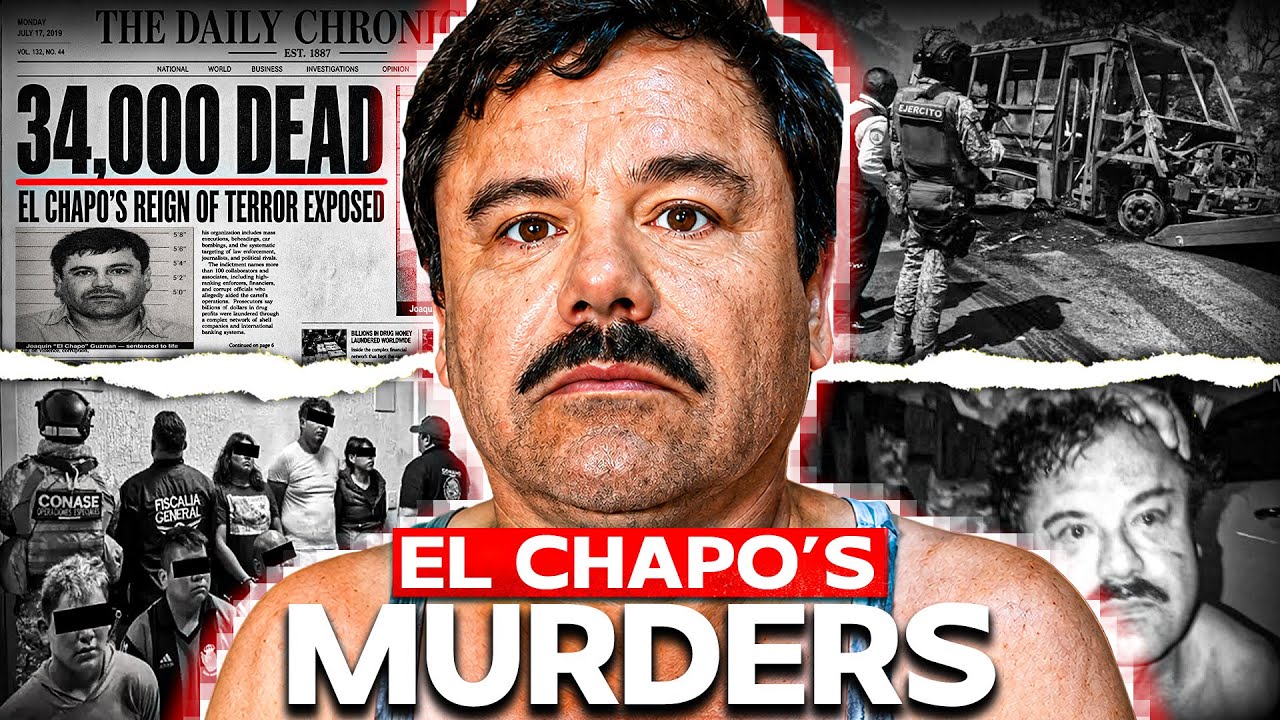
He was arrested in Guatemala on June 9, 1993, just weeks after the shooting, and extradited to Mexico, where he was charged in connection with the cardinal’s murder and other trafficking-related crimes. Guzmán was born on April 4, 1957, in La Tuna, a small rural settlement in the municipality of Badiraguato in Sinaloa. The region sits in the mountainous Golden Triangle where Sinaloa, Durango, and Chihuahua meet, one of the most productive opium and marijuana growing areas in North America. Poverty was widespread, state presence was thin, and for many families, cultivating illegal crops was the only economic option available.
Guzmán reportedly left school after only a few years of education and began working young, selling oranges as a child according to some accounts. By his teenage years, he was already connected to the drug trade that dominated the region. He is widely reported to have been mentored by figures such as Héctor El Güero Palma and, more significantly, Miguel Ángel Félix Gallardo, often called the godfather of the modern Mexican drug trade. Félix Gallardo had unified smaller trafficking operations into the Guadalajara Cartel during the late 1970s and 1980s, and Guzmán learned logistics, smuggling routes, and grower relationships under that umbrella.
The broader environment was shifting as well. As American law enforcement cracked down on Caribbean cocaine routes in the mid-to-late 1980s, Colombian traffickers increasingly turned to Mexican organizations with established border infrastructure to move product northward. This transformed Mexican groups from regional players into central cogs in a far more lucrative international cocaine pipeline. In 1989, Félix Gallardo was arrested in connection with the murder of DEA agent Enrique Kiki Camarena.
With the godfather facing prosecution, the Guadalajara Cartel fractured. According to widely reported accounts, Félix Gallardo divided trafficking territories among former lieutenants. The Tijuana corridor went to the Arellano Félix brothers, Ciudad Juárez to Amado Carrillo Fuentes, and the Sinaloa-based operations became associated with a group that included Guzmán, Palma, and Ismael El Mayo Zambada. The fragmentation created several newly independent power centers competing over the same smuggling corridors, all of them wealthier and better armed than their predecessors.
This environment gave rise to what became known as the Sinaloa Cartel, though the organization functioned less like a single corporation and more like a federation of allied trafficking groups. Violence served as the enforcement mechanism in an illegal business where disputes could not be settled through contracts or courts. If someone betrayed the organization, the response had to be severe enough that nobody else would consider doing the same. Guzmán’s rise is often attributed to a combination of factors.
He was reportedly extremely hands-on with logistics, personally involved in planning smuggling routes, including innovative tunnel methods under the United States border. He cultivated relationships with growers, pilots, truck drivers, and local officials through money and violence. And critically, he formed an alliance with El Mayo Zambada, a partnership that became the backbone of the organization. The first major violent conflict widely associated with Guzmán’s rise occurred in the early 1990s during the Tijuana Cartel War, a territorial dispute with the Arellano Félix organization over the lucrative Tijuana–San Diego corridor.
The airport killing of Cardinal Posadas was the most infamous incident connected to that rivalry. In the aftermath, Guzmán was sentenced to over twenty years in prison and held at Puente Grande, a maximum security federal prison in Jalisco. What happened there became one of the most consequential periods of his career. Multiple investigations described the prison functioning less like a maximum security facility and more like a base of operations.
Reports described him bribing prison officials extensively, directing trafficking operations from inside the walls, and even being allowed to leave the facility periodically. On January 19, 2001, Guzmán escaped. The most widely repeated version of the story claims he was smuggled out hidden inside a laundry cart pushed by a bribed guard. Subsequent investigations revealed that dozens of prison officials were implicated in facilitating the escape in exchange for bribes.
The escape transformed Guzmán from a known but contained cartel figure into a fugitive whose continued freedom became a symbol of organized crime impunity for some Mexicans, and perversely, a kind of folk hero defiance against a state widely seen as corrupt for others. What followed was the bloodiest period of cartel violence in modern Mexican history. The Sinaloa Cartel launched an aggressive expansion campaign, frequently at war with other organizations controlling territory it wanted. One of the most significant conflicts involved the Gulf Cartel and its enforcement arm, Los Zetas, a paramilitary group formed from deserters of Mexico’s special forces.
The conflict between the Sinaloa Cartel and the Gulf Cartel–Zetas alliance is widely credited as one of the major drivers of the explosion in cartel-related homicides that swept Mexico beginning around 2006 and 2007. Estimates place the total death toll from Mexico’s broader cartel conflicts during this era at well over 100,000 people killed, with tens of thousands more reported as forcibly disappeared. Not all of these deaths are attributable to the Sinaloa Cartel specifically or to Guzmán personally, but the organization was a direct party to an enormous amount of this violence. The conflict over Ciudad Juárez became one of the most violent urban battlegrounds in the Western Hemisphere.
The city, with a population of roughly 1. 3 million, saw thousands of murders annually at the conflict’s peak between approximately 2008 and 2011. The overwhelming majority of victims were not cartel members at all. They were taxi drivers, shop owners, students, and bystanders.
On January 31, 2010, gunmen opened fire at a birthday party in the Villas de Salvarcar neighborhood, killing fifteen people, most of them teenagers. Initial government statements suggested the victims were connected to gangs, a characterization later widely discredited. The massacre became a symbol of how the broader cartel conflict devastated civilian populations with no involvement in the underlying disputes. The organization commonly referred to as the Sinaloa Cartel was never a single unified hierarchy.
Internal disputes between factions produced significant violence as well. The most significant internal rupture involved the Beltrán Leyva brothers, long-time close allies of Guzmán who helped run significant portions of cartel operations. The alliance collapsed around 2008 following the arrest of Alfredo Beltrán Leyva, with the brothers reportedly believing Guzmán had betrayed them. What followed was an extremely violent split that produced years of additional bloodshed across multiple states.
Throughout this period, suspicion functioned as both a cause and consequence of violence. Law enforcement relied heavily on informants, and the cartels’ awareness that informants existed within their ranks created a pervasive culture of suspicion. Fear worked not because every person killed was guilty of something, but precisely because the violence was unpredictable and severe enough that compliance and silence became the only rational survival strategy. Extensive corruption connected Mexican political figures, police commanders, military officials, and prison administrators to the cartel.
During the 2018–2019 federal trial in Brooklyn, cooperating witness Alex Cifuentes Villa testified that Guzmán had paid a large bribe to former Mexican President Enrique Peña Nieto. Peña Nieto denied the allegation, it has never been independently corroborated, and no charges were filed. But the broader pattern of corruption is well documented and helps explain how an organization this violent could operate for so long without being dismantled. Guzmán was captured by Mexican Marines on February 22, 2014, in Mazatlán, Sinaloa, in an operation involving extensive American intelligence support.
He was held at the Altiplano Federal Prison. On July 11, 2015, he escaped through a tunnel constructed from a small unfinished house outside the prison directly into the shower area of his cell, complete with ventilation, lighting, and a modified motorcycle on rails. The engineering sophistication reinforced the growing mythology around him. In October 2015, actor Sean Penn, working with Mexican actress Kate del Castillo, conducted a secret interview with the fugitive that was later published by Rolling Stone.
Mexican authorities later stated that the meeting helped investigators track Guzmán’s movements. He was recaptured on January 8, 2016, following a raid in Los Mochis, Sinaloa that involved a gunfight and resulted in the deaths of several associates. He was extradited to the United States in January 2017 and convicted in 2019 on ten federal counts, including engaging in a continuing criminal enterprise. He was sentenced to life imprisonment plus thirty years and is serving the sentence at ADX Florence Supermax facility in Colorado.
His conviction established beyond a reasonable doubt that he led a massive drug trafficking conspiracy responsible for moving enormous quantities of narcotics into the United States over multiple decades and that the conspiracy involved violence. It did not represent a conviction for each individual killing discussed throughout the case. Many of those killings remain documented primarily through journalism and sworn testimony. The violence connected to the organization was never the product of one man acting alone.
It was the product of a system: thousands of people willing to participate in enforcement violence, corrupt officials willing to look away in exchange for money, decades of American drug policy that made illegal substances extraordinarily lucrative, and genuine economic desperation in the communities that provided the recruits who carried out much of the actual violence. Removing Guzmán did not end Sinaloa Cartel operations. The organization continued under the leadership of El Mayo Zambada and Guzmán’s sons, sometimes referred to as Los Chapitos, who have been connected to continued trafficking, including a significant pivot toward fentanyl. El Mayo Zambada was himself arrested in July 2024 under disputed circumstances, with his legal team alleging he was effectively kidnapped and forced onto a plane to the United States by one of Guzmán’s sons.
When Mexican security forces captured Guzmán’s son Ovidio on October 17, 2019, cartel gunmen responded with a coordinated military-style operation across the city of Culiacán, setting up roadblocks and attacking security forces so severely that the government released Ovidio to de-escalate the situation. He was captured again in January 2023 and extradited to the United States. The pattern of internal betrayal, family relationships used as instruments of violence, and the blurring of voluntary cooperation and coercion appears to be a structural feature of how organizations like this one operate, recurring across generations of leadership.
