In September 1878, Alexander Graham Bell walked into a telephone dispatch office in Boston and hired a seventeen-year-old woman named Emma Nutt to be the first female telephone operator in the world. She earned ten dollars a month for a fifty-four-hour work week. A few hours after she started, her sister Stella became the second. Before the Nutt sisters, the phone companies had hired teenage boys.
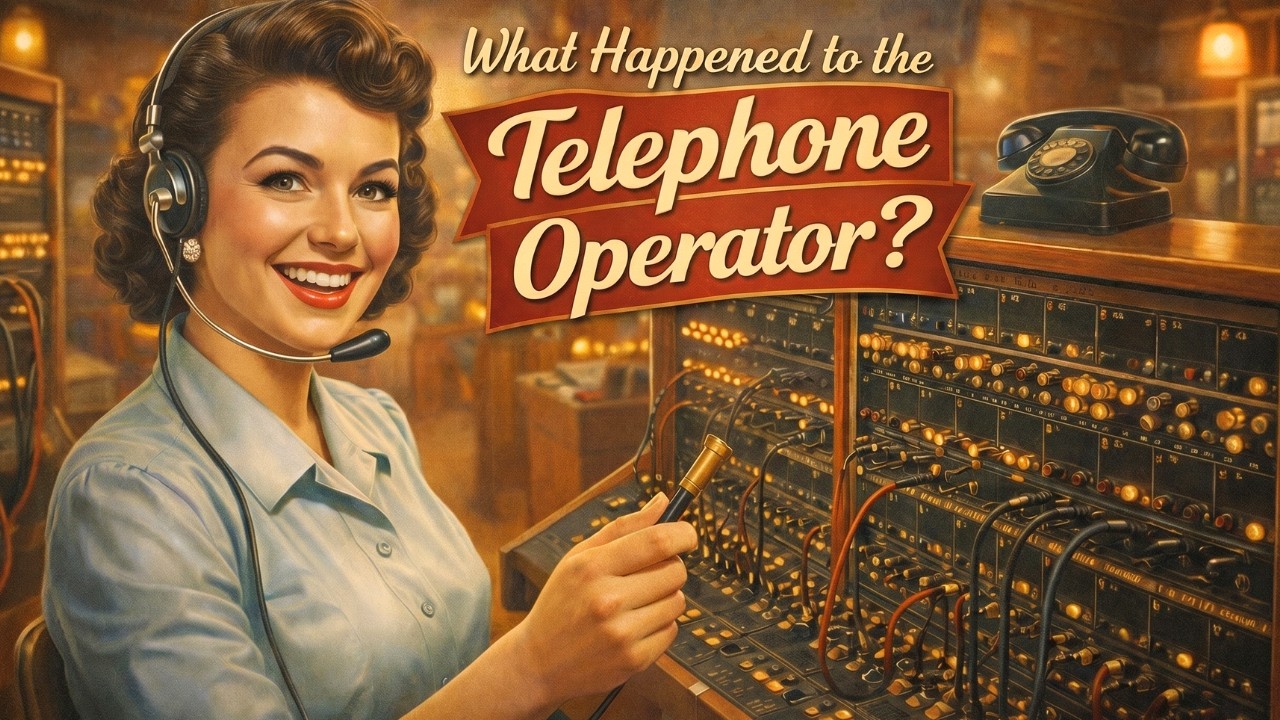
The boys were fast, but they cursed at customers, played pranks, and left calls unanswered when they got bored. One historian wrote that the boys would return impatient subscribers’ profanity with a few original oaths of their own. Bell decided to try a woman instead. Emma had a calm, soothing voice, patience, and she remembered every telephone number in the New England Telephone Company directory.
She worked as an operator for thirty-seven years. Within five years of her hiring, nearly every telephone operator in America was a woman. Emma Nutt had proven that a woman’s voice was the right voice for the job. For the next hundred years, that voice was the beginning of every phone call in America.
In the 1950s and 1960s, a child did not dial a number. The child picked up the heavy black receiver, put it to the ear, and heard the operator say two words: “Number, please. ” The child said “82, please” because that was grandmother’s number. Or “Boonton 83565” because that was an aunt in New Jersey.
Or “I need the doctor” because a little brother had just fallen off the porch, the mother was not home, and the twelve-year-old did not know what else to do. The operator said, “Hold on, honey. I will connect you right now. ” And she did.
In small towns, the operator was not just a voice on a wire. She was called “central. ” Her switchboard sat in a building on Main Street, above the bank, or in the back of the general store. Sometimes it was in her own home, and she was on duty twenty-four hours a day.
She sat before a panel of signal lights and rows of jacks, with cords that had plugs on both ends. When a light came on, she plugged in and said, “Number, please. ” When the caller gave the number, she plugged the other cord into the right jack and turned a key to ring the phone. Two shorts and a long for the Petersons.
One long and two shorts for the Hendersons. She knew every ring pattern for every family on every party line in town. And she knew more than numbers. If you asked for the doctor, she did not simply ring his office.
She knew he was out at the Morrison farm, and she tried that number for you. If you asked for your husband, she knew he had left the hardware store ten minutes ago and was probably on his way home. If an eleven-year-old girl called from a payphone without a nickel and asked to speak to her mother, the operator said, “Hold on, sweetheart,” and connected her anyway. One operator from a small town in Idaho said years later, “I would always figure it out.
It was a very nice time. It really was. ”
Most families did not have a private line. They shared a party line with three, four, or sometimes ten other families.
When the phone rang, everyone on the line heard it. The ring pattern told you who the call was for. If the call was not for you, you were supposed to hang up quietly, but of course you did not. You listened.
They called it rubbering. Everybody did it. A famous story tells of two women talking on a party line when one said, “Be careful what you say. Dorothy might be listening.
” Dorothy’s voice came through the receiver. She said, “I am not. ” And hung up. That was America before privacy existed, and somehow nobody minded, because everybody already knew everybody else’s business, and the telephone operator knew the most.
One story told over and over is of the young man who called the operator and asked to be connected to Mary Jane, because he wanted to ask her to the dance. Mary Jane said no. He called back and said, “Ring Sarah Smith. ” The operator said, “She already has a date, too.
” She was not being nosy. She was being efficient. She had already heard both conversations and was saving the young man a nickel. In 1917, America entered the First World War, and the army needed telephone operators in France who spoke French and English and could connect calls under pressure in combat zones.
Two hundred twenty-three American women volunteered. They served as the Signal Corps Female Telephone Operators Unit. The soldiers called them the Hello Girls, because they answered every call with “hello. ” They connected calls on military switchboards while shells fell around them.
They connected generals to field commanders, hospitals to supply lines, and soldiers to their wives back home. Female operators could connect five calls for every single call a male operator could handle. The telephone was faster than telegraph and more secure than radio. When the war ended, the government told the Hello Girls they were not veterans.
They were civilians who had volunteered. It took sixty years. In 1977, Congress finally granted them veteran status. Most were in their eighties.
Many had already passed. Long distance was serious business. It was not free, and it was not casual. If a mother picked up the phone and said, “Operator, I would like to make a long distance call to area code 314,” something important had happened.
Somebody had been born. Somebody had passed. It was Thanksgiving, and grandmother was too far away to visit. The caller stood in the hallway and listened to the operator take the number, then heard a series of clicks as the call was patched through exchange after exchange across the country.
Sometimes it took minutes. Sometimes all the circuits were busy, and the operator said, “I will keep trying and call you back when I get through. ” And she did. Sometimes an hour later, sometimes three hours later, she called back, because she had written your name on a ticket and was not going to let it go until the call went through.
The operator watched over people. She knew which phone lines were active and which were quiet. She knew who called whom every day, and she noticed when someone stopped calling. There were operators who would ring the house of an elderly person who had not made a call in two days just to check.
She might say, “Marty, are you all right? I have not heard from you. ” That was not in the job description. That was a woman who cared about the people on the other end of the wires.
She noticed when Mrs. Kowalski on line 39, who always called her daughter on Tuesday morning, had not rung by Wednesday afternoon. She was the invisible net beneath a small town. She caught people before they fell.
The first automatic telephone switching system was built in 1892 in LaPorte, Indiana, but it did not work well for large networks. The technology existed for decades before the phone companies used it widely, because the economics did not make sense. Every additional customer in an automated system cost more, not less. Operators were actually cheaper than machines for most of the twentieth century.
It was not until digital switching arrived in the 1960s that automation became more efficient than a woman at a switchboard. Direct dialing spread through the 1960s and 1970s, first for local calls, then for long distance. By 1978, AT&T had completed the transition. The last switchboard operators were phased out.
A hundred years of women connecting America by hand was done. At their peak in the 1950s, more than 350,000 women worked as telephone operators for the phone companies alone. Another million worked switchboards at hotels, offices, apartment buildings, and factories. One out of every thirteen working women in America was a telephone operator.
It was the profession a girl could get straight out of high school that came with a paycheck, a skill, and a place in the community. And it vanished in a single generation. The displaced women became typists, secretaries, and clerks, but nothing felt quite the same, because nothing else in the American economy had ever put a woman at the center of the entire system. She was not support staff.
She was the system. Without her, nothing connected. If you grew up in a small town in the 1950s, your operator was not a stranger. She was Mrs.
Chellis. She was Inga Johnson. She was the woman who lived above the phone office on Main Street and answered your call at three in the morning when your father had chest pains, who stayed on the line until the ambulance arrived, and who called back the next day to ask how he was doing. She connected a scared twelve-year-old to the doctor when nobody else was home.
She rang every house on the party line during a tornado warning because there was no other way to tell people. She let the children call Santa at Christmas, and somehow Santa always answered. She was the first voice you heard in the morning when you picked up the phone to call your mother and tell her the baby had been born. “Number, please” meant someone was listening.
It meant someone was ready to help. It meant that between you and the person you needed to reach there was a human being who cared whether the call went through. Today you tap a name on a screen, and the call connects in silence, or it does not connect at all, and nobody explains why. There is no voice.
There is no patience. There is no woman saying, “Hold on, honey. I will connect you right now. ” The telephone operator was the first voice interface in the history of human communication.
Before Siri, before Alexa, before any automated menu, there was a real woman who answered when you called, who knew your name, and who connected you to the people you loved. It took the phone companies eighty-six years to build a machine that could replace her. The machine connects calls.
The operator connected people.
