In late April 1874, a gaunt figure walked alone into the Los Piños Indian Agency in southwestern Colorado. He was Alfred Packer, and he appeared in surprisingly good physical condition for a man who had supposedly spent months stranded in the San Juan Mountains with almost no food. In his possession were items that had belonged to the five men who had set out with him. When officials asked where his companions were, Packer claimed the group had split up and that he had survived by foraging.
The story did not hold. Investigators found inconsistencies, including his use of money that had belonged to the missing men. When a search party reached the mountain camp that spring, they found the remains of Shannon Bell, James Humphrey, Frank Miller, George Noon, and Israel Swan. The evidence pointed to something far darker than starvation.
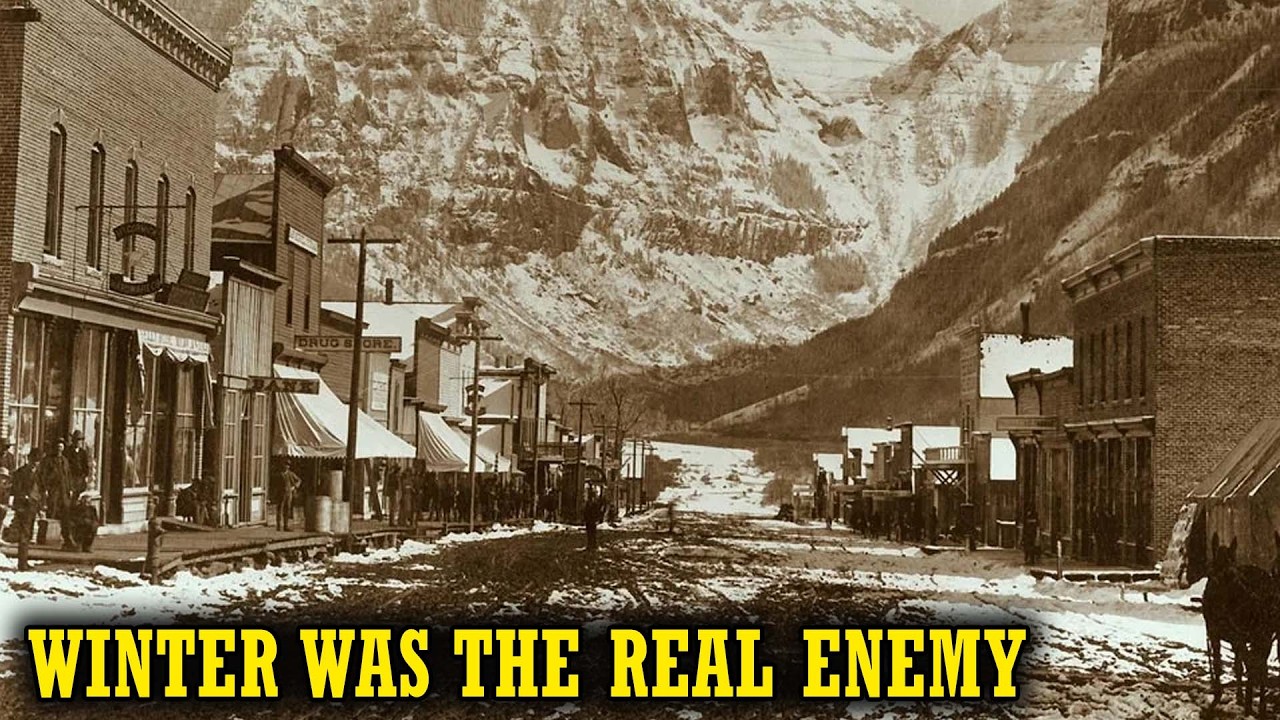
The winter of 1874 would become one of the most notorious chapters in the history of the American frontier, a stark example of what cold, isolation, and hunger could drive human beings to do. By the 1880s, the American West had been carved into territories where settlers, cowboys, miners, and travelers faced a threat that could be more dangerous than any gunfight. A single blizzard could trap families for weeks, kill livestock overnight, and turn an ordinary journey into a desperate struggle for survival. The charming image of the frontier cabin in the wilderness, with smoke curling from a stone chimney and warm lamplight glowing through a small window, told only part of the story.
Historians who studied pioneer diaries alongside late-nineteenth-century newspapers like the Bismarck Tribune described a very different reality. Those small, picture-perfect cabins were rarely comfortable. When a Dakota or Montana winter arrived, they became something more dangerous, an unreliable shelter tested constantly by brutal cold. To understand what survival actually required, one had to understand what people lived in.
Settlers in wooded areas built log cabins. Those who settled the treeless Great Plains built sod houses, often called soddies. Neither design prioritized comfort. Both were shaped entirely by necessity and available materials.
Sod homes were built by cutting thick blocks of prairie soil held together by intertwined grass roots and stacking them like bricks to form walls. Roofs were made from wooden beams when available and covered with additional layers of sod. Dry grass was a decent insulator, but as historians of Great Plains settlement noted, a sod roof behaved unpredictably when exposed to moisture. Heavy autumn snow could soak into the roof like a sponge, and a single square foot of saturated sod could weigh about fifty pounds.
After a major blizzard dumped feet of snow on top of a waterlogged roof, the accumulated weight could reach several tons. The diaries of pioneer women often described the unsettling sound of roof beams groaning under the pressure all night long. If a beam broke, the entire roof could collapse, leaving a family suddenly trapped under tons of earth and snow. By spring, some homes were found with collapsed roofs, a grim reminder of how fragile these shelters were.
Families fortunate enough to own a log cabin faced a different challenge, constant drafts. Fresh-cut lumber shrank and warped as it dried, opening gaps in the walls. Settlers sealed these gaps with a process called chinking, a mixture of clay, mud, straw, and animal hair stuffed between the logs. But severe cold and strong prairie winds often caused this mixture to freeze, crack, and fall out.
This created what old-timers called the heat gap, an indoor temperature contrast that is hard to imagine today. To stay warm, families kept a stone fireplace or cast-iron stove burning constantly, consuming wood at a rapid rate. Sitting close to the fire could feel comfortable, even 60 or 70 degrees Fahrenheit, but only a few feet away near an outer wall where drafts leaked in, temperatures could drop dramatically. Some pioneers described sitting near the fire with their faces flushed with warmth while water froze in a cup a short distance away.
By midwinter, frost inside the home became a familiar and unwelcome guest. Moisture from breathing rose, hit the cold walls or ceiling, and froze on contact. Diaries recorded waking up to find blankets stuck to the wooden walls or a thin layer of frost covering quilts. Mornings often began with a quick, urgent effort to revive the embers of the fire before the cold became dangerous.
These homes, built by hand from hope and necessity, pushed their inhabitants to the limits of physical endurance. They were not just houses. They were the fragile line between survival and the harsh reality of a prairie winter. The fireplace or cast-iron stove was the lifeline of the frontier home, but keeping it going required a level of physical labor that would exhaust most people today.
In the American West, heat was not something adjusted with a dial. It was earned in advance, through sustained, grueling effort. From November until the thaw in late April, a pioneer family could not rely on a few bundles of fuel. They had to spend months gathering and storing wood steadily, treating it as one of their most valuable resources.
The numbers recorded in nineteenth-century settlement records show the scale of the task. A typical family in a modest cabin needed roughly twenty to forty cords of firewood to survive one winter. A cord is a tightly stacked pile four feet high, four feet wide, and eight feet long. Thirty cords arranged in a row would cover nearly the length of a football field.
Long before the first snowfall, settlers spent late summer and autumn cutting trees, hauling logs with horse teams, and chopping wood for hours on end. The woodpiles often grew larger than the cabins they were meant to heat, a visible measure of how prepared a family was for the coming season. Life was different on the treeless Great Plains in places like western Kansas or the Dakota Territory. There, settlers relied on what they called prairie coal, dried buffalo dung left behind by roaming herds.
Though hardly appealing by modern standards, this fuel source was a practical necessity. Women and children often walked long distances with sacks to collect it. It burned slowly and with little odor, but it went quickly. Families might consume several bushels in a single day just to stay warm.
When severe blizzards in the late 1880s brought extremely low temperatures for extended periods and kept families trapped indoors for weeks, even careful preparations were sometimes not enough. With four feet of snow outside and temperatures near 30 degrees below zero, reaching the woodpile, let alone gathering more fuel, became impossible. Families faced difficult choices. Newspapers of the era, including the Cheyenne Leader, documented families who ran out of fuel during the heart of winter.
When wood supplies ran out, people sometimes used parts of their homes to heat them. Wooden furniture, chairs, benches, and tables could be dismantled and burned. In more extreme cases, families tore up floorboards to keep the fire alive a little longer. If the storm continued, some pioneers ventured out briefly during lulls in the wind to dismantle outbuildings, fences, or barns for fuel.
It was an unfortunate trade, using parts of the home itself to get through another day. Another option was rolling thick twists of marsh grass, known as straw logs. This method required large amounts of grass for only a short burn time. Families might spend hours feeding the fire constantly just to keep the temperature indoors above freezing.
The burden of gathering fuel was not a simple task. It was a relentless, exhausting responsibility shaped by the harsh western winter. A family’s wood supply was tied directly to its ability to survive the season, and a winter that lasted longer than the woodpile could have dire consequences. While the human cost of western winters appeared in frostbitten hands and long nights by the stove, the entire financial foundation of the frontier rested on the open range.
In the early 1880s, the western cattle industry was booming. Wealthy investors from New York and Great Britain, often called cattle barons, brought millions of head of cattle to the plains of Wyoming, Montana, and Dakota. The approach was simple and profitable. Buy cattle, brand them, and let them graze freely on vast, unfenced public land.
The grass was free, and the railroads handled transportation. But this rapid accumulation of cattle on the range created long-term risks, risks that became fully apparent during the brutal winter of 1886 to 1887, an event historians now call the Great Die-Up. Warning signs appeared as early as late summer 1886. A major drought left the plains dry, and the native grasses were short and brittle.
The cattle entered the cold season already suffering from poor nutrition. Then in November, the weather changed sharply. The first major blizzard struck with ferocity, bringing not just heavy snow but bitter cold. Temperatures dropped to between 40 and 60 degrees below zero Fahrenheit, with winds that created whiteout conditions lasting for days.
Cattle instinctively drifted with the wind during storms, moving toward lower ground in search of shelter. But by the late 1880s, the landscape had changed. Settlers had strung thousands of miles of barbed wire across the plains, a new and widespread technology at the time. As herds moved with the storm, they encountered these fences and could not continue.
Many animals became trapped against the wire in the freezing cold, and a great number did not survive. Others faced a different obstacle. Freezing rain covered the ground with a thick layer of ice. Unlike native bison, cattle lacked the ability to break through this ice to reach the grass beneath it, leaving many without food during the storm.
The scale of the loss was staggering. When spring finally arrived in March and April of 1887, the romantic image of the open-range cowboy was effectively finished. Historian Louis Peltzer, along with contemporary reports from newspapers such as the Bismarck Tribune, described landscapes where the effects of winter were visible for miles, with large numbers of cattle scattered across the region as the snow melted. The economic impact was enormous.
Cattlemen across the West lost an estimated 15 to 30 percent of their herds on average. In the worst-hit parts of Montana and Wyoming, losses reached 80 to 90 percent. Many large cattle operations went out of business almost immediately. Among those affected was a young politician named Theodore Roosevelt, who had invested heavily in two ranches in the Dakota Territory.
He lost more than half of his cattle in the Great Die-Up, a financial setback equivalent to millions of dollars today. The loss pushed him to abandon his ambitions for a long-term cattle ranching career and redirected his path toward a future in national politics. The Great Die-Up permanently changed the economic and geographic landscape of the American West. It demonstrated the dangers of unchecked expansion of the open range without adequate preparation for extreme weather conditions.
From that moment on, the era of unfenced open-range cattle ranching declined. The surviving cattlemen shifted toward smaller, fenced properties and began growing hay to feed cattle during the winter months. A more sustainable approach, but one requiring more labor, was shaped directly by the losses of that historic season. When modern Americans think about preparing for a winter storm, it usually means a quick trip to the store for milk, bread, and eggs.
In the Old West, there were no nearby stores, and the next supply shipment could be stopped by snowdrifts blocking the railroad miles away. Once heavy December snow sealed off a frontier cabin, whatever food was stored in the root cellar had to last until spring. If supplies ran out, or if the winter lasted longer than expected, families faced serious hardship. A pioneer doing heavy outdoor work, chopping wood, tending livestock, and clearing snow in freezing temperatures, could burn four to five thousand calories a day just to maintain body heat.
Yet as weeks passed and food supplies dwindled, many families had to make do with far less, sometimes under eight hundred calories a day. Meals that once included salt pork, beans, and dried fruit were reduced to simple cornmeal mixed with melted snow. As isolation stretched into months, prolonged malnutrition took a heavy physical toll. The body first draws energy from fat stores, then from muscle.
Without access to fresh fruits or vegetables, some pioneers developed scurvy, a condition historically documented with symptoms such as gum disease and joint weakness. Diaries collected by the state historical societies of Nebraska and Kansas describe mothers watching their children weaken dangerously from lack of food, a stark record of how severe scarcity could become. When stored food ran out completely, some families turned to unconventional sources of sustenance, including boiling leather items such as old boots, belts, or saddles. This process could extract a small amount of gelatin from the hide.
Though it provided little real nutritional value, the resulting broth offered some psychological comfort from hunger, even if temporary. The most extreme cases of winter starvation occurred when travelers or miners were stranded in remote mountain passes, isolated from any outside help. In these situations, survival options narrowed dramatically. Historical accounts describe trapped groups first relying on pack animals, horses and mules, for food, and in the most severe and documented cases, records indicate that dire circumstances sometimes drove desperate survivors to take exceptional measures beyond traditional food sources, as seen in accounts of the Donner Party’s ordeal.
Winter famine on the frontier was rarely sudden. It was usually a gradual decline caused by prolonged isolation and dwindling resources. It is a difficult but important part of understanding what survival required of early settlers. For those who lived through it, the return to reliable food sources was never taken for granted again.
While the physical toll of an Old West winter showed up in frostbite and empty pantries, the effect on mental health was often just as significant and sometimes longer lasting. In contemporary life, a quiet weekend at home might be welcomed. But for a late-nineteenth-century settler, isolation was not a choice. It was an unavoidable part of the season.
When snow piled high enough to cover the cabin’s only window, the world shrank to a small, dark space of about twelve by fourteen feet. For weeks, sometimes months, the only sounds were the wind outside and the presence of the same few people inside. This extended isolation contributed to a psychological strain that people at the time called prairie madness. To understand this mental burden, it helps to consider how long isolation could last.
In states like Montana, Wyoming, or Dakota, families could be cut off from others for six to eight weeks at a time. There were no telephones, no radio, no regular mail service. A neighbor three miles away was considered effectively unreachable. Historians studying frontier diaries, including the notable writings of Rachel Calof, a Jewish settler woman who lived in North Dakota, documented the psychological stress this isolation could cause.
Darkness was a constant companion since kerosene was expensive and carefully rationed. Families often spent the long winter days and nights in near-total darkness with only the faint glow of the stove for light. In this quiet, closed-in environment, some settlers described disturbing sensory experiences. The sound of wind through gaps in log walls or across a sod roof was sometimes mistaken for human voices.
Diaries recorded hearing phantom knocking during storms or imagining sounds with no real source. For a mother confined with several children for months, the lack of stimulation and constant close quarters could become truly difficult. Accounts describe irritability turning into persistent bad moods, and in some cases, deeper emotional distress affecting relationships within the family. Historical records from early frontier states support this pattern.
Following especially harsh winters, some counties and emerging government institutions recorded increased reports of erratic behavior or psychological crises during the spring months. Accounts describe people who had been steady and capable showing signs of significant emotional strain after a long winter of isolation. The newspapers of the era sometimes published tragic outcomes related to this kind of prolonged isolation and hardship. An Old West winter did not just test physical endurance.
It placed real pressure on mental health, especially for those cut off from community, routine, and daylight for extended periods. For many pioneers, the return of spring and the opening of cabin doors represented not just physical relief but a meaningful return to a sense of normalcy after months of isolation. Surviving hunger and maintaining mental health during isolated winter months left another serious challenge, illness. In the late nineteenth century, medical knowledge was limited and antibiotics did not exist.
During an Old West winter, this challenge was made worse by complete physical isolation. If a child came down with a fever in January, parents had no way to reach a doctor or obtain medicine. With snow drifting and frigid winds outside, families had to rely entirely on home remedies such as warm compresses, simple ointments, and hope. Historical records, including county records and notes from traveling frontier doctors, document how hard winter illnesses hit isolated homesteads.
The closed, poorly ventilated conditions of log cabins and sod houses made them vulnerable to the spread of respiratory diseases. Illnesses such as diphtheria, scarlet fever, pneumonia, and smallpox could spread through isolated communities during the winter months. Because families lived in such tight quarters, disease spread quickly from one person to the rest of the household. Children, being more vulnerable, were disproportionately affected.
Frontier newspapers from the 1870s and 1880s often included notices of the deaths of young children during winter, frequently from diseases that are more easily treatable today. Beyond the illness itself, pioneer families also faced practical challenges after losing a loved one. On the plains and in mountain regions, the persistent deep cold could freeze the ground for several feet, making digging a grave extremely difficult, often impossible, during the winter months. This created a truly difficult situation for grieving families.
To protect the remains of their loved ones until the ground thawed in spring, settlers sometimes had to find a temporary place to preserve the body safe from the elements and wild animals until burial became possible. Families would carefully wrap their loved one and place them in an unheated location, a barn, an attached shed, or a cellar, until conditions allowed for a proper burial in the spring. In some cases when other facilities were unavailable due to heavy snow, alternative temporary arrangements were made nearby. This reality added a heavy emotional burden to families already suffering from loss, as they lived for weeks or months in close proximity to a reminder of what they had lost.
It reflects one of the most difficult aspects of frontier life, where even the most basic rites of mourning had to be postponed until spring softened the earth enough for a proper burial. When examining the immense costs of survival in an Old West winter, from financial and physical hardships to delayed burials, there is an additional and disturbing chapter in frontier history worth understanding. It involves cases where extreme survival situations pushed people to their absolute limits, and few historical cases illustrate this more clearly than the Alfred Packer expedition of 1874. The story began in late autumn of 1873 when a group of prospectors hoped to reach gold fields near Breckenridge, Colorado.
A Ute chief named Ouray reportedly warned the group about the dangers of crossing the San Juan Mountains in winter and advised them to wait until spring. Most heeded this advice, but a smaller group of six men led by Alfred Packer chose to press on, entering the mountains in February 1874 with limited supplies. Conditions became dangerous quickly. A severe winter storm buried the trails in deep snow, trapping the group in rugged, high-altitude terrain.
According to historical trial records and contemporary reports from the Denver Post, food supplies ran out rapidly and the group resorted to eating hide and boiled pine needles in an attempt to survive. As weeks passed and conditions deteriorated, many of the group did not survive. In April 1874, Alfred Packer appeared alone at the Los Piños Indian Agency. He seemed in better physical condition than expected after a long period without adequate food, and he carried possessions belonging to his lost companions.
When questioned about the fate of the other five men, Shannon Bell, James Humphrey, Frank Miller, George Noon, and Israel Swan, Packer initially claimed the group had split apart and that he had survived by foraging. Investigators soon found discrepancies in his story, including his use of money belonging to the missing men. When a search party reached the site later in the spring, they found the remains of the five men. The evidence indicated that Packer survived the winter by consuming the remains of his deceased companions.
Packer was arrested, later escaped, and remained at large for nine years before being recaptured and put on trial in Lake City, Colorado. The case drew significant public attention given the unusual and gruesome circumstances. Packer insisted his actions were taken under extreme duress, claiming that one of the group, Shannon Bell, had first acted violently toward the others. However, physical evidence presented at trial pointed to a more deliberate sequence of events than Packer described.
The Packer case remains one of the most extreme documented examples of what desperate survival conditions during harsh American frontier winters could drive people to do, standing as a stark historical testament to how extreme environmental conditions, severe cold, isolation, and prolonged hunger could test the very limits of human behavior and decision-making. Surviving one winter in the Old West required far more than toughness. It tested the limits of the body, mind, and spirit, from the exhausting physical labor of hauling firewood to the silent, creeping cost of isolation and hunger. These were not just stories of suffering but daily battles fought by ordinary people against a nature that offered no mercy and no easy solutions.
The frontier families who endured those seasons remind us how much comfort and convenience we take for granted today.
