It was a smile that told him everything was about to change. Marilyn Bacon drove past Sanborn’s Garage on Route 4 in Andover, New Hampshire, and waved at the man she knew. Everett “Red” Delano, a 49-year-old retired Navy veteran and father of three, was backing up a vehicle at that moment. He smiled and waved back.
It was 9:25 a. m. on September 1st, 1966. Ten minutes later, someone entered the building and shot him three times in the head.
The gunman grabbed between seventy-five and a hundred dollars from the cash register and fled. Hidden beneath the counter sat a box containing five hundred dollars, untouched. A bullet struck Everett’s watch, freezing the hour and minute hands at the exact moment of the shooting: 9:35 a. m.
When new customers arrived, they found Everett lying on the office floor, unconscious and bleeding. He was rushed first to New London Hospital, then to Mary Hitchcock Hospital, but died from his wounds the next day. The medical examiner determined that two of the gunshot wounds to his head had occurred while Everett was upright. The third, which had gunpowder residue near the entry wound, was inflicted while he lay on the ground with the gun held nearly touching his head.
The perpetrator had clearly intended to leave no witnesses. Everett had been asked by his friend, the garage owner, to watch the station for a few hours while the owner ran errands. He helped in the office, ringing up transactions, and at the pump, refilling customers’ cars. Between 8:50 and 9:25 that morning, there was activity every ten minutes or so.
The cash register tape showed three sales had occurred. But at 9:35, the unthinkable happened. Despite interviews, ballistics tests, and evidence collection—including fingerprints taken from a running bathroom sink and a cigarette butt at the scene—the investigators ran out of leads. They searched the nearby Blackwater River, hoping the perpetrator had ditched the weapon, but the searches turned up nothing.
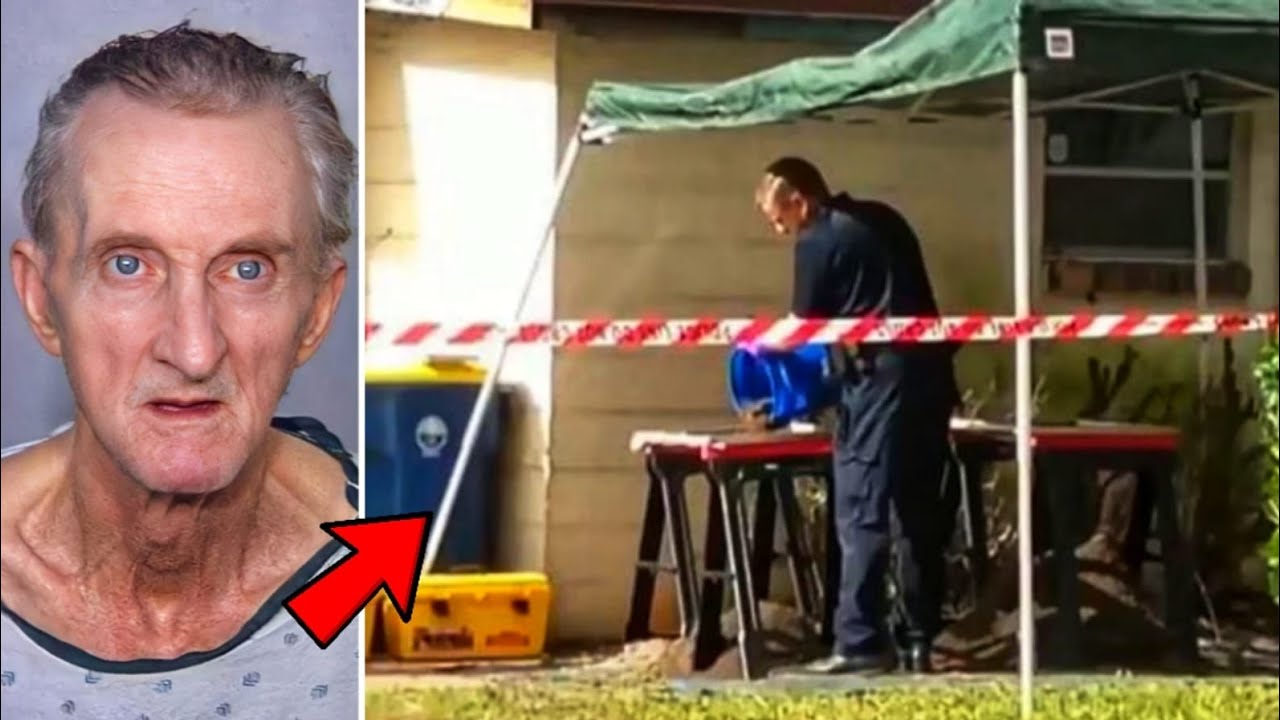
No suspect was identified in 1966, and the crime rapidly went cold. For more than forty-seven years, the case remained one of New Hampshire’s oldest unsolved mysteries. Then, in 2013, Everett’s family reached out to the New Hampshire Cold Case Unit to reopen the investigation. The investigators made a stunning discovery: the fingerprints collected at the scene had never been entered into the automated fingerprint identification system, a biometric database that was not fully operational in 1966.
Once the prints were submitted decades later, they finally yielded a match. The match pointed to Thomas Cass, then a twenty-year-old with a long history of violent crime, including robbery and assault in several states. He had even escaped from prison twice. At the time of the breakthrough, Cass was living in Orleans, Vermont.
The investigators interviewed Cass in 2013 and again in 2014. He denied any involvement and even said he did not know where Andover was located. When asked to submit DNA samples, he agreed. But when asked to take a polygraph test, he refused.
Cass’s ex-wife told the investigators that his home life growing up was rough. His father was an alcoholic, and the household was abusive. She said he was a very violent person and on multiple occasions had threatened to end her life. She subsequently got a restraining order and ultimately a divorce.
She mentioned that Cass would frequently brag about his crimes, proudly calling himself a career criminal, and she believed he had no problem with hurting people to get what he wanted. Another ex-wife told the investigators she had overheard a conversation between him and his friends, laughing and boasting over a crime they had allegedly gotten away with in the seventies. Four days after a follow-up interview in February 2014, in which the detectives told him they had forensic evidence linking him to the case, Cass took his own life at age sixty-seven. The authorities reported that he was found with a self-inflicted gunshot wound.
His girlfriend Jane told the 911 operator that he believed the police were coming to arrest him that day in relation to a cold case, so he beat them to the punch, refusing to go back to prison again. In November 2018, the Cold Case Unit interviewed Jane again, perhaps hoping to get that final beyond-a-reasonable-doubt confirmation that he was the perpetrator. But she reiterated that Cass had never said anything to her that would incriminate him. The closest he had come was what he had said about keeping quiet when you commit a crime that has no statute of limitations.
Susan Morrell, the cold case prosecutor, reflected on Cass’s statements. “You never talk about something that has no statute of limitations. Ending someone’s life is the only crime that does not have a statute of limitations. ” This comment, made to someone close to Cass, was seen as telling about his mindset as the investigation intensified.
Four months later, on February 20th, 2019, the New Hampshire Cold Case Unit finally released its formal report and announced that after fifty-two years, the case had officially been solved. Everett’s daughter, Darlene Delano, released a statement after the case was resolved. “Our family would like to take the opportunity to not only thank the initial investigators of our father’s case, but also the New Hampshire Cold Case Unit. Without their diligent efforts, we would not be here today.
We are happy this day has come where our family has been given a small measure of justice. For almost 53 years, our family has wondered what happened on September 1st, 1966. There was a very long time our family did not know if we would ever receive the answers about what happened that day. Today, our family has the long overdue answers we have been waiting for.
”
In January 1993, another family’s wait for answers was only just beginning. Bonnie Haim, a 23-year-old wife and mother, vanished from her Jacksonville, Florida home on January 7th. Her husband, Michael Haim, told police the couple had argued the night before and that Bonnie had left the house alone around 11:00 p. m.
and never returned. The police treated Bonnie’s disappearance as suspicious. Her purse was found in a dumpster behind a hotel near Jacksonville International Airport, and her car was located in the airport parking lot. Strange clues that raised questions.
The investigators soon focused on Michael as the prime suspect. But without a body or physical evidence, the prosecutors could not build a charge. In an early interview with child welfare workers, Bonnie and Michael’s three-year-old son, Aaron, told the authorities something chilling. “Daddy hurt Mommy.
” The testimony raised eyebrows, but at the time it was not enough to support criminal charges, and many family members dismissed the toddler’s statements as confusion or imagination. Despite the suspicions and troubling details, no arrest was made, and Bonnie’s disappearance remained a cold case for more than two decades. Her son was placed in foster care and eventually adopted, becoming Aaron Fraser. Aaron grew up with unanswered questions and memories of the day his mother vanished.
In December 2014, Aaron Fraser returned to the family home, a property he had won in a wrongful demise lawsuit against his father years earlier, to begin renovations. While demolishing a concrete slab near the backyard pool area, he noticed something unusual in the dirt, covered in a plastic bag. At first he thought it was a coconut, but as he pulled it from the ground, he realized it was not a coconut at all. It was a human skull.
Within weeks, the police confirmed what Aaron had feared. The remains belonged to his missing mother. DNA testing and forensic analysis positively identified her skeletal remains. In August 2015, nearly twenty-three years after her disappearance, Michael Haim, then fifty-two, was arrested and charged with second-degree slaying.
At trial, the prosecutors argued that Bonnie had planned to leave her husband and take their young son, and that Michael, confronted with that possibility, ended her life and buried her body in the backyard of their home. Assistant State Attorney Alan Mizrahi told the jurors, “The truth was always out there, buried in their backyard. ”
The jury took less than ninety minutes to reach a verdict. On April 12th, 2019, Michael was found guilty of second-degree slaying.
The defense had argued that the evidence did not conclusively prove that Michael had taken Bonnie’s life or buried her remains, but the jury disagreed. On May 21st, Michael was sentenced to life in prison, far exceeding the standard guidelines because of the emotional trauma endured by his son and the brutal nature of the crime. During sentencing, the prosecutors urged the judge to consider the profound impact on Aaron, who had lived with questions about his mother’s disappearance his entire life. Aaron Fraser spoke publicly about the harrowing discovery and the emotional weight it carried.
Though just a toddler at the time of his mother’s disappearance, his early words, later vindicated, and his eventual discovery of her remains became central to solving the case. In September 1987, on the other side of the country, the body of a young woman was discovered at the base of a cliff in Dana Point, California, but no one knew who she was. For nearly three decades, she remained a mystery known only as Dana Point Jane Doe. At around 6:40 a.
m. on September 20th, 1987, joggers found the body of a woman at the base of a seaside cliff in Dana Point, a place known for scenic overlooks and ocean views. She had no identification. Officials estimated the woman was between eighteen and twenty-three years old, with strawberry blonde or light brown hair and freckles, distinct features that did not match any missing persons reports at the time.
In her possession were two maps of Southern California, a half-consumed can of Coca-Cola, a packet of cigarettes, matches, and a purse with a name on it: Carol L. Pinkham. That lead turned into a dead end when the purse’s owner turned out to be alive and not connected to the case. The investigators found clues suggesting she may have been traveling or seeking help.
Written on the back of one map was a taxi company’s phone number and other notations showing she had been asking for directions. Witnesses later told police that a taxi driver picked her up early the same morning near a Mission Viejo gas station, and she told him her car had broken down. She asked to be taken to Laguna Beach, or as far as her remaining money would take her, before being dropped off near the area where her body was found. Despite these clues, the case grew cold.
Facial reconstructions were released. Family and friends looked for her. Yet for decades, no one could put a name to the young woman. She was eventually cremated by the Orange County authorities, her ashes buried at sea, her identity still unknown.
Then, more than two decades later, something remarkable happened. In 2011, several of the woman’s high school friends, now adults, began to suspect that the unidentified body might belong to their missing classmate, Holly Jo Glynn, a Whittier, California native who had disappeared in 1987. They had tried contacting her through social media years earlier, got no response, and grew increasingly worried. They brought their suspicions first to NamUs and the Doe Network, and later in 2014 used Facebook’s Help ID Me page to raise awareness.
Their efforts reignited official interest in the long-forgotten case. In early 2015, the Orange County Sheriff’s Department Coroner Division reached out to surviving family members of Holly and obtained DNA samples. Those samples were compared to the Dana Point Jane Doe, and the match was conclusive. In May 2015, the previously unidentified woman was finally confirmed to be Holly.
It was ultimately ruled that she ended her own life by jumping from the cliff. But questions about what led Holly to Dana Point that night linger in the hearts of those who knew her. News reports from the time indicate that investigators believed she had climbed over a fence at the edge of the cliff before her end, and that she likely passed away approximately two hours before her body was found. The identification brought closure not just to her case file, but to the many friends who had refused to let her memory fade.
In August 2004, in Denver, Colorado, another promising life ended in violence. Gina Gail Gruenwald was born to Andy Gruenwald in Tulsa County, Oklahoma on November 9th, 1976. She had been a star athlete in high school, a college softball player at Oklahoma State University, and a second mother to her young siblings, Sarah Campbell and Emily Collier. They reminisced how Gina got them everything they wanted anytime, with Emily adding, “She spoiled us for sure.
”
After graduation, she moved to Denver, where she shared an apartment with her friends. At twenty-seven, Gina was described by friends as an energetic, loyal, and trusting person who made friends easily. Gina’s roommates recalled that on the weekend of August 20th, 2004, she went out to a bar with friends. When she did not return home, they reported her missing.
The next morning, August 21st, a local resident went outside to get the newspaper and found Gina’s lifeless body in a breezeway between two houses on Lafayette Street in Denver. The police later determined she had been stabbed in the neck, with injuries to both her carotid artery and jugular vein, fatal wounds that indicated a violent attack. Investigators noted that Gina was fully dressed, but her jeans were undone and her shirt partially lifted, circumstances that pointed to a possible indecent assault. But the autopsy determined that was not the case.
A knife found next to her body was believed to be the weapon, and evidence of a struggle was evident. It appeared the perpetrator had gone through the victim’s pockets, with change lying outside her left pocket, lipstick outside her right one, and traces of blood inside both pockets. One of the key pieces of evidence was a bite mark on Gina’s left wrist. The crime lab specialists swabbed it carefully, preserving it for later DNA testing.
After the devastated friends positively identified Gina, the officers interviewed them. According to them, Gina insisted on attending an after-party a few blocks from the Denver bar they had been at. One friend, Brandy, claimed she last saw her leaving with two unknown women around 2:00 a. m.
According to her, Gina had left her car at the bar and taken a ride with her two female acquaintances. Thus, the police searched Gina’s car and found her purse and phone, indicating she had never returned from the party and was slain in between. The two young women voluntarily came forward after the media covered the story. They stated that Gina was unsure about the address, and they drove according to her directions but could not find the party.
The women alleged that Gina insisted they drop her at the spot, though they were uncomfortable leaving her alone at that time of night. While the investigators initially suspected the two women, they were cleared once the DNA analysis showed the bite mark on Gina’s hand came from a male donor. The police had also found a black duffel bag approximately fifteen feet from the body. Inside were a shirt, a do-rag, a razor, and two time-stamped receipts from a nearby Walgreens and a dollar store.
When the clothing items and the razor matched the DNA from the bite mark, the officers checked the surveillance footage of both stores. While the dollar store offered a grainy image, the detectives retrieved a partially clear picture of the suspect from Walgreens security footage, but could not identify him. DNA evidence was eventually entered into CODIS. Years later, that DNA match would help the investigators close the case.
Nearly seven years after the case was opened, in 2011, the police arrested forty-two-year-old Billy Jean Wilson, a homeless man with several prior arrests, after his DNA matched the bite mark evidence from Gina’s body. A spokeswoman for the District Attorney’s Office, Lynn Kimbrough, explained the breakthrough. “The DNA from our victim has been up there since 2004, just waiting for a match. Because DNA was not collected from many offenders in earlier years, Wilson might never have been identified if not for later arrests that allowed the authorities to capture his genetic profile.
”
On July 19th, 2012, a jury found Wilson guilty of felony slaying, second-degree slaying, and attempted indecent assault. Wilson had come to Denver for a substance rehab program to treat his alcohol and substance problems in the weeks leading up to Gina’s crime. Yet he had fallen astray from the program and was living on the streets when he came across her. Though Wilson claimed he ended her life by accident, the prosecution provided evidence that indicated he and Gina had struggled.
On August 31st, he was sentenced to life in prison without the possibility of release, effectively life without parole. He is incarcerated at the Sterling Correctional Facility in Colorado. For Gina’s family, the sentence brought a measure of relief, if not closure. After years of uncertainty, they finally learned the identity of the man accused of ending her life.
Friends and those who knew her described Gina as someone who would trust people quickly and had no fear of anything, making her loss even more painful for those who loved her. In March 1996, another young mother’s life was brutally cut short in Denver. Sherri Lynn Majors was a 27-year-old mother of three, described by her friends and family as warm, hard-working, and devoted to her children. On the night of March 16th, 1996, Sherri, who had been taking paramedic courses, decided to enjoy a night out in Commerce City, Colorado.
That evening, she went out with her boyfriend for dinner and games of pool. But what was meant to be a relaxing night ended in tragedy. Sherri was last seen leaving the bar, but the next morning her body was discovered in an alley off 24th Street between Blake and Walnut in Denver. Her body showed signs of an attack—beaten and strangled—and the investigators quickly ruled that her life was ended.
Soon after Sherri’s body was found, the Denver police identified a person of interest: Chester Leroy Todd, a truck driver who had last been seen with her. The investigators believed she had accepted a ride from him on the night of her end. Evidence recovered from Todd’s abandoned tractor-trailer helped link him to the case. Todd was charged with first-degree slaying in 1996 and became a fugitive shortly after, evading apprehension for years.
The FBI and local authorities continued pursuing leads, and in 2011 Todd, then using an alias, was arrested in Las Vegas. Todd, who was homeless, had been working at a produce warehouse under the alias James Diamond. The police identified him after hospital staff reported him discussing a crime in Denver. He was taken into custody and held without bond on the outstanding charge.
At first, Todd claimed he met Sherri at a Commerce City pub and agreed to drive her home, and that they had consensual intercourse in his truck. Todd later admitted that he struck her in the face and indecently assaulted her. While he was striking her with an iron bar used to detach the trailer from the cab, Sherri asked, “Why are you doing this? ” “Because you are a bitch,” Todd said during his confession, according to Denver Cold Cases Detective Philip Stanford.
Todd was extradited to Colorado and formally charged, but he never stood trial. In November 2013, at age sixty-nine, he passed away from pneumonia and other health complications while awaiting trial at Denver Health Medical Center. In 2006, the FBI released a bulletin naming Todd as a suspect in a series of crimes against prostitutes at truck stops across the country. Sherri’s father, Everett Donaldson, publicly spoke about forgiving Todd for his actions despite the tragedy and years of unanswered questions.
He said in a media interview, “I can see our Sherri dancing in heaven. The Lord knows all about Chester Todd and that is good enough for us. ”
Sherri’s family raised her three sons after her end—children who would grow up without their mother, carrying the memory of a woman taken too soon. While Todd’s demise prevented a trial and conviction, the authorities publicly maintained that the evidence supported his responsibility for Sherri’s crime.
In January 1997, a beloved grandmother was found brutally slain in her home in Denver, a crime that went unsolved for nearly two decades. On January 25th, 1997, police were called to 57 South Jasmine Street in Southeast Denver, where they found 67-year-old Serril Goldfogel lying on the pantry floor of her home, her head in a pool of blood. An autopsy later confirmed she lost her life due to blunt force trauma to the head and chest. Serril was not just a victim; she was a community leader, an active volunteer, known and loved by friends and neighbors.
When she did not show up for a planned appointment the next day, her sister became worried and discovered her body. The investigators immediately suspected a burglary gone wrong. The window and window screen appeared to be a point of entry, and items inside the home were scattered. But despite extensive interviews and evidence collection, no arrest was made at the time.
For years, the case went cold, with retesting of evidence in 2007, 2009, and 2010 yielding no new leads. For more than eighteen years, Serril’s case remained unresolved until a break in 2011. A tipster told the detectives that Jonathan Clinton, a local man, might be responsible. Clinton had passed away in 2003 at about age twenty, reportedly from complications related to heroin addiction, meaning he could never be charged.
But the investigators pursued the tip and discovered valuable details about his possible involvement. Clinton had been interviewed by the police shortly after the crime in 1997, denying involvement and even passing a polygraph test. At the time, he falsely told the officers he did not commit the crime. In the years after the crime, neighbors reported that Clinton and his mother were often seen near Serril’s home, since Clinton’s grandmother lived across the street.
The detectives later interviewed friends who said Clinton was involved in local burglaries and that his mother helped sell or trade stolen property for heroin. They also described how Clinton became paranoid after Serril’s case was opened, hallucinating that people were coming to get him. Finally, in September 2014, after years of investigation, Clinton’s mother confirmed that her son had ended the life of Serril when the victim unexpectedly returned home and found him inside. According to her statement to the police, Clinton struck Serril and fled without stealing anything.
Denver District Attorney Mitch Morrissey subsequently declared the case cleared, even though the perpetrator was already deceased. Serril’s family released an emotional statement after the breakthrough, acknowledging both relief and the pain of years without justice. The statement read, in short, “18 years is a brutally long time to live with pain and uncertainty. Time and circumstance have erased the chance for real justice.
All that is left is any solace and closure that comes with finally knowing the truth. Thank you for not allowing her to be forgotten. ”
The officials credited Commander Ron Saunier and Detective Troy Bisgard with pursuing the case relentlessly, refusing to let Serril’s case be forgotten even decades later.
