If you followed the trial of Lindsey Clancy, then listen to this. Because while a jury in Massachusetts was trying to decide whether Lindsey should be criminally convicted of killing her three children, there was another mother more than a thousand miles away following the case with intense interest. Her name was Cori Walsh. According to the prosecution, Cori was so obsessed with the Lindsey Clancy trial that on September 1st she was actively discussing its details with her friends in a group chat.
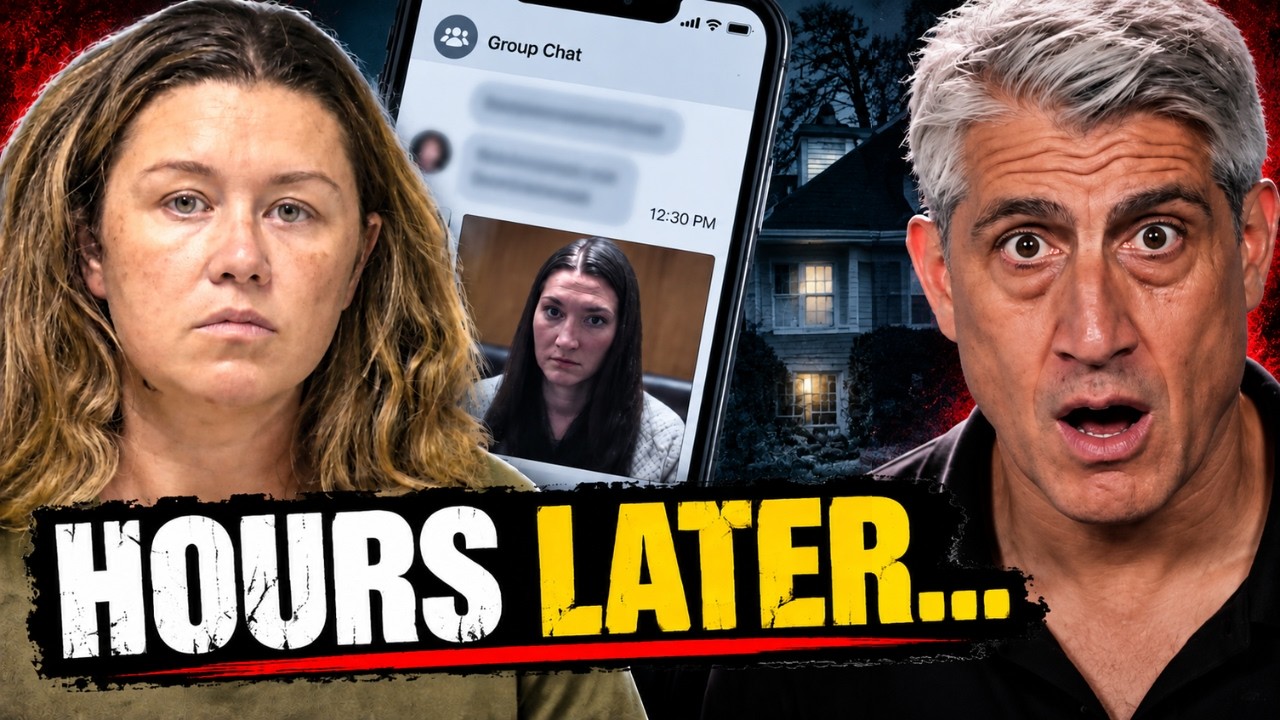
Those messages continued until about 12:30 that afternoon. Less than four hours later, police were called to Cori’s home, where her two-year-old son was found hanged in the basement. Now Cori faces a charge of murdering him, and suddenly a question has arisen around this case that Cori’s lawyers hate. Was the Lindsey Clancy case some kind of influence?
Because the similarities are concerning, but the differences may be just as important. Cori Walsh is a 40-year-old mother of four living in Frankfort, Illinois, a suburb about 35 miles from Chicago. Until September 1st, there was apparently no long, documented record of Cori abusing her children. In fact, defense lawyers say family and friends told investigators she never showed any signs of mistreating them.
They also say she had been seeing a counselor recently, but something seemed to go terribly wrong that day, and that is where Lindsey Clancy enters the story. Lindsey Clancy is the Massachusetts mother accused of killing her three young children in January 2023. There is no real dispute that Lindsey was the cause of their deaths. The dispute at trial was about why, and whether she was legally responsible for what she did.
Her defense argued that Lindsey suffered from postpartum psychosis and was mentally unfit. The prosecution argued that although Lindsey suffered from serious mental health problems, she was aware of what she was doing and knew it was wrong. That trial completely captured people’s attention, and in early September, while jurors were still deliberating, Cori Walsh was apparently among the people who followed it closely. Witnesses later told investigators that Cori had recently become, in their words, obsessed with the Clancy case.
On the morning of September 1st, she was talking about it in a group chat with her friends. But according to Cori’s defense attorney, her friends began to notice something strange. The messages no longer seemed to be coming from her. They described them as confusing and unlike her.
At some point, Cori apparently became convinced that Lindsey’s husband, Patrick Clancy, was the one who had actually killed the children. She sent a message saying she was panicking and asking for help. Keep that in mind, because Cori’s lawyers believe those messages are not evidence that she was planning to commit a crime similar to Lindsey Clancy’s. Rather, they believe it is evidence that Cori herself was beginning to lose touch with reality.
The group conversation about Lindsey continued until about 12:30 in the afternoon, and just a few hours later, everything changed inside the Walsh home. Cori’s husband was not there. He was out of state. An eight-month-old infant is said to have been upstairs.
Two of Cori’s children were of school age, while Barrett Walsh, two years old and called “Bear” by his family, was at home with his mother. At some point that afternoon, the prosecution alleges Cori took Barrett down to the basement. What happened next is difficult to hear. According to court records, Barrett was suspended from a beam in the basement by a cord around his neck.
At about 4:00 p. m. , two of Cori’s older children returned home from school. They realized something was wrong and ran to a neighbor for help.
Imagine that scene. You think you are coming home from an ordinary school day, only to find yourself running to the neighbors because something terrible is happening inside your own home. The neighbor rushed over. In the basement, he found little Barrett.
He took him down, called emergency services, and began CPR. But according to prosecutors, Barrett was cold and had no pulse. He was rushed to the hospital, but doctors could not save him. An autopsy later determined he died of asphyxia due to the pressure of the cord on his neck.
But Barrett was not the only person the neighbor found. Cori was upstairs. According to prosecutors, she was fully dressed and sitting in a bathtub filled with blood-tinged water. There were cuts on her wrists and thighs.
The neighbor said Cori was holding a knife. He took it from her and threw it into the laundry sink. At that point, Cori reportedly told him Barrett was in the basement. The neighbor later described Cori’s appearance as nothing like herself.
Her eyes were wide, and she was letting out what the neighbor described as a strange laugh. A firefighter who encountered Cori said she was delirious and her speech could not be understood in the ambulance. She was taken to the hospital. Her injuries were not considered life-threatening, and then investigators say she began to talk.
According to prosecutors, Cori said she killed Barrett because she believed her two-year-old son was the devil and the Antichrist. Police say she gave them information about what happened that matched what investigators found inside the home. But then, according to prosecutors, Cori made even more alarming statements. She claimed she believed she had already killed her other children.
But she had not. All three were alive. Prosecutors also say she talked about killing her husband when he returned home. Specifically, they alleged she said she planned to poison him by putting poison in his drink.
Authorities noted there were drinks and several bottles of prescription medication inside the home. Her husband flew back that night. He was unharmed. Now look at the timeline.
At 12:30 p. m. , Cori was in a group chat talking about Lindsey Clancy, a mother accused of killing her children and then attempting to end her own life. About three and a half hours later, Cori’s child was found hanged in the basement, and Cori was found injured in the bathtub after what appeared to be an attempt on her own life.
That is why the connection to the Lindsey Clancy case exploded almost immediately. But, and this is extremely important, police have not proven that the Clancy case was what drove Cori to do anything. There is currently no public evidence showing Cori decided to imitate Lindsey. There is no reported message essentially saying, “I will do what Lindsey did.
” For now, what we have is just a coincidence in timing. She was following the case with intense interest. She was discussing it hours before her son’s death, and then something terrible happened within her family. Cori’s lawyers say describing this case as a crime copycat is not only premature, it is cruel.
Her attorney Andrea Lyon has stated the two cases are unrelated and called the copycat speculation baseless and cruel. Andrea Lyon is an interesting name in itself. She previously represented Casey Anthony. So yes, a case already connected to Lindsey Clancy now has a lawyer connected to one of the most famous mother-on-child murder trials in modern American history.
But Cori’s defense offers an argument that actually creates another parallel with the Clancy case. They say Cori was suffering from psychosis. Her lawyer Robert Karr told the judge that Cori was diagnosed with brief psychotic disorder, and that she was suffering from severe mental illness when Barrett died. Her lawyers wanted her placed in inpatient psychiatric care, not jail.
They point to those strange group messages, the dilated eyes, the odd behavior, and the fact she was apparently incoherent. And her apparent belief that her other children had already died when they had not, and her belief that her young child was literally evil. The defense says these are not the signs of a woman rationally carrying out a plan inspired by a murder trial. They say they are signs of a woman suffering from psychosis.
And here is where this case could become very complicated, because the entire Lindsey Clancy trial revolved around this legal divide almost exactly. Being mentally ill does not automatically mean a person is legally insane. A jury may eventually have to decide not just what Cori did, but what Cori understood when she did it. And we are still far from that stage.
For now, these are competing claims. Prosecutors have charged Cori with three counts of first-degree murder for Barrett’s death. Her lawyers say this case should not be treated as an ordinary intentional murder case, and the judge has decided Cori will remain in custody for now, considering her a threat to her husband and surviving children. But the troubling question of Lindsey Clancy remains, and at least one criminal justice expert says we should not automatically ignore it.
Ken Gray is a former FBI special agent who now teaches criminal justice at the University of New Haven. He told Hearst Connecticut Media that copycat behavior is real in certain types of crimes. Although he did not say that is what happened here, he raised the possibility that a person already suffering from mental instability and violent thoughts could be influenced by a case receiving enormous attention. He specifically pointed to the massive public reaction surrounding the Lindsey Clancy case, including the apparent support she received during her trial.
Again, this does not prove Cori imitated Lindsey. It means experts are now wondering whether widely covered cases like this can influence vulnerable people in ways we do not fully understand. There is another reason this timing seems so frightening. Cori’s son died on September 1st.
At that exact moment, the Lindsey Clancy jury was still deliberating its verdict. Three days later, on September 4th, Lindsey’s trial ended without a verdict. Eleven jurors were reportedly ready to find Lindsey not guilty by reason of insanity. One disagreed, and the judge declared a mistrial.
Meanwhile, in Illinois, another mother was sitting in jail, another child was dead, and another defense team was telling the court this woman was suffering from psychosis. On September 8th, Cori appeared before a judge in Will County wearing prison clothing and shackles. She reportedly cried during the hearing. Her lawyers asked for her release so she could receive psychiatric treatment.
The judge refused. On that same morning, while Cori was in court, Barrett’s family was holding his funeral. He was only two years old. And that is the part worth remembering as this case turns into another major legal controversy.
There will be arguments about psychosis, criminal responsibility, Lindsey Clancy, copycats, mental health treatment, and perhaps eventually what Cori knew and what she did not know when this happened. These questions matter, but at the center of all of them is a small child named Barrett. His family called him “Bear. ” No matter what a jury eventually decides about his mother’s state of mind, Barrett is the only person in this story who had no choice.
Cori Walsh remains charged with first-degree murder, and she is presumed innocent until proven guilty. Her lawyers insist she was experiencing a psychotic episode and fiercely deny the claim that this crime was a copycat of the Lindsey Clancy case. She is scheduled to appear in court again on September 24th, and because this case is developing quickly, it is worth researching on your own to make sure you have the latest information. But for now, it is nearly impossible to ignore the question that surrounds this case.
Hours after Cori Walsh talked about Lindsey Clancy, what happened inside her mind and inside that home?
