On the afternoon of July 14, 1882, a teamster named James Yoast was hauling a load of wood along the bottom of West Turkey Creek Valley in Arizona Territory, about fifty miles east of Tombstone. The July heat pressed down on the creek bottom and the blackjack oaks gave the only shade for miles. Yoast saw a man sitting in that shade, propped against one of the trunks, upright, almost comfortable. There were five oaks growing out of a single root in a half circle, and in the middle of them a wide, flat rock made a natural seat.
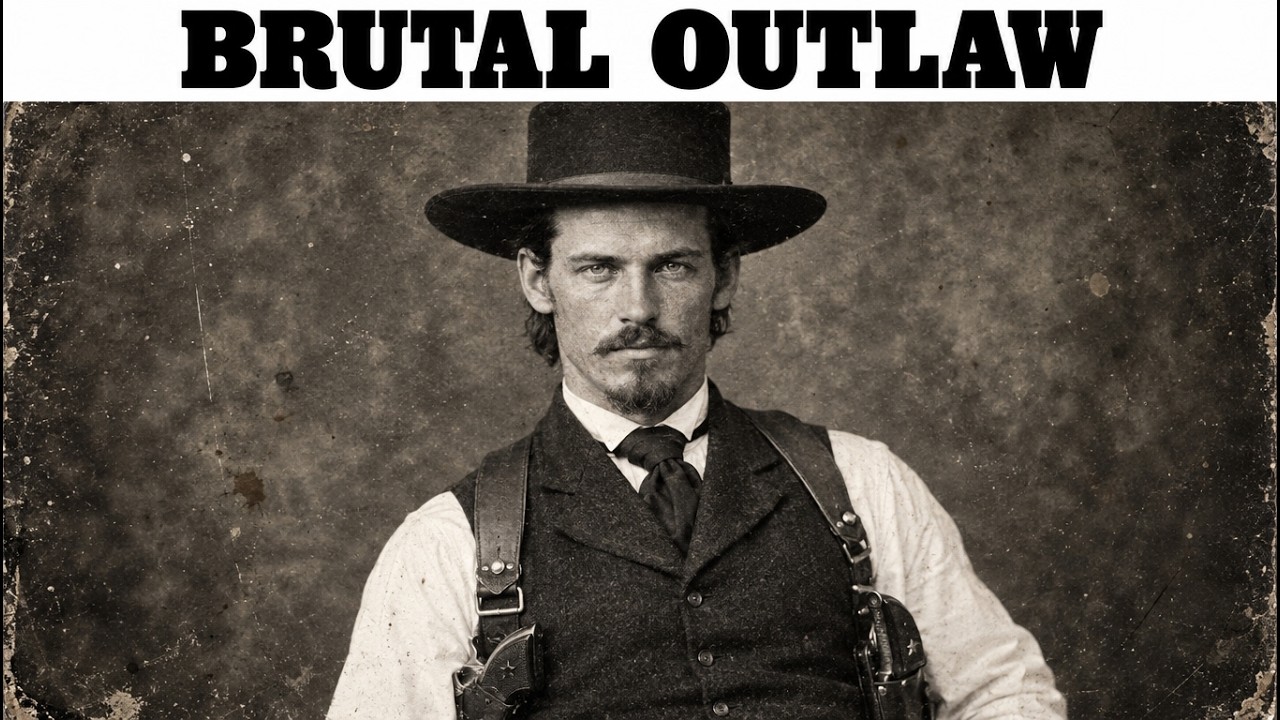
The man was on it. Yoast called out. The man did not answer. He walked closer, and then he understood why.
The body had been out in the heat for a day. The skin had gone black. There was a bullet hole in the right temple and an exit wound at the back of the skull. A Colt single-action .
45 still hung in the right hand, tangled in the watch chain. The man was not wearing boots. His feet were wrapped in strips of cloth torn from his own undershirt. He sat less than seven hundred feet from a ranch house, close enough to shout.
Close enough that the people inside had heard the shot the day before, around three in the afternoon, and decided it was not worth the walk to look. The dead man was Johnny Ringo. He was thirty-two years old. For three years, the newspapers of two territories had called him the most dangerous man in Tombstone.
They had built him into something that overshadowed every other name in the Southwest. And here was the part that should have stopped the legend cold: in his entire life, Johnny Ringo had killed exactly one person. One confirmed, documented killing, seven years earlier, in Texas. The victim was an unarmed man who had just invited him in for breakfast.
Ringo was not at the gunfight at the OK Corral. He was out of town that day. He never fought Doc Holliday, not once. They never drew on each other, never traded Latin, never circled each other in the street.
He was never convicted of anything more serious than firing a pistol in a town square. The real question about Johnny Ringo was never who killed him. The coroner’s jury answered that in 1882, and the physical evidence has not changed since. The real question is how a man with one confirmed kill became the most feared name in the American Southwest.
Because somebody built that. And to understand it, you have to go back to the first gunshot. July 30, 1864. Near Deer Creek, in what is now Wyoming, just west of present-day Glenrock.
A wagon was stopped on the trail. The Ringo family was a thousand miles from their destination, California, where a cousin of Mary Ringo had family, and where there was supposed to be land and clean air. Martin Ringo was forty-five years old. He had five children, the youngest two, the oldest fourteen.
He had tuberculosis, and that was most of the reason they were on the road at all. Going west was the standard medical advice of the era. Dry air. Buy yourself some years.
Martin stepped down off the wagon, holding a shotgun. The weapon discharged. The official record was brutally plain: he died by the accidental discharge of a gun in his own hand. A shotgun at arm’s length into his own head.
The oldest boy was right there. Johnny was fourteen and standing close enough to see all of it. There was no town, no doctor, no minister, no coffin, no headstone. The family dug into the hillside beside the wagon ruts, put Martin in, covered him with dirt and rock, and then did the only thing the trail allowed.
They kept going west. Mary Ringo kept a journal on that trail, her grief written in her own hand, day by day, while she drove five children across a continent alone. Nobody wrote down what the fourteen-year-old felt. He was not the kind of person whose feelings got recorded.
The family reached San Jose. Mary raised the children there with help from relatives, including a connection that later writers would work very hard to make into something. Her sister-in-law Augusta had married Coleman Younger, uncle of the Younger brothers of the James-Younger gang. That made Johnny Ringo a distant, tangential, marriage-only relation to famous outlaws.
It did not make him an outlaw. What it did was give the legend-builders a thread to pull sixty years later. What actually happened in San Jose was much smaller and much sadder. Johnny appears to have had very little schooling.
The college-educated Johnny Ringo, the man who quoted Shakespeare and sparred in Latin, was largely an invention. He read, and he seems to have genuinely liked books, but he was a school dropout in a fatherless house. In 1869, at nineteen, he left. Mother, brother, sisters, all of it.
He went to Texas. He never really came back, and the family split was permanent. One of his sisters, Fanny Fern Ringo, eventually disowned him outright. His mother kept his journal until the end of her life.
Then came a gap of five years, where the most famous outlaw in Arizona simply was not in the historical record in any meaningful way. He reappeared on Christmas Day, 1874, in Bernett, Texas, firing a pistol across the town square for no reason anybody bothered to record. The fine was seventy-five dollars. That was the origin of the criminal career of the most dangerous man in Tombstone: a drunk man shooting at nothing on Christmas, and a citation.
But it put his name in a courthouse ledger. And in a place that was about to catch fire, having your name on a ledger was how you got recruited, because Mason County, Texas, in 1875 was already tearing itself apart. The fight there was between native-born American cattlemen and a large, organized, politically powerful block of German immigrant settlers. The Americans said the Germans were running lynch mobs.
The Germans said the Americans were stealing cattle. Both accusations were true, which made it unsolvable. And the law was not a referee. The law was a prize.
Sheriff John Clark ran local enforcement and aligned himself openly with the German faction, which meant the badge was simply one side’s weapon. Two American cattlemen, the Bakis brothers, were dragged out of the Mason County jail by a predominantly German mob and lynched. Taken out of legal custody and killed. The investigation produced no indictments, not one.
That was the environment, and into it walked a twenty-five-year-old with no family, no trade, no education, and a courthouse fine. And he met the one man in this story who gave him somewhere to belong. Scott Cooley was an ex-Texas Ranger. His own childhood had been violent: orphaned young, taken captive as a boy and later recovered.
He was raised by a rancher named Tim Williamson and Williamson’s wife, who nursed him through typhoid when he was a child. Cooley’s loyalty to those two people was the organizing fact of his entire adult life. He had served under the Rangers on the frontier, and he was respected and feared. When Johnny Ringo showed up in Mason County, Cooley brought him in.
Since he was fourteen, no adult man had stood in front of him for anything. Cooley gave him a side, a purpose, and a place at a fire. It lasted about a year. On May 13, 1875, a posse took Tim Williamson into custody on a cattle theft charge.
He had posted bond on that kind of charge before. This time, the bond was revoked. On the road back, Williamson was intercepted. He was unarmed and in the legal custody of a deputy, a German farmer named Peter Bader.
Bader shot him dead. A grand jury convened in Mason County and returned nothing. No indictment, no charge. A man murdered while handcuffed and in the custody of the state, and the state’s own investigative body looked at it and walked away.
Cooley received the news at the ranger camp. Every surviving account says the same thing: he broke down and wept. Then he stopped weeping, and what came after was not grief. On August 10, 1875, Cooley went to the home of the ex-deputy who had been escorting Williamson, a man named John Worley, and killed him.
Then he took his scalp. Then he put the body down a well. He did not hide any of it. The scalp was the message, and the message was that the courts had abdicated and something else was operating now.
Ringo was inside that faction when it happened. And in September of 1875, a few weeks after Worley, he made the one killing that is actually his. The man’s name was James Cheney. He was a gambler, and Cooley’s people believed he had lured one of their own, Moses Baird, into an ambush.
Ringo rode out to Cheney’s place with a man named Bill Williams. Cheney came out and invited them to breakfast. He had no idea. He was unarmed.
He was friendly. He told two men who had come to kill him to come in and eat. Then he stepped onto the porch to wash up first, and bent over the basin, and put a towel over his face to dry it. That is when Ringo shot him, while his face was buried in the towel.
Not a gunfight. Not a draw. Not self-defense. Not a feud settled man to man in the street.
An unarmed host, blind behind a towel, on his own porch, seconds after offering two strangers a meal. That was one. The entire confirmed body count of the most dangerous man in Tombstone. And it happened in Texas, seven years before he died.
The count did not go up again. Shortly after that killing, Ringo and Cooley went after Peter Bader, the man who killed Williamson. They found their man and killed him. Except it was not Bader.
It was Charlie Bader, Peter’s brother. They killed the wrong Bader. A revenge campaign launched because a grand jury refused to identify a murderer ended up killing a man for being related to one. Both men were arrested in Bernett.
Friends broke them out. They separated to scatter the pursuit. Cooley never faced any of it. He died before the law could retake him, sometime around 1876, at no more than thirty years old.
What killed him is genuinely disputed. His own people said poison. There is no way now to confirm or refute it. Ringo went to jail.
He sat in custody for more than a year, moved between Austin, Bernett, and Lampasas while the courts decided what to do with him. On May 24, 1878, the case against him for the Cheney murder was dismissed. Not acquitted by a jury that heard evidence and found reasonable doubt. Dismissed.
The machinery simply ran out of energy and let go. His associate, George Gladden, got ninety-nine years for the same conflict. Ninety-nine years for one man. Dismissal for the man who shot a host behind a towel.
Same war, same faction, same courthouse. Then Ringo did something the legend has no room for. He became a lawman. In 1878, Johnny Ringo served as a constable in Loyal Valley, Texas.
A badge, a small town, a salary, a normal life at twenty-eight years old. He held it for about a year, and then he left it and rode for Arizona Territory. Nobody wrote down why. He arrived in Cochise County in 1879 with a friend from the Mason County War, a man named Joseph Graves Only, who was going by Joe Hill.
In December of that year, in a saloon in Safford, Arizona, Johnny Ringo offered a man named Louis Hancock a drink of whiskey. Hancock said he would rather have a beer. Ringo shot him. Louis Hancock survived.
The count stayed at one. That was the pattern. Ringo’s reputation was built almost entirely out of near misses, threats, drawn weapons, and men who lived. He reached for a gun constantly.
He almost never finished anything with it. And in Tombstone, that was enough, because Tombstone was not a place that checked. Tombstone in 1880 and 1881 was a silver boom town sitting on top of a political war. On one side were the Earp brothers, backed by the federal marshal’s office and the Republican business establishment.
On the other side was Cochise County Sheriff Johnny Behan, aligned with the Democratic ranching interests and with the loose network of rustlers, stage robbers, and border smugglers everyone in the territory called the cowboys. Behan’s office was not law enforcement in any recognizable sense. The sheriff collected the county’s taxes on gambling, liquor, and prostitution, and kept a ten percent cut personally. The arrangement was so open it had a nickname: the ten percent ring.
He deputized cowboys. Frank Stilwell held a deputy’s commission under him before being let go over irregularities in tax collection. His undersheriff, Harry Woods, wrote for the Tombstone Nugget, the paper that attacked the Earps in print. And Behan had one more thing on his ledger, a promise.
When Cochise County was carved out, both Behan and Wyatt Earp wanted the sheriff’s job. Behan had the political connections. Wyatt had the police record. So Behan made him an offer: step out of the race, and I will appoint you undersheriff.
Wyatt stepped out. Behan got the office. And he gave the undersheriff job to Harry Woods. That was the crack everything else in Tombstone fell through.
Not a gunfight. A lie between two politicians sealed with a handshake. Johnny Ringo arrived in the middle of that and picked his side immediately: Curly Bill Brocius, Ike Clanton, Behan, and the cowboys. The territory started calling him the king of the cowboys.
The mechanism of that title was simple. He was tall, dark, quiet, and he drank alone. He read books in a camp full of men who could not. He did not boast, which in that world read as menace rather than modesty.
He reached for his revolver in crowded rooms with no apparent calculation about consequences, and he did it often enough that people learned to move away from him. And he had something almost nobody else had: press. Ringo met Sam Purdy, an editor at the Tombstone Epitaph, and gave him what amounted to an interview. Purdy wrote down what he said, and it is without question the most chilling documented sentence to come out of Johnny Ringo’s own mouth.
He told Purdy that he was as certain of being killed as he was of being alive at that moment. That he might run along a couple more years, and he might not last two days. That was 1880 or 1881. He had roughly eighteen months left.
He was not predicting a gunfight. Nobody who fears a gunfight talks about not lasting two days. He was describing something that was already inside him. And he was describing it to a newspaper man on the record, and the newspaper printed it, and the town read it as swagger.
In the 1882 Cochise County Great Register, the official county roll, Johnny Ringo listed his occupation. He wrote: “speculator. ” The most dangerous man in Tombstone, filling out a form, describing himself as a man who was waiting to see how things turned out. There is also the part of the story that nobody tells because it does not fit the shape of a villain.
Somebody loved him. Mary Katherine Hony, Big Nose Kate, the Hungarian immigrant who had once burned down part of a Texas town to break Doc Holliday out of custody, knew Johnny Ringo in Tombstone. Decades later, an old woman who had outlived every single man in this story, she talked about him. She said he was a fine man any way you looked at him.
She called him an attractive man, and she said he was noble because he never fought anyone except face to face. And she said that every time she thought of him, her eyes filled with tears. She was wrong about the noble part. James Cheney died with a towel over his face.
But her testimony explains the missing piece of the most famous non-event in the American West. Kate was Doc Holliday’s woman, and Johnny Ringo was, in her own telling, the suitor who made Doc jealous. The famous hatred between Doc Holliday and Johnny Ringo, the thing two dozen films have built, was not primarily about the Earps or factions or politics. There was a woman in it.
On January 17, 1882, on Allen Street in Tombstone, three months after the OK Corral, which Ringo was not present for, Ringo and Doc Holliday were in the middle of the road, trading threats, hands on their revolvers. Doc was dying of tuberculosis and furious. Ringo had been drinking. This was the closest these two men ever came.
It is the entire factual basis for every scene ever filmed between them. And it ended with Tombstone’s chief of police, James Flynn, grabbing Ringo from behind before anyone fired. They were both hauled in front of a judge and fined for carrying weapons in town. Three days later, Judge William Stilwell revoked Ringo’s bond over an outstanding robbery charge out of Gayville, and Ringo spent the weekend in jail.
That was it. A police chief with two hands and a fine. The count stayed at one. Then Tombstone stopped being a political fight.
On December 28, 1881, three men with shotguns ambushed Virgil Earp on a Tombstone street at night. The blast destroyed his left arm. He would never use it again. Suspects were named.
Alibis appeared. Nobody was charged. On March 18, 1882, Morgan Earp was playing billiards at Campbell and Hatch’s. An assassin fired a rifle through the glass pane of the back door.
The bullet took Morgan in the spine. A second round missed Wyatt’s head by inches. Morgan died on the billiard table. He was thirty years old.
Johnny Ringo was among the men the Earps suspected in both attacks. It was never proven, and it has never been proven since. Two days later, Wyatt Earp killed Frank Stilwell in the Tucson rail yards, and the vendetta ride began. Sheriff Behan received warrants from a Tucson judge for the arrest of the Earps and Holliday.
To serve them, he formed a posse. He deputized nineteen men. Many of them were friends of Frank Stilwell. Many of them were the cowboys the federal posse was hunting.
And one of them was Johnny Ringo, a murder suspect riding with a sheriff’s commission, hunting the brother of the man he was suspected of murdering. Two posses in one desert. One carrying federal warrants, one carrying county warrants. Both legally authorized.
Both hunting each other. Wyatt’s posse killed Florentino Cruz. On March 24, at Iron Springs, Wyatt killed Curly Bill Brocius with a shotgun, Ringo’s closest friend in the territory, dead in a creek bed. And Behan’s posse never caught them once.
Former Pima County Sheriff Bob Paul, who rode with Behan, later wrote to correct the record. The Earps had sent word through the rancher Henry Hooker, telling Behan exactly where they were camped. Hooker passed the message along, and Behan’s posse rode off in the opposite direction. They were told where to find the Earps, and they left the other way.
Now came the last three months of Johnny Ringo’s life, and nothing dramatic happened in them. Nothing at all. By July of 1882, the world he had chosen was gone. Fire had gutted much of downtown Tombstone.
The silver was producing less. Curly Bill was dead. The Earps had left the territory and were never coming back. The Clantons were scattered.
Behan’s ring was collapsing. The faction that had made Johnny Ringo the king of the cowboys no longer existed. There was nothing left for him to be king of. During Tombstone’s Fourth of July celebrations, Ringo drank heavily.
Two days later, he left town, and he took several bottles of liquor with him for the ride. Two days after that, Deputy Billy Breakenridge, a county man and no friend of the Earps, came across him near Dial’s Ranch in the south pass of the Dragoon Mountains. Breakenridge wrote down what he saw. He said Ringo was very drunk, reeling in the saddle.
And then Breakenridge did something that has haunted the story ever since. He tried to bring him in, not arrest him, help him. He told Ringo to come along with him back to the Goodrich ranch, where there were people and food and a place to sleep it off. Ringo said no.
Breakenridge wrote that he was drunk and stubborn and went on his way. Breakenridge believed he was the last person to see Johnny Ringo alive. Somewhere in the days after that, Ringo lost his horse. It wandered off with his boots still tied to the saddle.
So he tore up his own undershirt and wrapped the strips around his feet, and he kept walking through the Chiricahua foothills in July. He did not get far. The coroner noted that he had evidently traveled only a short distance in that footwear. He walked into West Turkey Creek Valley, within seven hundred feet of a ranch house, within two hundred feet of fresh running water.
He was not lost. He was not in the wilderness. He was a four-minute walk from people and a drink of water. He sat down on a flat rock inside a circle of five oaks growing from one root.
At about three in the afternoon on July 13, 1882, the ranch hands at that house heard a single gunshot. Nobody went to look. A gunshot in the Chiricahuas in 1882 was not worth the walk. The physical evidence was all there.
The bullet entered at the right temple and exited at the back of the skull, and critically, the coroner recorded the path angling upward at roughly forty-five degrees, passing between the right eye and the right ear. That is not a trajectory an assassin produces. A man shooting another man from cover shoots level or down. An upward forty-five-degree path through the temple is the angle of a right-handed man holding a revolver against the side of his own head.
The revolver was still in his right hand. The cylinder of that Colt held five cartridges in a six-chamber weapon, and one fired shell with the hammer resting on the spent round. His boots were on a horse that would be found eleven days later, two miles off. The strips of undershirt on his feet were his own.
And then there was the detail that settled it, and almost nobody ever mentions it. A man named Robert Ballard served on the coroner’s jury that examined the scene. Fifty-two years later, in 1934, Ballard wrote down what he had personally seen and shown to the others. He pointed out where the bullet had gone into the tree.
The left side of the tree, the trunk Ringo was leaning against. A bullet hole in the wood, exactly where a round exiting the back left of his skull would have to land if he shot himself where he sat. Ballard described the blood and brain matter in the hair. He described the empty shell and the hammer sitting on it.
And he finished with this: he had called it a suicide fifty-two years earlier, and he was still calling it a suicide. He supposed he was the last of that jury left alive. The four murder theories have each had a century, and they all fall apart on paper. The popular one is Wyatt Earp, and it rests mostly on a 1976 book called I Married Wyatt Earp, presented as the memoirs of Wyatt’s wife, Josephine, in which Wyatt and Doc come back to Arizona and shoot Ringo in that canyon.
The man who produced that book refused to ever show anyone his source manuscripts. By the 1980s, researchers had stopped believing him. And Wyatt’s own version convicts itself. When he told the story to the historian who published Pioneer Days in Arizona, Wyatt said he killed Ringo as he was leaving Arizona in March of 1882.
Ringo died in July. Wyatt’s confession was off by four months. In an interview in Denver in 1896, Wyatt denied killing him at all, then later privately claimed it again. A man who tells four versions of a killing, one of which is on the wrong date, is telling you about his reputation, not about a murder.
Doc Holliday: the movie answer. And this one dies by paperwork. Pueblo County, Colorado court records place Holliday and his attorney in court on July 11, 14, and 18 of 1882, answering a larceny charge. Ringo’s body was found on the fourteenth.
Six days before Ringo died, the Pueblo Daily Chieftain reported Holliday in Celita, Colorado, about six hundred seventy miles from Turkey Creek. On the eighteenth, Leadville, roughly seven hundred miles away. And there was still an active Arizona murder warrant out on Holliday for Frank Stilwell. He was a dying tubercular man with lungs that could barely climb stairs, and he would have had to cross two states into a jurisdiction that wanted to hang him, and be back in a Colorado courtroom inside a week.
Buckskin Frank Leslie confessed, while serving time in Yuma prison for killing his wife. A convicted murderer volunteering credit for an unsolved death he could not be tried for, in a prison where notoriety was currency. Almost nobody believed him at the time. Michael O’Rourke, the gambler with a grudge, has a last documented sighting of May 1881 in the Dragoon Mountains, heading out of the territory fourteen months before Ringo died.
Everything after that is rumor with no paper under it. And then there was the piece of evidence sitting in the newspaper the entire time. On July 18, 1882, four days after the body was found, the Tombstone Epitaph reported that Ringo had frequently threatened to take his own life, and that people who knew him expected it at any time. Not a rumor started later.
Printed in his own town the same week, by people who had drunk with him. Put it together. A documented statement to a newspaper editor that he expected to be dead within days. Neighbors who were not surprised.
A three-month collapse of everything he belonged to. A heavy drinking binge. A refused offer of help from a deputy who thought he needed it. A man alone, bootless, four minutes from water, who sat down in the shade instead.
An upward forty-five-degree wound. The gun in his hand. The spent shell under the hammer. And a bullet hole in the tree behind his head.
Johnny Ringo killed himself. The coroner’s jury got it right in 1882, and one of its members was still saying so in 1934, and the evidence has not changed since. The counterarguments are thin and worth naming honestly. People have pointed to a lack of powder burns, except the coroner’s report never mentions powder burns either way, and the body had gone black with decomposition, which makes that observation impossible to rely on.
And there was a knife cut at the base of his scalp, which is genuinely strange and has never been explained. Though an unattended body in open country for a day in July has visitors that are not human. So the count ends where it started. Johnny Ringo, the most dangerous man in Tombstone, killed one man in his life: an unarmed host with a towel over his face, in Texas, in 1875.
And the last person he ever shot was himself. Which leaves the actual mystery. If that is the whole record, where did the legend come from? The year is 1927.
The book is Tombstone: An Iliad of the Southwest, by a writer named Walter Noble Burns. Forty-five years after Ringo died, Burns wrote that he stalked the stories of Tombstone like a Hamlet among outlaws. An introspective, tragic figure, darkly handsome, a man born for better things. An honorable outlaw, Burns wrote, to whom womanhood was an icon before which he bowed in reverence.
Every element of the Johnny Ringo you know is in that passage: the Shakespeare, the melancholy, the education, the nobility, the tragedy of wasted potential. And essentially none of it is sourced to anything. Burns gave a bookish drunk with one killing and a courthouse fine the interior life of a Danish prince, and the culture took it because it was a far better story than the truth. It took serious historians nearly fifty years just to establish the basic fact that Ringo was not at the OK Corral.
Then the machine ran on its own. Films. A television series in 1959 that had almost nothing to do with his actual life. In 1964, a talking ballad called “Ringo,” recorded by Lorne Greene of Bonanza, went to number one on the pop charts.
A chart-topping hit song about a man whose entire documented record is one murder and a beer dispute. In 1987, a historian named Jack Burrows finally published the correction, and the title tells you everything: John Ringo: The Gunfighter Who Never Was. Burrows’s verdict was that Ringo was a shadowy hanger-on among a gaggle of skulking Texas bushwhackers. He was right.
And it did not matter, because in 1993, the film Tombstone put Ringo and Doc Holliday face to face, spinning weapons and trading Latin. And that scene is now more real to more people than anything in the record. They never spoke Latin at each other. Ringo probably did not know much Latin.
The closest those two men ever got was a chief of police grabbing a drunk’s arms from behind on Allen Street. The people who actually knew him left thinner records, and the roll call is short. George Gladden, who fought in the same faction, served under a ninety-nine-year sentence while Ringo’s case was dismissed. Doc Holliday died in November 1887, in a bed in Glenwood Springs, Colorado, of the tuberculosis that had been killing him the whole time, five years after the afternoon he came closest to shooting Johnny Ringo.
Big Nose Kate outlived them all into old age, and used some of that time to tell anyone who asked that Johnny Ringo was a fine man and that thinking about him made her cry. Fanny Fern Ringo, his sister, lived until 1932 and never took him back. And Mary Ringo, who buried her husband on a Wyoming hillside and wrote her grief into a trail journal and drove five children to California alone, she kept her son’s journal until she died. Whatever was in it, she held on to it after everyone else had let go.
His grave is still out there at the base of that tree, on private land off East Turkey Creek Road near Pearce, Arizona, about fifty miles east of Tombstone. There is a pile of rock, a headstone, a state historical marker, and a gate the landowners leave open so people can walk in. The walk from the road is about forty-five yards. The oaks are still growing out of that single root.
Fifty miles west in Tombstone, actors in period costume perform the gunfight at the OK Corral for paying audiences several times a day. The gunfight Johnny Ringo was not at. The gift shops sell replica revolvers. The town that could not be bothered to send one man seven hundred feet to check on a gunshot turned out to be extremely good at selling tickets to its own violence.
So go back to where it started. July 30, 1864. A wagon on a trail in Wyoming. A man steps down holding a gun, and the gun goes off into his head.
There is no law, no inquest, no doctor, no marker. The fourteen-year-old boy standing there watches it. Then his family covers the body with rock and walks west and never comes back. July 13, 1882.
A canyon in Arizona. A man sits down under five oaks with a gun, and it goes off into his head. There is no law worth the name. No one comes when they hear it.
And a coroner’s jury that got it right and got ignored for a century. Two gunshots, eighteen years apart. Same angle, roughly. Same result.
The first one made him. The last one was the only thing he ever finished. And in between, a man who killed one person became the most feared name in the American Southwest. Not because of anything he did, but because he was quiet and he drank alone and he read books.
And a writer in 1927 needed a Hamlet. His feet were wrapped in his own shirt. His boots were on a horse two miles away.
He was four minutes from water.
