Deputy Sheriff Harrison Fletcher stood at the edge of the Cold Water property and noticed something he could not quite name. The forest had gone quiet around them, the bird calls and insect sounds fading as they approached the homestead, until the only noise was the crunch of their own boots and the breathing of the four men behind him. It was November 2nd, 1907, and they had come looking for Cornelius Ashford, a fur trader who had vanished nine days earlier somewhere in this dense woodland between the logging roads and the shore of Lake Huron. As they emerged from the trees, a tall, gray-haired man split firewood in the yard with methodical strokes, showing no surprise at their arrival, as though he had known they were coming long before they became visible.
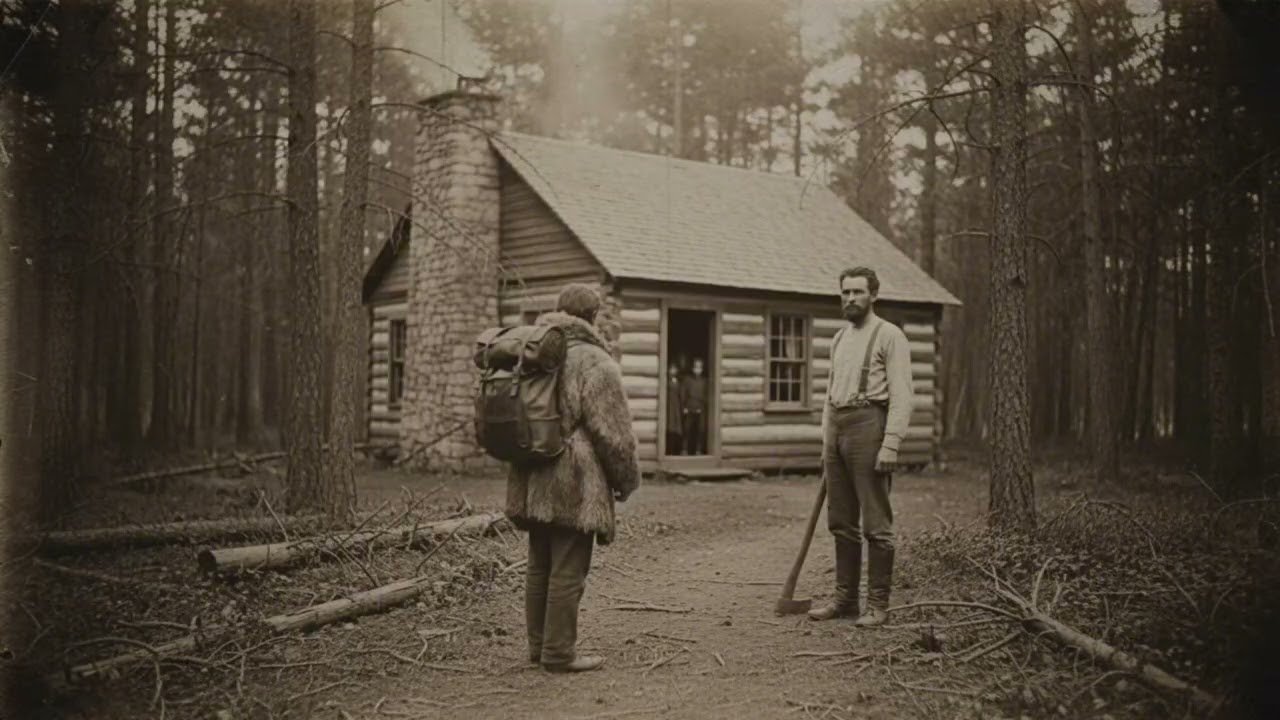
Ezekiel Coldwater set down his axe, wiped his hands, and greeted them politely. He had, he said, seen the missing trader. The man had stopped at the homestead on the evening of October 24th, declined the family’s offer of food and shelter, and insisted on continuing his journey into the darkness. The story was perfectly plausible.
But something about the way Coldwater told it troubled the searchers, and they could not yet say why. Cornelius Ashford had spent the better part of two decades building a reputation as an honest trader who moved reliably between the logging camps and scattered settlements of northern Michigan. At 43 years old, he was a man of methodical habits, keeping detailed records of his routes, marking his maps with precise notations about seasonal conditions and reliable shelters, and maintaining relationships with dozens of families who regarded him as a welcome visitor rather than merely a business contact. His leather-bound journal contained not only commercial transactions but personal observations about the people he encountered, their family circumstances, and the gradual changes he witnessed in the frontier communities over the years.
The fur trade in northern Michigan was transforming. The great logging operations that had dominated the regional economy for nearly four decades were exhausting the prime timber, leaving behind vast cut-over lands that would eventually return to second-growth forest or become farmland. The trading networks built around the lumber camps were disappearing, but new possibilities emerged as settlers pushed into previously inaccessible areas and established homesteads in places once considered too remote for permanent habitation. On October 23rd, 1907, Ashford set out from his boarding house in Alpena intending to reach the remote trading post at Oable before the heavy snows made winter travel treacherous.
He carried a collection of fine pelts acquired during the summer from trappers working the watersheds of the Thunder Bay and Alpena Rivers, along with a modest amount of currency and several orders for manufactured goods that isolated families had requested before winter set in. His planned route would take him through some of the most sparsely populated sections of Alcona County, following trails that were little more than wildlife paths marked by occasional blazes cut into trees by previous travelers. He was last seen by lumber crews near the Rifle River crossing around midday on October 24th. The foreman, a French Canadian named Baptiste Maro who had worked the Michigan forests since the 1880s, later testified that Ashford appeared in good spirits and mentioned his intention to take a shortcut through what locals called the Cold Water Tract, a dense section of woodland lying between the established logging roads and the lakeshore settlements.
Maro remembered the conversation clearly because Ashford had asked specific questions about the terrain and the locations of reliable water sources along the proposed route. What Maro and others knew, but apparently failed to communicate effectively to Ashford, was that the Cold Water Tract had earned a reputation as a place where travelers occasionally vanished without satisfactory explanation. Over the previous fifteen years, at least a dozen experienced woodsmen, traders, and hunters had entered the area and simply failed to emerge at their intended destinations. The disappearances followed no seasonal pattern, occurring in good weather and bad, and involved men with varying levels of wilderness experience.
Some had been traveling well-established routes they had used successfully for years. Others had been exploring new territory, but were equipped with adequate supplies and navigation tools. In every case, subsequent searches had failed to locate any trace of the missing persons or their equipment, despite the fact that the Michigan wilderness typically yielded evidence of even the most experienced travelers who had met with accidents or become lost. Local residents had developed various theories.
Some attributed the disappearances to ordinary frontier hazards: unstable terrain, hidden sinkholes, aggressive wildlife. Others suggested the missing men had simply abandoned their previous lives and started fresh in distant locations, using the wilderness as cover. A few whispered about more sinister possibilities, but those speculations were generally dismissed as the product of overactive imaginations influenced by too many evenings spent listening to ghost stories around lumber campfires. The Cold Water family had established their homestead in this remote section in the late 1880s, during the height of the logging boom.
Unlike most families who settled near established communities or along major waterways, they had deliberately sought isolation, purchasing a substantial tract of land nearly fifteen miles from their nearest neighbors and almost thirty miles from the closest settlement of any significant size. Ezekiel Coldwater, the family patriarch, was described by the few who encountered him as a man of imposing stature and unsettling intensity. Standing well over six feet tall, with a lean, muscular build suggesting a lifetime of physical labor, he possessed pale blue eyes that seemed to evaluate everything and everyone with calculating precision. His sparse gray hair and weathered features suggested a man in his fifties, but his movements retained the fluid coordination of someone considerably younger.
When he spoke, which was rarely and only when directly addressed, his voice carried the educated accent of someone who had received formal schooling, an unusual characteristic among the largely self-taught frontier population. His wife, Magdalena, rarely appeared in public, and when she did, witnesses noted she seemed to defer completely to her husband’s judgment in all matters. She was a woman of perhaps forty years with dark hair pulled back severely and a thin frame that suggested either poor health or inadequate nutrition. Her clothing, while clean and well-maintained, was consistently dark and cut in a style that concealed rather than flattered.
Those who observed her closely noted she rarely spoke above a whisper and seemed to anticipate her husband’s needs with an accuracy that suggested either exceptional devotion or carefully learned subservience. The couple lived with Ezekiel’s younger brother, Silas, and Magdalena’s sister, Cordelia, creating a family unit neighbors found difficult to categorize according to the normal social patterns of frontier life. Silas was a man of perhaps forty-five years, shorter and more heavily built than his older brother, with dark hair and eyes that suggested a more volatile temperament. He was occasionally seen in the settlements purchasing supplies, but he rarely engaged in casual conversation and would provide minimal responses that discouraged further inquiry when pressed about his family’s circumstances.
Cordelia appeared to be the youngest member of the household, a woman of perhaps thirty years with the kind of nervous energy that suggested constant anxiety or fear. She was occasionally observed working in the garden, but she avoided contact with strangers and would retreat into the house if visitors approached. The few who spoke with her reported she seemed intelligent and articulate but exhibited a weariness that went beyond normal frontier caution about unfamiliar people. The homestead itself was a source of considerable speculation.
Built in a natural depression surrounded by dense stands of pine, birch, and maple, the property was virtually invisible from any of the established trails or even from elevated positions that might provide distant views. The buildings had been constructed with obvious skill and considerable attention to concealment rather than convenience, with thick log walls that provided excellent insulation but also effectively muffled sounds from the interior. Those few individuals who glimpsed the homestead described a collection of structures that seemed designed more for defense and privacy than for efficient farming or household activities. The main dwelling was a substantial two-story building with unusually small windows placed high on the walls.
Several outbuildings appeared to serve specialized purposes that were not immediately obvious, and the entire property was surrounded by a fence that seemed designed more to mark boundaries than to contain livestock. The family maintained a large garden and raised a small number of chickens and pigs, but their livestock holdings were much smaller than would be expected for a family of four adults living in such isolation, suggesting either alternative sources of food and income or different consumption requirements than their apparent household size would indicate. When Cornelius Ashford failed to arrive at the O Sable trading post by October 27th, his business associates began to express serious concern. He was known throughout the region for punctuality and reliability, and the weather had remained clear and favorable throughout the period when he should have been traveling.
Initial inquiries among lumber crews and homesteaders along his intended route yielded little useful information. Several individuals remembered seeing him during the early stages of his journey, but no one could provide reliable information about his activities after he passed the Rifle River crossing on October 24th. It was Baptiste Maro who first suggested investigating the Cold Water Tract. Despite the fact that this would require a substantial deviation from Ashford’s stated route, Maro had worked the lumber camps long enough to develop an intuitive understanding of how experienced woodsmen made decisions about travel routes, and he believed Ashford might have chosen to modify his plans based on conditions encountered during his journey.
More significantly, Maro had begun to notice patterns in the various disappearances over the previous decade, and he suspected these incidents might not be as random or easily explained as most people preferred to believe. Maro’s concerns were initially dismissed by local authorities, who pointed out that the Cold Water family had never been the subject of any formal complaints and there was no evidence linking them to criminal activity. They paid their taxes, conducted their limited business dealings honestly, and maintained their property according to local standards. They were regarded as eccentric rather than dangerous.
But as the days passed without any trace of Ashford, and as inquiries in other directions failed to produce leads, Maro’s suggestion began to seem more reasonable. Deputy Sheriff Fletcher, a young man elected largely because of his family connections rather than his investigative experience, eventually agreed to accompany a small search party to the Cold Water property. On November 2nd, 1907, the party consisting of Maro, Fletcher, and two volunteer lumber camp foremen set out to trace Ashford’s presumed route through the tract. They found his trail relatively easy to follow through the first several miles, his distinctive bootprints clearly visible in soft earth near stream crossings and muddy sections of the path.
The route he had chosen made sense for an experienced traveler seeking to minimize distance and elevation changes while maintaining access to reliable water sources. As they followed the trail deeper into the tract, the searchers noticed subtle changes in the forest environment suggesting they were approaching an area where human activity had modified the natural landscape. The understory showed signs of selective clearing that created better sight lines and easier passage. Game trails had been subtly altered to funnel wildlife movement toward specific locations, and several trees bore old axe marks indicating systematic harvesting of particular species.
The trail led them directly toward the Cold Water homestead, following what appeared to be a well-maintained but deliberately concealed path that wound through the densest sections of forest, marked by broken branches at specific heights, stones arranged in particular patterns, and blazes cut into trees in a coding system that would be meaningless to strangers but provide clear direction to anyone who understood it. When they approached the property, they found Ezekiel Coldwater working in his yard, splitting firewood with methodical precision. When questioned about whether he had seen a traveling fur trader, Coldwater’s response was carefully measured and delivered without hesitation, as though he had anticipated the inquiry. He acknowledged that a stranger fitting Ashford’s description had approached the homestead on the evening of October 24th, seeking shelter and assistance with directions to O Sable.
According to Coldwater, the family had offered the stranger food and accommodation for the night, but the man had declined their hospitality and insisted on continuing his journey despite the approaching darkness. The story was perfectly plausible. A traveler who believed he was close to his destination might well prefer to continue rather than accept shelter from strangers, particularly if carrying valuable goods and concerned about the security of his possessions. However, something in Coldwater’s manner of speaking troubled the search party members, though they would have difficulty articulating exactly what had aroused their suspicions.
Silas Coldwater and the two women were summoned to provide their own accounts. Their versions matched Ezekiel’s story in all essential details. But when pressed for more specific details, the family members’ descriptions became less precise and occasionally contradictory. Magdalena claimed Ashford had been carrying a rifle, while Cordelia insisted he had only a walking stick and a small pack.
The estimated time of his departure varied by nearly two hours depending on which family member provided the information. Silas described Ashford as a man of medium height with dark hair, while Ezekiel had characterized him as tall and gray-haired. These inconsistencies might have been attributed to normal variations in observation and memory, but Fletcher noted the family members seemed unusually nervous when asked for details beyond their initial statements, and their nervousness increased when questioned separately rather than as a group, suggesting they were more comfortable when they could monitor each other’s responses and ensure their stories remained coordinated. The search party requested permission to examine the area around the homestead for signs of Ashford’s continued passage.
Coldwater granted permission readily, even offering to guide them along the most likely routes a traveler might have taken when departing toward O Sable. This cooperation impressed Fletcher, who noted in his subsequent report that the family seemed genuinely concerned about the missing traveler. But Maro noticed several things that troubled him deeply. The soil in several areas showed signs of recent disturbance beyond what would be expected from normal farming or household activities.
These areas had been carefully concealed with transplanted vegetation and scattered debris, but Maro’s experience with logging operations had taught him to recognize the signs of systematic excavation and subsequent efforts at concealment. When he pointed these areas out to Fletcher, Coldwater provided immediate explanations that were detailed and plausible: a root cellar expansion project, a drainage system to divert water from the foundation, the burial of a farm animal that had died of disease. Each explanation was delivered smoothly and accompanied by just enough technical detail to discourage further inquiry from individuals lacking specific expertise. The search party continued their investigation for another two days, following every possible route Ashford might have taken, examining terrain for signs of recent passage, searching areas where an injured or lost traveler might have sought shelter, and making inquiries at the few other homesteads within reasonable distance.
They found no trace of the missing fur trader. It was as though Cornelius Ashford had simply ceased to exist at the moment he encountered the isolated family. The official investigation concluded that Ashford had most likely become disoriented in the dense forest and perished from exposure or accident in some location where his remains had not yet been discovered. Fletcher’s final report noted that the Cold Water family had provided all possible assistance and recommended additional searches in the spring when snow melt might reveal evidence concealed by winter conditions.
The conclusion satisfied the legal requirements of the case but left Maro with a growing conviction that something far more sinister had occurred. Throughout the winter of 1907 and into the spring of 1908, he continued to gather information about the Cold Water family. He spoke with older residents who remembered the family’s arrival, examined public records related to their land purchases and tax payments, and carefully documented every story he could find about travelers who had disappeared in the vicinity. What Maro discovered was a pattern of missing persons cases stretching back to within two years of the family’s arrival.
Traveling salesmen, itinerant workers, hunters seeking shelter during unexpected storms, traders like Ashford moving between distant settlements—all had vanished after their paths crossed with the Cold Water homestead or the surrounding area. The pattern was subtle enough to avoid official scrutiny because the missing individuals were typically people whose absence might not be noticed immediately and whose disappearances could plausibly be attributed to the ordinary dangers of frontier life. The missing persons were almost exclusively men traveling alone, carrying valuable goods or significant amounts of currency, with no fixed schedule or people expecting their arrival at specific times. The timing of the disappearances showed no correlation with seasonal conditions or weather patterns.
Maro’s investigation also revealed that Coldwater had purchased his property using currency and bank drafts that local financial institutions found difficult to trace to any legitimate source. The family had arrived with possessions and equipment suggesting considerable wealth, including high-quality tools, weapons, and household goods that would have been expensive and difficult to obtain in the frontier settlements of northern Michigan during the 1880s. More disturbing were the accounts Maro gathered from the few individuals who had visited the Cold Water homestead under various circumstances and lived to speak of the experience. One lumber camp cook who sought shelter during a spring storm in 1906 reported he had been confined to a single room throughout his overnight stay, with different family members taking turns to monitor his activities and ensure he did not explore other areas of the building.
He described hearing sounds from other parts of the house suggesting the presence of additional people who never appeared and whose existence the family denied when questioned. The same visitor reported that Magdalena Coldwater bore what appeared to be fresh bruises on her arms and neck, injuries Ezekiel explained as farm accidents, though the visitor noted her behavior suggested fear rather than mere physical discomfort. Another individual, a traveling preacher who stopped at the homestead in 1904, described the family’s behavior as unlike anything he had encountered in twenty years of ministering to frontier families. The family members seemed to communicate through glances and subtle gestures rather than spoken words, creating an atmosphere of conspiracy and shared secrets that made normal social interaction virtually impossible.
The preacher also noted that the interior of the home contained personal possessions that seemed inconsistent with the family’s apparent lifestyle: items of jewelry, books, and decorative objects that would have been expensive and difficult to obtain, suggesting either hidden sources of income or a history the family preferred not to discuss. By the summer of 1908, Maro had compiled enough evidence to convince himself that the Cold Water family was responsible not only for Ashford’s disappearance but for a systematic pattern of criminal activity spanning nearly two decades. However, his evidence was largely circumstantial, and he recognized that convincing the official authorities would require more substantial proof. The county sheriff, a man named Fletcher Grimby who had held his position for nearly fifteen years, was initially skeptical.
But Maro’s persistence and the accumulation of circumstantial evidence eventually began to influence his thinking. Grimby recognized that the complete absence of any trace of Ashford despite extensive searches was difficult to explain through normal wilderness accidents. When he examined the broader pattern of disappearances Maro had documented, he found the concentration of cases in the vicinity of the Cold Water tract statistically improbable if the incidents were truly random. The decision to pursue a formal investigation was ultimately influenced by the discovery of additional evidence.
In the spring of 1908, a severe storm caused significant flooding along the Rifle River and its tributaries, washing out bridges and causing extensive erosion. During cleanup efforts, work crews discovered several items that appeared to be personal possessions of travelers who might have passed through the area in previous years: fragments of leather goods, metal buckles and fasteners, and pieces of equipment suggesting they had once belonged to individuals engaged in hunting, trapping, or trading. Most significant was a small metal locket bearing the initials “C. A.
” and containing a photograph of a woman and small boy. When this item was brought to the authorities, they determined it had most likely belonged to Cornelius Ashford based on descriptions provided by his business associates and family in Alpena. The location of the discovery was approximately three miles downstream from the Cold Water homestead, in an area where storm runoff would naturally carry objects that had been buried or discarded somewhere in the upper watershed. Armed with this more concrete evidence, Sheriff Grimby authorized a formal investigation.
On July 15th, 1908, Grimby led a party of eight men to the Cold Water property with legal authorization to conduct a thorough search. They arrived in the early morning hours, intending to catch the family before they could prepare for the visit or conceal evidence. What they found exceeded their worst expectations. The Cold Water homestead, which had appeared from the outside to be a modest frontier dwelling, proved to contain a complex network of hidden rooms, concealed storage areas, and underground chambers constructed with considerable skill and planning over many years.
Several walls contained concealed doorways leading to chambers not visible from the exterior. These hidden rooms contained collections of personal possessions clearly belonging to multiple individuals: clothing of various sizes and styles, personal jewelry including wedding rings and family heirlooms, weapons ranging from hunting knives to firearms, leather goods bearing the marks of different craftsmen, and personal papers including letters, diaries, and business documents bearing the names of individuals unknown to the Cold Water family. The most disturbing discovery came when the search party located what had initially appeared to be a root cellar beneath the kitchen floor. When they excavated, they found not stored food supplies but a carefully constructed underground chamber containing human remains in various stages of decomposition.
The condition of the remains suggested they had been placed there over a period of several years, with the most recent additions showing signs of deliberate preservation efforts. Among the personal effects, Grimby identified several items belonging to Cornelius Ashford: his distinctive leather satchel with his initials carved into the flap, several rare pelts matching descriptions provided by his business associates, and the small notebook in which he had recorded his trading activities and travel plans. The notebook’s final entries described his intended route through the Cold Water tract and his plan to seek shelter at the homestead if weather conditions made continued travel inadvisable. When confronted with this evidence, the family’s practiced cooperation dissolved into a series of contradictory explanations and accusations directed against each other.
Ezekiel initially maintained that his brother Silas had acted without his knowledge or consent, while Silas insisted the women had concealed their activities and been responsible for any criminal actions. Under sustained questioning, however, it became clear that all four family members had been actively involved in a systematic operation targeting travelers who met specific criteria. The family had developed sophisticated methods for identifying suitable targets, luring them to the homestead, incapacitating them through drugged food or direct violence, and disposing of remains and possessions in ways that minimized the risk of discovery. They preferred men traveling alone, carrying valuable goods or significant amounts of currency, with no fixed schedule or people expecting their arrival.
They avoided individuals who were part of larger groups, had established connections with local residents, or were expected at their destinations according to reliable timetables. Their methods of selection involved careful observation and evaluation long before direct contact, using a network of informants and observation posts to monitor the movement of travelers and gather information about their possessions, destinations, and personal circumstances. Once they identified a suitable victim, the family employed various strategies to lure the individual to the homestead. Sometimes they offered assistance to travelers who appeared lost or uncertain.
In other cases, they staged apparent emergencies or accidents that would prompt a helpful stranger to stop and provide aid. They had developed techniques for creating artificial weather emergencies or trail obstacles that would force travelers to seek shelter or alternative routes leading directly to the Cold Water property. The physical layout of the homestead had been designed specifically to facilitate their activities while maintaining the appearance of a normal frontier dwelling. The property’s location in a natural depression surrounded by dense forest ensured sounds would not carry to neighboring properties and activities could not be observed from any established trails.
The investigation revealed that some victims had been kept alive for extended periods, possibly weeks or months, during which they were subjected to systematic interrogation designed to extract information about their business connections, travel routes, and the people who might eventually come looking for them. This information allowed the family to anticipate and misdirect subsequent investigations, creating false trails and plausible explanations that had successfully concealed their activities for nearly two decades. Sheriff Grimby’s team found evidence that the family maintained detailed records of their victims, including personal information, descriptions of possessions, and notes about disposal methods. These records were kept in a coded format requiring considerable effort to decipher, but they provided a comprehensive account of at least twenty-three murders committed between 1889 and 1907.
The methods of killing varied depending on circumstances: some victims appeared to have been poisoned using plant-based toxins readily available in the local forest environment; others showed signs of strangulation, blunt force trauma, or wounds inflicted with knives or other sharp instruments. The condition of the remains indicated the family had experimented with different approaches, gradually developing more sophisticated techniques as their experience accumulated. When questioned extensively by experienced interrogators brought in from the state capital, Ezekiel Coldwater described their victims as individuals who had made the conscious choice to enter their property and accept their hospitality. In his view, this acceptance created a form of obligation or debt that justified any subsequent actions the family chose to take.
He spoke of their criminal activities not as violations of moral or legal principles but as a form of natural selection that removed the weak and unwary from a frontier environment demanding constant vigilance. The women of the household provided testimony suggesting they had been gradually inducted into the family’s criminal activities through psychological conditioning that began with minor deceptions and escalated over time to direct participation. Cordelia admitted her first involvement had been simply failing to warn a visitor about food deliberately contaminated with mild sedatives, a passive form of participation that evolved over several years into active collaboration in planning and executing murders. Magdalena’s testimony revealed she had been subjected to systematic psychological and physical abuse that gradually eroded her ability to resist her husband’s demands or maintain independent moral judgment.
Her initial attempts to protect potential victims or refuse participation had resulted in severe punishment that taught her to suppress any impulses toward compassion or resistance. The investigation also uncovered evidence that the family maintained connections with other criminal networks operating in different regions of Michigan and neighboring states. They had developed methods for converting stolen goods into usable currency through a network of dishonest merchants and traders who asked no questions about the origins of valuable items they purchased. This economic infrastructure allowed the family to sustain their lifestyle and continue their activities for nearly two decades without arousing suspicion through obvious displays of unexplained wealth.
The trial of the Cold Water family became one of the most closely followed legal proceedings in Michigan territorial history. The evidence was overwhelming, but the psychological complexity of the crimes and the unprecedented nature of their systematic approach to murder created significant challenges for the legal system. Defense attorneys argued that the women had been coerced into participation through physical and psychological abuse, while the prosecution maintained that all four family members had been willing participants in a criminal conspiracy resulting in the deaths of at least twenty-three innocent people. Expert testimony from physicians and alienists described the process by which normal human beings could be transformed into individuals capable of systematic murder through gradual exposure to violence and the erosion of moral restraints.
Ezekiel and Silas Coldwater were convicted of multiple counts of murder and sentenced to death by hanging. The executions were carried out at the county seat on March 12th, 1909, with both men maintaining their innocence until the moment of their deaths. Ezekiel’s final statement expressed no remorse for his victims but rather complained that society had failed to understand the natural order that justified his family’s actions. Magdalena and Cordelia Coldwater were committed to the state asylum for the mentally ill, where they remained under medical supervision until their deaths in 1923 and 1931, respectively.
Neither woman ever provided a complete account of their experiences within the household, and medical records from their confinement suggest they suffered from severe psychological trauma resulting from years of living under conditions of extreme manipulation and abuse. The commitment to a medical institution rather than a prison reflected the legal system’s recognition that their participation had been significantly influenced by coercion and psychological conditioning. However, their confinement was permanent, based on medical opinions that they posed a continuing danger to society and that their psychological damage was probably irreversible. The Cold Water homestead was destroyed by fire in the spring of 1909, officially as a public health measure but also to eliminate what had become a source of morbid curiosity for visitors from throughout the region.
The property was eventually sold to a lumber company, which cleared the remaining trees and graded the land to eliminate all traces of the buildings where so many travelers had met their deaths. The systematic destruction of physical evidence reflected a community desire to forget the disturbing revelations about what had been occurring in their midst for nearly two decades. Local residents were troubled not only by the crimes themselves but by their own failure to recognize and respond to the patterns that should have indicated systematic criminal activity. Baptiste Maro, whose persistent investigation had ultimately led to the discovery of the family’s crimes, continued to work in the lumber camps until his retirement in 1925.
In his later years, he often spoke of the case as an example of how the isolation of frontier life could allow unspeakable acts to continue undetected for extended periods. He also emphasized the importance of trusting intuitive suspicions and pursuing investigations even when official authorities were reluctant to take action based on circumstantial evidence. The official records of the Cold Water investigation were archived in the county courthouse, where they remained largely forgotten until 1961, when a graduate student in criminal psychology at the University of Michigan discovered them while researching historical murder cases. Her subsequent thesis, which was never published due to concerns about its disturbing content, provided the first systematic analysis of what she termed “family unit predation” in American criminal history.
The unpublished research described the case as an early example of what would later be recognized as organized serial murder with multiple perpetrators operating as a coordinated unit, identifying specific psychological and social factors that contributed to the family’s transformation from apparently normal frontier settlers into systematic predators. Today, the former Cold Water tract is part of the Huron National Forest, and few visitors are aware of the events that occurred there more than a century ago. Occasionally, hunters or hikers report finding metal objects or fragments of pottery that might be remnants of the original homestead, but the forest has long since reclaimed the land where Cornelius Ashford and at least twenty-two other travelers found not shelter and assistance but systematic exploitation and death. The case remains significant for what it revealed about the capacity of human beings to adapt to and rationalize the systematic destruction of their fellow humans.
The Cold Water family created what amounted to a sustainable economy based on murder, developing sophisticated methods of victim selection, psychological control, and evidence disposal that allowed them to operate successfully for nearly two decades without detection. Their success depended not on extraordinary criminal genius but on their understanding of the social vulnerabilities created by frontier isolation and their willingness to exploit the trust that travelers necessarily placed in those who offered assistance in the wilderness. When the case files were finally made available to researchers in the 1960s, they provided valuable insights into the psychology of family unit criminal enterprises and the social conditions that could allow such activities to flourish.
However, concerns about the disturbing nature of the evidence and its potential impact on the families of victims led to restrictions on access to the complete records, and much of the detailed information about the Cold Water methods remains sealed in state archives.
