When King Salman bin Abdulaziz al-Saud ascended the Saudi throne in 2015, he brought with him a family as vast and varied as the kingdom he ruled. Born in 1935, he was the last generation of sons of the founder, King Abdulaziz Ibn Saud, and his twelve sons, born across four decades, would shape nearly every sector of Saudi society. Some became astronauts and governors, others media tycoons and oil ministers. One became the most powerful crown prince in modern Saudi history, while a few remained so private that little is known about them.
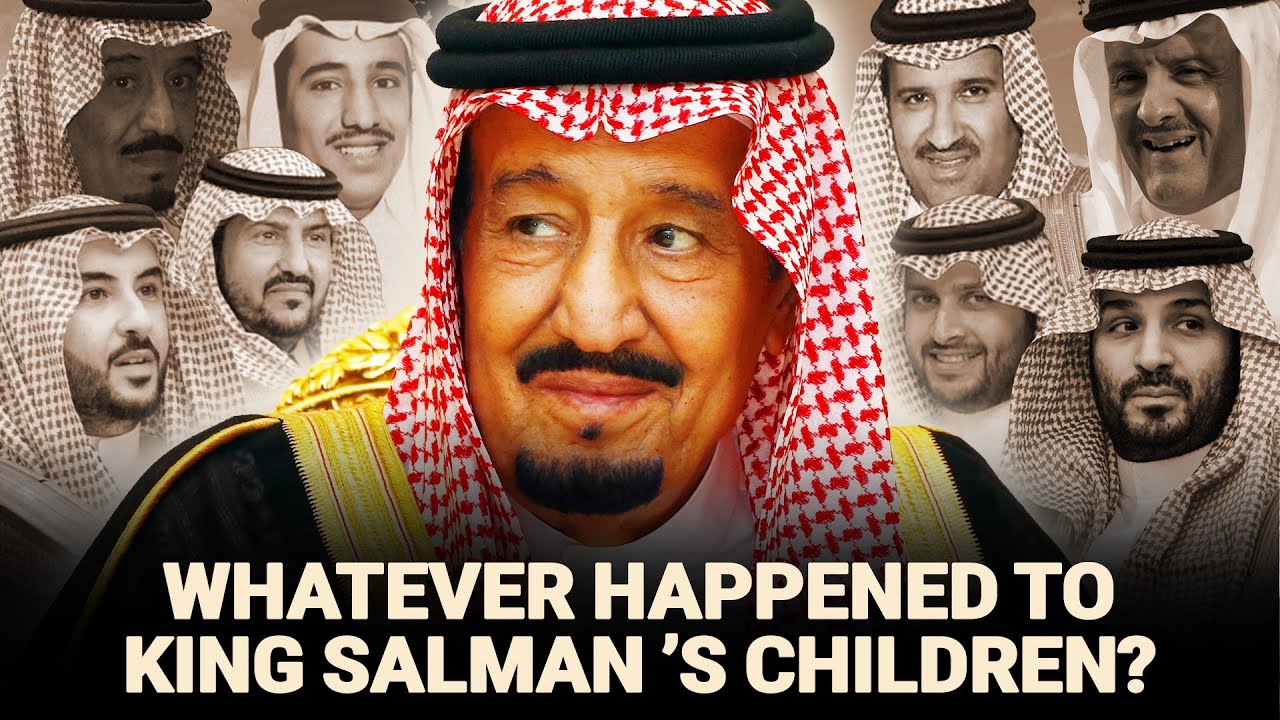
Two died young, their stories partly overshadowed by the rise of their brothers. The eldest, Prince Fahad bin Salman, was born in 1955, the son of Princess Sultana bint Turki al-Sudairi. Growing up in Riyadh in the 1960s, he watched his father, then governor of the province, transform the Saudi capital from a desert town into a modern metropolis. Fahad studied political science at King Saud University and later earned a master’s degree in public administration from the University of California, Berkeley.
Returning to Saudi Arabia in the late 1970s, he began his career in the Ministry of Interior. By the early 1980s, he was appointed deputy governor of the Eastern Province, the kingdom’s oil-rich heartland, where he worked closely with Saudi Aramco executives and oversaw infrastructure projects, industrial cities, and the expansion of the petrochemical industry. Alongside his government duties, Fahad founded Shadwell Farm, a thoroughbred racing operation with facilities in Saudi Arabia, Britain, and the United States that became one of the most successful stables in the Middle East, with horses competing at Royal Ascot and the Kentucky Derby. He died in 2001 at age 46, his death kept private.
As the eldest son, he had held a special place in his father’s expectations, and his loss deprived the royal family of an experienced administrator who might have played a significant role in the kingdom’s continued modernization. Just one year younger, Prince Sultan bin Salman was born in 1956, a full brother to Fahad. His path diverged dramatically. After studying social sciences and international relations at Harvard, he worked at the Ministry of Information before making history in June 1985.
At age 28, he flew aboard the space shuttle Discovery as part of NASA’s STS-51G mission, becoming the first Arab, the first Muslim, and the first member of royalty to travel to space. The seven-day mission deployed the Arabsat 1B communication satellite, crucial for improving telecommunications across the Arab world. During the flight, Sultan performed Islamic prayers in space and carried a copy of the Quran, symbolically connecting his faith with his scientific achievement. The mission generated enormous pride throughout the Arab world.
Afterward, he trained as a fighter pilot with the Royal Saudi Air Force, flying F-15s, and later became president of the Saudi Commission for Tourism and Antiquities, where he balanced promoting tourism with preserving Islamic holy sites and archaeological heritage. Prince Ahmed bin Salman, born in 1958, was the third full brother in this cluster. Unlike his siblings, he focused on the private sector. As leader of the Saudi Research and Marketing Group (SRMG), he built one of the largest media conglomerates in the Middle East, publishing the influential Arabic-language newspaper Asharq Al-Awsat and the popular women’s magazine Sayidaty.
His passion for thoroughbred racing led to the establishment of the Thoroughbred Corporation, based primarily in the United States. Its most famous horse, War Emblem, won the Kentucky Derby and the Preakness Stakes in 2002. Just months after that victory, Ahmed died suddenly of a heart attack at his home in Riyadh at age 43. His death shocked the international racing community, and memorial services were held in both Saudi Arabia and the United States.
The fourth son, Prince Abdulaziz bin Salman, was born in 1960 to a different mother, Princess Fahda bint Falah al-Hathleen. His focus was energy. He studied petroleum engineering at King Fahd University of Petroleum and Minerals in Dhahran, then pursued graduate studies in the United States. Beginning his career at the Ministry of Petroleum in the early 1980s, he rose through technical analysis roles and participated in OPEC negotiations throughout the 1980s and 1990s.
In 2019, he was appointed Minister of Energy, becoming the first member of the royal family to hold the position. His tenure has balanced Saudi Arabia’s traditional role as a major oil producer with new renewable energy initiatives, including massive solar and wind projects, while playing a key role in OPEC Plus negotiations during periods of market volatility. Prince Faisal bin Salman, born in 1970, was a full brother to Abdulaziz. An exceptional academic, he earned a doctorate from Oxford University, focusing on modern Middle Eastern history.
He gained media management experience with SRMG after Ahmed’s death, then in 2013 was appointed governor of Medina Province, home to the Prophet’s Mosque and the second holiest city in Islam. He oversaw massive expansion projects to accommodate millions of pilgrims, balancing religious significance with modern infrastructure needs. In 2023, he became an adviser to the king, focusing on cultural affairs, education policy, and historical preservation. The most consequential of Salman’s sons was born on August 31, 1985.
Prince Mohammed bin Salman, son of Princess Fahda bint Falah al-Hathleen, studied law at King Saud University before beginning his career working in his father’s court while Salman was still governor of Riyadh. His rise was remarkably rapid. In 2015, when his father became king, Mohammed was appointed deputy crown prince and minister of defense at age 29, making him one of the youngest defense ministers in the world. In 2017, he was appointed crown prince, and in 2022, he was additionally appointed prime minister, a position traditionally held by the king.
His defining contribution has been Vision 2030, an ambitious program to diversify the kingdom’s economy away from oil dependence. It includes the development of new economic cities, massive infrastructure projects, tourism development, and the creation of new entertainment industries. Under his leadership, Saudi Arabia implemented significant social reforms, including allowing women to drive and attend sporting events. Major projects such as NEOM, a futuristic city in the northwest, and the Red Sea tourism development aim to create new economic sectors and jobs.
Prince Saud bin Salman, born in 1986 in Paris to the same mother as Mohammed, pursued business rather than government. His primary venture has been the development of telecommunications infrastructure in Africa through his company, investing across multiple countries in mobile networks, internet infrastructure, and digital services. He has also developed significant real estate portfolios across several regions, emphasizing long-term value creation over speculative gains. Prince Turki bin Salman, born in 1987, briefly served as chairman of SRMG, the media conglomerate led by his late uncle Ahmed.
His primary business focus became Theowat Holding Company, an investment and management firm operating across technology, real estate, manufacturing, and financial services, with a focus on long-term value creation and alignment with Vision 2030 objectives. Prince Khaled bin Salman, born in 1988, was the youngest of the core group of full brothers. He trained as a fighter pilot through the Royal Saudi Air Force Academy, becoming qualified to fly F-15s and participating in operational missions. In 2017, he was appointed ambassador to the United States during a period of significant change in US-Saudi relations.
His military background provided credibility in defense discussions and helped facilitate cooperation agreements. In 2022, he was appointed Minister of Defense, overseeing major military modernization initiatives, equipment upgrades, and the development of domestic defense manufacturing capabilities. Prince Naif bin Salman remains largely unknown to the public. His birth date and personal details have been kept private, and he has maintained a life away from government, business, and media attention.
His choice demonstrates that royal family members can preserve dignity and family bonds while avoiding the pressures of public roles. Prince Bandar bin Salman, born in 1995, developed expertise in photography and visual media. He has served as an unofficial photographer for royal events, helping modernize the presentation of royal family communications while maintaining protocol. The youngest, Prince Rakken bin Salman, was born in 1997.
As the baby of the family, he has frequently appeared alongside his aging father at official ceremonies, demonstrating the close personal bond between them. His future direction remains open, likely influenced by the rapidly changing society emerging under Vision 2030. The sons of King Salman represent nearly five decades of evolving royal roles. The older generation established patterns of combining royal status with professional excellence in governance, space exploration, media, and racing.
The middle generation brought deep technical expertise and academic scholarship to policy. The youngest generation, led by Crown Prince Mohammed, assumed major responsibilities at remarkably young ages, reflecting the changing demands of governing a modern state. Together, their varied paths have shaped Saudi Arabia’s trajectory toward greater international integration, economic diversification, and social development, while maintaining cultural authenticity and Islamic values.
