In December 1888, two ranchers named Richard Wetherill and Charlie Mason were riding across the top of Mesa Verde in southwestern Colorado, searching for stray cattle in the blowing snow. When they reached the edge of a canyon and looked across, they saw something that would change the understanding of American history. There, set back in a great hollow in the far canyon wall, stood what Wetherill described as a magnificent city built of stone. They had found Cliff Palace.
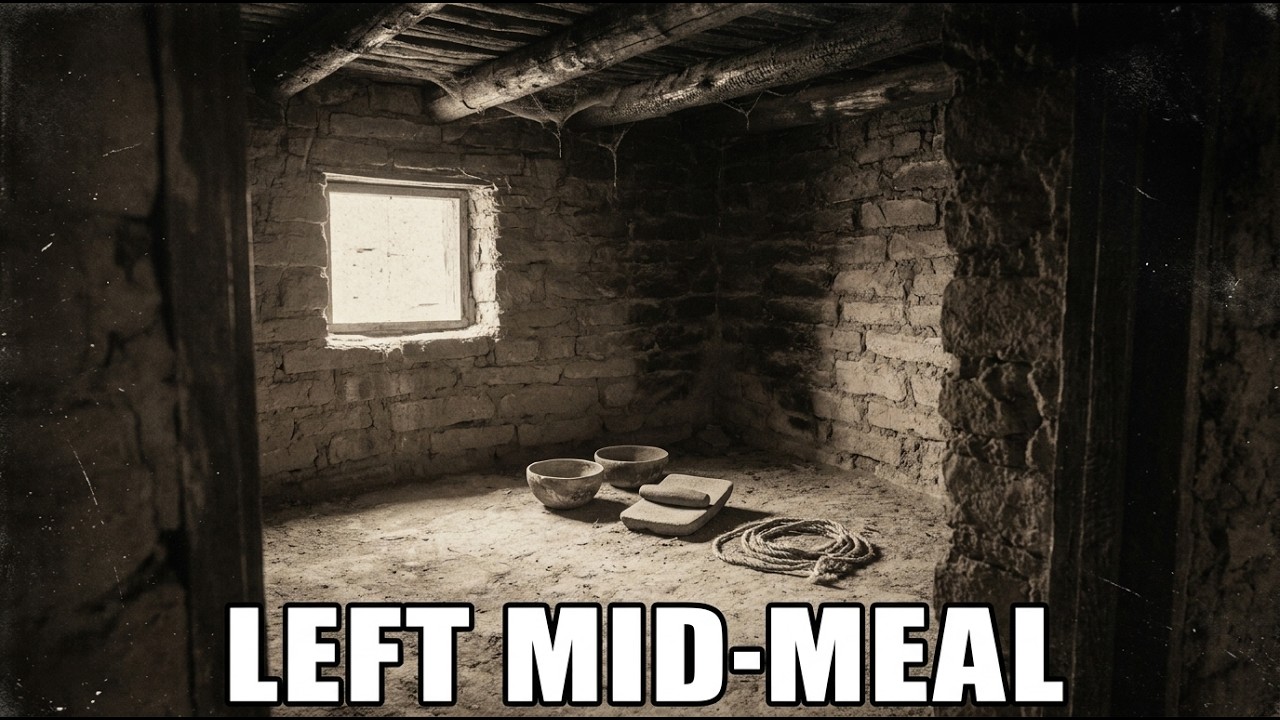
The city had been there for more than six centuries without anyone outside knowing it existed. Tucked inside a natural alcove scooped out of the canyon wall by water and frost and time, someone had stacked rooms and towers and round sunken chambers until the entire recess was full of stone building. It is the largest structure of its kind on the continent: 150 rooms and 23 round ceremonial chambers packed into a single cave. And it was built entirely by hand, with no metal tools, no wheel, and no draft animal stronger than a dog.
The people who built it are often called the Anasazi, but that word, borrowed from Navajo and spread by outsiders, means something close to ancestors of our enemies, and the living descendants of these builders find it offensive. The term archaeologists now use, and the one the Pueblo peoples prefer, is Ancestral Puebloan. Ancestral because these are somebody’s ancestors, a distinction that would prove to be the entire point of the story. Mesa Verde is a high, flat tableland cut by canyons into a pale rock called Cliff House Sandstone.
Water seeps down through the porous stone from the mesa top until it reaches a harder layer it cannot pass, then spreads sideways and pools. In winter, that trapped water freezes, expands, and pries loose great sheets of the cliff face over time. What is left behind is a smooth, curved hollow set back into the wall: an alcove. The builders did not carve these hollows.
The canyon handed them the hollows already made, and they moved in. The good alcoves, the ones that got the big villages, tend to open toward the winter sun. The low southern light of the cold months reaches deep into the shelter and warms the stone, while the high summer sun passes over the top and leaves it shaded. Before a single stone was stacked, the builders had already read exactly where the sun sat on the shortest and longest days of the year, choosing their homes so the cliff itself would heat them in winter and cool them in summer.
The cliff dwellings belong only to the very end of a long occupation. For 700 years, these people lived up on the open top of the mesa, first in pit houses dug into the ground, then in above-ground villages of stone and mud, out in the sun and wind, right next to their fields. It was only in the last 75 to 100 years before the leaving, roughly across the 1200s, that an entire population climbed down off the tableland and wedged their homes into the canyon walls, into hollows that were darker, more cramped, and a genuine daily labor to get in and out of. People do not usually take on that much hardship for no reason.
The engineering is staggering. The walls are built of shaped sandstone cut and ground into rough rectangles, laid in courses like brick. The builders quarried the stone right there from the canyon and shaped each block by hand, pecking and grinding it with harder hammer stones carried up from the riverbeds below. Every face on every block was dressed by hitting one stone with another, thousands and thousands of times.
The blocks were set in mortar made from local soil mixed with water and ash, and into the gaps of that soft mortar they pressed small chips of stone to lock the walls tight. Some walls were finished with a smooth coat of earthen plaster, and traces of color still cling to them: pinks, browns, reds, yellows, and white. These were not gray ruins when they were alive. They were plastered and painted.
No wheel means nothing rolls. No draft animals means nothing gets pulled but by human muscle. Every beam that roofs a room is a whole tree felled with a stone axe up on the mesa, trimmed, and carried down into the canyon and up into the alcove on somebody’s back and shoulders. In Cliff Palace, they stacked the rooms two, three, and in places four stories high, fitting the rising walls up under the curve of the alcove roof, working a perfectly straight and strong structure inside a crooked cave entirely by eye.
To build straight and strong inside a crooked cave, entirely by hand, is an act of engineering that would give a modern crew real trouble. They did it with hammer stones and baskets. Sunk into the floors of these villages are circular chambers dug below ground level and entered by a ladder down through a hole in the top. Cliff Palace has 23 of them.
They are called kivas, rooms for ceremony and gathering, the ritual and social heart of a household or clan. Many have the same careful features: a fire pit in the center, a low wall to keep the draft off the fire, and a ventilation shaft cut through the wall to pull fresh air down in, a genuine piece of ventilation engineering built into a room dug into the ground. Cliff Palace was not alone. Across Mesa Verde, there are about 600 cliff dwellings tucked into these canyon walls, and more than 5,000 recorded archaeological sites in the park all told.
Three-quarters of those 600 dwellings are tiny, holding one to five rooms: a single family’s home in a small hollow. Cliff Palace, home to about 100 people, was the rare giant, a social and administrative center with heavy ceremonial use for a whole community spread through the surrounding canyons, where thousands more lived within a walk. The cliff dwellings, though, are only half the engineering, and honestly the less impressive half. The part that kept everyone alive was up on top.
The flat mesa top is where the soil is, a fine windblown earth good for farming, and that is where the fields were. These were farmers first and cliff builders second. They grew corn above all, along with beans and squash, and they grew them in a place that gets very little rain. The split between fields up top and homes down in the cliff meant daily life was lived on a vertical.
Set into the bare rock of the canyon walls are handholds and toeholds, small shallow cups pecked into the stone with hammerstones, a ladder cut straight into a cliff face. People went up and down those toeholds every single day, carrying water and firewood and baskets of corn and infants tied to their backs. In dry country, they engineered the water. Down the shallow drainages, they built check dams, low walls of stone laid across the slope to slow the runoff, back it up, and make it sink in with its load of soil, creating terraced gardens stepping down the slope.
On the mesa top, they built reservoirs to collect and hold water against the dry stretch, work substantial enough that engineers still study them. Archaeologists estimate the wider population ran into the tens of thousands at its height. The careful science arrived in 1891 in the person of Gustaf Nordenskiöld, a young Swede in his early twenties from a family of famous scientists. He was pulled in by the ruins completely.
He stayed with the Wetherills, who had spent years after their discovery exploring and digging through the dwellings and selling what they found, because there was no law yet that said they could not. Nordenskiöld did something nobody had done before: he treated the cliff dwellings as an archaeological problem instead of a treasure chest. He excavated in an orderly way, photographed the sites more than 150 times, mapped and recorded, and even taught Richard Wetherill some of the method. In 1893, he published the first real scientific account of Mesa Verde, a book called The Cliff Dwellers of the Mesa Verde.
It is the foundation the whole modern study sits on. When he tried to ship the artifacts back to Europe, he was arrested and held for about a month on accusations of looting, even though, as everyone soon discovered, there was no law on the books that his digging had broken. He was cleared, and his collection went to Europe, eventually ending up in the National Museum of Finland, on the other side of an ocean from the canyon it came out of. Nordenskiöld himself died in 1895, only 26 years old.
More than 120 years later, the museum in Finland, working with the Pueblo tribes and with Mesa Verde, agreed to send the ancestral human remains and the sacred objects back. They came home across that same ocean, to the descendants of the people they had been taken from. You cannot repatriate the dead of a vanished people. There has to be someone on the other end to receive them.
There was. There is. This brings us to the leaving, and to the clock that dates it. Early in the 1900s, an astronomer named Andrew Ellicott Douglass, studying sunspots and climate, worked out that a tree lays down one ring a year, and that the rings run wide in a wet year and narrow in a dry one.
Match the pattern in an old beam to the pattern in a slightly older beam, and you can chain the record backward year by year until you can point at a single ring and say that ring grew in this exact calendar year. That is dendrochronology, tree-ring dating. Pointed at Mesa Verde, the roof beams are datable to the year the tree was cut. The dates across all the dwellings jump out with a pattern almost unbearable to look at.
The building goes on and on right through the 1200s, and then it stops. The very last tree felled for construction anywhere on the Mesa was cut in the year 1281. After that, nothing. Archaeologists have dated thousands of beams from well over a hundred sites, cross-checked one against another.
People were still raising walls in these canyons in the 1270s. By the middle of the 1280s, there was no one left to raise them. Douglas, when he read those tree rings, found something else: a long, brutal dry spell running from 1276 to 1299, 24 straight years of poor rain, one of the worst dry stretches in the entire 2,000-year record the trees preserve. It is called the Great Drought.
Douglas himself suggested the drought was the answer, and for a long time that is the version that got told. But a drought alone does not quite explain it. These were some of the most skilled dry-country farmers who have ever lived. They had already survived a hard dry spell in the middle of the 1100s, more than a century before, and kept farming and building for five or six more generations.
A people that engineered water for centuries did not simply forget how to farm the moment the rain thinned again. So the leaving almost certainly had more than one cause. There was the Great Drought sitting on top of everything else. Under that was the long, slow cost of 700 years of success in a fragile place: farming wears the soil down, and cutting timber and burning fuel across generations thins the forests.
A crowded countryside living close to the edge of what a dry land can give has no slack left when the rain fails. And in the last decades, the archaeology turns tense. Villages pull back into the most defensible spots, up onto high mesas and back into these very cliffs, which are hard places to reach and easy to guard. At some sites from this period, there is direct, grim evidence of violence among people under strain.
The picture that forms is deeply human: a large population that had thrived for centuries by working a dry land right up to its limit hit a stretch where the rain failed for a generation, on ground that was already tired, with forests already thinned, and tensions already rising. The whole system finally had no give left in it. They made a hard, clear-headed choice to leave before it took them down with it. They left.
They did not die out. They moved. To the south and east, along the Rio Grande and its tributaries in what is now New Mexico, and out in the mesa country to the southwest, the rain was more dependable and the rivers actually ran. That is where they went.
The great emptying of the late 1200s was a migration, a large, deliberate movement of people out of a place that had turned against them and toward country that could still be farmed. They carried their corn, their pottery, their kivas, their way of building in stone, and their ceremonies, and they built again. Archaeologists can track this in the ground: in the towns that grow up in the river valleys of New Mexico and out in the mesa country in exactly the years after Mesa Verde empties, you find the same kinds of pottery, the same masonry, the same round kivas dug into the earth, and a population arriving from the north. And the descendants of these people are alive right now.
They are the Pueblo peoples of the American Southwest: the Hopi in Arizona, the Zuni and Acoma in New Mexico, and the many Pueblo towns along the river. In those towns, people still plant corn in dry ground, still climb down into kivas by a ladder through the roof, still hold ceremonies whose roots reach straight back into the world of these cliffs. That thread runs unbroken. Those are not a vanished race.
Those are the great-grandchildren, many generations down, of the people who shaped Cliff Palace into that alcove. The silence in the canyon was real, and the building really did stop in a single generation, but the silence never meant the people had ended. They had already left, and they and their descendants have been there ever since, right up to this morning.
