In March 1934, Cornelia Vanderbilt walked out of America’s largest private home and married her English butler. She was thirty-four years old, heir to a fortune estimated at fifty million dollars, and the last direct descendant of the Vanderbilt line that had built Grand Central Terminal and much of Manhattan’s skyline. Society columnists called it a scandal. Her mother called it betrayal.
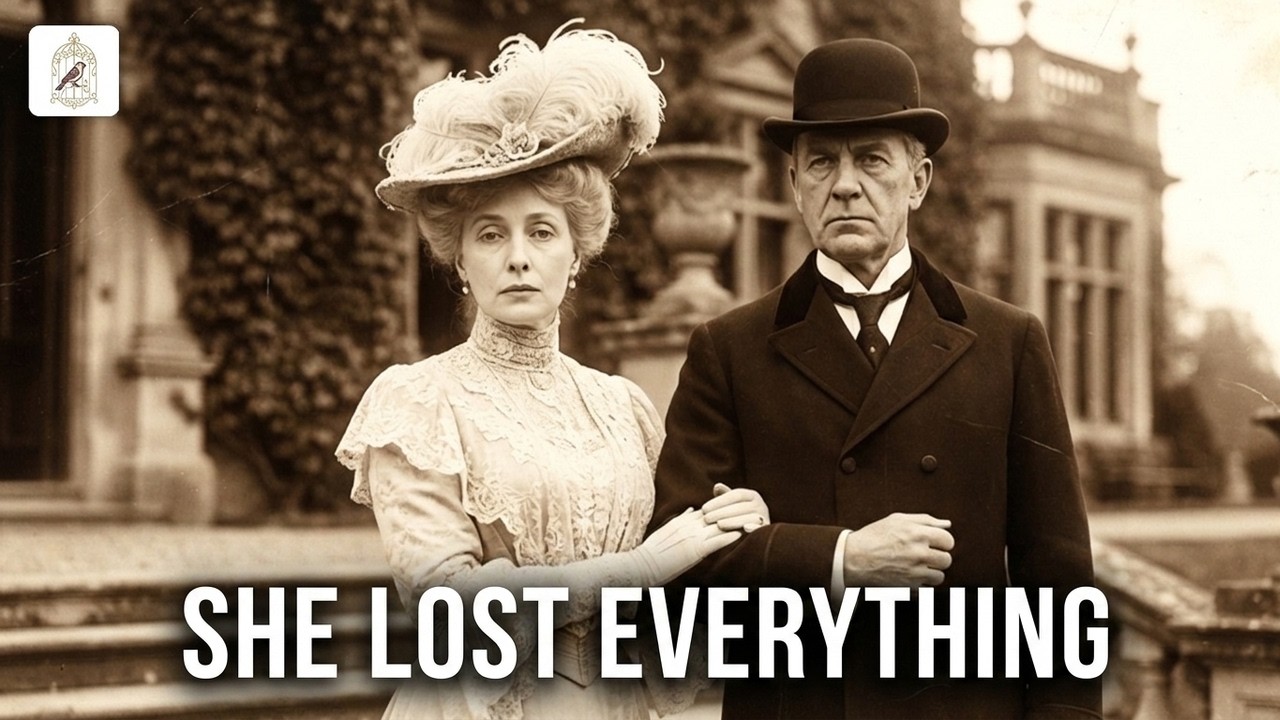
But the marriage was not a sudden rebellion or a reckless love affair. By the time John Francis Amherst Cecil arrived at Biltmore to serve as her butler, Cornelia had spent three decades inside a life that had hollowed her out. To understand why she walked away from everything, one must begin with the day she was born into a house that was never meant to be a home. Cornelia was born at Biltmore on August 22, 1900.
The estate sprawled across 125,000 acres of North Carolina mountains. The house itself held 250 rooms, 43 bathrooms, 65 fireplaces, an indoor pool, a bowling alley, and a banquet hall with a seventy-foot ceiling. Her father, George Vanderbilt, had spent six years and six million dollars building it. It was the largest private residence in America, modeled after a French chateau and staffed by sixty servants who lived in a separate village on the grounds.
Cornelia was an only child. She had no siblings, no nearby cousins, no neighborhood children to play with. Her classmates were tutors hired from Europe. Her playground was a house so vast that entire wings sat empty for months.
She had everything a child could want, except the one thing money could not buy. George Vanderbilt was forty-eight when Cornelia was born. He was a scholar and bibliophile who filled Biltmore’s library with 22,000 volumes in eight languages. He knew more about Renaissance art than he did about children.
He walked the estate with Cornelia, pointing out rare orchids in the conservatory and explaining the architectural details of the limestone facade, but he never asked what she wanted. His health began failing in 1911, and on March 6, 1914, he died following emergency surgery in Washington, D. C. Cornelia was thirteen years old.
His death left Cornelia with a mother who had very specific plans for what a Vanderbilt daughter should become. Edith Vanderbilt took full control of Biltmore’s 8,000 acres and Cornelia’s education, determined that her only child would marry into European aristocracy and secure the Vanderbilt name for another generation. Cornelia’s days were structured around becoming the perfect debutante. French and German tutors arrived each morning.
Dance instructors corrected her posture. She learned which fork to use at a twelve-course dinner, how to curtsy before royalty, and the genealogy of every titled family in England. At eighteen, Cornelia traveled to London and curtsied before King George V in a gown that cost three thousand dollars. Edith’s plan was working.
Then Cornelia met John Francis Amherst Cecil. He was the younger son of Lord William Cecil, a direct descendant of Queen Elizabeth I’s chief advisor, and held a minor diplomatic post at the British Embassy in Washington. He had the accent, the pedigree, and the need for American money that made transatlantic marriages work. They announced their engagement in January 1924.
On April 29, 1924, five hundred guests arrived at Biltmore for a ceremony in the estate’s private church. Cornelia wore a gown with a fifteen-foot train. The New York Times ran the story on the front page. The photographs captured Cornelia and Cecil smiling on the mansion’s grand staircase, surrounded by orchids flown in from New York and champagne shipped from France.
The marriage looked perfect in the photographs, but the cracks appeared almost immediately. Cornelia gave birth to two sons, George in February 1925 and William in August 1928. Cecil wanted the Vanderbilt name on his children and access to Biltmore’s social weight, but he showed little interest in the woman who came with them. They maintained separate suites in the family wing.
Cecil spent his days managing minor estate business and writing letters to British relatives about his American fortune. Cornelia ran the household staff, planned dinners for visiting dignitaries, and raised George and William largely alone. At dinner parties, Cecil spoke about hunting and politics while Cornelia sat silent at the other end of the table. The marriage had given him status.
It had given her loneliness wrapped in silk. Cecil’s answer to the estate’s mounting financial problems was simple: open Biltmore to the public and charge admission. Cornelia refused. Her father had built Biltmore as a working estate, a model of American forestry and agriculture.
Cecil saw a manor house with gift shops. By 1928, the Vanderbilt fortune was shrinking fast. Coal investments had soured, real estate taxes were hemorrhaging cash, and Biltmore itself cost $250,000 a year to run while generating almost nothing. Then came October 1929.
The market collapsed, and Vanderbilt holdings lost another third of their value in weeks. Edith called an emergency meeting with Cecil and the estate lawyers. Cornelia was not invited. When she found out and walked in midway through, Edith looked at her once and kept talking.
Within six months, they had made the decision: limited tours, by appointment only, starting in 1930. Cornelia signed because the alternative was losing Biltmore entirely. As the walls closed in financially, a new figure entered the staff. Guy Baer arrived in early 1934, hired as an under-butler.
He was English, thirty-eight years old, with references from two London households and a brief stint with a minor aristocratic family in Surrey. He had served in the war, worked his way up from footman, and knew how to keep his mouth shut. Assigned to the second floor, he was responsible for service during luncheons and private dinners. He was good at his job, efficient, unobtrusive.
But Baer had one skill the others did not: he paid attention not to the tasks, but to the people. In a house full of servants, he listened. At first it was nothing. A comment about the weather, a question about the gardens.
Cornelia would ask Baer to bring tea to the library, and they would talk for five minutes, then ten, then half an hour. He had no stake in her fortune, no social ambition to climb. He saw the woman who had been raised in a museum, married off like a painting, and left alone in a house with 250 rooms. The conversations grew longer.
The connection deepened slowly, carefully, until the line between propriety and feeling became impossible to see. By 1932, the Cecil marriage existed only on paper. Cecil kept a bedroom in the East Wing. Cornelia slept in her mother’s old suite.
Cecil’s affairs were whispered about in London and Asheville both. He made no effort to hide them. The marriage had become a business arrangement, cold and transactional. The affair began sometime in 1933.
They met in the gardens after dark, in unused rooms in the South Wing, in the stables where no one had reason to go. The risk was total. If Edith discovered it, Cornelia would lose access to the Vanderbilt fortune. If society learned, the scandal would be nuclear.
Yet she continued. Every stolen hour was a gamble. She knew it could not last in secret, but the alternative, walking away from him or going public, seemed equally impossible. By early 1934, something in Cornelia had gone quiet.
She had stopped sleeping through the night. She had started avoiding the rooms where her sons played. One morning in March, after another breakfast where Cecil spoke only to discuss the day’s appointments, she told him she wanted a divorce. Cecil did not raise his voice.
He laid out terms instead. If she filed, he would contest it. He would invoke moral turpitude, name Baer in court documents, and make the affair a matter of public record. He would fight for full custody of George and William, ages ten and eight, and he had the legal standing to do it.
North Carolina courts in 1934 did not look kindly on adulterous mothers. He assumed she would back down. He was wrong. Cornelia’s ultimatum arrived in writing, delivered separately to Cecil and to her mother.
Grant the divorce cleanly, no custody fight, no public accusations, or she would marry Baer the moment the divorce was final and invite the press to cover it. Edith offered her a European trust, a house in Paris or London, an allowance that would keep her comfortable for life, if she would just not marry him. Cornelia refused it all. In March 1934, she left Biltmore with a single suitcase and did not look back.
The divorce was handled through lawyers in Asheville and took six weeks. Cornelia surrendered full custody of William and George, ages nine and seven. It was a condition John demanded, and she accepted it without contest. Three months later, on July 29, 1934, Cornelia and Guy Baer were married in a registrar’s office in Kensington.
No family attended. The witnesses were two strangers pulled from the street, paid one pound each for their signatures. The New York Times ran the headline, “Heiress Weds Servant. ” Society columns dissected every detail.
Edith’s lawyers revised the estate documents within weeks. Cornelia’s name disappeared from the Biltmore succession plan. Conservative estimates placed her forfeited inheritance at fifty million dollars, closer to a billion today. Cornelia moved into a small rented flat in London.
Guy taught at a modest private school. She learned to cook, took up watercolors, and joined a local charity. The neighbors had no idea who she was. Then came September 1939.
Guy enlisted in the Royal Army Service Corps within weeks of the declaration, commissioned as a lieutenant despite being thirty-eight. Cornelia joined the Women’s Voluntary Service, organizing evacuation efforts and staffing aid stations. Guy was deployed to North Africa in 1941. For eighteen months, Cornelia lived alone, working twelve-hour shifts, sometimes not hearing from him for weeks.
While Cornelia rebuilt bomb shelters in London, her sons were growing up at Biltmore without her. The few letters she sent went unanswered. By 1943, George was fourteen and William eleven. What they knew was what they had been told: she had walked away from Biltmore, from her inheritance, from them.
Edith reinforced the narrative every time Cornelia’s name came up. Cornelia wrote anyway, sending birthday cards and small gifts. The packages were returned or discarded. Edith Stuyvesant Dresser Vanderbilt died on December 21, 1948, at the age of seventy-six.
Cornelia learned of it by telegram. She was not invited to the funeral. Edith’s will made the estrangement formal. There was no bequest for Cornelia, no letter, no gesture of reconciliation.
Her sons, now twenty-three and twenty-one, had spent their entire adult lives being told that what Cornelia did was unforgivable. There was no phone call to London, no letter extending an olive branch. The silence continued through the 1950s. By the mid-1950s, the Baer marriage had settled into something harder than romance.
They argued about money, about whether they should have fought harder for some portion of the estate, about what their life might have looked like if she had chosen differently. Friends remembered dinners where the silences stretched too long. Then, sometime in 1957 or 1958, they made a quieter choice: to stop litigating the past and start building something that could last. They developed the private shorthand of long marriages, and by the 1960s, they had created a life that had nothing to do with Vanderbilt legacy.
The first letter from her son George arrived in October 1962, postmarked Asheville. He was married now, managing Biltmore’s dairy operation, and he wrote that he understood why she had said what she said about the probate case. The tone was careful and lawyer-like, but the fact of the letter mattered more than its coldness. The letters continued, sporadic, never easy.
By 1970, George invited his mother to Biltmore for the first time since she had left. She arrived in April, sixty-six years old, driving up the three-mile approach she had ridden as a child. Tour groups moved through the house now, five dollars a ticket. John Cecil’s vision had come true exactly as he had promised.
George walked her through the rooms before opening hours. She stood in the winter garden for twenty minutes, silent. Then Guy met her sons for the first time. The introduction was brief and formal.
Nobody mentioned 1934. Guy Baer fell ill in 1976. The diagnosis was stomach cancer, already advanced. Cornelia nursed him through it herself, managing his medications, helping him when he could no longer walk unassisted, reading to him when the pain was too much for sleep.
He died in 1977. At seventy-seven, Cornelia was a widow with no fortune to cushion the loss. She stayed in London, kept painting, and gave few interviews. Asked if she regretted it, she said no, plainly, without the defensiveness of someone still arguing with the past.
She had counted the cost long before she paid it, and she considered the price fair. Through the 1980s, the contact between Cornelia and her sons grew. She met their wives properly and sat at tables where three generations shared a meal. Her grandchildren asked the questions her sons never had, and they got something unexpected.
Cornelia did not talk about sacrifice. She talked about freedom. In 1988, at eighty-eight, she sat for her final recorded interview. Asked what she would tell young women facing the choice between security and passion, she answered directly: choose the life you can live with, not the one others expect you to perform.
She said she regretted the pain her sons endured and the years of estrangement, but never Guy. Cornelia Vanderbilt Cecil Baer died quietly in London on February 7, 1991. A small service was held in a London chapel, attended by friends who had known her as Cornelia Baer, not Cornelia Vanderbilt. Her sons flew in from America.
She was laid beside Guy in a modest plot, not in the Vanderbilt family cemetery in North Carolina. That exclusion was her choice, made years earlier. The estate she had walked away from did not send flowers. The official story at Biltmore rarely mentions her second marriage.
Guy Baer is never named. But Cornelia and Guy were married for forty-three years, longer than the great Gilded Age matches built for bloodlines and bank balances. In 1998, her son William told an interviewer that he wished they had reached out sooner. George was more direct, saying that Edith’s anger at Cornelia’s choices had poisoned the family’s memory of her.
Both men acknowledged they had only heard one side. And they said they understood, finally, why she had needed to leave. Cornelia Vanderbilt traded a dynasty for a partnership, fifty million dollars for forty-three years, and never once looked back.
By her own accounting, she died wealthy.
