Ronnie Cray had been on the books as a certified paranoid schizophrenic for eight years by the time he walked into the Blind Beggar. He had the diagnosis on paper, written down by doctors at Long Grove, and it meant nothing to him that night except that he did not care. He walked into the crowded East End pub, past the barmaid, past the drinkers, past the old man reading his paper, and did something so brazen that the entire neighborhood chose silence for three years rather than tell a soul what they had seen. Both twins would go down for murder in the end.
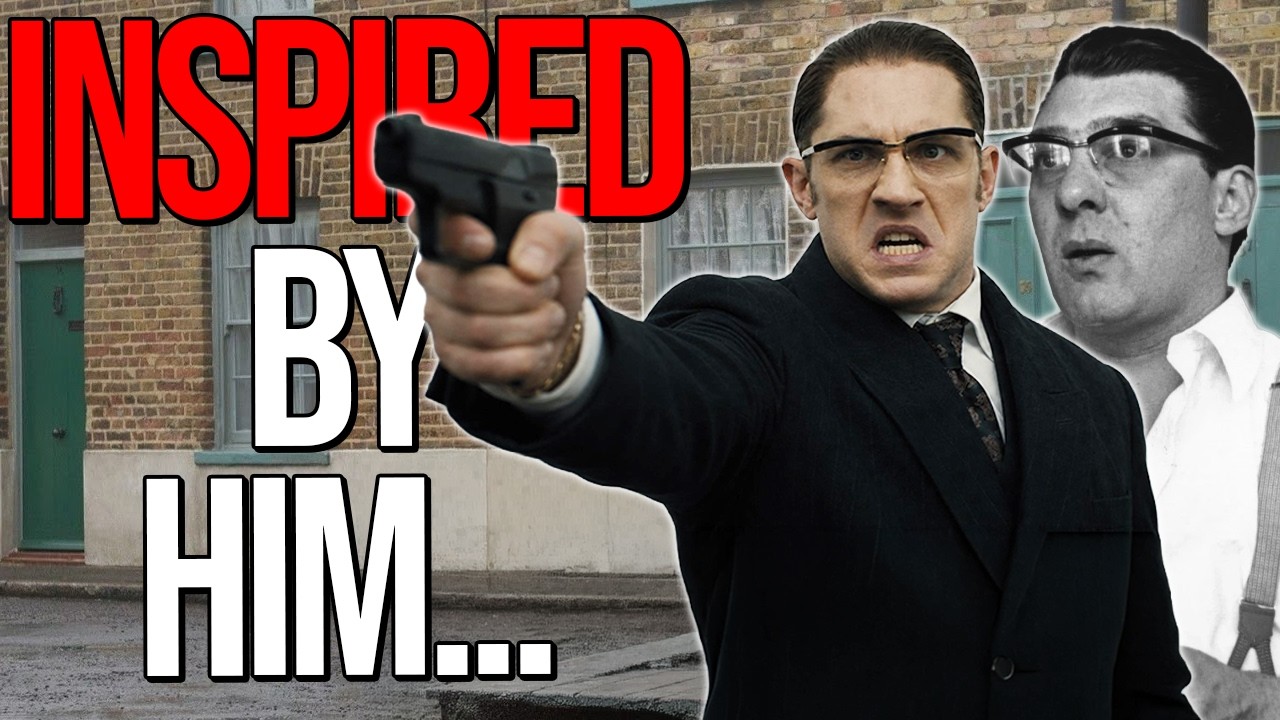
Only one of them was sent somewhere they never let him walk out of. The two brothers came into the world ten minutes apart in the autumn of 1933, Reggie first, Ronnie trailing behind him the way he would trail him for the next thirty odd years. They grew up in Bethnal Green, a two-up, two-down on Vallance Road, in the kind of East End poverty that turns boys into fighters because fighting is the one trade nobody can price you out of. Their grandfather was a bare-knuckle man called Cannonball Lee.
Their father steered them toward boxing young, the way plenty of East End boys learned to handle themselves, and even in the ring, before any of the blood, the split was already showing. Reggie boxed unbeaten: seven fights, seven wins, a disciplined lightweight with actual craft. Ronnie went four and two, every one of his wins by knockout, because Ronnie didn’t box to outpoint you. He boxed to hurt you.
Same gym, same blood, two completely different animals. Then came the paper. By 1958, Ronnie had done a stretch inside, and behind the walls he came apart. The doctors at Long Grove looked at him and wrote down words that no amount of East End menace could talk its way out of: paranoid schizophrenia, certified insane.
This is the fact that decides the whole argument, and it has to be handled carefully, because insane is a word people throw around when they only mean cruel. Ronnie wasn’t just cruel. He heard voices. He believed people were poisoning his food.
He swung with no warning, from flat calm into a violence he couldn’t switch back off. For the rest of his life he would take a heavy sedative called Stelazine, and the difference it made was simple and frightening. On the pills, Ronnie was a functioning man. Off them, he was a man with no brake pedal at all.
Reggie was a criminal. Ronnie was a criminal with a medical condition that removed the part of a person that stops. The state had already answered in writing, ten years before either of them killed a single person, the question the film would later ask: which twin was more dangerous. By the middle of the 1960s, the Krays weren’t two thugs with a grudge.
They were a business. The Firm ran protection, gambling, arson, robbery, a whole underground economy stretched across the East End and reaching into the West. They owned a club where the famous came to be photographed next to real danger: Sinatra, Judy Garland, a young David Bailey shooting the twins like they were pop stars. That’s the part people forget when they picture Ronnie.
He wasn’t menacing a couple of market stalls. He was menacing a genuinely profitable machine, and the man threatening it from the inside was one of the two men who owned it. The appetite to be seen is what really separates the Krays from ordinary villains. They didn’t just tolerate the attention; they wanted it.
Danger sold as a nightclub attraction, and it worked right up until the danger stopped being a look and started leaving bodies. Take 1964. The Sunday Mirror ran a front page about a relationship between a prominent peer and a leading London thug. The peer was a Conservative grandee, Lord Boothby.
The thug was Ronnie. A careful operator would have buried a thing like that quietly. What actually happened is almost funny. The establishment panicked because an election was coming and this smelled like the next Profumo, and the entire weight of respectable Britain came down, not on Ronnie, but on the newspaper.
The Mirror caved, sacked its editor, apologized, and paid Boothby £40,000 to make it go away. Scotland Yard was told to drop the whole thing. Files that surfaced decades later suggest the security services had even been content to use the twins to dig up dirt on other men in power. That was the moment the Krays stopped being gangsters and became something the country couldn’t afford to look at directly, and Ronnie sat at the center of it, because of course he did.
Then there was Frank Mitchell, the clearest look at how Ronnie’s mind actually worked. Mitchell was a giant of a man, a violent prisoner the papers had christened the Mad Axeman during his time in Dartmoor. By 1966 he had become a model inmate, trusted enough to wander the moors, feed the wild ponies, even slip off to a pub. Ronnie decided to break him out.
He didn’t do it for money, and he didn’t do it for the muscle. Ronnie had befriended him years before and got it into his head that springing him would be a grand gesture, a bit of legend building. So in December of 1966, Mitchell strolled off to feed the ponies, climbed into a waiting car, and disappeared into a London flat. And that’s where the gesture falls apart, because now Ronnie had a nationally hunted convict he couldn’t let out of a room, a man being debated in Parliament, growing angrier by the day that the twins who freed him barely visited.
Within a fortnight, the answer to the problem was a van, some armed men, and a body dropped into the Channel that was never found. That’s Ronnie in a single story. He pulled off a reckless favor nobody asked for, and then had a man killed to clean up the favor. The 9th of March, 1966, is the moment the real Ronnie stopped needing anyone to explain what he was.
George Cornell was an enforcer for the Richardsons, the South London firm. The Krays were quietly at war with them. Months earlier, during a row, Cornell had called Ronnie a fat poof. That’s it.
That’s the entire motive. Not territory, not money, not a threat to the business. An insult to Ronnie’s pride, months old, still sitting there unhealed. On the evening of the 9th, Cornell was drinking in the Blind Beggar on Whitechapel Road.
There were maybe five people in the pub. Cornell and two mates at one end of the bar, an old man reading his paper at the other, a barmaid rinsing glasses. Ronnie came in with an associate named Ian Barrie. Barrie put a shot into the ceiling.
And Cornell, seeing Ronnie walk through the door, actually smiled and said, “Well, just look who’s here. ”
That was the last thing he ever said. Ronnie took out a 9mm pistol and shot him in the head once, above the right eye, in a room full of witnesses, under the lights, with a record playing. Then he walked out calm, no hurry.
He went and had a drink somewhere else. Ronnie had just committed a public execution over a schoolyard insult, standing under the lights in front of a barmaid who could have picked him out of any lineup, and he was so certain nobody would ever talk that he turned out to be right for three straight years. That is not the confidence of a hard man weighing his odds. That is the confidence of a man who genuinely cannot picture a consequence coming for him.
There’s a detail people love about that night: that a song was playing when he fired, the Walker Brothers’ “The Sun Ain’t Gonna Shine Anymore. ” That part is true. The version where the bullet ricochets off a jukebox is not, because the pub didn’t even own one. The myth machine had been caught in the act.
Ronnie shot a man through the face in a quiet pub, and within a few years the story had grown itself a jukebox and a ricochet, because the plain truth wasn’t cinematic enough. He never needed the embellishment. The plain truth was worse than the myth. The silence afterward is the real measure of how dangerous he was, more than the trigger pull itself.
Everybody in that pub knew exactly who did it. The police knew. And it changed nothing, because the fear Ronnie had built across the East End was thicker than any evidence a court could use. He was pulled in, questioned, and let straight back out because not one witness would put their name to what their own eyes had seen.
Reggie never generated that kind of silence. You might take your chances informing on Reggie. With Ronnie, people just kept their heads down and hoped he’d forgotten they were ever in the room. And when Reggie finally did kill someone, his brother’s fingerprints were on that, too.
In October of 1967, a Firm member called Jack McVitie, a loud, unreliable man they called the Hat, was lured to a basement flat in Hackney on the promise of a party. The Krays had cleared the other guests out first. Reggie meant to shoot him, and the gun jammed. McVitie tried to throw himself out of a window and got hauled back in by the legs.
And as Reggie went at him with a knife, the voice in that room screaming “Kill him, Rege” was Ronnie’s. So even the murder the film pins on the calmer twin had Ronnie underneath it, pushing. Reggie did the stabbing, but it was Ronnie’s appetite that put the knife in his hand. Ronnie was dangerous enough for two men’s worth of killing and only bothered to do half of it himself.
The cleanup afterward tells you how routine this had become for them. McVitie’s body wouldn’t fit in the boot of the car, so it was wrapped in an ironed sheet and passed down the chain to lower men in the Firm to make disappear. It was never recovered. Years later, one of their associates admitted he’d taken it out on a boat and dropped it into the sea off the Sussex coast.
A man was stabbed to death at a party and then simply erased from the earth. For a while, that was just Tuesday for the people around the twins. There is another side, because a story that only argues one way isn’t worth much. There are historians who look at all of it and say the gap between the twins is smaller than the legend makes out.
They point out that Reggie, once the two were locked up and kept apart, built a violent record of his own. He was no gentle businessman. And that’s fair. If your picture of Reggie is the charming ladies’ man the movie sells you, throw it out, because even that was a fiction.
Freddie Foreman, the Firm man who helped dispose of two of their bodies, said flatly that the legend gets Reggie wrong. The tender marriage the film sells you was, in his telling, never real. Reggie was gay, like his brother, and the marriage was never even consummated. The film even rewrites how Ronnie got out of the mental hospital.
The real exit was a twin-switch con, so absurd it sounds invented: Reggie and Ronnie swapping clothes in the visiting room until the wrong twin walked out. The film drops all of it for a scene of Reggie leaning on a doctor to sign him sane, because somehow the truth was too strange to use. Both of these men were killers. Nobody is nominating Reggie for sainthood.
But naming Reggie’s violence doesn’t actually move the needle. The case for Ronnie being the more dangerous twin was never that Reggie was soft. It rests on two things that are documented and that Reggie has no equal for. One, the diagnosis: the certified, medicated, voices-in-the-head condition that meant the violence had no off switch.
Two, the Blind Beggar: a cold public killing over nothing, done in front of a full room, which Reggie simply never matched. Reggie killed once in a rage, with a jammed gun and a botched plan. Ronnie shot a man dead over a months-old insult, as calm as if he were crossing a name off a list. Those two things are not the same.
In the end, the people whose entire job was to measure exactly this drew the same line. Nipper Read finally cracked the wall of silence in 1968, arrested the twins and fifteen of the Firm, and in 1969 both brothers went down for murder, both handed life with a thirty-year minimum. On paper, the crimes were identical, and so were the sentences. Then the system did the one thing that tells you everything: it separated them.
Reggie went to prison. Ronnie was sent to Broadmoor, the hospital for the criminally insane, because the state had decided he could not be held as merely a criminal. The film dramatizes the difference between the twins. The Home Office made it official.
Broadmoor is where the last act of Ronnie’s life quietly proves the whole point. He spent sixteen years in that hospital. The doctors kept detailed notes, and what they described wasn’t a gangster playing up a diagnosis to dodge a normal prison. It was the real thing managed every day with medication: the paranoia, the hallucinations, the sudden violence held down by chemistry.
There’s even a recording of him from inside, an older, sedated Ronnie telling young people to stay away from crime, which would almost be touching if you could forget that the man giving the advice had shot someone through the head for calling him a name. That was Ronnie right to the end. Two people in one body, and nobody around him ever quite knew which one had woken up that morning. They died the way they’d been sorted.
Ronnie went first: a heart attack inside Broadmoor in 1995, sixty-one years old, never released, still classified insane to the last day. When they carried him back through Bethnal Green, thousands lined the streets. A horse-drawn hearse buried under flowers, the East End throwing a funeral for the man who’d once made it too frightened to speak. Reggie outlived him by five years.
When he was dying of cancer, the state let him out on compassionate grounds to finish it as something close to a free man. That is the final verdict, and no jury wrote it down. One twin they turned loose at the end. The other they kept locked in a secure hospital until his heart stopped, because right up to that last day they still didn’t trust what he might do if they opened the door.
The people who actually had to hold Ronnie Kray answered the question every day for sixteen years, and their answer never once changed.
