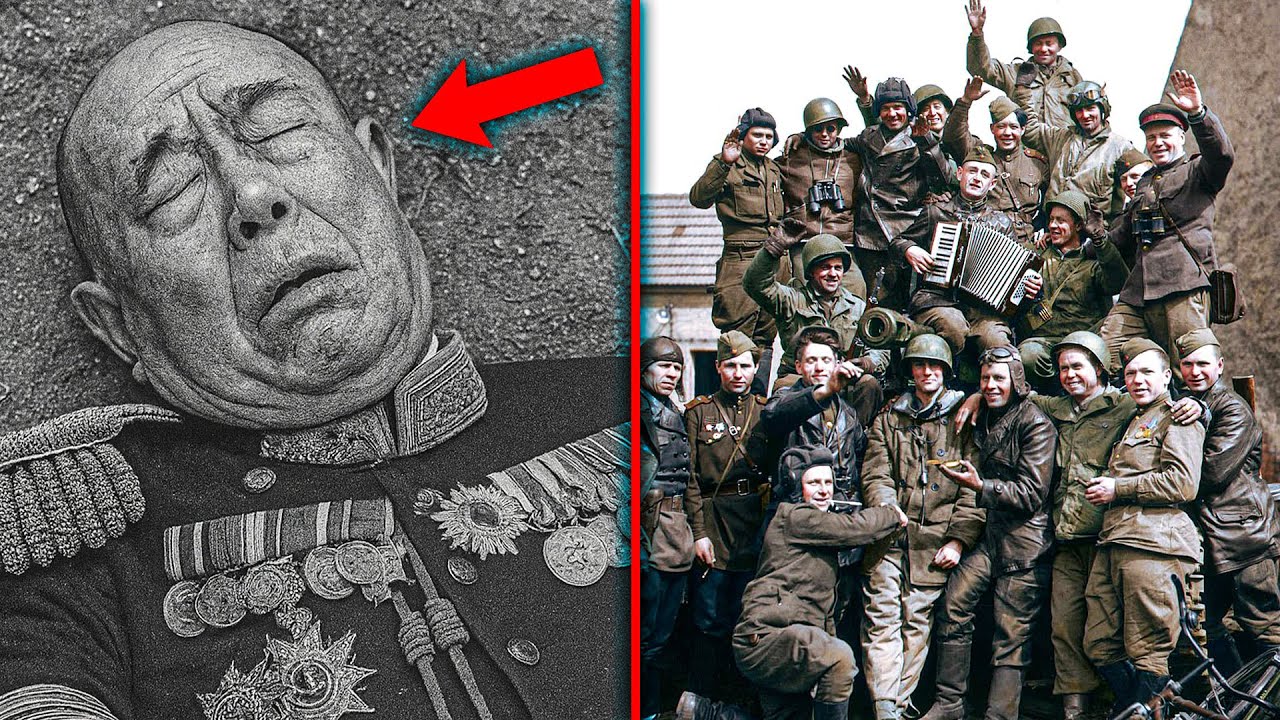
The pistol shot was barely audible above the thunder of naval guns pounding the ridges above Saipan. Inside the coral cave, the sound echoed faintly through the tunnels, swallowed almost instantly by the rumble of explosions and the distant screams of dying men. When US Marines finally reached the underground command post, they found the body of Admiral Chuichi Nagumo sitting upright against the rock wall, his service pistol still in his hand. Witnesses said his face looked peaceful, resigned.
The man who had unleashed hell on Pearl Harbor had met his end not in battle, but in silence. It had taken nearly three years for the circle to close. In the autumn of 1941, Admiral Chuichi Nagumo had been handed the most ambitious order in Japan’s naval history: lead a carrier strike force across three thousand miles of open ocean and cripple the United States Pacific Fleet. He had not planned the attack.
That credit belonged to Admiral Isoroku Yamamoto. But it was Nagumo who would execute it. A cautious man by nature, he had spent most of his career commanding destroyers and cruisers, not aircraft carriers. Many of his peers doubted he was the right choice for such an operation.
But in Japan’s rigid military hierarchy, obedience was absolute, and Nagumo did not question his orders. On November 26th, 1941, his fleet departed Hitokapu Bay under strict radio silence: six carriers, two battleships, three cruisers, and 350 aircraft. The mission was cloaked in such deep secrecy that even the pilots did not know their target. Only Nagumo and a handful of officers understood the stakes.
If the operation failed, Japan’s empire would be doomed before the war even began. At dawn on December 7th, 1941, the calm waters of Pearl Harbor erupted into chaos. Nagumo’s first wave struck with devastating precision, torpedo bombers tearing through the moored US fleet while dive bombers screamed down from the clouds. Within minutes, battleships like the Arizona and Oklahoma were burning infernos.
By the time the second wave withdrew, over 2,400 Americans were dead. Japan celebrated the strike as divine vengeance, and Nagumo returned to Tokyo to parades, banners, and the emperor’s praise. Yet beneath the victory, doubts haunted him. He had refused Yamamoto’s demand for a third wave to destroy America’s fuel reserves and repair docks, targets that might have crippled the US for years.
He feared a counterattack, believing prudence would preserve his fleet. Instead, it preserved America’s ability to strike back. That decision would mark him forever. The man who had delivered Japan’s greatest triumph had unknowingly ensured its downfall.
Across the Pacific, Americans swore revenge. Newspapers printed his name beside the flames of Pearl Harbor, and every pilot, every sailor, every marine knew it. Someday they would come for Admiral Nagumo. In the months following Pearl Harbor, Nagumo commanded the most powerful naval strike force the world had ever seen.
His carrier fleet dominated the Pacific, crushing opposition with terrifying efficiency. From the Philippines to the Indian Ocean, his planes sank Allied ships, destroyed bases, and spread panic across half the globe. For a time, he seemed untouchable. Tokyo hailed him as the man who had humbled the West.
But behind that reputation was a truth his officers quietly observed. Nagumo was not a visionary. He was cautious, methodical, and often afraid to take the kinds of risks that bold strategy required. He had inherited a weapon built for aggression but lacked the instinct to wield it fully.
In April 1942, he led the Kido Butai, Japan’s carrier task force, in a massive raid across the Indian Ocean. His fleet sank the British carrier Hermes, the cruisers Cornwall and Dorsetshire, and dozens of smaller ships. For Japan, it was another triumph. Yet even then, cracks began to show.
His subordinates complained that he hesitated too often, that he lacked Yamamoto’s daring. The same conservative instincts that had made him cautious at Pearl Harbor were now slowing Japan’s momentum. Yamamoto, ever the gambler, looked ahead to a decisive battle that would destroy the US Navy once and for all. That plan would lead Nagumo to Midway, a battle that would change the war and destroy everything he had built.
In June 1942, Nagumo sailed east with four of Japan’s finest carriers: Akagi, Kaga, Soryu, and Hiryu. His mission was to lure the remaining American carriers into a trap and finish what Pearl Harbor had started. But what he did not know was that the Americans had cracked Japan’s naval codes. Admiral Chester Nimitz and his intelligence officers already knew the plan, the target, even the date.
As Nagumo prepared his strike on Midway Island, the US Navy waited. The ambush that followed was swift and merciless. In the early hours of June 4th, Nagumo’s fleet came under attack from waves of American torpedo bombers. He launched fighters to counter them, not realizing that above the chaos, high-altitude dive bombers were already positioning for their run.
When they struck, it was devastation. Within minutes, three of his carriers, Akagi, Kaga, and Soryu, were engulfed in flames. A fourth, Hiryu, would follow hours later. Thousands of sailors and airmen died in a single morning.
Nagumo stood on his flagship’s deck, surrounded by smoke and burning oil, watching Japan’s dreams of dominance sink beneath the waves. Midway shattered more than Japan’s navy. It shattered Nagumo himself. His indecision during the battle, his failure to launch his planes at the right moment, became the stuff of bitter debate in Tokyo.
He had hesitated again, torn between attacking the island and striking at the American carriers. That hesitation cost Japan its entire carrier corps and ended its ability to wage offensive war. When he returned home, there were no parades, no cheering crowds, only silence. He offered his resignation, but the Navy refused, unwilling to publicly disgrace one of its heroes.
Instead, he was reassigned. His once glorious career was quietly buried under shame. For America, Midway was vindication. The man who had struck Pearl Harbor had been defeated in kind.
But for Nagumo, it was the beginning of a slow execution. Each battle Japan lost, each island America reclaimed carried his name like a curse. After Midway, Nagumo was a man haunted by ghosts. Ghosts of ships, pilots, and decisions that could not be undone.
The Navy that once praised him now looked at him with quiet contempt. He was still respected publicly, still saluted as the architect of Pearl Harbor. But behind closed doors, he was spoken of as a man whose time had passed. Japan’s momentum had been broken.
Its carrier fleet was crippled. Its pilots, once the best in the world, were now outnumbered and outmatched. Nagumo was transferred to less glamorous commands, far from the glory of the open sea. The proud admiral who had once commanded the Kido Butai now found himself shuffling between defensive assignments, reduced to holding lines rather than breaking them.
By 1943, the war had turned against Japan. The Americans were advancing across the Pacific with ruthless determination, seizing one island after another. Each victory brought them closer to the homeland, and each defeat pushed Nagumo further into the shadows. He took command of the Central Pacific Area Fleet, responsible for defending a crumbling perimeter of islands.
It was a post meant more for honor than victory. Supplies were dwindling, morale was collapsing, and Tokyo’s orders had shifted from attack to delay. Nagumo knew what that meant. He was to sacrifice everything to slow the inevitable.
His subordinates noticed the change in him. Once rigid and formal, Nagumo grew withdrawn. He rarely spoke during meals, spending hours alone staring at charts that showed Japan’s empire shrinking by the day. The same man who had commanded the world’s most powerful carrier fleet now watched helplessly as American carriers ruled the skies he once dominated.
Reports from the front arrived daily. Guadalcanal lost, the Solomon Islands under siege, Allied submarines strangling Japan’s shipping lanes. Nagumo, ever the realist, understood what others refused to say aloud. The war was lost.
But for a man raised in the Imperial Navy’s code of honor, surrender was not an option. Then came the order that sealed his fate. In early 1944, he was reassigned to the Marianas to defend the islands of Saipan and Tinian, Japan’s last major bastion before the homeland. It was a desperate assignment, but Nagumo accepted it without protest.
He knew why he had been chosen. Tokyo needed a symbol, a veteran of Pearl Harbor, to inspire the defenders. But he must have known the truth. He was not being sent to win.
He was being sent to die. By June 1944, Saipan had become the beating heart of Japan’s final defensive line. From the moment Nagumo arrived, the island felt like a tomb waiting to be sealed. American bombers thundered overhead day and night, softening the beaches for the inevitable invasion.
The sea that once carried his fleet now delivered destruction in endless waves: shells, torpedoes, and carrier-based aircraft that blotted out the sun. Nagumo took command of the naval garrison, but his fleet was a shadow of its former self. Grounded aircraft, a handful of anti-aircraft batteries, and sailors with no ships left to sail. Still, Tokyo demanded miracles.
“Defend Saipan to the last man,” came the order from the Imperial General Staff. Nagumo knew what those words meant. They were not instructions. They were a death sentence.
As American warships closed in, Nagumo walked through the defensive tunnels carved into the coral hillsides. The air was heavy with humidity and fear. Japanese soldiers, young and trembling, saluted him as he passed, their faces gaunt from hunger and malaria. Many had no illusions about what awaited them.
Supplies were scarce, and morale was collapsing faster than the bunkers being bombed above them. In the dark, Nagumo heard the distant rumble of naval guns pounding the shoreline. Each explosion drew closer, and each tremor reminded him of the fate that had been building since Midway. On June 15th, 1944, the US Marines landed.
The beaches erupted into chaos as waves of Higgins boats delivered thousands of men under the cover of naval artillery. Nagumo’s defenses were shattered within hours. The Americans poured inland, their tanks grinding over trenches and bunkers. The defenders fought ferociously, but they were hopelessly outgunned.
The Japanese airfields were reduced to ash, and communication with Tokyo was nearly gone. In the tunnels beneath Saipan, Nagumo’s command devolved into silence. He received word that Vice Admiral Teao Takashima had been killed by artillery fire, leaving Nagumo the senior officer on the island. It was both an honor and a curse.
He now bore the full weight of command, but there was nothing left to command. His troops were broken, his supplies gone, his fate sealed. The sound of American flamethrowers igniting the caves grew louder each day, the screams of the dying echoing through the tunnels. Nagumo’s aides urged him to flee to the northern ridges, but he refused.
There was nowhere left to run. And in the Imperial Navy, retreat was worse than death. By the fifth day of battle, Saipan had become unrecognizable. The lush green island was now a landscape of ash and ruin, filled with the stench of smoke, blood, and burning oil.
Nagumo moved through his underground command post in near silence, his uniform soaked in sweat, his once polished boots coated with dust. Every few minutes, the ground shuddered from American naval shells pounding the ridges above. Radios crackled with fragments of desperate transmissions: units overrun, ammunition gone, positions lost. Nagumo’s aides pleaded with him to move to a safer location.
But he only shook his head. “A commander must remain with his men,” he said quietly. The same conviction that had driven him into this trap now anchored him to it. Outside, the Americans were tightening their grip.
The Second and Fourth Marine Divisions had pushed inland, meeting fierce but futile resistance from Japanese soldiers fighting to the death. Many refused to surrender, launching suicidal charges at night that ended in slaughter. The bodies of Japanese troops carpeted the sugarcane fields. And still they came, driven by the same code that now bound Nagumo’s fate.
Better death than dishonor was not just a slogan. It was a doctrine carved into their souls. Nagumo could hear the distant shouts and explosions, knowing that every battle outside brought the Americans closer to the caves. Tokyo’s final message arrived on June 23rd.
It offered no strategy, no reinforcement, only a command: “You will die with honor. ”
Nagumo read it twice, folded it neatly, and placed it in his pocket. He knew that his death would be meaningless in military terms, but to the Japanese high command, it meant preserving the illusion of loyalty and strength. Those who knew him said he appeared calm, but distant, as if already halfway gone.
Perhaps he thought of the ships he had lost at Midway, of the faces of his pilots who never came home, or of the morning in 1941 when he gave the order to strike Pearl Harbor. The same sea that had carried him to triumph now thundered against the cliffs outside his cave, a grim reminder of the circle closing around him. American soldiers were only a few hundred yards away, their flamethrowers clearing out bunkers one by one. Inside the cave, Nagumo bowed to his aides, thanked them for their service, and gave his final order.
“Do your duty as I do mine. ”
Moments later, the sound of a single pistol shot echoed faintly through the tunnels. For Japan, his suicide was heralded as an act of honor. For the Americans, it was poetic justice.
The hunter of Pearl Harbor had become the hunted, and fate had delivered its verdict without mercy. When news of Nagumo’s death reached Tokyo, it spread through the corridors of the Imperial Navy like a ghost. Officially, it was reported as a noble act of self-sacrifice, a commander choosing death over capture. Newspapers printed his portrait framed in black ink, calling him a martyr of the Empire.
But among the senior officers who knew the truth, his suicide felt less like glory and more like a requiem. Nagumo had been one of Japan’s most visible symbols of power. Now his death marked something far greater: the death of Japan’s naval supremacy. The same admiral who had launched the first strike at Pearl Harbor had ended his life in a cave, hunted, broken, and alone.
For the Japanese people, that image was too painful to fully comprehend. In the Imperial Palace, Emperor Hirohito was said to have fallen into a long silence when informed of Nagumo’s fate. He had once personally decorated the admiral for his triumph at Pearl Harbor. Now the Empire’s most loyal servant had become another casualty of a war crumbling from within.
The morale in the fleet collapsed further. Younger officers whispered that if even Nagumo, the hero of Hawaii, could die in defeat, then Japan itself had no hope left. It was not just the loss of a man. It was the loss of an illusion.
For the Americans, Nagumo’s death was reported bluntly in wartime briefings: “Enemy commander deceased, Saipan. ” But within the US Navy, there was a quiet satisfaction. Some of the men who had survived Pearl Harbor were still serving, and when word spread that the architect of that attack had finally fallen, it felt like closure. For them, this was more than another victory.
It was personal. In the ruins of Saipan, Marines discovered Nagumo’s effects: his pistol, his sword, and a set of personal papers burned at the edges. Among them was a single line written in his hand: “I have done my duty to the end. ” It was neither boast nor excuse, just resignation.
His body was later buried with military honors by the Americans, a rare gesture of respect for a fallen enemy. Back in Japan, however, the truth was quietly rewritten. His suicide was framed as an honorable end, his defeats glossed over in patriotic speeches. But for those who had served under him, Nagumo’s story was a cautionary one.
A tale of pride, hesitation, and the crushing weight of command. He had lived by the code of Bushido, and in the end, that same code demanded his death. In the aftermath of Saipan, Nagumo’s death became both a symbol and a warning, one that echoed through the rest of the Pacific campaign. For Japan, it marked a spiritual collapse.
Saipan had been more than just a military stronghold. It was the final shield before the homeland itself. When it fell, the Imperial Command knew what it meant. The American advance could now reach Tokyo, and the myth of Japan’s invincibility was shattered beyond repair.
In the ashes of that defeat, Nagumo’s suicide was presented as proof that the old warrior spirit still lived. But everyone knew the truth. It was desperation dressed as honor. Across the Pacific, the United States celebrated Saipan as a turning point.
Newspapers ran headlines proclaiming “Gateway to Japan Captured,” while military briefings cited it as one of the most decisive victories of the war. Yet for many in uniform, there was a quieter emotion beneath the triumph: vindication. The same islands that once symbolized humiliation at Pearl Harbor were now symbols of retribution. Every American pilot who looked down at the burning cliffs of Saipan knew that somewhere in those tunnels, the architect of their nation’s darkest day had met his end.
But history is never so simple. In time, even Nagumo’s enemies would look back on him with something resembling pity. He was not a monster, not a fanatical ideologue, but a naval officer trapped by duty, politics, and tradition. He had carried out his orders with precision, even when he disagreed with them.
He had obeyed Yamamoto at Pearl Harbor, and he had obeyed Tokyo at Saipan. The tragedy of Nagumo’s life was not in his death, but in how little control he ever truly had. Every major decision that defined him was forced upon him by a system that valued loyalty over logic and sacrifice over survival. As the war dragged on, his name faded into the background, overshadowed by newer disasters: Leyte Gulf, Iwo Jima, Okinawa.
But to those who had served beside him, Nagumo’s ghost lingered. They spoke of him in quiet tones, remembering a man who had started a storm he could never escape. His rise at Pearl Harbor and his fall at Saipan became bookends to Japan’s fate. Two acts of the same tragedy, bound together by pride, vengeance, and inevitability.
When Japan finally surrendered in August 1945, American officials reviewing captured documents noted Nagumo’s final message. One admiral reportedly whispered: “He knew it was over long before the rest of them did. ”
And perhaps that was the cruelest irony of all.
The man who began the Pacific War also understood sooner than anyone else exactly how it would end.
