On the 1st of March 1881, Tsar Alexander II of Russia was driving through the streets of St. Petersburg when a bomb thrown by a revolutionary tore through the air. The explosion inflicted fatal wounds on the emperor, who died a few hours later. The news struck the imperial family like a thunderclap.
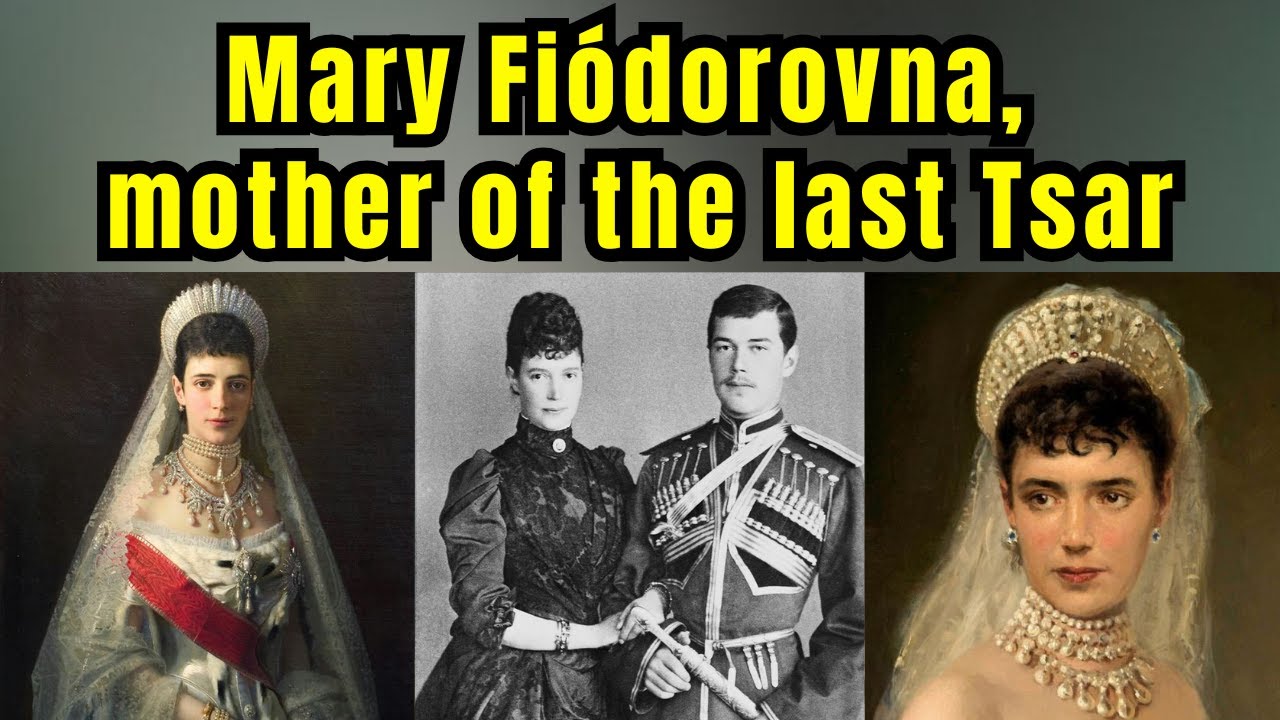
Among those left to absorb the shock was the Grand Duchess Maria Feodorovna, a Danish princess who had married into the Romanov dynasty less than fifteen years earlier. Her husband, Grand Duke Alexander Alexandrovich, would now ascend the throne as Alexander III, and she would become Empress Consort of the Russian Empire. The transition came not in a moment of celebration, but in an atmosphere of insecurity, mourning, and heightened vigilance. The reformist era of her father-in-law was over; the autocratic reaction had begun.
To understand how a princess from a modest Copenhagen palace came to stand at the center of the Russian imperial court, one must go back to her birth. Maria Sophia Frederica Dagmar was born on the 26th of November 1847 in Copenhagen, the capital of the Kingdom of Denmark. Her birthplace was the Yellow Palace, a modest residence adjacent to Amalienborg Palace, part of the royal complex but lacking the luxuries that characterized other European courts. Her arrival coincided with a period of significant change for the Danish monarchy, which was then experiencing political uncertainty and territorial redefinition.
The child was baptized according to the Lutheran rite, as was traditional in the Danish royal family, and from her earliest days was treated with the affection and informality that marked her parents’ domestic setting. At home, she was simply called Dagmar, though her full name appeared in official records. She was the second daughter of Prince Christian of Schleswig-Holstein-Sonderburg-Glücksburg, who would later become Christian IX, King of Denmark. Her father belonged to a junior branch of the House of Oldenburg, which at the time did not grant him a central role at the Danish court.
However, in 1852, through the London Protocol, Christian was designated as heir to the Danish throne, since King Frederick VII had no direct descendants. Dagmar’s mother, Louise of Hesse-Kassel, was the niece of King Christian VIII and brought a Germanic heritage that reinforced ties with the German houses. Louise had a firm character, remarkable general knowledge, and a strong sense of duty, qualities she instilled deeply in the upbringing of her children. Both parents formed an austere and deeply devout couple, transmitting to Dagmar values focused on family, discretion, and responsibility.
Dagmar grew up in a large family, the second of six children. Her elder brother Frederick was the firstborn son and inherited the Danish throne as Frederick VIII. Alexandra, Dagmar’s elder sister, married the Prince of Wales and was crowned Queen Consort of the United Kingdom alongside Edward VII. Her brother William was elected King of Greece in 1863 by the Greek National Assembly and assumed the throne under the name George I, establishing a new Hellenic dynasty backed by the European powers.
Another sister, Thyra, married Ernest Augustus of Hanover and assumed the title of Duchess of Cumberland. The youngest of the six siblings was Valdemar, who received the title Duke of Schleswig and pursued a distinguished naval career in the service of Denmark. The family later came to be known as the mother-in-law of Europe, as its members intermarried with the most powerful royal houses on the continent, a reflection of the diplomatic influence exerted by Christian IX and Louise. During her childhood, Dagmar experienced a life which, although set within a noble context, was far removed from the splendor that characterized other European courts.
Her family, not yet on the throne, lived modestly. Her early years were spent at the Yellow Palace, a relatively simple residence compared to grand royal dwellings. Later, the family moved to Bernstorff Palace, a summer villa on the outskirts of Copenhagen surrounded by woods and gardens, where the children grew up with a degree of freedom. Dagmar and her siblings received a strict education focused on religion, the Danish language, French, and family values.
The teachings of her mother Louise were central to her development. The girls of the family were also instructed in practical skills such as embroidery and music, within an atmosphere that combined dignity with simplicity. Emotional stability and close family bonds shaped Dagmar’s character, and she developed a strong sense of unity with her siblings. In 1864, at just seventeen years old, Dagmar was officially betrothed to Tsarevich Nicholas Alexandrovich, the eldest son of Tsar Alexander II of Russia.
This engagement was the result of carefully arranged dynastic negotiations between Denmark and Russia, aiming to strengthen ties between the two royal houses. Nicholas had met Dagmar in 1863 during a visit to Copenhagen and was deeply impressed by her intelligence and sweetness. Their correspondence reflected a close relationship and growing affection. In preparation for her future role as Russian Grand Duchess, Dagmar began studying Russian and familiarizing herself with Orthodox customs.
The union was well received in both St. Petersburg and Copenhagen. Then, in 1865, while in Nice, Nicholas became gravely ill with spinal tuberculosis, though some later sources mention meningitis. He died on the 24th of April that year.
After the death of the Tsarevich, Dagmar returned to Denmark accompanied by members of the Russian court, including Grand Duke Alexander Alexandrovich, the younger brother of the late Nicholas. The sudden loss of the young heir plunged both families into mourning. On his deathbed, Nicholas had expressed his wish that Dagmar be considered by his brother as a future wife. Although initially devastated, Dagmar found in Alexander a kind and respectful confidant.
In the months that followed, a discreet correspondence was maintained between them, encouraged by Empress Maria Alexandrovna and by Dagmar’s own mother, Louise of Hesse-Kassel. The letters, delicately written, gradually forged a bond that evolved from cordiality into affection. Alexander had long admired Dagmar, but he was cautious and wished to honor the period of mourning. Their connection deepened in an atmosphere of mutual respect, also driven by the political considerations of their respective families.
Dagmar’s final decision to accept Alexander’s proposal was not taken lightly. In the summer of 1866, following a visit by the Grand Duke to Copenhagen to see her in person, the engagement was formalized. The meeting proved decisive. Dagmar was able to confirm that she shared with Alexander a common vision of duty, family, and public life.
The conditions of the agreement entailed her permanent relocation to Russia as well as her conversion to the Orthodox Church. For a Lutheran princess, this step represented a profound change, but Dagmar understood that it was part of the responsibilities required of her role as future consort to the heir to the throne. The decision was well received by the Russian court, which regarded her as an ideal candidate: well educated, discreet, strong in character, and with family ties that linked Russia to the principal royal houses of Europe. The proposal was also a source of relief for Tsar Alexander II, who wished to close this chapter of personal grief with the hope of a new union that would ensure dynastic continuity.
Dagmar departed for Russia in the autumn of 1866. Upon her arrival, she settled in St. Petersburg and began the process of religious conversion as stipulated by the traditions of the imperial family. After receiving formal instruction in the principles of Eastern Orthodox Christianity, she was received into the Russian Orthodox Church and adopted the name Maria Feodorovna, in honor of the Mother of God, the Theotokos.
The conversion ceremony was held with great solemnity and marked a pivotal transition in her life. She left behind her identity as a Danish Lutheran princess and assumed her new role as a Russian Grand Duchess. Her attitude was met with respect by the Russian aristocracy, who valued her willingness to embrace the customs of the empire wholeheartedly. From that moment, Maria began to prepare for her duties within the imperial family, accompanying the Grand Duke at official functions and adapting to the strict ceremonial codes of the Russian court.
Her command of the Russian language progressed rapidly, facilitating her integration and increasing her popularity among the nobility. The marriage of Maria and Grand Duke Alexander Alexandrovich took place on the 9th of November 1866 in the chapel of the Winter Palace in St. Petersburg. The ceremony was one of the most prominent social events of the year in the Russian Empire, not only due to the personal union of the couple, but also for its political and dynastic significance.
The presence of foreign delegations and the splendor of the Orthodox ritual helped consolidate the prestige of the House of Romanov on the international stage. During the celebration, Maria wore an elaborate gown embroidered with silver threads and precious stones, complemented by an imperial tiara. Tsar Alexander II expressed his satisfaction with the marriage, regarding his son’s bride as a worthy match: educated, beautiful, and strong willed. After the wedding, the couple settled in the Anichkov Palace, one of the imperial residences in the capital, from where they began to undertake their public roles.
The relationship between Maria and Alexander was from the outset marked by deep personal complicity, founded on mutual respect and a shared vision of imperial duty. Between the years 1868 and 1882, Maria gave birth to six children, each of whom would play a significant role in the history of the imperial family, though often with tragic outcomes. The first, Nicholas Alexandrovich, born in 1868, was raised from early childhood as heir to the throne and would later become Nicholas II, the last Tsar of Russia. Their second son, Alexander, was born in 1869, but died a few months later, leaving his parents deeply grief stricken.
The third child, George Alexandrovich, was born in 1871 and showed a gentle and calm temperament, though his health was always fragile. He died of tuberculosis in 1899 in the Caucasus, where he had been sent on medical advice. The fourth child, Xenia Alexandrovna, born in 1875, married Grand Duke Alexander Mikhailovich and survived the Russian Revolution, later going into exile abroad. The fifth child, Michael Alexandrovich, was born in 1878 and was briefly considered Tsar following the abdication of Nicholas II, although he was never crowned and was executed by the Bolsheviks in 1918.
The last child, Olga Alexandrovna, was born in 1882 and passed away at the age of seventy-eight in 1960. Motherhood became a central pillar of Maria’s life. She was directly involved in the upbringing and care of her children, cultivating an affectionate bond with each of them, though also maintaining the discipline required by her imperial position. The assassination of Alexander II in March 1881 transformed Maria’s position overnight.
As Empress Consort, she stood by her husband with discretion and resolve, fulfilling her role with dignity and prudence during a particularly tense political era. Unlike her father-in-law, whose reign had been marked by reformist policies, Alexander III adopted a conservative stance rooted in autocracy, orthodoxy, and nationalism. The coronation of Alexander III and Maria Feodorovna took place on the 27th of May 1883 at the Cathedral of the Dormition, located within the walled Kremlin complex in Moscow. It was a solemn act that affirmed the legitimacy of imperial authority following the violent events of 1881.
Although the imperial couple had acceded to the throne two years earlier, Russian protocol required meticulous preparation for this deeply symbolic religious and state event. During the ceremony, Maria Feodorovna was crowned by her husband, as tradition dictated, and received the imperial regalia. Her bearing, luxurious attire, and composed demeanor impressed those in attendance, including dignitaries from across the empire, church representatives, and foreign nobility. The event was not merely a ritual, but a demonstration of power and continuity in a time of internal threats.
The Tsarina rose to the occasion with grace and solemnity, earning the sympathy of many who saw her as a symbol of stability and balance within the rigid court ceremonial. During the thirteen years Maria served as Empress Consort, her public image became one of the most beloved in Russia. In public, her behavior was measured yet approachable. She always maintained a kind expression and showed warmth towards the empire’s most vulnerable sectors.
Despite the pomp that surrounded the Russian court, Maria avoided haughtiness and favored a maternal and compassionate presence. Women among the common people regarded her as a model of virtue, while the upper classes admired her refined taste and discretion within the palace environment. She was known for keeping a steady routine and exerting a balanced influence over her husband, offering sensible private opinions without intervening directly in political affairs. In a period defined by political repression and social control, the figure of the Tsarina provided a warm contrast within an increasingly rigid regime.
Her actions during natural disasters, epidemics, or public accidents were crucial in reinforcing her reputation as a compassionate and protective figure. One of the most notable aspects of Maria’s time as Empress Consort was her unwavering commitment to charitable causes. She assumed patronage over numerous institutions dedicated to health, childhood, education, and the care of veterans. She promoted the expansion of military hospitals, pushed for improvements in imperial orphanages, and supported the work of the Russian Red Cross, in which she played a prominent role as honorary president.
She took an interest in the situation of working women and war widows and advocated for aid programs in the empire’s poorest provinces. These efforts were not superficial or merely symbolic. Her involvement included personal visits, oversight of funding, and direct communication with regional officials. Her closeness to social needs was especially valued in rural areas where contact with the court was nearly non-existent.
Memoirs from the time reflect that many of the beneficiaries of her initiatives remembered her with lasting gratitude, viewing her work not as a formal duty, but as a genuine expression of compassion. The relationship between Maria and Alexandra Feodorovna, the wife of her son Nicholas, was distant and complicated from the start. Alexandra, born as Princess Alix of Hesse-Darmstadt, was reserved, deeply pious, and held a strict view of her role as Empress. While Maria was also devout, she maintained a more practical and moderate approach to religion and public responsibilities.
Their differences became clear during the preparations for Nicholas and Alexandra’s wedding, when the future Tsarina initially resisted adopting Russian customs. Maria perceived in her daughter-in-law a withdrawn attitude which hindered her connection with both court and people. Additionally, Alexandra showed little interest in social functions, something Maria viewed as essential to the imperial role. Tensions were further heightened by Maria’s dominant presence in the early years of her son’s marriage, as she retained considerable influence over Nicholas.
Over time, the two women developed a relationship that was cordial but distant, marked by mistrust and disagreement over the direction the imperial family should take. By the end of 1894, Tsar Alexander III’s health had rapidly declined due to a kidney condition diagnosed as chronic nephritis. The imperial family relocated to the Livadia Palace in Crimea, hoping that the milder climate would aid his recovery. However, the treatment proved ineffective, and the emperor died on the 1st of November that year, aged forty-nine.
Maria Feodorovna remained by his side until the very end, accompanying him with strength and devotion. Her grief was deep and clearly visible to those around her. Their marriage had been solid and affectionate. Alexander had trusted her not only as a wife, but also as a confidant in both family life and public matters.
The Tsar’s death marked a turning point in Maria’s life. On the same day, their eldest son was proclaimed Nicholas II, the new emperor of Russia. Maria embraced her new status as Dowager Empress with dignity, though the emotional impact of the loss would stay with her for the rest of her life. At the funeral held in St.
Petersburg, her presence in mourning dress and her composed gaze left a deep impression on all those present. After Alexander III’s death, Maria made her permanent residence at the Anichkov Palace in St. Petersburg. This palace, which had already served as her home during the early years of her marriage, was adapted to become the official residence of the Dowager Empress.
From there, she maintained a discreet yet active lifestyle. She continued her involvement in charitable activities and attended official functions when required. The palace also became a hub for family gatherings, especially with her grandchildren, to whom she showed constant affection. Despite her formal retreat from power, she preserved a circle of influence among the more traditional sectors of the court.
The Anichkov residence represented both a personal and symbolic refuge for her, where she preserved the memory of her husband and the legacy of an era defined by order and stability. Now increasingly at odds with the changes unfolding across the country, Maria maintained a close relationship with her son Nicholas II during the early years of his reign. She offered him advice, particularly regarding the public image of the crown, the court, and the handling of the nobility. She was keenly aware of the risks of excessive isolation and urged him to maintain contact with Russian society beyond palace walls.
However, over time her influence waned. Empress Alexandra Feodorovna, reserved and deeply dependent on her religious convictions, distrusted the closeness between her husband and his mother. This tension worsened with the rise of Gregory Rasputin, a mystical peasant who gained considerable influence over Alexandra. Maria viewed Rasputin’s presence as a threat to the monarchy’s stability.
Although she voiced her disapproval firmly, her warnings were ignored. Maria was gradually excluded from important government decisions. This distancing not only affected her relationship with her daughter-in-law, but also caused her profound concern about the direction the imperial regime was taking. When the First World War broke out in August 1914, Maria joined the national efforts in her institutional role as Dowager Empress.
Despite her age, she wholeheartedly renewed her commitment to the Russian Red Cross, an organization she had served as honorary president for decades. She oversaw the creation and maintenance of field hospitals, promoted fundraising campaigns, and coordinated the delivery of medical supplies to the front lines. Her experience in charitable work made her a respected figure of action and leadership. She also visited military hospitals in St.
Petersburg and surrounding areas, where she spoke with wounded soldiers and medical staff, offering both moral and material support. Her presence was received with respect by servicemen who saw her as a protective figure. During these years, her prestige as a member of the imperial family remained high among broad sectors of the population. This period marked a reaffirmation of her sense of duty, even amidst a war that would forever change the history of the Russian Empire.
In February 1917, protests over food shortages, the strain of war, and widespread discontent with the Tsarist regime culminated in a revolution that forced Nicholas II to abdicate on the 2nd of March. At that time, Maria was in Crimea, where she had sought peace and rest amid the increasingly troubling events unfolding in the capital. The fall of the regime took her by surprise, and she was unable to return to St. Petersburg.
She was accompanied by her daughter, Xenia, and several other relatives who had also fled south. Although she was not officially detained, she was placed under effective isolation and monitored by the new revolutionary authorities. While Maria remained in Crimea, the situation across Russia deteriorated rapidly following the October Revolution of 1917. The new Bolshevik government, led by Lenin, ordered the transfer of the imperial family to Yekaterinburg, where they were held under strict surveillance.
The Dowager Empress was unaware of the details of their confinement and received only fragmented information. On the 17th of July 1918, Nicholas II, his wife Alexandra, and their five children were executed by the Bolshevik regime in the basement of the Ipatiev House. For four months, Maria received no official confirmation of the events. Rumors were conflicting, and news arrived late or was deliberately concealed.
In the years that followed, she clung to the hope that Nicholas or at least one of her grandchildren had survived. In public, she avoided speaking about the matter in detail. She never fully accepted the murder as a confirmed fact, and until the end of her days, she referred to her son with unwavering respect, as though he was still alive or awaiting justice. In April 1919, with the Bolshevik forces advancing in Crimea, an evacuation was arranged for several remaining members of the Imperial family.
The operation was coordinated by the British government, which dispatched the battleship HMS Marlborough to the port of Yalta. The vessel had been sent on the direct order of King George V, Maria’s nephew, who was determined to secure the safe departure of his aunt and other Danish and Greek relatives. Although initially reluctant to leave Russian soil, Maria recognized that staying would endanger not only her life, but also that of her companions. She eventually agreed to embark with her daughter Xenia, her grandchildren, and other family members.
The ship departed from Yalta on the 11th of April 1919 and arrived in Malta several days later. From there, the evacuees were transported to England. It was the last time Maria set foot on Russian soil, leaving behind a country that had been her home for over half a century and was now collapsing under a new regime. After leaving Russia, Maria spent a brief period in England, staying in various residences offered by the British royal family.
She was warmly received by King George V. Though she felt proud and emotionally distant from the British environment, longing for her adopted homeland and a desire to reconnect with her roots led her to return to Denmark. Her native country became her final refuge. Although grateful for her family’s support, her thoughts remained with the fate of Russia, which she continued to follow through the press and contacts in exile.
The rest of her life unfolded in a quiet setting, surrounded by memories and the loyal members of her closest circle. Maria Feodorovna settled permanently at Villa Hvidøre, a coastal residence near Copenhagen. The property, acquired years earlier with her sister Alexandra, widow of King Edward VII of the United Kingdom, became their shared home. The sisters had remained close since childhood and found mutual comfort after the many losses they had endured.
The villa, surrounded by gardens and overlooking the Øresund Strait, offered a peaceful environment in stark contrast to the turbulent years Maria had left behind. At Hvidøre, she lived simply, engaged in correspondence, reading, and occasional family visits. The residence became a small dynastic memorial, preserving portraits, letters, and objects that had once belonged to the Russian imperial family. Although she participated in some social events in Denmark, she preferred privacy and seclusion, living her final years with dignity, far from the lost grandeur of the imperial court.
Throughout her exile, Maria never officially accepted the deaths of Nicholas II and his children. The lack of clear confirmation in the early years, along with the emergence of impostors claiming to be surviving members of the imperial family, fueled her uncertainty. Privately, she acknowledged the possibility that they had been executed, but she refused to state it publicly. On several occasions, she expressed her rejection of accounts promoted by the Bolsheviks or by Western allies.
This stance became a symbol of emotional resistance in the face of the collapse of her world. For Maria, acknowledging those deaths meant sealing the tragedy of the Romanov dynasty. Her disbelief was not naive. It was a means of preserving the memory of her son as the rightful emperor and upholding the dignity of her lineage amid humiliation and violence.
Maria Feodorovna died on the 13th of October 1928 at Villa Hvidøre, aged eighty. In her final years she had experienced typical age-related health issues, though she remained lucid and mentally sharp. Two years earlier, in 1925, she had lost her closest sister, Queen Alexandra of the United Kingdom, with whom she had shared both her residence at Hvidøre and a lifelong bond. Alexandra’s death affected her deeply, marking the beginning of a lonelier chapter.
Her own passing was peaceful, surrounded by her Danish family in a private and respectful atmosphere. The European press paid tribute to her as a historical figure of great dignity. She was initially buried at Roskilde Cathedral, the traditional burial place of Danish monarchs. Her death closed an important chapter of nineteenth-century Europe, embodied in a generation of queens and empresses who had witnessed the fall of the great monarchies.
Maria Feodorovna had lived through wars, revolutions, and exile, always maintaining remarkable fortitude. In 2006, nearly eight decades after her death, the remains of Maria Feodorovna were transferred from Denmark to Russia. The Russian government, in coordination with the Danish Royal House and the Orthodox Church, organized a solemn ceremony to fulfill her wish of being buried alongside her husband Alexander III. On the 28th of September that year, her remains were interred at the Peter and Paul Cathedral in St.
Petersburg, the traditional resting place of the Russian Tsars. The ceremony was attended by official representatives of Denmark, Russia, and descendants of the Romanov family. It marked the final chapter in the story of a woman who embodied the splendor, tragedy, and resilience of a vanished era.
