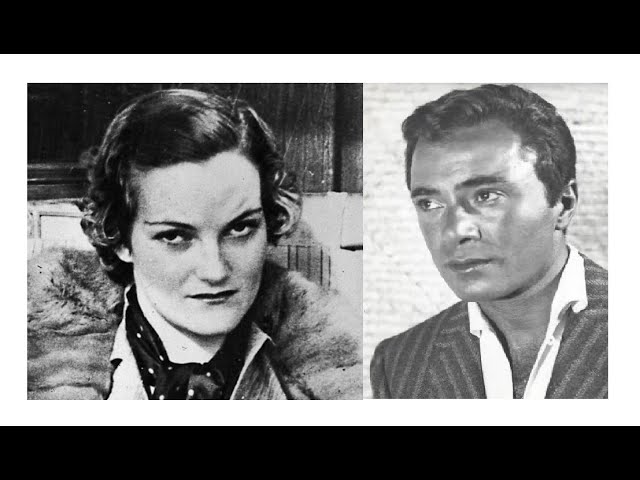
On October 6, 1966, a beautiful autumn afternoon in Newport, Rhode Island, patrolman Edward Angel received a radio message about an accident at the gates of Rough Point, the Tudor-style mansion of 54-year-old billionaire socialite Doris Duke. Arriving at the scene, Angel found a Dodge Polara station wagon crashed into a tree. A woman sat inside, extremely upset. Looking beneath the car, Angel saw what appeared to be a man.
He said he was under the car. The woman wailed, got out, and began walking up and down. A nurse named Judith Tom and her father, sightseers from Milwaukee, happened to be passing by and came to help. Angel asked Judith to look after the woman, whom he now recognized as Doris Duke herself.
Doris ran up the drive and into the house, crying that she had run over Ed. An ambulance arrived soon afterward, and the man beneath the rear axle, identified by the passport in his pocket as Doris Duke’s art curator Eduardo Tirella, was pronounced dead at the scene. Doris Duke had been born in New York City on November 22, 1912, the only child of tobacco tycoon James Buchanan Duke, founder of the American Tobacco Company, which controlled ninety percent of the U. S.
tobacco market. A ruthless businessman who lived by the motto “trust no one,” J. B. Duke left his daughter an estate worth billions in today’s terms when he died in 1925.
Doris was thirteen years old. She inherited her father’s ruthless streak early, suing her own mother in 1927 to prevent the sale of parts of the estate, when she was just fourteen. Known as the world’s richest girl, she grew richer with each milestone age, and when her mother died in 1962, she inherited a further fortune of roughly $250 million. She was rich, intelligent, tall, and attractive in a steely way, with a bad temper that could turn violent.
She had been a good surfer and excellent swimmer, taken singing lessons, worked in a canteen for sailors in Egypt during the war, and tried her hand as a journalist in Europe. She owned homes across the United States, including Falcon Lair in California, which once belonged to Rudolph Valentino, an estate in Hawaii called Shangri-La, and Rough Point itself, set among the old colonial mansions of Rhode Island where the Vanderbilts and Astors had established their dynasties. Doris married twice, first to James Cromwell in 1935, a political hopeful and sometime ambassador to Canada, ending in 1943, and then to Porfirio Rubirosa, a Dominican diplomat and playboy, in 1947, a marriage that lasted only a year. She never married again but had many lovers, including the jazz pianist Joe Castro, whom she once stabbed during a row.
She met Eduardo Tirella around 1959. He was then a talented thirty-two-year-old interior designer, born in 1924 in Dover, New Jersey, to Italian immigrant parents. He was gay and had once had ambitions to be a singer, interrupted by World War II when he joined the U. S.
Army and served in Europe, earning a Bronze Star in 1944. After the war he worked as a milliner and then as an interior designer for clients including Peggy Lee and Elizabeth Taylor. Doris, preoccupied with establishing gardens to honor her father’s memory, employed him to design her estates and gardens. Recognizing his talent and eye for art, she also made him her art manager, paying him $43,000 per year by the mid-1960s, around $400,000 in 2024 terms.
He had living quarters at each of her five main estates. She trusted his judgment in all things artistic and never bought a work of art without consulting him. He became indispensable to her, and she depended on him as a confidant in her various relationships, wanting him on call at all times. But Eduardo began spending more time in California with Edmund Kara, a designer and sculptor who was enjoying great success in Hollywood.
The two shared a house, gave parties attended by Hollywood luminaries, and Eduardo began making forays into the movie world himself, working on set design. In 1965 he worked on The Sandpiper with Elizabeth Taylor and Richard Burton, and in 1966 he spent the summer working on a movie for Tony Curtis. He decided to quit his job with Doris and take up a new career in set design. His lover counseled him to be careful in telling Doris, knowing her temper and fearing she would take the news badly.
He was right. On October 6, 1966, Eduardo flew to Rhode Island intending to inform Doris that he was leaving her employment. He planned to collect his belongings from the mansion, deposit them at his family home in Dover, New Jersey, and then head back to California permanently. Doris hired a Dodge Polara station wagon, drove to the airport, met him, and drove him back to Rough Point.
It is not known at what point Eduardo told her of his plans, but the following afternoon, staff overheard a furious row between the two. Soon afterward, at about five in the evening, they left the house together for the last time. Several minutes later, Eduardo Tirella was dead, crushed under the rear axle of the Dodge. Doris Duke was taken to Newport Hospital with cuts and abrasions to her face.
Her injuries were minor, according to the nurse and witnesses. The state medical examiner, Dr. Philip C. Mallister, arrived at the hospital to examine Tirella’s injuries and determine the cause of death.
He met Doris Duke, and she promptly hired him as her personal doctor, a move that should never have been permitted given his independent role in the matter. In this new role, he placed her in seclusion, declared that she could not be interviewed by police, and told the press he doubted she knew anything about what had happened, calling it a freak accident and stating she had not been drinking. He also said she had received thirty stitches to her face, but Judith Tom said Doris had no injuries requiring stitches, and Doris was never tested for alcohol in her bloodstream. A postmortem by Dr.
James J. Flanigan revealed that Tirella had sustained severe injuries to his torso, spine, and lungs, but died of massive head injuries that killed him instantly. His legs were not injured, though he had a fractured hip. The difficulties facing the authorities were apparent.
Doris Duke was said to be the richest woman in the United States, a friend of the Kennedys, and in Rhode Island she was royalty. It was two days after the accident that Doris, in her bedroom at Rough Point, in the presence of her attorneys, deigned to see officers. She sat in bed with her two German Shepherd dogs, which had previously attacked people walking near her property and had a destruction order in force against them. In her statement, she said she and Tirella were leaving Rough Point, and Tirella was driving down the drive.
He stopped about fifteen feet from the entrance, got out to unlock and remove the chain to open the gates, whereupon she slid over from the passenger seat into the driver’s seat, as she had hundreds of times before. She said she released the parking brake, moved the shift lever from park to drive, and accidentally depressed the accelerator rather than the brake. The car moved forward, pinned Eduardo against the gates, crashed through them, crossed the road, and hit a tree. Statements were taken from witnesses at the scene, including Judith Tom and Patrolman Edward Angel, but strangely, none of these statements ever saw the light of day.
The chief of police, Joseph Radich, informed the press that there were no suspicious circumstances. He said Tirella and Doris had been going out to dinner together and that Tirella had been crushed against the gates. Both claims were wrong. They were not going to dinner but to view an antique Doris had had restored at a local shop, and there was no blood on the gates and no injuries to Tirella’s legs.
Radich was either lying or mistaken. The conclusions of the police who examined the scene, Sergeant Fred Nugent and Edward Angel, were that someone had been forced onto the hood of the vehicle before it hit the gates. Doris had then braked, and he had rolled off onto the ground, whereupon she accelerated forward, crashed through a fence, and hit the tree. Nugent’s notes also indicated that tire marks showed tremendous acceleration in the driveway.
Radich declared the matter closed, but State Attorney J. Joseph Nugent declared himself dissatisfied, and some of the press began to question the haste of the closure. Radich backpedaled, declaring the investigation remained open. A second statement was drawn up by police and Doris Duke’s attorneys, which she duly signed, and Radich again declared the matter closed.
The New York Times declared the death of Tirella definitely an accident. There was no inquest, and no one queried this. Tirella’s family and many people in Rhode Island were not persuaded. Their suspicions were hardly laid to rest when, eight days after the accident, Doris donated $25,000 to restore the Cliff Walk on the Newport shoreline, a project she had previously opposed, gave $10,000 to Newport Hospital, and made other significant bequests.
Tongues wagged further when, months later, Police Chief Radich retired to Florida, where he purchased two condominiums, and the detective who had dealt with the accident received a spectacular promotion to chief of police. There was a common and widespread belief that Doris Duke had bought off her investigators. The case was closed. For a time, biographers relegated the death of Eduardo Tirella to brief references.
But in recent years, a less flattering view of the billionairess has emerged, most notably from investigative journalist Peter Lance, whose book Homicide at Rough Point conducted the most detailed examination of the circumstances of Tirella’s death. There are many problems in Doris’s account. In her insurance accident report, she stated she was sitting in the passenger seat, that Tirella got out to open the gate, and that she moved over to the driver’s seat, put her left foot on the brake, and moved the gear shift from park to drive, after which the car immediately moved forward through the gates. She said she was injured and dazed, looked around for Mr.
Tirella, did not see him, and went back into the house. This statement is at odds with her own statement to police. Howard McFarlin, Doris’s caretaker, told police that her practice was for the person driving to get out of the car, open the gates, return to the car, drive through the gates, return again to close them, and then drive away. He told police that Doris had never, to his knowledge, driven the vehicle through the gates when the person driving her had opened them.
Doris also claimed she had looked around for Mr. Tirella, but in her first statement she said she had pinned him against the gates. Patrolman Angel said in his report that he informed Miss Duke that the man was under the car. Judith Tom, who followed Doris to the house, said Doris said, “I have run over Ed.
”
There is a great deal to suggest the death did not occur as Doris claimed. The motive, means, and opportunity were in plain sight. Tirella had gone to Rough Point specifically to inform Doris he would no longer work for her. A furious row was heard by staff immediately prior to his death.
Tirella was not pinned to the gates, because his legs were not injured. All his injuries were to his head and torso, meaning he was lying down and dragged under the car. The gates being free of blood confirmed he was not seriously injured there. Patrolman Angel, who attended the scene within minutes, made drawings and took notes.
He reported the impact took place in the middle of the avenue itself, not in the driveway or at the gates. The following morning he returned with Sergeant Nugent to examine the scene, and both concurred that the fatal point of impact with Tirella occurred in the middle of the avenue, some thirty feet from the gates, and that he was dragged a further forty feet across the road to the point where the car hit the tree. Nugent concluded that Tirella had been forced onto the bonnet of the car, had been deposited in the avenue when the car stopped, and had then been run over. The tire marks showed two-inch-deep gouge marks from the rear tires some thirty feet from the gate, indicating a racing start.
The driver then accelerated a second time, running over Tirella as he lay on the ground and dragging him beneath the car until it hit a tree. This entire sequence seems to require a second deliberate act on the part of the driver, depressing the gas pedal a second time. The police who were in possession of these facts knew that the actions taken by Doris Duke were deliberate and could not have been accidental. The case was closed nonetheless.
Doris Duke continued her philanthropic work, seeking to buy public goodwill, but she remained a divisive figure. She died of a stroke on October 28, 1993, at the age of eighty, her will contested, her life ending as it had been lived, in litigation. There is one final footnote. Doris subsequently became romantically involved with an ex-World War II RAF pilot named Peter Burn.
He later told the writer Peter Lance that Doris once spoke of Eduardo Tirella, saying, “He got what he deserved. Nobody crosses me twice. ” It is impossible to tell at this distance whether Doris said this, but at least in this instance it has the virtue of being entirely in accord with her character.
