The first shot may not have been the one that killed him, but it was the one that ended the legend. Inside the Foster home in Cass County, Texas, on January 6th, 1869, Cullen Baker was finally cornered by men who knew him, knew his habits, and knew exactly where he would be. Whether the whiskey he drank that day had been laced with strychnine, or whether he was simply ambushed as he walked in, remains a matter of dispute. What is certain is the result.
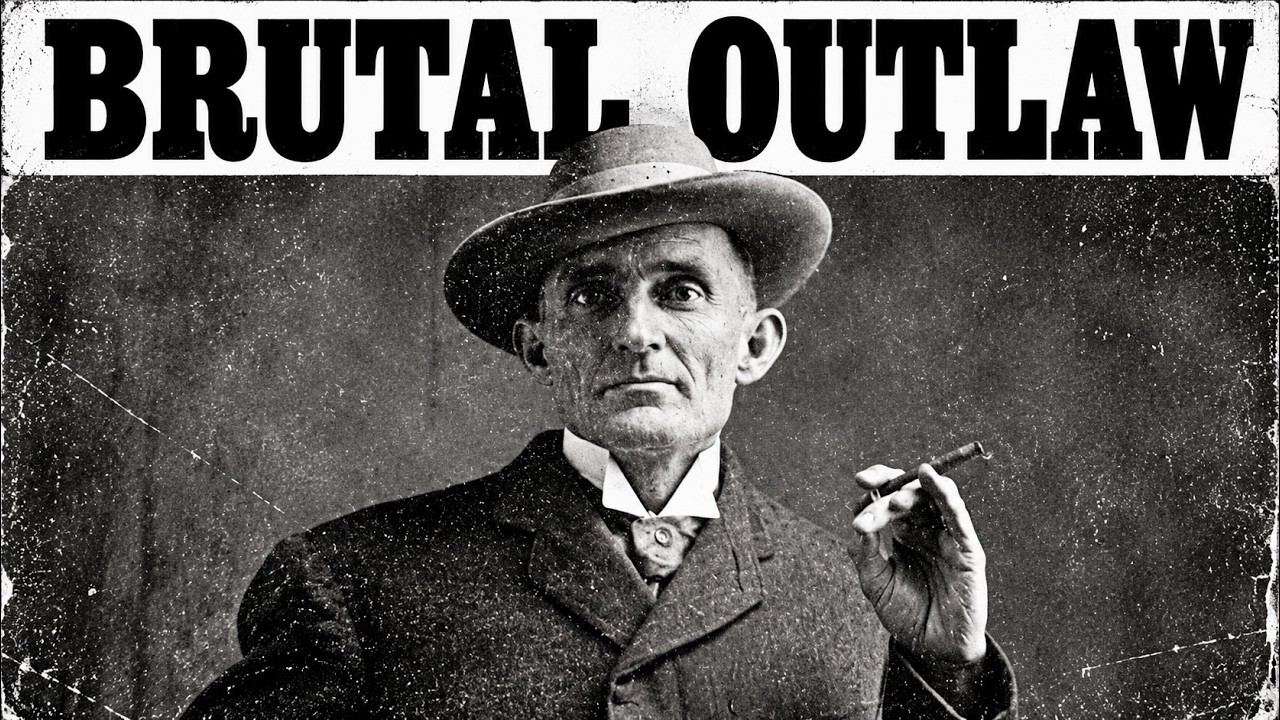
Baker and his companion were shot dead, their bodies put on display, and Thomas Orr—the school teacher Baker had once tried to hang—later collected part of the reward. The man who had slipped away from soldiers, patrols, and arrest attempts for years was killed not by the United States Army, but by a small group of neighbors who knew he would come home. Cullen Montgomery Baker was probably born on June 22nd, 1835, in Weakley County, Tennessee. His family moved to Texas while he was still a child, eventually settling in Cass County near the Arkansas line.
That corner of Texas was not the open desert of later Western movies. It was timber country, cut through by rivers and creeks, dominated by the thick, wet bottomlands of the Sulfur River. It was difficult ground for anyone trying to hunt a fugitive, and later writers would give Baker the nickname “the Swamp Fox of the Sulfur. ” But there was nothing romantic about the first part of his record.
According to the Texas State Historical Association, Baker was known as a hard drinker and a violent, quarrelsome man while still young. He married Mary Jane Petty in January 1854. Nine months later, he killed his first man. That timing matters, because it destroys one of the easier explanations for what came later.
Baker did not become violent because the Civil War ruined him. His first killing came years before the war started. Mary Jane died in July 1860. Baker killed another man and returned to Texas.
When the Civil War began, he entered Confederate service, but even that part of his biography is messy. Military records place him in more than one cavalry unit. One record lists him as a deserter in January 1863. Another says he left sick on the Arkansas River and was discharged for disability after being paid what he was owed.
Later stories turned those years into something much larger. Baker was described as the leader of a feared guerrilla band that preyed on anyone who crossed him. Some accounts make him sound like a Confederate partisan chief operating across the Texas-Arkansas border. The documentary evidence does not support all of it.
That does not mean Baker was peaceful during the war. It means the cleanest version of the legend was written after the fact, when frontier writers were trying to turn a complicated killer into a character readers recognized. In July 1862, Baker married Martha Foster. When the war ended, he tried for a time to make a living in the ferry business in Cass County.
If his life had stopped there, Cullen Baker might have become another violent local man whose name disappeared into county records. Then Martha died on March 1st, 1866. Most accounts say Baker was deeply affected. Two months later, he proposed to Martha’s sister, Belle Foster.
Belle did not marry him. She married Thomas Orr. That decision created one of the relationships that would shape Baker’s final years. Orr became a community figure, teacher, and political activist.
Baker became his enemy. But this was no longer only a family feud. The Civil War was over. Slavery had been abolished, and the federal government was trying to reconstruct the former Confederate states.
In northeastern Texas, that meant federal troops and the Freedmen’s Bureau entered communities where many white residents bitterly opposed them. The Freedmen’s Bureau was responsible for helping formerly enslaved people negotiate labor contracts, access courts, find family members, establish schools, and defend basic legal rights in a system that often refused to protect them. In Bowie and Cass counties, a small federal presence was trying to enforce that authority across a large area. Baker focused his violence on that new order.
The Texas State Historical Association says he harassed and killed Freedmen’s Bureau employees and their clients. His group was credited with the murder of two Bureau agents, one in Texas and another in Arkansas, along with the killings of numerous Black men and women. That is the part of the story the fast-draw version of Cullen Baker tends to blur. He was not simply an outlaw who robbed travelers and traded shots with lawmen.
His violence became tied to Reconstruction, to race, and to the attempt to keep federal authority from functioning in northeastern Texas. In July 1867, federal troops were stationed in Bowie County under William G. Kirkman, a former Union officer serving as a Freedmen’s Bureau agent. The detachment was small.
It was large enough to make federal authority visible, but not large enough to control the county. Kirkman tried to arrest Baker. Baker escaped. A soldier was killed and others were wounded.
The failed arrest had an effect that officers probably understood immediately. Every time Baker got away, his reputation grew. Every local person willing to hide him, feed him, warn him, or simply remain silent made the next arrest harder. He did not need an organized army.
He needed terrain, sympathizers, and enough fear that witnesses kept their mouths shut. In December 1867, Baker attacked the family of Howell Smith. The reported reason was the family’s relationship with the Black laborers they employed. Baker was wounded during the violence, but neither local citizens nor federal forces captured him.
By the middle of 1868, he was back. Now he was leading a collection of outcasts and killers across the border country. Federal officials saw him as more than a local criminal because his attacks made it harder for Reconstruction authorities to work at all. And the violence was escalating.
William Kirkman continued his work as a Bureau agent despite the hostility around him. Local civil authorities eventually indicted him for murder after another clash involving Baker’s men. A unionist reported that the pressure had left Kirkman unstable, and the Bureau ordered him to close his office and report to headquarters. He never made it out.
On October 7th, 1868, the day Kirkman was supposed to leave Bowie County, he was shot and killed. The murder was officially attributed to unknown persons. Baker was widely suspected, and the Texas State Historical Association notes that he later boasted about committing it. Kirkman’s death sent a blunt message.
The federal government could station soldiers in the county, appoint an agent, issue orders, and open an office. It still could not guarantee that the man carrying those orders would survive the ride home. The soldiers supporting Kirkman’s office were removed, and no other Freedmen’s Bureau agent was stationed in Bowie County. The weakness of federal authority in the region made Baker harder to confront than the word “outlaw” suggests.
A sheriff could arrest an ordinary suspect who lived openly in town. Baker moved through a countryside where a small detachment of soldiers might be responsible for an area too large to watch, and where some white residents saw the federal officers themselves as the enemy. An arrest party could not assume the nearest farmer would help. A warning could travel faster than the soldiers.
A horse could be waiting behind a house. A creek bottom could hide a man who knew the ground. And if witnesses feared retaliation, even a successful arrest might not produce a conviction. The Freedmen’s Bureau faced an even harder problem.
Its agents were trying to enforce labor contracts, investigate violence, and protect the rights of formerly enslaved people in communities where local institutions could be openly hostile to that mission. Killing an agent did more than remove one man. It warned every freed family who had considered bringing a complaint to the office that federal protection might not reach them when they went home. That is why Baker’s violence had consequences beyond his own body count.
Fear could shut down a legal process without anyone passing a new law. The point was not that he had outdrawn another famous gunfighter. The point was that violence had helped shut down a federal office intended to protect newly freed people in a county where hundreds of miles of roads, farms, creeks, and woods separated any officer from immediate help. Baker’s local support was complicated.
Some white residents despised him. Others viewed him as a defender against Reconstruction and federal military rule. That political sympathy did not make his violence less criminal, but it helps explain why he could keep moving through the region after authorities had every reason to arrest him. He was useful to people who wanted the same institutions weakened, even if they would never personally ride with him.
And then there was Thomas Orr. The family rivalry had never disappeared. Orr had married Belle Foster, the woman Baker wanted to marry after Martha’s death. Baker reportedly tried to hang Orr at one point.
That detail tells you what Baker’s final enemy understood about him. Orr was not chasing a distant celebrity outlaw. He was dealing with a man who knew his family, knew the roads, knew the houses, and had already tried to kill him. By December 1868, Baker’s gang was coming apart.
A band built around fear and personal loyalty is strong only while its members believe staying together keeps them alive. Once the rewards rise, patrols increase, allies disappear, and private enemies know where to wait, the same network becomes a liability. Baker returned toward home in Cass County. That was the weakness his enemies needed.
He could evade a military patrol by disappearing into river country. He could avoid a courthouse by never entering town. He could ride away from a posse before it knew which trail to follow. But eventually, a fugitive has to sleep somewhere.
He has to eat. He has to trust someone enough to enter a house. On January 6th, 1869, Baker and a companion named Lee Rains arrived at the Foster home. This is where fact and folklore become tangled again.
The most famous story says the men were given poisoned whiskey. Strychnine weakened them, and once they were helpless, Thomas Orr and others opened fire. It is a perfect Western story because it gives Baker an ending that matches his legend. A feared gunman could not be beaten fairly, so his enemies had to poison him first.
But historians do not treat that detail as settled. The Texas State Historical Association calls the strychnine story a legend. Other accounts describe a planned ambush without requiring poison at all. What survives more securely is the basic outcome.
Orr and a small group of neighbors moved against Baker. Baker and his companion were killed. Orr received part of the reward. The man who had survived repeated efforts by soldiers and officers did not die in a grand showdown with the United States Army.
He died close to home, surrounded by people who had lived with his violence. He was about 33 years old. He had spent much of his adult life building a reputation that depended on people believing he was too dangerous to challenge. But reputations work only while fear keeps everyone moving in the same direction.
By the end of 1868, the federal government wanted him. Local enemies wanted him. His gang no longer protected him. And the people closest to his home knew where he would eventually appear.
Even after death, the story kept changing. Writers turned Cullen Baker into one of the early gunfighters of Texas. His supposed quick draw became more important. His Confederate associations were polished.
His violence could be reframed as resistance to occupation, or reduced to the familiar image of a reckless outlaw who simply loved fighting. That version travels well because it looks like the Old West people expect. A lone killer with a revolver is easy to package. Reconstruction is not.
The real setting forces harder questions. Who controlled local law after the Civil War? Who could rely on a jury? What did federal authority mean in a county where its officers could be murdered?
What happened to freed people when the institutions created to protect them could be driven out by violence? Those questions make Baker harder to romanticize. They also explain why the title “outlaw” is not enough. He committed killings before the war.
He moved through irregular Confederate service. After the war, he became part of a violent campaign against federal Reconstruction personnel and Black citizens. His personal feuds overlapped with political conflict. His enemies finally answered private violence with private violence of their own.
There was no clean line separating outlaw history from Reconstruction history in Cullen Baker’s world. That may be why he never became a household name like Jesse James or Billy the Kid. Jesse James could be turned into a bank robber story. Billy the Kid could be turned into a young fugitive story.
Both could be photographed, mythologized, and placed inside a familiar chase between outlaw and lawman. Cullen Baker’s record resists that treatment. If you tell only the gunfighter version, you leave out the people he targeted. If you tell only the Confederate version, you ignore that his violence began before the war.
If you tell only the political version, you miss the personal feuds, drinking, and killings that followed him regardless of who controlled the government. And if you repeat every later story as fact, you end up with a character more useful to a dime novel than to history. The documented Baker is disturbing enough. He lived in a region struggling through the collapse of slavery and the attempt to build a new legal order.
He exploited weak institutions, local sympathy, difficult terrain, and fear. Men sent to arrest him were wounded or killed. Black citizens and federal agents were among the people his group targeted. A federal office effectively disappeared from Bowie County after its agent was murdered.
Then the same local world that had allowed Baker to survive finally closed around him. Thomas Orr did not need to find him hundreds of miles away. Baker came back into the network of families and grudges where everybody knew everybody. The reward helped.
The feud helped. Baker’s shrinking gang helped. And on January 6th, 1869, his luck ended. Maybe the strychnine story is true.
Maybe it grew because later writers needed an explanation for how such a feared man could be caught off guard. Either way, the result was the same. The outlaw who had repeatedly escaped organized authority was killed by a small group of neighbors. And the part of his story worth remembering is not how fast he could draw a revolver.
It is what happened in a place where violence could become political power, where a fugitive could weaken the institutions trying to protect freed people, and where the final answer to years of failed arrests was another killing outside a courtroom. Cullen Baker was not erased because the West had nothing to say about him. He faded because the true story does not fit comfortably inside the legend the West preferred to remember.
