The court ruled that Simone Rizzo De Cavalcante—Sam the Plumber, as the newspapers liked to call him—had to keep testifying before the State Commission of Investigation. It was his seventeenth time answering questions since the original subpoena had landed back in 1973, and the legal back-and-forth over whether he could be compelled to talk had finally reached its end. The decision was a footnote in New Jersey jurisprudence, a small paragraph in the back pages of the state section, and yet it closed a chapter that had been running for nearly a decade. For anyone who knew the story behind the story, the ruling was the last official act in a drama that had begun thirty years earlier, in a plumbing supply office in Kenilworth, New Jersey, where the FBI had planted a microphone and accidentally recorded the blueprint for the most influential television drama of its generation.
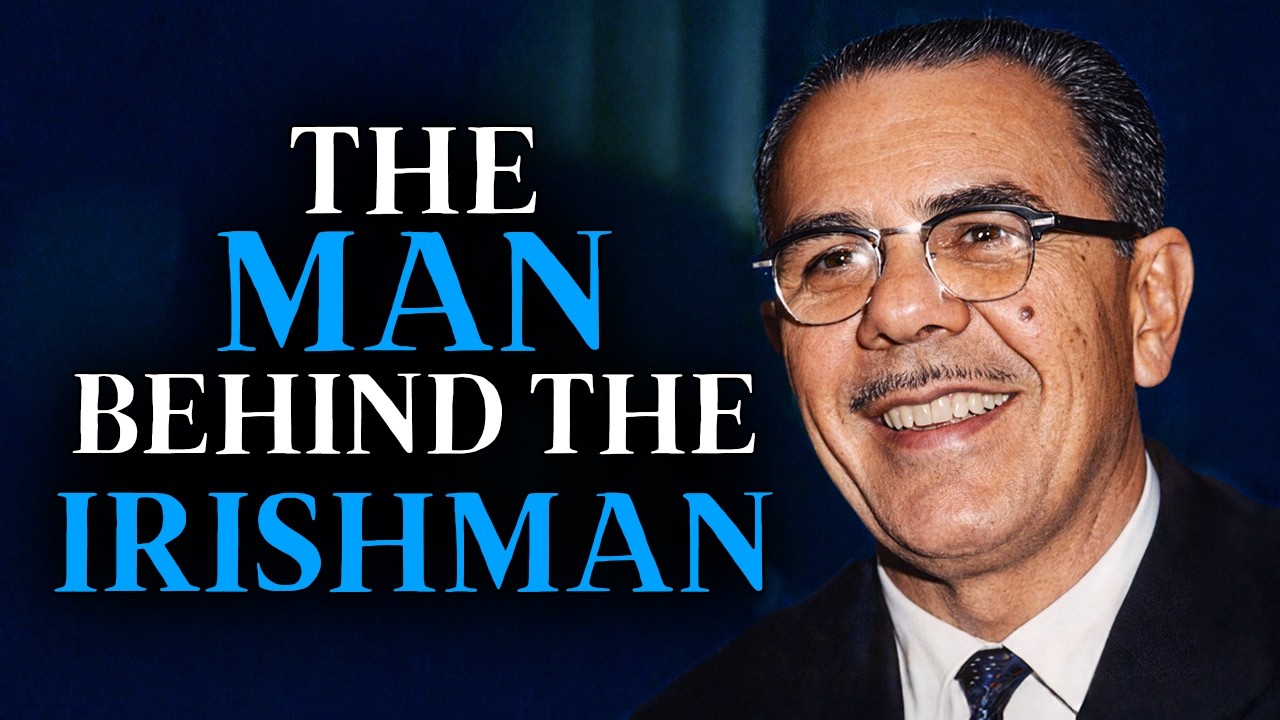
Before HBO had lit a single episode, before James Gandolfini ever sat down on that therapy couch, before Tony Soprano ever fed those ducks in his swimming pool, the FBI already had the whole thing on tape. Not a script, not a pitch. A real mob boss in a real office in New Jersey, complaining about money, about respect, about other bosses, about the crushing weight of running a criminal empire that nobody outside the underworld seemed to take seriously. The Sopranos wasn’t just inspired by real life.
In ways that would genuinely disturb you, it basically was real life. Here’s the thing about the American Mafia in the middle of the twentieth century. Everyone knew the names at the top. Carlo Gambino.
Vito Genovese. Joe Bonanno. These were the men the newspapers wrote about, the men J. Edgar Hoover reluctantly admitted existed after decades of pretending they didn’t.
The five families of New York were the sun around which every other organized crime operation orbited. And then there was Sam De Cavalcante. Simone Rizzo De Cavalcante was born in 1913 in Trenton, New Jersey. His family was Sicilian, which mattered enormously in a world where bloodlines were resumes.
He grew up around the edges of organized crime the way a lot of first-generation kids did in that era. Not thrust into it overnight, but drawn toward it gradually, the way water finds a crack in concrete. By the time he was a young man, Sam had figured out what most smart guys in his position figured out eventually. The fastest path to money and respect ran directly through the mob.
But Sam De Cavalcante wasn’t operating in New York. He was in New Jersey, and in the rigid hierarchy of the American underworld, that made all the difference. The De Cavalcante family, also known sometimes as the Kenilworth mob or the Elizabeth mob, depending on which law enforcement file you’re reading, was one of the smaller independent families in the country. Not a satellite of the New York families technically, but not quite their equal either.
Think of it like a regional franchise that the corporate office tolerated but never fully respected. Sam ran legitimate businesses alongside the rackets. The most famous of these was a plumbing and heating supply company called Kenilworth Heating and Air Conditioning. It was a real business.
He really did sell pipes and boilers. He just also happened to run gambling operations, loan sharking, labor racketeering, and whatever else turned a profit in northern New Jersey. That combination—the legitimate businessman who was also a mob boss, who complained about work, who worried about his reputation, who had people he liked and people he couldn’t stand—is exactly the template David Chase would use thirty years later to build Tony Soprano. But we’ll get to that.
What you need to understand about Sam De Cavalcante first is that he was genuinely capable. He wasn’t a figurehead. He wasn’t a puppet for the New York families. He had built something real in New Jersey, had earned his position through a combination of violence, intelligence, and an almost compulsive need to be liked and respected by people who were constitutionally incapable of showing either.
He was a boss. He just wasn’t treated like one. And that gap between what he believed he deserved and what he actually received drove him absolutely crazy. That frustration, it turns out, was also extraordinarily well documented.
In 1964, the FBI did something that would change the course of both law enforcement history and, improbably, American television. They planted a microphone inside Sam De Cavalcante’s plumbing supply office in Kenilworth, New Jersey. To appreciate how significant this was, you have to understand where the FBI was in 1964. The agency had spent most of the previous two decades under J.
Edgar Hoover insisting, absurdly, that there was no such thing as a national organized crime syndicate. The mob, according to Hoover, was a local problem, a city problem, not the Bureau’s concern. It took the 1957 Appalachian meeting, where New York State Police stumbled onto over sixty mob bosses gathered at a farmhouse in upstate New York, to finally drag the FBI into the reality that everyone else had already been living in. So by 1964, the Bureau was playing catch-up.
They were bugging offices, tapping phones, building files on families they’d pretended didn’t exist for decades. When they planted that microphone in De Cavalcante’s office, they were expecting to hear coded conversations about gambling routes, careful whispered discussions about money, the kind of guarded, clipped dialogue you’d expect from professional criminals who knew they were being watched. What they got instead was Sam De Cavalcante running his mouth for six years. Not in code, not in whispers.
Sam talked in full sentences, with opinions, with complaints, with gossip, with laughter, with the casual confidence of a man who believed, incorrectly as it turned out, that his office walls were keeping secrets. He discussed business. He discussed murders. He discussed the internal politics of the Commission.
He discussed other bosses by name, with assessments that ranged from respectful to absolutely withering. He discussed his own family’s finances. He discussed personal grievances in the kind of detail that would make a therapist’s head spin. The FBI agents monitoring the bug reportedly could not believe what they were hearing.
One agent described the recordings as the single most valuable source of intelligence about the internal workings of the American Mafia that the Bureau had ever obtained. And remember, this was before Henry Hill, before Sammy the Bull Gravano, before Nick Calabrese. The De Cavalcante tapes were, at the time, unprecedented. Over the course of the bug’s operation, agents recorded over two thousand conversations in the space of about a year and a half.
That’s not surveillance. That’s a podcast. And Sam was the host, the producer, and apparently unaware he had an audience. The transcripts that eventually became public, first through a 1969 New York Times report, then through various court proceedings, read like nothing law enforcement had ever seen before.
Here was a mob boss discussing the mechanics of organized crime with the same casual frankness a man might use to complain about his commute. Murder was discussed the way other men discuss personnel decisions. Corruption was discussed the way other men discuss networking. The whole violent, illegal, meticulously organized structure of the American underworld, laid out in plain conversational English, recorded on tape, sitting in an FBI evidence locker in New Jersey.
The agents had struck gold. Sam De Cavalcante had no idea. If the tapes had only captured Sam discussing his own family’s business, they would have been valuable. What made them extraordinary was that Sam couldn’t stop talking about everybody else.
On Carlo Gambino, considered by many to be the most powerful mob boss in America at the time, Sam was respectful but measured. He acknowledged Gambino’s power and his intelligence. But you could hear in Sam’s voice, even through the transcripts, a kind of resentment that a man he considered his equal was seated at the head of a table Sam wasn’t invited to. The Commission.
That’s what really ate at Sam De Cavalcante. The Commission was the governing body of the American Mafia, established by Lucky Luciano in the early 1930s to resolve disputes between families and set policy for the entire organization. Only the most powerful families had permanent seats. New York dominated it.
Chicago had a voice. And Sam De Cavalcante, boss of a New Jersey family with real power and real money and real men, sat outside looking in. The tapes captured Sam making his case, sometimes to visitors, sometimes apparently just to himself, that New Jersey deserved more respect, that his family’s contributions to the larger organization weren’t being properly credited, that he was being treated like a regional manager when he had the resume of a CEO. And here is where it gets genuinely fascinating, because Sam wasn’t wrong.
His family was legitimate. His operation was real. His men were capable. But in the mob, respect wasn’t just earned through performance.
It was granted through relationships, through history, through the kind of deep political entanglement with the New York families that Sam simply didn’t have. He’d built something good. He just hadn’t built it in the right zip code. The tapes also captured Sam discussing Joe Colombo, discussing the internal dynamics of various New York families, discussing who was rising and who was falling, and who was, in his assessment, not up to the job.
He talked about labor unions and political connections and the economics of gambling with the fluency of someone who had spent decades at the center of it all. What emerges from hours of these recordings is a portrait of a man who was by any reasonable measure extremely good at a very specific and very illegal job, and who was perpetually, chronically frustrated that the people he most wanted to impress didn’t seem to notice. If that sounds like someone you’ve seen on television, that’s because it is. But let’s not get so caught up in Sam’s charm and his opinions and his Sopranos-adjacent complaints about respect that we forget what he actually was.
Sam De Cavalcante was a mob boss. And mob bosses in the world he inhabited ordered murders, discussed murders, facilitated murders, treated the ending of human lives as a management tool, a business necessity, an occasionally unfortunate but largely unremarkable feature of the work. The tapes captured this, too. The Joseph Sfera case is one of the clearest examples.
Sfera was a member of Sam’s own family who, according to Sam’s recorded conversations, had become a problem. The details of exactly what Sfera had done or was suspected of having done were discussed on tape with a kind of calm analytical detachment that would be chilling in any context, and is particularly chilling when you remember that Sam was talking about a man he knew personally, a man who had worked for him, a man who was about to be killed. Sam discussed the justification. He discussed the logistics.
He discussed it the way another businessman might discuss letting an employee go, with a kind of reluctant pragmatism, a sense that this was an unpleasant but necessary decision made and moved past. Sfera was killed. What the tapes revealed about the mechanics of mob violence wasn’t the theatrical brutality that movies tend to emphasize. It was something arguably more disturbing: the bureaucratic normalcy of it.
Murders in De Cavalcante’s world were approved the way contracts were approved. They went up the chain. They received authorization. They were carried out, and then everyone moved on.
The conversation on tape didn’t linger. Sam didn’t agonize. The decision was made, noted, and the discussion shifted to something else. This is important context for everything that follows.
Because when people talk about The Sopranos being humanizing, being sympathetic, being a show that made you root for a monster, what they’re really describing is this exact quality. The banality. The way violence and business and family and grievance all occupied the same mental space in these men’s heads without any apparent contradiction. Sam De Cavalcante wasn’t a cartoon villain.
He was a complicated, intelligent, funny, deeply flawed man who also ordered people killed. The tapes proved all of those things simultaneously. And that tension—funny and terrifying, charming and murderous, ordinary and monstrous—is the beating heart of Tony Soprano. David Chase has been careful over the years about exactly how much credit he gives the De Cavalcante tapes for inspiring The Sopranos.
He’s acknowledged New Jersey as a setting, acknowledged the real mob families there as general inspiration, occasionally cited specific cases. But the parallels between the recorded reality of Sam De Cavalcante’s life and the fictional world Chase created are so numerous and so specific that calling it coincidence requires a kind of willful blindness. Let’s start with the obvious ones. Tony Soprano was the boss of a New Jersey mob family, not a New York family, not Chicago.
New Jersey, existing in a complicated, resentful, subordinate-but-not-quite relationship with the larger New York families. Sam De Cavalcante ran a New Jersey mob family in exactly that position. The geographical specificity isn’t incidental. Chase chose New Jersey because New Jersey had a real story, and the real story was Sam.
Then there’s the therapy. Tony Soprano’s sessions with Dr. Melfi are famously the structural spine of the entire show. A mob boss in therapy, examining his anxiety, his family relationships, his anger, his fear of obsolescence, the weight of leadership in a world with no legitimate support structures.
Nobody in the real mob went to therapy. At least not that anyone’s admitted. But the De Cavalcante tapes contain something that functions as its emotional equivalent. Sam in his office, talking, processing, complaining about other bosses, about his family members, about people who didn’t show proper respect, about the gap between his self-image and his reality.
The tapes are, in a very real sense, Sam De Cavalcante’s therapy sessions, delivered to an FBI microphone instead of a licensed professional. The complaints about the New York families, the sense of being looked down on, of being a capable operator who never quite gets the recognition he deserves, run through Tony Soprano’s storyline for six seasons. It runs through Sam De Cavalcante’s tapes for six years. Same emotion, same frustration, same inability to just let it go.
Then there are the specific details that Chase has never fully explained. In the tapes, Sam De Cavalcante is recorded saying that he and his men watch The Untouchables, the old television show about Eliot Ness and Al Capone, and they see themselves in it. They identify with the gangsters. They talk about how the show gets things right and wrong about the life.
In The Sopranos, Tony and his crew famously watch and critique mob movies in exactly the same way, arguing about whether The Godfather is accurate, finding themselves reflected in fictional criminals, and having complicated feelings about it. The meta-awareness of real gangsters watching fictional gangsters—that’s in the De Cavalcante tapes decades before Chase wrote a single scene. Sam De Cavalcante, according to the tapes, also dealt constantly with the psychological burden of leadership in a world where he couldn’t tell anyone outside the life what he actually did. The isolation of it, the performance of normality, the legitimate business, the family life, the community standing, layered over a reality that bore no resemblance to the surface.
Tony Soprano’s entire psychological architecture is built on exactly this foundation. The man in the pool with the ducks. The man at his daughter’s school. The man at the barbecue.
And underneath all of it, the man who orders murders before breakfast. The De Cavalcante family members themselves have noticed. Anthony Rotondo, a De Cavalcante captain who later became a government witness, was reportedly shown episodes of The Sopranos and said, paraphrasing, “That’s us. That’s exactly us.
” And he didn’t mean it as a complaint. Chase built an entire show around a fictional family. He moved things around, invented characters, created storylines that have no direct real-world equivalent. The Sopranos is not a documentary.
But the emotional DNA of the show, the specific texture of what it felt like to be a mid-level mob boss in New Jersey in the second half of the twentieth century, the specific flavor of the resentments and the relationships and the violence, that came from somewhere. And the most documented somewhere available was a plumbing supply office in Kenilworth, New Jersey, where the FBI had very helpfully recorded everything. To understand why Sam De Cavalcante’s frustration with the Commission ran so deep, you have to understand what the Commission actually was and what having a seat at that table actually meant. Lucky Luciano established the Commission in 1931 after the Castellammarese War, the bloody internal conflicts that reorganized the entire American Mafia.
The Commission was meant to function as a board of directors for organized crime nationwide. It would approve major decisions, resolve disputes between families, and prevent the kind of all-out warfare that had just killed a significant number of people. The original members were the bosses of the five New York families plus Chicago and one or two others. Everyone else was essentially a tributary.
They operated under the Commission’s framework. They were expected to follow its rulings, but they didn’t sit at the table and they didn’t cast votes. Sam De Cavalcante was in that second category, and it drove him absolutely crazy. The tapes are full of Sam’s navigation of this reality.
He worked the relationships. He cultivated ties with the New York bosses, particularly Carlo Gambino, whose power and sophistication Sam genuinely admired. He made himself useful, serving as a mediator in disputes between other families, leveraging his independent status to broker agreements that a New York boss couldn’t make without appearing to take sides. Sam was good at this.
He was politically intelligent and genuinely respected as an honest broker by bosses who had reason to trust no one. But being useful isn’t the same as being equal. And the recordings make clear that Sam understood the distinction even as he worked constantly to blur it. He wanted a permanent seat.
He wanted New Jersey recognized as a full Commission family. He wanted the respect that he believed, with some justification, that his operation had earned. He never got it. And this dynamic—the capable operator in the shadow of larger powers, perpetually angling for recognition that the system was structurally designed to withhold—is, again, one of the defining tensions of Tony Soprano’s life on television.
Tony never quite gets out from under New York either. The relationship with Carmine Lupertazzi and later with Johnny Sack mirrors exactly the patronizing, transactional dynamic that Sam De Cavalcante described in his own recorded voice from across the river forty years earlier. The mob had a glass ceiling. Sam De Cavalcante spent his career pressed against it.
In 1969, the world Sam De Cavalcante had spent decades building began to come apart in a very specific and very public way. The FBI, armed with the transcripts from their years of recordings in the Kenilworth office, along with additional evidence gathered through the late 1960s, moved toward indictment. The tapes were extraordinary. They were also, depending on the exact legal question at hand, complicated as evidence.
The admissibility of material from warrantless surveillance was a live legal debate in this period, and the courts were still working out the rules. But the government had enough. More than enough. The 1969 indictment hit Sam on conspiracy charges related to his gambling operations.
It wasn’t a murder charge. It wasn’t the full architectural exposure of everything the tapes contained. But it was enough to end his run as an active boss. Sam pleaded guilty.
He was sentenced to prison. And with Sam removed from day-to-day operations, the De Cavalcante family entered a period of turbulence that it would never fully recover from. Now, here’s something that history sometimes glosses over. The De Cavalcante tapes were not immediately public.
They circulated within law enforcement. They informed investigations. They were referenced in court proceedings. But it wasn’t until the New York Times published excerpts in 1969 that the broader public got any sense of what the FBI had been sitting on.
And even then, the full picture took years to emerge, through subsequent court cases, through the gradual declassification of documents, through the work of journalists and researchers who understood what they were looking at. What the public eventually saw, and what law enforcement had known for years, was the single most complete recorded portrait of how the American Mafia actually operated from the inside. Not from informants. Not from outside observers.
Not from wiretaps on phones where people were naturally guarded. From a room where the boss talked freely, openly, and continuously for years. After Sam stepped away, the family went through a succession of leadership that never quite stabilized. The De Cavalcante family continued to operate, continued to be a factor in New Jersey organized crime into the 1980s and 1990s.
But it never recovered the coherence it had under Sam. He had been, in a very real sense, the whole operation. Take away the boss who was also the brain and the diplomat and the center of gravity, and what you have left is a collection of capable criminals without an organizing principle. Sam De Cavalcante died in 1997.
He was eighty-four years old. He had outlived most of his contemporaries, outlived most of the world he had built, and lived just long enough to see The Sopranos announced, though the show didn’t premiere until 1999. Whether Sam ever saw it, whether he watched it and recognized himself in the heavy man on the therapy couch in New Jersey, is not recorded. History, frustratingly, did not plant a microphone in his living room.
The legacy here is the genuine historical legacy of Sam De Cavalcante. Stripped of The Sopranos comparisons for just a moment, the De Cavalcante tapes represented a turning point in how American law enforcement understood and approached organized crime. Before those tapes, the FBI had theories, informants, surveillance photographs, financial records. What they didn’t have was the internal voice of the organization itself.
The way these men talked to each other. The decision-making process in real time. The hierarchy as it actually functioned rather than as investigators theorized it did. The tapes provided that.
And they informed not just the De Cavalcante prosecution, but the broader development of mob intelligence across multiple cities and families. Techniques refined on Sam’s office were applied elsewhere. The legal frameworks developed around the admissibility of this kind of surveillance shaped the RICO statute that would later be used to dismantle multiple families simultaneously. The years of recordings in that Kenilworth office contributed, in ways that are difficult to fully trace but impossible to deny, to the strategic shift in law enforcement that eventually brought down the five families in the 1980s.
Sam De Cavalcante never got his seat at the Commission table, but his voice, preserved on tape, ended up influencing organized crime history more than most of the men who did sit there. And then there’s the other legacy. The television one. The Sopranos premiered on January 10, 1999, on HBO.
It ran for six seasons and eighty-six episodes. It won twenty-one Emmy Awards. It changed American television drama permanently and irrevocably. Every prestige drama that followed—The Wire, Breaking Bad, Mad Men, every show that treated its audience as adults capable of handling moral complexity—owes something to the door The Sopranos kicked open.
And at the foundation of that show, the emotional DNA, the geographic specificity, the texture of a mob boss’s inner life rendered in extraordinary detail, was the sound of Sam De Cavalcante talking in his office in Kenilworth, New Jersey, not knowing anyone was listening. David Chase turned it into art. Sam De Cavalcante had already lived it as reality. The plumbing supply company boss who wanted respect he never quite received ended up, posthumously and indirectly, generating more cultural impact than virtually any mob boss in history.
Tony Soprano is one of the most recognizable fictional characters of the last thirty years. The real man he was partly based on is known only to crime historians and people who watch YouTube channels about the mob, which is a kind of irony Sam would have hated. He wanted to be known. He talked constantly about legacy, about respect, about how history would assess him and his operation.
He recorded himself, unknowingly, for six straight years trying to make his case. In the end, history remembered the version of him that wore James Gandolfini’s face. So let’s come back to where we started. Before HBO, before the therapy couch, before the ducks in the pool and the Carmela arguments and the Paulie Walnuts hair, there was a real man in a real office in New Jersey.
He ran a real criminal enterprise. He ordered real murders. He had real resentments about real men who didn’t give him the respect he believed he’d earned. He worried about money and loyalty and succession and what would happen to everything he’d built.
And the FBI heard all of it. Tony Soprano got six seasons and an ending that people are still arguing about. He got a cultural canonization that very few fictional characters ever achieve. He got to be the complicated, compelling, monstrous, sympathetic anti-hero that an entire generation of viewers watched through their fingers, rooting for him even when they knew better.
Sam De Cavalcante got a federal indictment, a guilty plea, a prison sentence, and a family that fell apart without him. One of them became a legend. The other one already was. The difference is that one of them had a writer and the other one had a wire.
That’s the story of Sam De Cavalcante. That’s the real Sopranos.
