The Apollo Theater was full on the night of March 8, 1941, and then it was quiet. The music did not fade; it stopped mid-note, a trumpet hanging in the air unfinished. A fork paused halfway to a mouth. Ice waited inside a glass that never clinked.
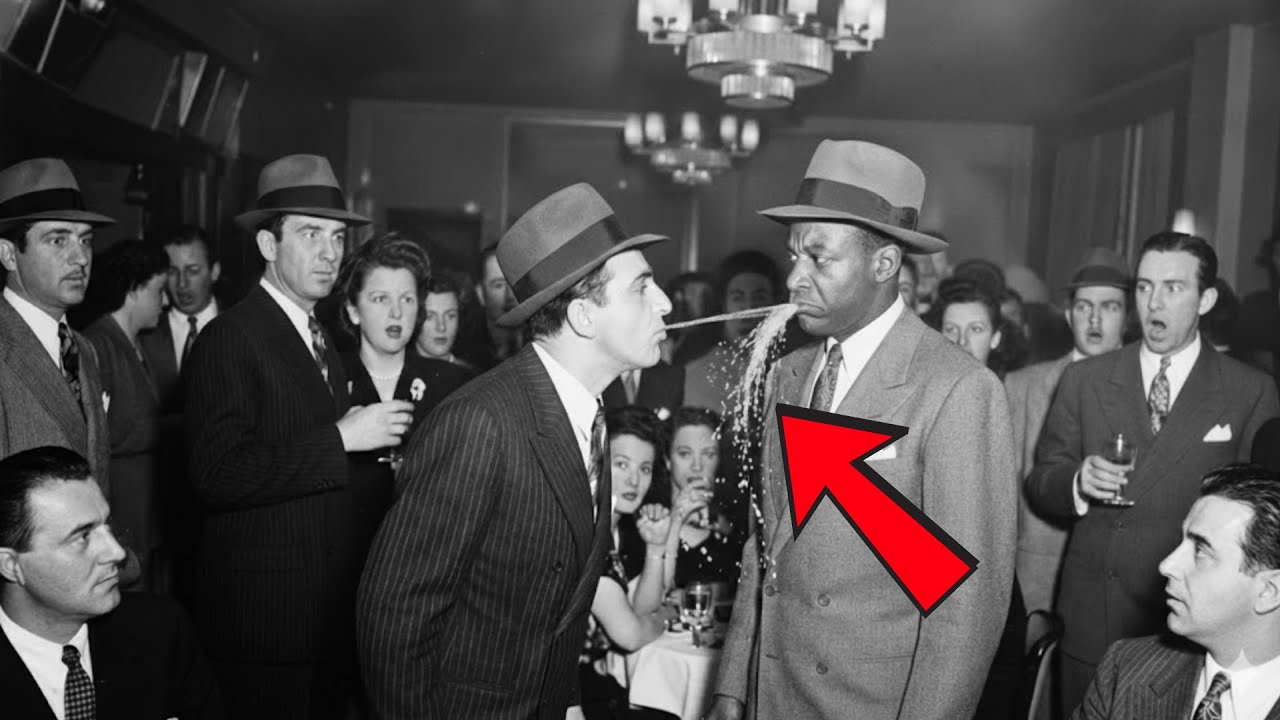
No one asked why, because everyone in the room felt the same pressure settle at the same time. Two hundred people sat inside the Apollo, and none of them were watching the stage anymore. Their attention shifted together toward the center aisle, quietly and instinctively, like a body reacting before the mind could intervene. At table 7, a man sat with his back against the wall, exactly where he always sat.
He had chosen that seat long before tonight, not for comfort, but for angles, exits, and certainty. From there he could see both entrances without turning his head. Nothing entered the room without passing his sightline. Bumpy Johnson did not look up when the room changed.
He did not scan faces or search for movement, because the room always reacted before it reached him. Power, when it was stable, announced itself through silence long before action. The crowd understood this without explanation. In Harlem, silence was not fear but compliance with a rule no one remembered being taught.
When a room like this went quiet on its own, it meant the law had already arrived. Several men who should have been here tonight were not. They were men who never missed Fridays, men who liked to be seen when things mattered. When men like that stayed away, it meant the room was about to test something dangerous, and they did not intend to be inside the answer.
A chair scraped against the floor, and the sound landed hard because it was the only sound left. A large man rose from a table closer to the aisle, neither rushing nor hesitating. Each step he took was measured, slow enough for everyone to count without trying. No one blocked him.
No hand reached out and no voice called his name, because resistance had already been weighed and dismissed. He walked straight toward table 7. He knew exactly where he was going, because this path had been chosen before he stood up. The insult did not arrive as a punch or a shove.
That would have been simple, predictable, almost respectful by comparison. Instead it came as something smaller, dirtier, and far more precise. Spit was not violence. It was humiliation designed to travel further than pain.
It landed exactly where it was meant to land, in full view of the room, in front of the woman seated beside him. No one mistook that detail as accidental. The man delivering the insult did not step back right away. He held the space and waited for the reaction everyone had been trained to expect.
He believed the next moment was already written. It was not. Bumpy Johnson did not stand. He did not speak.
He did not touch the man in front of him. He reached for his napkin instead, moving slowly and without urgency. One wipe, then another, followed by a careful fold that aligned the edges perfectly. The crowd noticed their own bodies before they noticed his.
Shoulders tightened. Breathing shifted. Hands gripped glasses, then loosened again. This was the moment where fights usually began, and blood was expected to follow.
But nothing happened. Bumpy looked up at last, his voice low and steady. He did not threaten, explain, or raise his tone. None of that was required.
He said only one thing, and he said it once. “Count to 50. ”
The words did not echo because they did not need to. Every person in the room heard them clearly and understood they were meant for everyone present, not just for the man standing there.
Time changed shape after that. Seconds felt heavier and shorter at the same time. The insult had already happened, and the response had been delayed. That delay was not mercy.
It was structure. The man who delivered the insult stepped back, uncertain for the first time. He had crossed something that should have triggered immediate violence, and instead he had been scheduled. The room no longer waited for a fight, because it understood a consequence was already moving.
At 11:33 the room understood this was no longer a confrontation. It was a process that would finish elsewhere, away from witnesses and away from noise. In Harlem, when time was named, it was never a suggestion. It was a warning.
To understand what had brought the room to that moment, one had to understand how Harlem lived in 1941. Across the ocean, a war was pulling young men into uniforms and promises that sounded larger than life. On these streets, hope and disappointment walked side by side, both asking for the same thing: money tomorrow, dignity today. Every morning Harlem woke up poor but organized.
People lined up for bread, for work, for rumors, for numbers written on scraps of paper. The city above pretended not to see it, but the city below ran on precision. The numbers racket was not gambling in Harlem. It was a daily ritual, a small tax on hope paid by people who had no access to banks that trusted them.
Pennies turned into dreams, dreams turned into rent, and rent turned into silence. Everyone understood the rules without reading them. You played your number, you waited, and you accepted the result. What kept the system alive was not luck.
It was trust that tomorrow would still arrive. Money moved through Harlem quietly. It did not flash or shout, because shouting attracted attention and attention attracted correction. That was where power lived in Harlem.
Not in guns, not in speeches, but in the ability to keep money moving when everything else stopped. Stability was the rarest currency in a place built on uncertainty. Bumpy Johnson understood this better than anyone. He did not announce his authority, because authority that needed announcing was already weakening.
He walked the streets like a man checking inventory, not like a man seeking praise. He stopped at the same bakery on 133rd Street, always at the same hour. He ordered coffee, left cash, and walked out without waiting to be thanked. The owner never saw his name on paper, but the lights stayed on every month.
Bumpy passed a school and left an envelope with no return address. Three children remained enrolled another semester, and no one asked why. In Harlem, questions were a luxury reserved for people with safety. Bumpy did not give speeches about loyalty.
He created conditions where loyalty became the practical choice. When people chose him, it was not out of fear, but out of arithmetic. Fear demanded constant reinforcement. Trust compounded quietly over time.
He invested in the second and let others exhaust themselves chasing the first. Men who ruled through fear had to be always present, always visible, always violent. Men who ruled through trust could afford to disappear for hours, sometimes days, without the structure collapsing. Harlem did not see Bumpy as a criminal first.
They saw him as a system that worked when official systems did not. Banks denied loans. Courts delayed justice. Police arrived late.
But Bumpy’s decisions arrived on time. This was not charity. It was strategy disguised as generosity. Every dollar placed correctly bought ten dollars’ worth of silence.
Outside Harlem, other men watched this with interest. Italian families saw numbers and revenue streams that refused to flow toward them. To them, Harlem was not a community. It was an account that had not been reconciled.
They did not understand why negotiations failed here. They offered muscle, titles, percentages, and threats. What they could not offer was legitimacy in a neighborhood that had already chosen its own banker. To the mafia, order meant standardization: same rules, same cut, same hierarchy, no exceptions.
Harlem, however, ran on exceptions, favors, and memory. That was the conflict no one said out loud. You could not convert loyalty into a ledger without breaking something first. And breaking something in Harlem did not produce compliance.
It produced witnesses. The phone call came from Italy three weeks before the night at the Apollo. It did not come from New York, and it did not come from the street. It came from a quiet room overlooking water, far enough away to make the voice on the line colder, not softer.
On the other end, a man listened without interrupting. He had already heard the numbers, the missed revenue, and the neighborhood that refused to be collected. What disturbed him was not the money itself, but what the money represented. A black neighborhood running its own system was an inconvenience.
A black neighborhood doing it openly was an embarrassment. In their world, embarrassment spread faster than fear and lingered longer. The instruction was precise and unemotional. Do not kill him, because death creates martyrs.
Break him in public, where witnesses will carry the message further than bullets. Public humiliation served a specific purpose: it told a neighborhood that its protector could not protect himself. It suggested that the system only worked until someone decided to test it. The plan took shape in rooms thick with smoke and paperwork.
Maps were spread across tables. Routes were traced. Names were spoken only once. The Apollo Theater became the obvious choice: too many witnesses to silence, too much reputation to contain.
If the system broke there, it broke in public. The man chosen to deliver the insult was not subtle by design. His value was in his size, his confidence, and his history of not stopping once he started. He was chosen because he looked like the kind of man consequences avoided.
He understood the assignment immediately: walk in, do it publicly, and walk out alive. What he did not know was that Harlem already knew his name. Not through rumors meant to impress, but through someone meant to be invisible. The janitor at the social club cleaned floors and emptied ashtrays every night.
He was old enough not to be questioned and quiet enough not to be noticed. Men spoke freely around things they believed did not listen. That night he heard everything: the plan, the timing, the place, and the confidence behind it. He heard laughter where caution should have been.
He did not react immediately. He waited until the room emptied and the floor went quiet again. Then he walked into the rain carrying information heavier than money. The back door at Smalls Paradise opened without hesitation.
No one asked why he was there or what he wanted. In Harlem, urgency outranked status. Upstairs, Bumpy Johnson listened without changing expression. He did not interrupt, ask questions, or demand proof.
He already understood what a public insult was meant to do. There were two options, and Bumpy saw both immediately. End it before it began, or let it happen and decide how it ended. One solved a problem.
The other solved a pattern. Bumpy had never been interested in solving problems, because problems returned under different names. Patterns repeated until they were finished correctly. Stopping this quietly would only invite another test, a louder one, a cruder one, designed to force a response.
Silence now would be read as weakness later. So he chose the longer path, the one that looked passive to men who mistook patience for hesitation, the one that ended questions instead of creating them. He told the janitor to forget what he heard. The money he gave him was not payment but insulation.
From that moment on, the plan belonged to Bumpy alone. For the next three weeks, Harlem felt unchanged. That was how preparation worked when it was done properly. Nothing moved on the surface.
Behind closed doors, pieces slid into position. Bumpy studied the man who would insult him: how he moved, how he thought, what he believed about power. Most of all, what he believed about humiliation. The man believed humiliation could not be undone; once delivered, it lived forever.
Bumpy agreed with him on that point. The mistake was believing humiliation must be answered immediately. Bumpy believed it must be answered completely, and completely took time. Three rules governed everything that followed.
The first rule: never react, always respond. Reaction was emotional and immediate. Response was calculated and arrived only when it could no longer be interrupted. Reaction satisfied the moment but exposed intent.
Response delayed satisfaction in exchange for leverage. That was why Bumpy listened more than he spoke. He allowed men to explain themselves fully, to show confidence, arrogance, or impatience without being challenged. By the time they finished talking, they had already stepped where he needed them to stand.
He treated disrespect as data, not provocation. Most men struck too early and destroyed the pattern they could have used. Bumpy waited until the pattern completed itself. By the time he responded, the argument was finished.
The second rule: retaliation existed only to teach. Pain by itself taught nothing permanent. Men recovered from pain and returned with explanations, excuses, and reinforcements. A lesson must remove the desire to test, not merely punish the act.
The purpose was not to hurt the offender. It was to inform everyone watching what the boundary actually was. When the audience understood the rule, repetition became unnecessary. This was why Bumpy never retaliated privately for a public offense.
Public lessons traveled without effort and required no follow-up. A lesson had to be simple enough to survive retelling. Excessive force weakened a lesson; it shifted attention from the rule to the spectacle and created sympathy for the offender. Proportion kept the message defensible even to those who disliked it.
Men feared unpredictability briefly. They feared consistency forever. The third rule: make the message last. A response that faded guaranteed another test.
Temporary consequences produced temporary obedience. Permanent memory produced long-term order. Bumpy was not interested in obedience that needed refreshing. A lasting message removed uncertainty completely.
One complete response was more convincing than a series of partial ones. Men did not fear what they could explain away. They feared what fit too cleanly to dismiss. Precision unsettled more deeply than brutality.
This was the difference between violence and authority. Violence demanded attention every time. Authority worked best when nothing needed to happen again. By the night of the Apollo, these principles were no longer philosophy.
They were procedure. Marcus came in through the back door just after midnight. He did not knock loudly or rush his steps. His coat was damp from the rain.
He stood where he was told without asking why. He spoke the way men speak when they know information is dangerous: dates, places, names, and timing delivered without emphasis or opinion. No drama in his voice, only sequence. Bumpy listened without interruption.
When Marcus finished, the room did not change. No one reacted. No chair moved. No order was given.
The information had landed and was being weighed. Marcus waited, because waiting was part of the exchange. He understood that if questions came, they would come later. Bumpy finally looked up, not at Marcus, but past him.
He already knew what the message meant. There were two ways to handle what was coming. The first was simple and efficient: end the problem before it reached the public. One call, one movement, and the night at the Apollo became ordinary again.
But that option solved the man. It removed Vincent before he performed the role assigned to him, yet it left the idea untouched and available for reuse. Ideas returned when they were not corrected properly. Another messenger would come louder or cruder, designed to force a response.
The test would repeat until it succeeded. The second option was slower and far more dangerous. It allowed the insult to happen exactly as planned. It accepted public humiliation in exchange for control over what followed.
This option did not protect pride. It protected structure. It shifted the focus from the insult itself to the response that would redefine the rules. Bumpy chose the option that ended all future tests, not just this one.
He told Marcus the information never existed. The money he gave him was not payment but insulation. Marcus left the same way he entered, quietly, carrying nothing that could be questioned. From the outside, nothing changed.
Harlem moved through its days as it always had, with familiar routines and predictable rhythms. Behind closed doors, decisions were not rushed. No orders were shouted. No threats were issued.
The plan depended on restraint. Bumpy would sit at his usual table and do nothing that looked unusual. His stillness would be mistaken for tolerance. Vincent would arrive believing the room was safe.
He would believe the insult was complete once delivered. He would believe walking away was the victory. That belief was essential. A man who thought he had won did not protect himself properly.
Confidence loosened discipline faster than alcohol. Bumpy intended for Vincent to leave the Apollo alive. That detail was not mercy. It was design.
The real response could not begin inside the theater. Too many eyes, too many stories, too many versions. The lesson had to unfold elsewhere. When Vincent walked out, the room would exhale.
People would believe the danger had passed. That belief would be shared, repeated, and trusted. That was the moment Bumpy had chosen. Not the insult.
Not the silence. But the certainty that followed. The plan did not begin with movement. It began with selection.
Three men were chosen because each solved a different problem, and none of them overlapped. Juny Bird was the engineer. He did not rush and did not raise his voice, because speed and volume distorted outcomes. He measured angles, distances, and timing the way other men counted money.
Illinois Gordon was the weight. When force was required, it arrived without discussion and left without trace. He existed to make sure hesitation never survived contact. Raymond Quick Lewis was the read.
He watched faces longer than hands and listened to pauses more than words. Fear revealed itself to him before men understood they were afraid. None of them were exceptional alone. Together they removed uncertainty.
That was the only purpose of assembling them. No speeches. No formal orders. Each man understood his role because the structure was familiar.
Familiarity was what made the plan quiet. They did not meet together. They did not rehearse in one place. Separation kept the work clean and the timeline intact.
Juny began with location: not where the response happened, but where it became irreversible. He looked for a place that did not attract attention by existing. The building had to be already forgotten, empty long enough to stop drawing questions, but solid enough to hold weight and sound. Light mattered as much as walls.
Too much created witnesses. Too little created mistakes. Exits were counted twice: one for arrival, one for removal, and one that would never be used. Time was treated as material.
Minutes were assigned purpose, not guessed at. Illinois handled access. He studied streets the way boxers studied opponents: traffic patterns, patrol habits, the moments when neighborhoods turned inward. He identified where a car could stop without stopping, where a door could open without being noticed, where a body could disappear without the city reacting.
He did not ask why a route was chosen. He only confirmed whether it held under pressure. If it did not, it was discarded without debate. Raymond studied the man, not his reputation, but his habits.
Confidence left patterns that fear never did. Vincent believed humiliation ended conflict. That belief shaped his posture, his timing, and his exit. Raymond tracked those expectations and marked the gaps they created.
A man who believed he had won did not check behind him. He did not question friendly space or empty streets. The trap was not force-based. It was expectation-based.
Every step relied on the target doing exactly what he believed was natural. Once the roles were clear, Juny drew the map. Not a city map, but a sequence. Seven points arranged to make sense without explanation.
Each point was chosen for visibility, not proximity. The purpose was not efficiency, but narrative. Stories moved along routes that felt inevitable. The city would connect the points on its own.
No instructions would be needed. Rumor would supply the logic faster than police ever could. These locations were symbols before they were addresses. They turned geography into language.
Timing was finalized last: not the start, but the interval. What happened in between was where meaning accumulated. Fifty minutes was not chosen for effect. It was chosen because it fit the movement required.
Nothing about the plan looked dramatic from the outside. Drama attracted attention before control was secured. Each man left with his portion complete. No one carried the whole picture.
Completion belonged to the structure, not the individuals. By the time the night arrived, there were no adjustments. Adjustments created hesitation. Hesitation created witnesses.
Vincent would walk the route already written for him, not because he was followed, but because he believed it was free. Freedom was the most reliable guide. He would not be chased. He would not be warned.
He would simply arrive where the plan required him to be. The opponent was not being watched. He was being scheduled. Inside the house, the quiet was different from the street.
No music, no witnesses, no men waiting for instructions. The lights were low, not for mood, but for habit. Bumpy set his hat down where it always went and loosened his coat without looking up. His wife did not ask where he had been.
She did not ask what would happen tomorrow. She had lived long enough beside him to recognize the weight he carried home. She saw it in how he moved slower than usual. She heard it in the silence he did not fill.
She poured a drink he did not ask for. He accepted it without comment, because refusing would have been an answer. She told him the house felt different. Not unsafe, not threatened, just altered.
As if tomorrow had already arrived and left its mark. She asked him what the night would make him. That question mattered more than what it would do to anyone else, because outcomes faded, but identity remained. The cost, she feared, was not violence, but permanence.
He told her he did not believe in hatred. Hatred burned too fast and left mistakes behind. What he believed in was protection. Protection required decisions others would never thank you for.
It required becoming the thing that kept danger elsewhere. He said this without pride, without defense. She listened and understood exactly what he was saying. Not that he was right, but that he saw no alternative.
She told him not to let it become personal: not anger, not memory, not satisfaction. She told him to make it structural, something that did not need to be felt again. He agreed without hesitation. If this was done, it had to be clean enough to never be revisited.
She asked him if he knew what he was risking. Not his life, not his position, but the boundary between who he was and what he did. Boundaries, once crossed, rarely returned to their original place. He told her he had counted that cost already.
That was why the number mattered. Not because it was dramatic, but because it was fixed. She asked him if 50 was enough. Enough to end it.
Enough to hold. Enough to last. He told her 50 was not a number. It was a limit.
A promise that once made would not require repetition. She stood and straightened his collar. The gesture was careful, deliberate, and final. There was no kiss, because affection would have softened resolve.
At the door he paused without turning around. Not to look back, but to mark the moment. She told him to come back the same man, not unchanged but intact. The request was unreasonable, and they both knew it.
He left without answering. Answers would have suggested uncertainty. Silence preserved intention. The Apollo Theater filled the way it always did on a Friday night.
Light settled into corners. Music softened the edges. People leaned into the illusion that this was just another evening. Ella Fitzgerald stood under the lights with the band behind her.
The manager watched the floor. The waiters moved between tables, and the crowd breathed in rhythm with the music. None of them came to testify. Yet every one of them would remember this night.
The doors opened without warning. Cold air cut across the floor, and the sound landed harder than a shout. Heads turned before anyone decided to look. Vincent entered with confidence that did not ask permission.
His steps were slow enough to be noticed and heavy enough to be felt. He carried no weapon except certainty. The men behind him made no effort to blend in. Their presence was deliberate.
They wanted the room to understand who had arrived. Vincent did not scan the room. He already knew where he was going. The band faltered first.
A note stretched too long, then collapsed. Sound thinned out until footsteps became the loudest thing in the room. Conversation died without instruction. Forks stopped halfway to mouths.
Glasses remained lifted without reaching lips. Silence arrived not because it was ordered, but because it was expected. Vincent stopped at the table and looked down. He did not introduce himself.
Introductions implied equality. Bumpy did not look up immediately. He finished what was on his plate with deliberate care. Time slowed to the pace he chose.
Vincent spoke loudly enough for the room to hear. His words were not complex and they were not subtle. The message was humiliation delivered cleanly. He leaned forward.
The movement was practiced, rehearsed in rooms that did not resemble this one. His confidence peaked where his caution should have begun. The spit left his mouth and crossed the space between them. It landed where it was meant to land, slow and visible.
The sound was small. The effect was not. The room did not react. No one gasped.
No one shouted. No one moved. Everyone waited for the reflex they believed they understood. Bumpy raised one finger.
The gesture was small enough to be missed by anyone not watching closely. Those who knew him saw it immediately. The men who were about to stand did not. The men who were about to reach did not.
Motion froze where it was. Bumpy reached for his napkin. He wiped his face once, then folded the cloth with care. The act took longer than it needed to.
When he finally looked up, his expression had not changed. There was no anger, no insult, no urgency. Calm settled heavier than noise. “Count to 50,” he said.
His voice did not rise, and it did not travel far. It did not need to. The words landed with weight the room did not yet understand. Vincent smiled, because he believed smiles still worked.
Bumpy stood slowly. The movement drew attention without demanding it. He looked at Vincent, then past him. His gaze touched the men behind him without addressing them.
“You have 60 seconds,” Bumpy said. The number was precise. Precision changed tone. Vincent laughed once, then stopped.
The laugh arrived late and left early. Something in the room had shifted. Vincent glanced behind him. His men did not move.
They were listening now. Bumpy did not repeat himself. Repetition weakened authority. Silence reinforced it.
The first 30 seconds passed. Vincent’s posture changed: weight shifted, breath shortened, eyes calculated. At 40 seconds, the room understood this was no performance. Ella lowered her eyes.
The band did not resume. At 50 seconds, Vincent stepped back. The movement surprised him more than anyone else. At 60, he turned and walked toward the door.
He did not run. Running would have confirmed too much. The doors opened again. Cold air returned, but the room did not follow it.
The sound of his exit was smaller than his entrance. The doors closed. Silence did not lift. It settled deeper.
Bumpy sat back down. He resumed his meal without comment. The room exhaled carefully. People did not look at each other, because looking would have required acknowledgment.
Everyone understood something had begun. No one knew where it would end. Outside, Vincent stepped into the night believing the danger had passed. Inside, the room knew better.
The street outside the Apollo felt ordinary for exactly three seconds. A cigarette was lit. A laugh broke out too loud. Then the lights went out.
Not everywhere, just enough to matter. Darkness arrived clean and complete. No warning, no buildup, no noise to mark it. When the lights returned, nothing looked disturbed.
A car door closed without urgency. An engine hummed once. Traffic continued. The absence blended in before anyone could name it.
No struggle. No chase. No confusion spilling into the street. Inside a moving car, time became measured differently: not by clocks, but by distance and silence.
Conversation would have created friction, so there was none. The city absorbed motion the way it always did. Vehicles moved, lights changed, intersections forgot what passed through them. At 30 minutes, the city began to cooperate.
Not actively, not consciously, but through habit. Doors remained closed. Eyes remained forward. Questions remained unasked.
No one was chased. No one was warned. By the time the interval reached its midpoint, certainty had already shifted. The question was no longer where Vincent had gone.
The question was whether asking would change anything. This was how order settled: not through force, but through alignment. People sensed the cost of curiosity before they articulated it. The phrase formed quietly and spread without attribution.
Not spoken loudly, not written down, just repeated. No one saw anything. It was not a lie. It was an agreement.
An understanding that seeing would require explaining, and explaining would require consequences. Silence became practical. It protected the teller, the listener, and the space between them. The mechanism worked because it did not demand loyalty.
It only required recognition that something had been decided. When the interval ended, it did so without ceremony. No signal, no marker, no announcement. Completion was understood by those who needed to understand it.
The message did not arrive all at once. It appeared in fragments separated by distance and time. No one counted out loud. Counting would have implied effort.
The number settled on its own. By morning, the city had a sentence it did not write. It circulated without punctuation, without emphasis, without names. The police received calls that led nowhere.
Locations offered nothing that held. Records opened and closed without friction. Paper waited for proof that never arrived. Witnesses remembered music, movement, and weather.
Memory avoided the space in between. The sentence finished forming by noon. It was short, efficient, and complete. He is no longer a question.
No one argued with it. Arguments required alternatives. There were none that mattered. By the end of the day, the city moved as if a boundary had been marked.
Not drawn, not spoken, but understood. Men who would have tested tomorrow chose something else instead. Choice replaced challenge. That was how messages lasted.
The investigation opened the next morning with routine efficiency. Detectives moved through Harlem with notebooks, questions, and practiced neutrality. Two hundred people were interviewed, and every conversation sounded familiar. Everyone remembered the music.
They remembered the lighting, the tables, the sound of glasses touching wood. What happened between those details never arrived in words. No one contradicted anyone else. Statements lined up not because they were rehearsed, but because deviation would have required courage no one intended to spend.
The police noticed the pattern immediately. Absence replaced evidence. Consistency replaced confusion. The case did not collapse.
It settled. Elsewhere, a quieter meeting was held. Older men sat without speaking, listening to what was not said. They did not ask how it was done.
They asked whether it could be done again. That question carried more weight than outrage. No one disputed the count. No one debated the locations.
They recognized the structure immediately. This was not chaos, not impulse, not loss of control. This was a system asserting itself. War was discussed briefly and dismissed quietly.
War created variables, witnesses, and expenses that compounded over time. Harlem offered no profit large enough to justify repetition. The decision formed without a vote: redirect resources, shift attention, move around the territory instead of through it. Survival favored men who knew when not to press.
The name stopped circulating in rooms where plans were made, not out of fear, but clarity. Some doors were better left unopened. Back in Harlem, nothing was announced. Streets remained busy.
Shops opened. Routines continued. Stability became the visible result. People did not speak about the number with curiosity.
They spoke about it as a limit. Limits did not invite debate. What happened that night was not celebrated. Celebration would have attracted attention and invited correction.
Understanding was enough. Bumpy Johnson did not give interviews. He did not explain, deny, or justify. Explanation would have weakened the shape of what was already settled.
He returned to his habits without ceremony. Predictability reinforced authority better than spectacle. The city read continuity as confirmation. That night did not turn him into a hero.
Heroes required admiration, and admiration faded. What it turned him into was infrastructure. Infrastructure was not challenged directly. It was worked around, respected, and accounted for.
Harlem remembered the night not for its noise, but for its quiet. The power had never been in the act itself. It was in the fact that it did not need to happen again. Repetition was for lessons that had failed.
When boundaries were understood, enforcement became unnecessary. The city adjusted its behavior without instruction. That was the final result: not a man defined by violence, but a system defined by consequence.
And systems, once established, were harder to test than people.
