In late fall 2021, deep in the Clo Valley State Forest, more than thirty miles from Duluth, Minnesota, a hunter following a narrow side trail spotted an object half-buried among dry leaves and moss. At first he took it for an animal bone, but its shape made him pause. Beside it, something small glinted in the late afternoon light. He knelt and saw a metal pendant with intricate engraving.
Uneasy, he called the St. Louis County Sheriff’s Office at once. Deputies sealed off the area, and the crime scene unit confirmed the bone fragment was human. The site sat on a steep, forested slope that dropped into low ground, where decades of rain and snowmelt had eroded the topsoil and exposed things that had been buried long ago.
When technicians cleaned the tarnish from the pendant, they recognized it from an old photograph in a file that had gathered dust for thirty-one years. It was the necklace Laura Hotton always wore, a birthday gift from her mother years earlier. The match was unmistakable. The discovery instantly reopened a case that had haunted Duluth since December 1990, the disappearance of a woman who had left home on a routine commute and never arrived.
For more than three decades, the questions had never stopped: Where did Laura go? Who brought her into this forest? What really happened on that short road to work? Now, for the first time, there was a place.
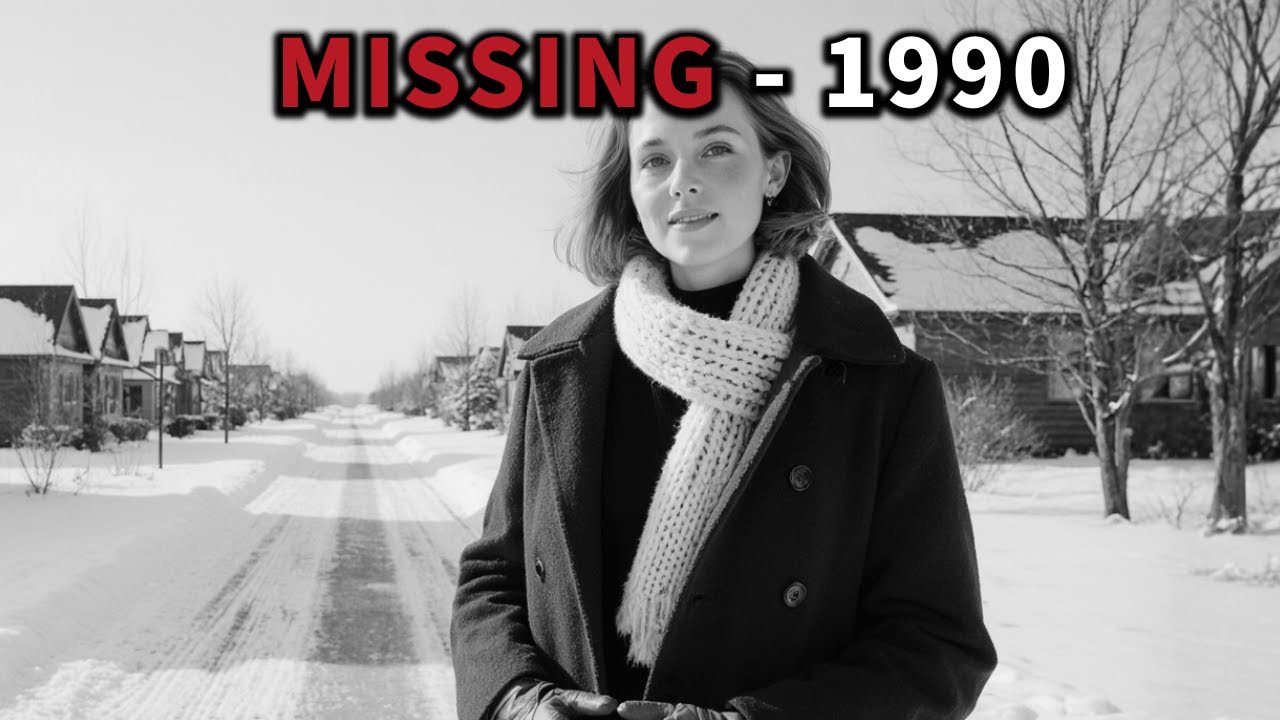
There was evidence. And there was a suspect, someone the community had known, trusted, and stood beside at Laura’s memorials, someone who had looked her family in the eye for years while hiding what he had done. On a December morning in 1990, the Duluth suburbs lay under fresh snow, the winter stillness of northern Minnesota settling over the log homes and roads leading toward Lake Superior. Laura Hotton, who lived in a small house near the edge of the city, left home for Lake View Pet Boarding, the pet care facility she had run for years, just as she did every day.
She was never late and never missed a shift, even in the harshest weather. So when the facility’s doors stayed locked and no one arrived to open it, staff knew something was wrong. The phone rang unanswered. The building stayed silent.
Laura, reliable, punctual, and rarely deviating from her schedule, had vanished in the short distance between home and work. The family reported her missing, and police entered the case into the official missing person protocol. They collected the identifying details: height, weight, hair color, the thick navy blue coat she usually wore, the high ponytail she tied for work, the car she drove. Laura habitually arrived early to open the facility, and her failure to appear was unprecedented.
Police checked the weather that year, bitter cold and heavy snow that made travel hazardous even for locals. A person missing in such conditions could mean life-threatening risk if her vehicle broke down, if she was injured, if she could not find shelter. The cold also meant evidence would be buried fast. Police ruled out voluntary disappearance.
Laura had no appointments other than work, no plans to leave town, and no signs of distress. The file was marked suspicious missing person, activating an urgent response. The first place officers went was Lake View Pet Boarding. Snow still covered the parking lot and entrance when they arrived.
The front door was locked, the hours sign untouched, and the snow on the steps showed no footprints. Laura’s vehicle was absent. Staff confirmed they had received no schedule change and that her absence was alarming enough to warrant the report. Police concluded she never reached the facility.
Officers swept the area around the kennel, checking trails behind the building, the roads leading to it, the woods at the edge. Thick snow erased any possible traces. Wind blurred whatever footprints or skid marks might have existed. Door to door interviews produced little.
One neighbor said they saw Laura’s car drive by early that morning. Another resident remembered a pickup truck passing around the time Laura would have left home, but the license plate was lost in fog and blowing snow. A delivery driver saw no activity at the kennel. A farm manager heard an engine revving longer than normal from the direction of the treeline.
None of it was enough to draw a conclusion. Police mapped the three possible routes Laura could have taken to work. They found no evidence of trouble on any of them: no skid marks, no vehicle damage, no dropped belongings. Then a search team moved along Old Thompson Trail, a narrow path through light woods not far from the kennel.
At a spot where the trail met a slight dip, one searcher spotted a dark object against the white. It was a heavy winter glove, half-buried in soft snow near some bushes. The shape and color matched the gloves the family said Laura usually wore. It was the first physical item potentially connected to her since she left home.
The glove was documented, photographed, and sealed for analysis. The discovery prompted police to re-examine the people in Laura’s life. The first person they needed to interview was Grant Halverson, her ex-husband. Their marriage had ended badly after a period of intense conflict, and Laura had admitted his calls and unexpected appearances made her uncomfortable.
When brought in for questioning, Grant claimed that on the morning Laura disappeared he had left the house later than usual, run a few errands, and returned home without encountering anyone noteworthy. But his timeline shifted with each retelling. He could not name the stores he visited or the route he drove. He flatly denied the family’s account that he had contacted Laura or appeared near her home in the weeks before she vanished.
The inconsistencies were not enough to incriminate him, but they raised serious questions. Police classified Grant Halverson as a person of interest, requiring continued monitoring. The search expanded into the Superior National Forest, a vast area of dense pine stands, steep slopes, and faint paths nearly impossible to discern under snow. Grid-based sweep units fanned out from Old Thompson Trail.
Heavy snow had obliterated any tracks. Teams checked large tree bases, deep ravines, and clearings, but found nothing. They considered the possibility that Laura had entered the forest voluntarily or under duress, or that someone else had driven her in on one of the many narrow roads passable in winter. No tire tracks remained.
A moderate snowfall could erase them within hours. Police turned their attention to vehicles in the area. Based on witness statements, they compiled a list of about two dozen trucks, pickups, and SUVs that regularly traveled the roads Laura likely took. Most owners provided solid alibis and were cleared.
A distinctive red pickup truck stood out because a witness recalled seeing a similar vehicle near Old Thompson Trail around dawn. The owner had no fixed schedule and appeared flustered when explaining his whereabouts, saying only that he had been driving around the area. The vehicle remained on the watch list. A search of Laura’s home revealed no sign of voluntary departure.
The glass and breakfast items were in their places. Clothes hung in the closet. Her desk calendar listed work appointments for the week, and a notebook near her vanity contained lists of pets to care for and those to be returned to their owners in the coming days. The mailbox held only routine bills.
Bank accounts showed no unusual transactions. Everything indicated she had prepared for a normal workday. Police became convinced the disappearance was against her will. With that conclusion, they obtained a warrant to search Grant Halverson’s home.
In the garage they found an old Superior National Forest map with numerous pencil markings highlighting trails and remote areas. Next to it, a coil of thick rope, a roll of heavy-duty gray duct tape, and a wilderness tool kit with a knife, small saw, and flashlight. Patches of dried, dark mud stained the garage floor. A pair of large hiking boots in the corner had hardened mud coarser than typical residential soil.
In a small drawer near the back door, they found loose notes with markings that matched the pencil lines on the map. In his vehicle trunk they found tie-down straps, rubber gloves, and cloth rags. All of it was sealed and tagged for analysis. Then police examined Laura’s answering machine.
Most messages were routine calls from clients and family. But interspersed among them were several recordings with a tense, sometimes threatening tone. A low male voice said Laura shouldn’t ignore conversations. Another message told her she needed to talk soon.
The messages carried pressure mixed with anger, and they had arrived sporadically in the weeks before her disappearance. Investigators noted the voice bore similarities to Grant Halverson’s. Family members who listened felt the same. The equipment of the time could not perform scientific voice analysis, but the resemblance placed the relationship under even greater suspicion.
Searches of cabins and old barns scattered along the forest produced no direct links. Faint bootprints were too distorted by wind and snow for comparison. At one derelict cabin, officers found a small piece of fabric stuck to ice and snow, but it was too degraded for identification. A resident reported seeing a strange man near the forest edge carrying a large backpack.
Police traced him to a motel, a store, and a gas station. His receipts, phone number, and itinerary matched perfectly. He was simply a traveler photographing winter scenery, and he had left the area before Laura was confirmed missing. The case against Grant remained circumstantial.
The threatening calls, the unaccounted time, the forest map and outdoor tools: all fell short of the evidentiary standard needed to file charges. In 1990, DNA technology was in its infancy. Technicians could not recover DNA from fabric. The glove could not be positively identified as Laura’s.
The rope showed no signs of struggle. The mud on Grant’s boots was too similar to other forest soil to be conclusive. The map markings meant nothing because locals commonly annotated their copies. The entire physical evidence analysis ended with no breakthrough.
Grant’s financial records showed no transactions on the morning Laura vanished. He had an unaccounted block of time, from the moment she left home until her family called police, when he could not document his whereabouts. Witnesses had seen a red pickup near the forest, and the color and size matched his vehicle. But without surveillance cameras or receipts, no firm conclusion was possible.
The investigation stalled. In early 1991, after months of searching with no new leads, the file was transferred to the St. Louis County cold case category. The glove, the forest map, the rope, the duct tape, the mud-covered shoes, and the small items from the cabins were sealed in specialized boxes and stored.
The case was neither closed nor active, only reopened if new information emerged. Between 1992 and 2000, the file was reviewed repeatedly. New investigators noted the glove, the vague footprints, the suspicious items in Grant’s home, and his unprovable alibi. But the cabins had deteriorated, witnesses’ memories had faded, and the forest had changed.
A proposal to re-search areas with metal detectors found only rusted scraps and old camping gear. Grant never left Minnesota, showed no notable criminal activity, and exhibited no particular signs of concealment. The file remained stagnant. From 2001 to 2010, DNA technology advanced dramatically across the country, but the progress did not reach Laura’s case.
The county’s testing budget went to cases with bodies, clear biological traces, or active violent crimes. Laura’s case had none of those. A 2006 proposal to analyze DNA in the mud on Grant’s boots was never carried out because the sample had oxidized. The glove was re-examined in 2007, but no traces remained sufficient to generate a profile.
The answer was always the same: no samples to test, no body, no clear crime scene. In 2011, St. Louis County launched a records modernization program to digitize every investigative document from the 1970s through the early 2000s. Laura’s file was among the first converted because the paper was in excellent condition.
Every document was scanned at high resolution. Physical evidence was removed from storage, inspected, and re-cataloged under modern standards. The glove was placed in a new moisture-resistant archival box. The forest map, rope, duct tape, and shoes received new barcode labels linked to the digitized file.
Laura’s case entered the county’s new cold case database, searchable and cross-referenceable, ready for connections that might only become possible years later. The connection came in the fall of 2021, when the hunter found the bone fragment and pendant in Clo Valley. The discovery site lay an hour’s drive north of Duluth, far outside every original search zone. In 1990, there had been no reason to think Laura could have traveled that far.
The case was reopened the same day, and the bone fragment was rushed to the state forensic laboratory in St. Paul. The testing team extracted mitochondrial DNA from the bone, a type far more durable than nuclear DNA and capable of surviving decades in the natural environment. Laura’s sister and a maternal niece provided reference samples.
The comparison showed an absolute match in the mitochondrial marker sequence. With a high degree of scientific certainty, the bone fragment belonged to Laura Hotton. She was dead, and her body had once been in that forest. The case was reclassified as an unexplained death.
Duth PD and the Minnesota Bureau of Criminal Apprehension immediately re-examined every sealed piece of evidence from 1990. One item stood out: a hair sample recovered from the interior of Laura’s vehicle shortly after her disappearance. At the time, it had been deemed insufficient for analysis. The three strands were dark brown and thicker than Laura’s light hair, so they had simply been logged as a detail inconsistent with the victim.
In 2021, the hair was sent to the BCA’s trace evidence laboratory. Technicians used laser micro-dissection to cut the central portion of the shafts, where mitochondrial DNA persists longest, and extracted enough to generate a genetic profile. Duth PD obtained a court order for a reference sample from Grant Halverson, who still lived in Minnesota. The comparison was immediate and unambiguous.
The mitochondrial DNA from the hair matched Grant’s exactly. The forensic report stated a certainty level exceeding 99. 99 percent, the highest probability possible with mitochondrial analysis. The hair could only have been inside Laura’s car if Grant had been present in the narrow window before her disappearance.
Under scanning electron microscopy, the strands showed unnatural breakage. They had not been shed naturally or stretched and snapped. They bore the signature of blunt-force fracture, the type seen when hair is yanked or subjected to sudden force, with keratin compressed on one side. This was consistent with hair pulled during a struggle.
The location, wedged between the driver’s seat and the gear shift, was not a place where hair would naturally fall without unusual movement. The violent contact had occurred very close to the moment Laura vanished. Investigators reconstructed Laura’s movements using all the new data. They rebuilt the 1990 road network from historical satellite imagery, land surveys, and forestry reports.
They modeled the window between when Laura left home and when her family called police, estimated at forty-five to ninety minutes. One route showed that if Grant intercepted Laura near a quiet intersection, he could reach the edge of Clo Valley in twenty-five to forty minutes. The glove on Old Thompson Trail lay on an indirect path from Duluth to Clo Valley, and the bone fragment site was only four hundred meters from a packed dirt forest road, entirely accessible to a pickup truck. Grant’s claim that he had simply driven around to relax was consistent with no busy location that morning, and perfectly consistent with a trip to Clo Valley.
Investigators re-interviewed 1990 witnesses using the cognitive interview technique, a method designed to recover details through sensory recall rather than direct questioning. A witness who had previously given a vague statement suddenly remembered a red pickup truck with a long bed, scratches on the right side, and a heavy engine sound. Grant’s 1990 vehicle records showed he owned an older red Chevrolet pickup with a long bed and a scratch on the right rear door, documented in a minor accident report from the summer before Laura disappeared. Another witness, asked to recreate the engine sound, described it as running unevenly, possibly bad spark plugs.
Grant’s maintenance records noted a heavy-running engine and vibration on light throttle. Other witnesses recalled the truck slowing at a turnoff onto a small trail, and one correctly identified the exact make and model from photographs. Every detail matched, and no other vehicle in the area had similar characteristics. A second search warrant for Grant’s home was issued, based on the DNA, the remains, and the witness statements.
In the basement, investigators found a large black plastic bin in the deepest corner. Inside were old outdoor items: a torn pair of gloves, a folding knife with a rusted blade, old rope, climbing carabiners, and a synthetic jacket with the left sleeve cut off. Stuck to the rope and a piece of broken plastic were several small gray-blue fabric fibers. Laura was wearing a gray-blue winter jacket the morning she left home.
The fibers were sealed and sent to the lab. In the bin also sat a tattered forest map with pencil circles around side roads that no longer exist, markings that aligned with the region where LiDAR would later detect ground disturbance. In a nearby crate, investigators found an old rubber boot caked with dried mud that matched the geological profile of Clo Valley more closely than the Duluth area. The most important item in the bin was the fibers.
They matched the color of Laura’s jacket and the weave structure of late-1980s winter jacket manufacturers, with edges frayed in a manner typical of fabric pulled hard or scraped against a rough surface. Duth PD placed Grant under continuous surveillance for three weeks. His behavior changed immediately. He left home at irregular times, drove to remote low-traffic areas near side forest roads, and stopped for only a few minutes before turning around.
He made multiple trips to hardware stores, buying industrial trash bags, chemical cleaning rags, and disposable rubber gloves. He began looking around carefully when visiting stores, as if sensing he was being watched. Three times he drove to an area on the edge of a side branch of Clo Valley, not far from where the bone fragment was found. Each stop was brief, and he carried no obvious tools.
The surveillance team logged every movement, recognizing the pattern of someone who feared an old scene was about to be examined. Grant was summoned to headquarters for questioning. He repeated his 1990 narrative: he had been driving around to relax, had not seen Laura, and knew nothing about her disappearance. When asked to mark his route on a map, he selected one that matched neither the timeline nor the direction described by witnesses.
When asked whether he had been inside Laura’s car, he said no. The investigators presented the DNA report from the hair. Grant was visibly stunned, then claimed it could be old hair from weeks earlier. The investigators described fresh witness statements: a red long-bed pickup with a scratch on the right side.
Grant admitted he had owned exactly such a truck. When asked about Clo Valley, he insisted he had never been there. The investigators presented the forest map with markings that matched the LiDAR-detected disturbances. Grant claimed it was just an old map.
When asked about the old box in the basement with the cut-sleeve jacket and the fibers, he said they were old camping things. He could not explain why material matching Laura’s clothing was in his possession. Three days later, Grant returned for a second interrogation. The investigators presented the fabric analysis report: the fibers matched the exact line of winter jacket Laura was wearing, confirmed by family photographs and the original purchase receipt.
Grant offered one explanation, then another, then another: he might have taken her jacket to be repaired; maybe she left it in his truck; maybe he found it somewhere. Each version collapsed against the records. The forest map bore oil stains matching the type of machine oil on Grant’s tools. The pencil markings were made with the exact brand and hardness of pencil found in his 1990 toolbox.
The mud on the rubber boots matched the clay soil of Clo Valley, a type not found in the Duluth residential area. Asked about it, Grant gave three successive versions: hiking, deer hunting, and finally, “I’m not even sure those boots are mine. ” When the investigators returned to the hair, he suggested it could have been transferred accidentally. They presented the fracture report, and he shifted again: “Maybe we argued,” he said, then corrected himself, “no, I mean sometimes we raised our voices.
” It directly contradicted his original statement that they had no significant conversation before the day she disappeared. Asked why he had visited multiple forest locations during the past three weeks, he said he was out thinking, then driving without knowing where he was going, then looking for fishing spots. The surveillance logs contradicted every version. By the third hour, Grant was repeating that everything was just coincidence.
The investigator replied, “You are facing a chain of coincidences so long that it does not exist in reality. ”
The case was submitted to the St. Louis County Attorney’s Office in a report exceeding one hundred pages. The arrest warrant was signed less than twenty-four hours after the file was submitted.
At approximately 6:15 a. m. , as Grant stepped onto his front porch, SWAT approached from the front and rear. He was handcuffed, read his Miranda rights, and placed in a patrol car.
Neighbors watched from a distance, stunned. Grant had always been regarded as a quiet, unremarkable resident. The case went to trial. The prosecution presented the forensic evidence in turn.
The BCA DNA expert explained mitochondrial DNA structure and the advanced PCR extraction process. When the comparison results appeared on the screen, two mitochondrial sequences matching 100 percent, the courtroom fell silent. The hair showed violent fracture signs: compressed keratin surface, jagged break edges, damage that only occurs with forceful pulling. The forensic geologist presented mineral analysis showing the boot soil matched the bone fragment site almost perfectly.
The fiber expert showed magnified images: the weave structure, polyester type, and tearing patterns matched exactly, and the fiber type had been produced only in two 1988–1989 winter jacket lines. Then the prosecution presented the LiDAR mapping. On the screen, the jury saw a three-dimensional map of Clo Valley. An abnormally compressed soil area appeared clearly, with pit edges showing evidence of excavation and refilling years earlier.
The animation recreated thirty-one years of freeze-thaw erosion, and the jury watched the bone fragment migrate from its original burial location to its 2021 discovery position. LiDAR also recorded a narrow trail leading from a forest service road directly to the compressed pit, the same road circled in pencil on the map seized from Grant’s home. The defense did not attempt to deny the forensic evidence in its entirety. Instead, they focused on the two areas still exploitable: the incomplete remains and the simulated timeline.
No one could say they knew exactly what happened that day, they argued. The bone fragment proved Laura was dead but revealed nothing about how, where, or when. The hair could have fallen at a different time; the fabric was not unique; the LiDAR anomaly could have been caused by animal burrows or fallen trees. The red pickup could have belonged to anyone.
The defense repeated one point endlessly: no intact body, no mechanism of death, no clear time of death. Everything the prosecution had offered, they said, was a story built from fragments. But a story is not proof. The jury deliberated for eight hours.
Some members initially admitted the absence of a body had given them pause, but as they reviewed the forensic framework, the pieces fell together. The bone fragment identified by DNA. The strands of Grant’s hair, forcibly pulled, in Laura’s car. The fibers from the type of jacket she wore, in his storage box.
The Clo Valley soil on his boots. The LiDAR mapping proving a pit had been dug and filled in the early 1990s. No evidence pointed to anyone else. When one juror asked whether there was any evidence that anyone else had been present at those locations, the entire group shook their heads.
The constantly shifting statements, the contradictions between 1990 and 2021, the surveillance of forest areas: it all pointed one way. The jury reached a unanimous verdict. In the courtroom, the judge asked if the jury had reached a verdict. The foreperson’s voice was clear and firm: guilty of murder in the first degree in connection with the death of Laura Hotton.
Laura’s family began crying silently. Grant showed no clear emotion, but his hands clenched so tightly that his knuckles turned white. The judge pronounced the sentence: life imprisonment without the possibility of parole. Thirty-one years after Laura vanished on her way to work, justice had been served, based not on confessions or eyewitnesses, but on science and a logical structure no counterargument could dismantle.
In the final report, Duth PD and the BCA analyzed why the 1990 investigation failed and why 2021 succeeded. The biggest limitation was forensic technology: DNA was barely used, fiber analysis was primitive, and there was no terrain scanning technology like LiDAR. The harsh Minnesota winter erased traces within hours. In the vast Superior National Forest, searches could cover breadth, not depth.
In 1990, police lacked the modern forensic mindset and the understanding of offender behavior patterns in domestic violence-related disappearances. There were no centralized databases; paper files were hard to cross-reference. The success in 2021 came from mitochondrial DNA extraction, microscopic fiber analysis, soil analysis, and LiDAR, which revealed a burial pit the naked eye could never have detected. It came from the digitization of records in 2011, from cognitive interview techniques that revived witness memories, from inter-agency coordination, and from the persistence of multiple generations of investigators.
The case file was closed as fully resolved. In the last note of the report, one line was written clearly: justice may come late, but it is never too late when science and persistence are put in the right place.
