On the deck of an ocean liner in 1929, Rose Kennedy stood beside her husband and the most famous film star in America. Gloria Swanson, the woman financing Joe Kennedy’s Hollywood ventures and, by every serious account, his mistress, spent the voyage studying Rose across the rails and meals. She never decided what Rose was: fool, saint, or simply a better actress than she was. Rose said nothing.
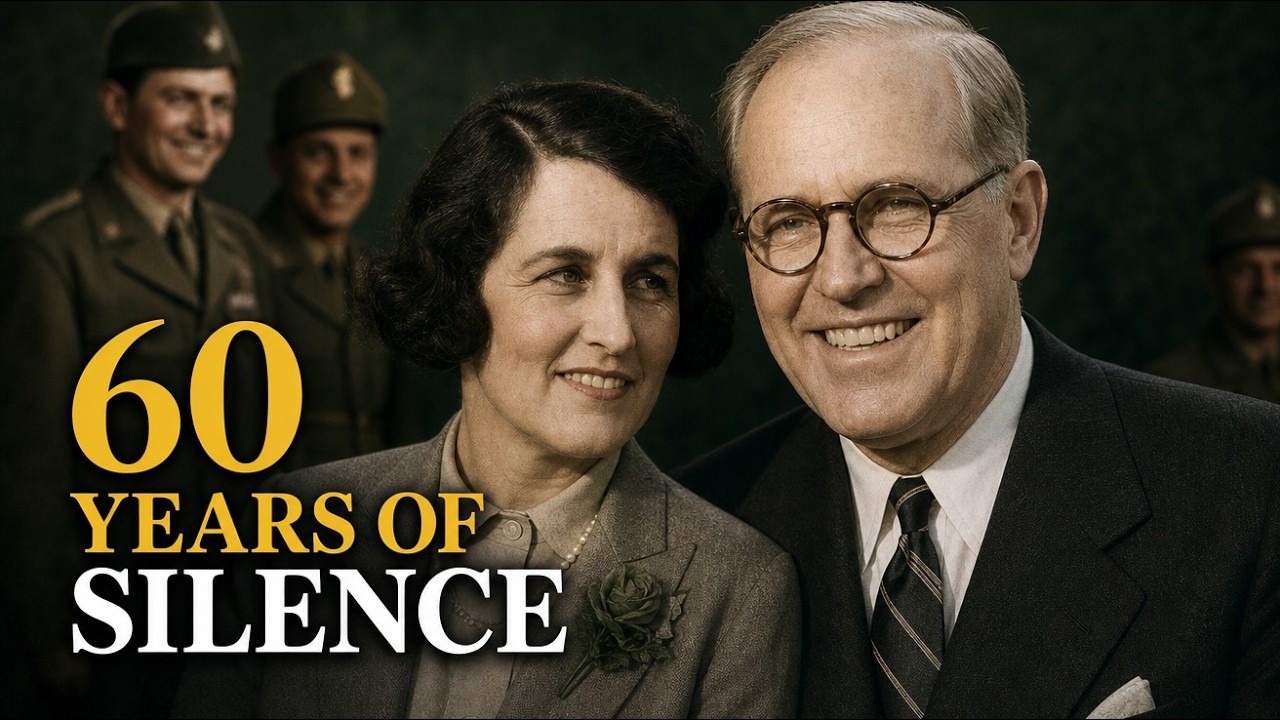
She remained married for another forty years, then lived twenty-six years past her husband’s death. Before she died, she left behind interview tapes no researcher heard for years. On those tapes, she says something her carefully published memoirs omit. Rose Kennedy was not the last to know.
She was the one who decided. The trip itself was strange in ways that had little to do with secrecy. Joe Kennedy was funding Swanson’s films, managing her money, and according to every serious account, sleeping with her. He arranged for all three of them to sail to Europe at the same time.
The press photographed them. Swanson came to Hyannis Port, landing in a small plane that sent the Kennedy children running to see her. She sat at the family table and swam at the same beach. When Rose finally published her memoirs in 1974 at the age of eighty-four, she mentioned Swanson the way one mentions a pleasant acquaintance from a long-ago summer, with no sharpness and no wound.
Those memoirs are the first thing to suspect. Titled “Times to Remember,” assembled with the journalist Robert Coughlan, they are a beautiful, warm, devout, orderly construction that reveals as much as a Christmas card. But Coughlan recorded her for hours. Those interview transcripts and tapes went into her papers at the John F.
Kennedy Library, and researchers did not gain real access until long after her death. When historian Barbara Perry worked through the material for her 2013 biography, the woman on the tapes did not always match the woman in the book. The published book and the unpublished recordings are two different records. That gap changes what this marriage actually was.
The easy version of the story holds that Rose Kennedy was a pious, subdued Catholic wife who could not leave. That version is wrong, and it is wrong in a far more interesting way than most people imagine. Long before Joe, there was Rose Fitzgerald. Born in 1890, she came from the closest thing Boston’s Irish Catholics had to royalty.
Her father was John Francis Fitzgerald, known as Honey Fitz, a congressman and then mayor of Boston, a man who sang “Sweet Adeline” at every opportunity and never stopped performing in his life. Rose was his favorite and his instrument. She finished Dorchester High School at fifteen. By her late teens she stood beside him at formal events, greeting dignitaries and traveling with his delegations to Europe, trading handshakes and small talk while her quiet mother, Josie, stayed home.
She was, in the terms of the day, a public woman—not a celebrity, but a functionary in a political family. She founded and ran a club for Catholic girls excluded from Boston’s Protestant society. She had a debut in 1911 with hundreds of guests. She learned French and German well enough to use them.
She mastered the mechanics of public image: who to be seen with, what to tell reporters, when to smile. She wanted to go to Wellesley. She was accepted. Most people who think they know Rose Kennedy have never heard that detail.
Her father refused. He sent her to convent schools instead—the Sacred Heart in Boston, then Blumenthal in the Netherlands—partly for Catholic political reasons, and partly, by most accounts, to keep her away from a young man named Joseph Kennedy, whose father was considered a rival. More than sixty years later, in her memoirs as one of the most famous mothers in America, she called this the greatest regret of her life. Not her marriage, not the deaths of her sons.
Wellesley. The first thing that happened to Rose Fitzgerald’s ambition was that a man she loved took it from her, and everyone told her it was for her own good. Now place two events side by side, because the dates matter. In December 1913, a woman known as Toodles Ryan became a public problem for Honey Fitz.
A political opponent threatened to expose the mayor’s affair with her. Fitzgerald withdrew from the 1914 mayoral race citing his health and left office in February 1914. His career never fully recovered. On October 7, 1914, Rose Fitzgerald married Joseph P.
Kennedy. Eight months separated her father’s political destruction over a woman who was not her mother, and her own walk down the aisle. The wedding was small, about seventy-five people in Cardinal O’Connell’s private chapel, followed by breakfast at the Fitzgerald home. No cathedral, no crowds.
There are innocent explanations—the family was in retreat. Nobody left a document explaining why, but it was a strange, quiet, almost defensive start for two of the noisiest families in Boston. After Toodles, Rose’s mother withdrew. She stopped appearing in public and gave up the public side of her life for the home.
Rose watched that and did the opposite. The first decade of the marriage was an assembly line. Joe Jr. in 1915, Jack in 1917, Rosemary in 1918, Kick in 1920, Eunice, Pat, Bobby, Jean, and finally Teddy in 1932.
Nine children in seventeen years, four of them in the first five. Meanwhile Joe Kennedy was becoming Joe Kennedy—bank president at twenty-five, wartime shipyard manager, stock speculator, then Hollywood, running film companies from New York and Los Angeles. He was gone for weeks, then months. Rose ran Brookline, then Bronxville, then Hyannis Port and Palm Beach on a schedule.
She kept a card file on every child: illnesses, vaccinations, dental work, weight, shoe size. People tell that story as a joke about a cold woman. Look at it from inside the house. One adult, nine children, four homes, rotating staff, and a husband whose location on any given Tuesday was a question rather than a fact.
The card file was not coldness. It was logistics. It is what a person does when she realizes she is the only permanent element in the system. Then in 1920, she quit.
This is the part the public never knew and the family never promoted. Rose Kennedy, mother of four, packed her bags and returned to her father’s house in Dorchester. She stayed about three weeks. Doris Kearns Goodwin reconstructed the story in her book on the Fitzgeralds and Kennedys, drawing on family memory.
Honey Fitz came to her and essentially told her she had made a vow and must keep it. The children needed her. Go home. The same man who took away Wellesley also took away her escape hatch.
She went back. But she did not return to disappear the way her mother had. Five more children followed. And something else followed too: a version of the marriage in which Rose Kennedy began setting her own rules about what she would and would not do, where she would go, and what her rights were.
No one wrote that down. There is no contract, no letter, no confession. What exists is the behavior that followed, and it was loud. Through the 1920s, Joe’s absence stopped being incidental and became the standing structure.
Publicly, his travel meant success—Hollywood deals, studio reorganizations, money that Boston’s elite never invited him to make. That was the newspaper version. Privately, the same calendar meant something else. Rose alone at the head of the table.
Rose deciding school matters. Rose in the church pew at daily Mass with a row of children beside her. Rose caring for Rosemary, who developed slowly and needed more attention than the others. Rose was said not to be with Joe when Teddy was born, and Joe was said not to have been present for more than one of the births.
Only one adult was in the house, and she was that adult. Then Joe began bringing parts of his other life home. Gloria Swanson was not hidden. She was the biggest movie star in America, and Joe Kennedy—her financier, her business manager, and her lover, as she later wrote in her memoir—brought her into the family’s personal space.
Hyannis. Palm Beach. The children remembered her. Rose received her.
No document records Rose saying in 1929 that this mattered and she would not pretend otherwise. Instead there is a woman who was among the most watched in Boston, trained from childhood to read rooms full of politicians, standing on a ship’s deck with her husband’s business partner. Swanson herself could not understand it. In her 1980 memoir “Swanson on Swanson,” she described watching Rose and being unable to decide whether the woman was oblivious, a saint, or simply playing her role better than Swanson played hers.
Swanson also made a far larger claim, one that belongs in the doubtful column. She wrote that Cardinal O’Connell—the same man who had married Joe and Rose in his private chapel—came to see her and urged her to end the affair, telling her that Joe had sought some kind of ecclesiastical arrangement to live apart from his wife. No record has ever supported that claim. Historians treat it as the unconfirmed memory of a woman writing her memoirs half a century later with her own reasons for placing herself at the center of the story.
But consider it anyway. If even a watered-down version is true—that Joe was exploring what the Church would accept—then someone in this marriage was testing limits. It was not Rose. The Swanson affair ended badly around 1930, with Swanson convinced Joe had cost her a fortune.
The pattern did not end. Money is the next place to look, because everyone assumes the wife stayed for it. In this case, that assumption collapses on inspection. Joe Kennedy did something in the 1920s and 1930s that few men of his era did: he distributed his money in advance.
A family trust in 1926, then in 1936 a much larger set of trusts, widely estimated at ten million dollars, split among the children, structured so the arrangements could not be unraveled by his later decisions or anyone else’s. Rose’s financial position was secured independently. She had her own income, not a monthly allowance from a husband in a good mood. On top of that, she had an arrangement most American women would have found fantastical: she bought her clothes at Paris couture houses and sent the bills to Joe, who never questioned them.
Biographers have repeated for decades that he wanted her to look perfect and never challenged the costs. Now listen to that from her side: the same reality, two different meanings. She could buy anything. She could not ask for anything.
That is not romance. That is terms. Once viewed as terms, the rest of the family’s life begins to look less like submission and more like management. She controlled the houses, the staff, the religious life of nine children, the schools, the seating arrangements, the guest lists, the public face of the family.
Joe supplied the motion and the money. Rose ran the fixed elements. The public version of the marriage in the 1930s was a prominent Catholic financier, a beautiful successful wife, and a huge handsome family—a portrait of an American dynasty forming. The documented version is a man moving through trains and ships and film studios, and a woman running four properties and nine children with a card file, inside a financial structure that made ending the arrangement very difficult.
Then came the return, the part of Rose’s life she never stopped discussing. In 1938, Joseph Kennedy became United States Ambassador to the Court of St. James’s—the son of an East Boston saloonkeeper sent to London to represent America before the King. For Rose this was not politics.
It was vindication. Think what it meant to a woman whose family had been excluded from Boston society, who had been denied Wellesley for being Catholic, to arrive in London as the ambassador’s wife. She was presented at court. Her daughters Rosemary and Kick curtsied to the King and Queen.
The British press adored the Kennedys. Rose tended her wardrobe with total seriousness because that wardrobe was her argument. In March 1939, the entire family went to Rome for the coronation of Pope Pius XII. They had front-row seats.
Shortly afterward, seven-year-old Teddy received his first communion from the Pope himself. Whatever this marriage was—and its other nature is coming—it gave Rose Kennedy things she could never have achieved in any other life. Being Joseph Kennedy’s wife was not only a price she paid. It was also access.
Then Joe destroyed it. He became the loudest voice for appeasement in the American government. He told a Boston reporter in November 1940 that democracy was finished in England, wrecking his career in a single interview. He resigned.
No other public office ever came his way. Rose did not leave. She did not distance herself. She stayed publicly attached to a man who had made himself politically radioactive.
Within a few years, the family’s political future depended on the children. And she was the one the public loved, trusted, and considered respectable: the devout mother, the mother of war heroes. Joe became the person kept out of sight. Rose became the person put on the platform.
The husband’s reputation was now a liability. The wife’s was an asset. In 1938, no one would have predicted that. At some point the question stops being “Did she know?
” and becomes “How did she live with knowing? ” The evidence for the second is far harder than most people realize. In 1948, Joe hired a young woman named Janet Des Rosiers as his secretary. She lived in the Kennedy homes for nearly nine years, working out of Hyannis and Palm Beach, traveling with him.
In interviews decades later, used by Lawrence Leamer in “The Kennedy Women,” she described a relationship that went well beyond secretarial work—combing his hair, sitting with him, accompanying him. She was a permanent presence inside the family’s houses, not in a hotel or another city. The houses Rose ran. In 1960, when Jack Kennedy ran for president on the family plane, Janet Des Rosiers was aboard serving the candidate and staff.
The woman who had spent years as the elder Kennedy’s resident companion worked on the family’s presidential campaign. Everyone on the campaign staff knew who she was. This was no longer an affair. It was administration.
There were others. Marlene Dietrich came to Palm Beach; her daughter, Maria Riva, later wrote about Joe’s behavior there. The pattern is consistent enough across the biographies that no serious historian disputes it. But the Des Rosiers arrangement changed the rules because it was continuous, domestic, salaried, and visible to everyone in the house.
Did Rose know? The honest answer is that she never confirmed it in any written text. Her memoirs contain no confession of infidelity. But the people around her—staff, children, friends, the biographers who interviewed them later—describe a woman who was neither blind nor stupid, living in houses where the situation was an open fact.
Barbara Perry, working from Rose’s own tapes and papers, describes a woman who understood her husband completely and made peace with it on her own terms. Doris Kearns Goodwin’s reconstruction points the same direction. The most convincing evidence is not a quotation. It is a habit.
Rose Kennedy traveled constantly, alone or with a friend, to Europe—dozens of trips over the years, for weeks at a time. She had her own schedule, her own suites, her own Paris fitting appointments, her own religious retreats. She left the house for long stretches and returned on her own timetable. She took the same freedom he took, built into her calendar and paid for from his accounts.
And notice what she did not do. She did not fight the other women. She did not make scenes. She did not compete.
There is no documented confrontation, no ultimatum, no smashed vases. What she did was maintain her position. She was the wife. She appeared where wives were supposed to appear.
She went to Mass. She ran the houses. And she left when she wanted to. Given that she knew, had her own money, and was the most respected member of the family, why stay?
The obvious answers collapse one by one. Religion: yes, Rose Kennedy attended daily Mass for most of her adult life and was named a papal countess by Pius XII in 1951. Divorce was not an option for her. But watch what she did with that same faith when it came to her daughter.
In 1944, Kick Kennedy married William Cavendish, the Protestant Marquess of Hartington, heir to one of England’s great Anglican families. Rose fought it fiercely. When the marriage took place in a London registry office against her wishes, she did not attend. She was in the hospital.
No Kennedy was there except Joe Jr. When Kick was killed in a plane crash in 1948 and buried in Derbyshire, the only family member to go to the funeral was Joe. Rose did not go. This is a woman who applied her faith at maximum cost against her own child.
Religion was real, but a rule that rigid has two faces. It explains why she never divorced. It does not explain why she stayed engaged, warm, and active inside the marriage for five more decades. Money: she had trust funds, and so did the children.
She had one of the most famous names in America. She would not have been destitute. These arguments hold until you check the calendar. Teddy, the youngest, was in college by the mid-1950s.
Rose remained Joseph Kennedy’s wife for another fifteen years after the last child left home—and for eight of those years, he was a man who could not speak. Status: being Mrs. Joseph P. Kennedy in 1955 was worth more than being a divorced Rose Fitzgerald.
But status does not explain the particular nature of what she did with the marriage. There is also the fact that overturns the theory that she stayed because she was in control. In November 1941, Rosemary, twenty-three years old, was a problem the family did not know how to handle—slow, increasingly volatile, at risk of getting into trouble that could destroy the others. Joe Kennedy found Dr.
Walter Freeman and Dr. James Watts in Washington and authorized a lobotomy. It destroyed her. She could no longer walk properly or speak intelligently afterward.
She was institutionalized, eventually placed at St. Coletta’s in Wisconsin. Kate Clifford Larson reviewed the records for her 2015 book on Rosemary and concluded Joe arranged the whole thing himself. Rose was not part of the decision.
According to multiple accounts, she learned what had been done after the fact. And then Rose Kennedy did not see her daughter for nearly twenty years. The evidence indicates Joe made the decision, controlled the information, and kept the family away from Rosemary. Rose complied.
Whatever authority Rose held over the house, she had none over this, and it cost her a daughter. The story that the quiet wife secretly held all the cards is false. In the most catastrophic decision in the family’s private history, her opinion was bypassed and she was kept in the dark. Which makes the next twenty-eight years genuinely strange, and leads to the actual shape of the arrangement.
Nobody signed anything. No letter states these are the terms. What exists is a set of behaviors so consistent over fifty years that they function as contract clauses. He got complete freedom, unconcealed and even on the payroll, extending into the homes themselves.
She got permanence and the permanent things: the marriage itself, treated as an indissoluble bond; the houses; the children’s religious formation; the family’s public face; money in a structure he could not reclaim; her own travel; her own name on the door. And she got something she said aloud in her own words long before anyone looked for a confession. Rose Kennedy described raising children as a profession, as demanding and interesting as any career path, not something that should make a woman dull or reclusive. When she wrote that in the 1970s it sounded like a cliché of ideal motherhood.
It is not. It is a job description. Read it again with everything now known. It stops being sentiment and becomes an organizational chart.
She was not a wife waiting at home. She was the permanent employee of an institution whose founder was almost never on site. The metaphor that fits this marriage is not romance. It is a ledger.
Two columns, both open, both slowly settled over decades. And here is the part that turns the whole story around. The columns did not stay balanced. After the war, the family’s entire goal became the sons’ political careers.
Joseph Kennedy could not appear. He was appeasement. He was Wall Street. He was Hollywood money.
He was the father who told a reporter England was finished. He ran the operation from behind the curtain, paid for it, made the calls, and stayed off the stage. Rose stepped onto the stage. Starting with Jack’s first run for Congress in 1946, and massively in the 1952 Senate campaign, she was the draw.
Formal receptions for thousands of Massachusetts women in hotel ballrooms and parish halls, receiving lines that lasted hours. In 1952 they filled the Commander Hotel in Cambridge. She wore couture. She talked about the children.
She was charming, warm, occasionally a bit regal. It worked. Kennedy organizers considered those receptions among the most effective things in the campaign. Jack won a seat everyone told him he could not win.
The girl who had been her father’s hostess at twenty-one, sent to a convent instead of Wellesley, who had spent thirty years running houses, returned to the platform that had been taken from her—and proved herself the best field politician in the family after her son. By 1960 she was campaigning nationally, addressing French-American crowds in French, Italian and German where needed, drawing audiences in her own name. Her father would have wept to see it. Then the ledger closed.
December 19, 1961, Palm Beach. Joe Kennedy played golf with his niece, felt unwell, went home, and suffered a massive stroke. He survived, but lost the power of speech. For the last eight years of his life, the most controlling, talkative, relentlessly manipulative man in twentieth-century American life could no longer make himself understood.
His nurse, Rita Dallas, wrote about it later in “The Kennedy Case”—the rages, the frustration, the wheelchair, the ramps installed in the houses. The houses Rose ran. The man who had spent fifty years elsewhere was now permanently, physically, inescapably home. Every decision about his day belonged to the staff and the woman who employed them.
Rose kept her routine. She swam. She walked. She went to Mass.
She came to visit him and left when she was done. Dallas’s account describes a woman who was present, organized, and unemotional. Some readers found her cold in that description. Perhaps.
Or perhaps fifty years earlier, Rose had learned exactly how much of her day she would give to this man—and she was not about to renegotiate now that he was incapable of arguing. Notice what else happened around that time. After the stroke, Rose Kennedy went to Wisconsin and saw Rosemary again. The man who made that decision and enforced twenty years of silence around it could no longer enforce anything.
Rose was seventy-one years old, and had just become the last active adult in the entire institution—which by then had buried Joe Jr. in 1944, Kick in 1948, and would bury a president in 1963 and Bobby in 1968. Joseph P. Kennedy died in Hyannis Port on November 18, 1969, with the family around him.
Rose was seventy-nine. She lived twenty-six more years. What she did in those years answers the title of her book. She never remarried, and nothing suggests she considered it.
She became the family’s living monument—the black dress at the funerals, the letters, the interviews, the fundraising for Rosemary’s cause through the foundation named for her dead eldest son. She outlived nearly every witness. Then she did something almost no one comments on, the most revealing act of her entire life. In 1966, three years before Joe died, Rose Kennedy bought back the house at 83 Beals Street in Brookline.
Not the Hyannis compound, not Palm Beach, not the London residence or the Bronxville estate. That small, ordinary three-bedroom house on a modest street, where her life with Joe began in 1914, where four of her children were born, which the family had outgrown and sold before Jack turned ten. She restored it from memory. She placed the furniture in its original positions.
She found old pieces or replaced them. She specified the wallpaper, the crib, the sofa. Then she gave it to the American people, and it opened as a National Historic Site. She recorded the audio tour in her own voice, taking visitors through her rooms, telling them where the piano stood and which room was Jack’s.
A woman writing her final draft. Fifty years of moving—trains and ships and ambassador’s residences and Palm Beach and Paris and campaign planes—and at the end, she bypasses all of it to rebuild the smallest house, where she was still a young wife with four children and a husband who came home. She controlled the version of her marriage that was preserved. She built her own museum.
She died in Hyannis Port on January 22, 1995, at 104. Then the file reopened. Her papers went to the Kennedy Library. The Coughlan interview material eventually became available.
In 2001, her granddaughter Amanda Smith published “Hostage to Fortune,” a volume of Joe’s personal letters. Larson obtained Rosemary’s medical records in 2015. Perry worked through Rose’s own words in 2013. What emerged was not a scandal.
It was worse in a way: a gap. The memoirs she published are calm. The recordings beneath them are sharper, drier, more aware of reality—a woman with an exact inventory of what her husband was, what her marriage cost her, and what she got from it. The affairs are never mentioned.
But the atmosphere is entirely different. The final chapter of Rose Kennedy’s public life was an editing decision. She had the material. She chose the version that went out under her name.
So why did Rose Kennedy refuse to divorce Joseph Kennedy? First, an honest correction: as far as the records show, divorce was never formally on the table. No one filed. No one proposed it in any surviving document.
There are exactly two moments the marriage came close to breaking—those three weeks in 1920, and Gloria Swanson’s unconfirmed story about the cardinal. One of them was her leaving, not his. Outsiders will say she stayed because she was Catholic, because it was 1930, because women did not leave, because of the children, because of the money. Each of those reasons was a real pressure.
None of them explains the behavior. The children grew up. The money was her money. The Church would have permitted a separation however it viewed divorce.
And she had already proven in 1920 that she was physically capable of walking out the door. What the evidence actually shows is a woman who decided in her thirties that she would not spend her life competing for a man’s attention, and would instead permanently own everything he was too busy to hold onto: the name, the faith, the nine children, the houses, the public face, the story. He got the moving world. She got the staying world.
In the end, she got both, because he lost his voice while she kept hers for twenty-six more years. Return to the ship’s deck in 1929. The same photograph, a different scene. A movie star who could not decide whether the wife beside her was a fool, a saint, or an actress, and never considered a fourth option: that Rose Kennedy had assessed the situation, decided what she was willing to trade, and concluded that Gloria Swanson was temporary.
Swanson got the films, the money, the destructive partnership, and a memoir published in 1980 in which she was still trying to understand Rose. Janet Des Rosiers got nine years and a seat on the campaign plane. Rose got sixty-five years, the title, the archive, and the last word. She is buried in Holyhood Cemetery in Brookline, a few minutes’ drive from where everything began.
Joe is beside her. Her parents are there too—Honey Fitz, who kept her from Wellesley and then sent her back to her husband, in the same ground. Four miles from that grave, the front door of 83 Beals Street opens every day to strangers. They walk through the small rooms she rebuilt from memory, past the crib she chose and the sofa she placed exactly where she remembered it, and a recorded voice tells them what happened in each one.
It is her voice, still running the house.
