She was a princess, and she had done everything that was asked of her. But at just twenty-two years old, her own husband had taken from her the one thing she could never get back. Crown Prince Rudolf infected Stephanie of Belgium with syphilis and gonorrhea, destroying her chance of ever bearing another child. The court announced that she had peritonitis.
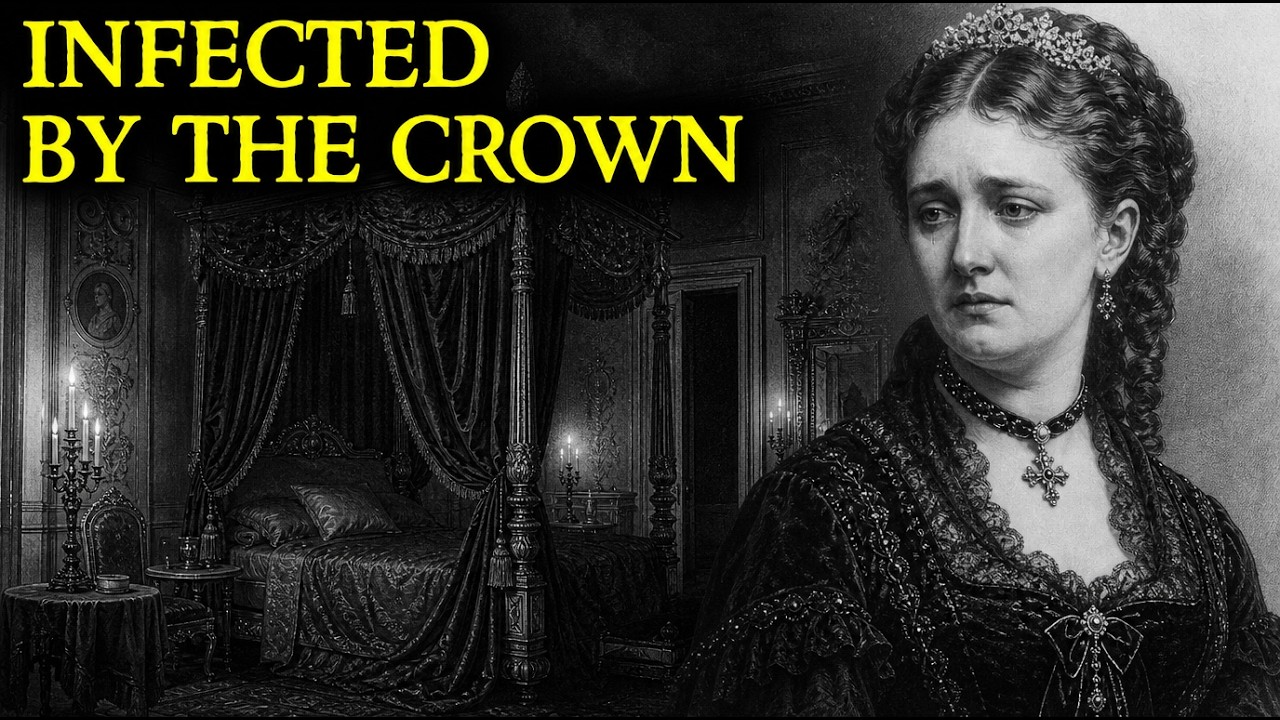
The truth was buried, and Stephanie became the one they blamed. In the late nineteenth century, a royal princess did not belong to herself. She belonged to the state. Groomed from infancy to serve as a diplomatic pawn in the high-stakes game of European alliances, she entered a dynastic union in which she possessed no legal rights, no personal agency, and no protection under the law.
Stephanie’s father, King Leopold II, presented himself to the world as a benevolent sovereign, yet his vast fortune was built on the brutal exploitation and forced labor of the Congo Free State. That blood money funded a regime of absolute control at home. When a young princess was traded into Emperor Franz Joseph’s Austro-Hungarian court, she arrived in an environment of suffocating, rigid hierarchy. Here, the preservation of the imperial dynasty mattered above all else, creating an unyielding machinery of power designed to protect its rulers while utterly silencing the women trapped within its walls.
On May 21, 1864, Princess Stephanie Clotilde was born at the Palace of Laeken in Brussels, the second daughter of King Leopold II and Queen Marie Henriette. Her childhood offered no refuge. Her parents’ marriage was cold and transactional, fractured entirely in 1869 when her nine-year-old brother, Prince Leopold, fell into a pond and died of pneumonia. A year later, a severe case of typhus nearly claimed six-year-old Stephanie as well.
Instead of comfort, her recovery brought a grueling regime of multilingual education under strict disciplinarians, shaping her into a silent instrument of the state. Following her sister’s marriage, eleven-year-old Stephanie became the highest-ranking female at the Belgian court, forced to host foreign dignitaries and perform rigid ceremonial duties. Before she could understand the world, she was already trained to endure it. In the winter of 1878, the machinery of state encroached on Stephanie’s narrow world.
She was barely a teenager when she was introduced to Crown Prince Rudolf, the twenty-year-old heir to the Austro-Hungarian Empire. The match was not a matter of shared affection but of cold diplomatic transaction, conducted entirely over her head. Her consent was neither sought nor required. On May 10, 1881, just days before her seventeenth birthday, Stephanie stood in St.
Augustine’s Church in Vienna to marry the twenty-two-year-old prince. The city erupted in lavish public celebrations, presenting a fairy-tale spectacle to cheering crowds. But beneath the heavy lace of her wedding veil and the choreographed splendor of the Habsburg court lay a quiet, inescapable reality. At sixteen, Stephanie had not found a partner.
She had simply been delivered to her entrapment. The grand public illusion of the wedding dissolved almost immediately within the suffocating, cold stone walls of the Hofburg Palace. Stephanie found herself in a hostile environment, placed under the constant, watchful gaze of a highly critical Austro-Hungarian court. Her husband, Crown Prince Rudolf, was far from the romantic partner the public imagined.
Volatile, controlling, and unfaithful from the very beginning of their married life, he offered his teenage bride no warmth or comfort, leaving her entirely isolated in a foreign capital with little freedom. In September 1883, Stephanie gave birth to their only child, Archduchess Elisabeth Marie. Instead of bringing peace, the birth of a daughter was met with heavy disappointment. The relentless pressure for a male heir to secure the imperial succession intensified, fracturing the young marriage even further.
Unable to cope with the expectations of his position, Rudolf spiraled into severe alcoholism, seeking escape in the licentious quarters of Vienna through a succession of rampant affairs. By the mid-1880s, the heir to the empire had contracted both syphilis and gonorrhea from his mistresses. Rudolf chose to conceal his physical condition to protect his reputation, avoiding honest medical treatment and refusing to warn his young wife. Stephanie remained completely unaware of the physical danger growing in her household, quietly enduring her daily confinement as an outsider while her husband’s hidden disease prepared to destroy her body and her future.
In the spring of 1886, twenty-two-year-old Stephanie fell suddenly and violently ill. She suffered from a high fever, severe abdominal rigidity, and agonizing pain. As the venereal infections her husband had contracted—both gonorrhea and syphilis—ravaged her body, the untreated diseases caused severe pelvic inflammatory damage, leaving her permanently infertile. She would never bear another child, destroying any hope of providing the male heir the empire demanded.
To shield the Imperial dynasty from a ruinous moral scandal, the court immediately initiated a cover-up. Court physicians publicly diagnosed her condition as peritonitis, a convenient medical euphemism designed to bury the truth of Rudolf’s lifestyle. His reckless behavior remained hidden behind closed doors, while Stephanie was left to process the physical ruin of her body in complete isolation, learning the true nature of her illness only after the damage was irreversible. In the quiet aftermath of her survival, the young princess found her own silent path of resistance.
She refused to ever share a bed with Rudolf again, withdrawing entirely from the marital chamber and denying him conjugal access. It was a rare, defiant assertion of control over her own physical boundaries, but she could not escape the court’s cold judgment. Though Rudolf had brought the disease into their home, the unyielding double standards of the Hofburg turned against his wife. Whispered gossip branded her a cold, failure-prone outsider, casting her as the infected princess.
Society quietly blamed her for the empty Imperial nursery, ensuring that she carried the heavy burden of shame for a violation committed entirely against her. On January 30, 1889, Crown Prince Rudolf was found dead at the Mayerling Hunting Lodge alongside his seventeen-year-old mistress, Baroness Mary Vetsera. Rudolf had shot the young girl before turning the gun on himself. At just twenty-four years old, Stephanie was a widow.
The farewell note she received from her husband was brief. He wrote that she was now freed from his presence and plague, urging her to be happy in her own way. Yet her widowhood brought no liberation. The imperial court treated Stephanie as an inconvenience rather than a mourner.
Because her daughter remained a Habsburg princess, Stephanie could not leave Vienna, left alone and trapped in the city that had blamed her. Brief consolation with Count Arthur Pocky ended with his death from cancer in 1890. Seeking escape, Stephanie fled Vienna, traveling through Malta, Tunisia, and Corfu. In the late 1890s, she fell in love with a Hungarian nobleman, Count Elemér Lónyay.
Her father, King Leopold, refused to sanction the match, but on March 22, 1900, she married Lónyay in open defiance. The union cost her imperial titles and her pension, and Leopold disowned her entirely, even barring her from her mother’s funeral. Yet she refused to be defeated. Following her father’s death, she waged a five-year legal battle against the Belgian crown, winning five million francs.
Through love and legal defiance, the silenced princess finally took control of her own life. Stephanie lived quietly with Lónyay on their Slovakian estate through the First World War. In 1918, the Austro-Hungarian Empire collapsed, dissolving the very court that had once imprisoned her. Decades later, in 1935, she published her memoirs, *I Was to Be an Empress*, but she chose to end her narrative at Mayerling.
She died on August 23, 1945, at the age of eighty-one, finding her final rest in a Hungarian abbey. Yet history performed its own quiet cruelty. While Rudolf was romanticized in popular culture as a tragic, star-crossed lover, Stephanie remained reduced to the infected princess. Today, history still romanticizes Rudolf’s tragic end, while the woman who paid the price remains a footnote.
Stephanie’s legacy reminds us that the glittering myths of empires are so often built on the silenced suffering of women.
