The telephone rang in Smalls Paradise at a little past nine in the evening. Bumpy Johnson looked up from his table and saw Frank Costello walking in alone. No bodyguards, no entourage. Just Frank.
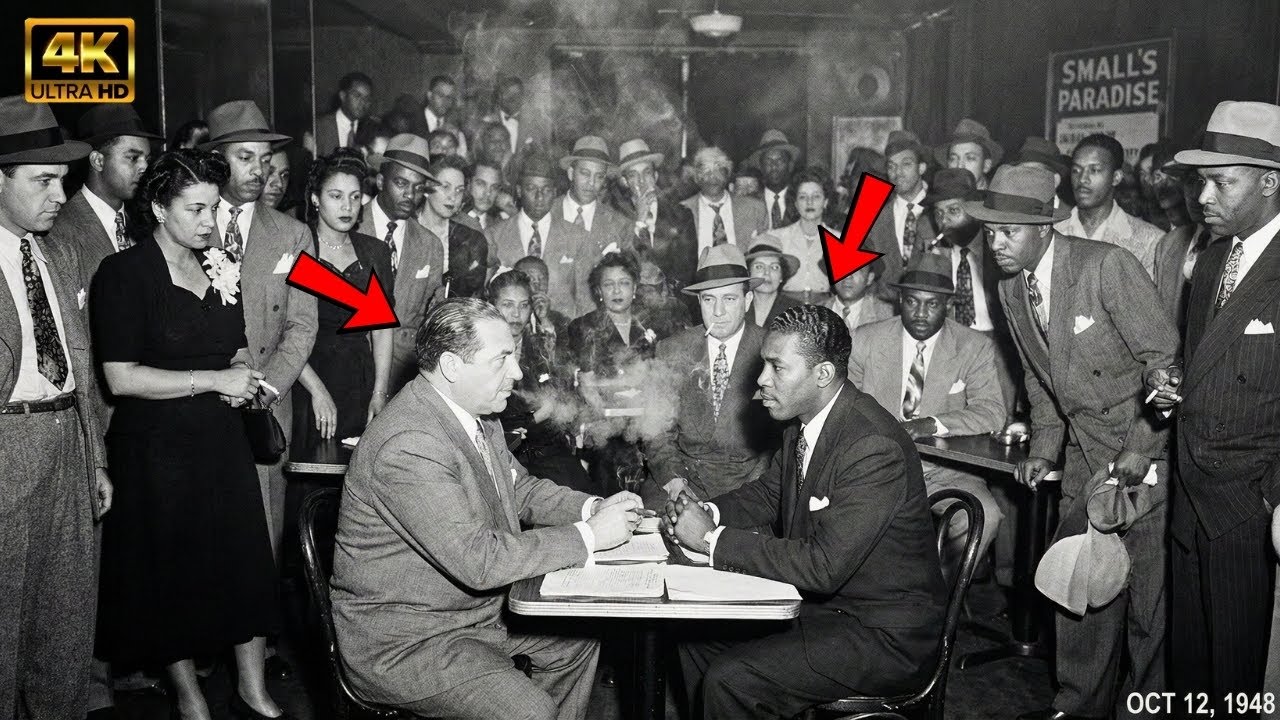
In Harlem, that was how a man showed respect. Bumpy raised an eyebrow. Frank Costello in Harlem without an army. “I must be important,” Bumpy said as Frank sat down across from him.
“You are,” Frank replied. “This must be serious. ”
“Very. ”
Bumpy gestured to a waiter.
Two bourbons. They sat in silence until the drinks arrived. Then Frank spoke. “Lucky’s coming back.
”
Bumpy had heard the rumors. Lucky Luciano. The man who created the Commission, organized the Five Families, built the modern mafia. Deported to Italy in 1946.
Now he was trying to return. “Back where? ” Bumpy asked. “America.
New York. Business. ”
Bumpy sipped his bourbon. “The government won’t allow it.
”
“He’s working on it. Bribes, connections, political pressure. He thinks he can overturn the deportation. And if he does, he wants to rebuild, reorganize, consolidate power.
”
Bumpy smiled. “And he needs Harlem. ”
Frank nodded. “He needs Harlem.
Which means he needs you. ”
“What does he want? ”
“A partnership. ”
“Define ‘partnership.
’”
“Fifty-fifty. Numbers, policy, protection, smuggling. Everything. You run the operations.
He provides protection, political contacts, access to the Commission. ”
Bumpy leaned back. “And what do I get? ”
“Money.
Safety. Legitimacy. ”
“I already have those things. ”
Frank smiled.
“Do you? ”
Bumpy’s eyes narrowed. “Explain. ”
“Right now, you’re independent.
Strong. Respected. But isolated. The Five Families tolerate you because you stay in your lane.
But if you ever tried to expand beyond Harlem, they would crush you. A partnership with Lucky changes that. You get Commission backing, protection, and the ability to operate anywhere. ”
Bumpy studied Frank.
“You’re offering me expansion. ”
“I’m offering you promotion. From King of Harlem to a player in a national game. ”
“And what does Lucky get?
”
“Access. Harlem generates what? Two million a year? More?
Three million? ”
“Close enough. ”
“That’s significant revenue. And Lucky wants his share, in exchange for what you already have.
”
“No. In exchange for what I could have. ”
Bumpy drained his bourbon. “Tell Lucky I’ll think about it.
”
“How long? ”
“I’ll let you know. ”
Frank stood. “Don’t think too long.
This offer has an expiration date. ”
“Why? ”
“Because if you say no, Lucky will find another way into Harlem. And that road may not be friendly.
”
“Is that a threat? ”
“That’s reality. ”
Bumpy stood and looked Frank in the eye. “Frank, I’ve been threatened by better men than Lucky Luciano.
And I’m still here. They’re not. Tell Lucky I’ll give him my answer when I’m ready. Not before.
”
Frank nodded. “So be it. But Bumpy, really. He’s not like other men.
He doesn’t accept no. ”
“Then he’ll have to learn. ”
At ten the next morning, Bumpy called his inner circle to his office. May, his wife.
Stephanie St. Clair. Juny Bird. Willie Jackson.
His most trusted advisors. He laid Costello’s offer on the table. A fifty-fifty partnership with Lucky Luciano. Access to the Commission.
National reach. But at what price? Stephanie spoke first. “You’d give up your independence.
Half your income, half your power. For what? Protection you already have. ”
“Exactly,” Juny agreed.
“We don’t need them. ”
May was silent. Then she spoke. “But what if we do?
”
Everyone looked at her. “What do you mean? ” Bumpy asked. “Right now, we’re strong in Harlem,” May said.
“But that’s it. We can’t expand. Can’t grow. We’re trapped in ten city blocks.
Is that enough? ”
“Yes,” Bumpy said. “Because it’s ours. ”
“But for how long?
” May pressed. “You’re forty-four. How much longer can you fight? Ten years?
Twenty? And then what? What happens to Harlem when you’re gone? ”
Bumpy was quiet.
She had a point. “If the offer is real,” May continued, “it could secure Harlem’s future. Not just yours. The whole community’s.
By aligning with the mafia. By aligning with power. That’s a difference. ”
Stephanie shook her head.
“This is a mistake. Luciano doesn’t do partnerships. He does takeovers. First it’s fifty-fifty, then sixty-forty, then seventy-thirty, and then you work for him.
”
“She’s right,” Willie said. “That’s how they operate. Slow conquest. ”
Bumpy listened, then spoke.
“So what do I do? ”
“Test him,” Stephanie said. “How? ”
“Make demands.
See if he’s willing to negotiate, or if it’s take it or leave it. And if it’s take it or leave it, then we know it’s not a real partnership. It’s a trap. ”
Two weeks later, Bumpy sent a message to Costello.
He wanted a personal meeting with Lucky Luciano, on neutral ground. Atlantic City was chosen. On June 15, 1948, the meeting took place in a hotel suite overlooking the ocean. Present: Lucky Luciano, Frank Costello, Meyer Lansky, Vito Genovese, Joe Bonanno.
The five most powerful mobsters in America. And Bumpy Johnson, with Juny Bird. That was all. Two men against five.
Lucky Luciano looked older than his fifty-one years. Prison and deportation had marked him. But his eyes were still sharp. Calculating.
Dangerous. “Mr. Johnson,” Lucky said. “Thank you for coming.
”
“Mr. Luciano. Please, call me Lucky. ”
Bumpy did not.
They sat down. Lucky began. “Frank told you about my offer. ”
“He did.
”
“What do you think? ”
“I think it’s interesting. But incomplete. ”
“How so?
”
“You’re offering me fifty percent of my own operation, in exchange for your protection and connections. That’s not a partnership. That’s a tax. ”
Lucky smiled.
“Fair point. So, what would make it a partnership? ”
“Sixty-forty. In my favor.
”
Lucky’s smile disappeared. “That’s not reasonable. ”
“It’s my operation. My people.
My territory. If you want access, you pay for it. ”
Meyer Lansky leaned forward. “Mr.
Johnson, you’re negotiating from a weak position. ”
“Am I? ”
“Yes. We could take Harlem whenever we wanted.
”
“Then why haven’t you? ”
“Because it would be costly. Bloody. And ultimately not worth it.
But if you force us, we will. ”
Bumpy looked at each of them in turn. Lucky. Frank.
Meyer. Vito. Joe. Five of the most powerful men in organized crime, threatening him.
He smiled. “Gentlemen, let me explain something. Harlem is not like your territories. It’s not the Bronx.
Not Brooklyn. Not Manhattan. It’s a community. A culture.
A people. And those people are loyal to me. Not because I’m the strongest, but because I protect them. If you invade Harlem by force, you’re not fighting me.
You’re fighting ten thousand people. Every shopkeeper, every preacher, every mother, every child. They’ll resist. Sabotage.
Rebel. And you’ll spend more holding Harlem than it will ever produce. ”
Vito Genovese laughed scornfully. “You’re bluffing.
”
“Am I? Test me. ”
Lucky raised his hand. “Enough.
” He looked at Bumpy. “You make a convincing argument. ”
“Thank you. ”
“But sixty-forty is too much.
”
“Then we have no deal. ”
Lucky studied Bumpy. “You’re willing to walk away, just like that? ”
“Yes.
”
“Why? ”
“Because I’d rather be King of Harlem than a prince in your empire. ”
Lucky smiled. “I respect that.
Fine. But I can’t accept sixty-forty. What can you accept? ”
“Fifty-fifty.
With one condition. ”
“What condition? ”
“Harlem stays autonomous. I run it my way.
No interference. No oversight. You get your fifty percent. But you don’t touch the operations.
”
Lucky looked at his partners. Meyer nodded. Frank nodded. Joe nodded.
Vito shook his head, but he was outvoted. Lucky extended his hand. “Agreed. ”
Bumpy did not shake it.
“One more thing. ”
“What? ”
“If you ever try to take more than fifty percent, or interfere with how I run Harlem, the deal is over. And we go to war.
”
“You’d go to war with the Commission? ”
“Yes. ”
Lucky studied Bumpy’s face. He saw no fear.
No bluff. Only certainty. This man would truly fight, and it would likely be very expensive. Lucky smiled.
“You’ve got guts, Johnson. I’ll give you that. So, do we have a deal? ”
He extended his hand again.
This time, Bumpy shook it. “Agreed. ”
The next day, Bumpy returned to Harlem and called another meeting with his inner circle. He told them the terms.
A fifty-fifty partnership. Harlem stays autonomous. No interference. Stephanie was skeptical.
“Do you trust them? ”
“No. ”
“Then why agree? ”
“Because refusing would mean war.
And war would destroy Harlem. This way, we keep control. Pay a tax. But we stay independent.
”
May agreed. “It’s pragmatic. ”
Willie didn’t. “They’ll eventually try to take more.
Guaranteed. ”
“So, what’s the plan? ”
“We prepare for war while hoping for peace. ”
On July 4, 1948, Independence Day, Bumpy threw a party at Smalls Paradise.
He invited everyone. The whole community. And, as a gesture, he invited Frank Costello, representing Lucky. Frank came with a gift.
A Rolex watch from Lucky, inscribed: *For Bumpy Johnson, a man who knows his worth. Lucky Luciano. *
Bumpy put it on and showed it to Frank. “Tell Lucky thank you.
”
“I will. ”
“And Frank? ”
“Yeah? ”
“Tell him I meant what I said about war.
If he crosses me, we fight. ”
“I’ll tell him. ”
“Good. ”
Frank smiled.
“You know, Bumpy, Lucky respects you. ”
“Why? ”
“Because you didn’t bend. Most men, when faced with the Commission, cave.
Beg. Give everything up. You negotiated. Held your ground.
Threatened war. That’s rare. ”
“I’m not most men. ”
“No.
You’re not. That’s why Lucky wants this partnership to work. ”
“Does it work so far? ”
From July to December 1948, the arrangement held.
Bumpy ran Harlem. Kept fifty percent. Fifty percent went to Lucky’s people. No interference.
No problems. Revenue even rose, because with the Commission’s backing, Bumpy could operate more openly and expand slightly into adjacent areas. By the end of 1948, Harlem was generating four million dollars a year. Bumpy kept two million.
Lucky’s organization received two million. Everyone won. In January 1949, Vito Genovese made his move. Without permission, he sent his men into Harlem to shake down businesses and collect protection money.
Bumpy called Frank Costello. “We have a problem. ”
“What now? ”
“Genovese is violating our agreement.
He’s operating in Harlem without consent. ”
Frank sighed. “I’ll handle it. ”
“No.
I’ll handle it. But I wanted you to know, so Lucky understands I didn’t start this. ”
“Understood. Be careful.
Genovese is dangerous. ”
“So am I. ”
On January 15, 1949, Bumpy’s men confronted Genovese’s crew on 135th Street. Ten of Bumpy’s men.
Eight of Genovese’s. “You’re not authorized to be here,” Juny said. “We don’t need authorization. ”
“Yes, you do.
We have a deal with Lucky. You’re violating it. ”
“Genovese doesn’t answer to Lucky. ”
“Then Genovese has a problem.
”
“With who? ”
“With me. ”
Bumpy stepped out of the shadows. Behind him, another thirty men, armed and ready.
Genovese’s men were outnumbered four to one. “Tell Vito,” Bumpy said. “Harlem is off-limits. If he wants to change the agreement, he takes it up with Lucky.
But if he sends men here again without permission, they don’t go home. ”
Genovese’s men left and reported back. Vito was furious. But Frank Costello intervened, calling a Commission meeting and telling Vito to stand down.
“You’re violating Lucky’s deal,” Frank said. “Bumpy Johnson has autonomy in Harlem. That was the agreement. ”
“I don’t care about the agreement.
”
“Then you go to war with Bumpy. With Lucky. And with the rest of the Commission. We voted.
You’re outvoted. ”
Vito backed down. Humiliated, but alive. In February 1949, Lucky Luciano called Bumpy from Italy.
The first time they spoke directly. “Mr. Johnson. ”
“Mr.
Luciano. I heard about the Genovese situation. ”
“Yes. You handled it well.
”
“Thank you. ”
“I want you to know our deal stands. Harlem is yours. ”
“As long as you honor the fifty-fifty split, so do I.
”
“Good. Because you’ve proven something important. ”
“What’s that? ”
“That a black man can stand up to the Italian mafia and win.
That’s significant. Not just for you. For everyone. ”
Bumpy was silent for a moment.
Then: “Mr. Luciano, may I ask you something? ”
“Of course. ”
“Why did you really offer this partnership?
”
Lucky laughed. “Honestly? Because taking Harlem by force would have been stupid. Expensive.
Bloody. And probably impossible. You’re too entrenched. Too respected.
So a partnership made sense. But more than that, I respect strength. And you are strong. Not just physically.
Mentally. You know your worth. You don’t bend. That’s rare.
Especially for someone in your position. ”
“Thank you. ”
“Don’t thank me. Just stay strong.
Because the moment you weaken, someone will try to take what’s yours. ”
“I know. ”
“Good. Then we understand each other.
”
By March 1949, nine months into the partnership, the arrangement held. But tensions remained. Vito Genovese was still angry, still looking for an opening. And in March, he found one.
A numbers runner in Harlem named Marcus Webb had been stealing from Bumpy and Lucky’s share. When he was caught, Marcus made a deal with Genovese: “I’ll testify that Bumpy is cheating. That he’s shorting his payments and keeping more than fifty percent. ”
Genovese brought this to the Commission, calling an emergency meeting and accusing Bumpy of breach of contract.
Frank Costello called Bumpy. “We have a problem. ”
“What now? ”
“Genovese is accusing you of cheating.
”
“Based on what? ”
“A witness. Marcus Webb. Your numbers runner.
”
Bumpy’s blood ran cold. Marcus, one of his most trusted men, had stolen and was now lying to save himself. “What does Lucky say? ”
“He wants to hear your side before he decides.
”
“When? ”
“Tomorrow. Atlantic City. Same hotel.
”
Bumpy hung up. Called Juny. “Find Marcus Webb. Now.
”
By midnight, they had him tied to a chair in a warehouse. Marcus was crying. “Bumpy, I’m sorry. I had to.
They would have killed me. ”
“So you lied. Said I was cheating. ”
“Yes.
”
“Why? ”
“Because Genovese said he’d protect me if I testified against you. ”
“And you believed him. ”
“I had no choice.
”
“Everyone has a choice. You made the wrong one. ”
Bumpy pulled out his ledgers. Every transaction.
Every payment. Every split, nine months worth, all documented. “Here’s proof I never shorted Lucky. Every payment exactly fifty percent, down to the cent.
”
Marcus looked at the books and realized his lie would be exposed. “What happens now? ”
“Now you come with me to Atlantic City. And you tell the truth.
”
On March 20, 1949, the Commission met in Atlantic City. Same room as before. Lucky Luciano, Frank Costello, Meyer Lansky, Vito Genovese, Joe Bonanno. And Bumpy Johnson, with Marcus Webb in handcuffs.
Lucky spoke first. “Mr. Johnson, you’ve been accused of cheating. Of keeping more than fifty percent.
What do you say? ”
“I say it’s a lie. ”
Vito leaned forward. “We have a witness who says otherwise.
”
“Your witness is a thief and a liar. ”
“Prove it. ”
Bumpy laid the ledgers on the table. “Here are the records for the last nine months.
Every payment to your organization, exactly fifty percent. ”
Meyer Lansky examined the books. Twenty minutes later, he looked up. “These are exact.
Every payment is precisely fifty percent. No discrepancies. ”
Vito turned to Marcus. “You said he was cheating.
”
Marcus was sweating. “I… I made a mistake. ”
“A mistake, or a lie? ”
“A lie.
”
Marcus collapsed. “Mr. Genovese told me to say Bumpy was cheating. He said if I testified, he’d protect me.
But it wasn’t true. I was the one stealing. Not Bumpy. ”
The room went silent.
Lucky Luciano looked at Vito. “You fabricated evidence. ”
Vito had no answer. Lucky stood.
“Vito, you overstep your bounds. This meeting is adjourned. ” He turned to Bumpy. “Mr.
Johnson, my apologies for this waste of time. For questioning your integrity. And for Vito’s behavior. ”
Bumpy nodded.
“I accept it. ”
“And what do we do with Marcus? ”
“What do you mean? ”
“He stole from both of us.
And he lied. You may decide his fate. Whatever way you choose. ”
Bumpy looked at Marcus, then at Lucky.
“I’ll handle it. ”
On March 21, 1949, back in Harlem, Bumpy stood before Marcus in the same warehouse. Marcus begged for his life. “Please, Bumpy.
I made a mistake. ”
“Yes, you did. ”
“I’ll pay back every dollar. ”
“You can’t.
You stole from the mafia. They don’t forgive debts. ”
“So, what happens to me? ”
Bumpy thought for a moment.
Then he made his decision. “You’re banished from Harlem. Permanently. Leave New York.
Never come back. If I ever see you again, you’re dead. ”
Marcus looked up. “You’re letting me live.
”
“I’m giving you a chance. More than you deserve. ”
“But why? ”
“Because if I killed you, I’d be just like them.
And I’m not like them. I run Harlem my way, by my rules. And my rules say mistakes can be forgiven. Once.
This is your once. ”
Marcus was escorted out of Harlem. He was never seen again. When Vito Genovese heard what Bumpy had done, he was confused.
“You let him live? ”
“Yes. ”
“Why? ”
“Because I could.
And because mercy is more powerful than murder. ”
Vito learned something that day. Bumpy Johnson was not just strong. He was wise.
In April 1949, a year after the partnership began, Lucky Luciano sent another message from Italy. “Mr. Johnson, our partnership has exceeded all expectations. Revenue is up, operations run smoothly, and you’ve proven yourself reliable.
More than that, you’ve proven yourself honorable. That’s rare in our business. I want to propose an extension of our arrangement. I want to give you more territory.
Not just Harlem, but parts of the Bronx, Queens, Brooklyn. You keep working independently, keep fifty percent, but with a larger reach. ”
Bumpy read the letter to May. “I think Lucky is testing you,” she said.
“How so? ”
“He’s offering expansion. Seeing if you’re content with what you have, or if you want more. ”
“And what should I say?
”
“What do you want? ”
Bumpy thought. “Harlem is enough. ”
“Then tell him that.
”
In May 1949, Bumpy’s reply went out. “Mr. Luciano, I appreciate the offer, but I must decline. Harlem is my home, my community, my responsibility.
Expanding beyond it would weaken my focus and reduce my effectiveness. I would rather be the undisputed King of Harlem than a disputed prince of several territories. I hope you understand. I hope this does not offend you.
”
When Lucky received the letter, he smiled, and showed it to Meyer Lansky. “Read this. ”
Meyer read it and laughed. “He turned down expansion.
”
“Yes. ”
“Why? ”
“Because he knows who he is and what he wants. That’s wisdom.
”
Meyer nodded. “Most men in his position would have grabbed the opportunity, overextended, and weakened themselves. But Bumpy knows his limits and stays within them. That’s discipline.
”
Lucky folded the letter and placed it in his desk drawer. “Mr. Johnson has just earned more respect by saying no. ”
In June 1949, the one-year anniversary of the partnership, Lucky sent a gift.
A painting of Harlem, 125th Street, by a famous Italian artist. With a note: *For Bumpy Johnson, who knows that the greatest strength is knowing when to say no. Thank you for teaching me that lesson. Lucky.
*
Bumpy hung the painting in his office, above his desk, where he could see it every day. A reminder that he had stood up to the most powerful gangster in America and won. Not through violence. Through principles.
The partnership lasted through 1955. Six years. The arrangement held. Bumpy ran Harlem independently, kept his fifty percent, and proved something Lucky had not thought possible.
“That power doesn’t have to be absolute,” Lucky told him. “That you can share, and both sides win. That’s rare in our world. Everyone wants everything.
But not you. You knew what you wanted, and you took only that. Nothing more. That’s wisdom.
And because of it, I respect you more than any made man I’ve ever worked with. ”
In September 1955, Bumpy attended a Commission meeting as a guest. The first time a non-Italian had ever been invited. Lucky introduced him.
“Gentlemen, this is Bumpy Johnson. You all know him. He runs Harlem independently, but in partnership with us. And I want to tell you something.
This man has taught me more about power than anyone in this room. He taught me that strength isn’t about how much you take. It’s about how much you keep. That respect isn’t about fear.
It’s about integrity. And that the best partnerships are based on mutual interest, not domination. I propose we extend his model to other areas. Other partnerships.
”
The room was silent. Then Carlo Gambino spoke. “With all due respect, Lucky, Bumpy Johnson is unique. You can’t copy what he’s built.
”
“Why not? ”
“Because it requires something most men don’t have. ”
“What? ”
“The ability to say no.
Even when yes would be easier. Even when yes would be more profitable. Bumpy says no because he knows who he is and what he wants. That can’t be taught.
”
The Commission nodded. Agreed. Bumpy Johnson was one of a kind. In January 1957, Lucky Luciano died.
A heart attack in Italy. He was sixty-four. Bumpy attended the funeral in Naples, one of only three non-Italians invited. At the funeral, Frank Costello spoke.
“Lucky Luciano built the Commission. Organized crime made us powerful. But his greatest achievement was not the Commission. It was the partnership with Bumpy Johnson.
Because that partnership proved that organized crime doesn’t have to be about domination. It can be about cooperation. Mutual respect. Shared success.
Bumpy proved that to Lucky, and Lucky never forgot it. ”
After the funeral, Meyer Lansky approached Bumpy. “What happens to the partnership now? ”
“That depends on you.
And me. Who inherits Lucky’s seat? ”
“Technically, Frank. But functionally, I manage the finances.
”
“So, what do you want? ”
“I want the partnership to continue. Same terms. Fifty-fifty.
Harlem autonomous. No interference. ”
Meyer extended his hand. “Agreed.
”
They shook. The partnership continued. From February 1957 to 1968, another eleven years. The arrangement held, even after Lucky’s death.
Bumpy ran Harlem. The Commission got their fifty percent. No problems. No wars.
Only business. By 1968, Harlem was generating eight million dollars a year. Bumpy kept four million. The Commission received four million.
The most successful partnership in the history of organized crime. On July 7, 1968, Bumpy Johnson died. A heart attack. He was sixty-three.
At his funeral, Frank Costello spoke. “Bumpy Johnson was many things. Criminal. Protector.
Leader. Friend. But above all, he was a man who knew his worth. When Lucky Luciano offered him a partnership, most would have bent, accepted the terms, and been grateful.
But Bumpy negotiated. Demanded respect. Threatened war if he didn’t get it. And Lucky respected him for that.
That partnership lasted twenty years. It made both sides rich. And it proved something important. That different worlds can coexist.
That power doesn’t have to be absolute. That respect can be mutual. Bumpy Johnson taught us that. And we are all better for it.
”
In the crowd, Meyer Lansky stood and applauded. The rest of the Commission followed. A standing ovation for a man who had never bowed, never compromised, never given up his independence. Even when he stood against the most powerful organization in America.
In 1969, a year after Bumpy’s death, the partnership fell apart. Not through conflict. But because Bumpy was irreplaceable. Harlem became divided.
Multiple leaders emerged, none with Bumpy’s respect, none with his integrity, none with his ability to say no. The Commission tried to take control. Sent men in. But the community resisted.
They remembered Bumpy. Remembered the independence. And refused to bow. By 1975, the Commission gave up.
Harlem remained independent, because Bumpy had taught them that some things cannot be bought. Cannot be controlled. Only respected. In 1980, Meyer Lansky, on his deathbed, gave an interview.
Asked about his greatest regret, one stood out. He said: “That we didn’t learn from Bumpy Johnson. ”
“Learn what? ”
“That partnership works better than domination.
That respect works better than fear. That knowing your worth works better than settling for less. Bumpy knew all of that. And he never compromised.
I wish we had all learned that lesson. The world would look different. ”
