On August 23, 1848, a Baton Rouge merchant named Richard Caldwell was traveling along a muddy trail east of the Mississippi River when he came upon an abandoned carriage with one wheel sunk into the soft ground. Inside were three objects: a leather glove, a ledger with every page blank, and a silver locket with no photograph. The carriage bore the markings of the Whitmore Plantation, a large estate roughly five miles east of the city. By midday, Caldwell had reported his discovery to the Baton Rouge constable.
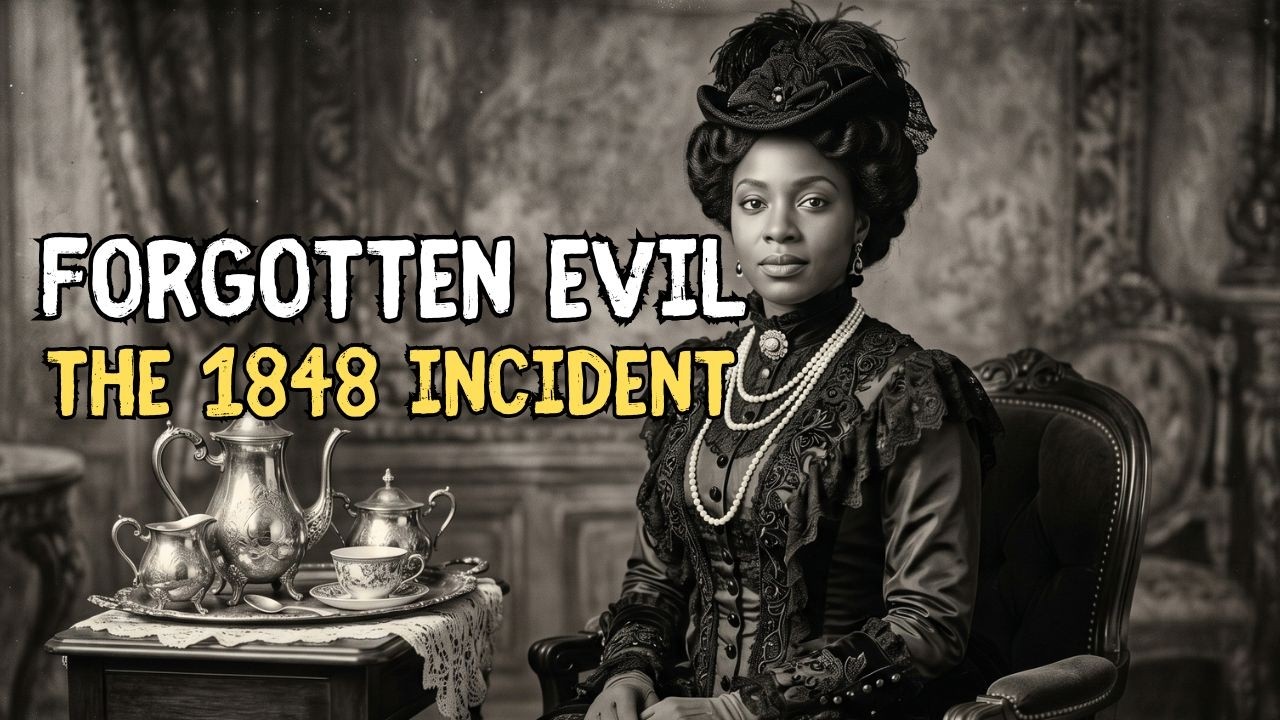
It was then noted that no member of the Whitmore household had been seen in town for nearly three weeks. Samuel Whitmore, forty-six, was a man of rigid habit, known for his Thursday appointments at the First Bank of Baton Rouge. Bank records later confirmed he had missed three consecutive visits without word. That afternoon, Constable James Harrington sent two deputies to the plantation.
What they found there would remain one of the most disturbing cases in the history of East Baton Rouge Parish. The main house appeared undisturbed. The twenty-seven enslaved people working the cotton fields continued their labor without interruption. House servants carried on their duties.
Meals were prepared and served. Beds were made. Everything gave the impression that the Whitmore family had simply stepped away somewhere on the grounds. Samuel Whitmore, his wife Elizabeth, and their three adult children were nowhere to be found.
The only household member who seemed out of the ordinary was a house slave named Adeline Broussard, approximately thirty years old, who had taken to sitting perfectly still in the parlor whenever she was not performing her duties. When the deputies questioned the enslaved workers, not one reported anything unusual. Every person gave nearly the same response: Master Whitmore has gone to visit his brother in Natchez. He is expected back before the harvest.
Samuel Whitmore had no brother in Natchez. According to every available record, he had no brothers at all. In the weeks that followed, a quiet investigation was launched. Neighboring plantation owners were approached.
The absence of the Whitmore family was acknowledged, yet none of them expressed alarm. When pressed, they grew uneasy and redirected the conversation. In September 1848, Judge Martin Lambert, a longtime business associate of Samuel Whitmore, opened a more formal inquiry. Lambert privately wrote of the strange silence hanging over the affair.
It is not merely that the family has disappeared, he recorded. It is that no one seems to want to speak of it. It is as if the community has collectively agreed to look away. By October, the harvest came in on schedule.
Cotton was gathered, processed, and sold. Profits were deposited into the Whitmore account at the First Bank of Baton Rouge. Those deposits were authorized by a signature matching Samuel Whitmore’s, though the man himself was never seen in person. During this period, accounts of Adeline Broussard’s increasingly unusual behavior began to surface.
She was now seen in the master bedroom, dressing herself in Elizabeth Whitmore’s clothing and wearing her jewelry. More alarming still, she had begun to speak as though she were Mrs. Whitmore herself, issuing orders in a flawless imitation of the missing woman’s voice and manner. The other house servants, evidently frightened, followed her instructions without question.
In early November, a field slave named Moses was caught attempting to flee the plantation. Before being returned, Moses reportedly told Judge Lambert, There ain’t no Whitmores no more. Miss Adeline says there never was. After he was brought back to the property, Moses was never seen again.
By December 1848, visitors to the plantation described being received by Adeline Broussard, who now openly presented herself as Mrs. Whitmore. One milliner who came to deliver hats ordered months earlier by Elizabeth wrote that the woman received her in the parlor dressed in Mrs. Whitmore’s clothes, speaking with perfect refinement.
When asked after Mrs. Whitmore, she replied, I am Mrs. Whitmore. The milliner noted that what unsettled her most was not the claim itself, but how naturally and completely the woman seemed to inhabit it.
Judge Lambert attempted to organize a formal investigation in January 1849. His efforts were blocked at every turn. Local officials called it a private plantation affair. Fellow judges urged him to leave the matter alone.
Lambert began writing about what he called a conspiracy of silence. In a letter to his brother in New Orleans, he wrote, Something has taken place here that no one is willing to confront. It is as if speaking of it openly might make it undeniable. The most chilling development came in February 1849, when a daguerreotype was taken at the plantation during a gathering of neighboring owners.
The image shows a formal dinner party. Seated at the head of the table is not Samuel Whitmore but Adeline Broussard, dressed in fine clothes. None of the white guests surrounding her appear to find anything wrong with the arrangement. Later analysis confirmed their faces show no trace of discomfort or unease.
They are engaged in conversation, smiling, raising their glasses. By March 1849, Lambert’s persistent inquiries had drawn unwanted attention. He reported receiving anonymous threats. His home was vandalized.
In April, he was removed from the bench on grounds of mental instability. He relocated to New Orleans, taking his private records with him. The most comprehensive account of what may have occurred came from an unexpected source. In 1865, a formerly enslaved man from a neighboring plantation named Isaiah Cooper testified before a Union Army officer.
Cooper claimed he had been present at the Whitmore Plantation on the night of August 1, 1848, three weeks before the carriage was discovered. According to Cooper, Samuel Whitmore’s cruelty toward Adeline Broussard had been building for years. Not the kind that leaves marks on the body, Cooper said, but the kind that breaks something inside. Adeline had been purchased in 1842 from a French family in New Orleans.
She was well educated and spoke both English and French fluently. Whitmore had bought her to serve as his wife’s personal maid, but, Cooper asserted, had other intentions entirely. The night of August 1 began with an elaborate supper prepared by Adeline. The entire Whitmore family gathered at the table.
After the meal, they began to show signs of severe distress. Cooper described them grabbing at their throats, their eyes bulging. Whitmore looked straight at Adeline like he finally understood something. Adeline sat watching them all, calm as still water.
Cooper’s testimony points to Adeline having poisoned the entire family that evening. What followed, he said, moved beyond comprehension. She gathered the house slaves in the kitchen and told them the Whitmores had gone to visit family in Natchez and that she would be managing the household in their absence. Then, according to Cooper, everyone simply nodded as though it were the most natural thing in the world.
Adeline directed several trusted field hands to bury the family deep in the swampland at the far eastern boundary of the property, a stretch seldom visited due to its harsh conditions. After that night, Cooper said, it was as if the Whitmores had simply ceased to exist. The most disturbing thread running through Cooper’s testimony was his description of how white Baton Rouge society responded. The white folks, they’d come to dinner, sit at her table, converse with her like she was one of them.
It wasn’t that they were fooled. They knew who she was. It was like they chose not to see what was right in front of them. Judge Lambert, in one of his final written reflections, articulated the psychology at work.
They cannot acknowledge what has happened without acknowledging what preceded it, and that, it seems, is the one thing they cannot bear to face. The historical record grows fragmented after 1850. The plantation continued to operate, apparently under Adeline Broussard’s direction, though official documents still bore Samuel Whitmore’s signature. In 1853, a fire gutted most of the main house.
No deaths were reported. The property was rebuilt on a smaller scale. In 1866, after the Civil War and emancipation, the Whitmore Plantation was formally transferred to a Mrs. Adelaide White, described in the documents as a free woman of color.
The transaction was handled by the same bank that had managed Whitmore accounts for decades. Adeline Broussard disappears from the official record after this point. Adelaide White appears in the 1870 census as the owner of a modest but productive farm on what had once been Whitmore land, recorded as a widow with no children. Bank records discovered in 1966 in a hidden compartment of the First Bank of Baton Rouge show the account was managed after August 1848 by someone other than Samuel Whitmore.
Two distinctly different hands signed the documents, both claiming to be him. After the disappearance, new patterns emerged: smaller cash withdrawals, purchases of medical texts and French language books from New Orleans, payments to a tutor, a dressmaker, a jeweler, and an importer of fine French goods. In 1851, the account funded the purchase of freedom papers for three individuals described only as former property of neighboring estates. In November 1852, a separate account was opened in the name of Adelaide White, funded by an initial transfer from the Whitmore holdings.
A series of interviews conducted in 1929 added a final unsettling detail. A ninety-four-year-old woman named Josephine Taylor, a former house slave at a neighboring plantation, confirmed Cooper’s account. She added that some of the white wives who visited Adeline understood exactly who she was and what she had done. In their eyes, Taylor said, there was something like admiration.
There were other wives who wished they could do what she did. Not just to be free, but to make the ones who hurt them pay. They lived through her. That’s why they protected her.
Adelaide White died in 1882. Her grave marker bore only a name and two dates. In 1962, workers excavating in the swampland that had once been part of the Whitmore property, during construction of what would later become Interstate 10, uncovered five skeletons. The remains were estimated to have been in the ground for over a century.
No further investigation was carried out. The bones were reinterred in an unmarked section of Highland Cemetery. Judge Lambert, who died in 1852, wrote in his journal shortly before his death: The most terrifying aspect of this affair is not what it reveals about Adeline Broussard or even about the institution of slavery itself. It is what it reveals about us all.
Our willingness to embrace a lie rather than face a truth that unsettles our sense of order. I fear this tendency lies dormant in every human heart, waiting only for the moment when reality becomes too painful to bear.
