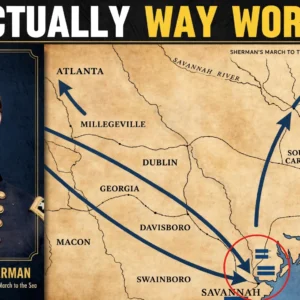
On November 15, 1864, General William Tecumseh Sherman led 62,000 battle-hardened troops out of Atlanta’s smoldering ruins, bound for Savannah. His orders were blunt: forage liberally, destroy…
The smoke had barely cleared from Atlanta when Sherman made his decision. The city lay in ruins behind him, its factories and rail hubs torched to deny the rebels any last scrap of industrial strength. Ahead stretched three hundred miles of Georgia farmland, towns, and plantations that had kept the Confederate war machine alive. On … Read more
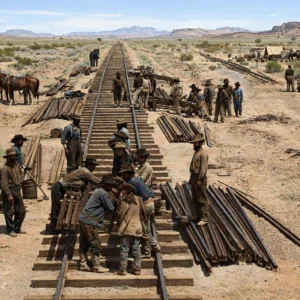
On January 8, 1863, in Sacramento, California, Governor Leland Stanford drove a silver spike into a railroad tie, launching the Central Pacific Railroad eastward toward a meeting with the Union…
The silver spike came down on January 8, 1863, at a muddy ceremony outside Sacramento, California. Governor Leland Stanford drove it into a railroad tie, and the crowd gathered on the wet ground watched the Central Pacific Railroad officially begin. What they were starting was audacious to the point of insanity: lay track east from … Read more
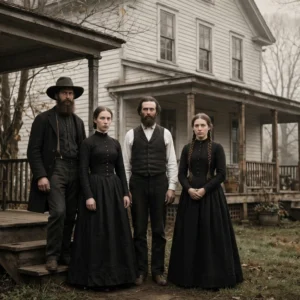
In 1924, deep in the isolated mountains of Haywood County, North Carolina, a young merchant named Thomas Brennan climbed a remote trail to collect an unpaid debt from the reclusive Ashford family….
The sound came from inside the house, muffled but unmistakable. It was a cry, or perhaps a lament, both restrained and desperate. Thomas Brennan turned back toward Jonathan Ashford, hoping for an explanation, but the patriarch merely squinted and slowly shut the door. The click of the lock being engaged echoed like a last warning. … Read more
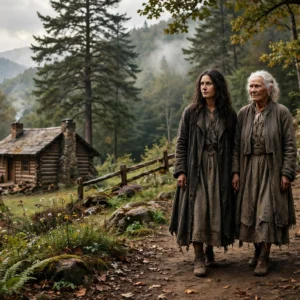
In 1891, in an isolated Appalachian settlement called Thorn Ridge Hollow, a railroad surveyor named Silas Pemberton vanished after ignoring warnings to stay away from a remote cabin. The local…
In late April of 1891, Vernon Griggs was making his usual rounds through Thornridge Hollow, checking on folks after a winter that had killed three people with pneumonia and two more who froze trying to walk to the nearest town for supplies. He was as close to a lawman as the settlement had, a broad-shouldered … Read more
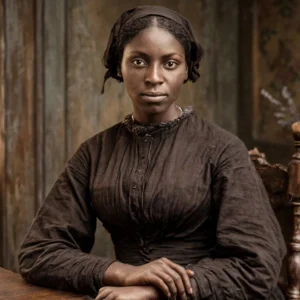
In November 1855, Ruth Washington carried water from a well on a Mississippi plantation and was never seen again. A 23-year-old house servant on Josiah Witmore’s cotton estate near Vicksburg, she…
On November 15th, 1855, Ruth Washington was last seen carrying water buckets from the well near the main house kitchen of the Witmore plantation. Sarah Mitchell, an elderly cook who had worked on the plantation for over twenty years, later told investigators that Ruth had seemed troubled that morning, but had refused to explain what … Read more
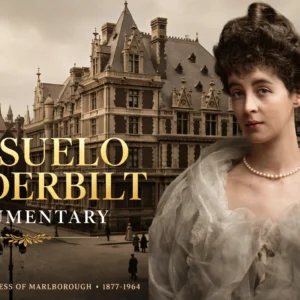
On November 6, 1895, police cordons struggled to hold back 2,000 people outside St. Thomas’s Church in New York, where women fainted and men climbed lampposts just to glimpse the bride. Inside the…
On the morning of November 6th, 1895, the corner of Fifth Avenue and 53rd Street in New York looked like the scene of a coronation. Police cordons barely held back a crowd of two thousand people who had come only to glimpse the carriages. Women fainted in the crush. Men climbed lampposts for a better … Read more
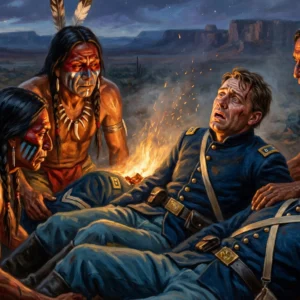
On June 25, 1876, George Armstrong Custer divided his 210 soldiers from the rest of the Seventh Cavalry and rode toward the Little Bighorn River, believing only a few hundred Native warriors…
On the afternoon of June 25, 1876, on the banks of the Little Bighorn River in Montana, the world lasted only thirty minutes for George Armstrong Custer’s 210 soldiers. What they experienced in those thirty minutes was one of the most terrifying final moments in history. Custer was already a controversial figure entering the summer … Read more
In November 1864, Cullen Baker and his Independent Rangers caught a band of settlers crossing the Saline River in the Ouachita Mountains—mostly old men, women, and children fleeing the wartime…
The whiskey was already in his hand when the four Black Union soldiers walked into the saloon at Spanish Bluffs, Arkansas. They asked for identification, and Cullen Baker, still wearing his Confederate hat, drew his pistol and shot them all—a sergeant first, then the three others, until the floor of the saloon ran with blood. … Read more
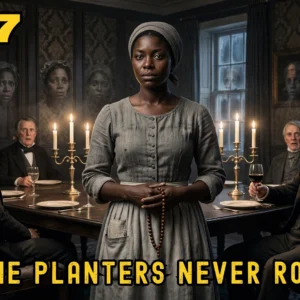
In November 1837, nine of Charleston’s wealthiest planters gathered at Oak Ridge Hall for an exclusive supper celebrating another prosperous harvest. The invitations were sealed in crimson wax,…
The air in Charleston that November carried the scent of magnolia and decay. The city stretched along the Carolina coast like a jewel built on bones. Its cobblestone streets were polished by the feet of the enslaved; its grand homes were whitewashed to hide the blood in their foundations. Fortunes rose on rice and cotton, … Read more

In 1927, Arthur Judson, manager of the Philadelphia Orchestra and the New York Philharmonic, asked NBC to broadcast his concerts. NBC refused. Rather …
For most of the history of American television, the country saw its programming through a handful of broadcast networks, delivered free over the air by hundreds of local affiliate stations. Above the rest stood the big four: NBC, CBS, ABC, and Fox. For decades, these networks did more than air shows; they created the television … Read more