King Charles III signed the formal instrument on the 30th of October 2025, and with it, his younger brother ceased to be a prince of the United Kingdom. By the brief statement issued from Buckingham Palace at midday, Andrew Mountbatten-Windsor was stripped of his style, his titles, and his honors. He was told that formal notice had been served to surrender the lease on Royal Lodge, the thirty-room mansion in Windsor Great Park he had occupied for over two decades, and that he would move to alternative private accommodation. The palace noted that these censures were deemed necessary, notwithstanding the fact that he continued to deny the allegations against him.
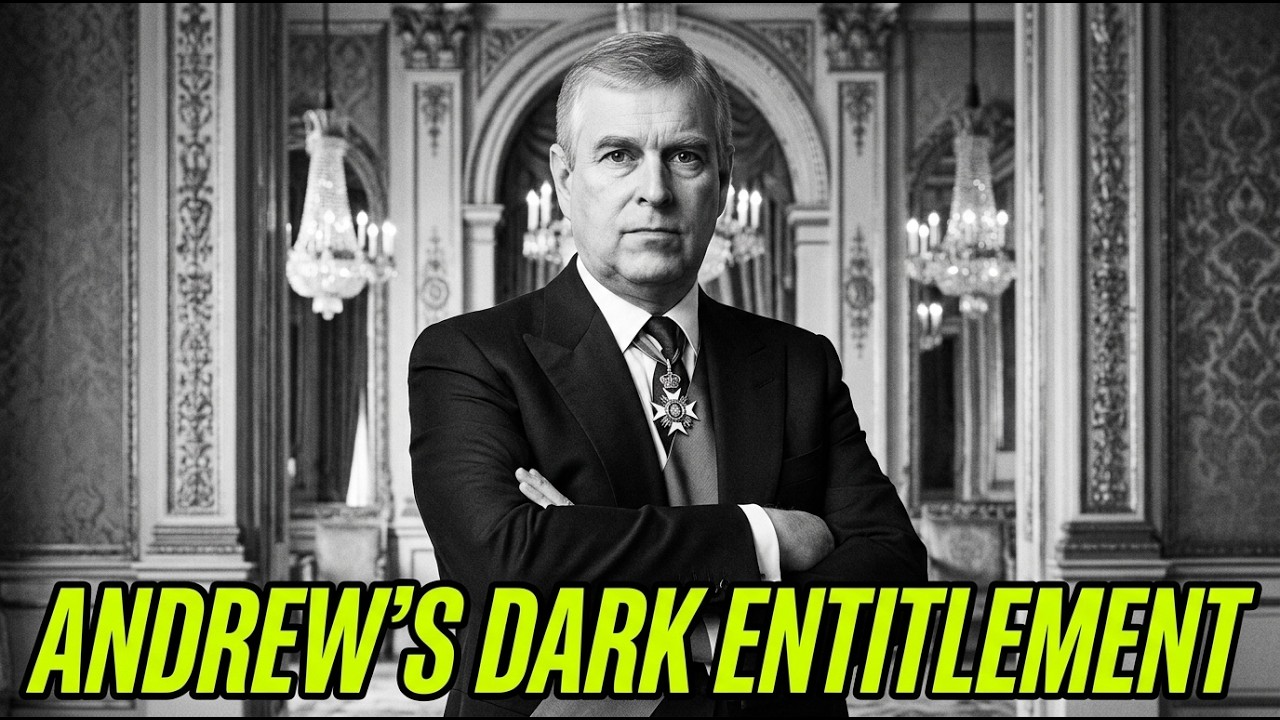
The action was the first of its kind against a British prince in over a hundred years. The last had been in 1919, when Prince Ernest Augustus lost his British titles under the Titles Deprivation Act for fighting on the German side in the First World War. Andrew’s removal was not accomplished under any comparable legislative framework; it was done by letters patent under the great seal, issued on the 3rd of November, declaring that Andrew Mountbatten-Windsor shall no longer be entitled to hold and enjoy the style, title, or attribute of royal highness and the titular dignity of prince. He remained eighth in line to the succession, because removing him would have required an act of parliament and the consent of the Commonwealth realms, a legislative complexity the institution chose not to pursue.
The announcement was the culmination of pressure that had built across the preceding three weeks. On the 17th of October, Andrew had issued his own statement saying he would no longer use his titles, an attempt to appear to make the decision himself. The gesture was not accepted as adequate. Two developments accelerated the pressure.
The first was the publication, on the 21st of October, of Virginia Giuffre’s posthumous memoir, *Nobody’s Girl*, which produced extensive coverage in the British and international press of the encounters she had described between herself and Andrew. The second was the emergence of new reporting on the financial arrangements under which Andrew had occupied Royal Lodge. He had paid one million pounds for a 75-year lease on the property in 2003. He had completed roughly 7.
5 million pounds of refurbishments by 2005, and from that point forward he had been required to pay only a peppercorn of rent, a nominal annual sum, if demanded at all. The British public absorbed the reporting with the kind of anger that financial revelations of this kind tend to produce. The woman whose testimony had made the removal possible had not lived to see it. Virginia Roberts Giuffre took her own life on the 24th of April 2025 at her home in Western Australia.
She was 41 years old. She had spent the last decade of her public life pursuing the institutional accountability that the network of men who had abused her had spent two decades attempting to prevent. Her brother, Sky Roberts, had issued the family’s statement after her death, acknowledging that the family had lost one of its most courageous members, and observing that an ordinary American girl from an ordinary American family had brought down a British prince with her truth and extraordinary courage. The bringing down was not complete at the time of her death.
The completion came six months later. Andrew’s life had begun in conditions almost perfectly designed to produce what he became. He was born on the 19th of February 1960 at Buckingham Palace, the first child of a reigning British monarch in over a hundred years. Queen Victoria’s youngest child, Princess Beatrice, had been born in 1857, and no British monarch since had produced children while on the throne.
The Queen was 33, eight years into her reign. Charles was then 11, Anne nine, both born before her accession when she was still Princess Elizabeth. The Queen had wanted another child, in part because the early childhoods of the older two had been substantially disrupted by the institutional demands of the new reign. Charles was three and Anne eighteen months old when their mother became queen, and both had been raised within the pressures that accession imposed.
The Queen wanted a child whose early childhood she could be more present for. Andrew was that child. By every available account from those who knew the family, the Queen was visibly more relaxed with him than she had been with Charles. The reign had settled into its working rhythm.
The household organized itself around him in the way households organized themselves around wanted babies in stable circumstances. He was the favorite, and it was not a secret. Charles observed the differential treatment with the accuracy that his temperament gave him about every dimension of family life. He had been the older brother who had absorbed the institutional pressures of his position from infancy; Andrew was the younger brother positioned to absorb more of the maternal warmth that Charles had not received.
Edward arrived in 1964, occupying his own position in the family arithmetic without disrupting Andrew’s place at the center of the maternal warmth. The lesson Andrew absorbed in those early years was that everyone around him bowed. The household staff bowed, the visitors bowed, the cousins bowed. He never learned that his social position required adjustment to other people’s; other people adjusted to him.
The conviction that he was the central figure of whatever world he was operating in was formed early and lasted for 65 years. His education began with a governess at Buckingham Palace, Catherine Peebles, called Mipsy by the children. She had also taught Charles, and the contrast was visible. Charles had been a sensitive and difficult student whose temperament had not matched her expectations.
Andrew was the easier child who produced the cheerful, confident engagement with lessons that pleased her. At eight, in 1968, he was sent to Heatherdown Preparatory School in Berkshire, a different school from the one Charles had attended, judged by the family to be a more appropriate fit for his temperament. He thrived there. In 1973, at 13, he followed his father and brother to Gordonstoun in Scotland, where Charles had been miserable.
Andrew’s experience was different. He was more physically robust, more temperamentally suited to the rough boarding school environment. He fit into the institutional culture in a way Charles had not. The recollections of those who attended Gordonstoun with him, preserved in Andrew Lownie’s 2025 biography, *The Rise and Fall of the House of York*, tell a consistent story.
One woman remembered him as a very slimy so-and-so, arrogant, pleased with himself, a bully, who thought he was funny, handsome, and clever when he was not. Another former student said he was so full of himself and would literally often say, “You do know who I am. ” The phrase is the one that recurs. He was 13, 14, 15 years old, at boarding school with boys who were nominally his equals under the democratic fiction such schools maintained.
Andrew had not absorbed that fiction. He had carried into Gordonstoun the conviction that he was different, and that any social interaction in which the difference had been forgotten could be corrected by the question that asserted it. People were wary of him. The nickname he earned at school, Randy Andy, followed him for the rest of his life.
It was applied to him for the conduct of a teenage boy who had absorbed the conviction that women were available to him and would naturally accommodate his interest. There is, preserved in the historical record, one recollection from the period that complicates the simpler picture. A student who had a relationship with him in his final year at Gordonstoun described him as kind, generous, and trusting of her, a great responsibility to be discreet, a young man who was naive and trusted people in case they took advantage of him. Both presentations coexisted across his life: he was capable of producing warmth, and he was capable of producing entitlement.
The challenge for honest documentary work is to preserve both while attending most carefully to what the entitlement produced for the people who could not access the warmth. Gordonstoun ended in 1979. The year between school and the Royal Navy, and the early naval training, pass quickly in the record. He joined the Navy in 1979, trained as a helicopter pilot, was awarded his wings, completed his operational training, and joined 820 Naval Air Squadron, the Sea King squadron based on the aircraft carrier HMS Invincible.
When the Falklands War began on the 2nd of April 1982, with Argentine forces overwhelming the small British garrison on islands Argentina had claimed for over a century, the British government led by Margaret Thatcher decided within days to mount a military operation to retake them. The task force assembled was the largest British military operation since the Suez crisis of 1956. The Invincible, one of only two operational aircraft carriers in the Royal Navy, was strategically essential to it. Andrew was 22, a sub-lieutenant, by every account a competent young naval officer.
He was also second in line to the throne. The government’s first instinct was to remove him from operational service, to move him to a desk role for the duration of the war. The risk of a royal death in combat was not a risk the government wanted to bear. The Queen refused.
She did not want her son removed from operational service. She had spent her life absorbing the institutional logic of the monarchy, the logic that royal sons should serve when called to serve, and that removing Andrew because of his royal status would violate the principles the institution depended on. He sailed with his ship. What followed across three months was the period of his life that would define his subsequent public reputation.
The Argentine forces possessed the French-designed Exocet anti-ship missile, which flew at very low altitudes over the waves and had demonstrated its capacity to sink British ships. They had used it to sink the destroyer HMS Sheffield on the 4th of May with the loss of 20 crew members, and the container ship Atlantic Conveyor on the 25th of May. Defending against the Exocets was one of the most dangerous tasks the British forces performed. The defense involved the use of helicopters as decoys, hovering near the British ships, mimicking their radar signatures, drawing the missiles toward the helicopters and away from the ships.
Andrew was one of the pilots performing this duty. In an interview he gave to United Press International in June 1982, he said he flew three to four hours a day behind the Invincible to serve as a decoy for Exocet missiles. He recalled being on decoy duty when the Sheffield was hit. For the first ten minutes, he said, one really didn’t know which way to turn or what to do.
He knew where he was, and he was very frightened then. He witnessed the Atlantic Conveyor sinking from his helicopter and participated in the rescue operation that recovered survivors. It was, he said, something I shall never ever forget. It was quite horrific.
At the same time, he saw a 4. 5-inch shell come quite close and saw his ship firing her missiles. The professional assessments from those who served with him support the picture of a competent and courageous officer. Commander Nigel Ward’s memoir, *Sea Harrier over the Falklands*, described him as an excellent pilot and a very promising officer.
A Ministry of Defence spokesperson described him as one hell of a helicopter pilot. He did the work, did it under real fire, and did not attempt to extract himself from conditions other young officers were operating in. The war ended on the 14th of June 1982 with the Argentine surrender at Stanley. British losses were 255 military personnel killed, Argentine losses 649, with three Falkland Islanders killed.
The Invincible returned to Portsmouth on the 17th of September, and the photograph of the Queen and Prince Philip greeting their son on the dock became one of the iconic images of the conflict. What followed was the construction of a public identity built on those three months, and the disproportions that construction eventually produced. The Falkland service had been authentic. But the rest of his life did not provide additional foundations to extend it on.
He continued in the Royal Navy until 2001, commanding a minesweeper, serving as a helicopter instructor, working at the Ministry of Defence, the kind of quiet operational service that characterized British military life in the 1980s and 1990s. When the hero status of 1982 began to diminish, he did not accept the diminishment. He continued to position himself as a Falklands veteran in social settings where the position was no longer particularly relevant. There is a smaller feature of the post-Falklands period that captures something specific about how his privileged position interacted with the women who came within range of his life.
Koo Stark was an American actress and photographer, born in 1956, who had appeared in 1976 in a small role in a low-budget British erotic film called *Emily*. She had moved past the film and built a career that included other acting work and developing photography. Andrew met her in February 1981. By Tina Brown’s later assessment, she was his only serious love interest of his early adult years.
In October 1982, after his return from the war, the couple holidayed together on the Caribbean island of Mustique. The photographs of the holiday appeared in the British press, which, having identified Stark’s earlier film appearance, began to characterize her in the kind of language tabloids reserved for women they had decided to make examples of. The palace and the press made it clear that the relationship could not continue. It ended in 1983.
Andrew complied with the institutional decision. He had not fought the pressure; he had accepted it. Stark retained her dignity. She did not sell her story despite the financial offers that would have been available.
In 1997, Andrew became godfather to her daughter Tatiana, and the relationship transitioned into friendship. When Andrew faced the Epstein accusations in 2015, Stark publicly defended him. He met Sarah Ferguson in June 1985 at Royal Ascot. She was 25, with red hair and a strong personality.
Her father, Major Ronald Ferguson, was Prince Charles’s polo manager; her mother had left the family when Sarah was a teenager, moving to Argentina with an Argentine polo player. Andrew and Sarah had known each other as children, moving in the same small aristocratic world. The Princess of Wales, Diana, had decided to play a role in introducing them, concluding that Sarah was confident, unintimidated by the royal context, and the kind of woman who could absorb institutional pressures without producing difficulties. The relationship developed quickly.
By February 1986 they were engaged; the engagement was announced on the 19th of March. They married on the 23rd of July 1986 at Westminster Abbey, and the Queen created Andrew Duke of York on his wedding day. An estimated 500 million people watched. The early years produced the conventional outcomes.
Princess Beatrice was born on the 8th of August 1988, Princess Eugenie on the 23rd of March 1990. The household at Sunninghill Park, the country residence the Queen had given the couple as a wedding present, appeared from the outside to operate along conventional lines. Inside, the marriage was already showing signs of difficulty. Andrew was by every account frequently absent, his naval career keeping him at sea for extended periods.
Sarah was attempting to construct her own public role as a warmer-edged alternative to the Princess of Wales, and the construction was not particularly successful. The press had begun to attack her weight, her clothing, her social conduct, her family. The mocking accelerated after Eugenie’s birth. By the early 1990s, Sarah was absorbing daily press hostility while her husband was professionally absent.
The marriage came apart in early 1992. The separation was announced on the 19th of March, with the conventional statement that the couple had decided with mutual regret that they would no longer live together as husband and wife. Five months later, in August, the Daily Mirror published photographs of Sarah on holiday in the south of France with a man named John Bryan, her financial adviser, showing him kissing her feet and sucking her toes. Sarah was at Balmoral when the photographs first appeared, completely humiliated.
The Queen did not directly confront her; the institutional consequence was the consequence the system always applied. The divorce was finalized on the 30th of May 1996. Sarah retained the title Duchess of York but was stripped of the Her Royal Highness style. What was unusual about the dissolution was what came after.
They continued to live together. First at Sunninghill Park, then after its sale in 2007 at Royal Lodge in Windsor Great Park. The arrangement persisted for nearly 30 years, until the October 2025 eviction. By the accounts of those who knew them, they occupied the household as old friends with separate bedrooms and separate lives.
The most generous interpretation is that it reflected genuine residual affection; the less generous interpretation, that it reflected Andrew’s particular psychological pattern of not fully relinquishing the women to whom he had formed attachments. He could not fully marry the women he formed attachments to, and he could not fully end the attachments when marriage failed. Both interpretations probably contain some truth. It was during the years of this arrangement, sometime in the late 1990s, that the friendship began that would eventually destroy his public life.
Andrew met Jeffrey Epstein in the late 1990s, by his own statements around 1999; the documentary record assembled by Lownie claims the friendship began earlier, by 1998 at the latest. Epstein by then was already operating a trafficking network that would in 2008 produce his first conviction for soliciting prostitution from a minor, and in 2019 his second arrest on federal charges of sex trafficking. The network involved the systematic recruitment of underage girls and young women, primarily from disadvantaged backgrounds, trafficked to Epstein’s properties for the sexual use of Epstein himself and the men in his social circle. The system had been operating for some time before Andrew became friends with the man at its center.
The women the network victimized are the central figures of this part of the story. The most prominent in the public record is Virginia Roberts Giuffre. She was born on the 9th of August 1983 in Sacramento, California. Her family moved to Florida when she was a child.
She was abused as a child by an older male family acquaintance, ran away from home as a teenager, lived for periods on the street. She was exactly the kind of vulnerable young person predatory networks target. She encountered the Epstein network in the summer of 2000 when she was 16, working as a locker room attendant at Donald Trump’s Mar-a-Lago resort in Palm Beach. Ghislaine Maxwell, Epstein’s principal partner, approached her there and offered her a job as a massage therapist, telling her she could be trained.
Virginia was taken to Epstein’s Palm Beach mansion for what was presented as her first training session. The session was not legitimate massage therapy training; it was her introduction to the trafficking network. The work she was being recruited for was the sexual servicing of Epstein himself and, as the network developed her involvement, of various men in his social circle. She was 16 years old, a child under the relevant legal standards.
The first encounter with Andrew, by her account, occurred in March 2001. She was 17. Epstein and Maxwell had brought her to London, and the encounter took place at Maxwell’s townhouse in Belgravia. The photograph that became the iconic image of the case was taken during this encounter: Andrew with his arm around Virginia’s waist, Maxwell visible in the background.
Virginia is 17 in the image; Andrew is 41. The original photograph was given to the FBI in 2011 and has remained in their custody. Copies have been examined by photographic experts who have not identified evidence of manipulation. The second and third encounters, by her account, occurred at Epstein’s New York mansion on East 71st Street and at Little St.
James, the private island in the U. S. Virgin Islands. Andrew has denied all three encounters since she first publicly named him in 2014.
Virginia survived the network. She was recruited away from it in 2002 when she was 18 by Robert Giuffre, an Australian martial arts instructor who helped her escape. She married him, moved to Australia, and had three children. She began producing testimony in 2009 when she contacted Florida prosecutors investigating Epstein.
She named Andrew publicly for the first time in 2014. She filed her civil lawsuit against him in August 2021 in the Southern District of New York, alleging he knew she was a minor at the time of the first encounter. Andrew’s lawyers moved to dismiss, arguing that a 2009 settlement Virginia had reached with Epstein included a release that extended to other potential defendants. In January 2022, Judge Lewis Kaplan denied the motion, ruling the release language ambiguous enough that the case could proceed.
The case did not proceed to trial. On the 15th of February 2022, the parties announced an out-of-court settlement. Virginia had not survived to see the institutional outcome. There is a category of conduct that operates below the threshold of formal complaint and above the threshold of ordinary professional friction, and Andrew occupied that middle space with unusual consistency across 40 years of his royal career.
The documentation is now extensive enough to allow the pattern to be examined as a coherent feature of his working life. The cases are individually small, cumulatively diagnostic. At Hillsborough Castle in July 2005, the head of household, David Anderson, approached Andrew to inform him that a storm had damaged a tree planted by Queen Elizabeth the Queen Mother. Anderson referred to her as the Queen Mother, the standard institutional reference since her death in 2002.
Andrew took offense. With eyes like George III, he said, “By who? ” Anderson repeated himself. Andrew produced the response for which the incident is known: “You fucking imbecile, get out.
” Anderson had been called a fucking imbecile in his own residence for using the standard reference for the principal’s own grandmother. He absorbed the incident, continued in his role, and carried the memory for 20 years before giving the account to Lownie. A diplomat visiting a royal residence for an official meeting stepped away from the dining table while Andrew was also briefly away. When the diplomat returned, his place setting and chair had been removed.
Andrew had removed them because, as Lownie documented, he knew his position of power and they couldn’t really respond. The diplomat could not demand restoration of his place at the table. A former aide was reduced to tears after being bollocked in a phone call before dawn because Andrew was unhappy with a story in the Sun newspaper, a story the aide had not written. Staff were moved to other duties because Andrew disliked a mole on one man’s face and because another was wearing a nylon tie.
The cases are small. The smallness is what makes them diagnostic. Charlotte Biggs was a maid at Royal Lodge. Among her duties was the maintenance of his collection of teddy bears, arranged on his bed in a specific pyramid configuration, smallest at the top, larger ones at the base.
She received, by her own account to the Daily Mirror, a day’s training specifically on the teddy bear arrangement. As soon as I got the job, she said, I was told about the teddies, and it was drilled into me how he wanted them. I even had a day’s training. Everything had to be just right.
It was so peculiar. Andrew expected staff to bow when he entered a room, and when staff failed to bow, he would re-enter the room and require them to perform the bow correctly. The fresh entry was performed, the staff member bowed, and the interaction continued. He operated the protocols at their maximum level of demand.
In 2021, the royal family held a summit to discuss Andrew’s conduct, convened by senior figures including the Queen and Prince Charles. The summit reached a specific conclusion: there was no way back for him to find his place in the monarchy. The conclusion was private. The four years between the summit and the October 2025 stripping were the years in which public pressure built sufficiently to require the private conclusion to become a public action.
Before the Epstein crisis consumed his public profile, there were the trade envoy years. The position of the United Kingdom’s special representative for international trade and investment had not existed before Andrew was appointed to it in 2001, after his naval retirement. It was constructed around him. The institutional rationale was defensible: a senior royal traveling to difficult countries could provide access ordinary diplomats could not.
The countries he traveled to most frequently were, with notable consistency, authoritarian: Azerbaijan, Kazakhstan, Libya before the 2011 collapse of the Gaddafi regime, Tunisia before its 2011 revolution, Saudi Arabia, Bahrain, the UAE. He developed friendships with their rulers, stayed in their palaces, attended their family weddings. The Fabergé egg case became the iconic illustration of the pattern: he was not afraid to ask for gifts at meetings with heads of state and government, including on one occasion a Fabergé egg. The host government, which had not offered it, complied rather than risk a diplomatic incident.
In 2007, Andrew put Sunninghill Park on the market, listing it for 12 million pounds. Several months passed without serious offers. Then a buyer emerged: Timur Kulibayev, a Kazakh oligarch, son-in-law of President Nursultan Nazarbayev, the long-serving authoritarian leader whose government Andrew had been engaging with in his trade envoy capacity. Kulibayev offered 15 million pounds, three million over the asking price, with no other competitive bidders.
The transaction went through. Investigations have not identified illegal conduct, but the gap between the price and the expected market value has never been satisfactorily explained. The British press developed the nickname Air Miles Andy for the volume of international travel he was conducting, much of it on private aircraft and at public expense. The pressure on his position accelerated in early 2011 with detailed reporting on his friendships with Gaddafi’s son, the Azerbaijani president, and the emerging coverage of his friendship with Epstein, which had survived Epstein’s 2008 conviction and included the four-day visit to Epstein’s New York mansion in December 2010.
On the 21st of July 2011, Andrew formally resigned, under pressure he could not resist. The November 2019 BBC Newsnight interview did more than any other single event to make the protection unsustainable. He had wanted to do it. His press advisers had unanimously warned against it, and he overruled them, concluding that the force of his own personality would restore his public reputation.
The interview was recorded on the 14th of November 2019 at Buckingham Palace, with Emily Maitlis, a senior presenter for Newsnight, who had been preparing for weeks. It ran approximately 50 minutes and was broadcast on the 16th. Maitlis asked about Virginia’s allegation that she had been trafficked to him when she was 17. Andrew produced the explanation that he could not have been at Maxwell’s London townhouse on the date specified because he had been at a Pizza Express in Woking, taking his daughter Beatrice to a children’s birthday party.
He claimed he could not have been sweating at a nightclub, as Virginia had described, because he had been suffering from a medical condition that prevented him from sweating, developed during his Falklands service as a result of an adrenaline reaction. Medical journalists found the claim unsupported. Maitlis asked whether he regretted the friendship with Epstein. He responded that he did not regret it in itself, because the friendship had given him the opportunity to meet various people he had found useful.
She asked about the photograph. He said he could not recall the encounter and suggested the photograph might have been digitally manipulated. She asked about the trafficking victims, and he produced statements that focused on his own embarrassment and difficulty. He did not produce any meaningful expression of empathy for the women.
He had been pleased immediately after the recording, telling Maitlis he hoped to do additional interviews and complaining that the broadcast had not included enough discussion of the Pizza Express alibi and his sweating. Four days after the broadcast, on the 20th of November, the palace announced he was stepping back from public royal duties for the foreseeable future. He never returned. Virginia Giuffre’s memoir was published on the 21st of October 2025.
Nine days later, the King acted. Andrew and Sarah Ferguson, who had ceased to use the title Duchess of York, both vacated Royal Lodge. Andrew moved to a property on the Sandringham estate, funded privately by the King. He remained in the line of succession.
The daughters retained their titles, held by the letters patent of King George V from 1917, which applied to them regardless of their father’s status. Sarah relocated to private accommodations at her own expense. The women around him paid the price. Koo Stark paid by the loss of her relationship and by maintaining her dignity in conditions that had entitled her to none of it.
Sarah Ferguson paid by the loss of her institutional standing and by a cohabitation arrangement that prevented her from constructing an independent post-divorce life. The staff across 40 years absorbed the bullying documented in the record. The trafficking victims of the Epstein network, whose names the public will never know, absorbed what they absorbed. Virginia paid the most visible price, and did not live to see the institution finally act.
The Queen had loved Andrew and had been his most consistent protector. When she died in September 2022, the protection ended, and the institutional conditions for the actions that would come three years later were established. The October 2025 action was not justice. It did not undo what was done to the women.
It was the institution’s acknowledgement, decades late and incomplete, that what was done mattered. The pattern that had protected a senior royal from the consequences of his conduct toward the people around him had, in this single case and after extraordinary pressure from a woman who did not live to see the result, been broken. She was 65 years old, a private citizen with a name and a complicated public history, living in a Norfolk property funded by his brother. He continued to deny the allegations against him.
The denial would stand formally as long as he lived. The women are the central figures of the story. They paid the price. The institution finally stopped protecting him.
The stopping was their work.
