The radar returns were too precise to be noise. Beneath nearly thirty feet of sand, just south of the Sphinx enclosure, the scanners had picked up something with straight edges, deep vertical cuts, and a rectangular base carved from bedrock. Its dimensions mirrored those of the Great Sphinx itself, and it was oriented almost perfectly toward the rising sun. An international team of archaeologists had come to the Giza Plateau expecting to map known ground.
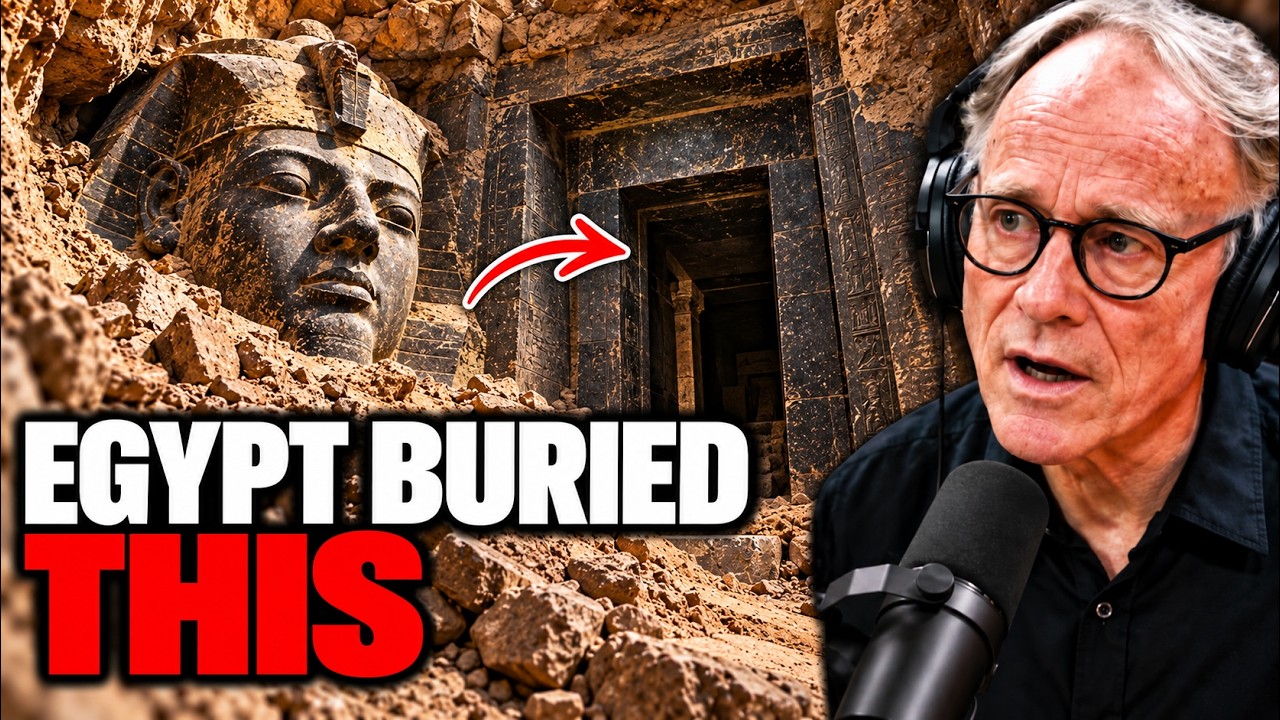
Instead, they had found what appeared to be a second Sphinx, hidden for more than four thousand five hundred years. At first the discovery was dismissed as an anomaly. Egypt’s desert is full of optical illusions, undulating dunes that deceive even the sharpest instruments. But as the team expanded their scans, the details grew undeniable: defined stone outlines, pores smoothed by time yet unmistakably deliberate, and a symmetry too exact to be natural.
The data painted a haunting image of a monument of massive scale, buried beneath layers of silt and windblown sand. The implications were staggering. For centuries, scholars had believed the Great Sphinx represented the divine power of Pharaoh Khafre, standing as both guardian and symbol of the sun god Ra. But here was evidence of something older and stranger: a pair of sphinxes, perhaps representing balance, unity, and celestial order.
Ancient texts may have held the first clues all along. On the walls of the temple of Edfu, inscriptions spoke of the twin lions of the horizon, guardians who watched over the passage of the sun. Early dynastic seals recovered from Memphis depicted two sphinxes facing opposite directions, flanking the solar disc. For decades those depictions were dismissed as mythic art.
Now the lidar scans suggested they may have been literal representations of a sacred pair. As researchers examined the digital model, they noticed something even more curious. The second formation was not perfectly aligned with Khafre’s Sphinx. It was offset by a mere six degrees to the east.
That deviation, according to archaeoastronomers, might have been intentional. Around 2500 BCE, that angle would have perfectly matched the rising of the star Sirius, the celestial embodiment of the goddess Isis. If one sphinx represented Ra, could the other have been built in honor of Isis, goddess of rebirth and balance? The idea of dual guardians was not unique to Egypt.
Across the ancient world, monumental pairs stood as cosmic mirrors, from the twin lions of Mycenae to the lamassu of Mesopotamia. Civilizations sought balance through symmetry. Perhaps Egypt’s greatest monument was simply the other half of a story no one had finished reading. To test the theory, a small excavation was launched where the lidar signals were strongest.
The sand was dense and unmoving, compacted by centuries of wind and flood. As diggers descended, fragments began to emerge: weathered limestone blocks with chisel marks identical to those found on the Great Sphinx’s enclosure, then a section of what appeared to be a sculpted paw. Dr. Nabil Aluli, a Cairo University archaeologist, described the moment.
It was as if the desert was exhaling after thousands of years. We had always wondered why build one guardian for the entire necropolis. Now maybe we know. But with revelation came danger.
The surrounding bedrock was fragile, and the area lay near a major tourist zone. A full excavation risked collapse or erosion. For now, the Egyptian Ministry of Antiquities authorized only non-invasive surveys. The hidden sphinx, if it truly existed, remained sealed within its sandy tomb.
Still, technology continued to peel back the layers. Thermal imaging from satellites revealed unusual heat signatures in the same location, possible voids beneath the stone consistent with hidden chambers. Ground penetrating radar confirmed cavities resembling tunnels or corridors stretching toward the Sphinx temple. If these were connected, the site could contain a network of passages once linking both monuments, perhaps part of a ceremonial route now buried beneath time.
Historians revisited early records for hints. In 1817, British explorer Henry Salt wrote of a vast mound south of the Sphinx bearing a curious resemblance to a lion’s haunches. His notes were dismissed as fanciful at the time, but Salt’s sketch, rediscovered in a London archive, showed a distinct raised shape precisely where the new lidar scans had found the anomaly. Modern analysis lent weight to Salt’s century-old observation.
The formation’s proportions matched those of the Sphinx within a margin of three percent, too precise for coincidence. Even erosion patterns, when digitally simulated, suggested similar sculpting techniques. Could early explorers have glimpsed the top of the buried monument before shifting sands erased it again? Geological surveys offered a possible explanation for its disappearance.
During the Middle Kingdom around 2000 BCE, heavy flooding from the Nile periodically reached the Giza Plateau. Sediment from these floods could have engulfed the lower Sphinx enclosure, burying nearby structures beneath tons of silt. Over centuries, shifting dunes finished the work, entombing whatever lay below. But some Egyptologists suspected deliberate concealment.
There were records from the reign of Amenhotep II describing the restoration of the sacred lion of the west while leaving its counterpart in silence. Could ancient priests have intentionally buried the second guardian, perhaps during a religious shift when the cult of Ra eclipsed older deities? Each discovery raised more questions than it answered. Who ordered the construction of the second sphinx?
Was it Khafre, as with the first, or an earlier ruler whose legacy was later absorbed by the Fourth Dynasty? And if the two sphinxes once stood together, what cosmic secret were they meant to guard? For now, the desert kept its silence. The Great Sphinx still gazed eastward as it had for forty-five hundred years, its expression unreadable.
But just beyond its shadow, the lidar image glowed like a ghost beneath the sand, a phantom lion waiting to return to the light. Archaeologists were preparing a new phase of scanning in 2025 using hyperspectral imaging, capable of detecting trace pigments and moisture deep underground. If the results confirmed a carved monument, it would change everything known about Giza’s sacred landscape. The mystery of the Sphinx had long been the spark that broke everything open for those who questioned the conventional timeline.
Some researchers pointed to the body of the Sphinx itself and claimed the erosion patterns did not look like wind and sand weathering but rather water erosion, suggesting the monument was far older than dynastic Egypt. The walls of the Sphinx enclosure preserved details that were difficult to read on the heavily repaired body, yet to a geological eye they spoke of a wetter climate, a time before the desert formed as it exists today. Such theories proposed that some structures in ancient Egypt were far older than conventional archaeology allowed, built by an earlier cycle of civilization whose legacy the dynastic Egyptians inherited. The Great Pyramid itself remained the most studied monument on the plateau, yet the other pyramids had received far less attention.
Researchers admitted that the bases of some of the other pyramids at Giza had not even been fully cleared. The gaps in knowledge fed the questions. If the historical narrative was incomplete, what else might be waiting beneath the sand? Deep beneath the plateau lay a whole underworld at Giza, only beginning to be recognized.
The area surrounding the Great Pyramid had already yielded remarkable discoveries. In 1954, Egyptian archaeologist Kamal el-Mallakh unearthed the solar boat pits: two intact boats buried near the pyramid’s southern side. Known as solar barks, they were believed to serve a dual purpose: carrying Khufu’s journey with the sun god Ra across the sky by day and through the underworld by night, or perhaps serving in the funerary procession of the pharaoh. The boats were made of Lebanese cedar, meticulously assembled without nails.
The larger measured about 43. 6 meters in length and featured a sophisticated design with a cabin, oars, and rope bindings using a mortise-and-tenon technique. It took Egyptian conservator Ahmed Youssef Mustafa fourteen years to reconstruct the first boat, now displayed in the Khufu Boat Museum beside the Great Pyramid. The second remained in situ, awaiting advanced preservation techniques.
In the early 1990s, Zahi Hawass and his team made a groundbreaking discovery southeast of the Great Pyramid: the tombs of the workers who built it. The tombs proved the builders were paid laborers who worked in three-month rotating shifts, reflecting the societal structure and economy of the Old Kingdom. Skeletal remains showed signs of healed injuries, indicating access to medical care. Pottery shards, tools, and remnants of food supplies such as bread and beer shed light on their diet.
The presence of beef and fish bones suggested the workers received good nutrition. The tombs themselves were simple yet carefully constructed from mudbrick and limestone, a sign of respect for the laborers, and some bore hieroglyphic inscriptions indicating their social status. In 1925, American archaeologist George Reisner uncovered the mastaba of Queen Hetepheres I, mother of Khufu, in the Giza necropolis. Hidden under debris, the tomb contained a large cache of funerary equipment: a golden throne, a gilded bed with a canopy, chairs, a palanquin, and personal items such as jewelry and cosmetic boxes.
The craftsmanship highlighted the luxurious lifestyle of the royal family. Yet Hetepheres’s body was never found, leading to theories that her mummy had been relocated or never placed in the tomb. The remains of Khufu’s pyramid temple had been uncovered through excavations by archaeologists such as Mark Lehner and Zahi Hawass. The temple was a site for offerings and rituals to honor the deceased pharaoh, featuring a courtyard, a hypostyle hall, and sanctuaries, connected to the pyramid by a causeway used for processional purposes.
Fragments of a life-size statue of Khufu provided insights into the pharaoh’s appearance and royal iconography. The tomb of Khentkawes, discovered in the early twentieth century, was sometimes called the fourth pyramid due to its unique design combining elements of both a pyramid and a mastaba. Located southeast of the Great Pyramid, it featured a stepped pyramid base with a superstructure that might have been intended as a pyramid but was left unfinished. The greatest enigmas, however, lay inside the Great Pyramid itself.
For centuries, the entrance to the monument was a mystery. Originally encased in smooth Tura limestone that concealed any openings, the pyramid presented a sealed face to the world. By the time explorers began their quest, most of the casing had been stripped away, revealing the underlying structure. The first recorded discovery of the entrance dated to 820 CE, when Caliph al-Ma’mun ordered an expedition to uncover the pyramid’s secrets.
His workers supposedly found the hidden entrance after hearing a stone fall within the pyramid. They located it about seventeen meters above the ground on the northern face, slightly east of the central axis. From the entrance, a descending passageway measured about 1. 2 meters high and 1.
1 meters wide, sloping downward at an angle of approximately twenty-six degrees. It extended for about 105 meters into the pyramid, eventually reaching the subterranean chamber, also known as the pit. This chamber lay beneath the pyramid, carved into the bedrock, and was unfinished, roughly hewn and not fully smoothed like other parts of the structure. Measuring approximately fourteen by eight meters and about 8.
6 meters high at its highest point, its purpose remained unclear. No burial of any pharaoh was ever found inside the Great Pyramid. Halfway along the descending passageway, an ascending passageway branched upward, extending for about thirty-nine meters before reaching the Grand Gallery. Its entrance had been concealed by a stone block, adding an extra level of security.
The Grand Gallery was one of the pyramid’s most impressive features: a steeply inclined corridor measuring about 46. 6 meters in length, 8. 6 meters in height, and 2. 1 meters in width at the base, narrowing toward the top.
The walls were lined with precisely cut stones, and the ceiling consisted of corbelled blocks creating a vaulted appearance. The floor had a series of slots, possibly for beams or to aid in transporting heavy objects. Approximately halfway along the Grand Gallery, a horizontal passageway led to the so-called Queen’s Chamber, smaller than the King’s Chamber, measuring about 5. 7 by 5.
2 meters with a height of 6. 3 meters. The walls were smooth and the ceiling pointed, forming a gabled roof. Its purpose was still debated; it might have been intended as a secondary burial chamber or a symbolic chamber for the pharaoh’s spirit.
Continuing up the Grand Gallery, a horizontal passage led to the King’s Chamber, the most important room in the pyramid. Rectangular, measuring about 10. 5 by 5. 2 meters, it had a flat roof composed of massive granite beams.
The walls were lined with granite, and the floor consisted of large granite blocks. Inside sat a large granite sarcophagus believed to have held Khufu’s body. The sarcophagus was too large to have been brought through the existing passages, indicating it was placed during construction. Above the King’s Chamber were five relieving chambers designed to distribute the pyramid’s weight and prevent the roof from collapsing, separated by large horizontal slabs of granite.
In modern times, advanced technologies such as ground penetrating radar and muon tomography were employed to explore further. These methods led to the discovery of previously unknown voids, including the ScanPyramids Big Void, a large empty space above the Grand Gallery discovered in 2017. Its purpose remained a mystery and a topic of ongoing research. The Scan Pyramids Project had been mapping the pyramid’s interior without drilling a single hole, using cosmic ray muon tomography.
Every second, particles from deep space called cosmic rays bombarded the Earth. When they hit the atmosphere, they created a shower of other particles, including muons, which are heavy and can penetrate deep into solid rock. By placing sensitive detectors inside and around the pyramid, scientists tracked the paths of these muons. If they passed through solid stone, many were blocked; if they passed through an empty space, more zipped through to the detectors.
Counting millions of muon hits over many months produced a three-dimensional map, like giving the pyramid an X-ray using the entire universe as its power source. The muon scan data was cross-referenced with infrared thermography and ground penetrating radar to build a high-fidelity picture of the pyramid’s internal structure. In 2017, the Scan Pyramids team announced a massive cavity hidden above the Grand Gallery, which they called the ScanPyramids Big Void. The data showed a space of at least thirty meters long, nearly a hundred feet, with a cross-section similar to the Grand Gallery below it.
It was the first major discovery of a previously unknown space inside the pyramid since the nineteenth century. The find was confirmed by three separate teams of physicists using three different muon detection techniques. Some Egyptologists believed the void served a structural purpose, a massive relieving chamber designed to redistribute the colossal weight above the Grand Gallery and prevent its ceiling from collapsing. Others pointed to a nagging fact: Khufu’s mummy had never been found.
The sarcophagus in the King’s Chamber was empty when first opened in modern times. This led to the tantalizing idea that the known chambers were elaborate decoys to fool tomb robbers, and that the Big Void could be connected to the true hidden burial chamber of the pharaoh. In March 2023, the Scan Pyramids team announced another discovery. Their instruments focused on the north face of the pyramid, right above the original entrance, where a distinctive pattern of huge gabled blocks known as chevrons marked the facade.
The muon scans detected an anomaly directly behind them. To get closer, the team used a snake-like endoscopic camera, feeding it through a small joint between the ancient stones. What they saw confirmed the data: a hidden corridor about nine meters long, roughly thirty feet, and about two meters wide, with a gabled or chevron-style ceiling perfectly mirroring the blocks on the outside. Unlike the vast and inaccessible Big Void, this north face corridor was real, photographed, and just meters away from the outside world, yet completely sealed.
The corridor appeared to end at a solid stone wall, leaving a brand new mystery. These discoveries ignited a firestorm of excitement. At the center stood Dr. Zahi Hawass, Egypt’s most famous Egyptologist and former minister of antiquities.
He had long supported the theory that Khufu’s true tomb was still hidden, stating his belief that all three known chambers were designed to deceive thieves. In late 2025, during a public book fair, he announced that a major discovery connected to the thirty-meter passageway would be revealed to the world in 2026, a finding he claimed would rewrite history. For now, no one would open it. That was the reality.
Despite confirming these voids and tantalizing possibilities, no one was taking a sledgehammer to a forty-five-hundred-year-old wall. The process was slow, methodical, and governed by one strict rule: do no harm. The Great Pyramid was a protected World Heritage site. The Egyptian Ministry of Antiquities and the International Scientific Committee overseeing the project demanded absolute certainty before any physical intervention.
Breaking through a wall could irreparably damage the monument. What if the seal inside contained organic material that could be carbon dated? What if the air inside had been trapped for millennia? Before anyone could think about opening it, the full scientific report had to be polished and peer reviewed.
The leading theories about the voids fell into three camps. The most conservative and, according to many experts, most likely explanation was that they were structural. Both the Big Void and the North Face Corridor were areas of immense stress. They could be sophisticated relieving chambers, masterful engineering tricks to ensure the pyramid stood forever.
In this view, they were empty by design. The second, more sensational theory was that one of these voids led to the real burial chamber of Khufu. Finding an intact royal burial from the Old Kingdom would be a discovery rivaling Howard Carter’s finding of King Tut’s tomb. It would solve one of the greatest and oldest mysteries in all of archaeology.
The third theory was perhaps the most intellectually exciting. What if the chamber was not for a body but for knowledge? Very few written records survived from the Old Kingdom. A sealed room could contain anything from architectural plans detailing how the pyramid was built, to religious texts, to a history of Khufu’s reign.
Such a discovery would be priceless, a library of lost knowledge that could, as Dr. Hawass said, truly rewrite history. For now, the voids remained silent. The Big Void floated in the heart of the pyramid, a giant question mark made of empty space.
The North Face Corridor waited beyond its chevron facade, its purpose unknown. Scientists continued their patient work, respecting the ancient wonder while using twenty-first-century technology to listen to its secrets. There was no sealed door visible to the naked eye, no keyhole to peer through. There was only data, the silent testimony of cosmic rays that had passed through stone and shadow.
We were living in a unique moment, standing at the threshold of potentially a discovery that was forty-five hundred years in the making. The answer was not there yet, but for the first time ever, we knew exactly where to look.
