Elizabeth Montgomery was television’s most beloved witch, a woman who could twitch her nose and make any problem vanish into thin air. As Samantha Stephens on Bewitched, she was the glamorous, witty, picture-perfect wife whose magical world always delivered a happy ending. But off-screen, her life bore little resemblance to the tidy sitcom fantasy. She was the daughter of Hollywood royalty, a woman who married four times, navigated the crushing pressures of superstardom, and raised three children while memorizing scripts between diaper changes.
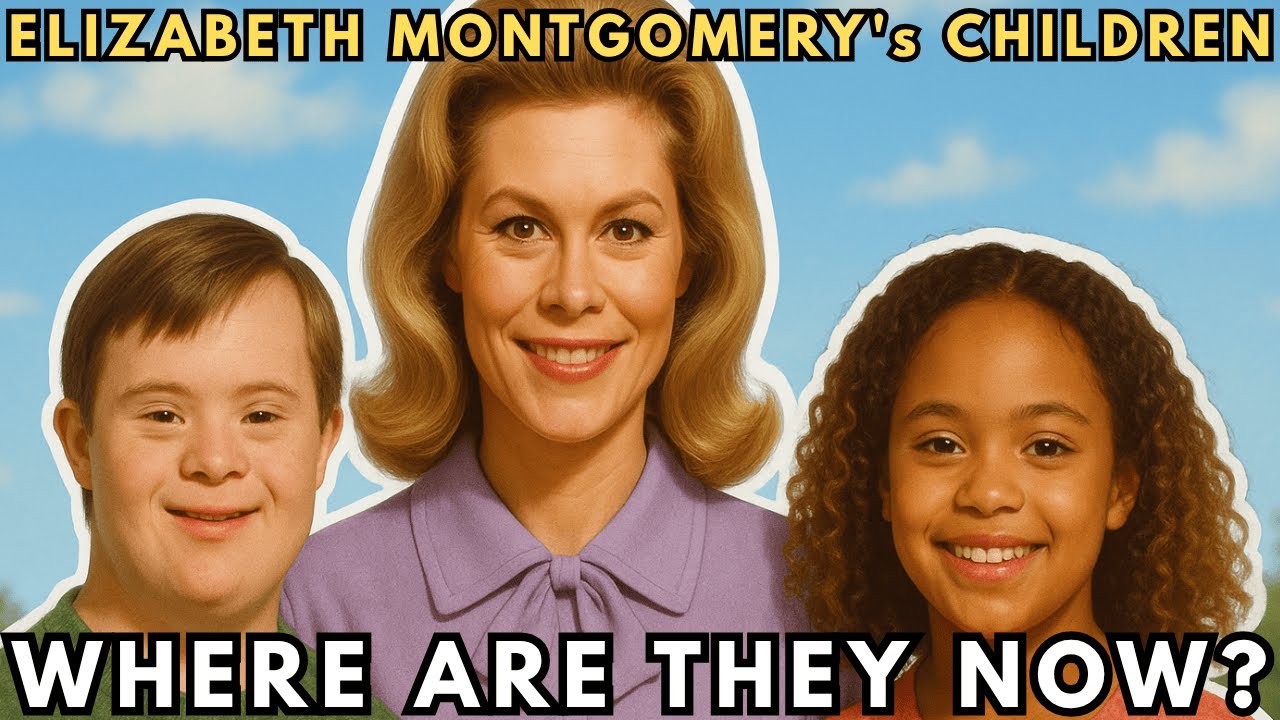
Decades after her death, fans still wonder what became of William, Robert, and Rebecca, the children who knew the woman behind the magic. Born Elizabeth Victoria Montgomery on April 15, 1933, in Los Angeles, she entered a world already defined by the entertainment industry. Her father, Robert Montgomery, was a leading man of the 1930s and 1940s who later became a respected director and producer. Her mother, Elizabeth Daniel Bryan Allen, was a Broadway actress.
From the outside, her childhood appeared charmed, a Beverly Hills upbringing filled with privilege and show business connections. But behind closed doors, it was a household marked by discipline and emotional distance. Elizabeth later reflected, “Dad expected excellence. He taught me discipline, but I had to learn tenderness on my own.
”
She attended the prestigious Westlake School for Girls, where she was known as shy and reserved, often feeling overshadowed by her father’s reputation. Yet it was during those years that she developed a fascination with performance, studying plays and practicing voices. After high school, she enrolled at the American Academy of Dramatic Arts in New York, a deliberate move to forge her own path rather than simply follow her father’s. Her first professional role came in 1951 on her father’s anthology series, Robert Montgomery Presents.
She took bit parts and live television roles, building a reputation for reliability and charisma. By the late 1950s, she was a rising star on the East Coast television scene, appearing in dramas like Studio One and Kraft Television Theatre, and by the early 1960s, she was acting alongside names like Dean Martin and Henry Fonda. In 1964, she stepped into the role that would define her career. Bewitched premiered on ABC, and Elizabeth’s Samantha Stevens became an instant sensation.
Audiences adored her playful charm, her comedic timing, and that iconic nose twitch. Within weeks, the show was one of the network’s top-rated programs, and Elizabeth Montgomery became a household name. But the magic on screen masked complications behind the camera. Her husband at the time, William Asher, was the show’s producer and frequent director, making the set both a workplace and a family battleground.
Arguments between the couple often spilled into filming. There were also well-documented tensions with co-star Dick York, whose chronic back problems and struggles with pain medication disrupted production. When York left the series in 1969, Dick Sargent replaced him, and fans immediately noticed the difference. Elizabeth defended Sargent, a close friend, and later admired his courage when he came out as gay years afterward.
Her real life was woven directly into Samantha’s storyline. When Elizabeth became pregnant, the writers incorporated it into the show. Her first child, William Asher Jr. , was born in Los Angeles in July 1964, just weeks before Bewitched premiered.
Elizabeth later admitted it was one of the most overwhelming moments of her life, balancing the launch of a new television series with the sleepless nights of caring for a newborn. Her second son, Robert Asher, arrived in October 1965, and she was back on set filming the second season just weeks after giving birth, sometimes bringing the baby to work. Her youngest, Rebecca Elizabeth Asher, was born on June 17, 1969. Elizabeth was filming the show’s fifth season when she discovered she was pregnant, and the writers once again wrote it into the story.
Crew members remembered her dressing room filled with cribs, toys, and script pages. She later laughed about those years, saying, “I was memorizing lines on set and rocking cribs at home. It was the best kind of exhaustion. ”
Even as she earned nine Emmy nominations and four Golden Globe nods, the pressure of balancing fame, marriage, and motherhood took its toll.
Her personal life was as eventful as her career. Her first marriage, to New York socialite Frederick Gallatin Cammann in 1954, ended in divorce in less than a year. Her second marriage, to actor Gig Young in 1956, unraveled amid his personal struggles and volatile behavior. It was her third marriage, to William Asher in 1963, that had the greatest impact on both her career and family life.
Together they had three children. But the pressures of Hollywood and long working hours strained the relationship, and they divorced in 1973. Elizabeth found lasting happiness with actor Robert Foxworth, whom she met in the early 1970s. They lived together for more than twenty years before marrying in 1993.
Friends described their relationship as the most stable and loving chapter of her life. After Bewitched ended in 1972, Elizabeth refused to be trapped by the image of Samantha Stevens. She turned to television films that tackled difficult and controversial subjects. In A Case of Rape in 1974, she gave a harrowing performance as a woman seeking justice after sexual assault, a subject network television had rarely addressed so directly.
In 1975, she stunned audiences with The Legend of Lizzie Borden, playing the accused axe murderer in a chilling performance that earned her another Emmy nomination. These roles revealed a side of Elizabeth far removed from the perfect TV witch, bold, dramatic, and unafraid to challenge viewers. Away from the screen, she became a passionate advocate for women’s rights and supported LGBTQ rights at a time when few stars would speak up. She worked tirelessly to raise AIDS awareness during the height of the epidemic, participating in charity events and fundraisers long before it became common for Hollywood celebrities to do so.
In March 1995, Elizabeth was diagnosed with colon cancer. The disease spread quickly, and despite treatment, it became clear she had little time left. Choosing comfort over hospitals, she spent her final weeks at her Beverly Hills home, surrounded by her children and Robert Foxworth. On May 18, 1995, she passed away at the age of sixty-two.
Her death shocked fans around the world. Erin Murphy, who played little Tabitha on Bewitched, remembered her as graceful, funny, and kind. Dick Sargent called her a true original and one of the kindest souls he had ever known. Her funeral was small and private, as she had wished, but the outpouring of love was enormous.
Fans left flowers at her star on the Hollywood Walk of Fame, transforming it into a shrine. Her three children each chose different paths. William Jr. , nicknamed Bill, spent much of his early childhood around studio lots but chose not to act, remaining connected to entertainment through behind-the-scenes production work while keeping a low profile.
Robert avoided Hollywood altogether, living a private life outside the spotlight. Rebecca, the youngest, most visibly inherited her mother’s creative spark. Instead of acting, she gravitated to directing and editing, building a strong career in Hollywood on acclaimed series like Arrested Development, WandaVision, and Don’t Trust the B—- in Apartment 23. She once shared, “My mom never wanted me to feel pressured to act.
She just wanted me to find my own magic. ”
Her children rarely speak publicly about her, but those close to the family have said they grieved privately, remembering not the TV witch adored by millions, but the mother who cooked their meals, helped with homework, and encouraged them to live authentically. Nearly sixty years after Bewitched first aired, her star on the Hollywood Walk of Fame still draws flowers on birthdays and anniversaries. The 2005 film remake with Nicole Kidman brought Samantha Stevens back to the big screen, and Marvel’s WandaVision winked at Elizabeth’s sitcom magic in its early episodes.
Directors, writers, and audiences continue to reference Bewitched as a cornerstone of television history. Elizabeth Montgomery cast a spell that has never worn off, but her truest legacy lives in the values her children carry and the devotion of the fans who still remember her.
