In the spring of 1987, a newspaper photographer walked into an old Victorian hospital in Surrey and told the staff he was a relative of one of the patients. He was not. But what he found on one of its wards would be on the front page within days, and it would force one of the most famous families in the world to answer a question it had managed to avoid for nearly half a century. The hospital was Royal Earlswood, a great red-brick pile from the age of Queen Victoria, and the patient he asked to see was a 60-year-old woman named Catherine Bowes Lyon.
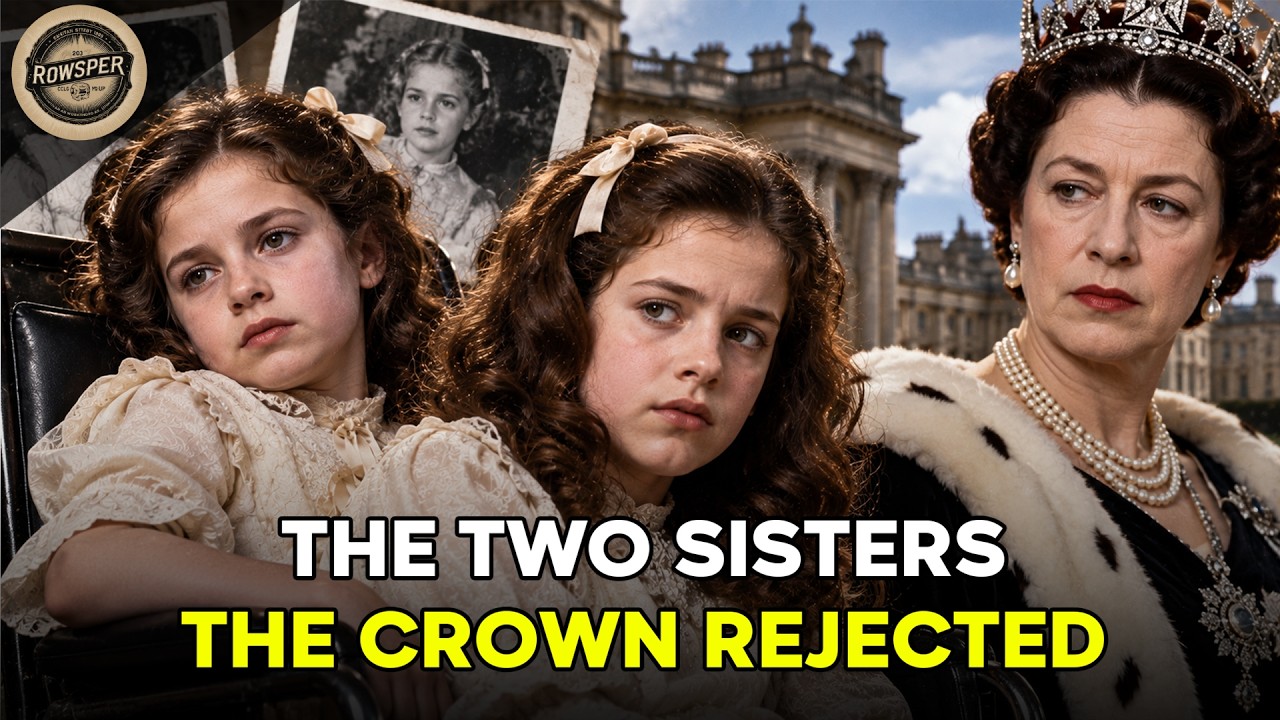
She was frail, unable to speak, and very much alive. She was also the first cousin of the reigning Queen Elizabeth II. And according to one of the most respected reference books in Britain, she had been dead for 26 years. —
Glamis Castle, 1930.
The great pink-grey tower of turrets and battlements stands in the green farmland of Angus in the east of Scotland, home to the same family for more than 600 years. It is the castle Shakespeare linked to Macbeth, who was made Thane of Glamis in the play, and it is famous for its ghost stories and legends of secret rooms. But the secrets this family kept in the twentieth century had nothing to do with legends. Just after midnight on the 7th of February 1930, a 43-year-old man named John Bowes Lyon died there of pneumonia.
Everybody in the family called him Jock. He had been to Eton and Oxford, played cricket for the university, worked as a stockbroker in the City of London, and served with the Black Watch in the First World War. He was the second son of the Earl of Strathmore. During the war he had been wounded in an accident with his own rifle, lost a finger, and later struggled with his nerves.
Within a few years he was back working in the City, a tall, charming man with a young family and plenty of years ahead of him. Three days after his death he was buried at St Paul’s Walden Bury in Hertfordshire, the family’s English country home. Jock was the older brother of a young woman named Elizabeth, the ninth of the Earl’s ten children. During the First World War, when Glamis had been turned into a convalescent home for wounded soldiers, she had spent her teenage years there chatting to the men, running errands, and writing their letters home.
Seven years before Jock’s death, that same sister had married the King’s second son and become the Duchess of York. That marriage had made the Bowes Lyons, already one of the grandest families in Scotland, part of the extended royal circle. The Duchess had a little daughter of her own by then, a three-year-old princess named Elizabeth. Later that same year, in August 1930, her second daughter, Margaret, would be born in this very castle, the first baby in the royal line to be born in Scotland in more than 300 years.
Bonfires were lit across the surrounding hills to celebrate her arrival. But in February, the family’s attention was on Jock’s widow, Fenella, and the four children he had left behind. Anne was 12, Nerissa was 10, Diana was six, and Catherine was only three. Fenella was the younger daughter of Lord Clinton, an old aristocratic family from the West Country.
She had married Jock on the 29th of September 1914, only weeks after the outbreak of the war. Their first daughter, Patricia, was born in 1916 and died before her first birthday. A second girl, Anne, arrived in December 1917, healthy and lively. Then came Nerissa, born in Chelsea on the 18th of February 1919.
Diana followed in 1923, and finally Catherine, born on the 4th of July 1926. That last date is worth pausing on. Catherine came into the world just ten weeks after her first cousin, Princess Elizabeth, the girl who would one day become queen. They were born into the same family in the same year, a few miles apart in London.
Their lives could not have turned out more differently. Because by the time Jock died, his family already knew that two of his four surviving daughters were not like the others. And what was eventually decided about those two girls would stay hidden for more than 40 years. —
Anne and Diana grew up exactly as aristocratic daughters of that era were expected to.
They had governesses, ponies, country weekends, and eventually debutante seasons in London. Nerissa and Catherine did not. Both girls were born with severe learning disabilities. Neither of them ever learned to talk beyond a few sounds.
Visitors to the family later remembered two quiet girls who could not join in the games or lessons of their sisters and who needed help with almost everything. Doctors who assessed them later described them as having the understanding of a very young child, somewhere around the age of three. In the harsh medical language of the time, they were officially classified with a word that is now considered deeply offensive, a word that was then used in hospital records and government forms without a second thought. Nobody has ever established exactly what caused their condition.
But there was a clue in the family, and it pointed not to the Bowes Lyons but to their mother’s side. Fenella had one sister, Harriet, who had married a soldier named Henry Feain. They had seven children. Three of their daughters—Idonea, Rosemary, and Etheldreda—had very similar disabilities to Nerissa and Catherine.
Five girls, all granddaughters of the same Lord Clinton, all affected in much the same way. In 1987, when the sisters’ story finally became public, a leading Australian expert in childhood genetics, David Danks of the Murdoch Institute in Melbourne, suggested that an inherited condition running through the Clinton line might explain it—one that seemed to affect girls with learning disabilities and may also have caused the deaths of some boys in the family in early childhood. Other writers have proposed other diagnoses. None has ever been confirmed.
What is clear is that whispers about the family traveled. In the 1950s, a young society beauty named Anne Cox, later Lady Glenconner, became engaged to Johnny Spencer, the heir to Earl Spencer and the future father of Diana, Princess of Wales. According to her own memoirs, his father broke the engagement off, citing fears of what he called bad blood in her family because one of her grandmothers came from the same Strutts family as Fenella. That was the world these girls were born into.
In 1913, Parliament had passed the Mental Deficiency Act, which allowed people judged to have learning disabilities to be certified and placed in institutions, sometimes for life. Many respectable voices of the day spoke openly about protecting the nation’s bloodstock, and families from every class were under quiet pressure to keep such relatives out of sight. A disability in the family was not just a private sorrow. It was treated as a stain on a bloodline.
Meanwhile, their cousin’s life was about to change beyond recognition. In December 1936, King Edward VIII gave up the throne to marry Wallis Simpson. His younger brother became King George VI, and the girls’ aunt, the Duchess of York, became Queen Elizabeth. On the 12th of May 1937, she was crowned in Westminster Abbey with ten-year-old Princess Elizabeth watching from the royal gallery.
Their aunt was now the Queen of the United Kingdom. And within four years, during the darkest days of the Second World War, a decision was made about her two nieces that would shape the rest of their lives. —
By 1941, Britain had been at war for more than a year. The Blitz was tearing through London night after night.
The Queen herself had become a symbol of the nation’s defiance, visiting bombed-out streets in the East End and famously remarking after Buckingham Palace was hit that she was glad, because now she could look the people of the East End in the face. Fenella had been a widow for eleven years. Nerissa was 22 and Catherine was 15. Their cousins, the two princesses, were spending the war behind the walls of Windsor Castle.
In October 1940, 14-year-old Princess Elizabeth had made her first radio broadcast, speaking on the BBC’s Children’s Hour to the boys and girls who had been evacuated away from their families. Her little sister Margaret joined in at the end to say good night. Families all over Britain listened. It was the first time most people had ever heard the future queen’s voice.
On a single day that year, both sisters were taken from their family and admitted to an institution in the town of Redhill in Surrey, south of London. On that very same day, their three Feain cousins were admitted with them. Five young women, all from the same extended family, all handed over together. Nobody has ever publicly explained why it happened then or why it happened that way.
There may have been ordinary reasons. Caring for two adult daughters with such severe needs through wartime, with staff leaving for the forces and bombs falling, may simply have become impossible. Their grandfather on their father’s side, the old Earl of Strathmore, was still alive too, and would live until 1944. Fenella’s own father, Lord Clinton, paid money to the institution for the care of all five of his granddaughters, which suggests he was involved in the decision as well.
In those years, it was not unusual. Across Britain, tens of thousands of people with learning disabilities lived out their lives in large institutions, often from childhood. Families were routinely told by doctors that this was the kindest thing to do, and that it was best to try to forget. Across the Atlantic in that very same year, another powerful family made its own decision about a disabled daughter.
In November 1941, Joseph Kennedy arranged an operation for his daughter Rosemary that left her permanently changed. She too spent the rest of her life in an institution, largely written out of her family’s public story for decades. But five girls from the most prominent family connections in the country, all admitted on the same day, was something else. And the place they were taken to had a history of its own.
—
The building stood on the edge of Earlswood Common, a huge Victorian Gothic pile of red brick and tall windows with a clock tower that could be seen from the railway line. Its foundation stone had been laid in 1853 by Prince Albert, Queen Victoria’s husband, and it had opened in 1855 as one of the very first institutions in Britain built specifically for people with learning disabilities. In its early days it had been considered a model of progress. From 1858, its medical superintendent was a young doctor named John Langdon Down.
It was while working at Earlswood that he wrote his famous description of a condition that would later carry his name. Down syndrome was, in a sense, first identified on these wards. Earlswood was also home for more than 60 years to a resident named James Henry Pullen, who could barely speak but was an extraordinarily gifted craftsman. He spent years building an enormous, detailed model of the great Victorian steamship the Great Eastern, and visitors came to marvel at his work.
People called him the genius of Earlswood. By 1941, though, the progressive ideals of the founders had long since faded. The hospital housed hundreds of residents. A ward could hold as many as 40 people, often looked after by just two nurses.
Days followed a rigid routine of meals, washing, and bedtimes. Former staff later described the place as regimented, with little room for comfort or fun. Over the years the hospital was also criticized for overcrowding, poor sanitation, and constant shortages of staff. One former ward sister summed up the care in plain terms: the staff bathed the residents, cut their nails, and fed those who needed help.
There was rarely time for much else. In 1948, with the creation of the National Health Service, Earlswood passed into the hands of the state and became an NHS hospital. The name and the building stayed the same, and so, for most of the people inside, did the routine. Nurses who worked there in later decades remembered the sisters clearly.
Neither could speak, but both could make sounds and react to the people around them. According to hospital staff, they became upset around strangers and seemed to recognize only a very few familiar faces. One of those faces, at least for a time, was their mother’s. But the family’s financial contribution to their care was small.
Records later showed that a sum of around £125 a year was paid to the hospital for them, and that was all. —
Outside the hospital walls, the rest of the family’s lives went on. And they went on in some of the most glamorous rooms in the country. In November 1947, Princess Elizabeth married Philip Mountbatten in Westminster Abbey.
It was the first great royal celebration after the war, and millions listened on the radio. Among the leading guests at the wedding was Fenella Bowes Lyon, the mother of the two young women in Redhill. Nerissa and Catherine were the bride’s first cousins. They were not there.
Three years later, in 1950, their older sister Anne married for the second time. Her first marriage, in 1938, had been to Viscount Anson, the heir to the Earl of Lichfield, and had ended in divorce ten years later. Her new husband was Prince Georg of Denmark, a member of the Danish royal family, and she became Princess Anne of Denmark. Her son from her first marriage, Patrick Anson, would grow up to become one of the most famous photographers in Britain, the Earl of Lichfield, who took the official photographs at the wedding of Prince Charles and Lady Diana Spencer in 1981.
In February 1952, King George VI died, and the girls’ cousin became Queen Elizabeth II at the age of 25. Their aunt became the Queen Mother. On the 2nd of June 1953, the coronation was watched on television by millions of people crowded around small black-and-white sets in front rooms and village halls all over the country. Inside Earlswood, life went on exactly as before.
In 1960, the youngest of the healthy sisters, Diana, married a man named Peter Somerville. The following year she had a daughter. The baby was named Catherine, and the Queen herself became her godmother. According to sources within the family, Fenella went on visiting her daughters regularly for the rest of her life.
The local health authority later confirmed that both sisters had regular family visits until the early 1960s, when one of their closest relatives died. After that, it said, they had very few visitors at all. The Feain girls’ parents were gone by then too: their father Henry Feain had died in 1947, and their mother Harriet—Fenella’s only sister—died in 1958. Fenella Bowes Lyon died on the 19th of July 1966.
She was 76. But three years before her death, something had already appeared in print that would later turn this quiet family arrangement into a national scandal. —
For well over a century, the bible of the British aristocracy has been a thick reference book called Burke’s Peerage. It lists every titled family in the country, every marriage, every birth, and every death, generation by generation.
Families supply the information themselves, usually by filling in forms sent out by the publishers. The 1963 edition contained an entry for the family of John Bowes Lyon. It listed his five daughters. Beside Nerissa’s name, it gave a date of death in 1940.
Beside Catherine’s, a date of death in 1961. Both women were alive. Nerissa was in her forties and Catherine in her late thirties, and they were living in Redhill, in the same hospital they had been in since 1941. Burke’s was not an obscure book.
It sat on the shelves of solicitors, newspapers, libraries, and country houses across Britain. Journalists checked royal relatives against it. Hostesses used it to address wedding invitations correctly. For most practical purposes, if Burke’s said someone was dead, the wider world accepted it.
This was not a case of a blank space or a missing detail. The book recorded specific years of death for two people who had not died. Burke’s would later make clear that it printed what families told it, and that if this was what the Bowes Lyon family had supplied, then this was what had gone into the book. Nobody corrected the entry.
For more than 20 years, anyone who looked up the family of the Queen Mother’s brother would have read that two of his daughters were long dead. Their aunt, the Queen Mother, would later say she had believed exactly that. And then, in 1982, a letter arrived that told her otherwise. —
By the early 1980s, the girls’ older sister Anne had died, in 1980.
Outside the hospital, 1982 was the year of the Falklands War and the birth of Prince William, the Queen Mother’s great-grandson and a future king. Their mother had been dead for more than 15 years. Nerissa was in her sixties and Catherine in her mid-fifties. Between them, they had spent more than 40 years at Earlswood.
The hospital had a League of Friends, a group of local volunteers who raised money for the residents and organized small comforts and outings. In 1982, the League of Friends wrote to the Queen Mother. The letter informed her that her two nieces were not dead at all. They were alive, and they were living at Royal Earlswood.
Accounts say that after receiving it, the Queen Mother began sending money each year on the sisters’ birthdays and at Christmas, to be spent on sweets and toys for them. There is no record of her visiting. What made that especially painful to many people later was a detail about the Queen Mother’s public work. For decades she had been a patron of Mencap, the leading British charity for people with learning disabilities.
She lent her name to its cause and supported its work in public. Yet, according to the documentary that later examined the case, there is no known record that any member of the Bowes Lyon or royal families ever visited the two sisters during their entire time at the hospital. Inside Earlswood, nothing outwardly changed. But time was running out for one of the sisters.
—
Nerissa Bowes Lyon died at Royal Earlswood on the 22nd of January 1986, a month before her 67th birthday. She had lived there for 45 years. Her funeral was held at Redstone Cemetery, a short distance from the hospital. According to the reports that later emerged, the only people who attended were members of the hospital staff.
No relatives came. She was buried in a plain plot. There was no headstone. And on the shelves of libraries across Britain, Burke’s Peerage still recorded that she had died 46 years earlier.
Her grave was marked with a small plastic tag bearing her name and a serial number, the way the graves of patients without family were usually marked. Redstone Cemetery is an ordinary Victorian town cemetery on a hillside in Redhill, with rows of weathered headstones and neatly kept paths. Not far away in the same cemetery lay former residents of the hospital, people who had lived and died at Earlswood with nobody outside its walls to mark their passing. Nerissa, the niece of the Queen Mother and first cousin of the reigning Queen, was now one of them.
A few months later, in May 1986, her younger sister Diana also died. Of the five Bowes Lyon daughters, only one was left: Catherine, still on her ward at Earlswood, now approaching 60. For a little over a year, nothing more happened. And then someone outside the family started asking questions.
—
Exactly how the story first came to the attention of the press has never been fully explained. Some accounts suggest Nerissa’s death had started the gossip. But in the spring of 1987, the Sun newspaper decided to find out whether the rumour was true. A photographer from the paper went to Royal Earlswood and, by most accounts, presented himself as a relative of Catherine Bowes Lyon.
He was allowed inside. He found her there: 60 years old, frail, unable to speak, and very much alive. On Monday the 6th of April 1987, the story was on the front page. The headline described the Queen’s cousin as being locked away in an asylum.
Beneath it was the revelation that Burke’s Peerage had listed both sisters as dead, that one of them had in fact died only the year before and been buried with a plastic marker, and that the other was still living in the same hospital where she had been for 46 years. At the time, the Queen was 60 years old and in the 36th year of her reign, and the royal family was rarely out of the papers. This was a very different kind of royal story. It was picked up around the world.
In Britain, the reaction was a mixture of shock and anger. Members of the public began sending flowers and cards to Catherine at the hospital. The photograph that went around the world showed an elderly woman sitting in a chair, unable to tell anyone who she was or where she had come from. Everything the public learned about her had to come from the nurses.
Buckingham Palace said very little. Its only response was that this was a matter for the Bowes Lyon family. The family pushed back. Within days, a relative on their mother’s side, Lord Clinton, told newspapers there had been no cover-up of any kind.
He suggested that Fenella, who by 1963 was an elderly woman, had simply filled in the Burke’s form incorrectly, or not filled it in at all, describing her as a rather vague person. The problem with that explanation was the one detail nobody could get around: the book had not left the girls’ details blank. It had given specific years in which they had supposedly died. Burke’s publishing director said he was thunderstruck to discover that the entry had been wrong.
Lady Elizabeth Anson, the daughter of the sisters’ late sister Anne and by then well known as a party planner for the royal family, also insisted there had been no conspiracy, and that the mistakes in the book had been an administrative error. Other relatives insisted that the sisters had not been abandoned at all, that family members had visited over the years, and that cards and gifts had been sent at Christmas and on birthdays. Hospital staff and records told a rather different story. The two accounts have never been fully reconciled.
One thing did change. After the story broke, Nerissa’s plastic grave marker was replaced. Her nieces and nephew—among them Patrick Lichfield, the royal photographer—arranged for a proper headstone with her name on it. Catherine, meanwhile, stayed exactly where she was.
But the hospital itself was running out of time. And when it finally closed its doors, the question of what to do with her would come back to the royal family one more time. —
By the 1990s, Britain’s attitude towards learning disabilities had changed dramatically. Scandals at long-stay hospitals in the late 1960s, where journalists and inquiries exposed shocking neglect, had led the government to rethink the whole system.
In 1971, an official report set out a new aim: fewer people in large institutions, and more care in small homes within ordinary communities. It took decades to put into practice, but by the late 1980s the old hospitals were finally emptying. The great Victorian institutions were being shut down one by one, and their residents moved into smaller homes in the community. Royal Earlswood’s turn came in the middle of the decade.
It closed for good in 1997. As the hospital prepared to close, its administrator later reported that he had tried to arrange a meeting to discuss Catherine’s future care, and that neither the Queen nor the Queen Mother had agreed to meet. Once again, the palace’s position was that it was a matter for the Bowes Lyon family. Of the five cousins who had walked through the doors together in 1941, only two were still alive.
Between them, they had spent more than a hundred years inside the same building. Rosemary Feain had died in 1972 and Etheldreda Feain in 1996. Catherine and her cousin Idonea Feain were moved together to Ketwin House, a care home in Surrey. For Catherine, who had arrived at Earlswood as a 15-year-old girl in wartime, it was the first time in more than half a century that she had lived anywhere else.
The great Victorian wards, the long corridors, and the clock tower she had known since 1941 were suddenly gone from her life. She was now in her seventies, and the only familiar face who came with her was the cousin who had arrived beside her on that very first day. In August 2000, a newspaper reported that the home where the Queen’s cousin was living had been criticized as substandard. The following year, Ketwin House closed, and the two elderly women were moved yet again, to another care home in the same county.
Then came the spring of 2002, one of the most remarkable seasons in modern royal history. Princess Margaret died in February. On the 30th of March, the Queen Mother died at the age of 101. Her funeral on the 9th of April filled Westminster Abbey, and more than 200,000 people had queued to file past her coffin as she lay in state.
Just days later, a newspaper reported that Idonea Feain, the Queen Mother’s niece by marriage, had been given a pauper’s funeral. She was buried at Redstone Cemetery, in the same grave as her sister Etheldreda, just two plots away from Nerissa. Catherine was now the last of the five. For almost a decade more, she lived quietly, far from any headlines.
But in 2011, her story was about to reach the nation’s television screens. —
In November 2011, Channel 4 broadcast a documentary called The Queen’s Hidden Cousins, directed by Kelly Close for an independent company called Minnow Films. It set out to tell the sisters’ story through the eyes of the people who had actually known them: the nurses who had cared for them, and the families of other residents who had lived alongside them at Earlswood. The programme made several claims that went to the heart of the matter.
It stated that throughout the sisters’ time at the hospital, there was no known record of any visit from a member of the Bowes Lyon or royal families. Nurses interviewed for the film said that as far as they knew, the sisters never received a birthday or Christmas card or present from their relatives. A former ward sister said that the impression she had was simply that they had been forgotten. Before it was even broadcast, a newspaper reported that the Queen was said to be deeply distressed by it.
When it aired, reviewers were divided. One national newspaper called it sad but revealing. Another argued that it told viewers little that had not already been known since 1987. The family responded strongly.
Lady Elizabeth Shakerley, the same niece who had defended the family back in 1987, publicly criticized the documentary as cruel and intrusive. She insisted that far from being a forbidden subject, Nerissa and Catherine had always been part of the family, and that their mother had visited them faithfully until her death. Even some critics who reviewed the programme pointed out that the one part of the story still genuinely unexplained was the first part of all: why the sisters had been sent away in 1941, and who exactly had decided it. The broadcast reopened the old arguments in the newspapers.
For some viewers it was a story about one family’s failure. For others, it was a story about a whole country’s attitude to disability in an age when sending people away had been considered normal and even kind. Catherine, now 85, was unaware of any of it. She lived for just over two more years, the last of the five.
Catherine Juliet Bowes Lyon died in Surrey on the 23rd of February 2014. She was 87 years old. She had spent 73 years in institutional care, from the age of 15 until the end of her life. Her niece and namesake, Catherine, the little girl born to Diana in 1961 with the Queen as her godmother, was by then in her fifties.
Of the family Catherine had been born into, almost nobody who remembered her as a child was still alive. Unlike her sister, she was given a private family funeral. Local newspapers in Surrey reported her death, noting that she had spent more than half a century at Royal Earlswood before it closed. She had outlived every one of her sisters, all three of the Feain cousins who had shared her fate, her mother by almost fifty years, and the aunt who had sent her money for sweets at Christmas.
But her story was not quite finished. Six years later, it would be told again, this time to millions of people around the world. And in a version that was not entirely true. —
In November 2020, the sisters’ story reached a far larger audience than ever before, through the Netflix series The Crown, in an episode titled “The Hereditary Principle.
” In it, Princess Margaret discovers that her two cousins are alive and confronts her mother, who defends the decision as a way of protecting the royal bloodline. Helena Bonham Carter played Margaret and Olivia Colman played the Queen. At the end of the episode, real photographs of the two sisters appeared on screen. It was powerful television.
It was also largely invented, and royal fact-checkers said so within days of the episode’s release. Historians and royal writers were quick to point out that there is no evidence of any such conversation, that the sisters were placed in care five years after the abdication rather than because of it, and that the Queen Mother, by most accounts, did not know her nieces were alive until the letter from the League of Friends in 1982. Their condition, as far as anyone can tell, came from their mother’s family, not the royal line. But for many viewers, it was the first time they had ever heard the names Nerissa and Catherine.
Today, the sisters are remembered in histories of disability in Britain as much as in royal biographies. Their story is often told alongside thousands of others whose names never reached a newspaper at all: people who spent their whole lives in institutions, whose families were told to forget them, and who were buried in plots marked only with numbers. The old hospital at Earlswood still stands. After it closed, the great Victorian building was converted into private apartments, and today people live in flats inside the walls where hundreds of residents once spent their whole lives.
And at Redstone Cemetery, a short walk away, there is a headstone that was only put up after a newspaper forced the issue. It carries the name of a woman born in Chelsea in 1919, the niece of a queen and the cousin of another, who never spoke a word, spent 45 years on a hospital ward, and was buried with a plastic tag and a number until somebody finally noticed that she had ever been alive at all.
