At half past six on the morning of Monday, the 18th of August 1862, Helen Carrothers was at the home of Mr. S. R. Henderson, caring for Mrs.
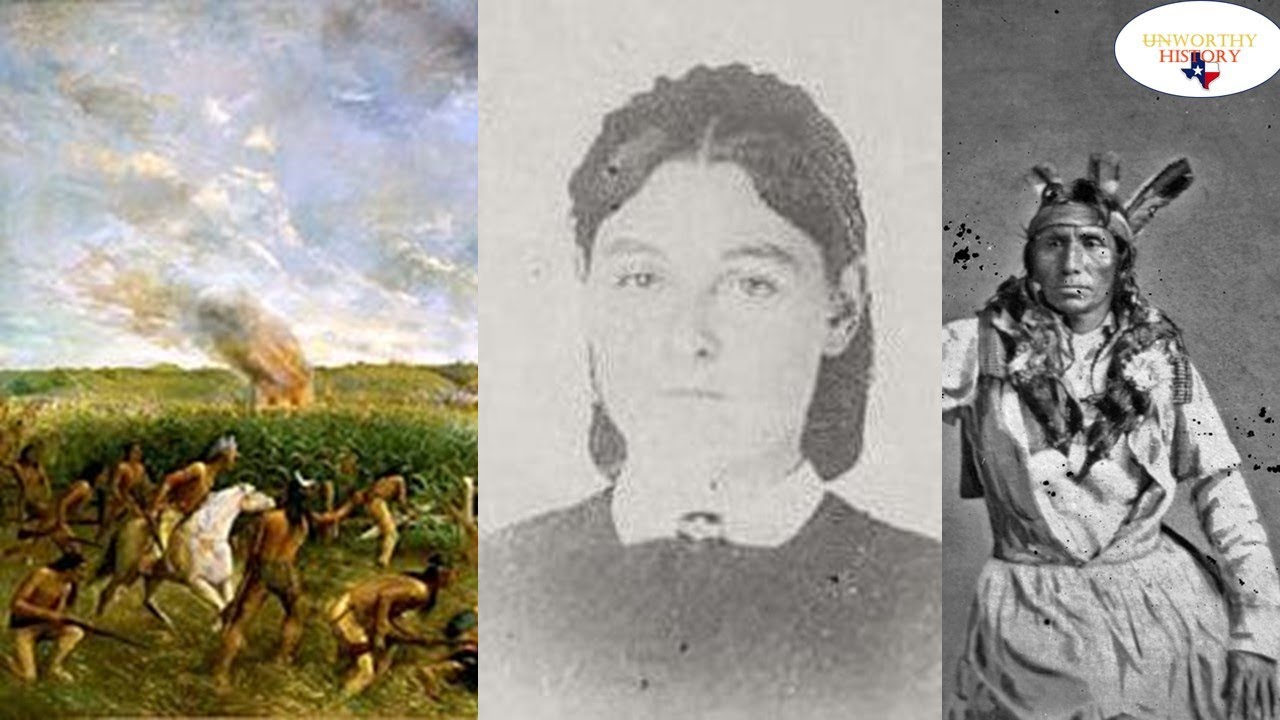
Henderson, who lay quite ill. The family was at breakfast when four Indians wearing blankets came to the house and looked in. They lingered for a short time without entering, then turned and walked off toward Mr. Earl’s place.
While at Mr. Earl’s, they tried to take his gun. Failing in that, they sat down by his door. Around the same time, Mr.
Henderson, Mr. Earl, Mr. Wedge, Eugene Whites, three of Mr. Earl’s boys, and David Carrothers saw some 150 Indians out on the prairie catching horses.
The men went down to stop them. When asked to desist, the Indians refused, saying they needed the horses to go and kill Chippewas. Seeing all efforts were useless, the men returned. As they made their way back toward the houses, a man arrived from the Lower Sioux Agency with a report: the Indians were killing all the whites there.
Mr. Earl already had his horses harnessed for work on the farm. Helen’s husband was from home. David Carrothers, her brother-in-law, came for her, and she went with him to Mr.
Earl’s. It was soon decided that they should make for the fort. With two horse teams belonging to Mr. Earl, and another team with three yoke of oxen attached, the party set out, the Indians remaining behind.
They had scarcely gotten underway when Helen saw several more Indians, not seen before, rise up. Soon they were surrounded on all sides. Before they had gone fifteen rods from the house, all the teams were stopped, and Mr. Henderson and David Carrothers went out to the Indians to learn their intention.
The answer came coldly: all the whites were to be killed. This was the more shocking because these Indians were all well known to them and had always professed such friendship. A parley followed, with the strongest remonstrances the men could offer. The result was that their lives would be spared if they gave up all the teams.
David Carrothers pleaded for one team, so that Mrs. Henderson, sick as she was, and her two small children might be carried to Fort Ridgely. The Indians agreed, and shook hands with all of them in token of satisfaction, seeming well pleased. Deprived of their teams except the one carrying Mrs.
Henderson, the party supposed the sacrifice had made them safe. But after going about ten rods further, the Indians came up again and demanded this last team as well. Another urgent appeal was made for the sick woman. This time it was agreed that if the team drawing the wagon were given up, the wagon itself might be retained.
This too was yielded, and the party advanced once more, the men now drawing the wagon by hand. They could not think of leaving Mrs. Henderson behind. In this way they advanced some twenty rods.
Helen was about ten rods ahead of the wagon when she heard the Indians singing. Looking around, she heard the reports of three guns. The dreadful truth flashed upon her: the Indians were actually killing them. When the firing began at the wagon, Mrs.
David Carrothers, who had been holding an umbrella over Mrs. Henderson, jumped out. Two balls passed through her dress before she reached the ground. At Mrs.
Henderson’s request, a white flag, a pillowcase, was held up by David Carrothers and Mr. Henderson. The flag of truce was not respected. It was soon riddled with bullets, and the fingers of Mr.
Henderson, holding one corner of it, were shot off. The flag fell. At the first fire, Mr. Wedge fell dead at the wagon.
Mr. Henderson and David Carrothers, seeing they could offer no help to Mrs. Henderson, ran from the wagon. Mr.
Earl, his sons, and Eugene White were still ahead of Helen. When the Indians came up to the women, they shook hands with each of them and said they were now going to live with them. The women sat down in the open prairie, guarded by two Indians. In about fifteen minutes, eight more Indians came back from the pursuit of the men, and with these they returned.
The Indians would not let them go back by Mrs. Henderson’s, but they saw a fire where she had last been seen. They supposed the Indians had burned her and her little children. This, Helen later learned, was exactly what had happened.
The party now consisted of eight persons: Mrs. David Carrothers and her baby, Mrs. Earl and her two daughters, Mrs. White and her baby, Julia White, and Helen herself.
All were ordered into one of the wagons taken from them and driven to Mr. Earl’s house. There they were told to get out. The conversation was in the Sioux language, most of which Helen understood.
They stood by the door while the Indians plundered the house, breaking up all the furniture and throwing cups, saucers, and other dishes through the windows. One of their number, an Indian called John, went to the spring and brought them water in a pan taken from the house. When everything they wanted was loaded into the wagon, they were driven off to Little Crow’s house. On the route they passed their own house and the house of Mr.
Hunter, one team attended by three Indians stopping at the latter. As they proceeded, they asked and obtained leave to walk down the hill, at the foot of which stood the house of Thomas Robinson, the Indian interpreter. One of the Indians struck the door violently with a hatchet; another reproved him sharply, saying, “This is an Indian’s house. ” Here they remained until the other team came up from Mr.
Hunter’s. At this place, Julia White, Julia Earl, Helen, and her two children were placed in one wagon, and all the other women and children into the other. Next they stopped at the house of Mr. Hayden and remained in the wagons while the Indians took from the premises everything they wanted and wantonly shot down a hog and some chickens in the yard.
Here Indian John told Helen he had cut off Mrs. Hayden’s head and that she was then lying in the house. This was a lie, as she later learned: Mrs. Hayden escaped unharmed with her child to Fort Ridgely and was alive and well.
They next went to the house of Mr. Uen, a German. The door was open, and the house had already been plundered. They went on and passed by the house of Mr.
Aisenrich. Here again Indian John told her that Mrs. Aisenrich had been killed and that her children were then alive in the house. This too was untrue: Mrs.
Aisenrich and her children were at that time captives with the Indians. They came to the Minnesota River and crossed at a ford. The Indians walked up the river hill, and Helen drove. After crossing, they came into a prairie, where John told her she must drive fast, that he heard cannon at the fort, and that he feared the soldiers would come after them and kill them before they reached Little Crow’s.
Again they had a steep hill to climb, and all got out and walked. At the top of the hill, an Indian told her he was going to take her to John Moore’s house. She asked if she and Mrs. Elizabeth Carrothers might not remain together.
The answer was emphatic: “No. ” They were then separated and were not again permitted to stay in the same wagon. The team carrying Mrs. Earl drove off toward Redwood, and Helen saw her no more that day.
About a mile from the hill, they stopped and loaded the wagon full of stores of all kinds: dried apples, prunes, calico, blankets, and numerous other articles taken from the Lower Agency. On top of this load, with three Indians, they were permitted to ride, and some of the dried apples were given them to eat. At the river, the Indians had opened a chest brought from Mr. Earl’s, packed by him with sugar, meat, bread, and clothing.
Of these stores, they gave the captives to eat. Helen supposed it was to be quite sure the food did not contain poison. Soon they came in sight of Little Crow’s house and stopped some fifteen rods from the door of the great chief, who was at home. Helen asked if she could go down to the house; the privilege was refused.
Here they were given water to drink from an old tin kettle. In a few moments Little Crow came along. He seemed very much pleased to see them and extended a cordial hand to welcome them to his own home. Helen then asked the chief himself if she could go down to his house.
He tried to be agreeable and said yes, and soon showed them the way to his Indian mansion, a two-story frame house made of boards set upright with battens, one room below and two above, all plastered, furnished with a good cooking stove, chairs, tables, and good common furniture. Besides the ordinary furniture, the house was packed with goods of all kinds taken as plunder: sugar, coffee, tea, calico, and clothing in general. Helen told Little Crow she was hungry. He pointed to a sack of flour and said, “Go and make you some bread if you are hungry.
” After he had gone out, an old squaw came and made her a cup of coffee and prepared some bread fried in grease, and she and the children ate their supper. On the table were good ordinary dishes, knives, and forks, and the table was quite supplied, with butter, sugar, and coffee among the luxuries. It was, however, an extra occasion, both as to the guest and the supply of provisions. After supper she went out and sat by the door of the chief, looking after her boy, Tommy.
While sitting there, Little Crow came along and gave her a sudden push, saying, “Go into the house. The Indians will kill you if you do not. ” Thus kindly admonished, she took the boy, went inside, sat behind the door, and, taking her boy on her lap, tried to keep him still. While she sat there, she saw Little Crow’s brother come in and sit down beside a German girl.
Putting his arm around her in a loving manner, he said in the Sioux language, “This is my squaw. ” This same Indian told them that John wished all the women to go up to his teepee. They had now to obey an Indian who chose to command them, and this too was the brother of the renowned Little Crow. They all arose and followed him.
At John’s teepee, they found it fitted up in the nicest Indian fashion. John himself built a fire after they arrived and behaved as though he expected them to remain with him. Outside the teepee, supper was being cooked, and they all sat down there. But Helen had scarcely been seated a moment when a squaw came and took Mrs.
Earl and her daughter Julia off with her, not permitting them to remain for supper. Mrs. White and her baby, Helen, and her two children were now all the white persons left at the teepee of the too much delighted, lying John. Here they ate supper.
While they were eating, the squaw fitted up the teepee. When supper was over, they all went in. A buffalo robe was brought, and they sat down according to Indian fashion. The squaw gave Helen a comb and told her she must braid her hair after the Indian fashion.
After this was done, a comforter was brought for a bed for the children. About ten o’clock, Little Crow came around and said they must not be in haste to go to bed, as they must make themselves some clothes to wear. The waiting squaw, in obedience to this hint from the chief, soon brought forth a blue cloth to make into skirts and a calico sack for each of them. They soon sewed up a skirt each for themselves.
Helen had sewn hers with a seam in the usual way among white people. The squaw ordered her to take it out and directed her to place the two edges so one doubled over the other, then run the seam down. This, she said, was their fashion. Owing to this mistake, Mrs.
White finished her skirt first but refused to put it on. It looked so horrible. Helen very cheerfully put hers on and laughed heartily at the figure she cut, half dressed in Indian costume. The squaws too were taken with a fit of laughter and went and brought in other squaws and Indians, and they all laughed heartily.
Mrs. White reluctantly and soberly put hers on, and the laugh turned on her, but she seemed not to see why anyone should laugh. Helen felt as Mrs. White did, yet she forced a laugh, with a desire to make herself as agreeable as possible under the circumstances.
That night the Indians sat up all night long, running bullets and preparing for war against the whites. Helen also sat up all night. Once, during the night, the alarm was given that the soldiers were coming, and there was all hurry and bustle getting ready to leave for Yellow Medicine. But after a while, Little Crow came around and told them they had better not go.
All were soon quiet again. In the morning they had for breakfast boiled beef without salt. Helen could not eat it and asked for salt. The reply she received was that they had no salt but would have some that day.
After giving the children some, she put the rest back, as she could not eat beef without salt. The squaw told her she had better eat it, for it was all she would get until night, as they were going to Yellow Medicine. They now watched her very closely. She was not permitted to go out of the tipi alone but was always attended by a squaw and compelled to wear a blanket over her head.
About eleven o’clock of that day, Tuesday, the 19th of August, a squaw came and took Mrs. White away, leaving Helen quite alone. The Indians now came to her, Little Crow and others, and talked a long time about killing someone. She did not understand who.
But now a squaw came and told her that they were going to kill her. The reason alleged was that four Indians wanted her for a squaw, and as they could not agree, Little Crow, unable as umpire to decide the quarrel, had concluded to settle the difficulty in the way intimated. The squaw was ordered to take her into a nearby cornfield and disrobe her, and the Indians were then to come and kill her. The squaw took her out and told her to take off her clothes.
Helen told her she would not, unless she would bring her something else to put on. The squaw went back to the teepee and brought her a quilt and an old rag of a skirt, unfit for anyone to wear. When the squaw left her, Helen started and went over to the middle of the cornfield. An Indian son came to where she was and said the Indians were not going to kill her.
After he went away, she made off still further, and the idea came to her that she might possibly get away. Soon another Indian came looking for her and was within six rows of corn of her when she sat down, and he passed by without discovering her. As he disappeared, she took fresh courage. Soon she passed out of the corn, through a potato patch, and down into the woods.
That night she stayed in the grass at the head of Tiger Lake. The next morning she thought she would try to cross the Minnesota River and go over to her house, to find something to put on better than what she had. She made a number of attempts to ford the river at different places but failed in each attempt. She could get over herself but could not get over with the children.
The water came up to her chin, and she could not manage them and herself too in water so deep. Thus baffled in her efforts to cross the river, she stayed around there for three nights after reaching it. She then went up near to the Lower Agency, on the hill. Here were two roads: one near the bank, the other half a mile back on the prairie.
She traveled along the one near the river bank while the Indians at the same time were on the other. She could not at this place get down the bank, some two hundred or two hundred fifty feet to the river. She finally found a path down the hill at Joe Campbell’s spring and hid just below the spring until almost dark. Then she went up to the house.
Finding a feather bed, she threw it down a trapdoor into the cellar and went down with her children, taking up her abode there for the present. She tried to find something to eat but did not succeed. She remained here for three nights and two days. Indians came into the house at different times during the nights and days while she was below in the cellar.
This place became too fearful to endure longer, and she thought she would go down to the ferry and cross the river. All this time she had eaten nothing but a few potatoes she found in Campbell’s garden. These potatoes were very small, not larger than the end of her thumb. When she reached the river, she found the ferry boat gone and was again disappointed.
But wandering along the shore, she found a board box, pointed at one end and square at the other, nearly filled with water. Opposite this she saw a soldier, one of Captain Marsh’s men killed on the Monday previous. She bailed out the boat with a tea cup she had brought from Campbell’s house to drink from, got in with her children, sat down in the middle, and pushed off from the shore. Thus improperly balanced, the boat went round and round.
She discovered she must make her station at the end of the boat. When thus balanced, the boat went down the stream, leaking fearfully. With her tea cup she made a feeble effort to keep the rickety craft afloat, but the water gained on her fast. She now found she must make for the shore, and in her efforts to do so succeeded in getting hold of some willows overhanging the edge of the river.
She was soon safe on the shore. Had the boat not leaked so badly, she had intended to go down the stream in it opposite the fort. But now, having made a crossing after falling down about seven miles without sinking, thankful for this unlooked-for assistance, she sent the sinking craft afloat, leaving her tea cup in it, and hastily set out for Fort Ridgely. She had seen, in different places, six dead soldiers along the river, lodged in the driftwood.
She now ascended the hill and reached the road leading from the agency to Fort Ridgely. It was just sundown as she stepped into the road. At the first house she came to, she stopped to rest and search for food. The house was deserted and plundered.
She went into the garden and found some cucumbers. She pared them with an old chisel she found at the house and ate them, giving each of the children a piece. She went forward and thought she would travel all night and reach the fort before she stopped. It was now getting dark, and the mosquitoes were exceedingly annoying.
She could not protect herself from them, as she had two children to carry, and her face was totally covered with them. It was now entirely dark. She could not travel and so was compelled to stop for the night. She heard horses coming and supposed the Indians were returning from the fort and that she should even yet be killed when she had so nearly escaped.
She went off from the road and hid in the grass and remained there all night. She was in fact afraid to go to the fort, for Little Crow had told her that everyone at the fort would be killed, and that when those men were killed, he was going with his own men to New Ulm. In the morning, however, hoping against hope, she made toward the fort. She came to a house but found nothing at all in it.
It had, from appearance, not been occupied for some time. She then went on to Mr. Bush’s house, three miles from the fort. Here she found some sugar in a bowl, tasted it, and gave some to her children.
She went into the cellar and found some butter but could not eat it. She was so near the fort, she thought she could get something better there, if the Indians had not killed off all the white people. While in the cellar, a man came down and looked into it. She supposed of course it was an Indian and was much frightened.
But to her joyous surprise, the strange man asked her if she could give him something to eat. She replied, “This is what I am looking for. ” This man proved to be a German who had come there three nights before and had not the courage to go to the fort, as he had heard shooting there most of the time. So he had dug a hole in a haystack close by and had remained there ever since.
Seeing she had determined to go to the fort, this companion in distress took her little girl and carried her for her, which helped her very much. When within half a mile of the fort, Lieutenant Colver and Warren De Camp came out to meet her. Mr. De Camp supposed her to be his own wife until he came within twenty feet of her.
They stopped where she met the men from the fort until some clothing could be brought for her. A gray blanket was brought, and in this she wrapped herself head and ears, and in this manner made her joyous entry into Fort Ridgely. “After all,” she exclaimed, “I am safe. ” She had been out eight days, having had nothing to eat but raw potatoes and a cucumber.
She had carried the two children all the way except about half a mile. The eldest was nearly four years old. She had traveled from Little Crow’s house, in the route she had taken, over thirty miles. She had been in imminent danger of detection by the Indians several times.
She remained at the fort three nights. The first night she could not sleep; some fellow sufferers congregated to hear of her escape, which exhausted the night. The eldest child during this night would frequently cry out in its troubled dreams, “Mama, mama, I can’t walk. ” While on the route, this little girl would wake from partial sleep and most piteously cry, “Mama, mama, give me some bread.
” All Helen could reply, from her full heart, with her face averted from the child, was, “When we get to the fort, you shall have something good to eat. ”
After three days at the fort, she came to St. Peter. She then went to La Crosse, Wisconsin, and remained all winter.
In March 1863, she came to St. Paul, and in June returned again to St. Peter, where, at the request of friends, she furnished this simple story of her adventures among the Sioux Indians. Helen had been born in Wisconsin to Thomas and Laura Paddock, both natives of Vermont.
She was named after the heroine Lady Helen Mar from the historical novel The Scottish Chiefs by Jane Porter, first published in 1810. Beginning with Helen Mar Paddock, the name carried through four generations of daughters: Helen Mar McAnany, 1873 to 1912; Helen Mar Riddle, 1898 to 1950; and Helen Mar Johnston, 1929 to 2010. In October 1856, when she was only thirteen years old, Helen married James Carrothers, aged twenty-six. In 1857, following a move to Winona, Minnesota, the couple moved to the southwest quarter of section 22 in Beaver Falls Township, Renville County, six miles from the Lower Sioux Indian Agency, where Mr.
Carrothers was employed as a carpenter. They were among the first white residents of the area known as the Beaver Creek settlements, and there their children Althea and Thomas were born. Helen was only fifteen when she gave birth to Althea. Mr.
Carrothers could be away from home for several days at a time, so Helen became acquainted with the Dakota Indians and learned their language. The medicine man was fond of her and taught her how to gather herbs and use them to make medicine, and she would go with him to nurse the sick. By the summer of 1862, the number of white settlers in the area had grown, and many of the Dakota were angry with the results of treaties and with conditions on the reservation. It all boiled over on August 18th, 1862, when Indians attacked the whites at the Lower Sioux Agency and in the settlements of the region, killing hundreds and taking over a hundred, mostly women and children, as prisoners.
When word of the uprising reached the Beaver Creek settlements, several residents gathered at the Jonathan Earl claim, where they made plans to go to Fort Ridgely for protection. They traveled just a short distance when they were surrounded by Indians who began shooting at them. Some in the group were killed, some escaped, and the rest, the women and children, including Helen and her two children, were captured. Her husband was away at the time.
In time, refugees at the fort were taken to St. Peter and then to St. Paul. In early September, Helen traveled to La Crosse, Wisconsin, to visit her parents, who were overjoyed to learn she was still alive.
She remained with them through the winter months to recover from exhaustion and the other effects of her captivity and escape. In April, James rejoined Helen, and they moved to St. Paul, where he worked as a pattern maker in a foundry and she boarded the men who worked with him. They were there for just two months before moving to St.
Peter. By this time they were having problems with their marriage. Many years later, Helen would write, “After my capture by the Indians, there was discord between me and my husband and at St. Peter, we agreed to disagree.
” Following their divorce, James joined the First Wisconsin Battery of Light Artillery and went to the South. Helen went to work for Joseph and Valencia Reynolds, keepers of the Northwestern Hotel in St. Peter. She worked there for two years, then returned to the home of her parents, who had moved from Wisconsin to Dodge County, Minnesota.
There she met Dennis McAnany, a native of Ireland, and they were married in October 1869. They eventually had three children: Helen Marr, Arthur, and Moses. It is unclear why the divorce occurred. All Helen says is that they agreed to disagree, but it may have been a similar situation to what happened to Mrs.
Wright after she returned from her captivity, when her husband divorced her after she gave birth to a half-Indian child. Whatever the cause, Helen Carrothers had survived eight days of captivity and flight, lost a husband but found another, and carried her story, and her two children, out of the Minnesota River valley to tell it herself.
