The Christmas season of 1986 in Fort Worth was a study in two different stories running side by side. Anne and Sid Bass sat together at the Nutcracker, where their two daughters were dancing on stage. To anyone watching them that evening, the marriage still looked whole. But elsewhere in the city, a society columnist was telling a different story about the same family that season.
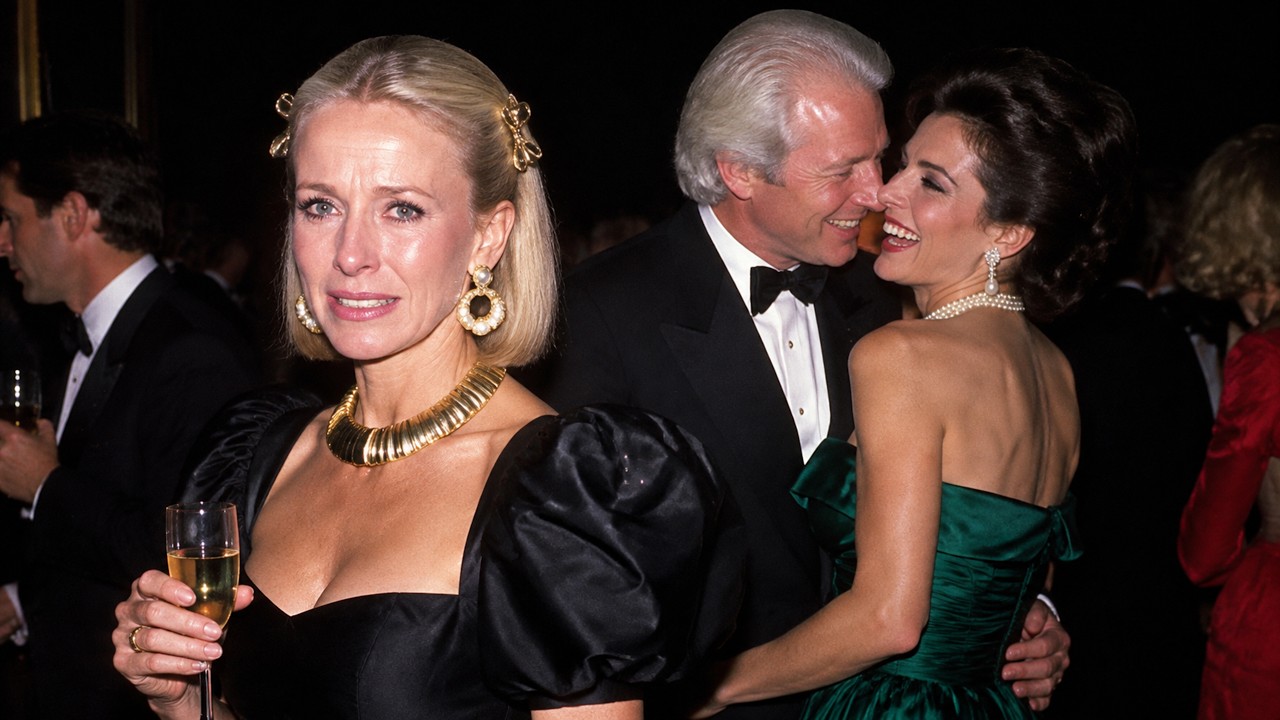
She reported that Sid Bass and another man’s wife had taken a house together for Christmas in the Dominican Republic. Within weeks, one magazine would put Anne on its cover as the Empress of Fort Worth, while another called her husband’s new romance a merger. She had built the house, the gardens, the ballet, and the collection. So when the fortune was his, what was a wife worth?
The answer to that question had been forming for a long time, and it began with a warning delivered before the wedding even took place. In the summer of 1965, an Indianapolis surgeon asked his daughter a question about money. He was Dr. John Wesley Hendricks, a urologist and a successful surgeon in that city.
His daughter was twenty-three. She was about to marry the eldest son of one of the great oil families of Texas, and her father wanted to know whether she was sure. More than twenty years later, she recalled that conversation for a reporter. He told her how much he liked the young man.
Then, as she put it, he asked if she was sure she wanted to marry him. He said she should think about it, because great wealth could breed a lot of unhappiness. It was a strange thing for a father to say on the eve of a wedding that most fathers in Indianapolis would have toasted. It was the kind of warning that only makes sense afterward.
His daughter took it seriously. She thought about it, she said, and decided she could handle it. Her name was Anne Hendricks Bass. She was born on October 19th, 1941, in Indianapolis, and she grew up with younger sisters and a brother.
Her mother, Jean, was a Vassar graduate and a champion golfer. When she was young, she had also wanted to be a dancer, but her own father had stopped her. That small refusal, made a generation earlier, would echo through her daughter’s entire life. Anne’s grandfather, R.
D. Brown, was a well-known Indianapolis builder and philanthropist. Anne took ballet lessons as a child. She went to the Tudor Hall School for Girls in Indianapolis and graduated in 1959.
Then she followed her mother east to Vassar College, where she studied Italian literature and art history and took her degree in 1963. She was the kind of student who went looking for more than the syllabus. She traveled to Yale to sit in on the lectures of the architecture critic Vincent Scully, not yet knowing she would one day commission a house from one of the most famous architects in America. After Vassar, she went to work in New York.
She joined the store Bonwit Teller as an executive trainee and became an associate buyer. She also worked as a contributing editor at Vogue. For a clever young woman of her class in the early 1960s, these were the right rooms to be seen in, the rooms where taste was trained and where good marriages were made. But her marriage had been decided, in a sense, long before.
She had first met Sid Richardson Bass at a birthday party in Fort Worth when she was nine years old. That was her own account. His mother liked to tell a grander version, that the boy had announced he would marry her one day. Anne was never quite convinced.
She suspected, she said with dry humor, that his mother sort of made it up. Sid Bass was born in Fort Worth on April 9th, 1942. He went to Yale and graduated in 1965, the year of the wedding. He was the eldest of four brothers, the sons of Perry Richardson Bass and Nancy Lee Bass, and he was the heir to a family business built on oil and ranching and a great uncle’s fortune.
When Anne’s father spoke of great wealth, this is what he meant. They were married on June 26th, 1965, in a Presbyterian church in Indianapolis. The reception was held at the Woodstock Country Club. Then the couple left for a honeymoon in Europe.
She was twenty-three. So was he. Their whole adult lives lay ahead of them, and almost none of it would be lived in Indianapolis. Her father’s warning went into the past with the wedding cake and the thank-you notes.
Great wealth could breed a lot of unhappiness. She had considered it and decided she could handle it. And for the next twenty years, almost everyone who watched her would have agreed that she had. The young couple did not go straight to Fort Worth.
They spent a year in Dallas first, and the picture of that year is almost ordinary. By the account Texas Monthly later gave, Sid rode the bus to work. In the evenings, thinking he might follow his interest in art, he painted in the spare bedroom. It is a small detail, and it is easy to pass over, but hold on to it.
More than forty years later, it would surface again in a very different marriage. From Dallas, they went to Palo Alto, California, for two years, while Sid took his degree at the Stanford Graduate School of Business, with a summer in New York along the way. Then they went home to Texas, to the city where his family’s fortune had been made. Anne later described the day she decided to do something of her own.
One day my husband and I were sitting outside, she said, and she was thinking, in her words, what a wonderful life we had. But with Sid doing such great things, I felt I still had to do something on my own. It is the sentence of a woman who already understood that the fortune around her had a name on it, and that the name was not hers. Anne Bass began to build something of her own.
In 1970, still in her twenties, Anne Bass hired one of the most famous modernist architects in America to build her a home. His name was Paul Rudolph. The commission would become, by the judgment of the scholars who later cataloged his work, his most ambitious residential project. Rudolph himself is said to have called it the best home he had ever designed.
The record does not even agree on when it began. One account says the design dates from 1966 and the house was finished in 1970. Texas Monthly put the commission in 1970, with three years of planning and building to follow. Either way, the client was a woman not yet thirty.
By then, the family had grown. Their first daughter, Hyatt, was born in 1969. A second daughter, Samantha, followed. The Basses had been living on a ranch estate above the Trinity River.
Now, they built in Westover Hills on Deep Dale Drive. The house took one year to plan and two years to build. When it was finished, it rose out of the treetops, in the words of one Texas writer, serene and white in a series of rectangular boxes. It was framed in steel and wrapped in white aluminum and glass.
Critics compared it to Frank Lloyd Wright’s Fallingwater and to Mies van der Rohe’s Farnsworth House, and one scholar judged its spatial complexity greater than theirs. Rudolph explained where it came from. The ideal of weight and counterweight, he said, similar to the movement of the human body, became the genesis of the house. He was designing for a woman who had trained in ballet, and the house was built to move like a dancer.
The scale of it was hard to take in from the drive. The house sat on an eight-acre tract and enclosed more than eighteen thousand square feet. Inside, three main stories were divided into twelve separate levels with fourteen different ceiling heights. The entrance was marked by a single cantilever forty feet long.
There were five bedrooms and six bathrooms. There was a butler, a cook, and two maids. And at the front stood a security station with armed guards, three of whom patrolled the grounds twenty-four hours a day. Then came the gardens.
They were designed by Robert Zion, an East Coast landscape architect, and Russell Page, the British designer who had made the garden at the Frick in New York. She worked beside them, and she is credited as a designer of the grounds alongside them. Together, they moved hillsides and created meadows. They sculpted views, built lily ponds and greenhouses, and planted rose gardens.
An avenue of pleached oaks led across the lawn to a bronze by Aristide Maillol called The River. A wisteria pergola shaded one path. Rudolph designed a greenhouse. By one account, the Basses spent several million dollars on the gardens alone.
The gardens kept changing. In 1981 and 1982, Russell Page came back and redesigned the grounds, aiming, in his own phrase, at the tranquility of an all-green base. The rose garden dates from that second campaign. She read books on horticulture, botany, and landscape architecture, and built a gardening library of her own.
She visited the great gardens of Europe. On one trip home from Hawaii, the magazine reported, she carried a ginger cutting on the plane. A friend of hers, Jane Brown, later put her finger on what Fort Worth noticed. They would have captured people’s attention, she said of Sid and Anne, if for no other reason than by the precision of their tastes.
Inside, the walls were made for pictures. The house had been designed to hold an extensive collection of contemporary art. There were paintings by Mark Rothko and Ellsworth Kelly, Frank Stella and Morris Louis, work by Henri Matisse and Andy Warhol. Over the conversation pit in the living room hung a white mobile by Alexander Calder.
The house was white with no curves anywhere, and it reflected the young woman’s own spare taste. That taste was the thing people noticed first about Anne Bass and the thing they would underestimate longest. The money that paid for the house was her husband’s family’s money. But the eye that chose what went on its walls was hers.
The pictures she was beginning to gather would one day be worth more than anything a court ever gave her. In 1970, nobody was counting. This is the image that Fort Worth saw and later the rest of the country. A blonde woman with straight posture in a white house above the treetops behind armed guards.
She drove a silver Cloud. She read constantly. She had a London bookseller who, she said, still sent her five books a day. Her favorites were Henry James’s The Portrait of a Lady and the novels of Edith Wharton, including The Custom of the Country.
And there were the guards. They had not always been there. After one break-in at the house and a holdup in the family’s garage, the Basses built a security station at the front and hired armed men to walk the grounds. Three of them patrolled around the clock, and the family had bodyguards as well.
The guards were watching for strangers coming over the wall. Nothing that would one day break this household came over the wall. The house was finished. The gardens were growing in.
And two little girls were growing up in rooms of fourteen different heights. Anne Bass had made her home. Now the woman who had built it turned to the city around it, and Fort Worth was about to discover that she meant to build that, too. Fort Worth had money long before Anne Bass arrived, but it had never met a patron quite like her.
It had been a cow town, and then it became the headquarters of the great ranching families, the Fortsons, the Carters, the Walshes, and the Moncriefs. By Texas Monthly’s count, about two hundred rich families made up its society, and that society lived at the country clubs. Fifteen years before the magazine’s story, it said, people from Fort Worth did not go to New York alone. The city’s taste was changing all the same.
The Amon Carter Museum opened in 1961. In 1966, Richard Brown arrived from the Los Angeles County Museum to be the founding director of the Kimbell. In 1968, Henry Hopkins came to make a professional institution of the Fort Worth Art Museum. Perry and Nancy Lee Bass gave that museum an annual stipend of twenty-five thousand dollars, and the Sid Richardson Foundation paid for a one-million-dollar expansion.
Into this city with its old fortunes and its new museums came a young wife from Indianapolis who meant to do more than attend. Anne Bass did not intend to sit anywhere quietly. I wasn’t going to spend my time playing tennis and bridge, she said. I was going to do something else.
She joined the board of the Fort Worth Art Museum in 1969, before the house was even planned. She became a member of the Junior League and its chairwoman for community arts and education. She supported the Van Cliburn Foundation. She supported the Fort Worth Symphony and the Fort Worth Country Day School.
Her contributions, one writer noted, were always perfect. That was the trouble, according to some of the people who worked with her. She wanted everything perfect. She wouldn’t accept anything that wasn’t perfect, one person told Texas Monthly.
Others went further, though they gave their accounts without their names. She was described as often curt with people who worked for her. When things were not done to her satisfaction, the magazine reported, she would throw temper tantrums. If she dealt with a partnership and decided that one partner was superior, it was said she would not bother even to be polite to the other.
The general view in town, as the magazine summed it up, was that she had to get her way or she would quit. Even her supporters, it said, approached her with an undercurrent of caution. And sooner or later, they got around to what people called the Bass body count, the list of those who did not make the grade. One of the museum directors who left said she had made it clear that she wasn’t running for public office.
At the art museum, three directors and an interim director came and went within ten years. She was blamed for the turnover. Whether she deserved all of it, the record does not say. What it does show is that the blame landed on her and stayed there.
One Fort Worth arts figure gave the most revealing line of all. Whenever I talk to her, the person said, I come away with the feeling I’m not good enough. That sentence tells you as much about the speaker as about Anne Bass. It describes the effect of standing beside someone who has very high standards and very little interest in small talk.
There were other voices, and they were just as specific. Anne Coonsman, the executive director of the Fort Worth Symphony, called her nurturing and said she had good ideas for raising money and building a board. Ted Sanford, the headmaster at Country Day, said she was good at solving problems and had an eye for detail. Neither of them sounds like they are describing a tyrant.
The Fort Worth Ballet was where her energy showed most plainly, and it began with her daughters. In 1984, a teacher at the School of American Ballet in New York happened to remark that Anne’s older daughter was developing very well in spite of the instruction she was getting in Fort Worth. For a woman whose own mother had been stopped from dancing, it was not a remark to let pass. She rented space in a shopping center off Interstate 30 and spent three hundred thousand dollars of her own money building a dance studio.
At the suggestion of Peter Martins, she hired two teachers, Nanette Glushak and Michel Rahn. At first, by the magazine’s account, the studio had three students. They were Anne Bass and her two daughters. Within three months, Glushak and Rahn were the artistic directors of the Fort Worth Ballet, which was failing, and Anne Bass was invited onto its board and helped restructure it.
She was quoted with a certain dryness as saying that if she wanted to see good ballet, it would be a lot cheaper for me to see it in New York. From April of 1985, the Sid Richardson Foundation added two hundred eighty thousand dollars in grants, according to one account, though another records the foundation’s gift as two hundred fifty thousand dollars. The company survived. It later became Texas Ballet Theater.
Her critics said she ran it with a heavy hand. The ballet’s own executive director, Jane Brown, put it in a way that managed to be both loyal and wary at once. We’ve established a good board of directors, she said. And it’s important for all of us to know that we can survive without Anne.
How did she actually come across in person? In 1987, a reporter from Texas Monthly sat with her and described exactly what he saw. A tight black leather skirt, spike-heeled blue shoes, and a blue angora sweater with large shoulder pads. Straight blonde hair held back by two gold barrettes shaped like bows, a wide gold necklace molded like coils of rope, and correct posture always.
She was brisk and businesslike. She had agreed to the interview on a condition, there were to be no personal questions, and she had written out her answers in advance. Her explanation was short. Yes, that way there are no mistakes.
Here is the gap at the center of the Anne Bass story. The town saw an empress. The town’s gossip saw a woman with a temper who drove directors out of the museum. But the woman herself was so careful about how she would be heard that she put her answers on paper before she would speak.
Her later partner would one day describe her in words the gossip never found. Shy and modest, he said. Fierce. My life doesn’t seem extraordinary to me, she told the reporter.
It seems very normal. He pushed back. That was too bad, he said, because she might be missing some of the pleasure. Her answer came back.
Perhaps, perhaps it seems normal because of those historical novels I read. To Fort Worth, whatever she felt about it, the house and the guards and the boards and the ballet made her a figure to be watched. Fort Worth called her difficult. But in the ballet world of New York, George Balanchine had his own name for her, and it was a great deal kinder.
In May of 1979, the School of American Ballet asked a new supporter from Fort Worth to fill one table at its gala. Its galas ran on a familiar arithmetic. She was asked to be one of ten co-chairwomen, and she was expected to bring a table of ten at two hundred to five hundred dollars a ticket. Anne Bass had joined the school’s national advisory council in 1978.
For her first big gala, she did not bring a table of ten. She brought thirty to forty people from Texas, along with friends from Connecticut, California, and New York. Mary Porter, who raised money for the school, never forgot it. Over fifty percent of the guests were Anne’s, she said.
We all laughed at the office when her invitation lists came in. We couldn’t believe the addresses. There were people who lived on something called Old Spanish Trail, and there were a lot of cactuses and ranches in the addresses. Then all of these people showed up, a lot in their own jets.
We thought it was glamorous. The school had been wary, the magazine said, of taking on too many newly rich patrons, and at first the staff thought of her as a nice lady from Fort Worth. That impression did not survive the gala. New York’s ballet world had seen rich patrons before.
It had not often seen one arrive with a small air force. That autumn, she returned the favor. She invited Mikhail Baryshnikov, Peter Martins, and Heather Watts to dinner in Fort Worth. It was incredible, Martins remembered.
When we came in, there was an orchestra playing. She became a fixture. The three dancers became friends. Her daughters took summer classes at the school.
In 1980, she joined the board of the New York City Ballet itself, and she would stay on it for twenty-five years. Balanchine himself, by the account Texas Monthly gave, called her the golden girl from Texas. When Balanchine was dying in 1983, she went to see him. She visited him in the hospital the night before he died, the magazine reported, and sat on the edge of his bed.
Whatever passed between them is not recorded. It is one of the few private moments of her life that anyone wrote down at all, and it was written down by someone else. The dancers saw her in their own terms. At Balanchine’s funeral, Alexandra Danilova kept glancing across at her.
In the Russian Orthodox church, we stand up, Danilova explained afterward. At the funeral, I glance at her from time to time. But she doesn’t move. She stands there perfectly still.
Beautiful posture, she said. I count her as a dancer. She is disciplined like a dancer. Peter Martins compared it to his boyhood in Denmark, when the king and queen would come to the royal theater.
That’s what it was like, he said, when Sid and Anne would come here. In the fall of 1981, Lincoln Kirstein and Mary Porter asked her to chair the school’s fiftieth anniversary campaign, a drive to raise a permanent endowment. She said no. Three months later, she said yes.
Once she said yes, Porter recalled, it was as if she had gone to work at the school as an unpaid member of the staff. She wrote letters, she helped with the planning, and she called people. The numbers show how far she carried it. The goal was fifteen million dollars.
A single gala in January of 1984 drew eight hundred guests and netted the school seven hundred fifty thousand dollars in one night, more than three-quarters of its annual budget. W Magazine announced that the Ballet Legions had arrived. Lincoln Kirstein, by Texas Monthly’s account, went further. The Basses, he said, had replaced the Morgans and the Rockefellers as America’s premier dynasty.
By the end of the campaign, she had raised about ten million dollars against Mary Porter’s goal of fifteen million. The next goal was seven million more for dormitories and new offices. She also bought a home in New York to match the one in Texas. In June of 1983, the Basses paid five and a quarter million dollars for an apartment at 965 Fifth Avenue, a building designed by Rosario Candela in 1928.
The price was a record at the time. The apartment had fifteen-foot ceilings and, by one description, the largest living room in Manhattan. It looked out over Central Park. She hired the decorator Mark Hampton, and she kept the old rooms.
The vocabulary is traditional, she said, and it would have been a sin to remove it and make it totally modern. Then in 1985, the golden girl found herself in the middle of a ballet war. In February, Lincoln Kirstein dismissed Mary Porter from her post as the school’s secretary after sixteen years. Porter stayed on as the school’s development director.
In April, she secured a verbal pledge of one million dollars from Louisa and Fayez Sarofim in Houston. Sid and Anne Bass pledged two million more. The week after Porter came back with those pledges, Kirstein fired her as development director, too. Anne Bass threatened to withdraw her support.
On May 6th, 1985, the New York Times ran a headline, Dispute Splits Ballet School Board. Around the story ran a phrase that stuck to her, the Texas takeover, because one of Mary Porter’s prime supporters was Anne Bass. Kirstein’s own supporters were scathing. Anne Bass came off looking like a hick, one of them said.
She simply failed to understand who Lincoln Kirstein was. Her friend Peter Wolf saw it the other way round. Lincoln saw Anne as another patron, he said. Mary just got in the way.
Peter Martins defended her too. Anne had the right to speak up when Mary was fired, he said. That’s why we have board members. But the phrase had done its work.
In New York, she was now the rich Texan who threw her weight around, just as in Fort Worth, she was the patron who drove directors out of the museum. Notice what both stories leave out. The two million dollars at the center of the ballet fight was a pledge from Sid and Anne Bass together. Every check she signed for every school and gala and studio was signed with money that had a long history before her and a set of rules she did not write.
The money behind every gala began with a bachelor wildcatter who died on a Texas island in 1959. His name was Sid W. Richardson, and Anne’s husband carried his name. Richardson was born in Athens, Texas, on April 25th, 1891.
He was a rancher and an oil wildcatter, a man who made his money, lost it, and made it again with his partner Clint Murchison Sr. He made a million dollars in oil in 1919 and 1920. Then he lost it. He did not recover until 1933.
He never married. When he died on September 30th, 1959, on San José Island off the Texas coast, he was sixty-eight years old. His estate was assessed at fifteen million dollars. He left most of it to the Sid W.
Richardson Foundation, which he had set up in 1947 with encouragement from Amon G. Carter. The foundation gives grants to Texas causes in education, health, human services, and culture. Years later, it would give money to the ballet company his great-nephew’s wife helped save.
He left several million to his nephew and partner, Perry Richardson Bass. And by Texas Monthly’s account, each of Perry’s four sons inherited two point eight million dollars. He named as one of the executives of his estate John B. Connally, the future governor of Texas.
The executorship gave Connally a steady income for years. Remember that name. It returns later in this story in a very different light. Perry Bass and his wife Nancy Lee had four sons.
Sid was born in 1942, Ed in 1945, Robert in 1948, and Lee in 1956. All four would become billionaires. The eldest took control of the family business in 1968, three years after his wedding, and set about making it grow. The figures are enormous.
Sid Richardson’s estate was assessed at fifteen million dollars. Each of the four boys inherited two point eight million. The family company Sid took over was worth about fifty million, and under him it became an investment group of fourteen billion. In the middle 1970s, the magazine reported, the oil income alone swung between ten and fifteen million dollars a month.
In 1984, Walt Disney Productions bought Arvida, a Florida land company in which the Basses held a large interest, and paid for it in Disney stock. That autumn, the Basses bought about two and a half million more Disney shares, most of them at sixty dollars apiece, spending one hundred forty million dollars in all. That brought them to fifteen point nine six percent of the company. Disney’s management called it a strong vote of confidence from the Bass brothers.
That same year, the family did more than buy shares. Disney had narrowly survived a string of takeover attempts, and its leadership was in question. Two of its shareholders, Sid Bass and Roy E. Disney, brought in Michael Eisner as chairman and chief executive and Frank Wells as president, replacing Ron W.
Miller. The quiet man from Fort Worth had helped choose who would run the Magic Kingdom. By 1987, Sid Bass was described in the press as the principal stockholder in Walt Disney. He also sat as a trustee of the Museum of Modern Art and of Yale.
Set beside that, Anne’s galas and studios look like what they were in the eyes of the money, a small part of a very large machine. This is the world Anne Bass married into, and it is worth understanding how it was put together, because the whole second half of her story turns on it. Texas is a community property state. Its marriage law comes, as the state’s own historical handbook puts it, from the law of Castile and ultimately from Visigothic custom.
Under that law, there are two kinds of property in a marriage. The first kind is community property, which is owned in common in equal shares by both spouses. That includes everything either spouse earns during the marriage. The second kind is separate property.
That includes what a husband or wife owned before the wedding and anything either of them receives by inheritance or as a gift. Separate property belongs to one spouse alone. In 1967, two years after the Bass wedding, Texas passed a matrimonial property act that divided the management of property between husband and wife according to where it came from. From 1980, spouses could divide their property between them by written agreement.
These were dry rules written for ordinary families with ordinary houses and ordinary savings accounts. For a family like the Basses, they meant something else. A great part of the fortune behind Anne Bass’s life had come down to her husband from a great uncle and a father. In the language of Texas law, an inheritance is separate property.
But the Texas definition of community property also took in revenues from separate property during the marriage. And in a family like this one, the line between what he inherited and what they built together was never going to be simple. None of this mattered while the marriage held. She ran the house, the gardens, the boards, and the galas, and the money arrived to pay for them.
She had the use of an empire. What she did not have, and what no social column ever explained, was any clear claim on the empire itself. She was the face of the fortune at every gala and every opening. In the eyes of the law, a great deal of that fortune had a separate name on it, and the name was not hers.
By the summer of 1986, that question of what was his and what was theirs stopped being a matter for lawyers’ textbooks. It was about to become a matter for the society pages. In June of 1986, by one account, Sid Bass met Mercedes Kellogg at a black and white ball at Blenheim Palace. The ball was given by the Duke of Marlborough at Blenheim, and it was exactly the kind of evening at which the rich of two continents found one another.
That is one version of the meeting. There are others. A later account held that she caught his attention at a lunch in East Hampton that same year by throwing a bread roll at him. A Dallas magazine said only that the two had met at what it called Gatsby-esque social functions in New York.
The stories do not agree. What the record shows is simpler. By the second half of 1986, Sid Bass and Mercedes Kellogg had been linked in public. Mercedes Kellogg was born Mercedes Tavakoli in Tehran on April 10th, 1944.
Her mother was Surur Tavakoli Diba. Her stepfather, Abul Hassan Diba, had been a deputy finance minister of Iran. She was educated in England and took a business degree at a Swiss university. In the early 1970s, she married Francis L.
Kellogg, a New Yorker born in 1917, who had worked for the CIA and later served as a special assistant to Secretaries of State William Rogers and Henry Kissinger in charge of refugees, with the rank of ambassador. His first marriage, in 1942, had been to Fernanda Wanamaker Munoz, a great-granddaughter of the department store founder John Wanamaker. They had two children and divorced in 1971. He was a fixture of New York society and a man of the State Department, and he was more than a quarter of a century older than his second wife.
She was, in other words, a married woman with a husband of some standing, and the society press reacted the way it always did. On October 20th, 1986, New York magazine ran an item under a headline that said it all. Sid Bass and Mercedes Kellogg Stun Society. The columns described her in a language they reserved for women.
New York society writers, according to one Texas magazine, called her quite the enchantress. Later, the New York Post would quote Charlotte Hays, a chronicler of the wealthy, as saying, she’s no great beauty. And then, but she was the ultimate geisha. The same paper passed on a story that she had told her husband, goodbye, darling, I’m marrying Sid.
It was a society anecdote, and it may be no more than that. These are the words the press used about a living woman, and they tell us more about the press than about her. Mercedes Kellogg was cast as the seductress. Anne Bass was about to be cast as the impossible wife.
Neither woman had chosen her part, and neither was asked. When the New York magazine item appeared, Heather Watts telephoned her. I called Anne, Watts recalled, and said, I can’t believe how rich you are. Sid himself was described as quiet.
A source told the Dallas magazine he was a quiet, retiring, pleasant person. He was being seen less often in Fort Worth, the magazine said, and spending his time at the Carlyle Hotel in New York. Texas Monthly reported that he had also reportedly had other girlfriends. Then came Christmas.
The society columnist Suzy Knickerbocker reported that Sid Bass and Mercedes Kellogg had taken a house for Christmas in the Dominican Republic. In the same season back in Fort Worth, Sid and Anne were seen together at the Nutcracker, where their daughters were dancing. Two Christmases for one husband, and both of them in print. Picture that second one, the one reported from Fort Worth.
A performance of the Nutcracker. Children in costume on the stage, two of them hers. A woman whose own mother had once been stopped from dancing, now watching her daughters do it, with the man she had married at twenty-three sitting beside her. Whatever she knew that evening, she never spoke about it in public.
She was not the first wife of a great fortune to see the state of her marriage written up in a society column, and she was not the last. The machinery was well worn by 1986. A sighting became an item. An item became a headline.
And a headline became a verdict that no court had issued. Francis Kellogg, meanwhile, was sixty-nine by the reckoning of one magazine. His marriage was ending, too. The story the columns wanted was the Texan, his wife, and the woman from Tehran.
Anne Bass did not hide. That season, the Fort Worth Ballet opened with a black and white dinner dance, and the evening was named after a Balanchine ballet. It was called Who Cares? The irony, Texas Monthly noted, was not lost on W Magazine, which ran photographs of Anne at the party and commended her for her stiff upper lip.
The title of the evening asked the question nobody would say aloud. In February of 1987, two magazines went to press about them in the same month. One would treat her as an empress. The other would treat her marriage as a deal.
The February 1987 issue of Texas Monthly put Anne Bass on its cover as an empress. The story was called The Empress of Fort Worth. It was written by John Davidson, and it is still the fullest portrait of her that exists in her own words. It had been built on her terms, no personal questions, written answers, so that there would be no mistakes.
It described the house, the gardens, the guards, the ballet, the museum, the tantrums, and the defenders. It quoted her father’s warning, and it went to press in the middle of the most personal crisis of her life, a crisis she had agreed in advance not to discuss. The magazine dealt with the crisis in a few careful lines. Sid Bass had left with Mercedes Kellogg, it said, the wife of Francis Kellogg.
Anne had not filed for divorce. Rumors of a five-hundred-million-dollar settlement, it added, were premature. The friend quoted most warmly on the subject was the ballerina Heather Watts. I don’t think of Anne as just being rich, and she doesn’t treat me like a ballerina, she said.
I also think of Sid as a good friend, and like all of Anne’s friends, I hope he’ll come back. That one sentence is the clearest window we have into the winter of 1987. Her friends still hoped. The marriage was over in the columns, but in the room it was not yet over at all.
The same month, a Dallas magazine took a different approach. D magazine ran a piece by Mike Shropshire with a headline that turned a marriage into a takeover battle. Bass Mulls Mercedes Merger. It read, Fort Worth Attwitter.
The piece described Sid as forty-four, the eldest of four brothers and the unquestioned decision maker of the family empire. It repeated the New York column’s description of Mercedes as quite the enchantress, met at Gatsby-esque parties in New York, and called the relationship a torrid romance. And it described Anne in harsh terms. Anne, on the other hand, it quoted an unnamed source, is something of a pickle.
She’s got a mean streak and pushes people around. It said she ran the Fort Worth Ballet with heavy-handed tactics. It could not even spell her name correctly. Then it reported, without naming its source, that she had turned down an offer from Sid of five hundred million dollars plus their house in Westover Hills.
The vocabulary was telling. Two years earlier, the New York papers had called her part in the ballet school fight a Texas takeover. Now, a Dallas magazine called her husband’s new romance a merger. Both times, the language of the boardroom was borrowed to describe a woman.
When she spoke up for a friend, it was a takeover. When her husband left, it was a merger. In neither case was she the one doing the deal. Consider what that combination did.
In the same article, the reader learned that the wife was difficult and that she had refused half a billion dollars. The story wrote itself, and it was not a kind one. If that offer was ever made, and if she ever refused it, we do not know why, because she never said. All we know is how the magazine chose to tell it.
Set the numbers of that winter side by side and the shape of the thing becomes clear. Twenty-two years of marriage. A husband of forty-four. A rival born in 1944, married to a man the Texas magazine put at sixty-nine.
A reported offer of five hundred million dollars refused. A house on eight acres that was part of the offer. And not a single published word from the wife at the center of it about any of it. That winter, the magazine reported, she was rereading Edith Wharton.
Among the books she talked about was The Custom of the Country, a novel about an ambitious woman who climbs through society one marriage at a time, trading up with each marriage. She had given it to her older daughter to read. When she finished it, Anne said, she came and asked if there were really people like that in the world. It is the kind of detail a novelist would cut for being too neat.
A girl reads a book about a woman who trades up through husbands and asks her mother whether such people exist. In the winter of 1987, the newspapers were answering her question for her, and her mother was living inside a version of the book in which she had not been given the part she might have expected. In August of 1987, the waiting ended. United Press International reported that Sid Bass had filed for divorce.
The reporter, William C. Trott, called her one of the country’s most prominent ballet patrons. He noted that the couple had been married for twenty-two years, and he described what the filing asked for. Sid Bass requested control of his separate property, while his wife kept control of hers.
If the two of them could not agree on a division of property, the court should step in and set the terms. The same wire story got the other husband wrong. It described Francis Kellogg as an heir to the Kellogg cereal fortune. He was not related to the cereal family at all.
In a year when every detail of the Bass marriage was being printed, even the basic facts were up for grabs. For Anne Bass, the filing turned a private matter into a legal question with an old answer. Separate property and community property. What came down to him from his family, and what was built during twenty-two years together.
She had spent two decades building. Now, a court in Texas was going to decide how much of what she had built counted as hers. In 1988, while a former governor of Texas was selling his desk at auction, the Basses’ divorce was settled. The state around it was in ruins.
The great Texas oil boom had collapsed. In 1973, a barrel of oil had cost three dollars and eighty-nine cents. A barrel that sold for thirty-one dollars and seventy-seven cents at the peak in 1981 had fallen to twelve fifty-one by 1986. Between January of 1981 and January of 1987, unemployment in Texas rose by almost four points and topped out at nine percent.
Famous names went bankrupt, the Hunt oil family among them. And in Houston in 1988, John Connally, the former governor, held what was called the Super Bowl of auctions. He sold his art. He sold his desk from the governor’s office.
This was the same John Connally whom Sid Richardson had named as one of his executors thirty years earlier. The Bass family by then was the principal stockholder in Walt Disney, a long way from any oil well. While old Texas money was being auctioned in public, the Bass money was being divided in private, and by the reports of the day, the division was on a scale that Texas had never seen. The divorce was final in 1988.
The settlement was reported at about two hundred million dollars and was described as the largest divorce settlement in Texas history up to that time. By some accounts, Anne also kept the Rudolph house in Westover Hills and the apartment at 965 Fifth Avenue, and one account adds more than a million shares of Disney. Later estimates of the whole settlement ranged from two hundred million to five hundred million dollars. The figures come from the press, not from a court record.
The house came with its contents, as was the custom in Texas, according to one later account. That detail would matter more than anyone could have guessed. In 1987, the year before the divorce was settled, Vincent van Gogh’s Sunflowers sold at auction for thirty-nine point eight million dollars, and the art market began a long climb. The pictures on Anne Bass’s walls had been chosen by her over two decades of marriage.
Now they were hers to keep. The list of the fallen read like a roll call of the Texas establishment. The former lieutenant governor Ben Barnes went under. So did the oilman Eddie Chiles and the Hunt oil family and the Midland oil company of George W.
Bush. In Houston, empty office towers stood along the skyline, so vacant that people called them see-through buildings. Food banks opened in neighborhoods that had never needed them. The state was frightened enough that it set up a rainy day fund, a savings account against the next bust, so that it would never be caught that way again.
Into that Texas, the Bass settlement landed like news from another planet. Weigh the numbers of that year against each other. Oil at twelve fifty-one a barrel, down from thirty-one seventy-seven. Unemployment at nine percent.
A former governor’s desk on an auction block. Two hundred million dollars to one wife. Thirty-nine point eight million dollars for a single painting of flowers, a sign of where the real value of that settlement lay. And in December, a wedding said to have cost five hundred thousand dollars.
That wedding took place on December 10th, 1988, at the Plaza Hotel in New York. Sid Richardson Bass married Mercedes Kellogg. Her own marriage to Francis Kellogg had ended that year, by his record, though another account places the end earlier. The gala, by the press’s accounts, cost half a million dollars.
Anne Bass never gave a public account of the end of her marriage. Francis Kellogg lived until 2006 and died at eighty-nine, remembered in his obituaries as an ambassador for refugees under two presidents. What did she feel? The record is silent, and an honest telling has to leave it silent.
What we have instead is the warning her father gave her before her own wedding in Indianapolis twenty-three years earlier. Great wealth could breed a lot of unhappiness. She had decided she could handle it. In 1988, she was handling it in public, with the whole country reading over her shoulder.
And we were reading. We read the item in New York magazine and the merger headline in Dallas. We learned the name of the second wife before we learned what the first one had built. We read about the enchantress and the pickle.
We watched a woman be left, and we called it news. There is one more figure from that year worth setting down. In 1989, Anne Bass appeared on the Forbes list of the four hundred richest Americans in her own right, under her own name. She was no longer the wife of a fortune.
She was one. By 2000, the same magazine would estimate her worth at six hundred ninety million dollars. The columns had their ending. The second wife had her wedding at the Plaza.
The first wife had a house in Fort Worth, an apartment on Fifth Avenue, and a set of paintings she had chosen herself. The story the press had been telling was finished. Hers had barely started. In 1995, Anne Bass bought twenty-three acres and a guest cottage in Kent, Connecticut.
It was a modest beginning by her standards, a place in the country far from Fort Worth and far from the columns. By then, she was no longer alone. From 1993, she shared her life with Julian Lethbridge, a painter. They would stay together for the rest of her life.
Years later, after she died, he described her in a few words that the society pages had never managed. Shy and modest, he said. Fierce, but soft and sensitive, determined and willful. Over the years, the Kent property grew.
She bought and joined together three historic farms and renovated them until the estate covered about a thousand acres. She called it Rock Cobble Farm, and it was a working farm. It grew vegetables and kept dairy cows and beef cattle. A barn from the 1970s came down, and in its place she put up a barn from the 1800s, moved from somewhere else and rebuilt.
It was the Fort Worth gardens all over again. The same eye and the same patience turned to fields and stone walls. She gave the land around her the same attention. In 2005, she joined the board of the Weantinoge Heritage Land Trust, which protects more than ten thousand acres across Litchfield and Fairfield counties, and was instrumental in reshaping it.
In 2013, with partners, she bought the Kent Barns, sixteen buildings on one point two acres. She restored an old house there, built in 1781, and opened a restaurant in it called Swyft. The numbers of that second life tell their own story. Twenty-three acres to begin with, a thousand by the end.
Three farms joined into one. Ten thousand acres protected by the trust whose board she sat on. A house from 1781 brought back to use. Meanwhile, she had not let go of the dancers.
In 2000, she joined a trip to Cambodia with the World Monuments Fund at Angkor Wat. She watched a performance of traditional Khmer dance, and she noticed one of the dancers, a sixteen-year-old boy named Sokvannara Sar, called C. She was thoroughly impressed by his stage presence. After she returned home, she contacted him and offered him the chance to audition for the School of American Ballet in New York.
He arrived in New York speaking no English. She arranged private lessons with the Russian ballet teacher Olga Kostritzky. He entered the school, and in 2005 he graduated. He won an apprenticeship with Pacific Northwest Ballet in Seattle and then joined its corps de ballet.
When a magazine asked him about her years later, he called her a mother figure. She really tried to understand where I come from, he said, and make me comfortable. She decided to tell his story on film, and she decided to do it herself, learning filmmaking as she went. I have to do this myself, she said.
I’ll learn on the job. It took two years, with crews in Cambodia, in Seattle, and in Connecticut. The film was called Dancing Across Borders. It premiered at the Dance on Camera Festival at Lincoln Center and opened in February of 2010.
A critic for the New York Times complained that it lacked an objective voice. It is hard to imagine a fairer complaint about a film made by a woman who loved her subject. Alongside it, she founded the Khmer Dance Project with the New York Public Library for the Performing Arts, to record and preserve the old dances she had first seen at Angkor Wat. Her daughters had grown up and found their own work.
Hyatt wrote and directed a film, 75 Degrees in July, released in 2000, and published a novel, The Embers, in 2009, about a Manhattan couple whose marriage comes apart after the death of their son. Samantha became a photographer. Their story is their own. The other marriage went on for a long time.
Sid and Mercedes Bass became great patrons in their turn. In 2006, they gave twenty-five million dollars to the Metropolitan Opera, reported as the largest unrestricted gift in its history, and the Grand Tier there carries her name. Then in 2011, after twenty-three years, they separated. A source quoted at the time gave a reason that sounds like an echo from a spare bedroom in Dallas.
They are leading separate lives, the source said. He’s had it with the black tie and the opera and wants to retreat and work on his art. Mercedes kept the Fort Worth estate called Oak Hill, a house in Aspen, and an apartment on Fifth Avenue. The second marriage lasted almost exactly as long as the first.
The people who worked beside her in Kent described someone the columns would not have recognized. Hiram Williams, a business partner, called her straightforward, without pretense, and a very hard worker. James Baron, who ran a gallery, went further. Anne’s attention to detail was as great as anyone I’ve ever met.
He said she was an artist. It was the same attention Fort Worth had once called impossible to please, seen by people who were glad of it. She once summed up her outlook in a sentence that could stand for her whole life after 1988. I think there should be a positive side, she said, when change happens in your life.
We remember the divorce. We remember the merger headline and the Plaza wedding. We do not remember the farm, the trust, the village house, or the boy from Angkor Wat who became a professional dancer in Seattle, because none of it made the kind of headline the divorce did. We only watched her when she was being left.
We did not watch her build. The farm in Kent was a very long way from the society pages, and that was the point of it. But a quiet life in the country has its own dangers. In April of 2007, the distance between Rock Cobble Farm and the rest of the world nearly cost Anne Bass her life.
On April 15th, 2007, three armed men in black came into the house at Rock Cobble Farm. They wore masks and gloves, and they carried guns and knives. Anne Bass and Julian Lethbridge were inside. So was her grandson, three years old, asleep nearby.
When the men confronted her, she said, what do you want then? I’ll give you whatever you want. The men bound and blindfolded the couple and held them in an upstairs bathroom near her safe. They kept them there for about six hours.
Then they did something so strange that it sounds invented, though it was later told in court. Lethbridge testified that someone cut his shirt and cleaned his shoulder. Then came the needle, he said. It felt like a flu shot.
They injected both of them with a substance they claimed was a lethal virus. It was never shown to be anything of the kind. They would supply an antidote, they said, only if Anne Bass handed over the cash. One report put the demand at eight point five million dollars, another at eight million.
She told a court years later what that night was like. I was sure we were going to die, she said. She also remembered thinking even then that something did not add up. It all seemed really strange.
An antidote is for poison, not a virus. And she remembered one of the men. I felt like someone was just staring at me with these piercing blue eyes. How the night ended is told in slightly different ways.
One report says she convinced the men that no one could gather that much cash overnight. The fullest account from the later prosecutions says that when it became clear she could not meet the demand, the men drugged both captives with a sleeping aid and fled in a stolen Jeep Cherokee. They took what was in the safe. There was about six thousand dollars in cash, a diary, and, of all things, her former husband’s wallet.
When she woke, she freed herself. Her grandson slept through it and was unharmed. The man behind the plan was Emanuel Nicolescu, a Romanian-born former butler and employee. He was arrested in Illinois in January of 2011 and convicted in March of 2012.
On August 17th of that year, he was sentenced to twenty years in prison. It took the courts far longer to finish. Four men were eventually sentenced. The last of them, arrested in Hungary in 2022, was sentenced in December of 2024, more than seventeen years after that night and four years after Anne Bass had died.
Decades earlier, armed guards had walked the grounds on Deep Dale Drive around the clock. This danger came instead to a farm in Connecticut, through a man who had once worked for her. She lived thirteen more years. On April 1st, 2020, Anne Hendricks Bass died in New York of ovarian cancer after a long illness.
She was seventy-eight. She was survived by her daughters, Hyatt, a novelist and filmmaker, and Samantha, a photographer, by three grandsons, and by Julian Lethbridge. In Kent, the first selectman, Jean Speck, said simply that she was a true patron of the arts. Two years later came the evening that settled the question the columns had raised in 1987.
On May 12th, 2022, Christie’s in New York sold twelve works from her collection. Claude Monet’s painting of the Houses of Parliament at Sunset sold for seventy-five point nine six million dollars. One of her two Mark Rothkos brought sixty-six point eight million, the other forty-nine point six two five million. A Monet Water Lilies sold for fifty-six point four nine five million.
And a bronze cast of Edgar Degas’s Little Dancer, Aged Fourteen, the young ballet student he first showed in wax with a real tutu and a ribbon in her hair, sold for forty-one point six million dollars. Among the rest were two paintings by Balthus, one by Morris Louis and one by Wilhelm Hammershøi, and a third Degas, a dancer tying her shoe, which sold for eight point nine seven seven five million. The twelve works together brought three hundred sixty-three million, eight hundred seventy-five thousand dollars. That was more than the two hundred million dollars the newspapers had reported for her settlement, from the contents of one apartment.
Max Carter, Christie’s head of Impressionist and Modern art, said her collection represented the pinnacle of the artists it contained, the pinnacle of taste, the pinnacle of modern collecting. The dealer Richard Feigen said simply that Anne Bass had impeccable taste and a deep commitment to the ballet and the visual arts. It was the eye that Fort Worth had called difficult and New York had called a takeover. So what was a wife worth when the fortune was his?
The court gave its answer in 1988. The columns gave theirs the year before. But the answer that lasted was her own, and it hung on her walls. Her father had warned her before the wedding in Indianapolis that great wealth could breed a lot of unhappiness.
She never said in public whether he had been right. What he could not have known was what his daughter would do with the wealth and with whatever it cost her. She did not answer the columns. She outlived them.
She did not chase the empire. She built a farm. She did not tell the world how it felt to be replaced. She showed it in a white house in Texas, a village in Connecticut, a boy from Angkor Wat dancing in Seattle, and twelve works that sold for more than the two hundred million dollars the newspapers said she was paid.
At the Christie’s sale, Bonnie Brennan, the president of Christie’s Americas, put it this way. The twelve masterpieces, beautifully chosen, she said, reflect the unique perspective of a female collector. Somewhere in that sale stood a little bronze student of the Paris Ballet School at rest in fourth position, the way girls stand when they are learning to dance. More than thirty years earlier in Fort Worth, two other girls had danced in the Nutcracker while their parents sat together in a marriage that was already ending, and the columns watched the parents.
Perhaps their mother had been watching the dancers all along.
