The courier reached Versailles with news that would reshape the French succession: on May 10, 1774, Louis XV was dead. His grandson, Louis Auguste, became Louis XVI, and the Austrian archduchess who had arrived four years earlier as a teenaged bride now stood beside him as Queen of France. Marie Antoinette, born Maria Antonia of Austria, had entered the palace as the wife of a young heir, a figure whose conduct would be watched as evidence of how well an Austrian princess could fit France. Now she was the reigning queen, and the marriage that had brought her there was no longer a promise for the future but the foundation of the present royal household.
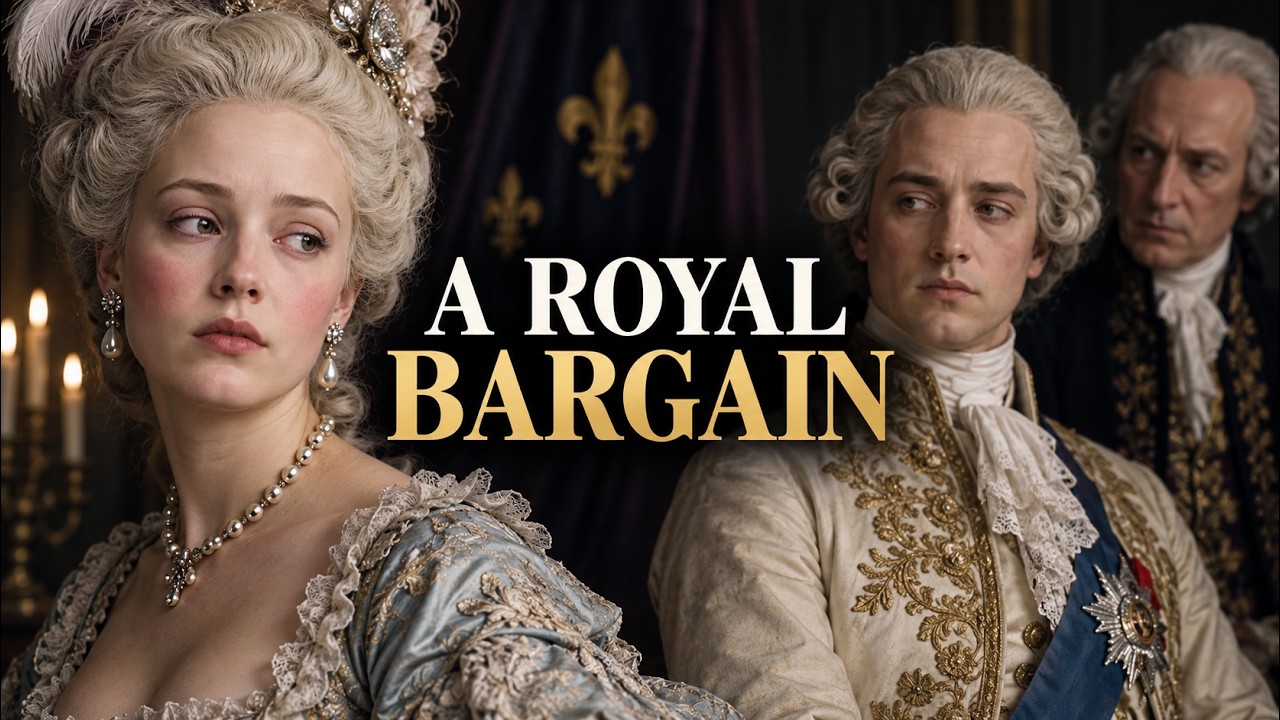
That marriage had not begun as a personal choice. It had been planned before she was old enough to understand diplomacy, arranged to bind together two powers that had spent generations on opposing sides. Austria and France had been rivals for so long that their reconciliation reversed a familiar pattern of European politics. The agreement between Vienna and Paris gave both courts a shared interest in maintaining a relationship they had previously resisted, though it did not make every old suspicion disappear.
To set that relationship inside their dynasties, Maria Theresa used the marriages of her children. Other Habsburg daughters married Bourbon branches ruling in Spain and Italy. Maria Antonia’s proposed husband belonged to the branch ruling France itself, and the match would place her beside the future French king. Her position was therefore especially important to the alliance, because it reached the very household expected to govern once the existing generation of rulers had gone.
She was born in Vienna in 1755, a daughter of Maria Theresa and Francis Stephen of Lorraine, into a large ruling family in which marriages could connect different parts of Europe. A royal daughter could become a wife abroad while remaining part of her parents’ political plans, and the household in which she grew up prepared children for positions beyond its own court. Louis Auguste was the grandson of Louis XV and became dauphin, the heir to the throne, before the marriage took place. The title mattered, because the wedding was not a union between two people already exercising equal sovereign authority.
Maria Antonia would arrive as the wife of a young heir, while the reigning king and his ministers could still shape the court around the couple and the foreign relationship their marriage represented. As the proposed match became definite, her education changed. French tutors taught her language, history, and the rules of court conduct. The preparation was practical: she would need to speak to people, understand their expectations, and perform ceremonies in a different setting.
A political marriage required more than a contract. It required a child to learn how to live convincingly in the public role designed for her. Those lessons also explained why she could not simply arrive as a private person. Her gestures, speech, and presentation would be observed as signs of how well an Austrian princess fitted France.
A mistake in a drawing room could become an opinion about the new dauphine. The alliance was an agreement between rulers, but part of its daily reception depended on the conduct of the young woman selected to embody it. In April 1770, a proxy wedding took place in Vienna. The groom was represented there rather than standing beside her in person, and the ceremony established the union before she completed the journey to France.
It also separated the political and legal arrangement from the couple’s life together. She had already entered the marriage while still among the family and surroundings she was about to leave. In May, she reached Versailles. She was fourteen and Louis Auguste was fifteen.
The ages made the distribution of authority clear: the marriage had come from decisions made by adults managing dynasties and state relationships, and the teenagers were required to live inside those decisions. Whatever feelings later developed between them, the original selection of bride and groom had been made for reasons extending far beyond private preference. The wedding in the royal chapel followed a carefully arranged public sequence. The couple passed through apartments crowded with people, then knelt before the altar surrounded by the royal family.
Afterwards, the marriage register was signed. The ceremony turned the diplomatic plan into an event the court could witness. It presented a new household within the French succession and made the young Austrian bride part of the royal family in view of everyone assembled. The festivities spread across the palace.
Ambassadors attended, and a feast used the newly completed royal opera. Even the wedding night included a court ritual in which the couple were ceremonially put to bed. The royal household treated the beginning of their private marriage as something that required public confirmation. The arrangement joined a diplomatic purpose to expectations about succession, with the couple’s bodies and daily life subject to unusual scrutiny.
The spectacle did not prove that the marriage would immediately accomplish every task assigned to it. Producing children was another expectation, and it remained unfulfilled for years. That delay placed pressure on a relationship already being observed for political reasons. A dynastic union needed a future generation to carry it forward.
The public wedding had created the partnership, but it could not order the timetable on which an heir would arrive. Marie Antoinette also entered a court with existing friendships, rivalries, and opinions about the alliance. The Duke of Choiseul had been an important architect of the reconciliation with Austria and of the marriage itself. Her arrival belonged to a political arrangement associated with his work, which meant that views of her could reflect views of ministers and foreign policy as well as judgments about her personality.
The new dauphine developed interests in music, performance, and sociability. These were familiar parts of court life, but her position made them unusually visible. People could discuss what she wore, whom she favored, or how she spent her time as evidence of what kind of royal wife she would become. The Austrian origin that had helped make her valuable to the marriage planners could also supply critics with a reason to question her loyalties.
When Louis XV died in 1774 and Louis Auguste became Louis XVI, Marie Antoinette became queen. The change raised her public rank without changing where she had been born. It also turned the young marriage into the reigning household. The country now looked to the couple as king and queen while the alliance that had brought them together remained an important part of their shared history.
She began altering the private rooms behind her state apartment. The surviving arrangement of smaller rooms, internal stairs, and service spaces shows another side of royal life: a queen receiving people ceremonially also needed places where access could be limited. The renovations did not remove her public position. They gave her a more personal environment within the building where that position had to be performed.
Petit Trianon offered another setting outside the main palace routine. Marie Antoinette used it with her children, close companions, and selected visitors. The estate’s history records a visit by her brother Joseph II in 1777. A member of the Austrian ruling family could now visit her in a residence associated with the French queen.
The marriage had created a permanent route between the two households through her. That visit did not make her merely an Austrian guest at Versailles. She had spent years there and occupied the French throne beside her husband. The difficulty was that the same connection could be described in more than one way.
To the planners of the alliance, family contact had been part of the purpose. To critics suspicious of foreign influence, it could appear to reinforce the very attachment that they wanted her to leave behind. Their first child arrived in 1778. Marie Thérèse Charlotte was a daughter, later known as Madame Royale.
The birth changed the queen’s family life after eight years of marriage, and it demonstrated how long the couple had lived under an expectation whose result could not be guaranteed by diplomatic planning. The match selected to carry a dynasty forward finally had a child but still did not have a male heir. In 1781, a son, Louis Joseph, was born. He became dauphin.
The succession now had the direct heir expected from the marriage. Further children followed, including another son, Louis Charles, and a daughter, Sophie Béatrice. The family produced the generation the marriage had been intended to provide, yet those births took place within a political world that would prove far less secure than the wedding planners had expected. The queen’s interest in a more private household continued.
At Trianon, she commissioned a model hamlet beside a lake with a functioning farm. The estate served leisure and also provided a place associated with the children’s upbringing. It is a surviving example of the environment she tried to organize once her own household existed. The young bride trained to meet another court’s rules had become a mother, arranging spaces for a royal family.
Children also brought bereavement. Sophie Béatrice died young, and Louis Joseph died in 1789. His younger brother then became dauphin. The sequence made the fragility of a dynastic plan particularly clear.
Marriage could establish a legal relationship and produce heirs, but the survival of those heirs remained uncertain. The family story changed just as the kingdom entered a period in which its political institutions were being challenged. Louis summoned the Estates-General that year amid a grave financial crisis. The revolution developed, and in October the royal family left Versailles for Paris under popular pressure.
The court in which Marie Antoinette had been trained to live ceased to be their home. The departure reversed the setting of the wedding. The young couple had entered a crowded palace as the future of the monarchy. The reigning family now left it in a crisis they could not control.
Her Austrian background remained part of the public case against her. What had once offered the promise of a stronger alliance could be represented as a dangerous foreign connection. The marriage had not changed her birthplace or removed her relatives abroad. It had made those ties permanently relevant to French politics.
The diplomatic planners had created a relationship intended to reduce rivalry while leaving one person exposed to continuing suspicion about the relationship itself. The monarchy was abolished in 1792. Louis and Marie Antoinette were executed the following year. Their deaths belong to a much larger revolutionary history, and the marriage alone cannot explain them.
The outcome does show the limits of the agreement through which she had arrived. A family alliance could join royal houses, but it could not preserve the institutions on which their authority depended. The signed marriage register is the clearest answer to why her wedding was political. It placed Maria Theresa’s daughter beside Louis XV’s grandson, connecting two former rivals through the French succession.
The couple later had children and built a household of their own. When that household left Versailles, the agreement remained part of their history. But the palace doors closed behind a monarchy which the wedding had never been able to secure.
