The bullet struck David Lunt in the head. It should have been fatal. Instead, in the smoky confusion of a Deadwood saloon on an evening in January 1877, the impossible happened: Lunt stood up, walked out of the establishment, and went home as though nothing had occurred. Those who witnessed the shooting could scarcely believe their eyes.
For two months, Lunt went about his daily routine in the bustling frontier town, showing no signs of pain or distress, carrying on as if the revolver had never been fired. Then the headaches began. They came on gradually at first, then worsened with a relentless, grinding persistence. Something was clearly wrong.
Not long after the first symptoms appeared, Lunt was dead. An autopsy revealed the truth: the bullet had not killed him outright, but it had left behind a slow, festering infection in his brain. The abscess had grown over time, and its eventual pressure on his skull had claimed his life. David Lunt’s strange end reflected the brutal unpredictability of injuries on the frontier and the limited medical understanding of remote towns like Deadwood, where a man could walk away from a bullet that would one day kill him.
The American Old West was a land of boundless opportunity, rugged landscapes, and untamed frontiers. But beneath the romanticized tales of cowboys and saloons lay a darker, more sinister reality—a time when lawlessness ruled and justice was often as harsh as the unforgiving desert sun. From chilling acts of vengeance to gruesome encounters with death itself, the frontier produced stories that still send shivers down the spine. One of the deadliest threats settlers faced was not an outlaw’s bullet but a bacterium.
In 1873, a devastating cholera epidemic swept across the United States, and frontier towns suffered the most. These remote communities had limited resources and inadequate sanitary conditions, leaving them nearly defenseless against the disease. There were no proper hygiene facilities, and the illness spread with terrifying speed once it took hold. At the time, some believed the epidemic had been introduced by migrants who had first arrived in New York before moving westward.
In Yankton, in the Dakota Territory, Dr. J. B. Van Velson characterized these newcomers as having poor hygiene practices.
He reported that they resisted adopting sanitary measures and often chose not to use proper toilets, instead relieving themselves near the buildings they occupied, contributing directly to the unsanitary conditions that allowed cholera to flourish. Cholera was a particularly lethal disease, often causing rapid deaths among those infected. It had the capacity to decimate entire wagon trains or small settlements, with mortality rates reaching 50 to 60 percent. The severity of an outbreak often led towns to impose quarantines in desperate attempts to contain the spread.
During the 18th and 19th centuries, it is estimated that thousands of settlers who ventured westward succumbed to diseases like cholera. American expansion was marked not only by the pursuit of new opportunities but also by the harsh realities of disease and the tremendous challenge of maintaining public health in burgeoning frontier communities. Seventy years earlier, a young woman named Margaret Pauley faced an entirely different kind of ordeal. In 1779, she set out with her husband and infant child on a journey from Virginia to Kentucky, seeking to build a new life on the frontier.
Their journey was violently interrupted when they were attacked by members of the Shawnee tribe. During the attack, Margaret’s husband was fatally shot. The attackers subjected Margaret to severe physical abuse, and in a devastating act of cruelty, they shot her baby before her eyes. Margaret was taken captive by the Shawnee and spent the next five years living with them under harsh conditions.
During her captivity, she gave birth to another child. Her survival was tested again when she narrowly escaped a violent attempt on her life by one of the tribesmen. Her ordeal finally came to an end when frontiersmen who had been searching for captives found her and negotiated her release, purchasing her freedom and returning her to Virginia. Back home, Margaret eventually remarried and went on to lead a long life, despite the profound trauma she had endured.
The frontier was also a place where quick justice could turn into mob violence. In 1883, a group of five armed men entered Bisbee, Arizona, intending to rob the local bank. They believed the bank was holding a substantial payroll for the miners employed by the Copper Queen Mining Company. But their timing was off—the payroll had not yet been deposited.
With their primary target out of reach, the five robbers took what they could and exited the bank. They soon found themselves in a fierce gunfight in the streets of Bisbee. The violent confrontation resulted in the deaths of three townspeople and a pregnant woman. The gang managed to escape on horseback, but their flight was short-lived.
John Heath, a prominent figure in the town, quickly organized a posse to track down the criminals. Despite his efforts, the posse was unable to capture the robbers. Eventually, through the diligent work of detectives, all five men were located and arrested. During their interrogations, they implicated a sixth individual: John Heath.
It was revealed that Heath had allegedly acted as an inside accomplice, orchestrating the robbery from within. This accusation led to his trial. The five robbers were sentenced to death, and their execution remains the largest mass hanging in Arizona’s history. Heath, tried separately, was initially sentenced to life imprisonment because the robbers had denied his involvement during his trial.
But the townspeople of Bisbee were unsatisfied with that outcome. An angry mob stormed the prison, removed Heath, and threw him off a telegraph pole. Three years before that hanging, the frontier experienced one of its most famous moments of violent retribution. In 1876, Lieutenant Colonel George Custer and his troops faced decisive defeat at the Battle of the Little Bighorn against a coalition of Lakota Sioux, Northern Cheyenne, and Arapaho warriors.
In the aftermath of that significant loss, William Frederick Cody—better known as Buffalo Bill—sought to retaliate. Cody made his way to Warbonnet Creek, where he launched an aggressive attack against Native American forces. During the confrontation, Cody killed a warrior identified as Yellow Hair. In a dramatic gesture, Cody removed the warrior’s scalp and declared it “the first scalp for Custer.
” His act of retribution was initially celebrated by American settlers eager for vengeance after Little Bighorn. But as time passed, Cody’s actions came to be viewed in a more critical light. Historical perspectives have since cast his actions as extreme and excessive, reflecting the broader context of violent retaliation that marked the period. Cody himself later expressed regret about his conduct, acknowledging the moral complexities and the harshness of his actions.
The frontier’s dangers were not always man-made. In 1862, a catastrophic flood—triggered by an extraordinary combination of heavy rainfall and snowfall that persisted for over 40 days—stands as one of the most devastating natural disasters in American history. To this day, it remains the largest flood ever recorded in California, Oregon, and Nevada, marking an unprecedented moment in each state’s history. The sheer volume of water caused rivers to overflow, inundating vast areas of land and wreaking havoc on everything in its path.
Entire communities were submerged, leading to the destruction of homes and infrastructure. The flood left countless people displaced, grappling with the harsh reality of survival in the wake of the disaster. While the flood resulted in relatively few fatalities compared to its scale, the economic consequences were staggering. The loss of livestock and extensive damage to critical infrastructure created severe long-term challenges.
Regions affected by the flood faced a prolonged recovery period, with some areas taking more than a decade to rebuild and stabilize. Many individuals and families struggled to regain their footing, and the economic hardship induced by the flood left lasting scars on the affected communities. No story better illustrates the brutal extremes of frontier survival than the tragedy of the Donner Party. In 1846, a group of 89 individuals, led by Jacob and George Donner, departed from Springfield, Illinois, with hopes of a new beginning in California.
Early in their journey, they encountered difficulties, including losses inflicted by the Paiute tribe, who either stole or killed many of their cattle. But these initial setbacks were just the beginning of their trials. The party’s attempts to find faster routes only compounded their problems. By October, they had not yet crossed the Sierra Nevada mountains, which stood between them and the relative safety of California.
As heavy snowfall began to block their path, they were forced to establish a makeshift camp at Truckee Lake and endure the harsh winter conditions. As the season wore on, their food supplies dwindled, leading to severe malnutrition. The dire circumstances forced some members of the party to make the unthinkable choice of resorting to cannibalism, consuming the bodies of those who had died in order to stay alive. In a desperate bid for survival, a small group of fewer than 20 individuals, known as the Forlorn Hope, crafted rudimentary snowshoes and ventured out from the camp in search of help.
Their journey was perilous, and only a few succeeded in crossing the mountains. The rest succumbed to extreme cold, exhaustion, or starvation. The bodies of those who perished were used to sustain the remaining survivors. The rescue of the last group at Truckee Lake did not occur until April 1847.
By then, fewer than 50 of the original 89 members were still alive. The frontier also produced men who seemed to survive the impossible. John Colter was a legendary figure of the American frontier, spending much of his life exploring untamed wilderness. In 1803, he became a member of the famous Lewis and Clark expedition, where he earned a reputation as one of the finest hunters and scouts.
After the expedition ended, Colter took up work with the Missouri Fur Company. He was tasked with scouting ahead to warn Native American tribes of the company’s approach and to establish peaceful trade relations. Colter’s explorations took him deep into uncharted territory, and he is widely believed to have been the first white man to lay eyes on Jackson Hole and Yellowstone Lake. His vivid descriptions of the area’s geothermal features—steaming hot springs and bubbling mud pots—left a lasting impression, and people began referring to the region as “Colter’s Hell.
” The term captured the awe and mystery of natural wonders unlike anything most people had ever seen. Colter’s life took a dramatic turn in 1809, when he was captured by Blackfoot warriors. Stripped of his clothes and possessions, he was unexpectedly told he could go free. Initially, Colter thought he had been granted an incredible stroke of luck.
But he soon realized he was the target of a cruel sport: the warriors intended to hunt him down. As he fled for his life, Colter managed to outmaneuver most of his pursuers. In a tense encounter with one of the warriors, Colter was able to defend himself using the man’s own spear, taking a blanket from the fallen warrior. He then hid in a river, evading further pursuit.
Over the following 11 days, Colter embarked on a grueling journey back to safety, covering roughly 320 kilometers to reach civilization with little more than bark and roots to sustain him and only a blanket to keep warm. His survival was a testament to incredible endurance and willpower. This harrowing experience convinced Colter that it was time to leave the perilous life of the wilderness behind. He chose to return to the relative peace of settled life, where he could reflect on his extraordinary adventures.
Twelve years after Colter’s ordeal, another frontiersman survived an attack that should have killed him. In 1827, Josiah P. Wilbarger established a farm along the Colorado River. During a routine scouting expedition, he and his group were ambushed by members of the Comanche tribe.
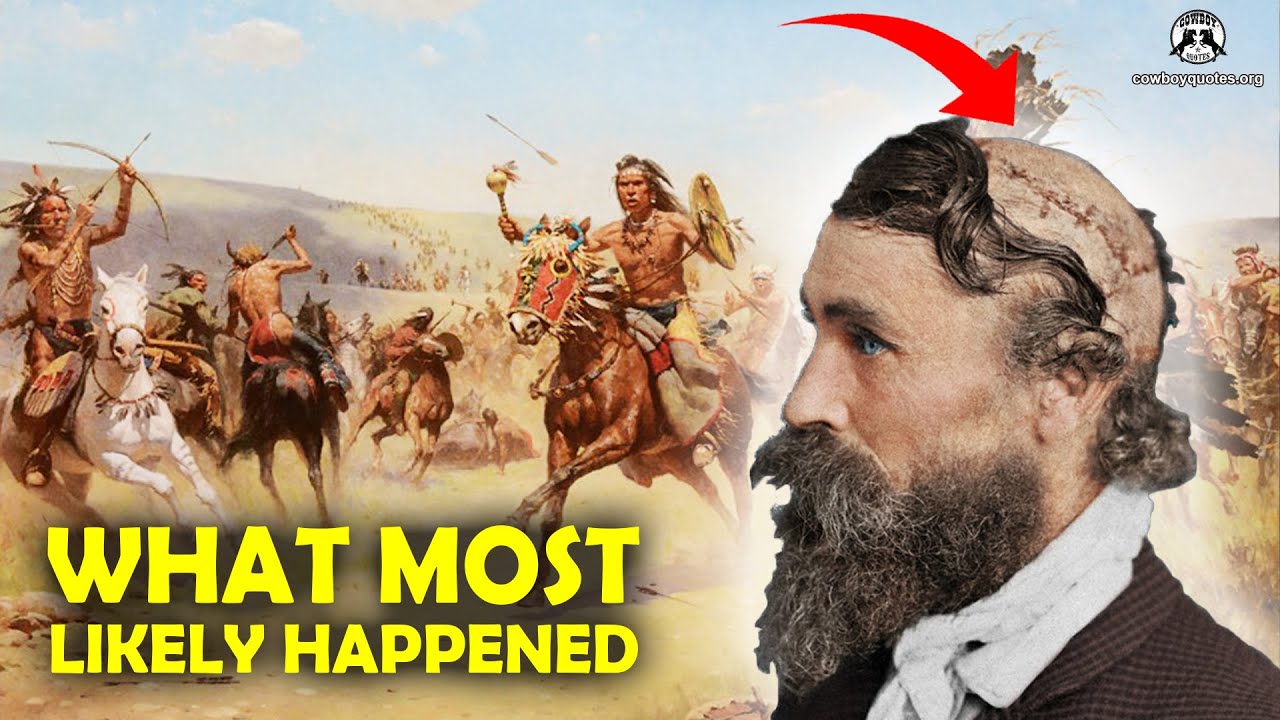
In the chaos that ensued, two of Wilbarger’s companions lost their lives, while two others managed to flee and escape. Wilbarger was struck by two arrows, one in each leg, and sustained a neck wound from a bullet. Realizing his best hope for survival was to pretend he was dead, he lay completely still as the attackers drew near. Despite his effort to remain unnoticed, one of the attackers approached Wilbarger and removed his scalp.
Remarkably, Wilbarger did not cry out, demonstrating incredible endurance and presence of mind. After the attackers left, he lay severely wounded in excruciating pain. As he lay there, Wilbarger experienced vivid visions of his sister Margaret, who seemed to comfort him with the promise that help was on the way. The members of his party who had escaped the attack returned to the farm and, upon realizing Wilbarger had not followed them, set out to find him.
They eventually found him and brought him back, saving his life. For over a decade after this traumatic event, Wilbarger continued with his life, wearing a specially designed cap to protect the area of his head where his scalp had been removed. He became something of a local legend, known for his remarkable survival and resilience. But his life came to a tragic end when he accidentally bumped his head against a low beam.
This seemingly minor incident led to a severe infection, which ultimately claimed his life. Wilbarger’s story reflects the harsh realities of frontier life, where survival often depended on both sheer luck and remarkable fortitude—and where even a minor accident could undo years of survival against impossible odds.
