On May 23, 1864, a moving train crawled through the Virginia countryside near Danville, carrying forty-three Union prisoners of war toward Confederate captivity. Among them were five officers who had decided they would not remain prisoners for long. Lieutenant Colonel Edmund Rice of the 19th Massachusetts Infantry, Captain Delos Phillips of the 17th Michigan Infantry, Lieutenant Benjamin Safford of the same regiment, Lieutenant Harrison Berdan of the 5th Michigan Cavalry, and Lieutenant Charles W. D.
Smitley of the 5th West Virginia Cavalry. All had been captured weeks earlier during the brutal fighting of the Overland Campaign, and all were determined to escape. The plan required nerve and luck. With Confederate guards watching, the officers quietly cut through the wooden bars of a locked boxcar door while the other prisoners sang to cover the noise.
When the door gave way, the five men jumped from the moving train roughly thirty miles outside Danville. They landed in enemy territory with no weapons, no supplies, and only the hope that local Unionists and sympathetic Black civilians would help them reach safety in Ohio. That night they walked boldly past a police station, hearing voices and dogs in the darkness. Near midnight they stumbled upon a Confederate soldier and feared the worst, but they asked him for food instead, and he gave them a chicken and some biscuits before they moved on.
On May 24 they met a free Black man named Felix Long, who proved to be a vital ally. His wife walked thirteen miles during the day to bring them bacon and cornbread. Long worked in a factory and learned that one hundred men were being organized to search for the escapees. He guided the officers toward Pittsylvania Court House, but the danger multiplied when Lieutenant Smitley and another free Black man were captured while foraging.
The officers grieved for Smitley, knowing the man who helped them would likely face brutal punishment for aiding Union escapees. The twenty-fifth of May found the four remaining officers hiding in the woods within twenty yards of a guard force that searched the area at dawn, passing within ten paces without discovering them. They moved deeper into the forest that afternoon, living on hope and dreams of home. Their journey became a long, exhausting march through southern Virginia, always moving west toward the mountains.
They survived on what they could beg or steal. On May 26, Phillips approached a house full of women and claimed to be a North Carolina soldier who had been denied leave and fled rather than serve longer. The women sympathized, fed him, and gave him directions to avoid the guard. They cursed the Yankee officers roaming the area, and Phillips privately agreed with them.
Food came irregularly. On May 27 they took chickens and onions from farmyards. On May 28 a civilian named Stanton fired at them as they tried to take food from a smokehouse. They pressed on, and Phillips later obtained three pounds of meat from a woman by claiming he was returning from leave.
Rain soaked them for days. They met a minister named McDowell on May 29 who gave them breakfast, cornbread for the road, and directions that accidentally added four miles to their march. Phillips continued his cover story, telling a Rebel soldier that he belonged to the personal guard of General Robert E. Lee, serving in the 39th Cavalry Battalion.
By May 31, the men were deep in the Blue Ridge foothills, cold and wet under a single blanket. Harrison Berdan killed a small pig with his walking stick, and the four officers ate well that night. They pressed on through mountain valleys, guided by local Black residents who directed them toward Patrick Court House and pointed out the routes to western North Carolina and eastern Tennessee, where they hoped to find Union lines. A free Black man who had helped them earlier reappeared and offered to guide them.
They promised to protect him. On June 1 they crossed a covered bridge near Franklin Court House and encountered two Rebels who briefly considered capturing them. The officers reversed the situation, forcing the men to swear on their honor to stay silent for four days. Their guide returned with a dozen biscuits.
The group paid the guide twenty-five dollars on June 2 when he left them thirteen miles from the courthouse, nervous about the previous night’s close call. That evening they met a Black man named Scotland, enslaved by a man named J. C. Smith.
Scotland had been punished as a child by being placed in snow, and his legs had been amputated above the knees after freezing. Despite his own suffering and poverty, he gave them bread and told them about Unionist women who could provide meals. The officers spent a miserable night in the rain. On June 3 they found shelter from heavy downpours, plagued by insects, and met an elderly Confederate who surprisingly gave them information about Union sympathizers near Salem.
They passed Cave Spring at midnight. The next day they finally reached a free Black man who treated them with extraordinary kindness. His wife washed their clothes, gave them shirts, and provided comfortable beds. Neighboring enslaved people came to help them as well.
Rain kept them inside on June 4, and they slept deeply, dreaming of homes they had not seen in months. On June 5 their host led them to a hiding place for the day, where a Unionist gave them breakfast, tobacco, and generous meals throughout the day. An elderly woman filled their haversacks with provisions and made a sack for the colonel. Before leaving, the officers gave their helpers written statements testifying to what they had done, hoping the documentation would protect them if Union forces ever reached the area.
The journey stretched into its third week. They crossed the Roanoke River and traveled along the East Tennessee and Virginia Railroad line at Mason’s Creek. On June 6 they climbed a steep hill at dawn, only to discover they were just four miles from Salem. They pushed past the poorhouse, crossed a steep mountain from Catawba Creek, and rested for the remainder of the day.
On June 7 Phillips visited a secessionist woman who gave him a pound of meat, believing he was a Rebel scout rather than a Union officer. He then visited a Unionist preacher who gave him three more pounds. June 8 brought more mountain crossings. They crossed Crane’s Creek four times and Jones’s Creek once, stopping at Middle Mountain at dawn.
After a fruitless search for a Unionist behind Scott’s Tavern, they climbed a mountain valley, exhausted, hungry, and soaked, and cooked the last of their food. At dusk they finally found their Unionist contact, who fed them well and let them sleep in his hay. On June 9 they were directed over Potts Mountain. They found many Unionists near Potts Creek, and one family fed them and directed them to a group of refugees preparing to leave the county under a man named Wolfe.
The officers agreed to accompany them, arranging to meet at a gathering point at Snake Run. But after passing John Stone’s farm and descending the mountain, they lay down near midnight barely knowing where they were. The next morning they realized they had descended the same side of the mountain they had climbed. With the help of a boy as a guide, they found a young man from the Stone family and tried to convince him they were guards.
They never found the refugee group, but a kind Unionist family persuaded them to stay a few days until a larger party of refugees could be organized. June 11 and 12 passed in rain and waiting. On June 13, they set out at 3 a. m.
with nine others, heading for Keys’s farm seven miles away. Six of the group turned back. The officers pressed on up the slopes of Brushy Mountain and slept in bitter cold until dawn. On June 14 they crossed the Greenbrier River in thick fog and met Mrs.
Bright, a secessionist woman, after which they feared betrayal until darkness fell. That night they passed through Frankfort, leaving it half a mile to their right. On June 15 they came to the home of a man named McClung at the foot of Coal Knob, ate a quick breakfast, and marched fifteen miles without seeing a single dwelling. They met an old hunter named Samuel Hinkle, who fed them roasted venison and cheese.
The ground was their bed, with a warm fire at their feet, for the mountains were always cold. June 16 they walked nine miles to breakfast and ten more to dinner. An old woman at first offered them only cold, greasy tongue, but their status as officers persuaded her to provide a proper meal. After thirty miles, they stopped at the home of Captain Jones of the National Guard, ate well, and slept in a real bed.
On June 17 they passed through Summersville, where an old saddler gave Phillips a pair of old shoes to replace his worn-out boots that had been cutting into his ankles. The group was now three: Phillips, Rice, and Safford. They had broken their wagon and were using walking sticks to help them along. At noon they reached Captain Ramsey’s camp, were treated well, and were given horses to ride to the home of a man named Hardaway, where they stayed until night.
June 18 began early, and by 7 a. m. they had covered eight miles to the home of a Mr. Morris, who gave them a good breakfast.
There they met some of the refugees they had lost near Snake Run. They had dinner with a captain of the 16th Ohio Volunteer Infantry and by 5 p. m. reached the camp of Colonel Thomas Moore of the 167th Ohio Infantry at Loop Creek.
Phillips noted that despite the good treatment they had received, he had never seen such poor discipline as in that regiment. On June 19 they arrived at Camp Pratt, where they were given a military wagon bound for Charleston, West Virginia. There they met Major James McElreth, the temporary commander of the Kanawha Valley. He and his officers treated them with great generosity, gave them clean clothes, and secured them good berths on a steamer bound for Cincinnati.
June 20 they bade farewell to their kind hosts and sailed to Gallipolis, Ohio, arriving at 8 a. m. They were fortunate enough to secure passage on the steamer T. J.
Becket, a new ship whose captain and clerk trusted their word to complete the missing paperwork upon arrival. They sailed all day on the Ohio River, stopping near Maysville, Kentucky, to load coal oil. On June 22 they disembarked in Cincinnati at dawn and ate breakfast at the Gibson House, where the owner refused payment. By 9 a.
m. they were on a train to Columbus, arriving at 4 p. m. They reported to General Samuel Heintzelman, who telegraphed the Secretary of War requesting permission to grant them thirty days’ leave.
They stayed at the American House, attended a theater performance that evening, and watched the play Mazeppa. The next day at noon their leave was approved, and by 4 p. m. they had received their pay.
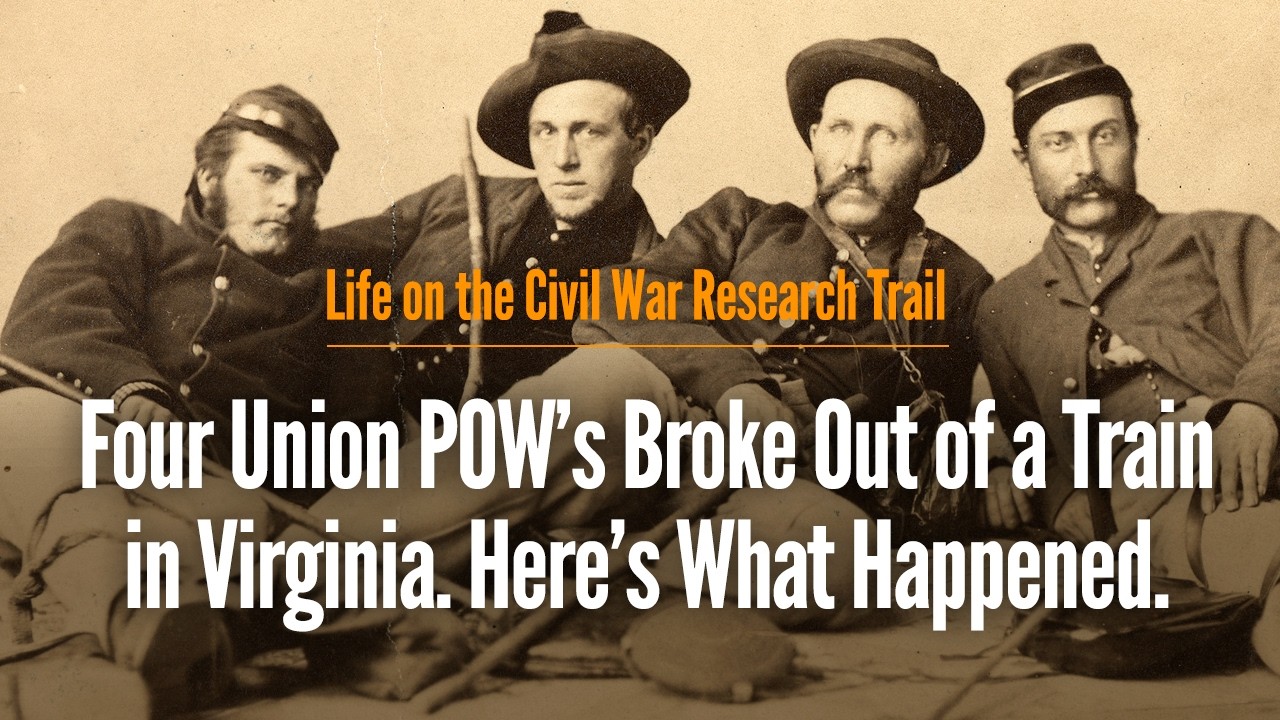
They took photographs together, a memento of their long ordeal, before parting ways. Rice traveled on to Boston with Phillips accompanying him as far as Cleveland. The four officers all returned to their units after their leave expired. Rice was promoted, continued serving in the regular army, and retired as a brigadier general in 1903.
Berdan finished the war as a captain and lived until 1923. Safford was promoted to captain, ended the war as a brevet major, settled in Detroit, and died in 1920. Phillips, the man who had kept the record of their escape, was mustered out of the regiment in October 1864 and died in Ypsilanti, Michigan, in 1887.
Their journey had taken them from a locked boxcar in Virginia to freedom in Ohio, a month of hunger, rain, and danger, survived through the help of strangers who risked everything for men they had never met.
