The room was dark, so dark that a man sitting on the edge of a bed could see nothing but the faint outline of a window and the distant orange glow of a campfire outside. Pat Garrett had been sitting there for minutes, his pistol still holstered, his eyes slowly adjusting to the blackness of Pete Maxwell’s bedroom. He had come to Fort Sumner with two deputies to ask a single question: was Billy the Kid in town? Maxwell, lying on the bed beside him, knew the answer.
He was terrified of saying so. Then the murmuring on the porch stopped. Footsteps. A figure appeared in the doorway.
He was not wearing boots. He carried no gun belt. In one hand he held a butcher knife. He had come to cut meat from a hanging carcass.
He stepped into the room, saw a shape he did not recognize, and whispered into the darkness: “¿Quién es? ¿Quién es? ” Who is it? Less than three seconds later, Garrett fired.
The muzzle flash filled the room with a split second of white light, the only moment either man fully saw the other. The most wanted man in the American West fell to the floor. He was twenty-one years old, and he never got an answer to his question. The killing happened in total darkness.
The shooter could not even see his target’s face. The most famous outlaw death in frontier history happened essentially blind. And for sixty-nine years, almost no one questioned it. Then an old man in Texas stood up and said it had all been staged, that the body in that bedroom belonged to someone else, and that he, Brushy Bill Roberts, was the real Billy the Kid.
To understand how one gunshot became the most disputed death in frontier history, you have to go back to the world that created him. New Mexico Territory in the 1870s was barely governed. Federal authority extended as far as the nearest army post, and beyond that, law was whatever the man with the most guns said it was. The territory was a patchwork of cattle ranches and mining camps clinging to river valleys in an ocean of desert and mesa.
The nearest railroad was hundreds of miles away. Justice was local, personal, and often fatal. Cattle rustling was practically an industry. Sheriffs were political appointees who served whichever faction had put them in office.
Into this world stepped a boy with no family, no money, and no reason to follow rules that did not apply to him. Henry McCarty was born around November 23rd, 1859, in New York City. His mother died of tuberculosis when he was fourteen. His stepfather showed no interest in raising him.
Within a year, the boy was on his own, drifting through the mining towns around Silver City, New Mexico. Everyone who met him remarked on the same thing: not his violence, but his charm. He was likable, funny, quick with a grin. He could talk his way into a card game, out of a bar fight, and through a sheriff’s office door.
By his mid-teens, he was also a petty thief who slept in back alleys and stole laundry. He was not yet dangerous. He was simply desperate. The world he entered was dominated by a single economic machine: the Murphy-Dolan clique.
Lawrence Murphy and James Dolan controlled the dry goods monopoly in Lincoln County. They owned the store, they held the government beef contracts, and they had the sheriff in their pocket. If you were a rancher, you sold your cattle to Murphy-Dolan at their price, or you did not sell at all. It was a feudal arrangement wearing a cowboy hat.
In 1877, a young Englishman named John Tunstall rode into Lincoln with money, ambition, and a plan to break the monopoly. He opened a rival store, hired cowboys, and retained a lawyer named Alexander McSween. He also took a liking to a teenage drifter named Henry McCarty, giving him a job and something the boy had never had: a sense of belonging. Tunstall was cultured, educated, and catastrophically naive about the men he was challenging.
Murphy and Dolan had not built their empire by tolerating competition. They had built it by eliminating it. Before the war even began, Billy killed for the first time. He was seventeen, maybe eighteen.
In a saloon in Bonita, Arizona Territory, a blacksmith named Frank Cahill, a known bully who had been tormenting Billy for weeks, pinned the smaller teenager to the ground. Billy pulled a pistol and shot him in the belly. Cahill died the next day. Billy escaped custody and rode east into New Mexico.
He was not yet Billy the Kid. He was just another frontier teenager with blood on his hands and nowhere to go. On February 18th, 1878, a posse of Murphy-Dolan men, operating under a dubious court order, rode out to seize Tunstall’s cattle. They found Tunstall on the trail.
They shot him off his horse. Then they shot the horse. According to witnesses, they placed Tunstall’s head on his saddle as a grotesque display. Billy was not present, but when word reached him, something broke.
He joined a group of Tunstall loyalists who called themselves the Regulators. Their stated purpose was to serve warrants on Tunstall’s killers. Their actual purpose was revenge. The Lincoln County War had begun, and the name Billy the Kid started sticking.
The next six months were a cascade of ambushes, gunfights, and political maneuvering. In April 1878, the Regulators tracked one of Tunstall’s alleged killers to Blazer’s Mill. The resulting shootout was chaotic. Billy survived, but a man named Buckshot Roberts killed the Regulators’ leader, Dick Brewer, with a rifle shot through a doorway.
The Regulators lost their commander, and Billy stepped further into the void. Then came the Battle of Lincoln in July 1878. It lasted five days. McSween’s faction barricaded itself inside buildings while the Murphy-Dolan men and a detachment of soldiers surrounded the town.
On the final night, McSween’s house was set ablaze. As the flames drove men into the open, bullets met them in the yard. Alexander McSween died in the firelight, unarmed, pleading. Billy, trapped in the same burning house, sprinted through the back door into the darkness, firing as he ran.
In the chaos, he killed Robert Beckwith. He was one of the few Regulators to survive the night. The war was over. The Murphy-Dolan faction had won.
Billy had nothing left: no employer, no cause, no legal protection. Governor Lew Wallace, the same man who would later write Ben-Hur, arrived in New Mexico and offered amnesty to combatants willing to testify. Billy took the deal. He met Wallace in person, provided testimony, and waited for his pardon.
It never came. Wallace, consumed by his literary ambitions and repulsed by frontier politics, quietly let the promise expire. Billy, betrayed by the one authority figure who might have saved him, returned to cattle rustling and outlawry. He killed Joe Grant in a Fort Sumner saloon in 1880, a gunfight that started when Grant drunkenly tried to shoot Billy with his own revolver, and the weapon misfired.
The confirmed solo kill count now stood at four. Then the man who would kill him arrived in Lincoln County. Pat Garrett was not a stranger. He was a former bartender, a tall, quiet man who had once shared drinks with Billy in Fort Sumner.
Now he was the newly elected sheriff of Lincoln County, with one mandate from the territorial establishment: bring in Billy the Kid, dead or alive. Garrett set a trap in December 1880, staking out a road near Fort Sumner. When Billy’s gang rode into the ambush, gunfire erupted. Tom O’Folliard, Billy’s close friend, was shot from his horse and died in agony.
Days later, Garrett cornered Billy and the remnants of his gang at a rock house called Stinking Springs. Charlie Bowdre stepped outside and was shot dead; Garrett’s men mistook him for Billy. Cold, hungry, and out of options, Billy surrendered. He was taken to jail in chains.
Billy was tried in Mesilla in April 1881 for the murder of Sheriff William Brady during the Lincoln County War. It was the only murder trial in which he was formally convicted. The trial was swift. The sentence was death by hanging, to be carried out in Lincoln.
Billy was transported back and held under guard in a room above the courthouse, the same building that had once been Murphy’s store, the headquarters of the faction that started the war. Two deputies were assigned to guard him around the clock: James Bell and Robert Olinger. Bell was regarded as decent, even sympathetic. Olinger was the opposite, a cruel man who taunted the prisoner, showing him the loaded shotgun and telling Billy it was the weapon that would kill him if he tried anything.
On April 28th, 1881, while Olinger was across the street eating lunch, Billy asked to be taken to the outhouse behind the courthouse. Deputy Bell escorted him, shackled at the wrists and ankles. What happened on the stairs as they returned is the point of contention. Some accounts say Billy slipped one hand free of his small-wristed shackles.
Others say he grabbed a pistol hidden in the outhouse. Either way, Billy got a gun. He shot James Bell, who staggered down the stairs and collapsed in the yard, dying within minutes. Billy, dragging his ankle chains, hobbled to the window and picked up Olinger’s own shotgun, the very weapon the deputy had used to taunt him.
Across the street, Olinger heard the shot and came running. He looked up at the second-floor window. Billy was standing there, silhouetted, holding the shotgun. According to witnesses, Billy said something, and the gist was unmistakable: a farewell.
He fired both barrels. Olinger dropped dead in the street. What followed was surreal. Billy, still shackled, calmly asked a townsman to bring him a pickaxe.
He spent nearly an hour chipping away at his leg irons on the courthouse balcony while the town watched. The clang of the pickaxe against iron echoed through Lincoln’s street, and no one intervened. Some accounts say people brought him food. When the chains finally broke, he took a horse and rode out of town at a leisurely pace.
He did not gallop. He did not panic. He reportedly sang as he rode away. The escape made Billy the most famous fugitive in the American West and made Pat Garrett, the sheriff whose prisoner had just murdered two deputies and strolled out of town, look like a fool.
For nearly three months, Billy hid in and around Fort Sumner. He could have run to Mexico or Colorado, but he did not. Fort Sumner was home. His friends were there.
A woman named Paulita Maxwell, Pete Maxwell’s sister, may have been the reason he stayed. On July 14th, 1881, Garrett rode to Fort Sumner with two deputies, Thomas McKinney and John Poe. They arrived after dark. Garrett went directly to Pete Maxwell’s ranch, to the bedroom of a man who knew every face in Fort Sumner.
If Billy was in town, Maxwell would know. Garrett sat on the edge of the bed in the dark. They spoke in low voices. Then came the footsteps on the porch.
Billy had been visiting a friend’s house nearby. He was hungry. He walked to Maxwell’s porch to cut a piece of beef from a carcass hanging on the north side. He wore stockings, no boots, and carried a butcher knife.
Accounts differ on whether he had a small self-cocking revolver, but he was functionally unarmed for a gunfight. He did not know Garrett was in Fort Sumner. He did not know two deputies were sitting on the porch in the shadows. As Billy stepped onto the porch, he nearly stumbled into Deputy John Poe, whom he did not recognize.
Startled, he backed toward Maxwell’s open bedroom door, knife raised, asking the men on the porch a question in Spanish. They did not answer. He retreated through the doorway into the dark bedroom. He saw a shape on the bed, Maxwell.
He saw another shape sitting. He stepped closer and asked again, this time to Maxwell. Maxwell heard the voice. He knew it instantly.
He leaned toward Garrett; in some accounts, he grabbed Garrett’s arm and whispered, “That’s him. ” Garrett had been sitting in the dark for minutes, his eyes partially adjusted. He could see a silhouette, a man in stockinged feet, a knife glinting faintly in the trace of moonlight, but he could not see the face. He had to make a decision based on the word of a frightened rancher whispering in the dark.
He did not hesitate. He drew his Colt single-action revolver. Billy, hearing the movement, said something, perhaps one final question, perhaps just an exclamation. Garrett fired.
The first bullet struck Billy in the chest, just above the heart. Garrett fired a second time; the shot missed, striking the headboard and sending splinters into the wall. The entire exchange, from Maxwell’s whisper to Billy hitting the floor, took no more than two or three heartbeats. Garrett scrambled off the bed and out the door, shaking.
Maxwell lunged out of bed and followed. On the porch, deputies McKinney and Poe nearly shot Garrett as he stumbled through the doorway; they had heard the shots and did not know what had happened inside. Garrett told them he thought he had shot Billy the Kid, but he was not sure. The room was still dark.
No one wanted to go back in. They waited. Someone brought a candle and held it to the window from outside, angling the amber light into the room. On the floor, a young man lay on his back, still.
The butcher knife was near his hand. His stockinged feet pointed toward the door. He was dead. By morning, Fort Sumner knew.
The Hispanic community, the people who had sheltered Billy, danced with him, and fed him, came to see the body. There was no doubt among those who knew him. The women of Fort Sumner washed his body and dressed him for burial. A coroner’s jury of six local men was convened.
They examined the corpse and confirmed the identity: this was William Bonney, known as Billy the Kid. Newspapers across New Mexico reported the death within days. No one in Fort Sumner, not Maxwell, not the deputies, not the community members who knew Billy personally, disputed the identification. Not one.
Billy was buried the next day in the Fort Sumner military cemetery alongside Tom O’Folliard and Charlie Bowdre, the two men who had died riding with him. Three graves in a row. No headstone initially, just wooden markers that would rot and shift over the decades, eventually making the exact grave location uncertain. In July 1881, no one questioned whose bones lay in the ground.
For decades, there was no controversy. Garrett published his account in 1882, and it became the foundation of the legend. The dime novels multiplied. Billy became the eternal boy outlaw, forever young, forever dangerous, frozen at twenty-one.
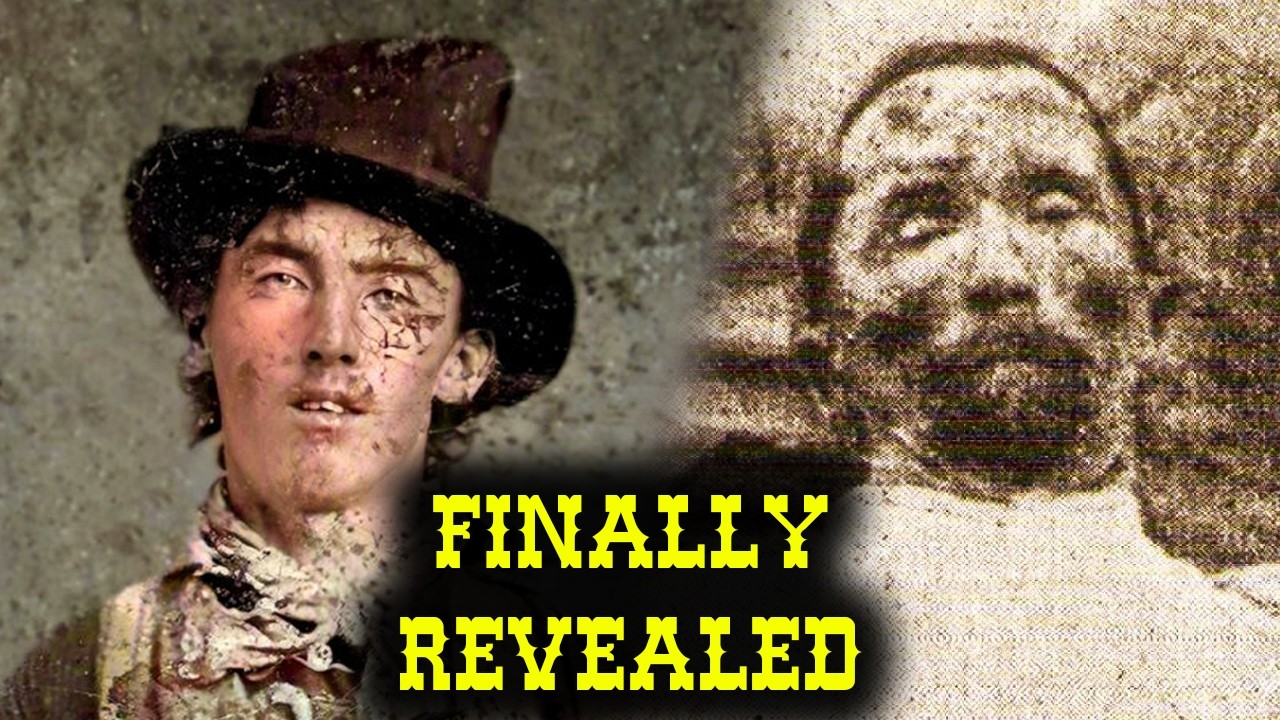
The real human being, the orphan, the charmer, disappeared beneath the legend. And for sixty-nine years, no one seriously suggested that Pat Garrett had shot the wrong man. Then, in 1950, an old man walked into the governor’s office in Santa Fe with a remarkable story. In Hico, Texas, a small town about one hundred miles southwest of Dallas, a seventy-year-old man named Ollie “Brushy Bill” Roberts had been telling anyone who would listen that he was Billy the Kid.
He said the killing in Fort Sumner was staged: a body double, a deal with Garrett, a cover-up. He said he had escaped that night and lived under aliases for nearly seven decades, drifting through Mexico, working odd jobs, keeping his mouth shut. Now, at the end of his life, he wanted the pardon that Governor Lew Wallace had promised back in 1879, the broken promise that had haunted Billy throughout his short, violent life. Roberts contacted a writer named William Morrison, who helped arrange a meeting with New Mexico Governor Thomas Mabry.
Roberts showed scars he claimed matched Billy’s injuries. He recited details about the Lincoln County War, names, dates, places, events that only someone who was there could know, or so he claimed. The meeting was brief and did not go well. Mabry examined the old man, listened to his story, and denied the pardon.
Roberts returned to Hico. On December 27th, 1950, he suffered a massive coronary and died. He was buried in Hico. A marker at his grave identifies him as Billy the Kid.
The town to this day maintains a Billy the Kid museum in his honor. The question the story leaves behind is irresistible: what if? But the evidence falls apart. Six men examined Billy’s body in Fort Sumner the morning after the killing.
They were not strangers; they were local men who knew Billy personally. They confirmed his identity under oath. No contemporary source disputes it, not Garrett, not Maxwell, not the deputies, not a single member of the Fort Sumner community. The only people who dispute it came along decades later, armed with theories rather than testimony.
Then there is the age problem. Roberts claimed to have been born in 1859, the same year as Billy, but people who met him in the 1940s and 1950s described a man who looked significantly older than his claimed years. His physical features did not match the single authenticated tintype photograph of Billy the Kid; Roberts appeared older, heavier, and taller, a different body entirely. When pressed on details of the Lincoln County War, Roberts made errors: wrong names, wrong sequences, wrong details about events Billy would have known intimately.
His knowledge was broad but shallow, consistent with someone who had read Garrett’s book and the dime novels, not someone who had lived the events. He knew the legend. He did not know the history. For Roberts’ story to be true, the entire fabric of the 1881 record would have to be fabricated.
Garrett’s posse would have had to be complicit in a cover-up. Pete Maxwell would have had to lie under oath. Six jurors would have had to falsely identify a body double. An entire community, the women who washed Billy’s body, the friends who attended his burial, would have had to participate in a conspiracy of silence lasting decades, and not one of them, not ever, broke that silence.
In a frontier community where secrets had the half-life of a campfire, that level of coordinated deception was impossible. What about the science? In 2003, investigators attempted to exhume remains from the Fort Sumner Cemetery and compare DNA with confirmed relatives of Henry McCarty. The effort was hampered by the shifting grave markers.
The exact location was uncertain, and the remains that were tested could not be definitively linked to any specific burial. The DNA test was inconclusive. Crucially, it did not support the survival theory. It did not prove Roberts was Billy.
It did not disprove the 1881 death. It simply added ambiguity to a question the historical record had already answered clearly. Pat Garrett’s book, ghostwritten by a journalist named Ash Upson, inflated Billy’s kill count to twenty-one, one for each year of his life. It was a poetic conceit, not a historical fact.
The actual tally, as established by serious historians, was four confirmed solo kills and up to five shared kills. The inflated legend served its purpose. It made Garrett the man who killed the most dangerous outlaw in the West, but Garrett did not profit much from the myth. His later career was a slow decline.
He served as a customs collector, ranched unsuccessfully, and became entangled in disputes. On February 29th, 1908, he was shot and killed on a road outside Las Cruces, New Mexico, under circumstances that remain debated to this day. The man who killed Billy the Kid died violently, too. Billy the Kid died on July 14th, 1881, in a dark bedroom at the age of twenty-one.
Brushy Bill Roberts died on December 27th, 1950, in a small Texas town at the age of seventy-one. They were not the same person. But the question remains: why do we so badly want them to be? Billy the Kid has been the subject of more than fifty films.
He has appeared in novels, television shows, video games, and operas. There are Billy the Kid museums in Fort Sumner and Hico, Texas, both claiming to tell the real story, both drawing tourists. The conspiracy theory survives because it serves a narrative need that the truth does not. The truth is abrupt and ugly: a young man walked into a dark room, was shot by someone he could not see, and died on the floor.
There was no final showdown, no blaze of glory, no last stand. The most famous outlaw of the American West died asking for a butcher knife. The myth of survival gives the story the ending we feel it deserves. It is the ending of a movie, not of history.
Billy the Kid was not a Robin Hood. He was a product of a broken system, an orphan in a lawless territory who attached himself to a faction in a commercial dispute and killed people when it suited his survival. He was charming, yes. He was brave, certainly.
He was also a cattle rustler and a murderer. What is remarkable is not that Billy killed or was killed, but that the machinery of American myth-making seized on a twenty-one-year-old petty criminal and turned him into an archetype: the eternal rebel, the boy who never grows old, the outlaw who cannot be caught. He was caught. He was killed.
And we have been refusing to accept it ever since. The evidence is clear. The six jurors were right. The community that mourned him was not deceived.
Billy the Kid died on July 14th, 1881, asking who was sitting in the dark. He never got an answer.
