In 1883, a young woman named Martha Dilling was living in the mountains of Greenbrier County, Western Virginia, a rugged and isolated region where communities were small and gossip traveled fast. She was twenty-two years old and known for her striking beauty, but more than that, she had a reputation for something stranger: a remarkable ability to attract wealthy, lonely men. They fell for her quickly, promised her marriage, placed rings on her finger, and signed property over to her. Then, with unsettling regularity, they disappeared.
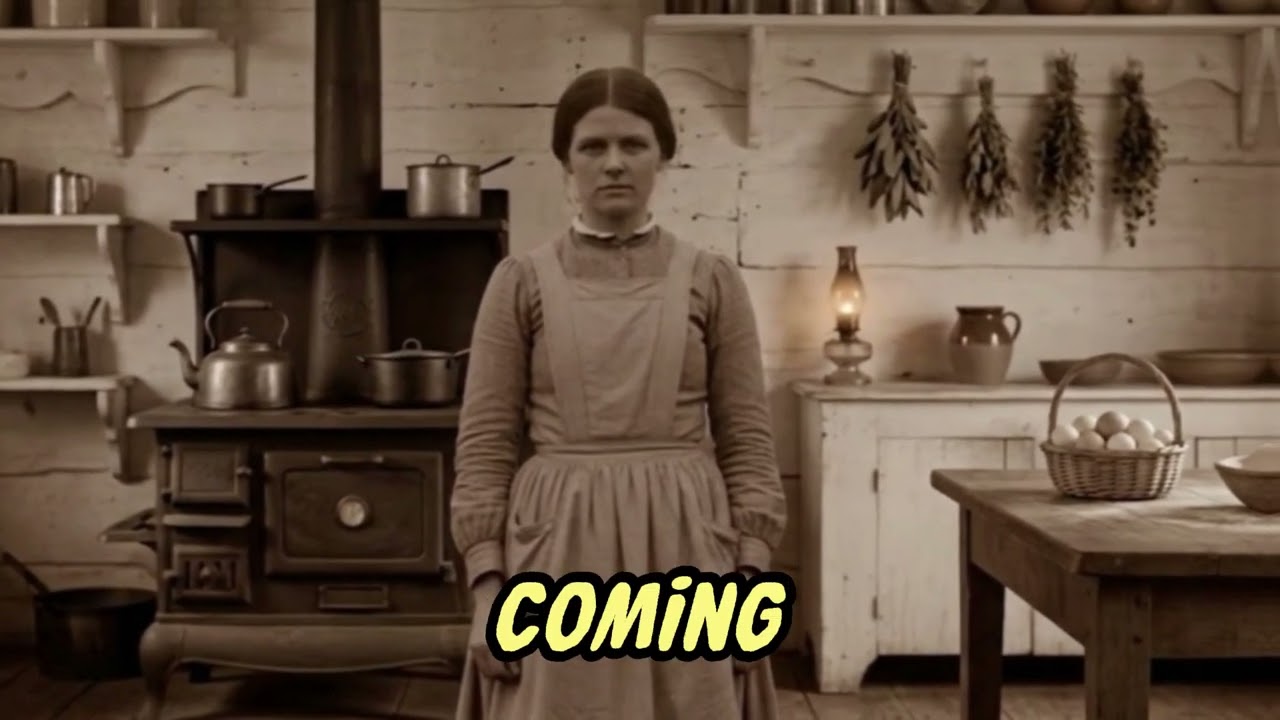
Martha first entered police records after the disappearance of Samuel Harrington, a forty-five-year-old widower who owned a large farm near Lewisburg. He met Martha at a community dance in the winter of 1882 and was, according to witnesses, completely taken with her. Within weeks, he proposed, ignoring the pleas of friends and family who warned he barely knew her. The wedding was a quiet affair, and Martha moved onto his property immediately.
Neighbors soon noticed that Samuel had stopped attending the Saturday market and the farmers’ meetings. He had once been a pillar of the community, but now he rarely left the farm. On a cold March morning in 1883, Samuel vanished. Martha arrived at the sheriff’s office in tears, claiming he had gone out before dawn to check traps in the woods and never returned.
A search lasting nearly two weeks found nothing: no clothing, no knife, not even a footprint. Sheriff James Whitaker, a veteran who trusted little at face value, was uneasy. The shotgun Samuel would have taken on such a trip still hung above the fireplace. The traps Martha mentioned were miles away in territory no one had used for years.
And the deed to the Harrington farm, registered just three weeks before Samuel disappeared, transferred everything to Martha. The farm, the house, the livestock, all of it. Legally, she was now one of the wealthiest women in the county. With no body and no evidence of foul play, the case went cold.
Whitaker kept Martha under discreet surveillance, and within six months, his deputy reported something interesting: Martha had moved on. She was seeing a man in neighboring Monroe County, where no one knew her history. William Thornton was fifty, a respectable draper who owned a successful store in Union. He too was a widower, and he too was enchanted by Martha.
The wedding was scheduled for the fall of 1883. But this time, someone noticed. A cousin of Samuel Harrington, doing business in Monroe County, heard the rumors and sent an anonymous letter to the authorities. It warned them about Martha and drew attention to the strange circumstances of her first husband’s disappearance.
The message ended with a chilling suggestion: William Thornton might be in danger. The Union marshal, Elias Page, was initially skeptical of anonymous letters, but this one was too specific. He telegraphed Sheriff Whitaker, who replied immediately: keep her in your sight, I am coming. Together, the two lawmen compared records and made the first startling discovery.
Samuel Harrington had not been Martha’s first husband. There had been another. His name was Thomas Beckley, a quiet farmer from White Sulphur Springs. Martha had married him in 1880, when she was nineteen.
The marriage lasted nine months before Thomas vanished one night, reportedly going out to check on his sheep and never returning. Weeks before his disappearance, he had signed his farm, his animals, and his bank savings over to Martha. She sold the property six months later and moved to another part of the county, where she soon met Samuel Harrington. The pattern was becoming clear, but the evidence was still circumstantial.
Then a messenger arrived from Pocahontas County, farther north, with news that transformed the investigation. There had been a third husband. In 1879, Martha had married a lumberjack named Jacob Winters, a solitary man who lived deep in the woods. He disappeared eight months after their wedding, and Martha sold his cabin and land before leaving the area.
The messenger brought a photograph of Jacob and the woman beside him. There was no mistaking her. It was Martha. Three husbands, three disappearances, three property transfers.
The authorities had a terrifying pattern, but no bodies, no witnesses, and no confession. They could not arrest her with what they had. A clever lawyer would tear the case apart. So Whitaker and Page devised a riskier plan.
They would let Martha believe her plan was working. William Thornton, now convinced of his danger, agreed to cooperate. He would continue the engagement and spy on her. He told them that Martha had already begun asking about his finances and suggesting, innocently, that he put her name on the deed to his store and house.
She had a way of making a legal transaction sound like a romantic gesture. The weeks passed, and Martha grew more insistent. During one conversation, frustrated by William’s delays, she made a slip. She mentioned that her previous marriages had been simpler, that Thomas, Samuel, and even Jacob had understood the importance of trust.
William reported the comment immediately. Whitaker saw an opening. He devised a plan: William would invite Martha to dinner, and hidden in the next room, the sheriff and two deputies would listen. The dinner took place on a cold October night in 1883.
Martha arrived confident and composed. William steered the conversation toward her past, and gradually, she began to talk. She described Thomas Beckley as naive, Samuel Harrington as possessive, Jacob Winters as too simple. When William asked how they had disappeared, she smiled and said that men were predictable creatures and that the Appalachian Mountains were vast enough to hide many secrets.
She did not confess, but the implication hung in the air. Then she described a specific ravine near Lewisburg, a place where someone could fall and never be found. She spoke of it with intimate detail: the curve of the stream, the moss on the rocks, the way the trees leaned over the edge. Whitaker knew they had found Samuel Harrington’s grave.
The next day, Whitaker led six men to the ravine. It took nearly a full day to reach it. The descent was dangerous, the rocks slick, and the sound of the stream was deafening. Late in the afternoon, a young deputy named Hatcher found something: a piece of rotted fabric snagged on a submerged branch.
They dug into the mud and found human bones. Scattered among the rocks were more fragments, pieces of clothing, metal buttons, and a belt buckle. One of the older deputies recognized it. It was Samuel’s.
The skull, lodged between two boulders, had a spiderweb fracture at the back. This was not an accident. It was murder. Whitaker ordered searches at the other locations, but the teams struggled.
The wilderness in Pocahontas was vast, and the farm in White Sulphur Springs had been sold and plowed. Martha sat in her cell, refusing to speak. Then help came from an unexpected source. An elderly woman named Elizabeth Marsh, Thomas Beckley’s former neighbor, came forward.
She told the sheriff that days after Thomas vanished, she had seen Martha walking alone into the wooded area behind the farm, carrying a shovel and a pickaxe. Guided by that information, the search team dug in the woods and found a human skeleton buried four feet down. A rope was wrapped around the neck bones. And in the dirt near the hand, they found a gold wedding ring, inscribed with the initials TB and MD, dated 1880.
The third discovery came from a local guide in Pocahontas who remembered Jacob Winters mentioning a rocky outcrop near his cabin. In a crevice between two boulders, the team found more bones, scattered by animals, and an axe head with the initials JW. The three bodies were found. Martha was charged with three counts of first-degree murder.
Her trial began in January 1884. The newspapers called her the Black Widow of Appalachia. William Thornton testified about the dinner and Martha’s description of the ravine. Elizabeth Marsh recounted what she had seen.
Whitaker laid out the deeds and the evidence. The defense had little to work with. Martha’s lawyer called her to the stand, and she gave a performance of weeping and fear. She claimed Thomas Beckley had been violent, that she had killed him in self-defense, that she had been young and terrified and knew no one would believe her.
She told the same story about Samuel. Then the prosecutor asked about Jacob Winters. Was he violent too? Martha hesitated.
He was gentle, she admitted. With that, her defense collapsed. If Jacob was gentle, his death was not self-defense. And if she was lying about Jacob, she was lying about all of them.
The jury deliberated for three hours and returned a verdict of guilty on all three counts. When the judge asked if she had anything to say, Martha stood and spoke clearly. She said she had done what she had to do to survive in a world that offered no honest path for a woman like her. Then she told the court to look at its own reflection and ask what kind of monsters it created.
She was sentenced to death. The execution took place on March 23, 1884, on a gallows built behind the police station. Martha walked to the platform with steady steps. Asked for final words, she looked out at the crowd and then at the mountains.
She said the Appalachian Mountains hold many secrets, that some stories would never be told, and that those who judged should remember they would never know the full story of any human life. The trap door was released. No one came to claim her body. She was buried in an unmarked grave in the county cemetery.
The story did not fade. It became a local legend, a ghost story whispered in the valleys of Greenbrier County. But the question of why she killed, whether she was a cold-blooded predator or a desperate woman shaped by a world that gave her no other path, remains unanswered.
What is certain is that three men signed away everything they owned, trusted her completely, and were never seen alive again.
