The figure stood at the very edge of the firelight, tall beyond natural proportion, perfectly still, watching. Vernon Ashcroft could feel its eyes on him, the weight of its attention pressing against his skin like something physical. He raised the rifle to his shoulder, sighted on the nearest shape, and called out one final time, demanding that whoever or whatever was out there identify itself. Nothing moved.
Nothing answered. The figures simply stood at the boundary of the light, waiting. Vernon’s finger rested on the trigger. He was a crack shot, had been since boyhood, and at this distance he could not miss.
But something held him back, a deeper instinct that told him if he fired, if he killed or tried to kill what stood at the edge of his camp, he would not survive the night. Then, as if released by some silent signal, the figures turned and walked away with a gliding gait that was too smooth to be natural, and made no sound at all as they vanished into the darkness. It was the autumn of 1891 when Vernon Ashcroft first arrived in the high country of eastern Kentucky. He was thirty-four years old, a geological surveyor working for a mining company out of Pittsburgh, standing about six feet tall with broad shoulders built from years of hauling equipment through rough terrain.
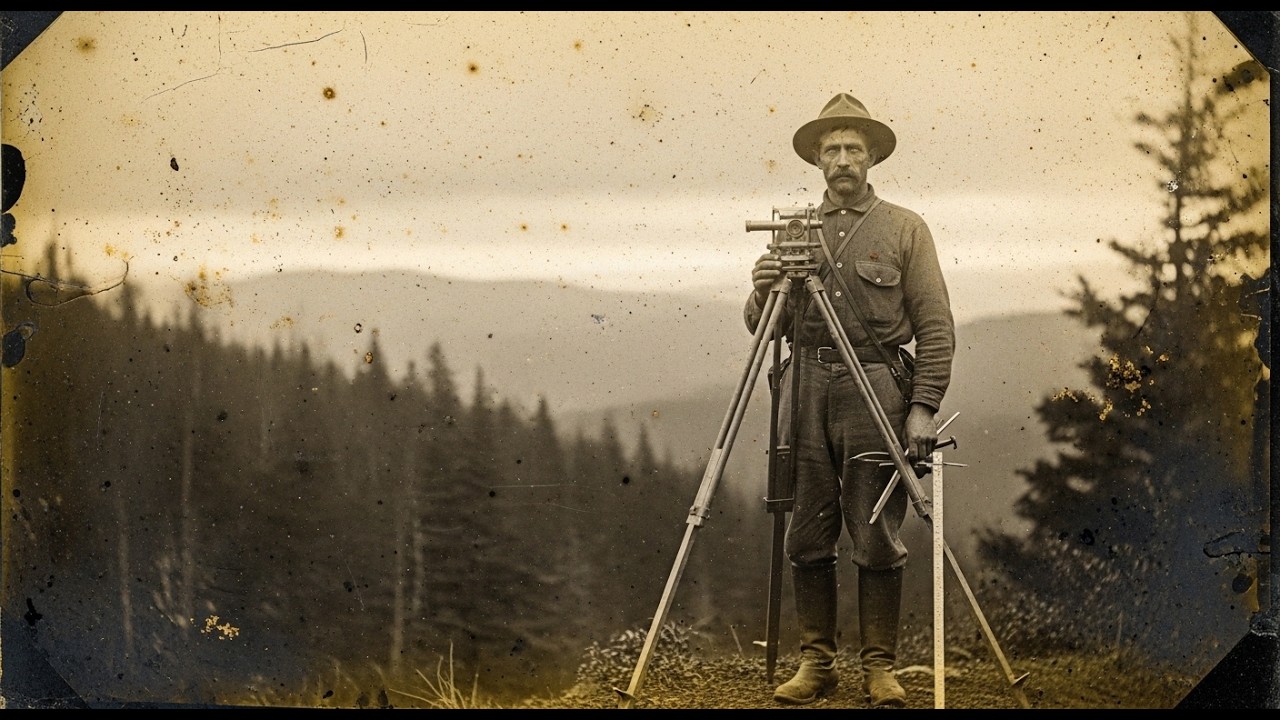
His hands were more callus than skin, his face weathered and serious, the kind of face that did not smile much because it had seen too many hard winters. He wore the practical clothes of his trade: heavy canvas pants, a wool shirt, leather boots that rose past his ankles, and a wide-brimmed hat that had seen better days. Vernon had been doing this work for nearly twelve years, mapping coal and mineral deposits in places most people had never heard of and would never visit. The company had sent him to survey a stretch of mountains the locals called the Shrouded Ridges, a name Vernon would come to understand was far more literal than he initially realized.
The assignment was simple on paper. Spend six weeks in the high country, take measurements, collect samples, map the geology, and report back on whether it was worth bringing in a full mining operation. Vernon had done this kind of work dozens of times. He had spent months alone in the wilderness of West Virginia, worked through brutal winters in the Alleghenies, and once mapped an entire canyon system in Tennessee so remote he did not see another human being for forty-seven days.
Solitude never bothered him. He preferred it. He had always been more comfortable with rocks and trees than with people. The company arranged for him to stay at a small settlement called Millrace, about fifteen miles from where he would be working.
It was not much of a town, just eight or nine buildings clustered around an old gristmill that had given the place its name. The mill had not operated in years, but the name stuck. When Vernon arrived on a gray afternoon in late September, riding in on a supply wagon that made the trip from the nearest railroad town once a month, he found the place even more isolated than he had expected. The buildings were rough-hewn log structures with stone chimneys, and the few people he saw moving about had the lean, watchful look of folks who had spent their entire lives in hard country.
The wagon driver, a man named Horace Drummond, who had to be pushing sixty with a face like worn leather and eyes that never quite looked at you directly, dropped Vernon and his equipment at what passed for the town’s boarding house. It was run by a woman named Cora Whitfield, a widow in her early fifties with iron-gray hair pulled back in a severe bun and a mouth that looked like it had forgotten how to smile sometime around the turn of the previous decade. She showed Vernon to a small room on the second floor, took his money for two months in advance, and told him that supper was at six o’clock and he had better not be late because she did not hold food. That first evening, Vernon sat in the boarding house’s common room, a cramped space with a wood stove and a table that could seat six people if they were friendly.
Three other men were staying there, all workers from a timber operation about twenty miles north. They were friendly enough in that distant way mountain people often are with outsiders. But when Vernon mentioned where he would be working, where he would be going every day for the next several weeks, the conversation died like someone had snuffed out a candle. One of the timbermen, a young fellow named Gareth Price who could not have been more than twenty-five but had the weathered look of someone much older, set down his coffee cup and looked at Vernon with an expression that was hard to read.
“You’re going up into the Shrouded Ridges? ” Gareth said, and it was not a question. Vernon nodded and asked if Gareth knew the area. The young man glanced at his companions, and something passed between them, some unspoken communication Vernon could not quite parse.
“I know of it,” Gareth finally said. “Don’t know anyone who goes up there regular anymore. Not for the last five years or so. ”
Vernon asked why.
Again, that look passed between the timbermen. The oldest of them, a man named Luther Crown, who had to be close to fifty and was missing the last two fingers on his left hand, spoke up. “It’s just people don’t like it up there. Gets a feeling to it, especially once you’re past Deadman’s Gap.
” Vernon had seen Deadman’s Gap on his survey maps, a narrow pass cutting through the ridge line about three miles from where he would set up his base camp. He asked what kind of feeling Luther meant, but the older man just shook his head and went back to his meal. Vernon did not press. He had worked in enough remote places to know that mountain folk always had their superstitions, their stories about haunted hollows and cursed peaks and spirits that walked the ridgelines after dark.
He had heard it all before and had never seen anything in all his years that could not be explained by perfectly natural causes. Weather, animals, the way sound carried in the mountains, the tricks that isolation and exhaustion played on the mind. Vernon was a practical man, a man of science and measurement, and he did not have much patience for ghost stories. The next morning, well before dawn, Vernon loaded his equipment onto a pack mule he had arranged to rent from a farmer on the edge of town.
The mule was a contrary animal named Sadie, gray and stubborn and prone to stopping dead in her tracks for no apparent reason, but she was strong and sure-footed, and that mattered more than personality. Vernon had his surveying equipment, his sample collection tools, his tent and bedroll, enough food for two weeks, and a rifle, a . 44 caliber Winchester he had carried for years and knew how to use. Not that he expected to need it.
In all his time in the back country, Vernon had fired that rifle maybe four times, twice at deer for meat and twice into the air to scare off curious black bears. The mountains had predators, but they generally wanted nothing to do with humans. The trail leading up toward the Shrouded Ridges started out clear enough, a path that had obviously been used regularly at some point, though it was beginning to grow over in places. Vernon made good time that first day, covering maybe eight miles before the terrain started getting steep.
The forest was thick with oak and hickory, maple and birch, and the understory was dense with mountain laurel and rhododendron that grew so thick in places you could not see more than a few feet off the trail. The leaves were just starting to turn, hints of yellow and red showing through the green, and the air had that crisp quality that comes with mountain autumns. By late afternoon, Vernon reached Deadman’s Gap, and he understood immediately why it had earned that name. The gap itself was a narrow cut through a ridge of dark gray stone, maybe thirty feet wide at its narrowest point, hemmed in on both sides by sheer rock faces that rose a hundred feet or more.
The stone had a strange quality, darker than the surrounding rock and almost smooth, as if it had been polished by centuries of wind and rain. More than that, though, the gap was silent in a way that felt wrong. Vernon had been in the mountains long enough to know the normal sounds of the forest, the constant background noise of birds and insects and small animals moving through the undergrowth. But as he led Sadie through the gap, all of that fell away.
No birds called, no wind stirred the trees. Even the sound of Sadie’s hooves on the stone seemed muffled, absorbed by something Vernon could not identify. He felt it then, that feeling Gareth and Luther had been talking about. Not fear, exactly, but a wrongness, like he had stepped into a place that did not quite follow the same rules as everywhere else.
Vernon shook it off, told himself it was just the acoustics of the place, the way the rock walls absorbed sound. He had been in dozens of formations with strange acoustic properties. This was no different. He kept moving, and after about twenty minutes the gap opened up and he was through, and the normal sounds of the forest returned.
On the other side, the character of the forest changed. The trees were older, thicker, trunks so massive three men could not have linked arms around them. The understory thinned out, and the forest floor was covered in a thick layer of old leaves and pine needles that muffled every step. The light had a different quality too, filtered through the dense canopy in a way that made everything look slightly gray, slightly faded.
Vernon set up his base camp in a small clearing beside a stream, a good flat spot with fresh water and enough space for his tent and equipment. By the time everything was set up and a fire was going, the sun was starting to set behind the western peaks. That first night was quiet. Vernon cooked a simple meal, made notes in his field journal, and turned in early.
He slept well, better than he usually did on the first night in a new place, and woke before dawn feeling rested and ready to begin his work. The next several days followed a comfortable pattern. He would wake at first light, eat a quick breakfast, load Sadie with the equipment he needed for the day, and head out to whatever section of the mountains he had marked for surveying. The work was methodical and familiar, taking measurements with his theodolite, collecting rock samples, noting the geological features he encountered, sketching maps in his field book.
The company was particularly interested in coal deposits, and by the third day Vernon had found several promising seams exposed in a cliff face about two miles northeast of camp. He spent most of a week in that area, mapping the extent of the coal, taking samples to determine its quality, estimating how deep the seams went. It was good coal, thick veins of anthracite that would burn hot and clean, exactly what the company was hoping to find. Vernon felt satisfied with his progress.
At this rate, he would have enough data in another two or three weeks to file a comprehensive report. But something had started bothering him, though he could not quite put his finger on what. It was subtle at first, easy to dismiss. He would catch movement in his peripheral vision, a flicker at the edge of sight, but when he turned to look there would be nothing there.
Or he would hear what sounded like footsteps on the trail behind him, but when he stopped to listen, the sound would be gone. Vernon told himself it was just his mind playing tricks, the isolation getting to him in ways he had not experienced before. He had been alone plenty, but there was something about these mountains that felt different, something he could not quite name. It was on the eighth day that Vernon first saw the marks.
He had been working in a section of forest about three miles from camp, a steep slope covered in old growth hardwoods, when he noticed something carved into the bark of a massive oak tree. At first he thought it was natural damage, the kind of scarring that happens when branches fall or animals claw at the bark. But closer inspection revealed the marks were deliberate, carved with a blade of some kind. They formed a symbol he did not recognize, a series of angular lines arranged in a pattern almost like a sunburst, but not quite.
The cuts were old, the bark had begun to heal over them, but Vernon guessed they had been made a year or two ago at most. He found more symbols over the next few hours, carved into trees at irregular intervals, always on the uphill side of the trunk, always facing the same direction, deeper into the mountains. Some matched the first symbol, but others were different, more complex patterns of lines and curves Vernon could not interpret. He copied several into his field book, more out of curiosity than anything.
They had to be property markers of some kind, he reasoned, or maybe old survey marks from a previous expedition, though the style was strange, unlike anything he had seen before. That night, back at camp, Vernon sat by his fire and studied the symbols. The firelight made them seem to move on the page, shadows shifting in a way that was almost hypnotic. He found himself staring longer than he intended, long enough that he startled when a branch cracked somewhere in the darkness beyond the fire’s light.
Vernon grabbed his rifle and called out, asking if anyone was there, his voice sounding small and swallowed by the vast forest around him. No answer came back. He waited, listening hard, but heard nothing more. After a while, he set the rifle down, told himself it was just a deer or a raccoon, and forced himself to turn in.
But he did not sleep well that night. He kept waking, convinced he had heard something that did not belong. Twice he got up and added wood to his fire, keeping it burning brighter than he normally would. The third time he woke, it was still deep night, that darkest stretch before dawn when the world feels like it is holding its breath.
Vernon lay in his tent, listening to the silence outside, and realized what had been bothering him for days. It was too quiet. Not the natural quiet of a forest at night, where you can still hear the distant call of an owl or the rustle of a possum in the leaves. This was an absolute silence, a void of sound that felt pressed up against his tent like something physical.
Vernon’s heart was hammering in his chest, and he told himself he was being ridiculous, letting the isolation get to him like some greenhorn. But when he heard the footsteps, slow and deliberate on the leaves outside his tent, he stopped telling himself anything and just listened. The steps moved around the perimeter of his camp, a steady rhythm that did not sound right. Not the four-legged gait of a deer or the shuffling waddle of a bear.
These sounded like boots on the ground, like someone walking with purpose. Vernon grabbed his rifle and threw open the tent flap, ready to confront whoever was prowling around his camp. But when he emerged, the fire had burned down to coals, casting almost no light, and the forest beyond was utterly black. He called out again, demanded to know who was there, and this time he heard a response.
Not words, exactly, but a sound, a low vocalization that could have been a voice but was pitched wrong somehow, too deep and too resonant to come from a human throat. It came from somewhere beyond the fire’s dim glow, maybe thirty feet away, and seemed to echo in a way that made no sense given the open forest around him. Vernon stood there in the cold mountain air in just his union suit and boots, rifle raised, staring into darkness so complete it felt like staring into the earth itself. The sound did not come again.
After what felt like an hour but was probably only a few minutes, Vernon backed toward his tent, keeping the rifle up, and grabbed his lantern. He lit it with shaking hands and held it high, casting a yellow circle of light maybe twenty feet across. The camp looked exactly as he had left it. His equipment in place.
Sadie standing hipshot by the tree where he had picketed her, looking sleepy and unconcerned. No one there, no tracks in the leaves, no sign anyone had been near his camp. But Vernon knew what he had heard. He did not sleep again that night.
He built up the fire, kept the lantern burning, and sat with his back against a tree, the rifle across his lap, watching the darkness and waiting for dawn. When the sun finally started to lighten the eastern sky, Vernon felt a relief so intense it was almost painful. He had never been afraid of the dark before, had spent countless nights alone in forests far more remote than this one, but something about the previous night had shaken him in a way he did not quite understand. He spent the next day close to camp, telling himself he needed to organize his samples and update his maps, but really he just did not want to venture far from his tent and supplies.
He kept expecting someone to show up, to walk into camp and explain the sounds from the night before. A hunter, maybe, or a trapper working a line through the mountains. No one came. The day passed in that strange, muffled silence, and Vernon found himself constantly checking over his shoulder, unable to shake the feeling he was being watched.
By late afternoon, he had talked himself into believing he had imagined the whole thing, or at least exaggerated it in memory. The mind did strange things in the dark, especially alone. The sound could have been an elk or a wild boar, something with a deep voice that just sounded wrong because of how the terrain affected acoustics. The footsteps could have been his imagination, or Sadie moving around, though he knew that was not true even as he thought it.
But Vernon was a rational man, and rational men did not abandon well-paying jobs because they got spooked one night in the woods. He decided to push deeper into the mountains the next day to survey a section of ridgeline his map showed running northeast for several miles. It was the farthest he had planned to go, the edge of his survey area, and once he had mapped it he could start thinking about packing up and heading back to Millrace. The thought of leaving was appealing in a way he did not want to examine too closely.
He had never cut a job short before and was not about to start now, but he could not deny he would be happy to see the back of these mountains. The next morning dawned clear and cold, the kind of mountain morning where your breath fogs in the air and the ground crunches with frost. Vernon loaded Sadie, checked his compass, and headed northeast, following a game trail that wound up the slope toward the ridgeline. The forest was dense at first, but as he climbed higher the trees thinned out and the undergrowth gave way to bare stone and patches of tough mountain grass.
By midmorning, Vernon reached the ridge, and the view was spectacular, range after range of mountains rolling away to the misty horizon. But Vernon was not there for the view. He set up his theodolite and started taking measurements, working his way along the ridge, stopping every few hundred feet to sight on landmarks and record the angles. It was tedious work requiring focus and precision, and Vernon lost himself in it the way he always did, his mind settling into the familiar rhythms of measurement and calculation.
He was maybe two miles along the ridge when he found the structure. At first he thought it was just a natural rock formation, a pile of boulders that had tumbled down from higher up the slope. But as he got closer, Vernon realized the rocks had been stacked deliberately, placed with care to form what looked like a crude shelter or blind, open on one side and facing back the way he had come. The structure was old; some stones were covered with lichen and moss, but it had been built by human hands.
Vernon stepped inside, ducking his head to clear the low opening, and immediately wished he had not. The interior was dark and smelled of rot and something else, something acrid that made his eyes water. As his vision adjusted, he saw the walls were covered with the same symbols he had found carved into the trees, but here they were scratched into the stone itself, hundreds of them covering every available surface. In the center of the space, a pile of ash and charred wood showed where someone had built a fire, and scattered around it were objects Vernon could not immediately identify.
Bits of bone, feathers tied together with what looked like sinew, bundles of dried herbs he did not recognize. And there, in the very back of the shelter, partially hidden behind a rock, something made Vernon’s stomach turn. It was a skull. Not animal.
Human. Or at least mostly human. The bones had an odd quality, darker than they should be, and the proportions seemed wrong in ways Vernon could not quite articulate. The jaw was too long, the eye sockets too large, the whole thing shaped in a way that made it look caught between two forms.
Vernon backed out quickly, his skin crawling, his breath coming fast. He told himself it was old, probably Native American from before white settlement in these mountains. That would explain the strange quality of the bones; exposure to the elements and mineral deposits in the soil could cause all kinds of discoloration and distortion. But Vernon knew he was lying to himself.
He knew, in that deep instinctive part of his mind he had been trying to ignore for days, that something was very wrong here. Wrong in a way that had nothing to do with abandoned shelters or old bones or carved symbols. The mountains themselves felt wrong, felt like a place where the normal rules did not quite apply. He left the ridgeline quickly, did not finish the survey of that section, just packed up his equipment and headed back down the slope.
Sadie seemed nervous too, pulling at her lead and trying to move faster than Vernon wanted. Several times he had to stop and settle her, speaking in the calm voice you use with frightened animals, but the truth was Vernon felt like running down that mountain and not stopping until he was back in Millrace. He reached camp in late afternoon, the sun already sinking toward the western peaks, and immediately knew something was wrong. His tent had been disturbed, the flap hanging open when he was certain he had secured it that morning.
His equipment had been moved. Not scattered or thrown around, but rearranged, placed in patterns Vernon could not interpret but which clearly meant something to whoever had done it. His field books were open, pages ruffled as if someone had been reading through them. His samples were lined up in neat rows beside his tent.
Vernon felt a cold anger rising, pushing aside his fear. Someone was messing with him, some mountain hermit or trapper who thought it was funny to terrorize a surveyor in their territory. He called out, said he knew someone was there, said he was not scared and they had better show themselves. His voice echoed off the slopes and died into silence.
No response. Vernon checked his supplies and found them intact. Nothing stolen, nothing damaged. He rebuilt his fire, cooked a meal he barely tasted, and as darkness fell he loaded his rifle and sat with his back to a large boulder, facing his tent and the forest beyond.
Tonight, he decided, he would see who or what had been bothering him. The hours crawled past. Vernon kept the fire burning bright, feeding it constantly, creating a circle of light that pushed back the darkness. But beyond that light the forest was a wall of black, impenetrable and somehow hostile.
Vernon’s eyes ached from staring into it, searching for movement, for any sign of the presence he knew was out there. The night was perfectly still, no wind, no animal sounds, just that oppressive silence that felt like a physical weight. It was sometime after midnight, Vernon guessed, though he had no way to check the time, when he heard it again. That low vocalization that was almost but not quite a voice.
This time it came from multiple directions, from somewhere to his left and somewhere to his right, as if two presences were calling back and forth to each other. The sounds overlapped and harmonized in a way human voices should not be able to, creating a resonance Vernon could feel in his chest, in his bones, vibrating through him like a tuning fork struck. He stood up, raised the rifle, and shouted at the darkness, told whatever was out there to show itself or leave him alone. The sound stopped immediately, cut off so abruptly it left a ringing in his ears.
And then, at the very edge of his firelight, he saw them. Figures standing just beyond where the light turned everything into indistinct shadow. Tall figures, unnaturally so, seven feet at least, maybe more. They stood perfectly still, and Vernon could not make out any details, could not tell if they were clothed or naked, could not see faces or hands or anything that would identify them as human.
Vernon could feel their eyes, could feel the weight of their attention like pressure against his skin. He raised the rifle to his shoulder, sighted on the nearest figure, called out one more time. Nothing moved. Nothing answered.
He stood there, caught in a moment that seemed to stretch forever, his finger on the trigger, some deeper instinct holding him back, telling him violence would break an unspoken agreement he did not understand. Then, as if released by a silent signal, the figures turned and walked away, moving with an odd gliding gait, making no sound as they disappeared into the darkness. Vernon stood there a long time, rifle still raised, staring at the place where they had been. Eventually his arm ached and he lowered the weapon.
He did not sit back down. He stood by that fire the rest of the night, feeding it constantly, keeping it burning so bright it hurt his eyes, and he did not take his hand off the rifle until the sun came up. When dawn broke, Vernon made a decision. He was not running, not abandoning his equipment or his job, but he was not staying out here alone anymore.
He would pack up what he could carry, cache the rest, and head back to Millrace. He would hire someone, one of the timbermen or a local who knew the mountains, to come back with him so he was not alone. The company was paying well enough that he could afford to cut someone else in. Vernon spent the morning breaking down camp, packing what he needed, hiding the rest under brush and rocks.
By early afternoon he was ready to leave. He took one last look at the clearing that had been his camp for more than a week and felt something he could not name. Not sadness, exactly, but a sense of loss, like he was leaving behind more than just a campsite. Like something in him had changed in this place, and the man walking down that trail was different from the man who had walked up it.
The trip down was uneventful at first. Vernon made good time, pushing hard, wanting to get through Deadman’s Gap before dark. But the trail seemed longer than he remembered. The landmarks he had noted on the way up did not appear where he expected them, and by late afternoon Vernon realized, with growing unease, that he was not sure where he was.
The trail had branched at some point without him noticing, or he had taken a wrong turn at one of the creek crossings. Either way, he was off course. He stopped, consulted his compass, and realized he had been heading west when he should have been heading south, away from Millrace instead of toward it. Vernon cursed, turned around, started retracing his steps, but the forest all looked the same, thick and gray and silent, and after half an hour of backtracking he had to admit he was lost.
Properly lost, in a way he had not been since he was a young man learning his trade. The sun was getting low, shadows growing long between the trees, and Vernon knew he needed to find a place to camp for the night. He could not risk blundering around in the dark, risking a fall or a twisted ankle miles from anywhere. He found a small clearing beside a stream, set up a minimal camp, built a fire, and tried not to think about how exposed he felt.
At least at his established camp he had known the terrain, had his tent and supplies, had Sadie for company. Now he had nothing but what he could carry, and the mule was picketed thirty feet away, barely visible in the growing darkness. The sound started as soon as full dark fell. That same low vocalization, but now it seemed to come from all around him, echoing off the trees until Vernon could not tell which direction it originated from.
He sat with his back to a tree, his fire burning as bright as he could make it, and heard things moving in the darkness. Not trying to be quiet now, not trying to hide their presence. Branches broke. Stones clattered.
Once he was certain he heard breathing, deep and slow, just beyond the fire’s light. Vernon did not fire his rifle. He wanted to, wanted to shoot into that darkness and drive back whatever was out there, but he remembered the feeling from the night before, that sense that violence would break some unspoken agreement. So he just sat there, shaking with fear and exhaustion, feeding his fire, waiting for dawn.
Hours passed like years. At one point Vernon must have dozed off despite himself, because he jerked awake to find his fire had burned down to coals, and something was standing over him. A shape darker than the darkness around it, absolutely silent. Vernon scrambled backward, nearly knocked over his pack, grabbed a branch and thrust it into the coals until it caught fire, then waved it at the figure.
By the flaring light he caught a glimpse of something he would never be able to adequately describe. A face that was almost human but stretched wrong, the features elongated and distorted. Eyes that reflected the firelight like an animal’s but held an intelligence far too knowing. And hands, if you could call them that, with fingers too long that seemed to bend in too many places.
The figure stepped back as Vernon waved the burning branch, retreating into the shadows, and Vernon heard that vocalization again. But now it sounded different, almost like laughter, mocking and cruel. Then it was gone. Vernon built up the fire immediately, using far too much of his wood supply, not caring that he would run out before morning, only caring that he have light, that he push back the darkness and whatever dwelt within it.
Dawn came eventually, the way it always does, though Vernon had not been sure he would live to see it. He had been certain he was going to die in those woods, certain that when the fire finally burned out those things would come for him and he would become just another story, another surveyor who went into the mountains and never came out. But the sun rose pale and weak through the canopy, and Vernon found himself still alive. He did not waste time.
He kicked apart his fire, grabbed his pack and rifle, and started walking. He did not know which direction was right, did not trust his compass anymore, did not trust anything. He just picked a direction that felt like it was going downhill and started moving. The forest seemed to resist him, undergrowth thick and tangled, vines catching at his feet, branches snagging his clothes.
Vernon pushed through, driven by a desperation he had never felt before. It was mid-morning when he heard voices. Real human voices, and he nearly cried with relief. He crashed through the brush toward the sound and emerged onto a trail, a real trail, wide and clear and obviously used regularly.
Two men were walking along it, timber workers by the look of their tools, and they stopped in surprise when Vernon stumbled out of the forest in front of them. He must have looked wild, clothes torn, face scratched and dirty, eyes hollow from lack of sleep. The men exchanged a glance, and one of them asked if Vernon was all right, if he needed help. Vernon tried to explain, tried to tell them about his camp and the figures and the sounds in the night, but the words came out confused and disjointed.
The timber workers listened with expressions hard to read, concern mixed with something else, something that might have been recognition. When Vernon finished, one of them, a man named Jasper Crane who was built like a barrel and had forearms like fence posts, said they could take him back to their camp, get him food and rest, help him find his way back to Millrace. The timber camp was about two miles down the trail, a collection of tents and rough shelters in a small valley. Maybe a dozen men were working there, cutting logs and hauling them to a splash dam downstream.
They welcomed Vernon with the practical kindness of working men, gave him coffee and food, let him wash up and rest. He slept for most of the afternoon, a deep exhausted sleep free of dreams. When he woke it was evening, and a camp cook was ladling out stew. Vernon sat by the cook fire with the timbermen and slowly the story came out.
He told them everything, and he could see by their expressions that they believed him. These were not men who spooked easily. They were hard men who made their living in the wilderness. But they knew about the Shrouded Ridges.
One of them, an older fellow named Rutherford Beck who had worked timber in these mountains for thirty years, told Vernon he was lucky to have made it out. “There’s places in these mountains,” Rutherford said, his voice quiet and serious, “where the old world is still close to the surface, where things live that were here before any of us, before the Indians even, things that don’t take kindly to being disturbed. ” He looked at Vernon across the fire. “You went into one of those places.
Most who do don’t come out. ” Vernon asked if anyone had ever tried to investigate, to document what was happening up there. Rutherford shook his head. “What would be the point?
You think the law’s going to do anything? You think the government is going to send troops into the mountains to fight shadows? People who know these mountains, who’ve lived here for generations, they just know to stay away from certain places. The Shrouded Ridges, that’s one of them.
Has been as long as anyone can remember. ”
Vernon stayed with the timber camp for two days, regaining his strength, and then Jasper Crane agreed to guide him back to Millrace. They made the trip in one long day, and Vernon was profoundly grateful to see the shabby buildings of the settlement appear through the trees. He paid Jasper generously, then headed straight to the boarding house.
Cora Whitfield took one look at him and said he looked like he had been through a war. Vernon just nodded, said he had been in a way, and went up to his room. He spent a week in Millrace writing his report for the company. He documented the coal deposits he had found, provided measurements and samples, made his recommendations.
But he also wrote a separate letter marked confidential, addressed to the head of the surveying division. In it, Vernon explained what had happened, laid out everything he had experienced as clearly and rationally as he could. He recommended the company abandon any plans to mine in the Shrouded Ridges, not because the coal was not there or not worth extracting, but because the cost would be too high. Not in money, but in lives and sanity.
“Some places,” Vernon wrote, “should be left alone. ”
He never went back for the equipment he had cached. He told himself it was not worth the risk, that the company could write it off, that he would buy replacements out of his own pay if necessary. But the truth was, Vernon could not bring himself to go back into those mountains.
Could not face the thought of passing through Deadman’s Gap again, of hearing that silence settle around him, of seeing those figures standing at the edge of his firelight. He had survived, and that was enough. More than enough. The company accepted his report and his recommendation.
Whether they believed his confidential letter or just decided the coal was not worth the trouble of developing such a remote site, Vernon never knew. But they did not send anyone else up there, and as far as Vernon could determine, no mining operation was ever established in the Shrouded Ridges. The mountains remained as they had always been, remote and isolated and avoided by anyone with sense. Vernon continued working as a surveyor for another fifteen years, but he never took another job in eastern Kentucky.
He worked in West Virginia, Tennessee, Virginia, Pennsylvania, but he avoided those mountains, gave them a wide berth. When other surveyors asked why, he would just shake his head and say it was not worth it. Some pressed, wanted to know what had happened up there, but Vernon never told the story again. He had learned that most people did not want to believe in things that challenged their understanding of the world, that questioned the neat boundaries between the natural and the unnatural.
So he kept quiet. Vernon retired in 1921, bought a small house in Pittsburgh, and spent his last years tending a garden and reading books and trying not to think about the mountains. But sometimes, on quiet nights, Vernon would lie awake and remember. The silence of those forests.
The wrongness that permeated everything beyond Deadman’s Gap. The figures standing just beyond his firelight. And he would remember that sense he had had, that feeling he had intruded on something old and powerful and fundamentally other, something that had allowed him to leave but would not be so generous twice. Vernon Ashcroft died in 1933 at the age of seventy-six and was buried in a cemetery on the outskirts of Pittsburgh.
His widow, a woman he had married late in life who had known him as a quiet, reserved man rarely speaking of his past, found his old field books while going through his effects. Among them was a journal from that autumn in 1891, filled with measurements and sketches and notes. But the last several pages had been torn out, removed so cleanly only the ragged edges remained. Whatever Vernon had written there, whatever he had documented about his final days in the Shrouded Ridges, he had chosen to destroy rather than let anyone else read.
The Shrouded Ridges are still there, still as remote and isolated as in Vernon’s time, maybe more so now that the old logging operations have ceased and the few settlements that once dotted those mountains have been abandoned. The forest has reclaimed everything, swallowed the trails and the camps and the scars that human activity once left. If you were to hike up there now, past Deadman’s Gap and into those high country forests, you would probably find the ruins of Vernon’s camp, tent poles rotted away, equipment rusted and overgrown, gradually absorbed back into the earth. But you would find other things too, if you looked.
Those symbols carved into trees, weathered but still visible. That stone shelter on the ridge, its interior still marked with scratches and stains. And if you stayed after dark, if you built a fire and sat by it as the night deepened, you might hear sounds that have no explanation. You might see movement at the edge of your light, figures that watch without approaching.
You might feel that same wrongness Vernon felt, that sense of being in a place where you do not belong, where your presence is tolerated but not welcomed.






