In November 1966, a quiet village in Wisconsin mailed a routine questionnaire to every delivery company with access to a local factory, asking one question: who had been on site the day a nineteen-year-old woman failed to return home from work? One company replied that none of its employees had been there that day. That answer was false. It would take investigators fifty-seven years to prove it.
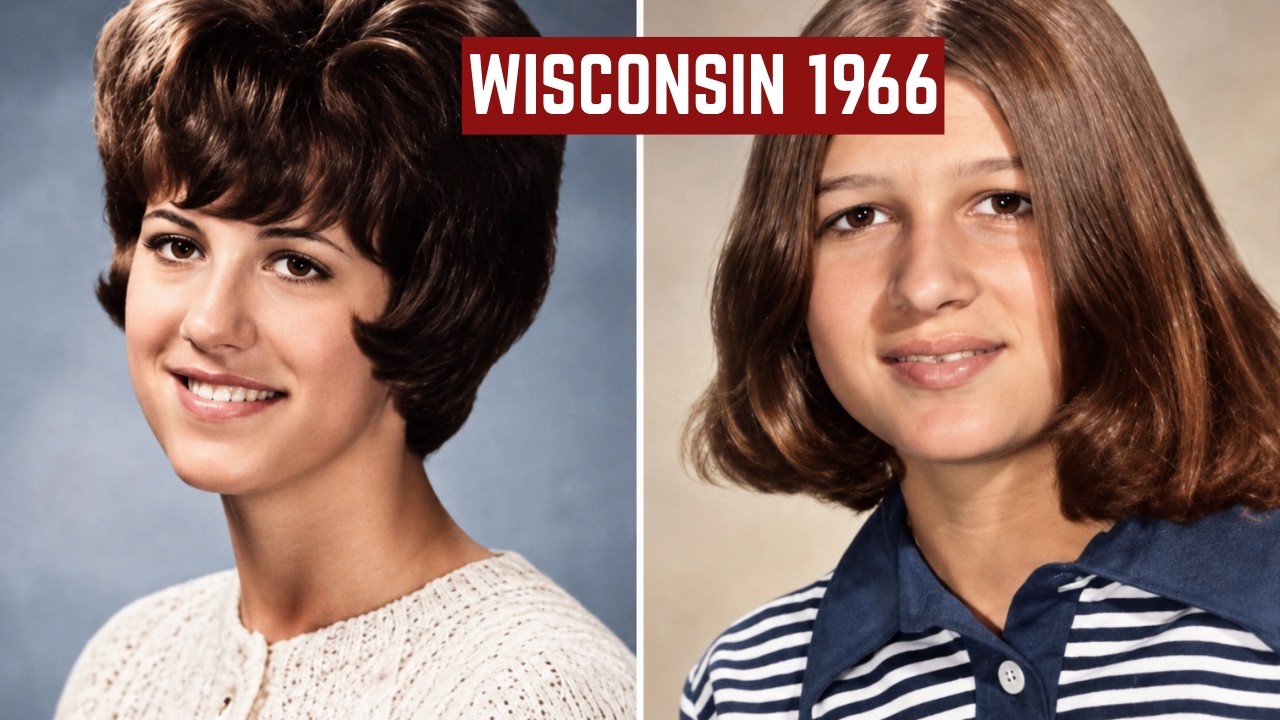
This is the case of Diane Olkwitz and Terry Erdman, two lives cut short five years apart, two files in different jurisdictions, and one name that sat silently in a filing cabinet the entire time, waiting for someone to look again. Three questions defined the investigation. How did a suspect’s name reach police within a week of the crime, yet remain hidden for more than half a century? Why did a DNA sample collected in 2001 fail to identify him?
And had investigators suspected, years before they could prove it, that a second death in 1971 was connected to the first? Decades later, investigators would find records that directly contradicted that company’s reply. By then, the man those records pointed to had been dead for years. Diane Jane Olkwitz was nineteen, the second of six children in a close-knit family in Menomonee Falls.
She worked as a secretary at Kearney & Trecker, a manufacturing company on Silver Spring Drive, a role built on a strict daily routine. Each workday, once the rest of the staff left at 3:30, Diane stayed alone for the final hour, answering calls and signing for late deliveries until closing. Family later described her as warm and cheerful, the kind of person colleagues and neighbors genuinely liked. Relatives remembered a young woman proud of her first steady job, building a routine and a future for herself in the town where she grew up.
On Thursday, November 3, 1966, Diane agreed to give a coworker a ride home after her shift. When she did not arrive, the coworker returned to the factory to check on her and found Diane’s car still parked outside, in the same spot where she had left it that evening. Diane was found inside the building at 5:10 that afternoon. She had been stabbed to death.
It was the first murder ever recorded in the village of Menomonee Falls, and for the family she left behind, it began a wait that would last decades. In the days after Diane’s death, investigators moved quickly. They interviewed her coworkers, questioned those close to her, and reviewed her daily habits for anything unusual. They found nothing.
There were no conflicts in her personal life, no enemies, no indicators of danger anyone could point to. As part of standard procedure, detectives also mailed written questionnaires to dozens of outside companies with regular access to the building, asking each to account for the whereabouts of its drivers and delivery staff during the hours surrounding the murder. It was methodical and thorough by the standards of the time, built on the assumption that if the killer had a reason to be inside that building, paperwork would eventually reveal it. It was not enough.
Over the years that followed, investigators built theory after theory and abandoned them all. Public records later showed that between twenty and thirty different men passed through the case as possible suspects. Each was eventually ruled out or simply could not be linked. No physical evidence tied any of them to the crime scene.
No motive for the killing was ever established. Without an arrest, the file was formally classified as unsolved and passed from investigator to investigator. Each new detective added notes and theories, but none could produce the one piece of evidence the case truly needed. Menomonee Falls had never seen a murder before Diane’s death, and the killing shook a community that had never faced anything like it.
The case went cold, but it was never entirely forgotten inside the department. Terry Lee Erdman was a teenager from Milwaukee, living in a city forty minutes from the small village where Diane had grown up. Far less biographical information about Terry exists in public records. What is documented is this: on June 24, 1971, her body was discovered in a wooded area on the northwest side of Milwaukee.
She had been stabbed to death. The discovery fell under a completely separate jurisdiction, and from the start, the Milwaukee Police handled it rather than the small department in Menomonee Falls. For Terry’s family, there was no history of violence in the area to compare, no clear starting point, no immediate answer. Milwaukee detectives opened a new file, canvassed the neighborhood near where she was found, and interviewed people who knew her, following the same standard procedures Menomonee Falls had used five years earlier.
That process produced no witnesses, no confession, and no suspect strong enough to charge. The similarities between the two cases were obvious. The method of attack. The short distance between locations.
Over the years, some investigators began to suspect the same person was responsible for both deaths. But suspicion was not evidence, and for decades there was no forensic way to link the two crime scenes with certainty. That question remained unanswered until science caught up. By 2001, DNA testing had become a standard part of reopening old cases, and investigators returned to Diane’s file with fresh eyes.
Preserved evidence from the crime scene was retested using techniques that did not exist in 1966. The results produced a male DNA profile, the first concrete biological trace of a suspect in thirty-five years. That profile was entered into CODIS, the national criminal DNA database. CODIS works by comparing genetic markers from an unknown sample against profiles already collected from convicted offenders and arrestees nationwide.
If the person behind the sample had ever passed through that system, the comparison would reveal his name. The search returned no match. The DNA belonged to a man who was not registered in any database investigators could access, leaving them with a profile without a name. A decade later, in 2011, investigators working Terry’s case extracted another male DNA profile from evidence preserved since 1971.
Like Diane’s sample a decade earlier, it sat in the files, uncompared to any other case, waiting for someone to make the link official. That moment came in December 2021. Detective Chris Bellos of Menomonee Falls began meeting with staff at the Wisconsin State Crime Laboratory to explore newer forensic methods, and out of those conversations, both departments submitted their DNA profiles for direct comparison. The results were a match.
The same man’s DNA was present at both crime scenes. For the first time, investigators had forensic evidence linking the same unknown man to both cases. But the match confirmed only that the DNA belonged to the same man. It said nothing about who he was.
Standard criminal database searches work only one way. They compare an unknown profile against people already in the system, people with prior arrests or convictions. When the search comes back empty, most investigations simply stop, because there is nowhere else to look. By that time, however, a newer method had emerged that did not rely on criminal records at all.
Investigative genetic genealogy used family relationships to generate leads, even if the unknown person had never been entered into a criminal DNA database. The method worked by comparing crime scene DNA against genealogy databases, tracing family connections until a single person was identified. It was far slower than it sounded. Genealogists began with a match to a distant relative, perhaps a third or fourth cousin, then built family trees using birth and marriage records, obituaries, and census data, moving across generations until branches met at a person who matched the case profile in age, location, and being alive at the time.
The approach raised genuine privacy questions, because it relied on the DNA of people who had never agreed to help solve a crime, who had simply wanted to trace their ancestry. Investigators generally confined these searches to databases where users had explicitly consented to matching with law enforcement, a distinction that kept the practice within current legal boundaries while the broader debate continued. The technique was not widely used in law enforcement until 2018, when it helped identify a serial killer responsible for a string of murders and assaults in California committed decades earlier. Since then, the same technique has helped identify suspects and victims in hundreds of other cold cases across the country.
In 2022, the Wisconsin Department of Justice contracted with Astrea Forensics, a private laboratory in Texas, to build a complete genetic profile from the evidence using advanced sequencing technology not available a decade earlier. That profile was handed to the FBI’s genetic genealogy team, which spent months tracing family branches, narrowing the search using geography, age, and biological details left behind at the crime scenes. In February 2023, that painstaking process finally produced something no database search ever had: a name. Clarence Marcus Tabandorf.
When investigators pulled the original 1966 case file and searched it for Tabandorf’s name, they did not have to look far. It was already there, among the list of responses gathered from delivery companies in the first week of the investigation. He worked for Claremont Transfer, one of dozens of companies that had answered the department’s original questionnaire. The company’s written statement, given decades earlier, claimed no deliveries had been made to the factory on the day Diane was killed.
But records later revealed a different story. Tabandorf himself had delivered goods to that exact location four days before the murder, on Halloween. And on November 3, the day Diane lost her life, he made a separate delivery for GM Diesel, a company located directly across the street. He had been in view of the building that evening.
His name, his employer, and his route had all been inside the police file since the first week of the investigation. Clarence Marcus Tabandorf was born on July 16, 1927. At the time of Diane’s death, he was a delivery driver for Claremont Transfer, a job that took him through Milwaukee and its suburbs daily. Public records show he was married to his wife Joyce for fifty-seven years, and they raised six children together.
By every measure recorded in public records, he lived an ordinary life. He had a steady job. He had a family. He had grandchildren.
He died on January 6, 2008, at the age of eighty, and was buried at Holy Cross Cemetery in Milwaukee. For fifteen years after his death, his file, his name, and his life showed no connection to either case. But investigators still had a problem. Genetic genealogy had produced a name, but it had not yet given them the direct confirmation they needed.
Tabandorf had been dead for fifteen years. A name pulled from a database was not enough to close the case. That meant finding his closest relatives and asking for something they were not obligated to give. Investigators located Tabandorf’s living relatives and asked them to cooperate in a case none of them had ever heard of.
In May 2023, his son voluntarily provided a DNA sample, a decision that pushed the case closer to certainty than ever before. The father-son comparison did not work like a direct match. Investigators were not looking for an identical profile. They were looking for one consistent with a father and son, sharing enough genetic markers to make any other explanation statistically impossible.
The son’s sample matched that pattern. That result was strong enough to present to a judge. Investigators obtained a warrant to exhume Tabandorf’s remains from the cemetery where he had lain for fifteen years. In July 2023, the exhumation took place, and DNA was collected directly from his body for comparison with the two crime scenes.
It took about three months for the Wisconsin State Crime Laboratory to complete the testing and confirm the result beyond doubt. There was no ambiguity, no missing record, no gap in the system. The DNA matched. On October 25, 2023, four agencies stood together at a joint press conference: the Menomonee Falls Police Department, the Milwaukee Police Department, the Wisconsin Department of Justice, and the FBI.
Menomonee Falls Police Captain Jane Neihart opened the event, telling reporters the case represented decades of work by investigators who refused to give up. Menomonee Falls Police Chief Mark Waters stated that based on the physical evidence collected, his department’s official position was that Tabandorf was responsible for the death of Diane Olkwitz. Milwaukee Police Chief Jeffrey Norman confirmed the same conclusion in Terry Erdman’s case. Wisconsin Attorney General Josh Kaul told reporters it was disappointing not to be able to bring Tabandorf to justice while he was still alive, but that he was glad the case could be closed.
FBI Special Agent in Charge Michael Hensel added that sixty years is a long time, but investigators do not forget. No arrest was made that day, because there was no one left to arrest. Tabandorf had passed away in 2008. Wisconsin law does not permit charges against a deceased person, which meant that no matter how strong the evidence, a courtroom would never be part of this case’s ending.
No motive was ever revealed for either crime. Detective Bellos publicly stated that his team continued investigating whether Tabandorf was connected to other unsolved cases from that era, but as of the latest available reports, no such link had been confirmed. Diane’s sister Debbie Caliari, who was only nine when Diane died, said the identification lifted a weight her family had carried for more than half a century. Her niece Tracy Olkwitz, who never had the chance to meet the aunt she grew up hearing about, had a simple message for other families still waiting in cold cases: do not lose hope.
Norm Gross, a former study partner of Diane’s who attended the press conference in person, said the announcement brought a measure of peace to a community that had quietly carried this mystery for nearly sixty years. Neither family received a trial. Neither heard a jury reach a verdict. But for the first time since 1966 and 1971, both families finally had something they had been denied for more than half a century.
Certainty.






