In the late winter of 1867, a child’s voice echoed through the upper floors of a Roman palace. Matilde, born a duchess of Bavaria, now wife of a Neapolitan prince, followed the sound of her daughter running through the rooms. She named the girl Maria Theresa, but within the family everyone called her Madi. For Matilde, the birth was more than a joy.
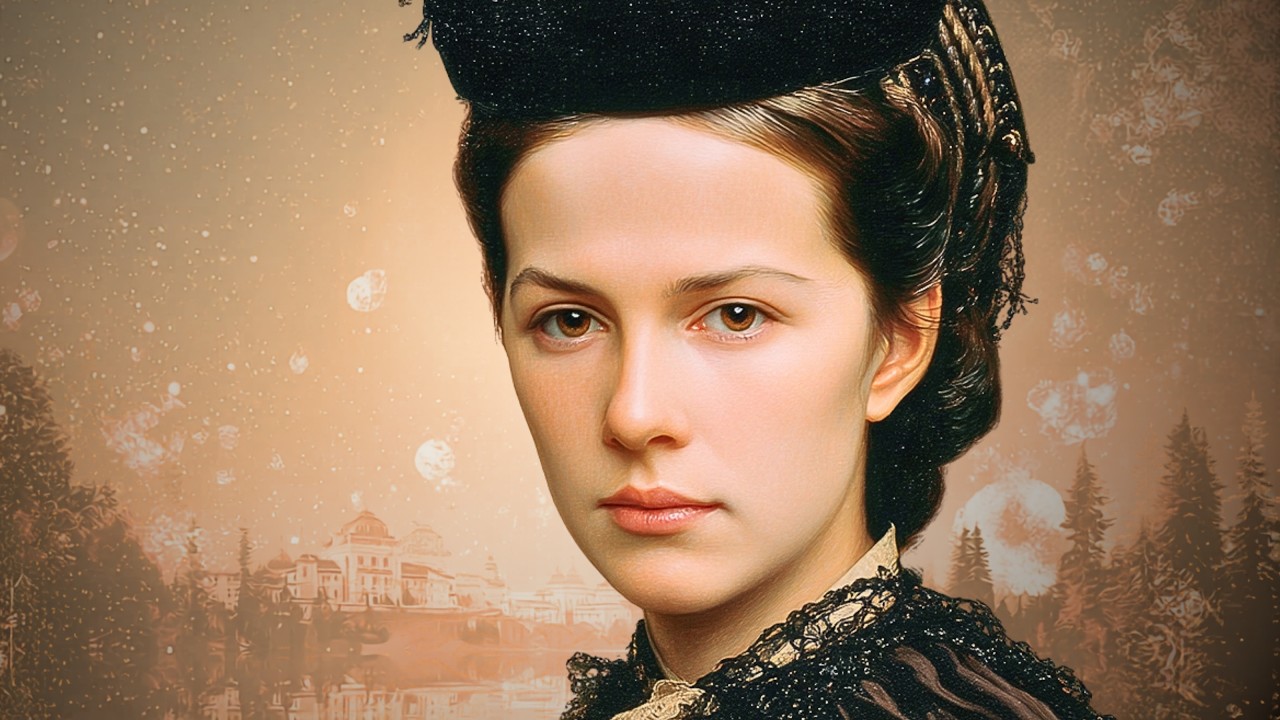
After years of disappointment, her daughter gave her a new anchor. The child became the center of her existence, the piece of family happiness she had needed so badly after everything that had gone wrong. But the same winter that brought Matilde her daughter also made plain what her marriage had become. The young man she had once laughed with by the Starnberg lake had long since turned into a stranger.
Whatever hope she had carried into that union had evaporated, and the time was coming when she would have to choose how to live with what remained. Matilde was born on 30 September 1843 at Schloss Possenhofen, the seventh child of Duke Max in Bavaria and Duchess Ludovika. Her childhood unfolded on the shores of Lake Starnberg. Unlike many European court children, she and her siblings grew up relatively free.
They swam in the lake, rode horses, and spent most of their hours outdoors. The household included ponies, dogs, cats, and even deer. Because she was slender and had an unusually sharp voice, she was nicknamed Sparrow from an early age, a name that stayed with her for life. Her bond with her sisters ran deep.
She shared a close friendship with Marie Sophie, one that would last until her death. She also shared many memories of those carefree years at Possenhofen with her sister Elisabeth. Their father, Max, gave his children as much freedom as he could, while Duchess Ludovika made sure her daughters received a proper education. Languages, music, and dancing formed the core of their studies.
Those were happy years for Matilde. She enjoyed her easy time at Possenhofen with her brothers and sisters, unaware of the tragedies that would later strike so many of them. Of all her siblings, Matilde was closest to Marie Sophie. But by the early 1860s they lived far apart.
Marie Sophie had married King Francis of Naples and lived in Rome. Life there was not what she had imagined. She often recalled her family, her homeland, and her happy days at Possenhofen. Above all, she missed her sister.
Then a thought came to her. If Matilde came to Rome, she would no longer be alone. When the search began for a suitable husband for the young duchess, attention turned to Luigi of Trani, the younger brother of Marie’s husband. This marriage would reunite the two sisters.
Marie did everything she could and pressed her family to arrange it. Perhaps she hoped not only for a proper match for Matilde, but simply longed to have her sister near again. For Matilde, the prospect marked the beginning of a new chapter. Without knowing it, she was facing a decision that would change the course of her life.
In May 1861, Luigi of Trani traveled to Lake Starnberg to meet Matilde. For the seventeen-year-old duchess, it was her first encounter with the man she might marry. Her initial hesitation soon faded. The two spent long stretches of time together, talking and laughing, getting along surprisingly well.
Within days, their formal acquaintance turned into genuine affection. To Matilde, everything seemed promising. Luigi appeared friendly, attentive, and tolerant. There was no sign of the difficulties the future held.
The decision came quickly. On 5 June 1861, Matilde married in Munich. At only seventeen, she followed her husband to Rome. A wholly new life began for the young duchess, and perhaps at that moment she truly believed she might be happier than some of her sisters.
In Rome, the sisters finally met again. After years of separation, they could spend time together once more. For Marie Sophie, a great wish came true. They treasured their time together and often recalled their carefree years at the palace.
But as their bond grew stronger, signs of strain in their new lives began to show. Marie Sophie’s marriage had not developed as hoped. The young queen often felt lonely and disappointed. Matilde, too, had to realize that her husband was not the man she had believed him to be.
With time, the problems grew more visible. Both sisters had hoped to find happiness in their new lives, but they felt increasingly let down. It was precisely in this period that they became more important to each other, talking about their fears, their hopes, and the challenges of life. The lively girls of Possenhofen had turned into young women struggling with similar problems, and for that very reason they became each other’s support.
During this difficult time, Matilde’s life took an unexpected turn. In the years she spent in Rome, she began a relationship with a Spanish diplomat. It produced a daughter, born in 1864 and named Maria. But the child did not live with her mother.
Shortly after the birth, Maria was placed in the care of her father’s family, far from Rome. Little is known about their later relationship, and most evidence suggests that contact between mother and daughter was rare. It is hard today to determine how difficult this separation was for Matilde, but the thought of not watching her child grow up must have been painful. On 15 January 1867, Matilde’s daughter was born and given the name Maria Theresa, though nearly everyone in the family called her Madi.
After the disappointments of previous years, Madi’s birth gave Matilde new stability, and her daughter quickly became the center of her life. Children’s voices were heard from the upper floors as Madi ran through the rooms, her mother following after her. They spent their mornings together reading, playing, and taking walks. For Matilde, these hours were among the happiest of her life.
A close bond grew between mother and daughter, and Madi became what Matilde most needed after all those disappointments: a piece of family happiness. But this did not save the marriage. The young man she had once laughed with at Possenhofen had become a stranger to her long before. Over the years, the distance between the spouses widened.
Ludwig was addicted to alcohol and had many affairs. What had begun with great hope gradually turned into disappointment. In the end, the couple spent more and more time apart. While Ludwig went his own way, Matilde sought to distance herself from a life that made her unhappy.
She traveled often, spending time in Bavaria, Baden-Baden, and the south of France. In some respects, she resembled her sister Sisi. While Sisi fled the constraints of the Viennese court, Matilde tried to escape a marriage that had not brought the happiness she had hoped for. By the time Ludwig died in 1886, the two had long since grown apart.
Matilde never remarried. When many things in life became difficult, one thing remained constant for Matilde: her family. Above all, her relationships with her sisters Marie Sophie and Elisabeth lasted her whole life. The three women met regularly.
They exchanged letters, spent enjoyable time together, and talked about the events that had shaped their lives. Each carried her own burdens. Sisi suffered under the constraints of the imperial court and the loss of her son Rudolf. Marie Sophie witnessed the fall of her kingdom and many personal disappointments.
What united them were their memories of Possenhofen, of their summers on Lake Starnberg, of a time when their whole lives still lay ahead of them. A small story illustrates this. When Ludovika once announced her arrival to her daughter Elisabeth, writing that she was coming with Jackel and Spatz, meaning rooster and sparrow, a postal worker took the nicknames literally. Instead of relatives, the hotel expected two birds and even sent cages to the train station.
The sisters must have laughed from the bottom of their hearts. For Matilde, such moments were precious, because she knew how quickly life could change. The last few years brought heavy losses to Matilde. In 1898, her sister Sisi was killed in Geneva, news that shook the family.
But at first there were also happy moments. Her daughter Madi later married Prince Wilhelm of Hohenzollern-Sigmaringen. The marriage was considered happy and produced three children. For the first time, Matilde experienced the joy of becoming a grandmother.
But life was not merciful to her. Even at a relatively young age, Madi’s health deteriorated. Matilde rarely left her daughter’s side. In March 1909, Madi died at only forty-two years old.
For more than four decades, Madi had been the most important person in her life. After the disappointments of her marriage, she had given her support, brought her happiness, and provided the family happiness she had always wished for. Madi left behind three children. Her daughter Augusta Victoria later became Queen of Portugal.
Her two sons, Frederick Victor and Franz Joseph, founded their own families and continued the family line. After this terrible loss, only her closest friend, Marie Sophie, remained to Matilde. The sisters spent their last years together. After the monarchies had fallen, they finally returned to Munich.
The carefree days of Possenhofen were gone. The queens, princesses, and duchesses had become elderly women recalling their eventful lives. In 1925, Marie Sophie died. For Matilde, this marked the end of the last sister who had been at her side since the days of Possenhofen.
A few months later, she followed her. Matilde never became a famous empress or a great queen. To this day, her name remains in the shadow of her sister Sisi.
But behind that name lies the life of a woman who had to endure many disappointments and losses, who lost her happiness again and again, and yet never stopped believing in it.






