On June 25, 1876, Lieutenant Charles DeRudio rode with the Seventh Cavalry toward the banks of the Little Big Horn River. A veteran soldier who had once fought as a revolutionary in Europe before joining the United States Army, DeRudio had already lived through more than most men could imagine. But nothing in his past prepared him for the hours that lay ahead. Under General George Custer’s command, the cavalry had been sent to strike what scouts described as a massive Native American encampment.
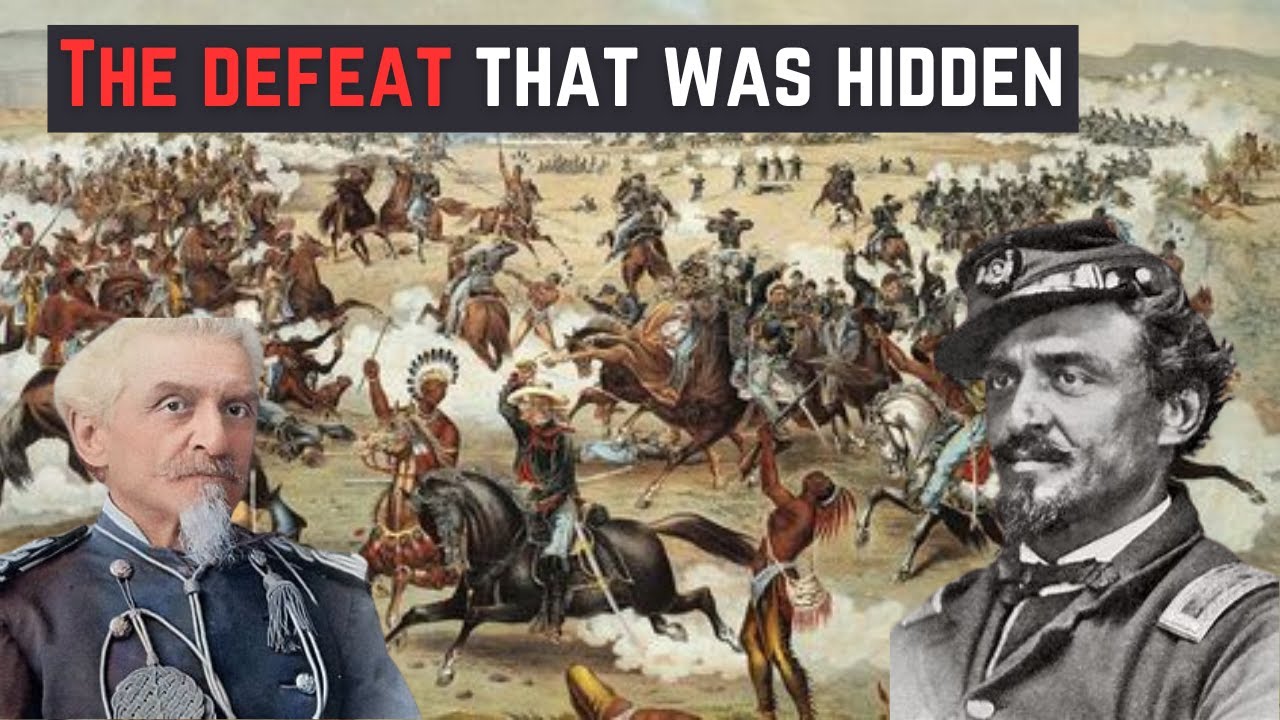
The soldiers expected a surprise attack that would scatter the Lakota Sioux and Cheyenne tribes. Instead, they rode into a fight that would become one of the most infamous disasters in American military history. DeRudio was temporarily attached to Major Marcus Reno’s company when the command split into three groups. Custer took one column, Reno another, and Captain Frederick Benteen commanded the third.
Reno’s men advanced toward the village expecting the tribes to flee at the sight of cavalry. They were met instead by a fierce counterattack. The Native American forces, led by warriors under chiefs such as Sitting Bull and Crazy Horse, vastly outnumbered the soldiers and were fighting to defend their lands, their families, and their way of life. The orderly approach dissolved into chaos as the warriors surrounded Reno’s men.
Bullets cut through the air, dust obscured the battlefield, and the cavalry found itself overwhelmed. In the confusion, DeRudio became separated from his comrades. His horse was shot out from under him, leaving him stranded in the middle of a raging battle. In his own account, he described the terror of finding himself only fifty yards from roughly three hundred Sioux warriors.
They fired a volley at him, yet miraculously none of the bullets struck their mark. With no other option, DeRudio took cover in a thicket of brush, where he would remain for the next several hours, hidden and waiting. From that concealed position, he witnessed one of the most gruesome scenes of the battle. Native women, referred to as squaws in his account, were scalping a fallen soldier.
The sight haunted him, but he knew that moving or revealing himself would mean certain death. He stayed silent and still while the sounds of battle raged around him. DeRudio was not entirely alone. He eventually found other survivors, including a scout named Fred Gerard and a few soldiers who had also escaped the initial onslaught.
Together they huddled in the brush, trying to remain quiet as they listened to the terrifying sounds of the fight continuing around them. Every crack of a twig or rustle of leaves could mean discovery by the Native warriors who patrolled the area. Their only hope was to wait for darkness and then try to slip back to their own lines. The day dragged on.
At one point, DeRudio and his companions nearly made it to safety, only to stumble upon a group of Native warriors who had captured the cavalry’s horses and uniforms. Mistaking them for fellow soldiers, DeRudio called out. The response was a barrage of gunfire. The realization that the warriors had already overrun much of Custer’s forces drove home just how dire their situation had become.
When night finally fell, DeRudio and his small band of survivors made their move. Using the darkness as cover, they began crawling toward the river, hoping to find a place where they could cross. Native warriors still patrolled the area, and any misstep could be their last. For hours they crept through the night, constantly fearing discovery.
Eventually, they managed to cross the river, but their ordeal was far from over. In the early hours of the morning, as they neared the cavalry’s position, they encountered Native warriors once again. This time, they managed to fight off their attackers with the little ammunition they had left. Pushing onward, they somehow reached the safety of Reno’s forces, who had entrenched themselves on a bluff overlooking the river.
The Battle of the Little Big Horn, often remembered as Custer’s Last Stand, became one of the most famous conflicts in American history. For the Lakota Sioux and Cheyenne, it was a hard-fought victory and a powerful symbol of resistance against American expansion. They had defended their homeland against a force that sought to take their land and erase their way of life. Yet the triumph proved short-lived.
The United States government responded to the disaster by redoubling its efforts to subjugate the Native tribes, leading to further losses of land, culture, and sovereignty in the years that followed. DeRudio’s account provides one of the most harrowing firsthand descriptions of the battle. His story is a testament to the chaos, terror, and unpredictability of that day. He survived through a combination of sharp instincts, desperate decisions, and plain luck.
Hidden among the burning woods, besieged by warriors, and cut off from his unit, he refused to surrender to the overwhelming odds against him. His narrow escapes, his long crawl through the darkness, and his final desperate dash to safety all stand as a reminder of the human cost of that violent confrontation. But his story is only one thread in a much larger tapestry. While his survival offers a rare glimpse into the experience of a cavalryman caught in the disaster, the battle itself must also be understood from the perspective of the Native American tribes who fought to preserve their land and their people.
Their victory at the Little Big Horn was a defining moment in their long struggle against an encroaching power, a moment of resistance that would be answered with even greater force from the United States government. DeRudio lived to tell his tale, and his letter from the front lines remains one of the most detailed accounts of the battle ever recorded. His testimony preserves the confusion and brutality of the fight, the constant fear of discovery, and the will to survive that carried him through one of the darkest days in American military history. For the soldiers of the Seventh Cavalry, June 25 and 26, 1876, were days of unimaginable suffering.
For the Lakota and Cheyenne warriors who defeated them, it was a hard-won stand for their way of life. And for Lieutenant Charles DeRudio, it was the fight of his life, one he barely escaped with nothing more than his instincts and a stroke of good fortune.