In May 1570, Anna of Austria, just twenty years old, married King Philip II of Spain by proxy in Vienna. The match shocked Europe. The Pope himself tried to prevent it. The scandal was not simply the twenty-three-year gap between bride and groom.
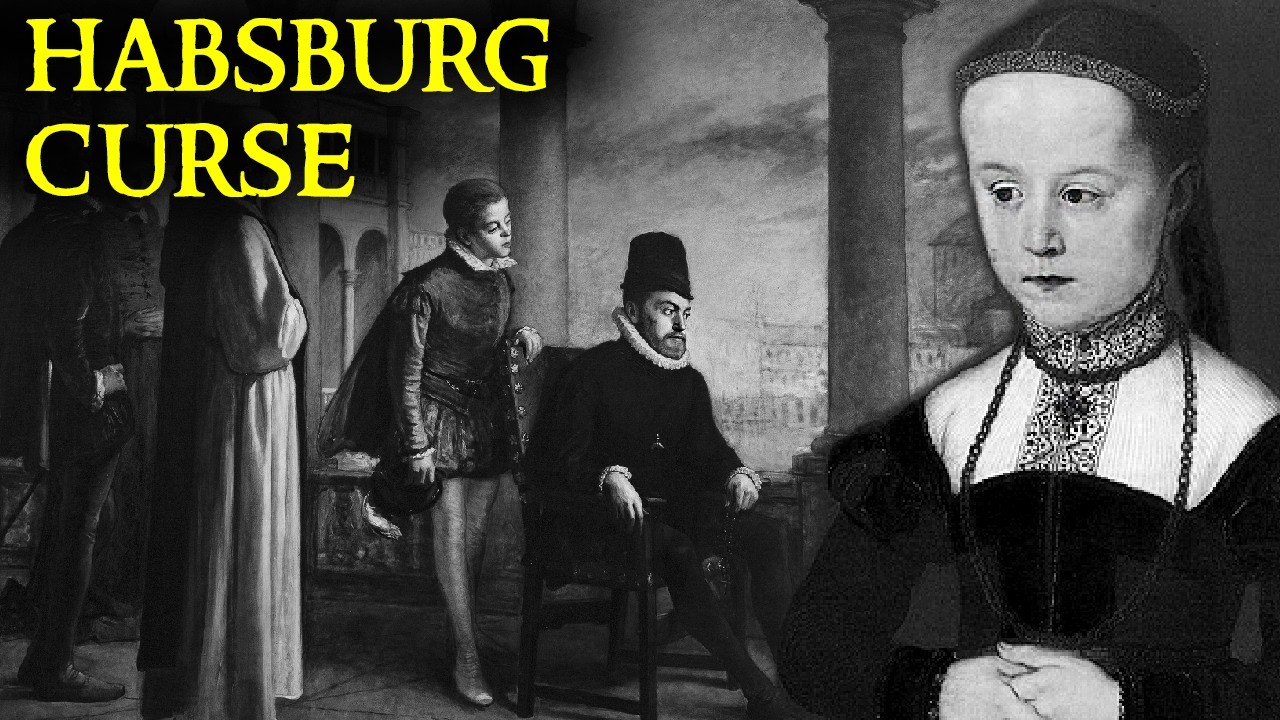
Philip was her uncle. The marriage bound the Austrian and Spanish branches of the Habsburg family even more tightly together, deepening the pattern of intermarriage that would eventually destroy the Spanish line. Anna was born on November 2, 1549, at Cigales near Valladolid in Spain. Her father was Maximilian, the future Holy Roman Emperor, son of Ferdinand I.
Her mother was Maria, the daughter of Charles V, the most powerful monarch in Europe. Maximilian had married Maria in 1548, and the couple were first cousins, as their fathers, Ferdinand and Charles, were brothers. It was one of the earliest unions between the two branches of the Habsburg dynasty, an alliance forged for political strength that would, over the following century, contribute to the genetic problems that came to haunt the family. Anna spent her earliest years at the Spanish court.
She was the eldest of nine surviving children and her father’s favorite. While she was still an infant, her mother Maria governed Spain as regent alongside Maximilian, while Charles V was occupied in central Europe fighting the Protestant Reformation. In 1551, Maria’s brother, Prince Philip, returned from central Europe to take over as acting ruler, and Anna’s parents returned to Austria. She was raised and educated in Vienna throughout the 1550s, too young to remember her Spanish birth but already marked by the imperial inheritance that surrounded her.
Sixteenth-century Europe was a fragmented and dangerous place. Germany was not yet a nation but a patchwork of hundreds of small states under the loose authority of the Holy Roman Empire. Italy was divided into rival duchies and republics. Two powers stood above the rest: Spain and France, locked in a bitter struggle for supremacy that had already produced a series of wars over Italy between 1494 and 1559.
For Spain, alliance with the Austrian Habsburgs was essential to keep French ambitions in check. By the late 1560s, that alliance mattered more than ever, as a fierce revolt had erupted in the Low Countries, threatening one of Spain’s richest territories. Initially, Anna was never meant to marry Philip at all. The courts of Madrid and Vienna planned for her to wed Don Carlos, Prince of Asturias, Philip’s only son by his first wife, Maria Manuela of Portugal.
Marriages between cousins were a common tool of royal diplomacy, and the match seemed well suited. Don Carlos was only four years older than Anna. But Don Carlos was a deeply troubled young man. Since his mid-teens he had suffered from fevers and mysterious health problems.
In 1562, he fell down a staircase and injured his head. Despite brutal medical treatments, his psychological state deteriorated. By his twenties, he was infamous for violent outbursts and erratic behavior. He secretly contacted opponents of his father’s rule, including the Dutch rebels.
In early 1568, Philip had his own son arrested. On July 24, 1568, Don Carlos died in prison. Many believed his father had him starved to death to prevent him from becoming a rallying point for rebellion. The disaster did not end the idea of Anna marrying within her family.
It only redirected it. Philip II was already on his third wife. His first, Don Carlos’s mother, had died days after giving birth. His second, Mary Tudor of England, had died without children in 1558.
His third, Elizabeth of Valois, died on October 3, 1568, ten weeks after Don Carlos, following a stillbirth. Philip found himself without a wife and without a male heir, as his marriage to Elizabeth had produced only daughters. Faced with this succession crisis, he proposed something unthinkable: if Don Carlos could not marry Anna, then Philip himself would marry his niece. Astonishingly, Anna’s father agreed.
Pope Pius V was appalled, but his objections were ignored. In May 1570, Anna married her uncle by proxy in Vienna. In the autumn of that year, she traveled to Spain for the formal ceremony. The journey was long and tense.
Her party traveled overland through the Low Countries, where they were met with both cheers and hostility, an ominous sign, as the Dutch revolt had erupted in 1568. During the voyage, relatives of Floris of Montmorency, a Dutch noble imprisoned in Spain for his role in the rebellion, petitioned Anna to intervene for him. She arrived in Spain on October 3, 1570, and formally requested that his life be spared. Before she could reach the king, Floris was secretly executed on October 16, strangled to death, most historians believe on Philip’s orders.
Once in Spain, Anna settled in surprisingly well. She was bright, cheerful, and vivacious, and she brought some life to the rigid Spanish court. She became Philip’s most beloved wife. Diplomats reported that the king was genuinely in love with her, and unlike his previous marriages, there are no records of mistresses during this one.
Philip visited her chambers daily, and the couple were close, sharing similar personalities. Soon she was pregnant. In December 1571, she gave birth to a son named Ferdinand, who was given the title Prince of Asturias, the same title Don Carlos had held until his death. Ferdinand died in October 1578, possibly from dysentery.
His fate set the pattern. Another son, Carlos, was born in 1573 and died in 1575. Diego was born in 1575, and with two healthy boys briefly alive, the succession seemed secure. But after Ferdinand died in 1578, Diego became heir apparent.
He outlived his mother but died of smallpox in 1582. A daughter, Maria, born in 1580, died in 1583. Only one of the five children survived to adulthood: a boy named Philip after his father, born in 1578. He would become the heir that Philip II had gone to such lengths to secure.
Anna also acted as a loving mother to the daughters Philip had with Elizabeth of Valois. Anna became the fourth of Philip’s wives to die prematurely. In 1578, King Sebastian I of Portugal died in North Africa while campaigning against the Muslims of Morocco. He was twenty-four and left no children.
His successor, Henry I, was a cardinal and also had no children. When Henry died in 1580, a succession crisis followed, and Philip claimed the Portuguese throne. To solidify his claim, Philip, Anna, and the Spanish court set out for Portugal in September 1580. Anna was briefly queen consort of Portugal for a few weeks.
But during the journey or shortly after arriving, she contracted a severe form of influenza. She died in the city of Badajoz on October 26, 1580, a week short of her thirty-first birthday. She was initially buried in Portugal, but her remains were later moved to Spain and interred in the royal crypt at the Escorial. Philip never remarried and lived until 1598.
From the narrow perspective of securing the royal succession, Anna’s marriage was successful. It produced several sons, and although three of the four died young, Prince Philip lived long enough to succeed his father as Philip III in 1598. But the marriage set a dangerous precedent. The Austrian and Spanish Habsburgs continued to marry each other for the next century.
In 1646, Mariana of Austria was betrothed to her Spanish cousin Balthasar Charles, Prince of Asturias, the son of King Philip IV. When Balthasar died before the marriage could take place, Philip IV decided to marry Mariana himself. She was his niece, the exact same arrangement as eighty years earlier. This time the consequences were far more tragic.
Mariana produced a son, the future King Charles II of Spain, but he was severely ill and cognitively challenged for his entire life as a result of generations of inbreeding. He was unable to have children, and the Spanish Habsburg line died out in 1700. The intermarriage that began with Anna in 1570, intended to preserve the Spanish royal line, was the very thing that brought about its extinction 130 years later.






